


Chikuanga
Chikuanga (also known as cassava bread or kikwanza) is a storied Angolan staple with roots in rural tradition. This fermented cassava loaf, steamed in banana leaves, has a dense, chewy texture and a mild sour aroma. In northern Angola, households prepare it days ahead: freshly harvested cassava tubers (manioc) are peeled and soaked in water for 2–3 days to ferment…


Mufete
Mufete is a festive Angolan platter centered around grilled whole fish and an array of sides. Imagine a charcoal-grilled bream or tilapia, smoky and crisp-skinned, surrounded by boiled tubers and a scoop of stewed beans. The dish typically includes sweet potatoes, plantains, cassava, and a tangy onion–tomato relish. Each component adds color and flavor: the golden fried sweet potato and…

Doce de Ginguba
Doce de Ginguba is a beloved Angolan sweet: chewy peanut fudge made from just roasted peanuts, sugar, and water. The name literally means “ginguba candy,” with ginguba being the local word for peanut. Despite its simple ingredients, the result is a treat that’s crunchy, nutty, and deeply satisfying. It is similar to peanut brittle but has a more even, fudge-like…

Couscous / Seksou / Kesksu
Couscous (called seksou or kesksu in some regions) is more than a recipe in Algeria – it is a centuries-old ritual woven into daily life and communal gatherings. Legend has it that ancient Berbers knew how to make couscous with simple ingredients of wheat semolina and water. Today each family has its own technique (some even steam it with saffron…

Mchawcha (Kabyle Tahboult)
Mchawcha (sometimes called tahboult) is a traditional Kabyle honey cake often described as an “omelette” cake. The simple batter contains eggs, flour, semolina, a little oil, and a hint of orange blossom water or lemon zest. It is cooked slowly in a well-greased skillet until puffed and golden on the outside. While still warm, the cake is generously drizzled with…
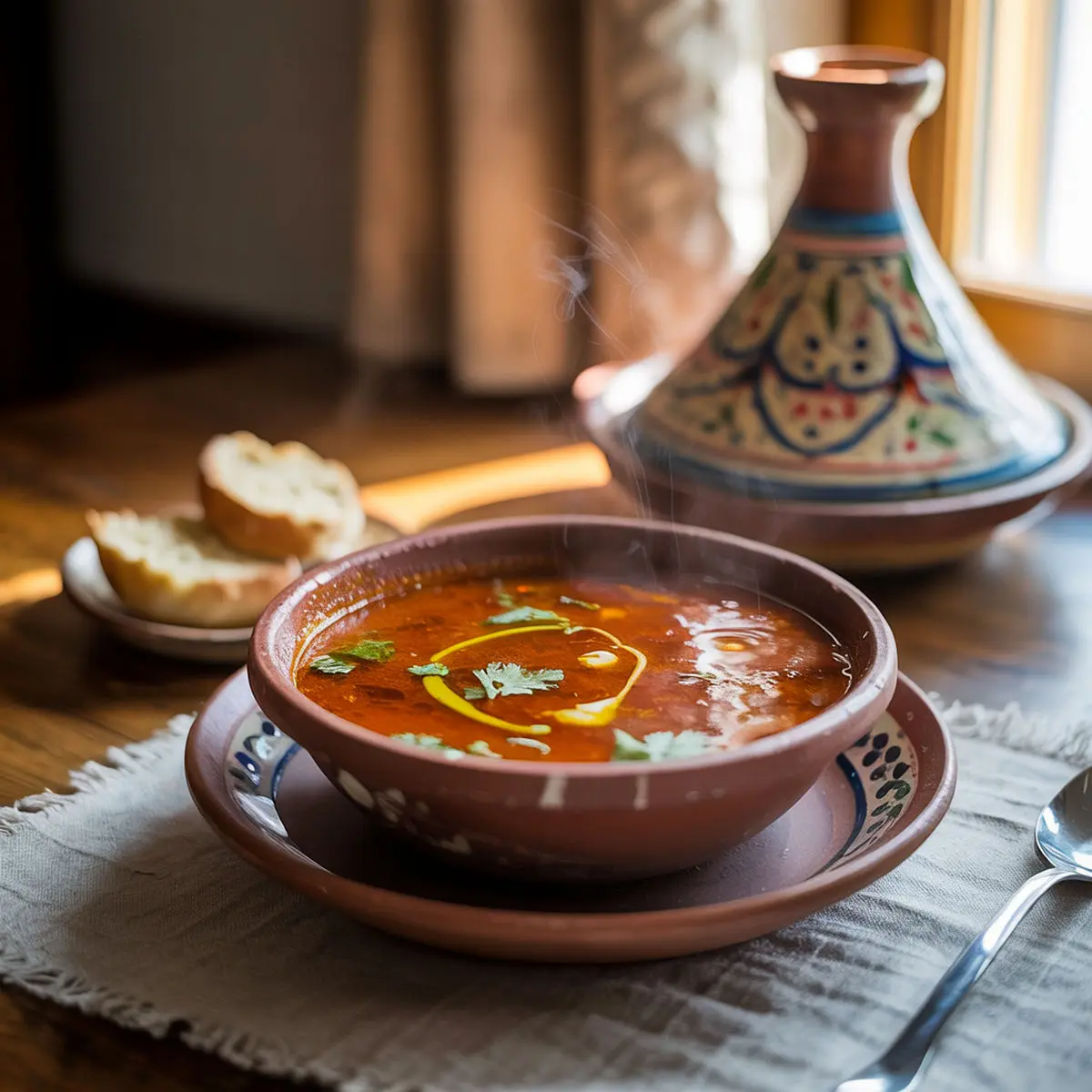
Harira (Algerian-Style Soup with Egg & Flour)
Harira is a beloved North African soup served at Ramadan, and the Algerian version is hearty and warming. In this recipe, tender lamb and aromatic vegetables are simmered in a tomato broth with chickpeas and fragrant spices like ginger and cinnamon. The broth is then enriched with a mixture of beaten egg and flour (called al-’aqda) to give the soup…
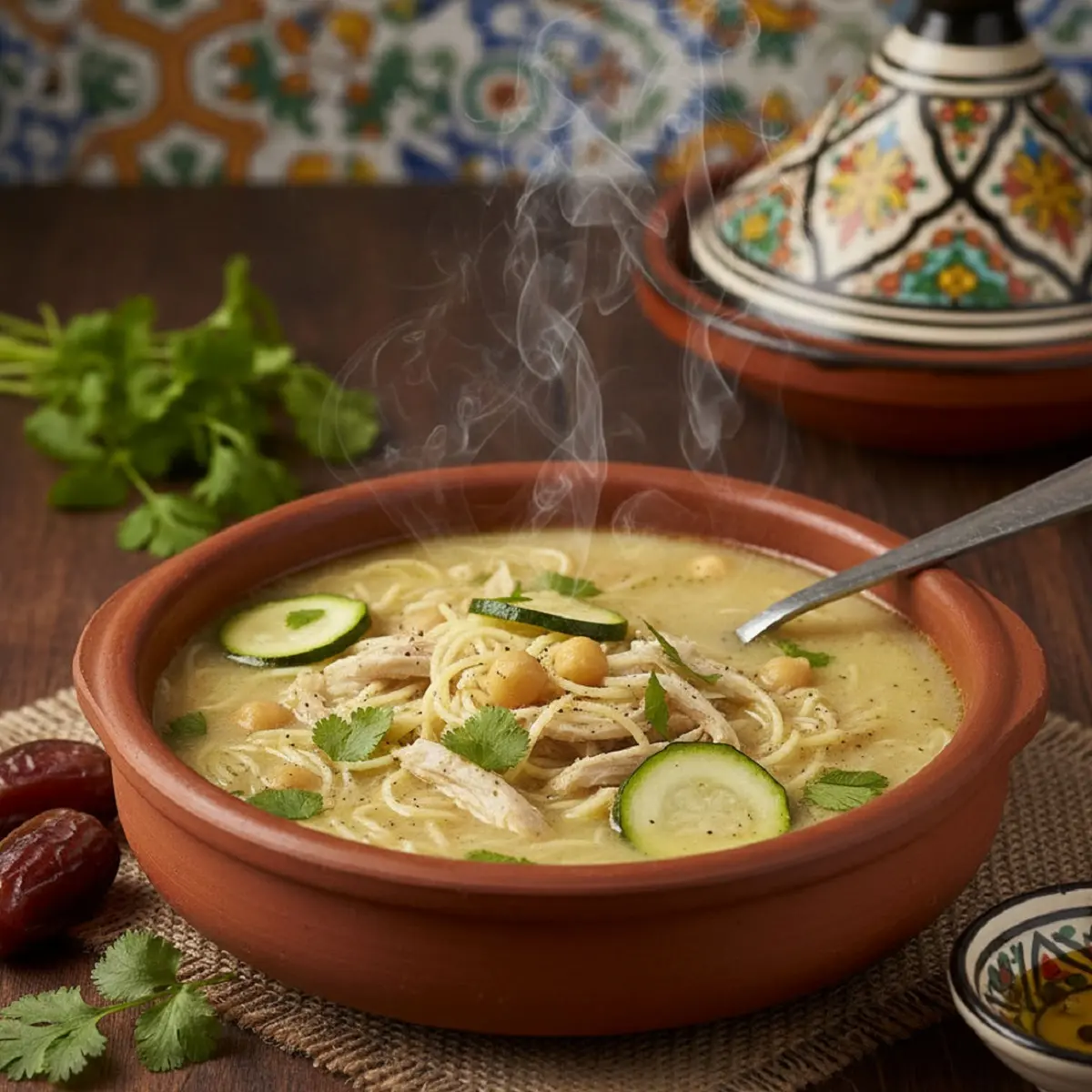
Chorba Beïda (White Chicken Soup)
Chorba Beïda, literally “white soup,” is a classic Algerian chicken and vermicelli soup traditionally served at iftar. Its gentle saffron and cinnamon notes create a warm, inviting aroma. Tender chicken and soft chickpeas simmer in a simple broth of onion and water, perfumed with cilantro and whole cinnamon. Towards the end of cooking, fine vermicelli pasta is added and the…

Chorba Frik (Lamb & Freekeh Soup)
In Algerian homes, Chorba Frik warms evenings with its complex blend of lamb, tomatoes, chickpeas, and cracked green wheat (freekeh). Traditionally served to break the fast in Ramadan, this thick soup features fragrant spices like cinnamon and coriander, fresh cilantro, and a hint of chili, creating a comforting, layered flavor. Each spoonful is rich with tender lamb, plump chickpeas, and…

Dolma & Farcis
Drawing on Ottoman influence and Mediterranean traditions, dolma (Arabic for “stuffed”) holds a beloved place in Algerian cuisine, especially during Ramadan and family feasts. Unlike Egyptian dolma limited to grape leaves, Algerian dolma consists of various vegetables and fruits filled with a spiced meat-and-rice mixture. Common choices include hollowed zucchini (courgettes), potatoes, bell peppers, artichoke bottoms and tomatoes.

Karantika (Garantita)
Karantika (also called garantita or calentita) is the humble chickpea custard beloved in Algerian street markets and cafes. A legacy of Mediterranean fusion, this simple savory flan is said to have originated with Spanish cooks in Algeria and has since become a staple snack, especially in Oran and Algiers. Prepared with chickpea flour, water, oil and a pinch of cumin,…







