

Urban travel, re-paced
Finding Calm in Bangkok: A Slower Guide to the City
Bangkok does not become peaceful by becoming empty. It becomes manageable when the day is designed around shade, water, ritual, distance and recovery.
A practical editorial guide for travellers who want to experience Bangkok's energy without allowing that energy to dictate every hour.
Bangkok is often introduced through motion: traffic pouring beneath elevated rail lines, ferries cutting across the Chao Phraya, market lanes tightening around lunch counters, temple courtyards filling with tour groups, and neon districts waking as offices close. The intensity is real, but it is not the whole city. Quiet exists here in layers rather than in one isolated sanctuary. It can be found in the first hour of a temple morning, on a shaded park path before the heat builds, along a residential canal where engines fall silent, or at a table where lunch is allowed to last longer than the transfer that preceded it.
The useful question is therefore not where Bangkok is completely silent. A metropolis of this scale rarely is. The better question is how a traveller can reduce friction: fewer cross-city journeys, less exposure to midday heat, more time near water or trees, and enough margin for delays. Calm in Bangkok is partly geographic, but it is also logistical. It comes from selecting one district at a time, accepting that traffic reshapes plans, and recognizing that an air-conditioned pause can be as important as a headline attraction.
This guide treats stillness as a travel method rather than a promise of escape. It brings together temples, parks, river transport, canals, neighbourhoods and simple routines while keeping each recommendation proportionate. A temple remains a functioning religious place, not a wellness prop. A park is public infrastructure shared with runners, families and commuters. A canal community is a home, not scenery. The quieter the traveller becomes, the easier it is to notice those distinctions.
The result is a Bangkok itinerary with breathing room. It begins early, contracts during the hottest hours and opens again in late afternoon. It favors short, coherent routes over a checklist scattered across the map. It also keeps live details outside the prose: opening hours, boat services, air quality, construction and access can change, so each should be reconfirmed before the day begins.
Bangkok · Thailand
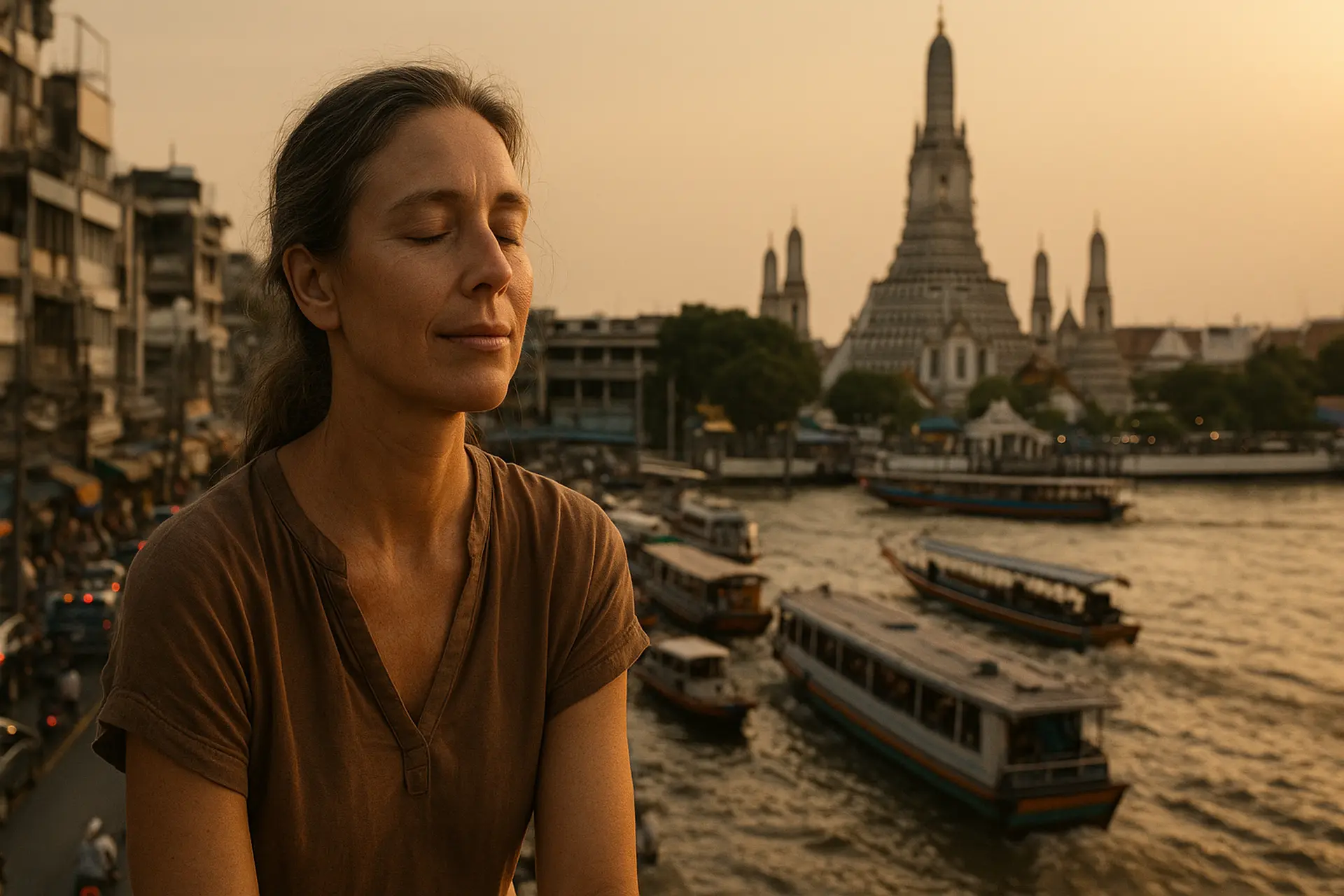
Bangkok's Quiet Counterpoint
The city's stillness is not separate from its intensity; it appears where water, shade, ritual and careful timing interrupt the rush.
Best for: travellers who want a full Bangkok experience with fewer exhausting transfers and more deliberate pauses.
Editorial guide
Calm is a pattern, not a single address
Bangkok rewards travellers who stop treating distance as neutral. Two points that look close on a map can be separated by congested roads, long station walks or a river crossing. Conversely, a ferry ride may feel easier than a short taxi journey because it removes the stop-start strain of traffic. The calm version of the city therefore begins with route design. Choose one anchor area for the morning, one protected place for midday and one gentle destination for dusk. Leave at least one planned stop unclaimed so that delays do not feel like failure.
The river is an especially effective organizing line. On one side are the historic districts around the Grand Palace, Wat Pho and the older trading quarters; across the water, Thonburi offers temples, lanes and canals with a different scale. The journey itself becomes part of the experience. Ferries provide moving air, open views and a visual sense of orientation that is often lost on the road. They also make it easier to understand that Bangkok developed through water long before expressways became its dominant image.
Green space provides another counterpoint. Lumphini, Benjakitti and smaller neighbourhood parks are not substitutes for the city but places where its residents reset. Early mornings bring walkers, runners, tai chi groups and people finishing night shifts. Late afternoons bring families and office workers. Visiting at those times gives a traveller a social view of Bangkok that is quieter without being staged. The parks are most useful when treated as part of the day's structure rather than as a separate attraction requiring another long transfer.
Temples create a different kind of pause. The architecture may be spectacular, but the calmer experience comes from noticing how a compound works: shoes left at the threshold, voices lowered inside prayer halls, offerings placed without hurry, shaded cloisters framing movement. Arriving early helps, but etiquette matters more than emptiness. A visitor who dresses appropriately, moves slowly and avoids blocking worshippers contributes to the atmosphere being sought.
Finally, calm is personal. Some travellers recover through silence; others through predictable movement, a long meal, a massage, a museum or an hour in a hotel room with the curtains closed. Bangkok offers all of these. The important decision is to build recovery into the itinerary before sensory overload arrives, not after it has already shaped every response.
Explore in the cooler morning, withdraw during peak heat and return for late afternoon or evening.
Reduce cross-city movement and let river or rail corridors organize the day.
A flexible buffer absorbs traffic, queues, weather and the need for an unplanned break.
Pacing before places
Design the Day Around Bangkok's Climate
A calm itinerary begins with the clock: cooler hours for movement, protected hours for recovery and enough flexibility for weather.
The most reliable Bangkok day is divided into three distinct phases. Morning is for temples, markets, walking and any activity that requires patience outdoors. Midday is for shade, lunch, museums, a hotel break or a long transit in air conditioning. Late afternoon and evening are for parks, river views, neighbourhood dining and short walks. This structure is not rigid, but it respects the combined effect of heat, humidity, crowds and travel time.
Beginning early changes more than the temperature. Streets are being cleaned, monks may be collecting alms, vendors are setting up and commuter life is visible before tourism becomes dominant. A major temple can still be busy, but the movement feels more legible. The traveller has more attention available for details because the body is not yet negotiating heat and thirst. Breakfast can then become a deliberate transition rather than fuel consumed while moving.
Midday should not be treated as wasted time. Bangkok's indoor spaces are part of the city: museums, galleries, traditional houses, shopping centres, libraries, cafés and hotel lounges all provide a legitimate second register. A long lunch also reveals Thai dining more fully than a rushed snack. Several dishes can be shared, spice levels discussed and the meal allowed to unfold without the pressure of reaching another attraction before a fixed minute.
The late day is often the most forgiving. Parks become social again, the river reflects changing light and neighbourhood restaurants begin to fill. Even a familiar place can feel transformed once the sun drops. The key is not to overbook this window. One park walk and one dinner are enough. A rooftop, night market or cultural performance can be added when energy remains, but should not be treated as an obligation.
Season also matters. Rain can be intense and localized; air quality can alter the wisdom of extended outdoor exercise; extreme heat may make even an early schedule demanding. Check live conditions and adapt. Calm comes from allowing the itinerary to respond to Bangkok rather than insisting that Bangkok submit to the itinerary.
Start with one outdoor anchor
Choose a temple, market, neighbourhood walk or river journey and reach it before the day becomes hottest.
Plan the retreat before departure
Identify the exact café, museum, hotel or shaded lunch stop that will hold the midday pause.
Keep the evening local
Return to a park, riverside lane or restaurant near the day's existing route rather than beginning a new cross-city transfer.
Leave one hour unassigned
Use the margin for rain, traffic, fatigue or an unexpectedly rewarding place that deserves longer.
Ritual and attention
Temples Are Quietest When Visitors Understand Their Purpose
The calm of a wat depends less on finding an empty courtyard than on entering a functioning religious place with restraint.
Bangkok's temples are among its most visually powerful spaces, but their value is not limited to ornament. They are active institutions where people pray, make merit, study, work and gather. A visitor seeking calm should begin by recognizing this continuity. The experience deepens when photography stops being the first response and the compound is allowed to reveal its own sequence: gateway, courtyard, ordination hall, cloister, shrine and shaded edge.
Wat Arun, Wat Pho and Wat Ratchanatdaram are different in scale and atmosphere, yet all reward slow observation. At Wat Arun, the relationship between the temple and the river is inseparable from the visit. Wat Pho combines monumental art with working religious and educational traditions. Wat Ratchanatdaram's Loha Prasat introduces a more geometric, contemplative experience within the Old City. These places can be combined selectively, but attempting several major temples in quick succession often reduces them to repeated surfaces.
Appropriate dress is practical as well as respectful. Shoulders and knees should be covered where required, footwear should be easy to remove, and clothing should remain comfortable in heat. Inside prayer spaces, feet should not point toward Buddha images, voices should be low and worshippers should never be used as foreground subjects without permission. Signs and staff instructions take priority over any general advice.
Timing helps but does not guarantee solitude. Early opening periods and late afternoons are often gentler, while midday can bring both tour groups and severe heat. Yet a busy temple can still contain quiet edges: a side cloister, a tree-shaded bench, a smaller hall or a few minutes spent watching the rhythm of offerings rather than moving directly to the main image. The goal is not to monopolize silence but to participate without adding unnecessary noise.
Temple visits also benefit from limits. Select one major temple and one smaller nearby site rather than racing through a long list. Read enough history beforehand to understand what is being seen, then put the phone away for part of the visit. The resulting attention is often the most convincing form of stillness Bangkok offers.
Temple habits that preserve calm
Dress for respect
Carry a light layer or wear clothing that meets current temple requirements without creating extra heat.
Follow local movement
Remove shoes where indicated, avoid blocking entrances and let worshippers set the pace.
Photograph selectively
Check signs, avoid flash and never turn private devotion into an intrusive close-up.
Pause before leaving
Use the shaded perimeter to absorb the visit instead of immediately opening maps for the next task.
The city's breathing spaces
Use Parks as Part of the Route, Not as Isolated Attractions
Bangkok's parks work best when they replace a stressful transfer or create the day's natural recovery window.
Lumphini Park remains the classic central refuge, valued not because it is hidden but because it is accessible and socially alive. The skyline remains visible, traffic can still be heard at the edges and monitor lizards may appear near water, yet the internal rhythm is markedly slower. Early morning reveals exercise groups and regular walkers; late afternoon offers long shadows and a more communal atmosphere. A complete circuit is not necessary. Twenty minutes under trees can be enough to reset attention.
Benjakitti Park offers a different urban landscape, combining large water surfaces, paths and forest-park design near the convention-centre district. Its scale gives walkers and cyclists room to disperse, while elevated routes and wetlands provide visual variety. Because facilities and access arrangements can change, current information should be checked through the Bangkok Metropolitan Administration. The broader lesson is stable: a well-placed central park can connect parts of a day that would otherwise feel like separate expeditions.
Smaller parks may be even more useful. Santichaiprakarn Park can provide a river pause near the old city; Benchasiri offers a compact green interval beside Sukhumvit; neighbourhood grounds and temple gardens create shorter breaks that require no special journey. The best park is often the one already near the route. Travellers should resist the impulse to cross town merely to collect a famous green space when a modest local alternative would protect more energy.
Park etiquette is straightforward but important. These are shared civic spaces, not resort grounds. Keep paths clear, observe cycling and exercise zones, avoid feeding wildlife, and respect posted rules. Hydration matters, as does sun protection even under partial canopy. After heavy rain, surfaces may be slippery and some areas may be temporarily restricted.
A park visit becomes especially calming when paired with a single adjacent activity: breakfast before Lumphini, a museum after Benjakitti, sunset near the river after Santichaiprakarn. The pairing reduces decision-making and keeps the day geographically coherent. The traveller leaves with a better memory of one urban landscape instead of a blurred sequence of transfers.
| Setting | Best use | Ideal timing | Planning note |
|---|---|---|---|
| Large central park | Long walk, exercise or deliberate reset | Early morning or late afternoon | Check current hours and weather. |
| Compact neighbourhood park | Short break between nearby stops | Whenever shade is available | Choose convenience over fame. |
| Riverside park | Breeze, views and sunset transition | Late afternoon | Confirm river access and local events. |
| Temple garden or courtyard | Quiet observation after a religious visit | Morning | Remain respectful of worship and ceremonies. |
Water as orientation
Let the River Slow the Journey
Bangkok's waterways can reduce road fatigue, reveal older settlement patterns and turn transit into observation.
The Chao Phraya is not simply a scenic boundary. It is a transport corridor, historical axis and practical way to understand the city's layout. Ferries connect major sites while offering airflow and distance from road congestion. Even a short crossing creates a perceptible reset: engines remain, but the visual field opens, landmarks become easier to place and the traveller is no longer trapped inside traffic.
For a calm river day, avoid treating every pier as a stop. Select a small sequence, such as an Old City temple, one crossing to Thonburi and a riverside meal. Check the current service pattern because routes, piers and operating hours can change. Boarding can be quick, so tickets, bags and balance should be organized before the boat arrives. Follow crew instructions and remain seated where required.
The canals, or khlongs, reveal another Bangkok. In Thonburi, homes, shrines, workshops and small businesses still face the water. A slow boat can make these relationships visible, but the experience must be approached carefully. Residential canals are not open-air museums. Noise, wake, photography and the behavior of visitors affect people living along the banks. Smaller groups and operators that explain local context are preferable to high-speed circuits designed around spectacle.
Traditional long-tail boats can be loud; electric or low-noise options may provide a gentler experience where available. Availability changes, so claims about specific services should be verified directly. Whatever the craft, a life jacket, weather judgment and a reputable operator matter more than an idealized image of canal life. Heavy rain, high water or poor visibility may justify postponement.
Water travel is most calming when it replaces another journey. A ferry should connect the day's places, not become an additional attraction inserted between distant stops. A canal excursion should occupy a half-day with a meal and one neighbourhood walk, rather than be squeezed between temples and shopping. The slower route is also the clearer one.
Where location changes the trip
Choose a Base That Reduces Daily Friction
A quiet room in the wrong location can create more stress than a modest hotel within an easy, coherent route.
Accommodation shapes Bangkok more than many itineraries acknowledge. Staying near a rail station, a usable pier or the district where most planned activities are concentrated can remove hours of negotiation from a short visit. The goal is not absolute silence, which is difficult to guarantee, but predictable movement. A room set back from a main road, with good sound insulation and a short walk to transport, often delivers more calm than a distant resort-like property.
The riverside appeals to travellers who want views, ferry access and evenings organized around water. It can also involve longer journeys to parts of Sukhumvit or northern Bangkok, so the choice works best when temples, Thonburi and the Old City dominate the plan. Central districts near Lumphini or Benjakitti suit travellers who value parks, rail access and a broad range of indoor refuges. Ari and selected residential lanes offer café culture and a neighbourhood scale, though traffic and construction can vary block by block.
Thonburi can feel slower, particularly near canals and older communities, but transport should be checked carefully. A charming guesthouse that requires repeated taxi journeys may undermine the benefit. Likewise, an inexpensive room beside a nightlife street may produce interrupted sleep even when daytime access is excellent. Read recent reviews for noise, construction, lifts, air conditioning and access rather than relying on broad neighbourhood reputations.
Inside the hotel, create a recovery system. Keep drinking water visible, prepare clothing for the next morning, use a small bag for temple layers and rain protection, and schedule a genuine return rather than an ambiguous possibility. A midday room break is only useful when the route makes it realistic.
The calmest base is therefore not necessarily the most luxurious or secluded. It is the place that shortens the next day's first journey, offers a reliable retreat and allows the traveller to say no to one more transfer.
Base-selection questions
Can the first stop be reached simply?
Look for direct rail, river or walking access rather than a chain of connections.
What do recent guests report?
Check road noise, bars, building work, corridor sound and air-conditioning performance.
Would a midday return be realistic?
A retreat that requires an hour in traffic will rarely be used.
Can dinner stay nearby?
A good local meal prevents the day from ending with another complicated crossing.
Recovery through ordinary routines
Slow Meals, Massage and Indoor Culture
Calm often arrives through basic care: food eaten without haste, competent bodywork, cool interiors and fewer decisions.
Bangkok's food culture can be exhilarating, but constant grazing in crowded places is not the only authentic approach. A slower meal offers equal value. Choose a restaurant or market counter where sitting is possible, order a manageable number of dishes and allow time to understand balance: sour, salty, sweet, bitter, spicy and aromatic elements meeting across the table. Ask about heat levels when needed and remember that sharing is often the best way to experience variety without over-ordering.
Street food remains part of the city's character, yet a traveller seeking calm should choose timing and setting carefully. A busy stall can be efficient and excellent, but standing in heat with bags and no clear place to eat may not support the day's rhythm. Breakfast and early lunch are often easier than late-night wandering after fatigue. Food safety judgment remains essential: favour active vendors, freshly cooked dishes and sensible handling, and use personal dietary needs as the deciding factor.
Traditional Thai massage can provide physical relief after long walks, but it should not be romanticized as universally gentle. The technique may involve firm pressure, assisted stretches and positions that are unsuitable for some people. Communicate preferences, disclose relevant limitations and stop any movement that causes pain. Reputable, clean establishments with clear services and trained staff are preferable to choosing only by price. Oil massage or foot massage may suit travellers who want a less intensive experience.
Museums and heritage houses also function as restorative spaces. They shift attention from traffic and commerce to objects, stories and architecture. The best choice is one already near the route, with enough time to look rather than sheltering briefly before rushing on. Current opening information should be checked, and indoor climate can be cool enough to justify carrying a light layer.
None of these activities needs to be framed as a transformation. Their value is cumulative and practical. A seated lunch, an hour off the street and a shorter evening route can preserve curiosity. That is the difference between merely enduring Bangkok's intensity and remaining available to it.
A workable sequence
A Three-Day Bangkok Plan with Breathing Room
The itinerary keeps each day geographically coherent and makes the midday retreat part of the design.
Day one belongs to the river and Old City. Begin with one major temple at opening, then walk or take a short ferry to breakfast. Add a second nearby religious or cultural site only if attention remains. Before noon, move indoors for a museum, heritage house or long lunch. Return to the river in late afternoon for a simple crossing, a Thonburi lane or an unhurried dinner. The day should end without a distant nightlife transfer.
Day two is built around central green space. Start at Lumphini or Benjakitti while residents are exercising, then continue to a nearby neighbourhood for breakfast. Use midday for a hotel rest, gallery, shopping centre or massage. In late afternoon, return to the connected park network or choose a compact neighbourhood walk. Dinner should be within the same central corridor. This is the day to keep deliberately light, especially after an early start.
Day three explores canals or a slower residential district. A reputable small-group canal journey can occupy the morning, followed by lunch near the landing point. The afternoon remains open for weather or recovery. If energy is strong, choose one final temple, market or creative district nearby. If it is not, protect the empty time. A calm itinerary is successful when it leaves something unvisited without regret.
Across all three days, use the same decision rule: remove one stop whenever travel time expands. Bangkok is not a city that rewards stubborn adherence to minute-by-minute plans. Rain, congestion, queues and heat are not exceptions; they are normal planning variables. The itinerary must be elastic enough to absorb them.
The plan also works at different budgets. Public parks, temples and ferries can form an economical structure, while private transfers, spas and riverside hotels can reduce certain kinds of friction at higher cost. Money can buy comfort but cannot replace sequencing. A luxury day with four cross-city appointments may feel more exhausting than a simple morning temple, long lunch and sunset ferry.
Day 1 · River and ritual
One major temple, one nearby cultural stop, a protected midday pause and a riverside evening.
Day 2 · Parks and central Bangkok
Early green space, a long indoor middle and a short neighbourhood dinner route.
Day 3 · Canals or residential scale
A half-day water or neighbourhood experience followed by an intentionally flexible afternoon.
Small systems, large effect
Practical Habits That Prevent Sensory Overload
Preparation cannot remove Bangkok's intensity, but it can stop ordinary discomfort from becoming the dominant memory.
Carry less. A heavy day bag increases heat, slows security checks and makes every crowded passage feel narrower. The essentials are water, sun protection, a light temple layer, rain protection appropriate to the season, tissues, hand sanitizer, required medication and a secure method of carrying payment and identification. Headphones or earplugs can reduce transport noise, but situational awareness should remain intact near traffic and while boarding boats.
Hydration should be continuous rather than reactive. Take regular indoor or shaded breaks and replace fluids before thirst becomes severe. Heat illness can escalate quickly; dizziness, confusion, fainting or worsening symptoms require immediate attention and, when serious, medical help. Travellers with health conditions should plan conservatively and follow professional advice. The objective is not to prove endurance.
Digital preparation also helps. Save hotel details, key destinations and transport alternatives offline. Screenshots of addresses in Thai can assist drivers or staff. Keep a portable charger, but do not spend the entire day correcting the route on a map. When a transfer becomes complicated, pause in a safe place before deciding. The fastest way out of confusion is often to stop moving.
Personal security should be calm rather than fearful. Use a closed bag, keep phones away from the road edge, watch belongings in crowded markets and verify transport before entering. Follow local authority guidance and use the national emergency number if necessary. Most importantly, fatigue lowers judgment. Returning earlier can be a safety decision as well as a comfort decision.
Finally, allow emotional neutrality. Not every moment in Bangkok must be profound, beautiful or efficient. Some journeys are hot, some temples are crowded and some meals are merely convenient. A calmer traveller does not demand that the city perform serenity. The achievement is to remain observant, respectful and capable of changing course.
Is Bangkok too intense for a first-time visitor?
It can feel demanding, but a district-based plan, early starts and scheduled recovery make the city far more manageable than a checklist itinerary.
Where is the quietest part of Bangkok?
There is no single permanently quiet district. Conditions vary by street and time; temples, parks, river routes and residential lanes provide the most reliable changes of pace.
Should every day include a hotel break?
Not necessarily, but every day should include a protected recovery period, whether in the room, a museum, a long lunch or another cool indoor space.
Are canal tours always peaceful?
No. Boat type, group size, route, engine noise, weather and operator practices all matter. Verify the experience directly before booking.
The wider view
Bangkok becomes clearer when the itinerary stops fighting it.
Finding calm in Bangkok does not mean avoiding its markets, traffic, crowds or speed. It means encountering them from a position of enough rest and attention to understand what lies beside them. The river is calmer because the road was left behind. A temple is quieter because the visitor lowered their own voice. A park matters because it arrived exactly when the day needed shade.
The practical formula is modest: begin early, move within one area, retreat before exhaustion and return for a simpler evening. Use water and green space as connectors. Treat religious and residential places with respect. Recheck live details rather than forcing old information onto a changing city.
Bangkok's intensity is not a problem to solve. It is a condition to navigate. Once the schedule includes room for weather, distance and human limits, the city no longer feels like a sequence of demands. It becomes what it has always been: many rhythms occupying the same place, with quiet available to those who know when to stop.