

Responsible travel · Memory and evidence
A Guide to Dark Tourism: Visiting Sites of Tragedy
Difficult places can deepen historical understanding, but only when visitors put evidence, survivors and local communities before spectacle.
This guide treats memorial museums, former camps, burial grounds, peace parks and ancient disaster sites as distinct institutions with different responsibilities.
Dark tourism is a broad label for travel to places associated with death, persecution, disaster, conflict or public mourning. The phrase can be useful when it prompts ethical questions, yet it can also flatten places that have little in common. A preserved Nazi concentration and extermination camp, an urban peace museum, a Cambodian execution site and a Roman city buried by volcanic material do not ask for the same emotional response or visitor behaviour. Their histories, custodians and communities determine what a responsible visit looks like.
The strongest reason to enter such a place is to learn from documented evidence and to encounter the way affected communities have chosen to preserve memory. That means allowing an institution to set the language, sequence and boundaries of the visit. It also means resisting the habits of ordinary sightseeing: rushing through a checklist, arranging dramatic portraits, treating grief as atmosphere or using the site as a background for personal branding.
Preparation matters because these visits combine practical and emotional demands. Timed entry, identity checks, heat, uneven ground, graphic displays and long transfers can all shape the day. So can the presence of mourners, school groups, survivors or relatives of victims. A well-planned itinerary leaves enough time to read, listen and recover, rather than placing another intense museum or a party directly afterward.
The destinations below are not ranked. Each profile explains what the place preserves, how its interpretation works and why the surrounding living city should not be reduced to tragedy. Current opening details are deliberately kept out of the main prose because official rules can change; the institution’s own website should always be the final source before travel.
Ethics first
Decide whether the visit serves understanding
A difficult site should never be treated as an extreme experience product.
A responsible decision begins with a simple question: who benefits from the visit? At a well-run memorial, admission, guiding and publications may support conservation, archives, education or survivor programmes. At a recent disaster zone, the same visitor economy may obstruct recovery, intrude on displaced residents or reward trespass. The label “dark tourism” does not answer the question; governance and community participation do.
Institutional authority is another essential test. Serious memorials explain who curates the history, which archives support the exhibition and how testimony is handled. They acknowledge uncertainty and distinguish evidence from legend. Operators that advertise secret access, gore, weapons, ghosts or prohibited ruins usually reverse those priorities: the guide becomes the attraction and the people represented by the site become scenery.
Consent is rarely a single yes-or-no decision. A national government may allow entry while families object to particular photographs. A museum may welcome visitors while restricting certain rooms. A cemetery may be publicly accessible but still contain private acts of mourning. Good behaviour therefore requires attention on site, not just compliance with a ticket purchase.
Visitors should also consider their own readiness. Graphic photographs, personal belongings, testimony and human remains can be overwhelming. It is acceptable to leave a gallery, decline a photograph, sit quietly or decide that a child is not ready. Completing every room is not a moral achievement. Listening carefully and respecting limits matters more than endurance.
Warning signs in tour marketing
Spectacle over evidence
The description promises fear, shock or “forbidden” access but says little about the institution or history.
No community voice
Survivors, descendants, local historians and custodians are absent from the operator’s explanation.
Trespass as a feature
Barriers, closed buildings and safety rules are presented as challenges to defeat.
Rushed combinations
Several traumatic sites are packaged into a single day without time for interpretation or recovery.
Plan with care
Build the day around the institution’s needs
Logistics are part of respect because lateness, rushing and poor preparation change how people behave.
Read a reliable overview before arrival so the first hour is not spent trying to learn basic chronology. Official museum introductions, heritage listings and court or archive summaries usually provide a stronger foundation than entertainment media. Knowing the principal groups, dates and terminology helps visitors recognise what the institution is showing rather than searching only for famous images.
Reserve through official channels where possible. Third-party sellers may blur the difference between transport, an external escort and an institution-authorised educator. Confirm what the booking includes, which entrance it uses, whether identification is required and how cancellations work. Download maps and tickets before leaving reliable internet coverage, but still check for day-of changes.
Dress for the place rather than for a photograph. Memorials may include exposed landscapes, gravel, stairs, religious spaces and long outdoor walks. Modest, weather-appropriate clothing and quiet footwear are usually more useful than formal dress. Carry water where permitted, keep bags small and avoid symbols or slogans that could distress others.
Finally, plan the hours after the visit. A calm meal, park or unscheduled evening can create space for reflection. Travelling companions may react differently, and silence is not a sign that the visit failed. Avoid demanding an immediate emotional summary or posting other people’s grief online.
Read
Learn the basic history and the institution’s terminology before booking.
Verify
Check official access, tickets, identification, transport and photography rules close to departure.
Pace
Allow the recommended time plus transfers, breaks and security procedures.
Visit
Follow the site’s sequence and give private mourners physical and visual space.
Recover
Leave unstructured time afterward and share reflections only after leaving the memorial setting.
Poland · Oświęcim
Auschwitz–Birkenau
The surviving landscape is evidence of a German Nazi concentration and extermination camp system, not a conventional day trip from Kraków.
Best for: documented Holocaust history, remembrance and institution-led education

Auschwitz–Birkenau preserves buildings, ruins, objects, documents and a landscape in which about 1.1 million people were murdered. The memorial is spread principally across Auschwitz I and Auschwitz II–Birkenau. Brick barracks and exhibitions at the first site establish chronology and evidence; the scale of Birkenau, with its rail infrastructure, barrack remains and destroyed killing facilities, reveals the industrial dimensions of deportation and mass murder. Seeing only one part produces an incomplete understanding.
Most international visitors travel from Kraków, Oświęcim or Katowice, but the transfer should not turn the memorial into a hurried excursion between unrelated attractions. Official educators explain the function of buildings, the development of the camp system and the identities of persecuted groups. Their work is especially important because social media circulates myths, misleading captions and images detached from context.
Advance planning is essential. Entry procedures, personalised passes, guided-visit requirements, bag restrictions and release windows change. A commercial transport package does not necessarily guarantee the correct institutional reservation, so compare every booking with the Memorial’s own system. The visit includes long outdoor sections and can be physically demanding in heat, rain, wind or winter conditions.
Conduct should reflect that the grounds are also a cemetery and place of mourning. Do not pose on tracks, climb structures, touch exhibits or remove stones and fragments. Keep voices low, follow room-specific photography rules and allow groups of relatives or students to pass. The most meaningful return journey is usually a quiet one; Jewish heritage in Kraków’s Kazimierz district deserves a separate day and should not be packaged as entertainment after the camp.
Japan · Hiroshima
Hiroshima Peace Memorial Park
The museum, cenotaphs, surviving structures and civic peace work connect personal loss to a modern city rebuilt around remembrance.
Best for: survivor testimony, urban history and peace education

Hiroshima is an active regional capital, not a city frozen on 6 August 1945. Its memorial district occupies land that had been a busy commercial and residential centre before the atomic bombing. The Peace Memorial Museum interprets the city before the attack, the bombing and fire, radiation effects, individual lives and the long work of survivors. Personal belongings and testimony are more important than searching for one dramatic object.
A strong sequence begins inside the museum and continues into the park. The Cenotaph, Flame of Peace, Children’s Peace Monument, surviving trees and Atomic Bomb Dome become more legible after the historical galleries. The riverfront provides pauses between sites, while school groups and folded paper cranes show that remembrance remains part of civic education rather than only an international visitor experience.
Visitors should make room for the city beyond the park. Hiroshima’s tram network, neighbourhoods, food culture and nearby islands belong to its postwar life. Eating okonomiyaki or exploring contemporary art does not diminish the memorial visit when the activities are separated and approached without themed trivialisation. The point is to understand how ordinary urban life and institutional memory coexist.
Museum reservations, gallery routes and ceremony access can change, especially around 6 August. Confirm official information and expect summer heat and humidity. Photography rules vary by gallery, and a visible permission sign does not remove the obligation to avoid photographing distressed visitors. Hiroshima’s institutions move deliberately from destruction toward testimony, reconstruction and nuclear disarmament; the visitor should follow that movement rather than leave with a collection of ruin images.
Japan · Nagasaki
Nagasaki Peace Park and Atomic Bomb Museum
A hillier, more dispersed memorial geography reveals the bombing within Nagasaki’s religious, industrial and international history.
Best for: a second, distinct atomic-bomb history centred on Urakami

Nagasaki should not be treated as a secondary version of Hiroshima. The bomb was dropped on 9 August 1945 over a city with a different topography, industrial role and religious history. The principal memorial institutions cluster around Urakami, but hills and fragmented streets make the experience less linear. The Atomic Bomb Museum, Hypocentre Park, Peace Park and National Peace Memorial Hall each perform a different function.
The museum places the bombing within Nagasaki before the war, the mechanics and consequences of the attack, the history of nuclear weapons and efforts for peace. Nearby remnants of Urakami Cathedral, neighbourhood memorials and the one-legged torii at Sannō Shrine connect the event to local communities. These places deserve time rather than a rapid taxi circuit.
The National Peace Memorial Hall offers a quieter environment focused on names, photographs and testimony. Moving between exhibition, prayer and public park helps prevent a single visual symbol from carrying the entire history. The famous Peace Statue is part of that landscape, but it should not become a substitute for listening to survivor accounts or learning about Korean, Chinese and other victims whose stories complicate a simplified national narrative.
Check official closures, ceremony arrangements and public transport before travelling. Nagasaki is also a port city with Christian heritage, steep neighbourhoods, trams and a distinct food culture. Give those parts of the city their own attention. Responsible remembrance does not require reducing residents to the bombing; it requires recognising how the city preserves the event while continuing to live beyond it.
United States · New York City
National September 11 Memorial & Museum
The footprints of the Twin Towers, inscribed names and underground museum join individual lives to the rebuilt city around them.
Best for: contemporary memorial design, oral history and urban recovery

The 9/11 Memorial occupies the World Trade Center site in a district that is simultaneously a workplace, transport hub and place of mourning. Two recessed pools mark the footprints of the towers. Names are cut into bronze parapets and arranged through meaningful adjacencies based on relationships, workplaces and family requests. That design rewards slow reading rather than a quick photograph from the edge.
The museum below the plaza holds architectural remnants, personal objects, photographs, recordings and an extensive historical exhibition. Its scale and emotional intensity are easy to underestimate. Visitors should give the main exhibition enough time and use the quieter memorial spaces rather than rushing toward the largest artefacts. Some material is difficult for children, so review family guidance before booking.
Lower Manhattan continues to function around the memorial. Commuters cross the Oculus, construction and security patterns change, and nearby St Paul’s Chapel preserves a different layer of the rescue and recovery story. A walk toward Battery Park after the museum can provide a useful transition without turning the visit into a themed route.
The outdoor memorial and ticketed museum have different access conditions. Opening days, timed entry, anniversary events and security rules change. Do not photograph strangers touching names, leave flowers undisturbed and keep food, calls and posed portraits away from the pools. The site’s power comes from joining individual names and physical evidence to a city that rebuilt without erasing the voids.
Cambodia · Phnom Penh
Tuol Sleng Genocide Museum
A former school records how an ordinary institution was transformed into a prison governed by documentation, forced confession and terror.
Best for: archive-led understanding of Khmer Rouge repression

Tuol Sleng occupies a former secondary school converted by the Khmer Rouge into Security Prison 21. Classrooms became cells and interrogation spaces; balconies were enclosed; prisoners were photographed and catalogued. The apparent familiarity of the buildings is part of the shock, but the museum should be read through records and testimony rather than through an expectation of horror architecture.
Portrait photographs, documents, rooms and paintings by survivor Vann Nath reveal a system in which bureaucracy and violence reinforced one another. An official audio guide or historically trained guide can establish chronology and explain how preserved material was collected. Survivor accounts are not performances on demand. When survivors or relatives choose to speak, visitors should listen without pressing for intimate details or unauthorised recordings.
The content is graphic and the tropical heat can make concentration difficult. Schedule water and a quiet break, and do not combine the museum with several other intense stops merely because a driver offers a package. Tuol Sleng is in a living Phnom Penh neighbourhood; residents, traffic and ordinary commerce surround it. That urban context should not be treated as an interruption.
Tuol Sleng and Choeung Ek are connected historically, but each is a primary memorial with its own physical and ethical demands. Visiting Tuol Sleng first can clarify the prison’s administrative system before travelling to the execution and burial site. Check current hours, audio-guide arrangements and photography rules through the museum, and never touch walls, beds, restraints or displayed documents.
Cambodia · Phnom Penh outskirts
Choeung Ek Genocidal Center
A former orchard and execution site requires slower movement, restrained photography and respect for human remains and ongoing commemoration.
Best for: understanding the final stage of the S-21 prison system

Choeung Ek lies outside central Phnom Penh and was used as an execution and burial site linked to S-21. The route through the grounds passes depressions associated with mass graves, interpretive points and a Buddhist memorial stupa. The landscape can appear green and quiet, which makes careful historical interpretation essential; tranquillity is not evidence that the past has become distant.
Human remains and fragments of clothing have emerged from the soil, particularly after heavy rain. Visitors must stay on paths, never pick up material and immediately alert staff if something is visible. The stupa contains preserved remains and demands the same restraint expected in a burial or religious setting. Photographs that isolate bones for visual impact can strip them of personhood and institutional context.
A visit after Tuol Sleng helps connect prison records to the transport and killing process, but Choeung Ek should not become the climax of a “Killing Fields” entertainment package. The site’s memorial purpose, conservation work and relationship to Cambodian families matter more than a visitor’s search for the most disturbing detail. Use the official audio material or a guide who explains evidence without sensational language.
Transport time, heat and emotional fatigue should be built into the day. Do not schedule an immediate nightlife activity or joke-filled group meal on the return journey. Cambodia’s history also includes Angkorian civilisation, colonialism, civil war, cultural renewal and contemporary life; learning about genocide should deepen engagement with the country rather than replace every other story.
Italy · Campania
Pompeii Archaeological Park
Streets, houses, workshops and public buildings reveal a complete urban society before they reveal its destruction.
Best for: Roman urban life, conservation and volcanic history

Pompeii belongs in a dark-tourism discussion only if catastrophe does not eclipse the city that existed before it. The archaeological park preserves streets, houses, baths, temples, food shops, workshops, gardens and political inscriptions. Begin with urban systems and daily life: water, labour, status, religion, entertainment and domestic design. The casts and evidence of death then become part of a human city rather than isolated spectacles.
The site is vast, exposed and uneven. Maps, accessible routes and lists of open buildings can change daily because conservation work is continuous. Choose an entrance and route that match the rail connection and the amount of time available. Trying to see every famous house in one visit usually produces fatigue and encourages shortcuts across protected areas.
The presence of casts and skeletal material requires restraint. Do not imitate bodies, make comic poses or use death as a backdrop for fashion photography. Walls, mosaics and fragments are vulnerable; barriers protect both archaeology and visitors. Carry water where permitted, wear sun protection and expect little shade in summer.
Pompeii town, Naples and the wider Vesuvian region are living communities, not extensions of the ruin. The Naples National Archaeological Museum conserves many major objects and deserves a separate visit. Herculaneum is another independent archaeological city, not a small annex to Pompeii. Giving each site its own profile and time reveals how different materials, urban forms and eruption processes shaped preservation.
Italy · Campania
Herculaneum Archaeological Park
Smaller scale, multi-storey buildings and rare organic survival create a distinct record from Pompeii.
Best for: architecture, conservation detail and a focused half-day

Herculaneum is often paired with Pompeii, but its preservation and visitor experience are different enough to demand independent treatment. The excavated city is more compact, and deep volcanic deposits preserved upper floors, wood, food remains and architectural detail that are rare elsewhere. Dense streets and intact interiors make social differences between houses, shops and public space easier to read at a slower pace.
The ancient shoreline area and evidence associated with people who sought shelter during the eruption are among the site’s most sensitive elements. Interpretation should remain factual and avoid turning their deaths into a dramatic reveal. Staff routes and access to particular structures change as conservation proceeds, so an old “must-see” list is less useful than the current official map.
Herculaneum can fit into half a day, but that does not mean it should be rushed after an exhausting circuit of Pompeii. A separate morning allows attention to construction, decoration, water systems and carbonised material. Steps and uneven surfaces still require practical footwear, and the cut of the excavation can intensify heat.
The modern town of Ercolano sits directly above and around the archaeological site. Its streets, railway station and households make the overlap between ancient and contemporary settlement especially visible. Respect residential areas, use official entrances and do not treat the town merely as transport infrastructure. The site’s value lies in the extraordinary survival of an urban community, not simply in the violence of its burial.
Rwanda · Kigali
Kigali Genocide Memorial
Historical galleries, individual stories, gardens and mass graves require different modes of attention within one institution.
Best for: national history, testimony and reflection in a living capital

The Kigali Genocide Memorial at Gisozi is simultaneously a burial place, museum, archive and education centre dedicated to the 1994 Genocide against the Tutsi. Its exhibitions explain the political construction of division, the events of the genocide, individual experiences and the consequences that followed. Comparative material on other genocides broadens the frame, but the institution’s Rwandan terminology and sequence should guide the visit.
Indoor galleries and outdoor memorial spaces require different behaviour. Graphic displays may be difficult, while gardens and mass graves may contain ceremonies or private mourning. Visitors should step back from families, avoid photographing people without permission and keep group conversations quiet. A driver’s schedule is never a reason to rush a grave or testimony room.
Kigali’s hills make walking times deceptive, so arrange reliable transport and allow several hours. School groups and official events can affect circulation. Related memorials at Nyamata and Ntarama are separate primary sites in Bugesera and should not be compressed into a casual add-on; they require their own planning, interpretation and emotional energy.
The capital’s cafés, markets, art spaces and neighbourhoods demonstrate a society that cannot be reduced to 1994. Kiyovu, Kimihurura and Nyamirambo each reveal contemporary life in different ways. The ethical purpose of the memorial visit is not to make tragedy the only lens on Rwanda, but to understand why remembrance, justice, burial and education remain connected to the country’s present.
Bosnia and Herzegovina · Potočari
Srebrenica–Potočari Memorial Center
The former battery factory, cemetery, exhibitions and continuing burials connect documented genocide to families still seeking and identifying relatives.
Best for: study of the Bosnian War, genocide documentation and survivor memory

The Memorial Center at Potočari stands on and around the former battery factory used by the United Nations contingent during the fall of the Srebrenica safe area in July 1995. The cemetery, exhibitions, archive and former industrial buildings document the genocide and its aftermath. This is not a completed monument to a remote event: identified victims continue to be buried and families continue to search for relatives.
A visit from Sarajevo or Tuzla requires a long road journey and should occupy a full day. Contact the centre or a specialist guide before departure, especially for groups, research visits or accessibility needs. Political rhetoric and denial remain part of the surrounding public environment, which makes institution-led terminology and court-established facts especially important.
At the cemetery, keep drones, staged portraits and debates away from graves. Ask before recording testimony, and never pressure a survivor or family member to perform grief for a camera. The former battery factory contains exhibitions and evidence that require time to read. Anniversary commemorations around 11 July significantly change access, traffic and the emotional character of the site.
Srebrenica and Potočari are communities, not only historical names. Food, accommodation and transport options are limited, so prepare without treating local inconvenience as part of an “extreme” experience. Related museums in Sarajevo offer civilian perspectives on the war, but they deserve another day. The most responsible itinerary gives Potočari enough time and returns without converting the experience into a rapid content summary.
Germany · Berlin
Berlin’s Memorial Landscape
Memorials, documentation centres, former prisons and preserved border sites interpret different victims, perpetrators and political systems across a living capital.
Best for: comparing memorial design and evidence across several historical periods

Berlin does not offer one self-contained dark-tourism attraction. Its memorial landscape is distributed across ordinary streets, government districts, former institutional sites and neighbourhoods. Near the Brandenburg Gate, the Memorial to the Murdered Jews of Europe and its information centre have a specific subject. Nearby memorials address Roma and Sinti victims, persecuted homosexuals and victims of National Socialist “euthanasia” crimes. Each should retain its own meaning.
The Topography of Terror shifts attention from victims to the institutions and personnel of Nazi terror on the former headquarters site of the Gestapo and SS leadership. The Berlin Wall Memorial on Bernauer Strasse documents division, border systems and individual escape stories. The former Stasi prison at Hohenschönhausen belongs to yet another political period and often benefits from a carefully chosen guided visit.
Attempting all of these places in one “dark Berlin” day collapses histories and produces museum fatigue. Build two or three thematic half-days: Holocaust remembrance and Nazi institutions, then the Wall and East German repression, for example. Verify language, tour and reservation requirements separately because the sites are operated by different foundations.
Public access does not excuse careless behaviour. Do not jump between stelae, use memorials as fashion sets or photograph individuals absorbed in private remembrance. Berlin also has vigorous contemporary art, neighbourhood culture, parks and nightlife; those experiences need not be avoided, but they should be paced and separated. The city’s achievement is not that it makes tragedy entertaining, but that it places difficult evidence within civic space and ongoing debate.
Critical boundary
Recent disaster zones are not automatically travel products
Chernobyl illustrates why old access information can become dangerously obsolete.
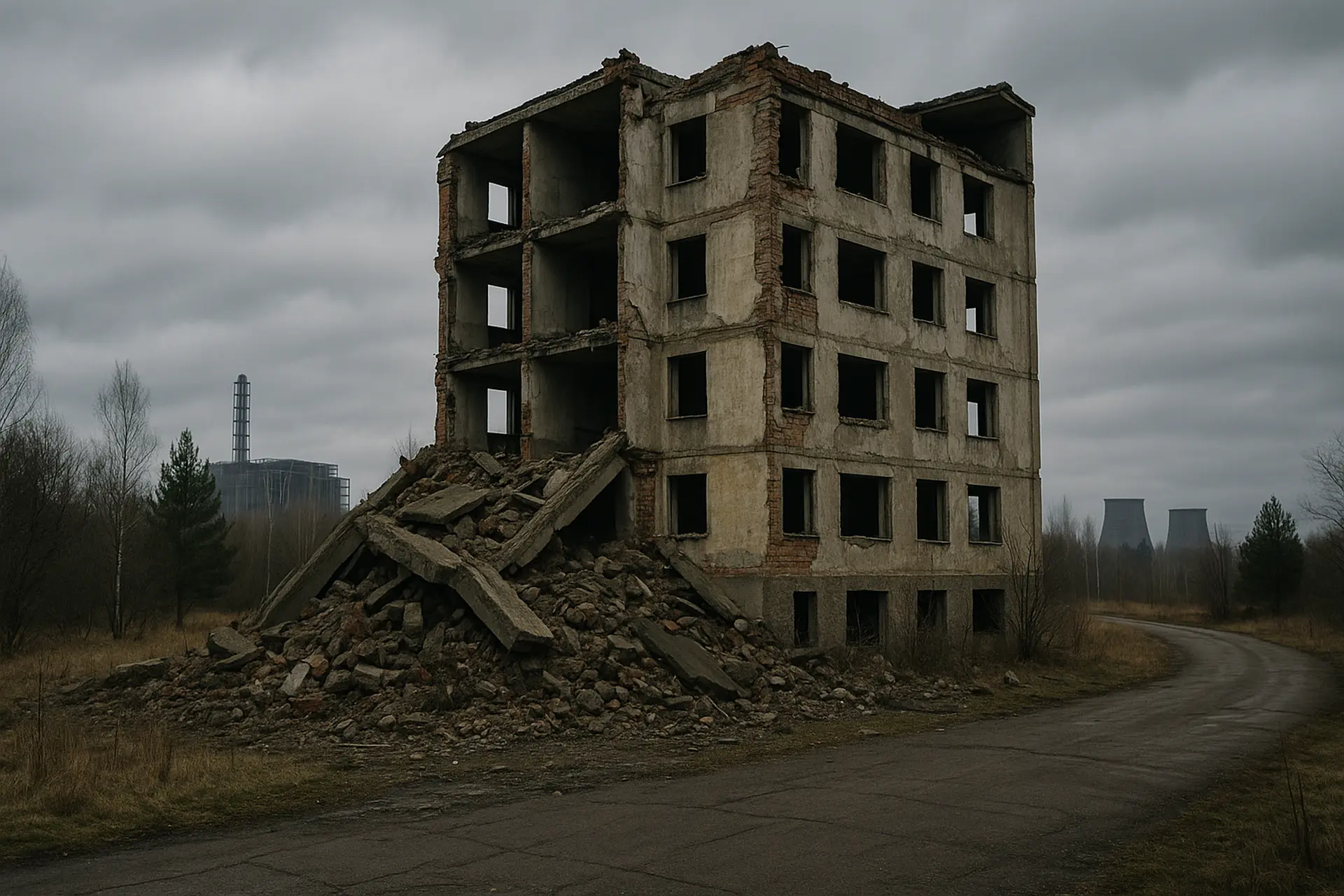
Before the full-scale war in Ukraine, organised visits to parts of the Chernobyl Exclusion Zone and Pripyat operated under government rules. That history still circulates through old articles, videos and booking pages, creating the false impression that a familiar tourism product continues unchanged. Wartime security, mines, damaged infrastructure, military restrictions and broader travel advisories make such assumptions irresponsible.
The same principle applies after earthquakes, fires, floods, terrorist attacks and industrial accidents. Residents may be searching for relatives, clearing debris or negotiating insurance and housing. Roads and emergency services may be overloaded. A visitor who arrives because images appear dramatic can consume scarce resources and turn private loss into content.
Official permission is necessary but not always sufficient. Governments may reopen an area before communities agree on how remembrance and tourism should work. Journalists, researchers, relatives and aid workers have different purposes from leisure travellers. A responsible decision asks whether the visit is welcomed, what institution interprets the place and where the visitor’s money goes.
When access eventually becomes appropriate, current government guidance must outrank memories of previous tours. Never trespass into abandoned buildings, collect objects, bypass radiation or structural controls, or pay an operator who advertises military-style secrecy. “Urban exploration” language does not remove legal, ethical or physical risk.
A mature dark-tourism guide must sometimes recommend not going. Refusal can protect residents, evidence and the traveller. It also prevents the genre from rewarding novelty at precisely the moment when communities have the least ability to control how their suffering is represented.
At the site
Let people and evidence set the pace
Respect is visible in small decisions long after the ticket has been scanned.
Photography is never only a technical question. A room may permit cameras while a grieving person in that room has not consented to be photographed. Human remains, personal effects and names deserve greater restraint than architecture. Ask staff when uncertain, accept no-photography rules without argument and remember that leaving without an image can be the correct outcome.
Children need preparation based on the institution’s guidance and the individual child, not a universal age. Explain what they may encounter, offer a route that allows rooms to be skipped and leave when attention or emotional regulation fails. Adults should not use a child’s distress as proof that a visit was educational. A calm conversation later is more useful than forcing completion.
Spending can support preservation when it goes to official guides, publications, archives, local accommodation and ordinary businesses. It becomes harmful when souvenirs trivialise atrocity, reproduce extremist symbols or claim to contain material taken from a site. Never buy bones, fragments, military debris or objects with uncertain provenance.
Afterward, distinguish reflection from performance. Write down questions, read more and correct misinformation encountered during the visit. Do not demand that companions produce a profound reaction for social media. Memorial institutions often provide reading lists, testimony archives and educational programmes that extend learning beyond the day.
Finally, allow living places to remain complex. Hiroshima is a modern city, Phnom Penh is more than the Khmer Rouge, Kigali is more than genocide and Berlin is more than dictatorship. Responsible remembrance adds depth to travel; it does not turn tragedy into the only story a destination is allowed to tell.
Is dark tourism inherently unethical?
No. It can support education, remembrance and preservation when institutions and affected communities shape the visit. It becomes exploitative when suffering is marketed as entertainment, local consent is ignored or access depends on trespass.
Should visitors take photographs?
Only where the institution allows them and where doing so does not intrude on mourners, survivors, human remains or personal effects. Permission to use a camera is not permission to photograph every person or object.
Can a memorial visit be combined with normal sightseeing?
Yes, because living cities should not be reduced to tragedy. The key is pacing and separation: give the memorial adequate time and avoid marketing grief as a themed component of entertainment.
How can travellers choose a guide?
Prefer official educators, qualified local historians and survivor-informed programmes that explain their sources, rules and community relationships. Avoid operators selling shock, secret access or reenacted violence.
The wider view
The most responsible journey may change how a traveller looks, not how many dark sites they collect.
Places of tragedy do not become ethical destinations simply because they appear in guidebooks. Their legitimacy comes from evidence, stewardship, community participation and a visitor culture willing to accept boundaries. The traveller’s task is modest: prepare carefully, follow the institution, make room for grief and resist the urge to turn every experience into proof of presence.
A meaningful visit leaves questions behind. It may prompt further reading, support for archives, a clearer understanding of public memory or greater care with language. That continuing work matters more than completing a list. The goal is not to consume darkness, but to recognise people, systems and choices with enough attention that the past is neither sensationalised nor forgotten.