Prepare scrippelle and ragù
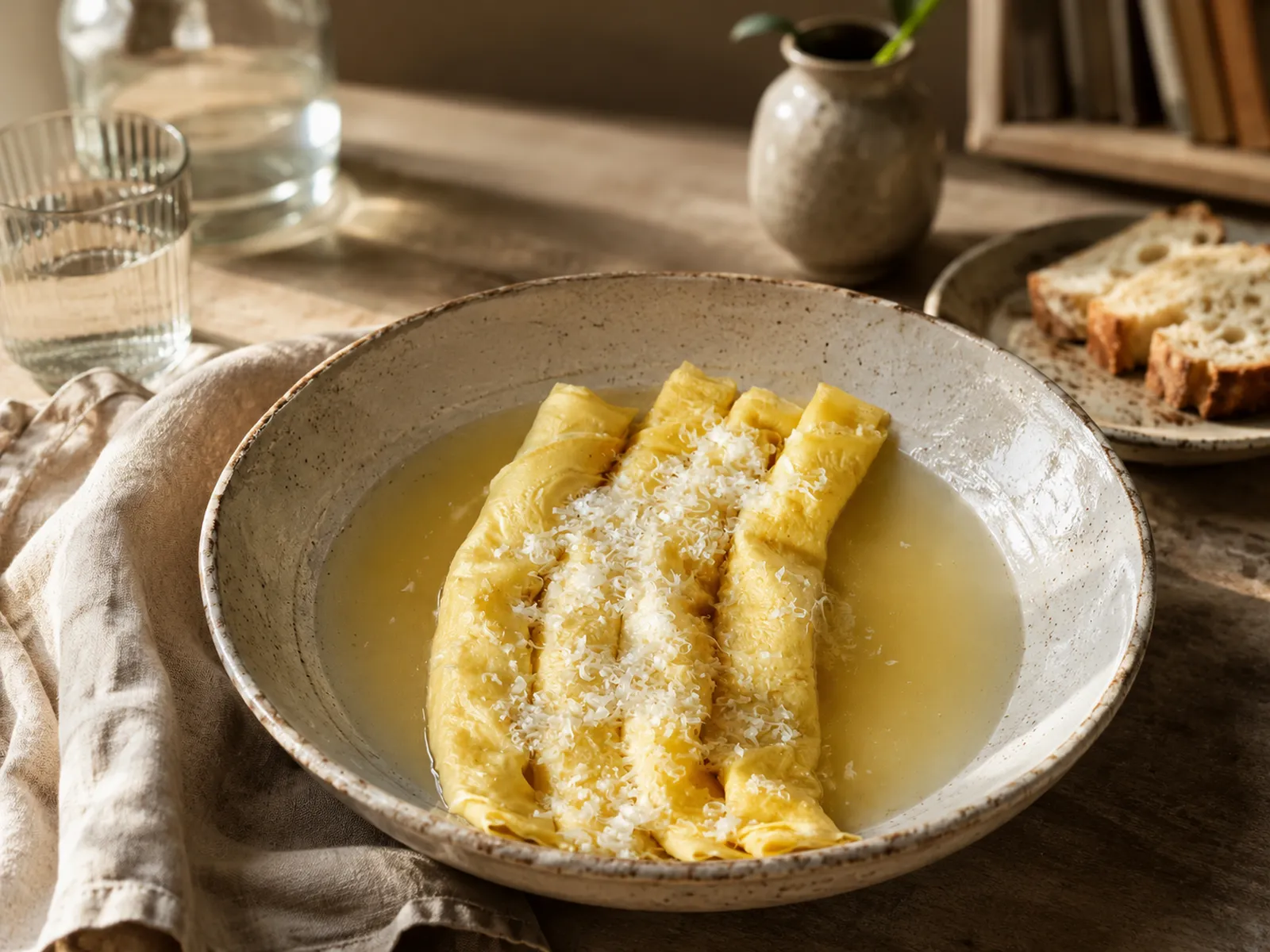
01Cook the scrippelle.
Whisk eggs, flour, water and salt into a fluid batter and cook very thin sheets in a barely oiled skillet.
Sheets should be flexible and pale, not crisp.
Timballo alla teramana replaces pasta sheets with delicate scrippelle, layering them with a mixed-meat pallottine ragù, cheese and eggs before a slow bake that binds the tall festive pie.
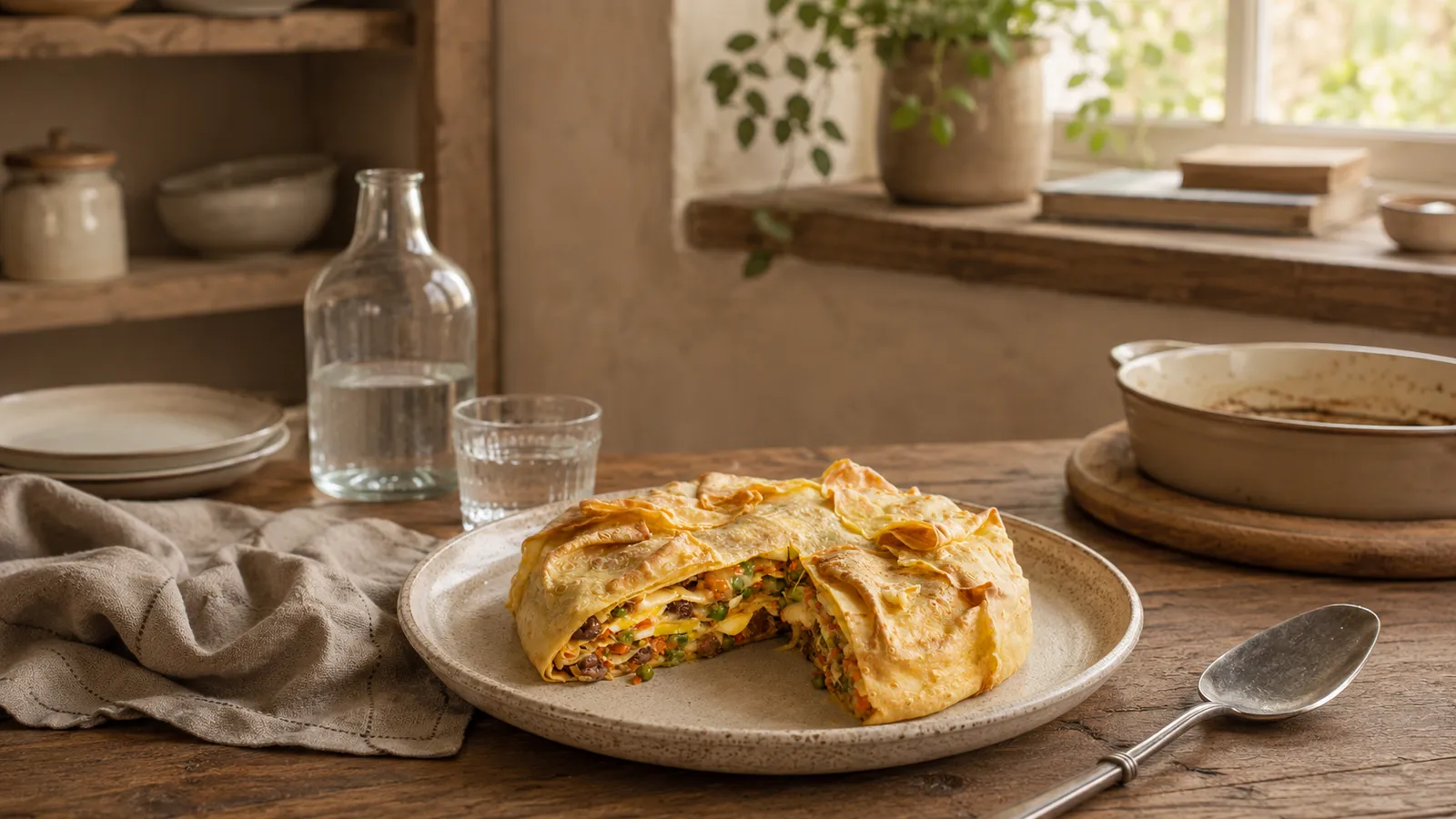
Regione Abruzzo explicitly distinguishes Teramo timballo from lasagna because its layers are made from scrippelle rather than sheets of pasta.
The classic red version includes tiny mixed-meat pallottine in tomato sauce, with local variations adding eggs, scamorza/mozzarella and vegetables.
A moderate 160°C oven is traditional because the goal is to heat and bind many delicate layers without scorching the outside.
Resting before cutting is essential: the timballo must firm enough to show layers instead of collapsing into sauce.
Whisk eggs, flour, water and salt into a fluid batter and cook very thin sheets in a barely oiled skillet.
Sheets should be flexible and pale, not crisp.
Season the three ground meats, then roll into 1–1.5 cm balls.
Meatballs should be much smaller than standard meatballs.
Soften onion, carrot and celery in oil, brown pallottine lightly, add passata and simmer 35–40 minutes.
Meatballs should be cooked through and the sauce thick enough to coat a spoon.
Heat oven to 160°C and line the base and sides with overlapping scrippelle, leaving some overhang.
No gaps should expose the baking dish.
Layer ragù and pallottine, cheese cubes, Parmigiano, egg slices and a little beaten egg mixture between scrippelle.
Each layer should be thin and evenly distributed.
Continue to the rim, finish with scrippelle and fold in the overhang; spoon over the remaining egg mixture and a little Parmigiano.
The top should be fully covered and lightly moistened, not flooded.
Bake at 160°C for 55–65 minutes.
The centre should be piping hot and the surface lightly crusted.
Remove from oven and rest at least 20 minutes.
The edges should pull slightly from the dish and the layers should firm.
Slice with a sharp knife and lift with a wide spatula.
A serving should reveal distinct thin scrippelle and filling layers.
This is a festive Teramo dish traditionally associated with Christmas, Easter and major family occasions.
Artichokes, spinach, peas or zucchini belong to documented local variants; this version stays focused on the red pallottine style.
Assemble several hours ahead, refrigerate, then allow the dish to lose its chill before baking.
Approximate; cheese and meat proportions vary by household.
Cook mixed-meat pallottine completely before final assembly.
The baked centre should reach at least 74°C because the dish contains meat and egg.
Cool leftovers within 2 hours and refrigerate up to 3 days.
No. Regione Abruzzo specifically notes that its defining layers are scrippelle, not pasta sheets.
Very small meatballs, commonly made from mixed meats in Teramo cooking.
The moderate heat warms and binds many delicate layers without drying the scrippelle.