01Soak the bread.
Lay the bread in a wide dish, pour over 250 g cold water and press lightly so the slices moisten evenly. Leave for 40–45 minutes.
The bread should soften throughout but still squeeze into loose crumbs rather than paste.
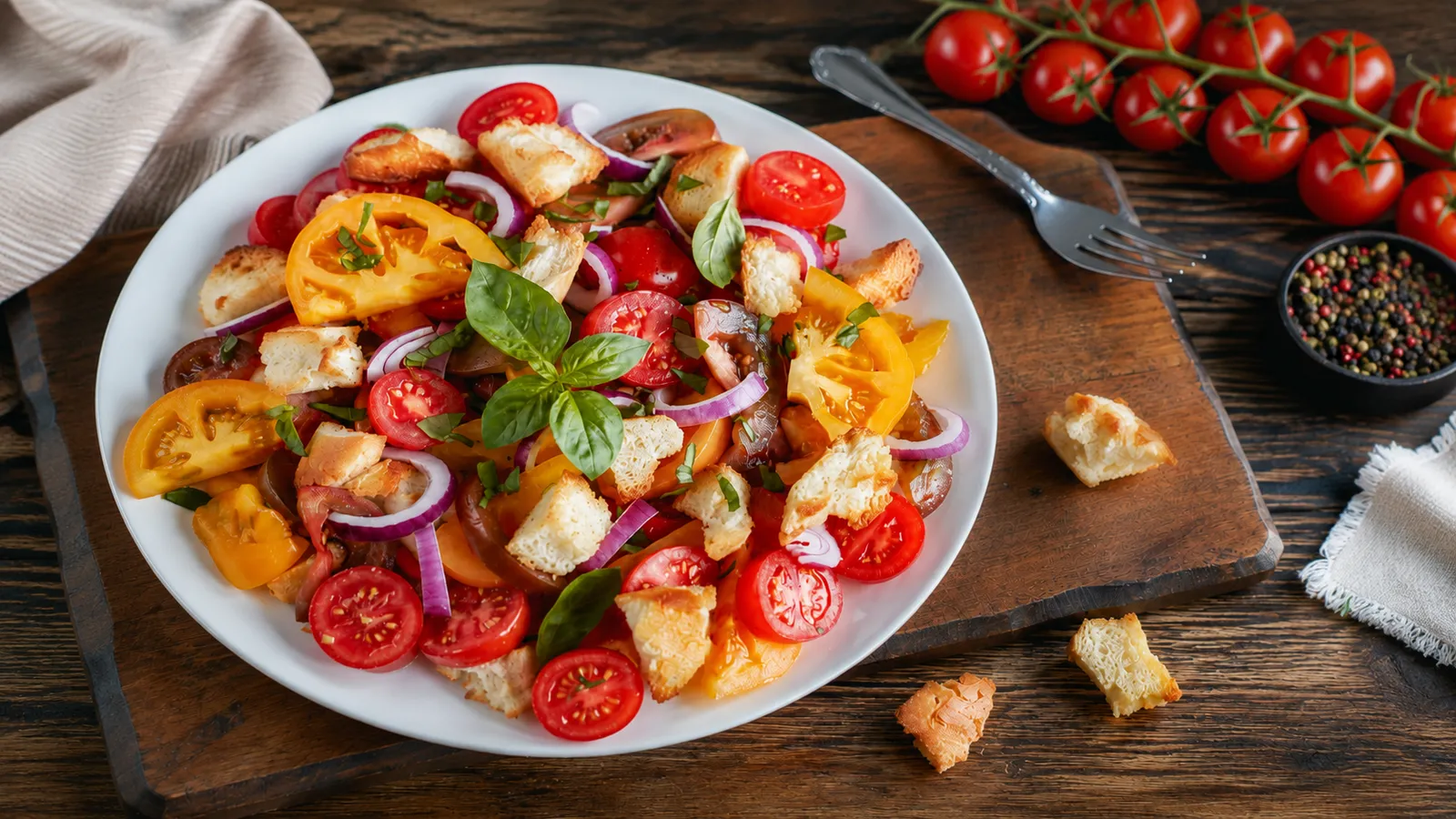
Tuscan panzanella turns stale country bread into a cool summer salad with ripe tomatoes, red onion, cucumber, basil, vinegar and extra-virgin olive oil.

Panzanella is a Tuscan cucina povera dish built around stale bread and seasonal produce. Visit Tuscany identifies the essential core as stale bread, ripe tomatoes and basil, with onion and cucumber among the familiar additions.
The recipe succeeds or fails on water control. Bread must soften enough to break into irregular moist crumbs, but it should not become a wet paste. La Cucina Italiana’s current method uses a measured bread soak, followed by squeezing if necessary, and separately macerates the onion to soften its raw bite.
Ripe firm tomatoes are preferred because they provide juice without collapsing completely. Their liquid then seasons the softened bread from inside the bowl rather than being drained away.
Vinegar is split between the onion soak and the final dressing. The onion therefore loses some aggression before it joins the salad, while a smaller fresh dose of vinegar remains perceptible at serving.
The finished panzanella is rested cold before service. That pause allows bread, tomato and dressing to meet without turning the cucumber and onion limp.

Lay the bread in a wide dish, pour over 250 g cold water and press lightly so the slices moisten evenly. Leave for 40–45 minutes.
The bread should soften throughout but still squeeze into loose crumbs rather than paste.
Combine the sliced onion with 70 g water and 70 g vinegar for 15–20 minutes, turning a few times, then drain well.
The onion should taste cleaner and less sharp while retaining bite.
Cut the tomatoes into small pieces, slice the cucumber thinly and tear the basil by hand. Keep all tomato juices in the mixing bowl.
The tomatoes should be ripe but not collapsing into puree.
Lift the soaked bread and squeeze lightly only if it is dripping. Crumble it by hand into a large bowl.
The crumbs should be irregular and moist, not compressed into dough.
Add drained onion, tomato and its juices, cucumber and basil. Toss gently until the bread is evenly distributed.
Large bread crumbs and vegetable pieces should remain visible.
Refrigerate the mixed panzanella for about 1 hour.
The bread should absorb tomato flavour without releasing a pool of water.
Add olive oil, the final 15 g vinegar, salt and black pepper. Toss once more and serve cool.
The salad should taste fresh and tangy, with bread soft but not mushy.
Unsalted Tuscan bread is traditional, but any sturdy country loaf works better than soft sandwich bread.
The vegetables can be cut early, but final dressing is best close to service. If holding overnight, the cucumber and tomato lose more texture.
Do not discard it. The natural juice is part of what seasons and rehydrates the bread.
Panzanella works as an appetizer, light lunch or side dish, especially when tomatoes are at their best.
Estimate uses 400 g country bread and 60 g olive oil; sodium varies with the bread, especially if it is not Tuscan-style unsalted bread.
Contains wheat/gluten.
Wash raw vegetables thoroughly and keep the finished salad refrigerated until service.
Discard panzanella left at warm room temperature for more than 2 hours, especially in hot summer conditions.
Stale bread absorbs water and tomato juices while retaining a crumb structure; fresh bread tends to collapse into paste.
Yes. Tuscan household versions vary, while stale bread, tomato and basil form the most consistent core.
No. Cool is ideal; a few minutes out of the refrigerator improves tomato and olive-oil aroma.