Última actualización Verificado

Fuentes consultadas: official Visit Senegal climate information for dry-season and rainy-season planning, including the November–May dry season and June–October rainy season; UNESCO World Heritage Centre listings for Gorée Island, Saint-Louis, Saloum Delta, Djoudj National Bird Sanctuary, Niokolo-Koba National Park, Bassari Country, and the Stone Circles of Senegambia; U.S. Department of State and U.S. Embassy Dakar travel advisory information for Senegal safety context and Casamance caution; UK Foreign, Commonwealth & Development Office guidance for regional risks, road conditions, night-driving precautions, and Casamance travel notes; CDC Travelers’ Health information for Senegal malaria prevention, vaccine planning, food and water precautions, and mosquito-bite prevention; airport and airline references for Blaise Diagne International Airport distance and DSS arrival-transfer planning; Dakar transport references for BRT, TER, taxis, ferries, buses, and intercity travel context; current currency references for the West African CFA franc, XOF, and the fixed euro relationship; and current visitor-planning references for Dakar, Gorée Island, Saint-Louis, Touba, the Petite Côte, Saly, Somone, Popenguine, Joal-Fadiouth, the Sine-Saloum Delta, Bandia Reserve, Djoudj, Niokolo-Koba, Casamance, Ziguinchor, Cap Skirring, food, beaches, accommodation, safety, costs, SIM cards, and practical Senegal travel essentials.

Senegal is one of West Africa’s most rewarding and approachable travel destinations, combining Atlantic beaches, lively cities, UNESCO-listed heritage, music, food, wetlands, religious landmarks, and warm everyday hospitality in a country that is easier to navigate than many first-time visitors expect. Most travelers begin in Dakar, the energetic capital on the Cape Verde Peninsula, then branch out to Gorée Island, Saint-Louis, the Petite Côte, the Sine-Saloum Delta, Touba, national parks, or the greener southern region of Casamance. Senegal is especially worth visiting for travelers who want culture as much as scenery: a trip here can move from a ferry ride to a former slave-trade island to a beach lunch of grilled fish, a night of mbalax music, a pirogue through mangroves, and a slow conversation over attaya tea.

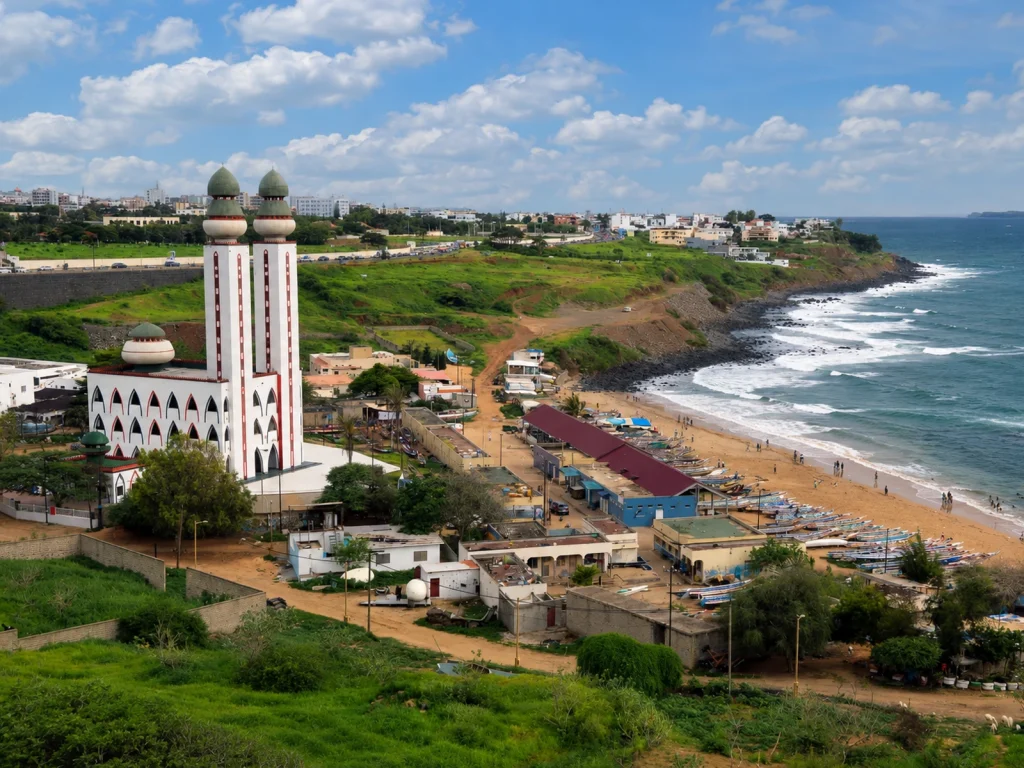
Senegal’s appeal comes from the way it brings together several kinds of travel in one compact but varied country. Dakar is a bold introduction, with surf beaches, markets, galleries, mosques, nightlife, traffic, street food, contemporary art, and neighborhoods that feel very different from one another. Plateau is practical for business, museums, and the ferry to Gorée Island; Almadies and Ngor bring restaurants, sea air, and coastal evenings; Mamelles and Ouakam add the African Renaissance Monument, the Mosque of the Divinity, and dramatic Atlantic viewpoints. Dakar is not a polished resort city, and that is part of its value. It is busy, creative, noisy, stylish, and deeply connected to Senegal’s modern identity.

Just off Dakar, Gorée Island gives Senegal one of its most internationally recognized places of memory. Its pastel colonial houses, narrow lanes, sea walls, museums, and the Maison des Esclaves make it one of the most important cultural visits in the country. Gorée should not be treated as a quick photo stop. It is beautiful, but its meaning is tied to the Atlantic slave trade, colonial power, remembrance, and the responsibility of visiting respectfully. A half day is the minimum, while a slower full day gives more time to understand the island beyond its postcard views.

Beyond Dakar, Senegal opens into distinct regions that suit different travel styles. The Petite Côte is the easiest beach escape, especially around Saly, Somone, Popenguine, and Joal-Fadiouth. Saly works well for resort comfort, families, restaurants, and excursions, while Somone has a quieter lagoon atmosphere and Popenguine feels more village-like. Cap Skirring, in Casamance, offers a greener and more remote southern beach experience, with palms, rice fields, Jola culture, and a slower rhythm, but it requires more planning because of distance and regional safety considerations. For travelers with limited time, the Petite Côte is usually the simpler coastal choice; for those with two weeks or more, Casamance can become one of the most memorable parts of the trip.

Senegal is also a strong destination for nature, although not in the classic Big Five safari sense. Djoudj National Bird Sanctuary, near Saint-Louis, is one of West Africa’s great birding sites, a wetland landscape of channels, ponds, backwaters, pelicans, herons, spoonbills, cormorants, and migratory birds. Niokolo-Koba National Park in southeastern Senegal is wilder and more demanding, with savanna, gallery forests, rivers, and important conservation value, but it is best for travelers with time, patience, a guide, and realistic expectations. Bandia Reserve is easier to visit from Dakar, Saly, or Somone and offers a more accessible safari-style outing with large animals in a managed reserve setting. The Sine-Saloum Delta adds a different kind of nature experience: mangrove channels, shell islands, pirogue trips, birdlife, fishing villages, quiet lodges, and sunsets that reward slow travel.

History and culture are central to a Senegal trip. Saint-Louis, the former colonial capital at the mouth of the Senegal River, is a strong northern base for heritage streets, riverfront walks, music, fishing life, and trips to Djoudj or Langue de Barbarie. Touba, the spiritual center of the Mouride brotherhood, is one of the country’s most important religious cities, with the Great Mosque standing at the heart of Senegal’s Sufi Islamic landscape. Visitors should dress modestly, move respectfully, and understand that Touba is an active sacred city rather than a casual sightseeing stop. Across the country, the idea of teranga, often translated as hospitality, shapes encounters in homes, markets, restaurants, villages, taxis, and guesthouses. Greetings matter. Patience matters. A few words of Wolof, even alongside basic French, can change the tone of a conversation.

Food is another reason to travel through Senegal slowly. Thiéboudienne, or ceebu jën, the rice-and-fish dish widely considered the national dish, is essential, but it is only the beginning. Yassa brings lemon, onions, mustard, and grilled chicken or fish; mafé offers a rich peanut sauce; ceebu yapp gives meat and rice a hearty Senegalese form; and beach restaurants serve grilled fish with lime, chili, onions, rice, fries, or salad. Snacks such as fataya and pastels appear around markets and street stalls, while bissap, bouye, ginger juice, café Touba, and attaya tea make daily drinking just as memorable as formal meals. Eating in Senegal is often social, generous, and tied to the rhythm of shared plates.

The best time to visit Senegal is generally the dry season from November to May, especially December to March, when travel conditions are easier, humidity is lower, skies are clearer, and beaches, road trips, city sightseeing, and birdwatching are more comfortable. The rainy season from June to October brings greener landscapes, especially in Casamance and rural areas, but also heavier humidity, downpours, muddy roads, and more flexible planning needs. A first trip usually works best with 7 to 10 days: Dakar and Gorée, then either the Petite Côte, Saint-Louis, or the Saloum Delta. With two weeks, travelers can add Casamance or build a fuller route through the north, coast, delta, and south.

Senegal is not a destination to rush. Its rewards come from balancing practical planning with openness: leaving enough time for traffic in Dakar, checking ferry and flight schedules, carrying cash in West African CFA francs, preparing for malaria risk and food-water precautions, and choosing guides or drivers carefully for regional travel. Done well, a Senegal journey feels layered rather than hurried. It offers Atlantic light, music after dark, difficult history, generous food, religious depth, river towns, coastal villages, mangroves, markets, and the kind of human warmth that stays with travelers long after the itinerary ends.

Navega por esta guía

Tabla de contenido

This Senegal travel guide moves from a practical country overview into top attractions, Dakar, Gorée Island, beaches, national parks, the Sine-Saloum Delta, Casamance, culture, food, where to stay, transport, best time to visit, itineraries, safety, money, SIM cards, travel tips, and frequently asked questions for planning a complete first trip.

Senegal Travel Guide

Overview of Senegal

Senegal is a West African country known for Dakar’s Atlantic energy, Gorée Island’s difficult memory, Saint-Louis’ colonial-era architecture, Sine-Saloum’s mangroves, Casamance’s greener south, and a food culture shaped by rice, fish, peanuts, millet, tamarind, and hospitality.

Aerial view of Dakar skyline and Atlantic coastline in Senegal
Atlantic West Africa Senegal sits at the western edge of mainland Africa, where Sahelian plains, Atlantic beaches, river towns, mangrove deltas, music, markets, and historic islands create one of the region’s most rewarding first-time travel routes.
18.5mn2024 Population
196,712kilómetros cuadrados
7UNESCO Properties
1960época de la independencia
50–60kmAirport to Dakar
XOFMoneda local

identidad del país

Senegal is one of West Africa’s most accessible and culturally influential countries. It is not a single-theme destination. Dakar gives the journey an urban, Atlantic-facing start, while Saint-Louis, Gorée, Touba, the Petite Côte, Sine-Saloum, Casamance, and eastern national parks reveal different versions of the country’s history, landscapes, faith, cuisine, and everyday life.

For travelers, Senegal is especially valuable because distances are manageable by regional standards. A well-planned trip can combine art galleries, beaches, historic islands, bird reserves, music venues, fishing towns, craft markets, and village stays without crossing several countries.

Geografía y entorno

Senegal occupies the westernmost mainland edge of Africa. It borders Mauritania, Mali, Guinea, Guinea-Bissau, The Gambia, and the Atlantic Ocean. The Gambia cuts deep into the country around the Gambia River, creating one of West Africa’s most distinctive political and geographic shapes.

The north and interior feel Sahelian and dry, while the south becomes greener toward Casamance. The Atlantic coast shapes tourism around Dakar, the Petite Côte, Saly, Popenguine, Somone, Cap Skirring, fishing villages, surf breaks, islands, and mangrove estuaries.

Por qué es importante

Senegal matters because it links several major West African stories: pre-colonial kingdoms, Islamic scholarship, Atlantic trade, French colonial rule, independence-era politics, music, migration, literature, fishing economies, and modern urban culture. These layers are visible in architecture, markets, mosques, ports, food, language, and public life.

The country is also a strong introduction to the region. It has a major international airport, a lively capital, recognized heritage sites, established coastal tourism, and a reputation for social warmth often described locally through the idea of teranga.

Dakar & Atlantic Culture

Dakar is Senegal’s cultural and transport hub, with galleries, music venues, markets, beaches, cafés, surf spots, government institutions, and ferry links to Gorée Island.

Gorée & Saint-Louis

Gorée Island and Saint-Louis are essential heritage stops, especially for travelers interested in Atlantic history, colonial architecture, memory, museums, and urban conservation.

Mangroves & Birdlife

The Saloum Delta and Djoudj National Bird Sanctuary make Senegal important for wetlands, migratory birds, pirogue trips, islands, saltwater channels, and conservation travel.

Coast & Casamance

The Petite Côte offers easy beach escapes from Dakar, while Casamance feels lusher, slower, and culturally distinct, with Cap Skirring as its best-known seaside base.

Breve reseña histórica

Senegal’s history is layered rather than linear. Pre-colonial polities, trans-Saharan and Atlantic trade, Islamic scholarship, Wolof, Serer, Pulaar, Jola, Mandinka, Soninke, and other communities all shaped the country before modern borders existed.

European coastal contact expanded from the 15th century, followed by French colonial control, the growth of Saint-Louis and Dakar, and the painful Atlantic slave-trade memory associated with Gorée. Senegal became independent in 1960 and developed into one of the region’s most politically visible republics.

1

Pre-colonial Worlds

Kingdoms, river trade, fishing communities, farming systems, and Islamic learning shaped early Senegalese societies.

2

Atlantic Contact

Coastal trade, European forts, missionary activity, commercial ports, and forced migration connected Senegal to wider Atlantic history.

3

Colonial Cities

Saint-Louis, Gorée, Rufisque, and Dakar preserve different traces of French colonial administration, trade, planning, and architecture.

4

Modern Republic

Since independence, Senegal has developed a strong cultural identity through politics, music, literature, sport, religion, food, and migration.

Travel Geography & Regional Routes

Most first-time Senegal itineraries begin in Dakar, then branch north to Saint-Louis and Djoudj, south along the Petite Côte to Saly and Joal-Fadiouth, southeast into the Saloum Delta, or farther south to Ziguinchor and Casamance.

Longer journeys can include Touba, Kaolack, Tambacounda, Kedougou, Niokolo-Koba National Park, and Bassari cultural landscapes. Roads vary, distances are real, and private drivers or organized transfers often make travel smoother than trying to combine too much independently.

1

Dakar Peninsula

Best for museums, nightlife, art, restaurants, markets, surf, beaches, and the Gorée ferry.

2

Northern Route

Saint-Louis, Djoudj, the Senegal River, colonial streets, birdwatching, and desert-edge scenery.

3

Petite Côte & Saloum

Beach towns, fishing villages, shell islands, mangroves, pirogue rides, and slower coastal stays.

4

Casamance & East

Greener landscapes, Jola villages, Cap Skirring beaches, Ziguinchor, Kedougou, and national-park travel.

Dakar

Use Dakar as the main arrival base for restaurants, galleries, markets, nightlife, surf, the African Renaissance Monument, Plateau, Ngor, Almadies, Mamelles, and ferry access to Gorée.

Gorée Island

A short ferry ride from Dakar, Gorée is one of Senegal’s most visited heritage sites, combining colonial streets, museums, Atlantic memory, and a compact island setting.

Saint-Louis

The former colonial capital is known for its island core, balconies, bridges, faded architecture, music heritage, river setting, and access to Djoudj National Bird Sanctuary.

Sine-Saloum

This delta region is best for pirogue trips, mangrove channels, shell islands, fishing villages, birdlife, quiet lodges, and a softer rhythm than Dakar.

Petite Côte

Saly, Somone, Popenguine, and nearby beach towns suit travelers who want Atlantic resort comfort, seafood, day trips, and easy road access from Dakar.

Casamance

Casamance is greener and culturally distinct, with Ziguinchor, Cap Skirring, river landscapes, rice fields, palm groves, and village-based travel possibilities.

Touba

Touba is the spiritual center of the Mouride brotherhood and home to one of West Africa’s most significant mosques, requiring respectful dress and behavior.

Eastern Senegal

Kedougou, Bassari country, waterfalls, hills, and Niokolo-Koba National Park reward travelers with more time, patience, heat tolerance, and flexible logistics.

Senegal in Five Milestones

Antes de 1500Local kingdoms, river trade, fishing communities, farming systems, and Islamic learning shaped the region.
siglo XVEuropean coastal contact expanded, linking Senegal more deeply to Atlantic commerce and conflict.
1659Saint-Louis developed as a major French colonial settlement near the mouth of the Senegal River.
1960Senegal entered independence and built a modern republic with Dakar as capital.
HoyThe country combines democratic politics, religious networks, creative culture, coastal tourism, and regional trade.

Best Time to Visit Senegal

The best time to visit Senegal is generally the dry season, from November to May, when Dakar and the coast are easier to enjoy, roads are more predictable, and birdwatching is strong in northern wetlands. December to March is especially comfortable for many travelers.

The rainy season, usually June to October, brings heat, humidity, greener scenery, heavier showers, and more challenging rural travel. It can still be rewarding, especially in Casamance, but itineraries need flexibility.

First-Time Visitor Highlights

Spend at least two or three nights in Dakar before moving to beaches, Saint-Louis, or the Saloum Delta.

Visit Gorée early in the day and treat its history as a place of memory, not only as a photo stop.

Use a guide or trusted driver for longer routes, especially when combining several regions in one trip.

Build food into the itinerary: thiéboudienne, yassa, mafé, grilled fish, bissap, and local fruit juices are central experiences.

Orientación práctica

Blaise Diagne International Airport sits outside Dakar, near Diass, and the transfer to central Dakar is commonly around 50 to 60 kilometres by road. Travelers should plan airport transfers in advance, especially for late arrivals.

Within Dakar, traffic can be slow, so neighborhood choice matters. Plateau suits business and ferry access, Almadies and Ngor suit restaurants and coastal stays, while budget travelers often look for practical guesthouses near transport corridors.

Safety Requires Normal Urban Awareness

Senegal is commonly considered one of West Africa’s easier countries for visitors, but petty theft, traffic risks, beach safety, and regional cautions still matter. Travelers should check current advisories before visiting Casamance or remote border areas.

French Helps, Wolof Opens Doors

French is the official language, but Wolof is widely heard in Dakar and many visitor settings. Learning simple greetings, using respectful forms, and asking before photographing people improves daily interactions.

Do Not Overpack the Route

Senegal looks compact on a map, but heat, road time, traffic, ferries, and regional variation slow travel. A stronger itinerary usually chooses Dakar plus two regions rather than rushing across the whole country.

Is Senegal Worth Visiting?

Senegal is worth visiting for travelers who want a culturally rich, coastal, historically layered introduction to West Africa. Its strongest trips balance Dakar’s modern energy with at least one heritage stop, one natural landscape, and enough unhurried time for food, music, conversation, and local rhythm.

Best first trip: Dakar, Gorée, Petite Côte, and Sine-Saloum
Best culture route: Dakar, Gorée, Saint-Louis, Touba
Best nature route: Djoudj, Saloum Delta, Casamance, Niokolo-Koba
Best trip length: 7 to 12 days for a balanced country guide itinerary

Las mejores experiencias

Las mejores cosas que hacer en Senegal

The best things to do in Senegal combine Dakar’s Atlantic culture, Gorée Island’s historic streets, Saint-Louis’ riverfront architecture, Sine-Saloum’s mangrove channels, Casamance’s palm-lined beaches, and national parks where birdlife, savanna, and wetland landscapes show the country’s range.

Aerial view of Gorée Island off the coast of Dakar in Senegal
Heritage, coast and culture Senegal rewards travelers who balance famous sights with slower regional experiences: a ferry to Gorée, a night in Dakar, a pirogue ride in the Saloum Delta, a walk through Saint-Louis, and time on the Atlantic coast.
1

Explore Dakar’s Atlantic Energy

Dakar is the natural starting point for a Senegal trip. Visit the Plateau district, markets, galleries, the African Renaissance Monument, the Mosque of the Divinity, Ngor, Almadies, Yoff, and the city’s busy Atlantic beaches. The capital works best when travelers allow time for traffic, meals, music, and neighborhood wandering rather than treating it as a one-night stopover.

CapitalCulturaAlimento
2

Take the Ferry to Gorée Island

Gorée Island is Senegal’s most important short trip from Dakar. Its quiet lanes, colonial houses, harbor views, museums, and memorial sites demand a respectful pace. The island is beautiful, but it is also a place of memory linked to the Atlantic slave trade, so the strongest visit combines photography with time for interpretation and reflection.

UNESCOHistoriaExcursión de un día
3

Walk Through Saint-Louis

Saint-Louis gives Senegal a different rhythm from Dakar. The island city is known for its colonial-era buildings, balconies, riverfront streets, fishing culture, music heritage, and the Faidherbe Bridge. It also works as a base for Djoudj National Bird Sanctuary and the Senegal River, making it one of the country’s best cultural-nature combinations.

UNESCORiver CityArquitectura
4

Ride a Pirogue in the Saloum Delta

The Saloum Delta is one of Senegal’s most rewarding slow-travel regions. Pirogues move through mangrove channels, shell islands, fishing villages, bird habitats, and quiet waterways where the country feels softer and more spacious. Toubacouta, Foundiougne, Palmarin, and Mar Lodj are useful gateways for lodge stays and guided boat trips.

MangrovesVida silvestreViajes lentos
5

Watch Birds at Djoudj

Djoudj National Bird Sanctuary sits in the Senegal River delta and is one of West Africa’s major wetland birding sites. It is especially rewarding in the dry season, when migratory birds gather around channels, ponds, and open water. Many travelers visit from Saint-Louis with a guide, a driver, and an early start.

OrnitologíaWetlandNaturaleza
6

Travel to Touba

Touba is one of Senegal’s most significant religious cities and the spiritual center of the Mouride brotherhood. Its Great Mosque dominates the city and requires modest dress, respectful conduct, and awareness that Touba is not a casual sightseeing stop. For culturally curious travelers, it offers insight into faith, pilgrimage, scholarship, and Senegalese public life.

ReligiónArquitecturaCultura
7

Unwind on the Petite Côte

The Petite Côte south of Dakar is Senegal’s easiest beach region for many visitors. Saly offers resort infrastructure, Somone feels quieter and lagoon-focused, Popenguine has a more local coastal atmosphere, and Joal-Fadiouth adds a memorable shell island and fishing-town setting. It is a practical choice for travelers who want beaches without complicated logistics.

PlayasMariscosEasy Base
8

Go South to Casamance

Casamance is greener, slower, and culturally distinct from the north. Ziguinchor, Oussouye, Cap Skirring, river landscapes, palm groves, rice fields, and Atlantic beaches make the region ideal for travelers with more time. Flights can simplify access, while road journeys require careful planning because The Gambia separates Casamance from much of northern Senegal.

PlayasSurCultura
9

See Wildlife at Bandia Reserve

Bandia Reserve is one of the easiest wildlife outings from Dakar or Saly. It is not a remote wilderness experience, but it offers a practical introduction to Senegal’s savanna landscapes and family-friendly game drives. Visitors commonly combine Bandia with Somone Lagoon, the Petite Côte, or a beach stay south of Dakar.

FaunaFamiliaExcursión de un día
10

Plan Carefully for Niokolo-Koba

Niokolo-Koba National Park is Senegal’s largest and most ambitious wilderness experience, with savanna, gallery forest, waterways, and wildlife habitat in the southeast. It is best for travelers who understand the distance, heat, seasonality, and guide requirements. It should be treated as a planned expedition, not a quick add-on from Dakar.

Parque nacionalRemoteFauna
11

Visit Lompoul Desert

Lompoul gives Senegal a compact desert-like landscape of dunes between Dakar and Saint-Louis. Travelers usually visit for sunset views, camel rides, camp stays, and a change from the coast and cities. It works best as part of a northern route rather than as a standalone destination.

DunesCampNorth Route
12

Approach Lake Retba Realistically

Lake Retba, often called Lac Rose or the Pink Lake, became famous for its unusual color and salt-harvesting landscape. The pink tone can vary with season, salinity, light, algae, rainfall, and environmental conditions, so visitors should not expect a guaranteed bright-pink lake on every trip. It is most worthwhile when combined with nearby coastal or Dakar-area stops.

Lago RosaSalt LakeVariable Color

How to Choose the Right Senegal Experiences

First-time visitors should usually begin with Dakar and Gorée, then add one or two regions based on travel style. Saint-Louis suits heritage and birdwatching, the Petite Côte suits beaches and easier logistics, Sine-Saloum suits quiet nature and pirogue travel, and Casamance suits travelers who want a greener, slower south with more time in the itinerary.

3DDakar, Gorée Island, Ngor or Almadies, markets, museums, and one coastal meal.
7DDakar, Gorée, Petite Côte, Sine-Saloum, and either Bandia or Joal-Fadiouth.
10DDakar, Gorée, Saint-Louis, Djoudj, Petite Côte, and the Saloum Delta.
14DDakar, northern Senegal, Saloum, and Casamance, with flights or careful road planning.

What Should Not Be Rushed

Gorée needs emotional space, Saint-Louis deserves at least one night, and the Saloum Delta is strongest when travelers sleep near the water instead of treating it as a fast stop. Casamance also benefits from time. Its appeal comes from rhythm, landscape, local interaction, and distance from the busier north.

Senegal looks manageable on a map, but heat, road time, traffic, ferries, and regional variation shape the real pace of travel. A thoughtful route is more rewarding than a checklist that tries to include every famous name.

Ideal para quienes visitan el lugar por primera vez.

Dakar, Gorée, Petite Côte, and Sine-Saloum create the most balanced introduction, with city life, heritage, beaches, food, and mangrove landscapes in one manageable route.

Best for Nature Lovers

Djoudj, Saloum, Bandia, Langue de Barbarie, and Niokolo-Koba offer Senegal’s strongest nature experiences, but timing and logistics matter more than simply adding park names.

Best for Cultural Depth

Gorée, Saint-Louis, Touba, Dakar’s markets, Casamance villages, music venues, religious festivals, and food experiences reveal Senegal beyond beaches and headline attractions.

What are the best things to do in Senegal?

The best things to do in Senegal are to explore Dakar, visit Gorée Island, spend time in Saint-Louis, take a pirogue through the Saloum Delta, see birdlife at Djoudj, relax on the Petite Côte, experience Touba respectfully, and travel south to Casamance if time allows. Together, these places show Senegal as a coastal, cultural, historic, and naturally varied destination.

Guía de la ciudad capital

Dakar Travel Guide and Capital City Highlights

Dakar is Senegal’s capital, main international gateway, cultural engine, and most useful first base. The city combines Atlantic beaches, galleries, markets, music, restaurants, mosques, monuments, business districts, surf spots, and ferry access to Gorée Island, all shaped by traffic, coastal geography, and strong neighborhood contrasts.

Aerial view of Place de l’Indépendance and central Dakar in Senegal
Senegal’s Atlantic capital Dakar is best understood as a coastal city of movement: ferries to Gorée, taxis crossing the peninsula, surfers at Ngor and Yoff, market crowds in Plateau, and restaurants and nightlife spreading toward Almadies.

Meseta

Dakar-Plateau is the historic and administrative core, useful for Place de l’Indépendance, the port, business hotels, ferry access to Gorée, colonial-era streets, cafés, and older city landmarks.

Almadies

Almadies is one of Dakar’s best areas for restaurants, nightlife, sea views, international hotels, embassies, late dinners, and a calmer coastal base away from the city-center rush.

Ngor

Ngor suits beach-focused travelers, surfers, seafood lovers, and visitors who want boat access to Ngor Island, a compact escape with sand, water, and a softer rhythm.

Mamelles and Ouakam

Mamelles and Ouakam are useful for the African Renaissance Monument, the Mosque of the Divinity, coastal viewpoints, residential streets, and access toward the western edge of the peninsula.

Yoff

Yoff is known for its long beach, fishing culture, surf possibilities, and local coastal life. It feels more everyday and less polished than Almadies or central hotel districts.

Médina

Médina is a dense, energetic district associated with markets, street life, murals, local food, mosques, and urban culture. It rewards curiosity but is best explored with awareness.

Fann and Point E

Fann and Point E are practical residential and institutional areas with easier access to universities, clinics, offices, restaurants, and central routes between Plateau and the western peninsula.

Port and Ferry Area

The port zone matters for travelers because ferries to Gorée depart from central Dakar. It is practical rather than scenic, so timing and traffic planning are important.

1

Start at Place de l’Indépendance

Place de l’Indépendance is a useful orientation point in central Dakar. It places travelers near Plateau’s administrative streets, older commercial buildings, hotels, banks, cafés, and the routes toward the port and ferry terminal. It is not the whole city, but it helps first-time visitors understand Dakar’s historic center.

MesetaCentro de la ciudadOrientation
2

Visit the African Renaissance Monument

The African Renaissance Monument rises above the Mamelles hills and gives one of Dakar’s most recognizable skyline images. Visitors come for the scale, symbolism, and views across the peninsula. The surrounding area also works well with nearby Ouakam, Mamelles, and coastal stops.

MonumentoPunto de vistaMamelles
3

See the Mosque of the Divinity

The Mosque of the Divinity sits dramatically near the Atlantic coast in Ouakam, backed by cliffs and sea air. It is one of Dakar’s most photogenic religious landmarks, but visitors should approach respectfully, dress modestly, and remember that it is an active place of worship.

OuakamMezquitaCosta
4

Explore Dakar’s Markets

Sandaga Market and Kermel Market show different sides of Dakar’s commercial life. Sandaga is busy, street-level, and intense, while Kermel has a more historic market setting. Go for fabrics, fruit, spices, crafts, everyday scenes, and the rhythm of bargaining, but keep valuables secure and ask before photographing people.

MercadosComprasVida callejera
5

Use Dakar as the Gateway to Gorée

The ferry to Gorée Island is one of Dakar’s most important visitor routes. Most travelers board from the central port area, making Plateau a convenient base for an early departure. Gorée is close enough for a day trip, but it should be visited slowly and respectfully.

TransportarGoréeExcursión de un día
6

Spend Time on Ngor and Yoff Beaches

Dakar’s beaches are social, urban, and full of local life. Ngor is popular for island access, surf culture, and seafood, while Yoff has a long working beach with fishing boats and open sand. Swimming conditions vary, so visitors should follow local advice and avoid isolated stretches after dark.

PlayasSurfMariscos
7

Look for Art, Music, and Galleries

Dakar is one of West Africa’s major creative capitals. Its galleries, live music venues, festivals, murals, fashion spaces, and contemporary art scene give the city much of its identity. Travelers interested in culture should leave evenings open rather than filling every hour with daytime sightseeing.

ArteMúsicaVida nocturna
8

Visit Museums and Historic Landmarks

Dakar’s museum circuit can include the IFAN Museum of African Arts, the Museum of Black Civilizations, and smaller cultural spaces depending on time and opening schedules. These stops help connect Senegal’s capital to wider West African history, art, archaeology, and intellectual life.

MuseosHistoriaCultura
9

Eat Across the Peninsula

Dakar is one of the best places in Senegal to understand the country through food. Look for thiéboudienne, yassa, grilled fish, pastels, fataya, bissap, bouye, attaya, beachside seafood, modern Senegalese restaurants, and late dinners in Almadies or Ngor.

AlimentoRestaurantesMariscos

How Many Days Do You Need in Dakar?

First-time visitors should spend at least two full days in Dakar. One day can cover Plateau, a museum, a market, and a coastal dinner, while the second day works well for Gorée Island or the Mamelles, Ouakam, Ngor, and Almadies route. Three days gives the city more breathing room and allows time for music, beaches, restaurants, and traffic delays.

1DPlateau, market stop, African Renaissance Monument, Mosque of the Divinity, and dinner in Almadies.
2DDay one in Dakar neighborhoods, day two for Gorée Island and a relaxed coastal evening.
3DAdd Ngor Island, Yoff Beach, museums, galleries, live music, and a slower food-focused day.
4D+Use Dakar as a base for Gorée, Lac Rose, Bandia Reserve, or the Petite Côte before moving on.

Getting from Dakar Airport to the City

Blaise Diagne International Airport is outside Dakar near Diass, so the transfer is longer than many first-time visitors expect. The journey to Plateau or the western peninsula is commonly around 50 to 60 kilometres and can take about one hour in light traffic or longer during busy periods.

Pre-arranged transfers and official taxis are usually the easiest choices for arrivals with luggage, late flights, or first visits. Public transport can be useful for experienced travelers, but Dakar’s traffic and the distance from the airport make arrival planning important.

Choose Your Base Carefully

Stay in Plateau for ferry access and central business convenience, Almadies for restaurants and nightlife, Ngor for beaches and surf, or Mamelles and Ouakam for viewpoints and a more residential coastal feel.

Expect Traffic

Dakar traffic can turn short distances into slow journeys. Plan fewer stops per day, group sights by neighborhood, and avoid scheduling a tight airport transfer after afternoon or evening sightseeing.

Respect Local Rhythm

Dakar is energetic but not only a checklist city. Its best experiences often happen through meals, markets, music, beach time, conversation, and a slower evening pace after the day’s heat.

What are the best things to do in Dakar?

The best things to do in Dakar are to explore Plateau, visit the African Renaissance Monument, see the Mosque of the Divinity, browse Sandaga or Kermel Market, take the ferry to Gorée Island, spend time around Ngor and Yoff beaches, visit museums and galleries, and experience the city’s restaurants, music, and nightlife. Dakar is both Senegal’s gateway and one of its most rewarding destinations.

UNESCO Island Guide

Gorée Island Visitor Guide

Gorée Island is Senegal’s most important heritage day trip from Dakar, a small Atlantic island known for colonial streets, museums, sea views, living community life, and the memory of the transatlantic slave trade. It is beautiful, but it should never be treated as only a scenic stop.

Red colonial house on Gorée Island near Dakar in Senegal
Island of memory Gorée is a compact island where pastel houses, volcanic rock, courtyards, museum rooms, harbor lanes, and quiet sea-facing corners sit beside one of West Africa’s most solemn memorial landscapes.

Harbor Arrival

The ferry arrives near Gorée’s small harbor, where visitors step directly into a compact island of lanes, courtyards, cafés, galleries, museums, and sea-facing viewpoints.

Walkable Layout

Gorée is easy to explore on foot. Its size encourages a slow route rather than a rushed checklist, especially around memorial sites and residential streets.

Arquitectura colonial

The island’s houses, shutters, balconies, stone walls, and pastel facades show layers of Portuguese, Dutch, English, and French influence across several centuries.

Living Community

Gorée is not only a museum landscape. People live, work, worship, study, sell, cook, paint, and host visitors here, so respect for daily life matters.

1

Visit the Maison des Esclaves

The Maison des Esclaves, or House of Slaves, is the island’s most recognized memorial site. Its rooms, courtyard, and symbolic Door of No Return are linked to the memory of the Atlantic slave trade. Visitors should allow quiet time here and avoid treating the building as a quick photo stop.

MemorialHistoriaMuseo
2

Walk the Historic Streets

Gorée’s lanes are part of the experience. Red, ochre, yellow, and pastel facades frame shaded corners, steps, courtyards, and small workshops. The architecture is attractive, but its meaning comes from the contrast between elegant trader houses, former holding spaces, and the island’s role in Atlantic history.

ArquitecturaCaminandoHerencia
3

Pause at the Coastline

The island’s rocky edges and open Atlantic views offer space after the emotional weight of the museums. These coastal viewpoints help visitors understand Gorée’s position opposite Dakar, facing the sea routes that shaped its history and its modern identity as a place of remembrance.

CostaPuntos de vistaReflexión
4

Visit the Island’s Museums

Gorée has several cultural and historical spaces beyond the Maison des Esclaves. Depending on opening times, visitors may find museums and exhibitions connected to women’s history, maritime memory, local heritage, art, and the island’s wider place in Senegalese and Atlantic history.

MuseosCulturaContext
5

Meet Local Artists and Sellers

Art studios, craft stalls, textiles, jewelry, paintings, postcards, and small galleries are part of Gorée’s visitor economy. Bargaining should stay polite and fair. Buying directly from local makers can make the visit feel more connected than simply passing through with a camera.

ArteArtesaníaLocal Economy
6

Stay for a Slower Meal

A simple lunch or drink on Gorée helps slow the visit and supports local businesses. Seafood, rice dishes, juices, and café terraces are common parts of the island experience. Eating after the main museum visit can also give travelers time to process what they have seen.

AlimentocafésViajes lentos

How to Visit Gorée Island from Dakar

Gorée Island is reached by passenger ferry from Dakar’s port area. Ferries run several times daily, but schedules, fares, queues, weather, holidays, and special events can affect the trip, so travelers should verify the current timetable before going. Arriving earlier in the day usually gives the visit more space and reduces the risk of rushing the return.

1Travel to the Dakar ferry terminal with extra time for traffic, tickets, and boarding.
2Take the passenger ferry across to Gorée and check the return departures after arrival.
3Begin with the memorial sites and museums while the day is cooler and quieter.
4Leave time for streets, sea views, artists, lunch, and a calm walk back to the harbor.

¿Cuánto tiempo necesitas?

A rushed Gorée visit can be done in a few hours, but a half day is the minimum most travelers should allow. A fuller day is better for anyone who wants to visit the Maison des Esclaves carefully, walk the island without pressure, sit by the coast, eat locally, and understand Gorée as both a memorial site and a living community.

Visitors staying in Plateau can usually combine Gorée with a central Dakar evening. Travelers based in Almadies, Ngor, Yoff, Mamelles, or outside the city should allow more time for road traffic before and after the ferry.

Visit With Care

Gorée’s beauty should not soften its historical weight. The strongest visit recognizes both the island’s visual charm and its role as a place of memory, grief, interpretation, and reconciliation.

Ask Before Photographing People

Photograph buildings, lanes, sea views, and public spaces respectfully. Ask before taking portraits, photographing vendors, or recording people near homes, workshops, religious spaces, or memorial areas.

Avoid the Checklist Mentality

Gorée is close to Dakar, but it should not feel like a quick souvenir stop. Leave time for silence, context, local interaction, and the slower rhythm that makes the island meaningful.

How do you visit Gorée Island from Dakar?

To visit Gorée Island from Dakar, go to the passenger ferry terminal in the port area, check the current ferry schedule and return times, take the short crossing to the island, and allow at least a half day for the Maison des Esclaves, historic streets, museums, coastline, local artists, and a respectful walk through the island’s living heritage landscape.

Coast and Beach Guide

Beaches, Coast and Resort Areas in Senegal

Senegal’s best beaches range from lively Dakar surf spots and fishing beaches to resort areas on the Petite Côte, quiet lagoons around Somone, religious and coastal calm in Popenguine, and the palm-lined Atlantic shore of Cap Skirring in Casamance.

Aerial view of Ngor Island beach and clear Atlantic water in Dakar, Senegal
Atlantic beaches with different rhythms Senegal’s coast is not one simple beach destination. Ngor, Yoff, Saly, Somone, Popenguine, Joal-Fadiouth, and Cap Skirring all offer different balances of swimming, surf, seafood, resort comfort, village life, and travel logistics.
1

Ngor Island and Ngor Beach

Ngor is one of Dakar’s easiest beach escapes, especially for travelers staying around Almadies or the western peninsula. Small boats connect the mainland to Ngor Island, where sand, seafood, guesthouses, surf culture, and clear-water views create a compact break from city traffic. It is social rather than secluded, and weekends can feel busy.

DakarIslaSurf
2

Yoff Beach

Yoff has a long Atlantic beach, active fishing culture, open sand, and a more everyday Dakar atmosphere than Ngor or Almadies. It suits travelers interested in local coastal life, long walks, pirogues, and surf possibilities. Swimming conditions vary, so visitors should follow local advice and avoid isolated sections after dark.

PescaVida localLong Beach
3

Virage and Almadies Coast

The Virage and Almadies coastline is useful for travelers who want beach access close to restaurants, hotels, nightlife, and Dakar’s western neighborhoods. It is not the country’s quietest beach zone, but it works well for short stays, sunset drinks, coastal meals, and combining beach time with city sightseeing.

RestaurantesVida nocturnaEstancia corta
4

Saly

Saly is Senegal’s best-known resort area and the most developed beach base on the Petite Côte. It suits travelers who want hotels, pools, restaurants, excursions, watersports, golf, nightlife, and easy access to Bandia Reserve, Somone Lagoon, Mbour, Joal-Fadiouth, and Popenguine. It is convenient, but less intimate than smaller coastal villages.

Complejos turísticosPetite CôteExcursions
5

Laguna de Somone

Somone is a gentler alternative to Saly, known for its lagoon, birdlife, pirogue rides, seafood, guesthouses, and calmer coastal atmosphere. It is a strong choice for couples, families, and travelers who want beach time without losing access to restaurants, nature, and day trips along the Petite Côte.

LagunaVida silvestreMariscos
6

Popenguine

Popenguine offers a more village-based coast, with cliffs, beach views, religious importance, quiet guesthouses, and a slower rhythm than Saly. It is best for travelers who prefer atmosphere over resort infrastructure. The beach can feel peaceful on weekdays, while pilgrimages and local events bring a different energy at certain times.

PuebloCliffsQuiet Coast
7

Joal-Fadiouth

Joal-Fadiouth is not only a beach stop. It is a fishing town and shell island experience that works well as a cultural day trip from Saly, Somone, or the Petite Côte. Come for pirogues, seafood, bridges, shell paths, religious coexistence, and coastal life rather than a classic resort beach day.

Shell IslandFishing TownExcursión de un día
8

Cap Skirring

Cap Skirring is Senegal’s most famous beach area in Casamance, with palms, long sand, relaxed guesthouses, resorts, and a greener southern setting. It feels more remote than the Petite Côte and rewards travelers who have time for Ziguinchor, Oussouye, village visits, river landscapes, and a slower Casamance itinerary.

CasamancePalmsLong Stay
9

Coastal Pirogue and Seafood Stops

Some of Senegal’s best coastal experiences are not only beaches. Fishing harbors, pirogue landings, grilled fish, beach cafés, lagoon trips, and sunset walks often define the coast more strongly than swimming alone. The most rewarding beach days usually mix sea time with food, local markets, and short excursions.

MariscosPiroguesLocal Coast

Which Senegal Beach Area Should You Choose?

Senegal’s coast changes quickly from urban Dakar beaches to developed resort zones, quieter fishing villages, lagoons, and more remote Casamance sands. Choosing the right base depends on whether comfort, surf, local life, restaurants, nature, or distance from Dakar matters most.

Beach Area Mejor para Estilo de viaje Good Base For Esté atento a
Ngor Dakar beach break, surf, island access, seafood Urban, social, easy from Almadies Short stays, city-and-beach trips Weekend crowds and boat logistics
Yoff Fishing culture, long beach walks, local atmosphere Everyday Dakar coast Travelers curious about local beach life Variable swimming conditions and valuables on sand
Saly Resorts, restaurants, excursions, comfort Developed beach tourism Families, first-time visitors, easy logistics Less local intimacy than smaller villages
Somone Lagoon, birdlife, seafood, quieter stays Relaxed and nature-adjacent Couples, families, slow beach days Tide and lagoon conditions vary
Popenguine Quiet coast, cliffs, village atmosphere Independent and low-key Slow travelers and weekend escapes Limited resort infrastructure
Cap Skirring Long beaches, palms, Casamance atmosphere Remote, greener, slower Longer trips and southern Senegal routes Distance from Dakar and seasonal logistics

Resort Stay or Independent Coast?

Choose Saly for the easiest resort-style beach holiday in Senegal. It has the widest range of hotels, restaurants, excursions, and services, making it practical for families, first-time visitors, and travelers who want beach time without managing too many logistics.

Choose Somone, Popenguine, Ngor, Yoff, or Cap Skirring for a more local, slower, or independent coastal stay. These places can feel more atmospheric, but they require more flexibility with transport, tides, restaurants, and daily planning.

1For a short Dakar trip, use Ngor, Yoff, Virage, or Almadies rather than traveling far south.
2For comfort and day trips, stay in Saly or nearby Somone on the Petite Côte.
3For a quieter village coast, look at Popenguine, Ngaparou, or Toubab Dialaw.
4For a southern beach route, plan Cap Skirring with Ziguinchor and Casamance time.

Swimming, Surf and Beach Safety

Senegal’s Atlantic coast can be beautiful, but it is not uniformly calm. Conditions vary by beach, tide, season, wind, current, and local geography. Some beaches are better for walking, surfing, fishing culture, or sea views than for relaxed swimming.

Ask local residents, hotel staff, surf schools, or guides before entering the water. Avoid swimming alone, avoid rough surf if unsure, keep valuables off open sand, and treat isolated beaches differently after dark. Dakar beaches are lively and convenient, but normal urban awareness still applies.

Best First-Time Beach Plan

Combine Dakar and Gorée with two or three nights on the Petite Côte. Saly or Somone gives an easy transition from the capital to beaches, seafood, lagoons, Bandia Reserve, and Joal-Fadiouth.

Best Beach for a Longer Trip

Cap Skirring is strongest when treated as part of a Casamance journey, not a quick beach add-on. Its appeal comes from distance, greenery, pace, and the southern region around it.

Best Coastal Food Experience

Look beyond resort dining. Fishing beaches, grilled fish, beach cafés, oysters, local juices, and lagoon-side meals often make Senegal’s coast more memorable than the sand alone.

Where are the best beaches in Senegal?

The best beaches in Senegal are Ngor Island and Yoff for Dakar beach life, Saly for resort comfort, Somone for a quieter lagoon stay, Popenguine for a village coast, Joal-Fadiouth for fishing and shell-island culture, and Cap Skirring for palm-lined beaches in Casamance. The right choice depends on whether travelers want city access, resort facilities, local atmosphere, or a slower southern escape.

Nature and Wildlife

Nature, National Parks and Wildlife in Senegal

Senegal’s nature experiences range from bird-filled wetlands and mangrove channels to savanna reserves, river landscapes, baobab country, and remote national parks. It is not a classic Big Five safari destination, but it rewards travelers who value birdlife, landscapes, conservation stories, and guided regional travel.

Giraffe walking through savanna vegetation at Bandia Reserve in Senegal
Wildlife beyond the beach Senegal’s strongest nature trips include Djoudj for migratory birds, Bandia for an easy reserve outing, the Saloum Delta for mangroves and pirogues, and Niokolo-Koba for a more demanding southeastern wilderness journey.
1

Djoudj National Bird Sanctuary

Djoudj is one of Senegal’s most important nature sites and one of West Africa’s great bird sanctuaries. Set in the Senegal River delta, it protects wetlands, channels, ponds, and open water used by huge numbers of migratory and resident birds. Pelicans, herons, spoonbills, egrets, cormorants, ducks, and other species make it especially rewarding in the dry season.

UNESCOObservación de avesWetlands
2

Niokolo-Koba National Park

Niokolo-Koba is Senegal’s largest and most ambitious wilderness area, with savanna, gallery forest, rivers, ponds, dry woodland, rocky slopes, and important wildlife habitat. It is the country’s most serious national-park expedition, but it requires time, heat tolerance, a guide, and careful planning from Dakar, Tambacounda, or Kedougou.

UNESCORemoteSafari
3

Reserva Artificial

Bandia Reserve is the easiest wildlife outing for many visitors because it lies within reach of Dakar, Saly, Somone, and the Petite Côte. It offers guided drives through a managed reserve landscape where travelers may see giraffes, rhinos, antelope, buffalo, monkeys, crocodiles, tortoises, and birds. It is practical, family-friendly, and best understood as an accessible reserve experience.

Excursión de un díaFamiliasReserve
4

Sine-Saloum Delta Birdlife

The Saloum Delta is a gentler nature experience built around mangroves, tidal channels, shell islands, fishing villages, and birdlife. Pirogue trips from places such as Toubacouta, Foundiougne, Palmarin, and Mar Lodj reveal a landscape where water, salt, trees, and village life are inseparable.

MangrovesPiroguesViajes lentos
5

Lengua de Berbería

Langue de Barbarie, near Saint-Louis, adds coastal dunes, river-mouth scenery, fishing culture, and birdlife to a northern Senegal itinerary. It pairs naturally with Saint-Louis and Djoudj, especially for travelers who want a mix of river, ocean, sand, and wetland landscapes without traveling deep into the interior.

Saint-LouisCostaVida silvestre
6

Baobab and Savanna Landscapes

Some of Senegal’s most memorable nature moments happen outside formal parks: baobab silhouettes at sunset, dry-season plains, acacia scrub, coastal lagoons, salt flats, and road journeys between regions. These landscapes help travelers understand Senegal as a country shaped by Sahelian dryness, Atlantic humidity, river systems, and seasonal change.

BaobabsSabanaEscenario

Which Senegal Nature Experience Should You Choose?

Senegal’s nature areas serve different kinds of travelers. Some are easy day trips, others work best as multi-day regional journeys, and Niokolo-Koba requires the most commitment. The best choice depends on time, season, wildlife expectations, road tolerance, and interest in birds, landscapes, or guided safari-style drives.

Nature Area Mejor para Estilo de viaje Suggested Base Esté atento a
Djoudj Migratory birds, wetlands, boat trips, photography Seasonal bird sanctuary visit Saint-Louis Best in migratory months; rainy-season access can be limited
Bandia Easy wildlife drive, families, short trips Managed reserve outing Saly, Somone, Dakar Not a remote wilderness experience
Delta del Salum Mangroves, pirogues, birds, villages, quiet lodges Slow eco-cultural travel Toubacouta, Foundiougne, Palmarin Tides, boat planning, and lodge location matter
Lengua de Berbería River mouth, coastal birds, dunes, northern scenery Half-day or day trip Saint-Louis Conditions vary with season and local access
Niokolo-Koba Remote savanna, rivers, conservation, serious park travel Multi-day expedition Tambacounda or Kedougou routes Heat, distance, road time, guide logistics, seasonality

Best Time for Wildlife and Birdwatching

The dry season is usually the easiest period for Senegal’s nature travel because roads are more predictable, heat is more manageable in some areas, and wildlife concentrates around water. Djoudj is especially tied to migratory bird season, with the strongest visits typically falling between late autumn and spring.

The rainy season brings greener landscapes, heavier humidity, difficult tracks, and more complicated access in some parks. It can be beautiful, especially in the south, but travelers should avoid assuming that every reserve, road, or boat route will operate as smoothly as it does in the dry months.

1Choose Djoudj for birds, especially when staying in Saint-Louis during the migratory season.
2Choose Bandia for an easy, family-friendly reserve outing from the Petite Côte.
3Choose Saloum for mangroves, pirogues, quiet lodges, and softer nature experiences.
4Choose Niokolo-Koba only with enough days, a guide, and realistic expectations.

Realistic Wildlife Expectations

Senegal can offer excellent wildlife experiences, but it should not be compared directly with East or Southern African safari circuits. Birdlife, wetlands, baobab landscapes, antelope, monkeys, reptiles, river habitats, and conservation stories are more reliable than dramatic predator sightings.

Bandia is the most accessible reserve for travelers who want to see large animals without a long expedition. Niokolo-Koba is wilder and more important ecologically, but sightings depend on time, season, guide quality, road conditions, and patience.

Guides Matter

Use qualified guides for parks, reserves, pirogue trips, and birding. They improve safety, interpretation, wildlife spotting, local support, and understanding of conservation issues.

Heat Changes the Day

Early starts are usually better for wildlife, birds, and comfort. Midday heat can be intense, especially away from the coast and during long road journeys inland.

Respect Fragile Habitats

Keep distance from wildlife, avoid disturbing nesting birds, reduce plastic waste, stay on approved tracks, and choose operators who respect park rules and local communities.

Can you go on safari in Senegal?

You can go on safari in Senegal, but the best experience depends on expectations. Bandia Reserve is the easiest option for a short guided wildlife drive, Djoudj is exceptional for birds, the Saloum Delta is ideal for mangrove and pirogue travel, and Niokolo-Koba National Park offers Senegal’s most serious wilderness journey for travelers with time, patience, and a guide.

Mangrove Delta

Sine-Saloum Delta and Mangrove Travel

The Sine-Saloum Delta is one of Senegal’s most atmospheric regions, where mangrove channels, shell islands, fishing villages, birdlife, pirogue trips, saltwater creeks, and quiet lodges create a slower alternative to Dakar, Saly, and the busier coast.

Small boats on a calm coastal lagoon in Senegal near the Sine-Saloum Delta
Senegal’s slow-water landscape In the Saloum Delta, travel happens by tide, pirogue, footpath, and village rhythm. The strongest visits combine mangrove waterways, birdwatching, shell mounds, seafood, local guides, and nights close to the water.
1

Take a Pirogue Through the Mangroves

A pirogue trip is the essential Saloum Delta experience. Local boatmen guide travelers through bolongs, narrow channels, mangrove roots, bird habitats, oyster areas, fishing zones, and island approaches. Morning and late-afternoon trips often feel calmer, cooler, and better for light and wildlife.

PirogueMangrovesGuided
2

Stay in Toubacouta

Toubacouta is one of the most useful bases for exploring the delta, especially for travelers coming from Dakar, Saly, or the Petite Côte. It offers lodges, boat trips, birdwatching, fishing excursions, island visits, and easy access to quieter waterways without feeling too remote.

BaseLodgesExcursiones en barco
3

Explore Foundiougne

Foundiougne sits beside the Saloum River and works well for travelers who want a quieter town atmosphere, river crossings, local markets, and access to delta routes. It is less resort-like than Saly and gives the journey a more local, river-town character.

River TownVida localPuerta
4

Use Palmarin for Coast and Delta

Palmarin combines a coastal setting with access to mangrove channels, salt pans, fishing villages, birdlife, and quieter guesthouses. It suits travelers who want the Saloum to feel both watery and coastal, with beach air, pirogue trips, and a slower rural atmosphere.

CostaSalt PansVida silvestre
5

Visit Mar Lodj and Island Villages

Mar Lodj and nearby island communities reveal the delta at a more intimate pace. Visitors come for sandy tracks, village life, baobabs, pirogue access, quiet guesthouses, and cultural encounters. A local guide helps make the visit respectful and more meaningful.

IslaPuebloViajes lentos
6

Look for Birds and Shell Landscapes

The delta’s mangroves, tidal flats, islands, and waterways attract herons, pelicans, kingfishers, egrets, cormorants, raptors, and many seasonal visitors. Shell mounds and shell islands add another layer, connecting the natural setting to long histories of fishing, gathering, burial, and settlement.

BirdsShell MoundsUNESCO

Where to Stay in the Saloum Delta

The best base depends on the route, budget, and preferred rhythm. Some travelers want easy lodge access, others want island quiet, and others want a town with river connections. Staying at least two nights makes the delta feel like a destination rather than a rushed excursion.

Base Mejor para Atmósfera Useful For Esté atento a
Toubacouta Lodges, boat trips, birdlife, first-time delta stays Accessible, calm, visitor-friendly Dakar or Petite Côte routes Choose lodge location carefully if boat access matters
Foundiougne River-town atmosphere, ferry links, local life Practical and less resort-like Travelers seeking a town base Less polished than lodge-focused areas
Palmarin Coast, salt pans, villages, birdlife, quiet guesthouses Rural, coastal, spacious Beach-and-delta combinations Transport planning matters between scattered lodges
Mar Lodj Island stays, village walks, slow travel, pirogues Quiet, intimate, community-based Travelers wanting a slower island rhythm Access depends on boat transfers and tide-aware planning
Ndangane Pirogue departures, island access, simple services Gateway village feel Short boat trips and island connections Can feel busier around departure points

How to Plan a Sine-Saloum Delta Trip

The Saloum Delta works best as a two- to four-night stay between Dakar, the Petite Côte, and central Senegal. Travelers can come after Saly or Somone for a natural change of pace, or include the delta before continuing toward Kaolack, Foundiougne, or longer routes south.

Private transfers are the easiest option for many visitors, especially with luggage or lodge stays. Independent travel is possible but slower, with shared transport, ferries, local taxis, and boat connections requiring more flexibility.

1For a first visit, stay two or three nights in Toubacouta, Palmarin, or Mar Lodj.
2Book pirogue trips with local guides who understand tides, birds, villages, and safe channels.
3Plan at least one sunrise or late-afternoon boat trip for softer light and cooler temperatures.
4Combine the delta with Saly, Somone, Joal-Fadiouth, or Popenguine for a strong coast-and-nature route.

Why the Delta Feels Different

The Saloum Delta is not a conventional beach resort area and not a fast sightseeing stop. Its appeal comes from movement across water, changing tides, conversations with guides, birds lifting from mangroves, shell paths, island crossings, and evenings when the landscape becomes quiet.

Travelers who expect nightlife, large hotels, and constant activity may prefer Saly. Those who want calm, nature, village life, and pirogue-based exploration will usually find the delta one of the most memorable parts of Senegal.

Use Local Guides

Local boatmen and guides make the delta safer and more meaningful. They understand channels, tides, birdlife, village etiquette, fishing areas, sacred spaces, and responsible routes.

Respect Mangrove Habitats

Mangroves protect coastlines, support fisheries, shelter birds, and sustain local livelihoods. Avoid littering, disturbing nesting areas, breaking branches, or pressuring guides to enter sensitive zones.

Travel With the Tides

Boat journeys, island access, fishing activity, birdwatching, and lagoon views can change with tides and season. A flexible schedule works better than trying to control every hour.

What is the Saloum Delta known for?

The Saloum Delta is known for mangrove waterways, pirogue trips, birdlife, shell mounds, fishing villages, island lodges, brackish channels, and a UNESCO-listed cultural landscape shaped by centuries of fishing, shellfish gathering, settlement, and coastal life. It is one of Senegal’s best regions for slow travel, responsible guiding, and nature-rich days away from the city.

Southern Senegal

Casamance Travel Guide

Casamance is Senegal’s greener southern region, known for palm beaches, rice fields, river landscapes, Jola culture, village routes, Cap Skirring, Ziguinchor, Oussouye, and a slower atmosphere that feels different from Dakar, Saint-Louis, and the Petite Côte.

Palm-lined beach in Casamance in southern Senegal
Green coast and river country Casamance rewards travelers who slow down: mornings on palm-backed beaches, pirogue rides along the river, village visits near Oussouye, market time in Ziguinchor, and evenings around Cap Skirring’s Atlantic shore.
1

Ziguinchor

Ziguinchor is the practical capital of Casamance and the main southern gateway for many travelers. It sits on the Casamance River and works well for markets, riverfront walks, colonial-era streets, transport connections, guesthouses, restaurants, and arranging onward travel to Cap Skirring, Oussouye, Carabane, or village areas.

PuertaRiver CityMercados
2

Cap Skirring

Cap Skirring is Casamance’s best-known beach destination, with long Atlantic sand, palms, relaxed hotels, seafood, guesthouses, and access to nearby villages. It suits travelers who want a softer southern beach stay rather than the busier resort feel of Saly or the urban beaches of Dakar.

PlayaPalmsRelajación
3

Oussouye

Oussouye is one of the most culturally distinctive stops in Lower Casamance. It is known for Jola traditions, sacred groves, rice fields, palm landscapes, and nearby villages. A local guide can help visitors understand etiquette, history, and cultural context without reducing the area to a sightseeing performance.

Jola CultureVillagesRice Fields
4

Carabane Island

Carabane Island offers a slower river-island atmosphere, with colonial traces, palm trees, sandy paths, fishing life, and boat access. It works best for travelers who are comfortable with simple logistics and want Casamance to feel removed from road traffic and larger beach towns.

IslaPirogueSlow Stay
5

Kafountine

Kafountine is a relaxed coastal village north of the Casamance River, known for fishing, music, beach life, and a low-key independent-travel scene. It is less polished than Cap Skirring, but it can be more rewarding for travelers seeking atmosphere, local rhythm, and a quieter coast.

PescaMúsicaIndependiente
6

River and Village Routes

Casamance is strongest when travelers look beyond a single beach. Pirogue rides, rice fields, palm groves, impluvium-style houses, village paths, markets, forests, and riverside stops reveal why the region feels culturally and geographically separate from much of northern Senegal.

PiroguesVillagesPaisaje

Where to Stay in Casamance

The right Casamance base depends on whether the trip is focused on beaches, culture, transport, river travel, or slow village routes. Many travelers combine Ziguinchor with Cap Skirring or Oussouye rather than staying in only one place.

Base Mejor para Atmósfera Useful For Esté atento a
Ziguinchor Transport, markets, riverfront, first arrival Practical, local, urban-river setting Starting and ending a Casamance route Less beach-focused than Cap Skirring
Cap Skirring Long beach, palms, guesthouses, resort comfort Relaxed, coastal, visitor-friendly Beach stays and excursions to nearby villages Seasonal quiet periods and distance from Dakar
Oussouye Jola culture, village routes, rice fields Small-town, cultural, inland-green Guided local visits and regional context Respectful guiding and etiquette matter
Carabane Island quiet, boat access, river landscapes Slow, simple, atmospheric Travelers who like low-key island stays Boat transfers and flexible timing
Kafountine Fishing village life, music, independent beach stays Bohemian, local, relaxed Longer slow-travel routes More limited formal infrastructure

How to Get from Dakar to Casamance

Flights from Dakar to Ziguinchor or Cap Skirring are usually the simplest way to reach Casamance when schedules and fares work. They save significant time and avoid the complexity of crossing The Gambia by road. Travelers should confirm current routes, luggage rules, and airport transfers before booking.

Road travel is possible but slower. Routes from northern Senegal to Casamance may involve crossing or skirting The Gambia, river crossings, border formalities, ferry timing, shared transport, and long hours. Private drivers can make the journey easier, but daytime travel and main roads are strongly preferred.

1Fly to Ziguinchor for the easiest start to a Casamance itinerary.
2Use Cap Skirring for beach stays and Oussouye for cultural and village routes.
3Avoid night driving and keep to main roads when traveling by land.
4Allow at least four nights, and preferably a week, to make the journey worthwhile.

Who Should Visit Casamance?

Casamance is best for travelers who want a greener, slower, more culturally distinctive side of Senegal. It suits return visitors, beach travelers with extra time, photographers, cultural travelers, birdwatchers, and anyone interested in Jola communities, river landscapes, rice agriculture, palm forests, and village-based travel.

It is less suitable for visitors who have only a few days in Senegal, dislike long transfers, need highly predictable logistics, or want a simple resort holiday close to Dakar. For those travelers, the Petite Côte is usually easier.

Check Current Conditions

Casamance is widely visited in main tourist areas, but conditions can vary by route and border zone. Check current travel advice before leaving Dakar and adjust plans if guidance changes.

Travel by Day

Use reliable transport, avoid night road journeys, keep to main roads, and build extra time into transfers. This is especially important when traveling between Ziguinchor, Cap Skirring, Oussouye, and more remote areas.

Visit Villages Respectfully

Casamance’s cultural richness depends on living communities, not staged scenery. Use local guides, ask before photographing people or sacred spaces, dress respectfully, and listen before interpreting traditions.

Is Casamance safe for tourists?

Casamance can be safe for tourists in main visitor areas such as Ziguinchor, Cap Skirring, and Oussouye when travelers use current advice, reliable transport, daytime road travel, main routes, and local guidance. The region is one of Senegal’s most rewarding areas, but it requires more planning than Dakar, Saly, or Saint-Louis because of distance, road logistics, border proximity, and regional safety considerations.

Culture and Etiquette

Culture, Religion, Music and Everyday Etiquette in Senegal

Senegalese culture is shaped by hospitality, family life, Islam, Sufi brotherhoods, music, language, markets, food, public greetings, and a strong sense of social respect. Visitors who learn a few local phrases, dress thoughtfully, and move with patience usually experience Senegal more warmly and deeply.

Great Mosque of Touba in Senegal with minarets and decorative architecture
Faith, music and hospitality From Touba’s religious importance to Dakar’s mbalax nights, Senegal’s cultural life is visible in greetings, dress, food, family visits, market exchanges, mosque etiquette, festivals, and the everyday generosity often described as teranga.
1

Understand Teranga

Teranga is one of the ideas travelers hear most often in Senegal. It appears in shared meals, long greetings, offers of tea, guest care, neighborhood life, and the way hosts try to make visitors feel recognized. Travelers should receive hospitality warmly without assuming that every gesture is a performance for tourists.

HospitalidadRespetoVida cotidiana
2

Take Greetings Seriously

Greetings are not a formality in Senegal; they are part of social order. A simple hello, handshake where appropriate, inquiry about health, and a few words in Wolof can change the tone of an exchange. Rushing straight into prices, directions, or questions can feel abrupt.

WolofMannersFirst Contact
3

Recognize Senegal’s Religious Landscape

Senegal is predominantly Muslim, and Sufi brotherhoods such as the Mouride, Tijaniyya, Qadiriyya, and Layene orders play important roles in public life, pilgrimage, music, dress, charity, education, and social organization. Religious identity is visible, but Senegal is also known for everyday coexistence among different communities.

islamSufi OrdersCoexistence
4

Visit Touba Respectfully

Touba is the spiritual center of the Mouride brotherhood and one of Senegal’s most important religious cities. Visitors should dress modestly, behave quietly, ask before photographing people, and understand that the Great Mosque is an active sacred space rather than a casual monument.

ToubaMourideMezquita
5

Listen for Mbalax and Sabar

Music is central to Senegal’s cultural identity. Mbalax blends modern popular music with sabar percussion and older griot traditions, while Dakar adds hip-hop, jazz, electronic sounds, and live bands. A night of music can explain the city as clearly as any museum.

MbalaxSabarDakar Nights
6

Bargain With Patience

Bargaining is common in markets, taxis, crafts, and informal settings, but it should remain friendly. Smiling, greeting first, asking prices calmly, and accepting that negotiation is partly social will usually create better interactions than aggressive haggling.

MercadosComprasPoliteness
7

Dress Thoughtfully

Dakar is stylish and varied, but modest dress is still helpful in religious towns, mosques, villages, markets, and family settings. Beachwear belongs on the beach, not in town streets or sacred places. Light, loose clothing works well for both climate and etiquette.

Código de vestimentaMosquesVillages
8

Ask Before Photographing People

Senegal is visually rich, but not everything should be photographed freely. Ask before taking portraits, recording market vendors, photographing children, filming ceremonies, or capturing people near homes, mosques, memorial sites, and sacred spaces.

FotografíaConsentirRespeto
9

Understand Tea and Shared Meals

Attaya, the strong green tea prepared in rounds, is part of social life. Shared rice dishes, seafood meals, family visits, and long conversations can become trip highlights. When invited to eat, follow the host’s rhythm and observe how others share the plate.

AttayaAlimentoHospitalidad

Useful French and Wolof Phrases

French is the official language, but Wolof is widely used in everyday life. Even a few Wolof greetings can soften an exchange in Dakar, markets, taxis, villages, and family-run guesthouses.

Buen díaFrench: Hello; useful everywhere, especially in formal settings.
GRACIASFrench: Thank you; simple and always useful.
¿Cómo estás?Wolof: How are you? A common friendly greeting.
Mangi fi rekkWolof: I am fine / I am here only.
JerejefWolof: Thank you; often appreciated by local speakers.
WaawWolof: Yes.
DéedéetWolof: No.
Ellos eranWolof: See you next time / goodbye.

What to Know Before Visiting Senegal

Senegal is socially warm, but visitors should not mistake warmth for informality. Greetings, patience, modesty in the right places, respect for elders, and awareness of religious spaces all matter. In markets and taxis, good humor often works better than bluntness. In villages, sacred groves, family compounds, and religious towns, local guidance is valuable.

Dakar can feel modern and cosmopolitan, while Touba, Casamance villages, Saint-Louis neighborhoods, and Saloum Delta communities each have different rhythms. Good travel in Senegal comes from adjusting to the setting rather than behaving the same way everywhere.

1Greet before asking for directions, prices, photographs, or help.
2Dress more modestly in mosques, religious towns, villages, and family settings.
3Ask permission before photographing people, ceremonies, homes, or sacred spaces.
4Use a local guide when visiting culturally sensitive villages, religious sites, or unfamiliar neighborhoods.

Music, Festivals and Public Life

Senegal’s cultural calendar is shaped by religious festivals, music events, family celebrations, weddings, baptisms, pilgrimages, sporting life, and public gatherings. The Grand Magal of Touba is the largest Mouride pilgrimage and can strongly affect transport, accommodation, and movement around the country.

Music is especially important in Dakar, Saint-Louis, Casamance, and local ceremonies. Mbalax, sabar drumming, griot praise traditions, hip-hop, and contemporary bands make live performance one of the best ways to experience Senegal after dark.

Mosque Etiquette

Dress modestly, remove shoes where required, follow local instructions, keep voices low, and avoid entering restricted areas. At active religious sites, worshippers always come before photographs.

Etiqueta en el mercado

Markets are social spaces as well as shopping places. Greet first, bargain calmly, watch belongings, avoid blocking stalls, and ask before photographing vendors or goods.

Village Etiquette

Use local introductions, respect elders, avoid filming private spaces, dress with care, and listen to guidance around sacred sites, rice fields, ceremonies, and family compounds.

What should tourists know about Senegalese culture?

Tourists should know that Senegalese culture values hospitality, greetings, religious respect, music, family life, modest behavior in sacred spaces, and patient social interaction. French is the official language, Wolof is widely spoken, Islam and Sufi brotherhoods shape public life, and small gestures such as greeting properly, asking before photos, dressing thoughtfully, and learning a few Wolof words can greatly improve the travel experience.

Comida y bebida

Food and Drink in Senegal

Food in Senegal is generous, coastal, rice-based, deeply social, and full of layered flavors. The best meals range from thiéboudienne and yassa to peanut-rich mafé, grilled fish, beach seafood, market snacks, hibiscus drinks, baobab juice, and long rounds of attaya tea.

Busy local market street scene with food stalls and vendors in Senegal
Rice, fish, peanuts and hospitality Senegalese cuisine is best experienced slowly: a shared bowl of ceebu jën, grilled fish by the coast, market snacks in Dakar, bissap on a hot afternoon, and attaya tea that turns a simple pause into a social ritual.
1

Thiéboudienne / Ceebu Jën

Thiéboudienne is Senegal’s signature dish: fish, broken rice, tomato, herbs, vegetables, dried seafood, and chili cooked into a deeply savory one-pot meal. It is often served from a shared platter and is one of the most important food experiences in the country.

Plato nacionalArrozPez
2

Yassa is usually made with chicken or fish marinated in lemon, onion, mustard, garlic, and spices, then cooked into a bright, tangy sauce served with rice. It is especially satisfying for travelers who want bold flavor without heavy heat.

ChickenLimónCebolla
3

Mafé

Mafé is a rich peanut-based stew made with meat, chicken, fish, or vegetables in a tomato-peanut sauce. It is warming, filling, and common across West Africa, but Senegalese versions often have a generous, slow-cooked depth that works beautifully with rice.

PeanutsGuisoComida reconfortante
4

Ceebu Yapp

Ceebu yapp is a meat-and-rice dish, usually prepared with beef or lamb, onions, spices, and vegetables. It is a strong option for travelers who enjoy the structure of thiéboudienne but prefer meat to fish.

CarneArrozHearty
5

Grilled Fish and Beach Seafood

Along Dakar’s coast, the Petite Côte, Saint-Louis, Casamance, and fishing villages, grilled fish is one of Senegal’s most reliable pleasures. Look for simple preparations with onion sauce, chili, lime, rice, fries, salad, or local condiments.

MariscosCostaA la parilla
6

Fataya and Pastels

Fataya and pastels are popular snacks often filled with fish, meat, onion, or spicy sauce. They are common around markets, street stalls, beach areas, and casual eateries, making them easy entry points into Senegalese street food.

Comida callejeraBocadilloFried
7

Lakh

Lakh is a millet-based dish often served with sweetened fermented milk or yogurt-like sauce. It can appear at breakfast, family meals, celebrations, or as a refreshing contrast to heavier rice and sauce dishes.

MijoDulceTradicional
8

Fonio

Fonio is an ancient West African grain that appears in lighter dishes, porridges, couscous-style preparations, and modern restaurant menus. It is especially interesting for travelers who want to taste beyond rice and discover regional grains.

GrainLightRegional
9

Market Meals and Family-Style Plates

Some of the best Senegalese meals are not formal restaurant dishes but shared bowls, market lunches, roadside grills, family-run cantines, and beach shacks. The setting often matters as much as the recipe: food is part of welcome, conversation, rhythm, and generosity.

MercadosShared PlatesLocal Food

Senegalese Drinks to Try

Senegal’s drinks are colorful, refreshing, and social. Fruit juices cool the heat, while attaya tea turns a pause into a ritual of conversation and hospitality.

BissapA hibiscus drink served cold, often sweetened and sometimes flavored with mint, vanilla, or fruit.
BouyeA creamy baobab-fruit drink with a tangy flavor and smooth texture.
Ginger JuiceA sharp, sweet, spicy drink popular in markets, cafés, homes, and beach areas.
AttayaStrong green tea prepared in rounds, poured with foam, and shared slowly in social settings.
Tamarind JuiceA sweet-sour drink made from tamarind pulp, especially welcome in hot weather.
Local Fruit JuicesMango, ditakh, orange, pineapple, and seasonal juices appear in restaurants and homes.
Café ToubaSpiced coffee associated with Touba, often flavored with Guinea pepper or cloves.
AguaBottled or properly filtered water is the safest choice for most visitors.

Where to Eat in Senegal

Dakar has the widest range of restaurants, from family-run Senegalese kitchens and beach seafood spots to modern dining, Lebanese cafés, French-influenced bakeries, and late-night places in Almadies or Ngor. Saint-Louis is excellent for fish, rice dishes, riverfront meals, and the food history linked to ceebu jën.

On the Petite Côte, meals often revolve around grilled fish, prawns, oysters, rice, salads, and resort dining. In the Saloum Delta and Casamance, lodges, village meals, river fish, palm-country ingredients, and shared plates often make food feel more connected to the landscape.

1Try thiéboudienne at least once in a local restaurant or family-style setting.
2Choose beach restaurants for grilled fish, seafood, onion sauce, and fresh juices.
3Visit markets early for snacks, fruit, spices, and the energy of daily food shopping.
4Leave time for attaya; it is more social ritual than quick refreshment.

How to Eat Respectfully

Meals in Senegal are often shared, especially in homes or family-style restaurants. Handwashing before eating is important, and when a communal plate is used, diners usually eat from the section in front of them. The right hand is traditionally used for eating and passing food.

Guests should follow the host’s rhythm, accept hospitality graciously, and avoid criticizing food that has been prepared generously. In restaurants, asking about spice levels, fish bones, peanut sauces, and daily dishes can help first-time visitors choose comfortably.

Choose Busy Places

Restaurants and stalls with steady local traffic are usually better bets than quiet food displays. Freshly cooked rice, grilled fish, stews, and hot snacks are safer than food left sitting too long.

Be Careful With Water and Ice

Use bottled or properly filtered water unless certain the tap water is safe. Be cautious with ice, washed salads, and unpeeled fruit in basic settings.

Ask About Peanuts and Fish

Peanuts, fish, shellfish, dried seafood, and stock cubes appear in many dishes and sauces. Travelers with allergies should ask clearly and repeatedly before eating.

What should you eat in Senegal?

The essential foods to eat in Senegal are thiéboudienne or ceebu jën, yassa, mafé, ceebu yapp, grilled fish, beach seafood, fataya, pastels, lakh, fonio, and market snacks. For drinks, try bissap, bouye, ginger juice, café Touba, and attaya tea. Together, they show Senegalese cuisine as generous, coastal, social, rice-based, and deeply connected to hospitality.

Hotels and Bases

Where to Stay in Senegal

The best place to stay in Senegal depends on the trip: Dakar for culture and arrivals, Saly for easy beach resorts, Somone for a quieter lagoon stay, Saint-Louis for heritage and birdwatching, the Saloum Delta for lodges and mangroves, and Cap Skirring for a slower Casamance beach escape.

Palm trees and beach resort area in Saly on Senegal’s Petite Côte
Choosing the right Senegal base Senegal is easier to plan when accommodation follows the route: arrive in Dakar, choose a beach or delta base, add Saint-Louis or Casamance only with enough time, and avoid crossing the country just to sleep in the wrong place.
1

Dakar Plateau

Plateau is best for travelers who want ferry access to Gorée Island, central business convenience, older city streets, banks, restaurants, museums, and a practical first-night base. It is less beachy than the western peninsula, but it saves time for central sightseeing and early ferry departures.

First NightGorée FerryCentral
2

Almadies

Almadies is one of Dakar’s most comfortable areas for restaurants, nightlife, sea views, international hotels, embassies, and late dinners. It suits travelers who want a more polished coastal base, but traffic to Plateau and the ferry can take time.

RestaurantesVida nocturnaComodidad
3

Ngor

Ngor is a strong Dakar base for beach access, surf culture, seafood, guesthouses, and trips to Ngor Island. It feels more relaxed than Plateau and more local than some Almadies hotel zones, though travelers should still plan around city traffic.

PlayaSurfGuesthouses
4

Mamelles and Ouakam

Mamelles and Ouakam work well for visitors who want the African Renaissance Monument, the Mosque of the Divinity, coastal viewpoints, apartments, guesthouses, and a residential feel. They are useful for travelers who prefer the western peninsula over central Dakar.

ViewpointsResidencialWestern Dakar
5

Yoff

Yoff offers long beach access, fishing culture, surf possibilities, and a more everyday Dakar atmosphere. It can be good for budget-conscious travelers, surfers, and longer stays, but it is less convenient for formal sightseeing in Plateau.

PresupuestoPlayaVida local
6

Saly

Saly is Senegal’s easiest resort base on the Petite Côte, with hotels, restaurants, pools, beach access, excursions, nightlife, and services for families and first-time visitors. It is practical for Bandia Reserve, Somone Lagoon, Joal-Fadiouth, Popenguine, and a relaxed coast-focused stay.

Complejos turísticosFamiliasPetite Côte
7

Somone

Somone is quieter than Saly, with a lagoon, mangroves, seafood, guesthouses, beach bars, and a gentler coastal rhythm. It suits couples, families, and travelers who want easy access to the Petite Côte without staying in the most developed resort zone.

LagunaQuiet CoastMariscos
8

Popenguine

Popenguine is a good choice for a slower village coast, cliffs, quiet guesthouses, religious significance, and a more local feeling than Saly. It is best for travelers who value atmosphere over large-hotel infrastructure.

PuebloTranquiloCliffs
9

Saint-Louis

Saint-Louis is the best northern base for heritage streets, riverfront hotels, fishing culture, jazz, colonial-era architecture, and day trips to Djoudj National Bird Sanctuary. At least one night is recommended, and two nights give the city more breathing room.

HerenciaRíoDjoudj
10

Saloum Delta Lodges

The Saloum Delta is best experienced from lodges or guesthouses around Toubacouta, Foundiougne, Palmarin, Ndangane, or Mar Lodj. Stay here for pirogue trips, mangroves, birdlife, shell islands, quiet evenings, and a softer rhythm than Dakar or Saly.

LodgesMangrovesPirogues
11

Ziguinchor

Ziguinchor is the practical base for arriving in Casamance, arranging onward transport, exploring markets, walking the riverfront, and connecting to Cap Skirring, Oussouye, Carabane, or Kafountine. It suits travelers who want Casamance context before the beach.

CasamancePuertaRiver City
12

Cap Skirring

Cap Skirring is the best-known beach base in Casamance, with palms, long sand, resorts, guesthouses, seafood, and a slower southern atmosphere. It is rewarding for travelers with enough time to justify the flight or long overland journey.

Casamance BeachPalmsSlow Stay

Best Senegal Bases by Trip Style

Senegal works best when accommodation is chosen by route, not only by hotel rating. Dakar traffic, airport distance, beach access, ferry times, internal flights, and regional road journeys all affect where travelers should sleep.

Base Mejor para Good Without a Car Apto para familias Estancia típica Esté atento a
Dakar Plateau Gorée ferry, central sightseeing, business hotels Yes, for central routes Moderado 1-3 noches Less beach atmosphere
Almadies Restaurants, nightlife, comfort, sea views Partly, with taxis Bien 2–4 nights Traffic to Plateau and ferry
Ngor Beach, surf, guesthouses, Ngor Island Partly, with taxis and local boats Bien 2–4 nights Weekend crowds and traffic
Saly Resorts, families, excursions, beach comfort Yes, with hotel transfers and taxis Very good 3–5 nights More developed and less local
Somone Lagoon, seafood, quieter coast, couples Partly Very good 2–4 nights Transport between scattered places
Saint-Louis Heritage, riverfront, Djoudj, music Yes in the historic core Bien 1-3 noches Long road time from Dakar
Delta del Salum Lodges, pirogues, mangroves, birdlife Usually no Good with the right lodge 2–4 nights Boat transfers, tides, lodge location
Cap Skirring Casamance beach, palms, slow southern stays Partly, after arrival Bien 3–6 nights Flight schedules or long road access

How to Choose Your Senegal Base

For a first trip, the simplest accommodation plan is Dakar plus one coastal or nature base. Dakar gives access to Gorée, museums, restaurants, galleries, and arrival logistics. Saly or Somone adds easy beach time. The Saloum Delta adds mangroves and pirogue travel. Saint-Louis adds heritage and birdwatching. Casamance adds a greener, slower south when the itinerary is long enough.

Travelers without a car should favor Dakar Plateau, Almadies, Ngor, Saly, Somone, and central Saint-Louis. Saloum lodges, Popenguine, Palmarin, and Casamance villages can be rewarding without self-driving, but transfers should be arranged in advance.

1For 5–7 days, stay in Dakar and either Saly, Somone, or the Saloum Delta.
2For 10 days, add Saint-Louis or split time between the Petite Côte and Saloum.
3For two weeks, consider Casamance with flights to Ziguinchor or Cap Skirring.
4For no-car travel, choose bases with taxis, ferries, walkable cores, or hotel-arranged excursions.

Budget, Mid-Range and Luxury Stays

Senegal has budget guesthouses, beach camps, city hotels, business hotels, family-run lodgings, eco-lodges, boutique properties, resort hotels, and higher-end coastal stays. Dakar and Saly usually offer the widest price range, while Saloum and Casamance depend more on lodge location, transfers, season, and meal arrangements.

Budget travelers should look carefully at transport costs, because a cheap room far from beaches, ferries, restaurants, or main roads can become expensive in taxis. Families should prioritize pools, reliable transfers, beach safety, room size, and easy meal options. Couples may prefer Somone, Popenguine, Saloum lodges, or Cap Skirring for slower stays.

Book Dakar by Neighborhood

Do not choose Dakar accommodation by price alone. Plateau, Almadies, Ngor, Mamelles, and Yoff create very different travel days because traffic shapes everything.

Match the Coast to the Trip

Choose Saly for resort ease, Somone for a calmer lagoon, Popenguine for a village coast, and Cap Skirring for a longer Casamance beach stay.

Think Beyond the Room

In Saloum, Saint-Louis, and Casamance, the best lodging choice often depends on transfers, guides, boat access, meals, season, and distance from the next route.

Where should first-time visitors stay in Senegal?

First-time visitors should usually stay in Dakar for culture, arrivals, restaurants, and Gorée Island, then add Saly or Somone for easy beach time, Saint-Louis for heritage and Djoudj, or the Saloum Delta for mangroves and quiet lodges. Cap Skirring, Ziguinchor, and Casamance are excellent for longer trips but require more travel planning than Dakar, Saly, or the Petite Côte.

Transport and Transfers

Getting Around Senegal and Airport Transfers

Getting around Senegal is easiest when travel days are planned realistically. Dakar traffic, the distance from Blaise Diagne International Airport, ferry schedules, intercity road time, domestic flights, shared taxis, buses, and regional safety considerations all affect how much of the country can be comfortably included in one trip.

Bus Rapid Transit road corridor in Dakar, Senegal
Dakar first, then the regions Senegal’s transport network combines modern Dakar projects, airport transfers, taxis, ride-hailing, ferries, buses, shared sept-place taxis, private drivers, domestic flights, and slower regional routes where patience matters as much as distance.
1

Airport Taxis and Private Transfers

For most first-time visitors, an airport taxi, hotel pickup, or pre-arranged private transfer is the simplest way to reach Dakar from DSS. This is especially true for late arrivals, families, travelers with luggage, and anyone staying in Almadies, Ngor, Yoff, Mamelles, or outside Plateau.

DSS AirportEasy ArrivalEquipaje
2

Dakar Taxis and Ride-Hailing

Taxis are widely used in Dakar, but prices should be agreed before departure when the vehicle is not metered. Ride-hailing can be useful where available, especially for clearer pricing and pickup points. Traffic is the main challenge, so grouping sights by neighborhood saves time.

DakarTaxisviaje por la ciudad
3

Dakar BRT

Dakar’s electric Bus Rapid Transit corridor has become an important part of the capital’s modern transport network, especially on the north-south axis. It can be useful for specific city movements, but visitors should still check routes, stations, operating times, ticketing, and how far their hotel is from the corridor.

BRTTransporte públicoDakar
4

TER Train

The Train Express Régional links parts of the Dakar region and is useful for some commuter-style journeys. Airport rail access and service patterns should be checked close to travel, because not every visitor can treat the train as a simple door-to-door airport transfer to a hotel.

CarrilDakar RegionCheck Status
5

Car Rapides, Ndiaga Ndiaye and Local Buses

Colorful car rapides and Ndiaga Ndiaye minibuses are iconic parts of Senegalese street life. They can be cheap and memorable, but they are not always the most practical choice for visitors with luggage, tight schedules, limited French or Wolof, or unfamiliar routes.

Transporte localPresupuestoIcónico
6

Autobuses interurbanos

Intercity buses connect Dakar with major towns and regions, including routes toward Saint-Louis, Kaolack, Tambacounda, Ziguinchor, and other transport hubs. They are usually more comfortable than improvised local transport, but schedules, luggage rules, departure points, and road time need checking.

InterurbanoAutobúsMajor Routes
7

Sept-Place Shared Taxis

Sept-place taxis are shared intercity cars that leave when full and connect many towns. They are useful for independent travelers, but comfort, departure time, luggage space, road safety, and patience vary. They work best for flexible travelers who understand shared transport rhythm.

Shared TaxiFlexibleInterurbano
8

Conductores privados

Private drivers are often the smoothest option for country routes, especially Dakar to Saint-Louis, Dakar to the Petite Côte, Saloum Delta lodge transfers, Bandia Reserve, and multi-stop itineraries. They cost more, but save time and reduce uncertainty.

ComodidadMulti-StopRoad Trips
9

Domestic Flights and Ferries

Domestic flights are useful for Casamance, especially Ziguinchor and Cap Skirring when schedules operate. Ferries and boats also matter for Gorée Island, Ngor Island, Saloum Delta lodges, river routes, and some Casamance connections. Always confirm current schedules before building a tight itinerary.

VuelosTransbordadoresCasamance

Common Senegal Routes and Realistic Planning Notes

Distances in Senegal can look simple on a map, but traffic, road conditions, heat, ferry timing, airport transfers, and stops for fuel or police checks can slow travel. The ranges below are planning estimates, not guaranteed schedules.

Ruta Common Options Typical Planning Time Mejor para Important Notes
DSS Airport to Dakar Official taxi, private transfer, hotel pickup, shuttle or public transport where practical About 1 hour in lighter traffic; longer at busy times Arrivals and departures Pre-book for late flights, luggage, families, or first visits
Dakar to Gorée Island Taxi to ferry terminal, passenger ferry, walking on the island Half day minimum Heritage day trip Check current ferry timetable and return departures
Dakar to Saly or Somone Private driver, taxi, bus, shared transport, hotel transfer Usually a few hours depending on traffic and stops Easy beach route Good first coastal transfer after Dakar
Dakar to Saint-Louis Private driver, intercity bus, shared taxi Most of a travel day with stops Heritage, riverfront, Djoudj At least one overnight stay is recommended
Dakar to Saloum Delta Private driver, lodge transfer, bus plus local taxi, boat where needed Half day to most bases Mangroves, lodges, pirogues Lodge location and boat transfers matter
Dakar to Ziguinchor Domestic flight, bus, shared taxi, private road journey, ferry options when operating Flight is quickest; road and ferry routes need more time Casamance gateway Check schedules, border or ferry conditions, and regional advice
Ziguinchor to Cap Skirring Taxi, private transfer, shared transport A regional transfer rather than a city hop Casamance beach stay Daytime travel and reliable transport are preferred

How to Plan Transport in Senegal

The strongest Senegal itineraries avoid overloading travel days. A realistic first trip might use a private transfer from DSS to Dakar, taxis or ride-hailing inside the city, the ferry to Gorée, a driver or transfer to Saly or Somone, and a lodge-arranged transfer for the Saloum Delta.

Independent travelers can use buses, shared taxis, local minibuses, and ferries, but comfort and timing vary. The more remote the destination, the more important it becomes to confirm departure points, luggage rules, payment method, arrival time, and onward connections.

1Pre-arrange the first airport transfer, especially for night arrivals or hotels outside Plateau.
2Group Dakar sights by neighborhood to reduce time lost in traffic.
3Use drivers or lodge transfers for Saloum, Bandia, Saint-Louis, or multi-stop routes.
4Consider domestic flights for Casamance when schedules and budget make sense.

Driving, Road Safety and Night Travel

Self-driving in Senegal is possible for experienced travelers, but it is not the easiest choice for most first-time visitors. Roads, traffic behavior, police checkpoints, navigation, livestock, pedestrians, unlit stretches, and sudden delays can make driving more demanding than expected.

Night road travel should generally be avoided outside well-known urban areas, especially on unfamiliar routes. For Casamance, remote borders, and rural transfers, daytime travel, main roads, local advice, and reliable drivers are especially important.

Do Not Underestimate Dakar Traffic

Dakar’s peninsula shape and busy roads mean short distances can take longer than expected. Build buffer time before ferries, airport transfers, meetings, and restaurant reservations.

Verify Schedules Close to Travel

Ferries, domestic flights, buses, train services, and regional transfers can change. Confirm times shortly before departure, especially around holidays, weather events, or major religious gatherings.

Use the Right Transport for the Route

Choose taxis for Dakar, ferries for Gorée and islands, drivers for multi-stop road days, lodges for delta transfers, and flights when Casamance distance matters more than cost.

How do you get from Dakar airport to the city center?

The easiest way to get from Blaise Diagne International Airport to Dakar city center is by pre-arranged private transfer, hotel pickup, or official airport taxi. DSS is outside the city near Diass, commonly around 50 to 60 kilometres from central Dakar, so travelers should allow at least an hour in good conditions and more time during heavy traffic. Public transport may be possible for flexible travelers, but first-time visitors usually find a booked transfer easier.

El tiempo y las estaciones

Best Time to Visit Senegal

The best time to visit Senegal is the dry season, from November to May, when skies are clearer, rainfall is low, humidity is easier to manage, and travel conditions are better for Dakar, Gorée, Saint-Louis, the Petite Côte, the Saloum Delta, national parks, and most road journeys.

Baobab tree at sunset in a dry-season Senegal landscape
Dry-season clarity Senegal’s most comfortable travel months bring bright days, cooler evenings, easier roads, better city sightseeing, strong birdwatching, and beach weather that suits both first-time visitors and longer regional itineraries.
1

Dry Season: November to May

The dry season is the most reliable period for Senegal travel. Rainfall is low, roads are easier, humidity is lower, beaches are more comfortable, and sightseeing in Dakar, Gorée, Saint-Louis, Touba, Saly, Somone, and the Saloum Delta is simpler. December to March is usually the most comfortable core of the season.

mejor en generalClearer Skiesviaje por carretera
2

Rainy Season: June to October

The rainy season brings heat, humidity, afternoon downpours, greener landscapes, and more complicated travel in some rural areas. It can still be rewarding, especially for travelers who want lush scenery in Casamance or quieter tourism periods, but flexible planning is essential.

Green SeasonHumedadPlanes flexibles
3

Harmattan and Dust

During parts of the dry season, the Harmattan can bring dry, dusty air from the Sahara. It may soften light, reduce visibility, irritate eyes or throats, and make sunrises and sunsets appear hazier. Travelers with respiratory sensitivity should pack accordingly.

Dry WindPolvoHazy Light
4

Coastal Weather

Dakar, Saint-Louis, Saly, Somone, and the Atlantic coast are generally milder than the interior because sea breezes moderate temperatures. Even so, humidity rises in the rainy season, and exposed beaches can feel windy or changeable depending on surf and currents.

DakarPlayasSea Breeze
5

Casamance and the South

Casamance is greener and wetter than northern Senegal. The rainy season can make the region lush and beautiful, but roads, humidity, and local transfers require more patience. November to February is often the most comfortable window for southern beach and village travel.

CasamanceGreener SouthHúmedo
6

Interior Heat

Inland areas such as Tambacounda, Kedougou, and routes toward Niokolo-Koba are hotter than Dakar and the coast. Travel here is best planned with early starts, shaded breaks, enough water, and realistic daily distances, especially late in the dry season.

InteriorHotterEarly Starts

Senegal Weather and Travel by Month

This month-by-month guide gives practical planning guidance for first-time visitors. Exact weather varies by region, with Dakar and the coast milder, the interior hotter, and Casamance generally greener and wetter.

Mes Estación Travel Conditions Mejor para Notas de planificación
Enero estación seca Comfortable, sunny, generally low humidity Dakar, beaches, Saint-Louis, Djoudj, Saloum One of the easiest months for first-time travel
Febrero estación seca Warm days, cooler nights, mostly dry Birdwatching, city sightseeing, road trips Good all-round month; possible Harmattan haze
Marzo estación seca Still strong for travel, warming inland Beaches, Saloum, Saint-Louis, cultural routes Excellent before late-season heat builds
Abril Late dry season Hotter, especially away from the coast Coastal stays and shorter regional routes Plan early starts for interior journeys
Puede Late dry season Hot and increasingly humid in some regions Dakar, coast, flexible beach travel Less comfortable inland; rains may approach
Junio Rainy season begins Humidity rises; showers become more likely Green landscapes and lower-season travel Keep road plans flexible, especially outside Dakar
Julio Temporada de lluvias Humid, with heavier showers and greener scenery Casamance, slower trips, photography Expect travel delays and wet roads in places
Agosto Peak rains Often among the wettest and most humid months Lush landscapes, fewer crowds Not ideal for tight road itineraries or park access
Septiembre Temporada de lluvias Still wet and humid, especially in the south Green Casamance and flexible stays Road and rural travel can remain difficult
Octubre Rainy season ending Rains ease gradually; humidity may remain Transition travel and greener scenery Conditions improve toward the end of the month
Noviembre Dry season returns Rainfall drops, skies clear, humidity eases Countrywide travel, beaches, Dakar, Saloum Excellent shoulder month before peak season
Diciembre estación seca Comfortable, bright, and generally reliable First-time trips, beaches, birdwatching, road routes One of the best months, but book ahead for holidays

Best Time by Activity

For a classic Senegal itinerary with Dakar, Gorée, Saint-Louis, Saly, Somone, and the Saloum Delta, choose December to March. For birdwatching at Djoudj and other wetlands, the dry-season migratory period is strongest. For beach resorts, November to May is generally more comfortable, with December to April especially popular.

For Casamance, November to February offers a good balance of greenery, lower humidity, and easier movement. For Niokolo-Koba and inland routes, avoid the hottest late-dry-season periods if heat is a concern, and check seasonal access before planning a park-focused journey.

1Best all-round Senegal trip: December to March.
2Best beach and resort weather: November to May, with the most comfortable months often December to April.
3Best birdwatching: dry-season migratory months, especially around Saint-Louis and Djoudj.
4Best green scenery: rainy season, especially in Casamance, with flexible logistics.

Weather Differences by Region

Dakar and the Atlantic coast usually feel milder than inland Senegal, but they can still be humid during the rainy season. Saint-Louis and the north are drier than the south, which makes them easier for heritage and birding routes in the dry months.

Casamance receives more rain and stays greener, while Tambacounda, Kedougou, and eastern routes can become very hot. A route that feels comfortable in Dakar may feel much heavier inland, so itinerary pacing, shade, hydration, and early starts matter.

Dry Season Packing

Pack light breathable clothes, sun protection, sunglasses, a hat, moisturizer or lip balm for dry air, and a light layer for cooler evenings or air-conditioned vehicles.

Rainy Season Packing

Bring quick-dry clothing, sandals or shoes that handle wet streets, insect repellent, a compact rain jacket, waterproof bags, and extra patience for transport delays.

Regional Packing

For Casamance and wetlands, add insect protection and breathable long sleeves. For the interior, prioritize water, sun cover, early starts, and heat-aware pacing.

¿Cuál es la mejor época para visitar Senegal?

The best time to visit Senegal is from November to May, during the dry season, with December to March offering the most comfortable balance of sunshine, lower humidity, easier roads, beaches, city sightseeing, birdwatching, and regional travel. June to October is the rainy season; it brings greener landscapes and quieter travel, but also humidity, downpours, muddy roads, and more flexible planning needs, especially in Casamance and rural areas.

Planificación de viajes

Senegal Itineraries

A strong Senegal itinerary balances Dakar, Gorée Island, the Atlantic coast, Saint-Louis, the Saloum Delta, and Casamance without trying to rush every region. Most first-time visitors need at least 7 days for a satisfying introduction, while 10 to 14 days allows a deeper north, coast, delta, or southern route.

Colorful pirogue boats with flags on a river in Senegal
Routes by rhythm, not just distance Senegal looks compact on a map, but the best trips respect ferry schedules, Dakar traffic, road time, regional contrasts, heat, and the slower pace that makes places such as Gorée, Saint-Louis, Saloum, and Casamance memorable.
3D

3 Days in Senegal: Dakar and Gorée

This short itinerary is best for a stopover or first taste of Senegal. It keeps travel simple and avoids losing time on long roads.

Día 1Arrive in Dakar, explore Plateau or Almadies, and plan a relaxed Senegalese dinner.
Día 2Take the ferry to Gorée Island, then return for a Dakar evening.
Día 3Visit the African Renaissance Monument, Mosque of the Divinity, Ngor, markets, or a museum before departure.
EscalaDakarGorée
5D

5 Days in Senegal: Dakar and Petite Côte

This route is ideal for travelers who want culture and beach time without complicated logistics. It pairs Dakar and Gorée with Saly, Somone, or Popenguine.

Días 1 a 2Dakar neighborhoods, Gorée Island, markets, museums, food, and coastal viewpoints.
Día 3Transfer to Saly, Somone, or Popenguine and settle into the Petite Côte.
Día 4Choose Bandia Reserve, Somone Lagoon, Joal-Fadiouth, or a quiet beach day.
día 5Return to Dakar or the airport with enough time for traffic.
PlayaEasy RouteFirst Trip
7D

7 Days in Senegal: Classic First-Time Route

One week in Senegal works best when the route stays focused. Combine Dakar, Gorée, the Petite Côte, and either Saloum or Saint-Louis.

Días 1 a 2Dakar, Gorée Island, Plateau, Ngor, Almadies, museums, and food.
Days 3–4Saly, Somone, Bandia Reserve, Popenguine, or Joal-Fadiouth.
Days 5–6Choose Saloum Delta for pirogues and mangroves or Saint-Louis for heritage and Djoudj.
día 7Return to Dakar or DSS airport with a generous transfer buffer.
One WeekBalancedFlexible
10D

10 Days in Senegal: Dakar, Saint-Louis and Saloum

This is one of the most rewarding Senegal routes because it combines city culture, Atlantic history, northern heritage, birdlife, beaches, and mangrove travel.

Días 1 a 2Dakar, Gorée, markets, restaurants, museums, and coastal neighborhoods.
Days 3–4Travel to Saint-Louis, walk the island city, and visit riverfront neighborhoods.
día 5Visit Djoudj National Bird Sanctuary or Langue de Barbarie, then overnight in Saint-Louis.
Days 6–7Return south toward Saly, Somone, Popenguine, or a relaxed Petite Côte base.
Days 8–9Continue to the Saloum Delta for pirogue trips, birdlife, lodges, and mangroves.
día 10Return to Dakar or DSS airport with extra road-time allowance.
Best BalanceNorteDelta
14D

2 Weeks in Senegal: Add Casamance

Two weeks allows Senegal to open up properly. The route can include Dakar, Gorée, Saint-Louis, the Petite Côte, Saloum, and Casamance without turning every day into a transfer.

Days 1–3Dakar, Gorée Island, Ngor, Mamelles, Almadies, food, music, and markets.
Days 4–5Saint-Louis, Djoudj, riverfront walks, and northern heritage.
Days 6–7Petite Côte for Saly, Somone, Popenguine, Joal-Fadiouth, or Bandia.
Days 8–10Saloum Delta for Toubacouta, Palmarin, Mar Lodj, pirogues, and lodges.
Days 11–13Fly or travel to Casamance for Ziguinchor, Oussouye, Cap Skirring, or river routes.
día 14Return to Dakar by flight or planned transfer with buffer time.
CasamanceTwo WeeksDeep Trip
FAM

Family-Friendly Senegal Route

Families usually do best with shorter transfers, easier bases, pools, wildlife, beach time, and a relaxed pace. Dakar, Gorée, Saly, Somone, Bandia, and the Saloum Delta are easier than a rushed Casamance route.

Base 1Dakar for arrival, Gorée, a museum, easy meals, and coastal sightseeing.
Base 2Saly or Somone for pools, beach time, seafood, and short excursions.
Add OnBandia Reserve for wildlife or Saloum for boat trips and lodge time.
FamiliasShort TransfersFauna

Best Senegal Route by Travel Style

The right Senegal itinerary depends on whether the trip is built around culture, beaches, nature, family comfort, or slow travel. Most travelers should choose one main direction beyond Dakar rather than trying to cover every region at once.

Estilo de viaje mejor ruta Ideal Length Best Bases Qué evitar
visitante primerizo Dakar, Gorée, Petite Côte, Saloum or Saint-Louis 7–10 días Dakar, Saly, Somone, Toubacouta, Saint-Louis Adding Casamance with less than 10 days
Cultura e Historia Dakar, Gorée, Saint-Louis, Touba, Saloum villages 10 días Plateau, Saint-Louis, Toubacouta or Foundiougne Treating Gorée or Touba as quick photo stops
Beach Holiday Dakar, Gorée, Saly, Somone, Popenguine, or Cap Skirring 5–10 days Almadies, Ngor, Saly, Somone, Cap Skirring Expecting every beach to have calm swimming
Nature and Wildlife Dakar, Bandia, Saloum, Saint-Louis, Djoudj 7–10 días Saly, Somone, Toubacouta, Saint-Louis Comparing Senegal with classic Big Five safari circuits
Viajes lentos Saloum Delta, Casamance, Saint-Louis, river and village routes 14 days or more Mar Lodj, Palmarin, Ziguinchor, Oussouye, Cap Skirring Over-scheduling transfers and one-night stays

How to Build a Senegal Itinerary

Start with Dakar, because most international trips begin or end there. Add Gorée Island early, then choose one direction: north to Saint-Louis and Djoudj, south to the Petite Côte and Saloum, or farther south to Casamance. With one week, choose two regions beyond Dakar at most. With 10 days, three regions can work. With two weeks, Casamance becomes much easier.

Road time matters more than straight-line distance. Dakar traffic, airport transfers, ferry departures, lodge access, domestic flights, border or ferry logistics for Casamance, heat, and seasonal weather can all change the pace of a route.

1Keep the first night in Dakar unless arrival timing strongly favors an airport-area transfer.
2Visit Gorée as a half-day minimum, not as a rushed ferry stop.
3Use Saly or Somone for easy beach logistics and Saloum for quieter nature.
4Add Casamance only when the trip has enough days for flights, transfers, and slower regional travel.

Road-Time and Pacing Caveats

Senegal itineraries often fail when travelers plan too many one-night stops. Saint-Louis deserves at least one night and preferably two. Saloum is far better with two or three nights. Casamance should not be reduced to a single rushed beach stay unless flights are perfectly timed.

Travelers using private drivers can cover more ground with less stress, while independent travelers using buses, shared taxis, ferries, and local transfers should add more buffer time. In the rainy season, rural routes and delta or Casamance travel may need extra flexibility.

Best First Trip

Dakar, Gorée, Saly or Somone, and Saloum create the easiest first-time balance of culture, beaches, food, nature, and manageable transfers.

Best Northern Add-On

Saint-Louis and Djoudj are ideal for travelers who prefer heritage, river landscapes, colonial architecture, birdwatching, and a slower northern rhythm.

Best Longer Add-On

Casamance is best for travelers with 10 to 14 days or more, especially those who want palm beaches, Jola culture, rice fields, rivers, and a greener south.

How many days do you need in Senegal?

Most travelers need at least 7 days in Senegal for Dakar, Gorée Island, and either the Petite Côte, Saloum Delta, or Saint-Louis. A 10-day itinerary allows a stronger route combining Dakar, Gorée, Saint-Louis, Djoudj, the coast, and Saloum. Two weeks is best for adding Casamance without rushing, especially if the trip includes Ziguinchor, Oussouye, Cap Skirring, river travel, or village-based exploration.

Seguridad y salud

Safety, Health and Common Travel Mistakes in Senegal

Senegal is one of West Africa’s most approachable destinations, but travelers should still plan carefully. Petty theft, traffic, beach conditions, heat, malaria risk, food and water precautions, regional caveats in Casamance, and common first-time mistakes all matter for a safe, confident trip.

Senegal national flag flying against a clear blue sky
Practical caution, not alarm Most visits to Senegal are trouble-free when travelers use normal urban awareness, avoid risky road choices, prepare for tropical health conditions, respect local norms, and treat Casamance as a region that requires extra planning rather than fear.
1

Dakar and Urban Petty Theft

Dakar is lively and rewarding, but normal city awareness matters. Pickpocketing and bag snatching are most likely around crowded markets, transport areas, nightlife zones, beaches, ferry terminals, and busy streets. Keep phones discreet, avoid dangling cameras or bags, and use taxis or ride-hailing after dark when walking routes feel uncertain.

DakarHurtoMercados
2

Seguridad en la playa y en el agua

Senegal’s Atlantic beaches are beautiful, but conditions can be rough. Currents, surf, rocks, tides, fishing activity, and isolated stretches all require caution. Ask hotel staff, surf schools, lifeguards where present, or local residents before swimming, and avoid leaving valuables unattended on the sand.

PlayasCorrientesNadar
3

Road Safety and Night Travel

Road travel is one of the biggest practical risks in Senegal. Avoid unnecessary night driving, especially outside Dakar and main urban areas. Use reputable drivers, wear seatbelts where available, build buffer time into routes, and do not underestimate fatigue, heat, livestock, pedestrians, checkpoints, or unlit roads.

CarreterasConductoresViajes nocturnos
4

Casamance Safety

Main tourist areas of Casamance, including Ziguinchor, Cap Skirring, and Oussouye, receive visitors, but the region needs more care than Dakar or Saly. Use current travel advice, stay on main roads, travel by day, choose reliable transport, and be cautious near remote border areas because of past separatist violence and remaining landmine concerns in some zones.

CasamanceCarreteras principalesDay Travel
5

Scams, Guides and Money

Most interactions are friendly, but travelers may encounter inflated taxi prices, unofficial guides, persistent sellers, commission-driven recommendations, and distraction tactics. Agree prices before services, use official guides where possible, keep small cash separate, and avoid flashing money at markets, beaches, or transport hubs.

ScamsGuíasDinero
6

Food and Water Precautions

Food is a major part of Senegal travel, but stomach illness can affect visitors. Choose busy restaurants and stalls, eat food that is freshly cooked and served hot, use bottled or properly filtered water, be cautious with ice, and take extra care with unpeeled fruit, salads, and seafood in basic settings.

Seguridad alimentariaAguaComida callejera
7

Malaria and Mosquito Protection

Malaria is a serious risk in Senegal, so travelers should speak with a travel-health professional before departure about antimalarial medication and insect precautions. Use repellent, sleep under nets where needed, wear long sleeves in the evening, and take fever after travel seriously.

MalariaMosquitoesSalud
8

Vaccines and Travel Insurance

Travelers should review routine vaccines and destination-specific recommendations before visiting Senegal. Yellow fever rules can depend on travel history and transit through countries with transmission risk. Comprehensive travel insurance should include medical care, evacuation, road travel, theft, cancellations, and activities such as boat trips or wildlife excursions.

VacunasSeguroPreparación
9

Photography and Respect

Responsible photography is part of safe travel. Ask before photographing people, children, vendors, ceremonies, homes, sacred spaces, security forces, official buildings, and memorial sites. A respectful approach avoids conflict and creates better interactions than trying to capture every scene quickly.

FotosConsentirEtiqueta

Common Safety Situations and What to Do

Good Senegal travel safety is mostly practical: protect valuables, plan transport carefully, prepare for tropical health conditions, use local advice, and avoid turning small risks into major problems through rushed decisions.

Situación Riesgo principal Where It Matters Most Best Response error común
Markets and Crowds Pickpocketing, distraction, overcharging Dakar, Sandaga, ferry areas, bus stations Keep valuables secure, carry small cash, agree prices calmly Holding phones loosely or opening wallets in crowds
Playas Currents, theft, isolated areas after dark Yoff, Ngor, Virage, Casamance, remote coast Ask local advice, swim carefully, secure belongings Assuming every Atlantic beach is safe for swimming
Road Transfers Traffic, fatigue, night driving, unsafe vehicles Dakar exits, Saint-Louis road, Saloum, Casamance Use reliable drivers, travel by day, add buffer time Planning tight same-day airport or ferry connections
Casamance Regional security caveats, border-area risk, road issues Remote areas, borders, secondary roads Check current advice, use main roads, avoid night driving Treating Casamance logistics like Saly or Dakar
Food and Water Traveler’s diarrhea and dehydration Basic eateries, street stalls, rural areas Eat hot fresh food, drink safe water, wash hands often Ignoring ice, salads, unpeeled fruit, or water source
Preparación para la salud Malaria, heat illness, vaccine gaps, lack of insurance Countrywide, especially rural and wet-season travel Consult a travel clinic, use mosquito protection, insure properly Waiting until arrival to think about malaria prevention

Health Preparation Before Travel

Before visiting Senegal, travelers should schedule a travel-health consultation early enough to discuss malaria prevention, routine vaccinations, yellow fever considerations, hepatitis A and B, typhoid, rabies risk for certain itineraries, and personal medical needs. Medication availability and clinic quality vary by location, so packing a sensible medical kit is useful.

Travelers with chronic conditions should bring prescriptions in original packaging, copies of prescriptions, spare medication, and insurance documentation. Anyone who develops fever during or after travel should seek medical advice promptly and mention time spent in a malaria-risk country.

1Discuss malaria medication with a travel-health professional before departure.
2Carry insect repellent, oral rehydration salts, basic stomach medicine, sunscreen, and any regular prescriptions.
3Use bottled or properly treated water unless certain the local source is safe.
4Buy travel insurance that covers medical evacuation and regional travel, not only flight cancellation.

Emergency Numbers in Senegal

Useful emergency numbers include police 17, ambulance 15, and fire service 18. In rural areas, the military police may be reachable on 123 and can sometimes be more responsive outside major cities. Travelers should also keep hotel contacts, driver numbers, insurance emergency lines, and embassy or consulate details available offline.

In an emergency, local help often begins with the hotel, guide, driver, lodge manager, or host, especially outside Dakar. Keep a charged phone, backup battery, offline maps, and enough cash for transport when traveling between regions.

Mistake: Rushing Transfers

Dakar traffic, airport distance, ferries, police checks, and road conditions can turn simple plans into stressful days. Build time buffers around DSS airport, Gorée ferries, Saint-Louis, Saloum, and Casamance.

Mistake: Ignoring Health Prep

Malaria prevention, vaccines, safe water, hand hygiene, insect protection, and heat management should be planned before arrival. Senegal is welcoming, but tropical health risks still require preparation.

Mistake: Photographing Too Freely

People, markets, religious sites, memorials, children, homes, and official buildings require care. Asking permission protects privacy, reduces tension, and shows respect for local life.

¿Es Senegal seguro para los turistas?

Senegal is generally safe for tourists who use normal precautions, especially on common routes through Dakar, Gorée Island, Saint-Louis, Saly, Somone, the Saloum Delta, and main Casamance visitor areas. The most important precautions are protecting valuables in crowds, avoiding risky night road travel, checking current advice for Casamance and border regions, preparing for malaria and food-water safety, using reliable drivers and guides, and carrying travel insurance that covers medical emergencies and evacuation.

Costs and Essentials

Budget, Money, SIM Cards and Practical Travel Tips

Senegal is moderately priced by international travel standards, but costs vary sharply by region, season, transport style, and accommodation. Travelers should plan around the West African CFA franc, carry cash outside major hotels, use ATMs carefully, arrange mobile data early, and leave room in the budget for transfers, guides, tips, and regional travel.

Busy Dakar market street with a colorful car rapide bus in Senegal
Cash, cards and daily rhythm Senegal travel feels smoother with a practical money plan: small CFA notes for taxis and markets, cards for selected hotels and restaurants, mobile data for navigation, and enough cash for areas where ATMs or card machines are limited.
1

Use the West African CFA Franc

Senegal uses the West African CFA franc, commonly shown as XOF, CFA, or FCFA. It is also used in several neighboring West African countries and is fixed to the euro at 1 EUR = 655.957 XOF. Prices in markets, taxis, restaurants, guesthouses, and transport are normally quoted in CFA.

XOFFCFADivisa
2

Carry Cash, Especially Outside Dakar

Credit cards are useful in larger hotels, some restaurants, tour offices, and better-established businesses, but Senegal remains a cash-heavy destination. Carry enough small notes for taxis, markets, tips, snacks, ferries, guides, beach cafés, village stops, and rural routes.

DineroSmall NotesMercados
3

Use cajeros automáticos con cuidado

ATMs are easiest to find in Dakar and larger towns, but machines can be empty, offline, or limited outside the capital. Use bank-linked ATMs in secure locations, avoid late-night withdrawals, shield the keypad, keep receipts, and do not rely on a single card.

Cajeros automáticosBank CardsBackup Cash
4

Understand Mobile Money

Mobile money is widely used locally, but short-term visitors may still depend more on cash, cards, and prepaid phone credit. Travelers staying longer, working with local guides, or using local services may find mobile-payment options helpful once a local SIM and account setup are possible.

Mobile MoneyLocal UsePagos
5

Buy a Local SIM or eSIM

A local SIM or travel eSIM makes Senegal easier to navigate. Orange, Free, and Expresso are commonly encountered operators, with prepaid options available in cities, at shops, and sometimes near the airport. Bring a passport for registration and check data coverage before remote routes.

SIM CardeSIMDatos móviles
6

Plan for Plugs and Charging

Senegal’s electricity supply is 230 V and 50 Hz. Plug types C, D, E, and K may appear, so a universal adapter is useful. Most modern phone and laptop chargers handle 100–240 V, but travelers should check device labels before plugging in single-voltage equipment.

Adapter230 VCharging
7

Bargain With Good Humor

Bargaining is common in markets, taxis, crafts, and informal services. Greeting first, smiling, and negotiating calmly usually works better than aggressive haggling. Agree taxi fares, guide fees, boat prices, and excursion costs before starting.

NegociaciónMercadosTaxis
8

Tip When Service Is Helpful

Tipping is not always mandatory, but it is appreciated for good service. Small tips are common for guides, drivers, porters, hotel staff, boatmen, and restaurant service when a charge is not already included. Keep small CFA notes available.

PropinasGuíasConductores
9

Book Key Logistics Ahead

Book airport transfers, popular lodges, domestic flights, guided park visits, Saloum Delta boat transfers, and Casamance transport ahead when timing matters. Senegal rewards flexibility, but some routes are harder to improvise than they look on a map.

TransferenciasVuelosLodges

Senegal Daily Budget by Travel Style

These are practical planning ranges, not fixed prices. Dakar, Saly, private transfers, domestic flights, high-season beach hotels, and remote lodges can raise costs, while local food, guesthouses, and shared transport can keep spending lower.

Estilo de viaje Approximate Daily Budget Alojamiento Food and Transport Mejor para
Presupuesto 25,000–45,000 XOF per person Simple guesthouses, basic hotels, beach camps, shared rooms where available Local meals, shared taxis, buses, markets, limited paid excursions Flexible independent travelers who accept slower logistics
Gama media 60,000–120,000 XOF per person Comfortable hotels, guesthouses, smaller resorts, selected lodges Restaurant meals, taxis, occasional private transfers, guides, boat trips Most first-time visitors wanting comfort without luxury pricing
Comfort and Boutique 150,000 XOF and above per person Higher-end hotels, beach resorts, boutique stays, quality lodges Private drivers, curated guides, domestic flights, better restaurants, lodge packages Families, couples, short trips, and travelers prioritizing ease
Cost Drivers Variable Dakar hotels, Saly resorts, Saloum lodges, Casamance beach stays Private transfers, park guides, fuel, flights, ferry timing, remote access Routes with fewer one-night stays and better transfer planning

Money Strategy for Senegal

The safest approach is to use several payment methods: a small amount of cash on arrival, a primary bank card, a backup card kept separately, and enough CFA notes for daily expenses. Dakar has the best access to banks and ATMs, while smaller towns, beaches, delta lodges, and village routes often require more cash planning.

Large euro or U.S. dollar notes may be exchangeable at banks or exchange offices, but travelers should not assume that every hotel, shop, guide, driver, or restaurant will accept foreign currency. CFA cash remains the most useful everyday payment method.

1Withdraw or exchange enough CFA before leaving Dakar for smaller towns or remote lodges.
2Carry small notes for taxis, tips, markets, snacks, ferries, and informal services.
3Do not rely on one ATM card, one phone wallet, or one cash stash.
4Pay in the local currency when card terminals offer a choice, to avoid poor conversion rates.

SIM Cards, Connectivity and Offline Backups

Mobile data is very useful in Senegal for maps, translation, ride-hailing, contacting drivers, checking ferry times, finding restaurants, and communicating with hotels or guides. A prepaid local SIM can be cost-effective for longer trips, while an eSIM may be easier for short stays if the phone supports it.

Coverage is strongest in Dakar and larger towns, and more variable in remote areas, parks, delta routes, and parts of Casamance. Download offline maps, save hotel addresses, keep transfer contacts in writing, and carry a small power bank for long road days.

Pack for Heat and Dust

Bring breathable clothing, sun protection, sunglasses, insect repellent, a reusable bottle with safe refill options, wet wipes, hand sanitizer, and a light layer for evenings or air-conditioned vehicles.

Keep Documents Organized

Save passport copies, travel insurance, flight details, hotel addresses, driver numbers, and emergency contacts offline. A paper backup is useful when batteries, data, or networks fail.

Budget for Transfers

Private drivers, airport transfers, lodge pickups, domestic flights, boat trips, and park guides can cost more than daily food. Include logistics in the budget before choosing remote regions.

How much does it cost to travel in Senegal?

A practical Senegal travel budget starts around 25,000–45,000 XOF per day for simple independent travel, 60,000–120,000 XOF per day for mid-range comfort, and 150,000 XOF or more per day for higher-end hotels, private transfers, lodges, domestic flights, and guided excursions. Costs rise in Dakar, Saly, Saloum lodges, and Casamance when transport, comfort, and limited availability matter. Cash in West African CFA francs is essential, cards are useful but not universal, and a local SIM or eSIM makes daily logistics much easier.

Senegal Travel FAQ

Senegal FAQ

These answers cover the most common planning questions for a Senegal trip, including safety, timing, itineraries, Dakar, Gorée Island, beaches, Casamance, language, money, food, transport, family travel, and responsible visitor behavior.

Close-up of the Senegal flag flying against a blue sky
Quick answers for planning Senegal is easiest to plan when the trip balances Dakar, Gorée Island, beaches, heritage towns, mangroves, regional travel, weather, and realistic transport times instead of trying to see the whole country too quickly.

¿Es Senegal seguro para los turistas?

Senegal is generally safe for tourists who use normal precautions, especially on common routes through Dakar, Gorée Island, Saint-Louis, Saly, Somone, the Saloum Delta, and main Casamance visitor areas. The main concerns are petty theft, traffic, beach conditions, food and water illness, malaria precautions, and extra care in parts of Casamance and remote border areas. Travelers should protect valuables, avoid unnecessary night road travel, use reliable drivers, check current advice before visiting Casamance, and carry travel insurance.

¿Cuál es la mejor época para visitar Senegal?

The best time to visit Senegal is the dry season, from November to May, with December to March usually offering the most comfortable weather for first-time visitors. These months are better for Dakar, Gorée, Saint-Louis, the Petite Côte, the Saloum Delta, road travel, birdwatching, and beaches. The rainy season, from about June to October, brings greener landscapes and lower-season atmosphere but also humidity, downpours, muddier roads, and more flexible planning needs, especially in rural areas and Casamance.

How many days do you need in Senegal?

A satisfying first trip to Senegal needs at least 7 days. That allows time for Dakar, Gorée Island, and either the Petite Côte, Saint-Louis, or the Saloum Delta. With 10 days, travelers can combine Dakar, Gorée, Saint-Louis, Djoudj, a beach stay, and Saloum. Two weeks is better for adding Casamance without rushing, especially if the route includes Ziguinchor, Oussouye, Cap Skirring, river travel, or village-based experiences.

Where should first-time visitors stay in Senegal?

First-time visitors should usually start in Dakar, choosing Plateau for Gorée ferry access and central sightseeing, or Almadies, Ngor, Mamelles, or Yoff for a more coastal base. After Dakar, Saly is the easiest resort base, Somone is better for a quieter lagoon stay, Saint-Louis suits heritage and birdwatching, and the Saloum Delta is ideal for lodges, pirogues, and mangroves. Cap Skirring and Ziguinchor are excellent for longer Casamance trips but require more planning.

Is Dakar worth visiting?

Dakar is worth visiting because it is Senegal’s main gateway, cultural capital, food hub, nightlife center, gallery scene, and transport base. The city gives travelers access to Gorée Island, Plateau, Almadies, Ngor, Mamelles, Yoff, markets, mosques, museums, the African Renaissance Monument, the Mosque of the Divinity, beaches, surf, music, and contemporary Senegalese life. It can be busy and traffic-heavy, so planning by neighborhood makes the visit much easier.

How do you visit Gorée Island from Dakar?

Gorée Island is visited by passenger ferry from Dakar’s port area. Travelers should go to the ferry terminal with enough time for traffic, tickets, and boarding, then check return departure times after arriving on the island. A half day is the minimum for the Maison des Esclaves, colonial streets, museums, artists, sea views, and lunch, but a slower full day is more respectful and rewarding. Gorée is beautiful, but it should be approached as a memorial landscape as well as a heritage day trip.

Where are the best beaches in Senegal?

The best beaches in Senegal depend on travel style. Ngor Island and Yoff are useful for Dakar beach life, surf, seafood, and fishing culture. Saly is best for resort comfort and excursions on the Petite Côte, while Somone offers a calmer lagoon atmosphere. Popenguine is quieter and more village-based, Joal-Fadiouth is better for culture than classic beach lounging, and Cap Skirring is the strongest beach base in Casamance for travelers with enough time.

Is Casamance safe to visit?

Casamance can be visited safely by many travelers in main tourist areas such as Ziguinchor, Cap Skirring, and Oussouye, but it requires more caution than Dakar, Saly, or Saint-Louis. Travelers should check current travel advice, use reliable transport, avoid night road journeys, stay on main roads, and be more careful near remote border areas. Casamance is one of Senegal’s most distinctive regions, with palm beaches, rice fields, rivers, Jola culture, and greener landscapes, but it should not be treated as a casual short add-on.

What food is Senegal famous for?

Senegal is famous for thiéboudienne, also called ceebu jën, a rice-and-fish dish widely regarded as the national dish. Other essential foods include yassa, mafé, ceebu yapp, grilled fish, beach seafood, fataya, pastels, lakh, fonio, and market snacks. Drinks to try include bissap, bouye, ginger juice, café Touba, and attaya tea. Food in Senegal is social and generous, often connected to shared bowls, hospitality, coastal ingredients, and market life.

Do you need French to travel in Senegal?

French is very useful in Senegal because it is the official language and is widely used in administration, hotels, transport, restaurants, and formal settings. Wolof is also widely spoken, especially in Dakar and many everyday situations. Travelers can visit without fluent French, but learning basic French and a few Wolof greetings such as “Nanga def?”, “Jërëjëf,” and “Ba beneen” improves interactions and shows respect. Guides, hotel staff, and tour operators may speak English in some visitor areas, but English should not be assumed everywhere.

Can you visit Senegal without a car?

Yes, Senegal can be visited without a car, especially if the trip focuses on Dakar, Gorée Island, Saly, Somone, Saint-Louis, and selected guided excursions. Taxis, ride-hailing where available, ferries, buses, private transfers, hotel pickups, sept-place shared taxis, and domestic flights can all help. A car is not necessary in Dakar itself, but private drivers or lodge-arranged transfers are often easier for the Saloum Delta, Bandia Reserve, Saint-Louis road trips, rural areas, and Casamance routes.

How much does it cost to travel in Senegal?

Senegal can be affordable or fairly expensive depending on comfort level and transport style. Budget travelers using guesthouses, local food, and shared transport may spend roughly 25,000–45,000 XOF per person per day. Mid-range travelers using comfortable hotels, taxis, guides, and occasional transfers may spend around 60,000–120,000 XOF per person per day. Higher-end trips with resorts, lodges, domestic flights, private drivers, and curated excursions can exceed 150,000 XOF per person per day. Dakar, Saly, Saloum lodges, and Casamance logistics can raise costs.

Is Senegal good for families?

Senegal can be good for families when the route is planned with short transfers, reliable accommodation, safe beach choices, pools, wildlife, and flexible pacing. Dakar plus Saly or Somone is the easiest family route, with possible excursions to Gorée Island, Bandia Reserve, Somone Lagoon, Joal-Fadiouth, or the Saloum Delta. Families should be careful with heat, food and water safety, malaria prevention, traffic, beach currents, and long road days. Casamance can work for experienced family travelers but is better with more time.

What should tourists know about respectful travel in Senegal?

Respectful travel in Senegal starts with greetings, patience, modest dress in religious and village settings, and asking before photographing people. Visitors should treat Gorée Island as a memorial site, Touba as a sacred religious city, villages as living communities, and markets as social spaces rather than only shopping or photography opportunities. Using local guides, paying fair prices, supporting local businesses, reducing plastic waste, and learning a few words of Wolof all help make travel more thoughtful.

Is Senegal worth visiting?

Senegal is worth visiting for travelers who want a West African trip with strong culture, accessible Atlantic coast, important history, welcoming social life, excellent food, music, markets, beaches, birdlife, and varied regional landscapes. Dakar and Gorée introduce the country well, while Saint-Louis, Saly, Somone, the Saloum Delta, Touba, and Casamance add depth for travelers with more time.