Travel S HelperWorld of FoodItalian FoodSpaghetti alla carbonara
Italy · Rome / Lazio

Spaghetti alla carbonara

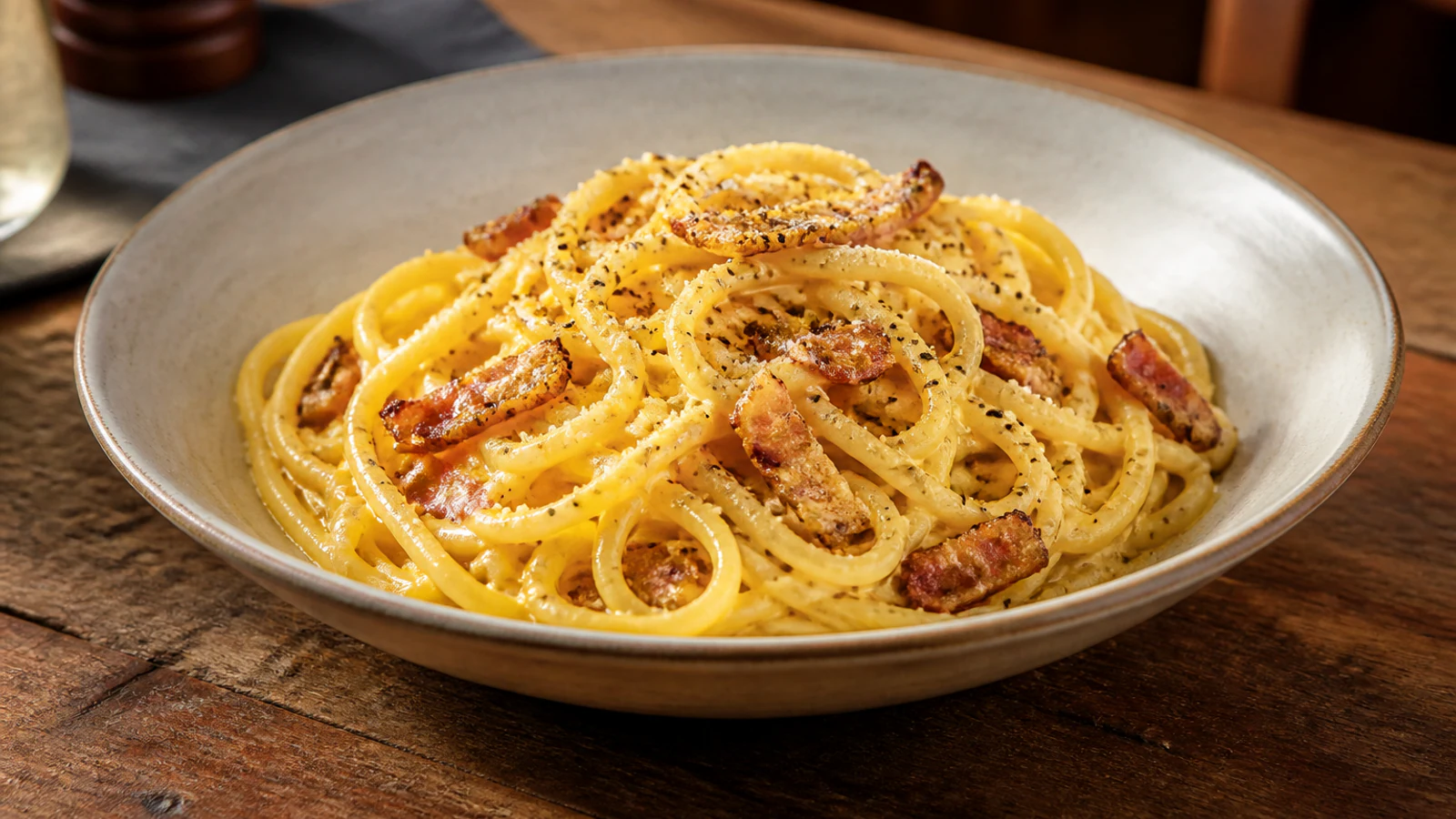
Roman spaghetti coated with egg and Pecorino, finished with rendered guanciale and black pepper, with no cream in the sauce.

Traditional Italian recipePasta / first course
Share
Spaghetti alla carbonara with guanciale, Pecorino and black pepper
Prep15 minutes
Cook20 minutes
Total35 minutes
Yield4 servings
The dish

About Spaghetti alla carbonara

Carbonara is a lesson in controlled heat. The sauce contains no cream: its smooth body comes from eggs, grated Pecorino and the starch carried by hot pasta and a little cooking water. The pan must be warm enough to thicken that mixture but not so hot that the eggs set into curds.

The current Accademia Italiana della Cucina recipe labelled “all’uso di Roma” specifies spaghetti, guanciale, eggs, Pecorino, olive oil, garlic, black pepper and salt. Other respected Roman versions omit the garlic and added oil, relying entirely on rendered guanciale fat. This Travel S Helper version follows the Accademia formula rather than quietly combining competing versions.

Guanciale should render gradually. A hard initial sear can brown the outside while leaving the fat rubbery; moderate heat gives the fat time to liquefy and leaves the lean pieces browned but still succulent. The rendered fat is part of the sauce, not waste.

The decisive moment comes after the pasta reaches the guanciale pan. The pan comes off the heat before the egg mixture is added. A spoonful or two of pasta water loosens the emulsion, and vigorous tossing distributes the sauce before it can overheat.

Pecorino Romano brings both salt and structure, so the pasta water should be seasoned more cautiously than for a tomato sauce. Final seasoning belongs at the table, after the guanciale and cheese have contributed their own salinity.

Technique

Three things that matter

  • Control the egg temperature. Add the egg-and-cheese mixture off the direct heat and toss continuously. A glossy coating is the target; visible scrambled curds mean the pan was too hot.
  • Render, do not scorch, the guanciale. Moderate heat melts its fat before the lean edges brown, giving both crispness and enough fat to carry the sauce.
  • Use pasta water deliberately. Add it a tablespoon at a time. The sauce should cling to each strand without becoming watery or pasty.
Cook the dish

Ingredients

Everything needed to prepare the dish, arranged for fast scanning before cooking.

Pasta and guanciale

  • 350 gspaghetti
  • 120 gguancialecut into strips about 5 mm thick
  • 15 mlextra-virgin olive oil
  • 1garlic clovelightly crushed
  • Fine sea saltfor the pasta water

Egg and cheese mixture

  • 3large eggspreferably pasteurized if food-safety risk is a concern
  • 50 gPecorino Romanofinely grated
  • 2 gblack pepperfreshly and coarsely ground
Step by step

Method

Prepare the sauce base

  1. Render the guanciale. Put the guanciale, olive oil and crushed garlic in a wide pan over medium-low heat. Cook until the fat has rendered and the meat is browned at the edges but not dry, about 7–9 minutes. Remove and discard the garlic.

    The rendered fat should be clear and fluid while the guanciale remains meaty inside.
  2. Whisk the eggs and Pecorino. In a heatproof bowl, whisk the eggs with the grated Pecorino and most of the black pepper until homogeneous. The mixture will be thick rather than pourable.

Cook the spaghetti

  1. Boil the pasta until al dente. Cook the spaghetti in moderately salted boiling water until just al dente. Before draining, reserve at least 250 ml of the starchy cooking water.

  2. Coat the pasta in guanciale fat. Return the guanciale pan to medium heat, add the drained spaghetti and toss for 20–30 seconds so the strands pick up the rendered fat. Remove the pan completely from the heat.

Emulsify and serve

  1. Add the egg mixture off the heat. Wait about 20 seconds, then add the egg-and-Pecorino mixture while tossing continuously. Add hot pasta water 15 ml at a time until the sauce becomes glossy and flows around the spaghetti without pooling.

    The sauce should look creamy and shiny, with no visible cooked egg curds.
  2. Finish immediately. Divide among warm bowls, scatter over the guanciale and remaining black pepper, and serve without delay. Add extra Pecorino only after tasting for salt.

Practical guidance

Practical guidance

Why there is no cream

The emulsion is built from eggs, Pecorino, guanciale fat and pasta water. Cream changes both the flavour and the mechanism of the traditional sauce.

A lower-risk egg option

For pregnant people, young children, older adults or immunocompromised diners, use pasteurized eggs or yolks. Residual heat varies from kitchen to kitchen and should not be treated as a guaranteed pasteurization step.

Salt management

Guanciale and Pecorino are salty. Salt the pasta water more lightly than usual, then adjust only after the sauce is finished.

Serving

Carbonara loses its glossy texture as it sits. Have plates ready and serve as soon as the emulsion is stable.

Troubleshooting

Troubleshooting

  • The eggs scrambled. The pan was too hot. Move farther off the burner and let the pasta cool for 15–30 seconds before adding the egg mixture next time.
  • The sauce is dry or sticky. Add reserved pasta water a tablespoon at a time while tossing vigorously; the starch and water re-open the emulsion.
  • The sauce is thin. Too much water was added or the pasta was very wet. Toss longer off the heat so the cheese and egg can tighten around the strands.
  • The guanciale is hard. It was cooked too fast or too long. Start over medium-low heat so the fat renders before the lean meat browns deeply.
Nutrition per serving

Nutrition per serving

  • Serving size: 1 pasta course
  • Calories: approximately 690 kcal
  • Carbohydrates: 68 g
  • Protein: 28 g
  • Fat: 33 g
  • Fibre: 3 g
  • Sodium: approximately 1,050 mg

Estimate based on the listed ingredients divided among four servings. Sodium varies widely with guanciale and Pecorino.

Allergens and food safety

Allergens and food safety

Contains wheat/gluten, egg and milk. Guanciale is pork.

Use pasteurized eggs for diners at elevated risk from raw or undercooked egg. Keep eggs refrigerated until needed.

Refrigerate leftovers within 2 hours and reheat thoroughly, understanding that reheating changes the sauce texture.

FAQ

FAQ

Does authentic carbonara contain cream?

No cream is needed in the selected Roman formula. Eggs, Pecorino, guanciale fat and starchy pasta water create the sauce.

Whole eggs or yolks?

The current Accademia “all’uso di Roma” formula uses whole eggs. Many modern Roman cooks adjust the whole-egg-to-yolk balance, but that is a different formulation.

Why is garlic included here?

Because the selected current Accademia Italiana della Cucina recipe includes one crushed garlic clove, removed after flavouring the guanciale fat. Other respected Roman versions omit it.

Can pancetta replace guanciale?

Pancetta can make a good egg-and-cheese pasta, but guanciale is the defining cured pork in the selected Roman carbonara formula.

Final note

What matters most

  • Result: Glossy spaghetti coated in a savoury egg-and-Pecorino emulsion, with rendered guanciale and assertive black pepper.
  • Key: Temperature control matters more than speed: render gently, remove the pan from direct heat, then emulsify decisively.