


Exohiko — Greek Country-Style Meat Parcels in Phyllo
Exohiko (Greek for “countryside” or “outside”) refers to a rustic baked parcel beloved in Greek home cooking. This hearty dish features tender cooked meat (often lamb), layered with vegetables and cheese, all wrapped in crispy phyllo dough or sometimes parchment. It’s comfort food that was traditionally made with leftovers: pieces of roast lamb, bits of cooked vegetables, and any hard…

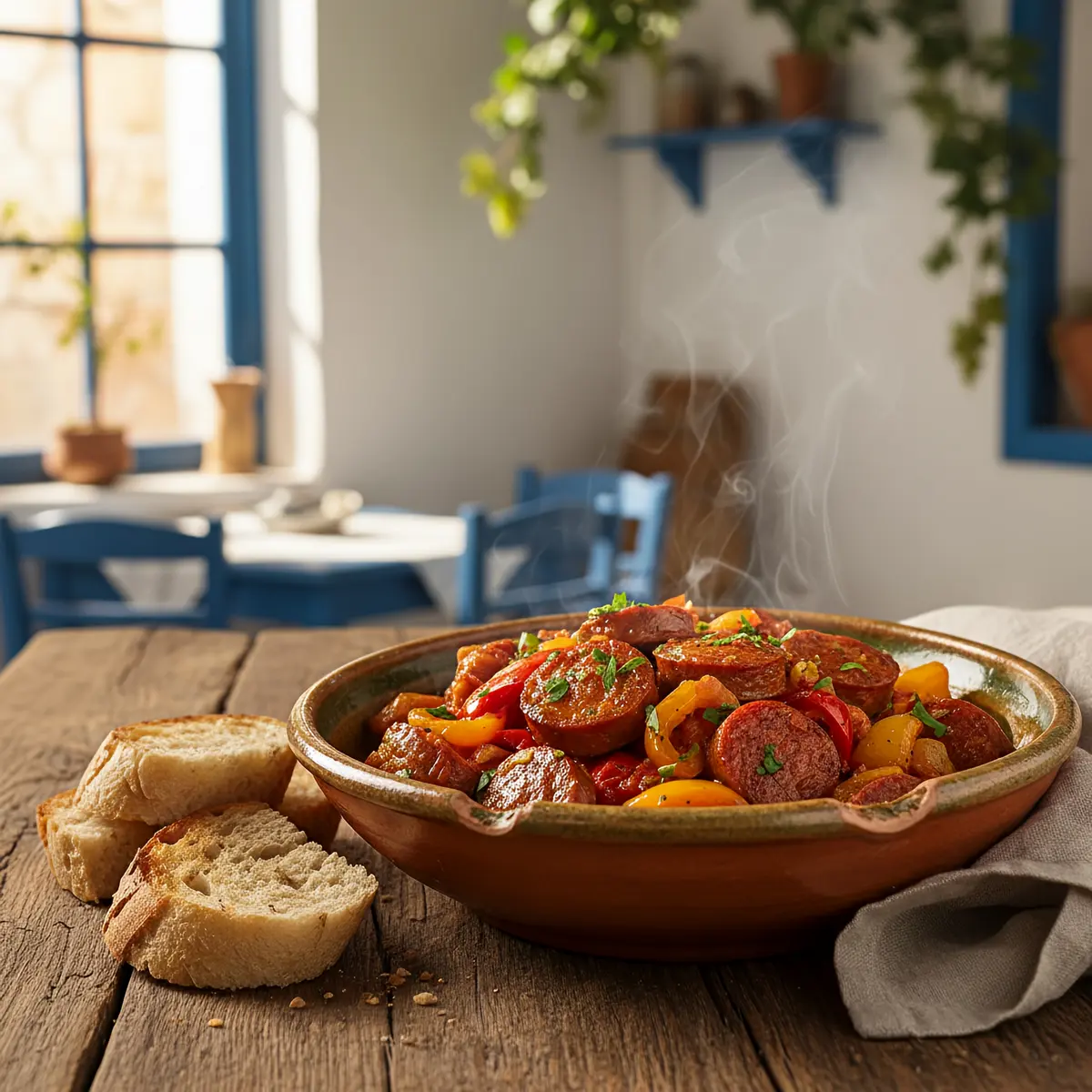
Spetsofai — Greek Sausages with Peppers & Tomatoes
A rustic Pelion stew of Greek sausages simmered with red and green peppers, tomato, garlic and herbs. Spicy, hearty and served hot in its rich tomato sauce.

Paidakia — Charcoal-Grilled Greek Lamb Chops
Paidakia are Greece’s quintessential grilled lamb chops, a soul-satisfying staple of seaside tavernas and backyard barbecues alike. These tender rib chops are lightly marinated in fresh lemon juice, garlic and fragrant oregano, then grilled until just charred and succulent. The result is a vibrant dish that showcases the pure flavors of lamb, brightened by lemon and herbed with oregano. In…

Arnaki Frikase (Greek Lamb Avgolemono Stew)
Greek lamb and spring greens stew finished in an egg-lemon (avgolemono) sauce. Tender lamb shanks or neck simmered with celery, lettuce and dill, enriched with a creamy lemon-egg broth.

Papoutsakia (Greek Stuffed Eggplant “Little Shoes”)
Papoutsakia (literally “little shoes” in Greek) are a beloved comfort food in Greece. This classic dish consists of eggplants hollowed into boat shapes and filled with a rich, spiced meat-and-tomato sauce, then crowned with a layer of creamy béchamel sauce. Think of it as a single-serving casserole – a close cousin to moussaka. Each eggplant half becomes a “shoe” filled…

Fasoláda: Greek White Bean Soup
Fasoláda (Φασολάδα) is often called Greece’s national dish – a warm, hearty white bean soup that’s been nourishing families for generations. Simple ingredients – beans, olive oil, tomatoes, carrots and celery – cook slowly to create a thick, stew-like broth, melding into an earthy, comforting meal.

Greek Pastitsio – Baked Bucatini with Meat Sauce and Béchamel
Pastítsio (παστίτσιο) is a beloved Greek pasta casserole, sometimes described as Greece’s answer to lasagna. Originating from the Ionian Islands and influenced by Italian pasticcio, it features a bold meat sauce laced with warming spices (cinnamon and cloves), layered between short tubular pasta, and topped with a thick, creamy béchamel.

Rizogalo — Greek Rice Pudding
Rizogalo (ρυζόγαλο) is a velvety Greek rice pudding, simple yet deeply comforting. The name itself means “rice and milk” – reflecting its basic ingredients. Imagine a bowl of creamy, milky pudding studded with soft rice grains and lightly sweetened.

Kritsinia – Greek Sesame Breadsticks
Kritsinia (pronounced kree-TSI-nee-ah) are traditional Greek sesame-coated breadsticks, found in every bakery across Greece. Unlike many breadsticks, Kritsinia contain no dairy or eggs, making them naturally vegan and ideal for fasting days. The dough is enriched with tahini (sesame paste) and a touch of sweetener (typically honey or grape molasses), which gives the breadsticks a nutty flavor and a hint…

Kreatopita – Greek Meat & Phyllo Pie
Kreatopita (pronounced kre-a-toh-PEE-tah) is a hearty, rustic Greek meat pie baked in flaky phyllo dough. This savory pie hails from rural Greece (especially the Ionian islands and village kitchens) and is known for using a combination of meats—traditionally pork and lamb or beef and lamb. The filling simmers slowly with onions, garlic, tomato, and fragrant spices like cinnamon and oregano.…







