
Greece National Food
Fáva Santorínis: Silky Yellow Split-Pea Purée

Last updated: 2026-02-28 19:43:01

Recipe at a glance
Fáva Santorínis: Silky Yellow Split-Pea Purée
Key recipe details from the source.
- Servings
- 4
- Preparation
- 15 minutes
- Cooking
- 60 minutes
- Calories
- 557 kcal
Greek recipe
Fava Santorini (Greek Yellow Split-Pea Puree Recipe)
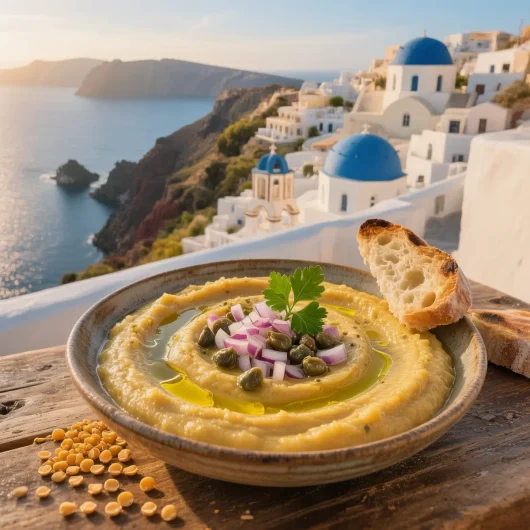
Soaked yellow split peas are simmered with onion until they break down fully. The mixture is then drained, returned to the pot, and mashed or blended with olive oil and a splash of lemon juice (or vinegar) until smooth and creamy. The dip is garnished with diced red onion (or scallions), capers, and an extra drizzle of olive oil. The final result is a savory, protein-packed spread that is sweet from the peas and bright from the toppings, perfect on bread, crackers, or as part of a meze.
01 · Overview
Overview
Fáva Santorínis is a cherished specialty from the volcanic island of Santorini. Made with a unique local variety of yellow split peas (PDO “Fava Santoríni”), this silky purée embodies centuries of tradition. Archaeological finds in Akrotiri show these peas in pottery from over 3,500 years ago, testifying to a deep-rooted heritage. Even today, farmers sow by hand and sun-dry the peas on canvas, preserving an ancient, artisanal method. The unique sandy soil of Santorini, enriched by volcanic ash, gives these yellow split peas an exceptional flavor. In fact, Fava Santorini received Protected Designation of Origin (PDO) status in 2010 to protect its heritage. These peas are harvested only on Santorini’s terraces, making the dish an emblem of the island. Though called “fava,” the dish uses split peas rather than true fava beans.
The dish is simple in composition yet profound in flavor. Only olive oil, onion, and water are needed to coax character from the peas. After soaking and simmering until mushy, the peas are mashed into a creamy consistency. A finishing drizzle of rich extra-virgin olive oil, a handful of finely chopped sweet red onion or scallions, and tangy capers transform the mash into a luscious dip or side. When tasted, the purée is warm and comforting, with a velvety mouthfeel and a hint of sweetness from the onions. Garnishes of briny capers and sharp raw onion provide contrast—each bite is creamy yet bright. Traditionally, fava is scooped up with crusty bread or spread on pita. It can also serve as a sandwich spread or a base for other spreads at gatherings. Beyond Santorini, it has become popular in cities across Greece and the world, emblematic of Greek vegetarian cuisine.
In Greece, this fava is typically enjoyed at room temperature as part of a meze platter. It complements crisp vegetables, grilled seafood, or warm pita bread. As it’s naturally vegan and gluten-free, fava Santorini is a mainstay on Lenten tables and fast-day meals. Yet its creamy richness makes it a beloved appetizer any time of year. Visitors to Santorini often taste it alongside local white wines like Assyrtiko, finding that the wine’s acidity mirrors the salad-like brightness of the dish’s toppings.
The simplicity of fava makes it accessible for home cooks. However, technique matters: gentle simmering prevents the peas from becoming grainy, and slowly whisking in olive oil off the heat yields the smoothest texture. Despite its simplicity, serving the dish with care—drizzling high-quality olive oil and artfully arranging the chopped onions and capers—turns a humble bean mash into a dish worthy of a fine taverna.
Made with humble, wholesome ingredients, fava Santorini connects diners to Greek history and simple island life. It’s a dish meant to be shared casually, spooned onto bread or crackers, or used as a sauce for grilled fish or lamb.
02 · Ingredients
Ingredients
- Yellow split peas 1¼ cups (about 250 g), rinsed. (Use Santorini variety if available, or any yellow split peas. Chickpeas may be substituted in a pinch.)
- Water or vegetable stock ~4–5 cups, for simmering. (Stock adds flavor, but water is fine.)
- Medium onion 1, quartered (add to pot).
- Red onion or scallions ¼ cup finely chopped, for garnish.
- Extra-virgin olive oil ¼ cup (plus extra for serving).
- Lemon juice 1 tablespoon (optional, for brightness).
- Kosher salt and black pepper to taste.
- Capers 2 tablespoons, drained. (Or substitute chopped brine-cured olives.)
- Fresh herbs (optional) chopped parsley or dill for garnish.
03 · Directions
Directions
Directions
Soak the peas.
Place the split peas in a large bowl and cover with water by 2 inches. Let soak 8–12 hours or overnight to reduce cooking time and improve texture. (For a quick version, cover peas with boiling water and soak 1 hour.)
Simmer the peas.
Drain and rinse the peas, then transfer to a large pot. Add 4–5 cups fresh water or stock and the quartered onion. Bring to a boil, skimming off any foam. Reduce heat to low, cover partially, and simmer 45–60 minutes until the peas are very soft and begin to collapse. Stir occasionally to prevent sticking; add more water if needed to keep peas submerged.
Mash or blend.
Remove and discard the cooked onion pieces. In the same pot (off heat), mash the peas with a potato masher or an immersion blender until very smooth. Alternatively, transfer to a blender and purée (in batches if needed).
Season and finish.
Stir in ⅓ cup olive oil and lemon juice, adding a little at a time and mashing between additions, until fully incorporated. Season with salt and pepper to taste. If the dip is too thick, whisk in a splash of water or warm stock to loosen it.
Garnish and serve.
Transfer the fava to a bowl and make a shallow well in the center. Drizzle with more olive oil, then top with chopped red onion (or scallions) and capers. Sprinkle with herbs if using. Serve at room temperature with warm pita, crusty bread, or veggies.
04 · Nutrition
Nutrition
- Calories
- 557 kcal