Angolan National Foods

Angola’s national cuisine is a rich reflection of its history and geography. The staples – cassava-based funge, maize porridge, beans, rice, tropical vegetables and fish – underpin a tapestry of flavors shaped by indigenous (Bantu) traditions, Portuguese colonial imports, and Afro-Brazilian connections. Iconic dishes like muamba de galinha (chicken in peanut-palm oil stew) and funge illustrate this blend, as do regional specialties such as mufete (grilled fish platter) and calulu (okra-and-fish stew). These foods are typically served in generous portions for sharing, making Angolan meals a communal celebration of local ingredients and culinary heritage. Traditional stews, grilled meats, and sweets like coconut pudding convey stories of cross-Atlantic exchanges and local ingenuity, offering travelers a profound taste of Angola’s cultural past.

Angolan cuisine reflects the country’s Bantu heritage and centuries of Portuguese colonial influence. Indigenous staples – cassava, maize, beans, fish and game – formed the diet of precolonial kingdoms (like Kongo and Ndongo), while the Portuguese (from the late 1500s onward) introduced new ingredients and cooking methods (olive oil, garlic, citrus, preserved meats) into urban centers like Luanda. The result is “a delicious blend of Portuguese and Congolese flavors,” as one food writer puts it, reflecting Angola’s neighbors and its own history. Today Angolan cooking typically combines palm oil, native vegetables and meats with sauces and spices from both Africa and Portugal. Red palm oil remains indispensable in many dishes, and seafood is especially prized along the coast. Modern Angolan gastronomy also draws on wider Lusophone influences – for example ingredients and recipes from Brazil – even as chefs today emphasize reclaiming pre‐colonial traditions as a form of cultural identity.

Key Ingredients and Staples

Angolan cooking is built on hearty staples. Cassava (manioc) and maize (corn) are processed into flours and porridges that accompany most meals. In the north, cassava flour makes a thick, grayish porridge called funje de bombo, whereas in southern Angola a yellow cornmeal porridge (pirão) is more common. Dried beans (often cooked with palm oil) and rice are also staple side dishes. Other common ingredients include palm oil, onions, garlic, tomatoes, hot chilies and sour vinegars, which flavor many stews. Because of Angola’s long coastline and river systems, seafood and freshwater fish (often smoked or grilled) feature prominently. Pork, chicken and goat meat are popular proteins, especially at celebrations. Leafy greens and vegetables (okra, squash, sweet potato leaves, bitter melon, etc.) are typically cooked into stews or relishes, and peanuts (ground into sauces or snacks) and cassava bread (chikungua) also play a role in local recipes.

  • Cassava and maize flours (for porridge funge or pirão)
  • Palm oil (dendê) – the characteristic red oil used in stews
  • Onions, garlic, tomatoes and chilies – the base of many sauces
  • Beans and rice – eaten at many meals
  • Seafood and freshwater fish – grilled, stewed or smoked (especially on the coast)
  • Meats: chicken, pork, goat – often stewed or barbecued at feasts
  • Leafy greens (okra, cassava or sweet potato leaves) and peanuts (ginguba) – used in stews and snacks

Signature Dishes of Angola

Angola’s national dishes typically pair a rich sauce or stew with a starch like funge or rice. Some of the most emblematic are:

  • Funge (or funje) – the national starch. Funge is a thick, smooth porridge made by whisking cassava flour (or sometimes cornmeal) into hot water or fish broth. It is bland but filling, serving as the “neutral” base for flavorful sauces. In practice, Angolans scoop up funge with stews or grilled meats. (In the north it’s usually cassava-based funje de bombo, while in the south yellow corn pirão is more common.) Funge is eaten with almost every meal, especially as an accompaniment to dishes like moamba or calulu.
    Funge, a thick corn/cassava porridge eaten across Angola, served here alongside a meat sauce. It is the ubiquitous side dish at Angolan tables.*
  • Moamba de Galinha – often cited as Angola’s national dish. Moamba (also called muamba or moamba) is a rich chicken stew cooked with palm oil and local vegetables. Chicken pieces are braised for an hour or more in a sauce of red palm (dendê) oil, garlic, onion, tomatoes, okra, and pieces of squash or sweet potato. Traditionally, the chicken is rubbed with malagueta chilis (piri-piri) and sometimes peanut butter before stewing. The result is a savory, orange-hued gravy. Moamba is almost always served with funge or rice to sop up the sauce. It’s so central that one source notes it “takes the top spot” among favorite foods, and it is also found in neighboring Congo and Gabon as a shared national stew.
    Moamba de galinha, a classic Angolan chicken stew. Slow-simmered chicken is mixed with okra, squash and red palm oil (dendê) to make a rich sauce, traditionally served with a side of funge.*
  • Calulu – a hearty fish or meat stew. Calulu typically includes dried or fresh fish (often salted cod or grilled bass) or smoked meat cooked with vegetables like okra, tomatoes, onion, garlic and palm oil. It is thickened with leafy greens (such as sweet potato or cassava leaves) and flavored with chilis. Angolans usually eat calulu with funge or rice. (A common saying is that everyone adds their own spices: “each wife has her own calulu” to indicate home recipes vary.) Typical preparations are “calulu de peixe” (fish) or “calulu de galinha” (chicken) or “calulu de carne” (meat).
    Calulu, a classic Angolan stew. Here dried fish and okra are stewed in palm oil with onions and tomatoes. Calulu is normally eaten with funge or rice.*
  • Mufete – a coastal grilled-fish platter. Mufete is associated especially with Luanda (the capital) and involves large grilled fish (often tilapia, called kacussso or cakuesso) served on a plate with an array of sides. Typical accompaniments include a palm-oil–spiced bean paste, boiled cassava or rice, fried plantains or sweet potatoes, and sliced onions in vinegar or hot sauce. The fish is usually rubbed with salt and lemon then char-grilled. One description notes “Mufete de kacusso (or cacusso)… grilled fish… served with palm oil beans and cooked manioc, rice, sweet potato, or farofa”. In practice, Mufete is a special weekend meal enjoyed communally.
  • Other notable dishes – Angolans also enjoy kizaca (cassava leaves stewed with fish or meat), jimboa (greens), cachupa (a Portuguese–Cape Verdean bean-and-corn stew adopted locally), and muíla (okra soup). A Portuguese-influenced dish, cabidela (meat stewed in its own blood with vinegar), is known too, as is calulu’s cousin stew “saka-saka.” For street food, spicy grilled chicken or fish with hot sauce is common. Edible caterpillars (“catatos”) and other insects are eaten in rural areas as protein. On weekends, barbecue (ginga de galinha) and goat stew (cabrito) are often prepared for family gatherings.

Food in Daily Life and Festivities

Food is central to Angolan social life. At celebrations or ceremonies (weddings, graduations, religious festivals), traditional dishes and drinks play a key role. When circumstances allow, hosts serve grilled chicken or goat, rice and bean stews, and bottles of beer or soda. However, such imported drinks are expensive for many Angolans, so homemade maize beer (similar to chibuku) and palm wine are more commonly shared at community feasts. One writer notes that at parties “grilled chicken, soft drinks, and bottled beer are served… [but] as these items are costly, most people can only afford local beverages such as maize beer and palm wine”. Goat meat in particular is a celebratory favorite: “Goat meat is very popular in Angolan cuisine… It is often eaten when there is a celebration, graduation party, or even on special holidays,” and a spread with goat makes guests forget other meats.

Angolans also observe traditional food festivals. The Feast of Nganja (usually in April) is a harvest festival in which communities roast ears of corn together under the almond trees. Lentils, peanuts and dried fish may be given to the poor. Meanwhile, in rural areas families gather to roast sweet potatoes, yams and cassava at certain harvest times. Some foods have ritual significance: for example, the drink kissangua (a slightly fermented cornflour beer) from southern Angola is traditionally used in healing ceremonies. Homemade spirits are also common—chewing sugarcane to make ualende, or fermenting bananas (capatica) and palm sap (maluva) into liquor. These drinks are often brewed at home in provinces like Huambo or Malanje and enjoyed at parties.

Regional Variations

Angola’s cuisine varies by region and ethnicity. Along the coast (Luanda, Benguela, Cabinda), seafood dominates due to plentiful fish, crab and shrimp. In fact, coastal specialties include mariscos cozidos (seafood boiled in seawater) and dried salted fish called makayabu. Inland, in the arid south and east (Huila, Cunene provinces), diets lean on dairy and meat from cattle, goats and sheep, as herding is common there. For example, the Kunene region is known for goat and sheep meat stews. In the fertile central highlands (Huambo, Bié), farmers raise maize, beans, bananas and cassava, so that region favors corn-based porridge and bean stew.

Even the staple porridge shows north–south differences: as noted, central and northern Angolans tend to make funge with cassava flour, giving a grayish paste, whereas in southern Angola cornmeal porridge (pirão) is the norm. Certain dishes are associated with ethnic groups: in Cabinda the spicy palm-oil sauce mukuié is a local delicacy, and among the Ovimbundu people chicken is often stewed with peanuts. In recent decades, urban restaurants in Luanda and provincial capitals have popularized pan-Angolan dishes, but home cooking still reflects local customs. Overall, one observer notes that “coastal people include much seafood in their diet, herders in the southwest rely mostly on dairy products and meat, and farmers eat maize, sorghum, cassava and other crops”. Thus, Angola’s varied geography and diverse ethnic heritage produce a cuisine that changes from province to province.

Cuisine and National Identity

Since independence, Angolan food has come to be seen as an expression of national culture. Chefs and food scholars emphasize that traditional recipes are “a fundamental element of Angolan cultural heritage.” Modern gastronomy in Angola remains heavily influenced by Portuguese colonization – one chef notes that today’s cuisine is essentially “Portuguese-based” due to colonial history – but Angolans have adapted these influences to create distinct national dishes. In this sense, the fusion of Bantu and European elements itself is part of Angolan identity. Prominent Angolan chefs stress that promoting native cuisine is a way to reconnect with pre-colonial roots. As Chef Helt Araújo remarks, reviving traditional Angolan gastronomy is “an identity and cultural response, a rescue of the basic Angolan culture, agriculture and its communities”.

Indeed, many iconic dishes now serve as symbols of Angola. During Independence Day or national sporting events, foods like muamba and funge often appear on communal tables, reinforcing a shared heritage. Cookbooks and TV shows increasingly highlight local ingredients (like ngonguenha fruit or berbagai pepper) and regional recipes, reflecting pride in Angolan soil. While Angola has no single homogeneous cuisine (the country’s civil conflicts and ethnic mix make a single “national” culture complex), food remains one of the most tangible commonalities. In sum, the country’s national cuisine is an evolving mosaic: it honors the indigenous plants and techniques of its many peoples, even as it carries the legacy of Portuguese and Brazilian influences, all of which together help define Angolan identity today.

Main Dishes & Staples

Calulu – Mixed vegetable (mainly spinach or “kizaca”cassava leaves) and dried or fresh fish stew, slow-cooked with red palm oil, okra, onions, and tomato

Angolan Calulu Stew

Calulu is a rich, aromatic stew of fish (or meat) and vegetables that is a beloved part of Angolan cuisine. Its roots trace back to ...
Read More →
Cabidela à Angolana – Chicken (or sometimes duck) rice cooked in the animal’s blood, vinegar, and herbs. Portuguese roots, now considered traditional

Cabidela Angolana

Cabidela à Angolana is a rich and savory chicken stew unique to Angola. In this dish, a chicken (or sometimes duck) is simmered with aromatics, ...
Read More →
Carne Seca com Feijão – Sun-dried beef cooked with red beans, onions, and tomato

Carne Seca com Feijão

Carne Seca com Feijão is a rustic, protein-rich stew found in Angolan kitchens. In this dish, beef is preserved by salting and sun-drying, then rehydrated ...
Read More →
Chikuanga Kikwanza – Cassava-root “bread” steamed in banana leaves; slightly sour, eaten with stews or grilled meatfish.

Chikuanga

Chikuanga (also known as cassava bread or kikwanza) is a storied Angolan staple with roots in rural tradition. This fermented cassava loaf, steamed in banana ...
Read More →
Ensopado de Cabrito – Young goat stew with wine, garlic, and bay leaf.

Ensopado de Cabrito

Ensopado de Cabrito is a classic Angolan stew showcasing tender young goat simmered in a fragrant wine-and-herb sauce. Chunks of cabrito (young goat meat) are ...
Read More →
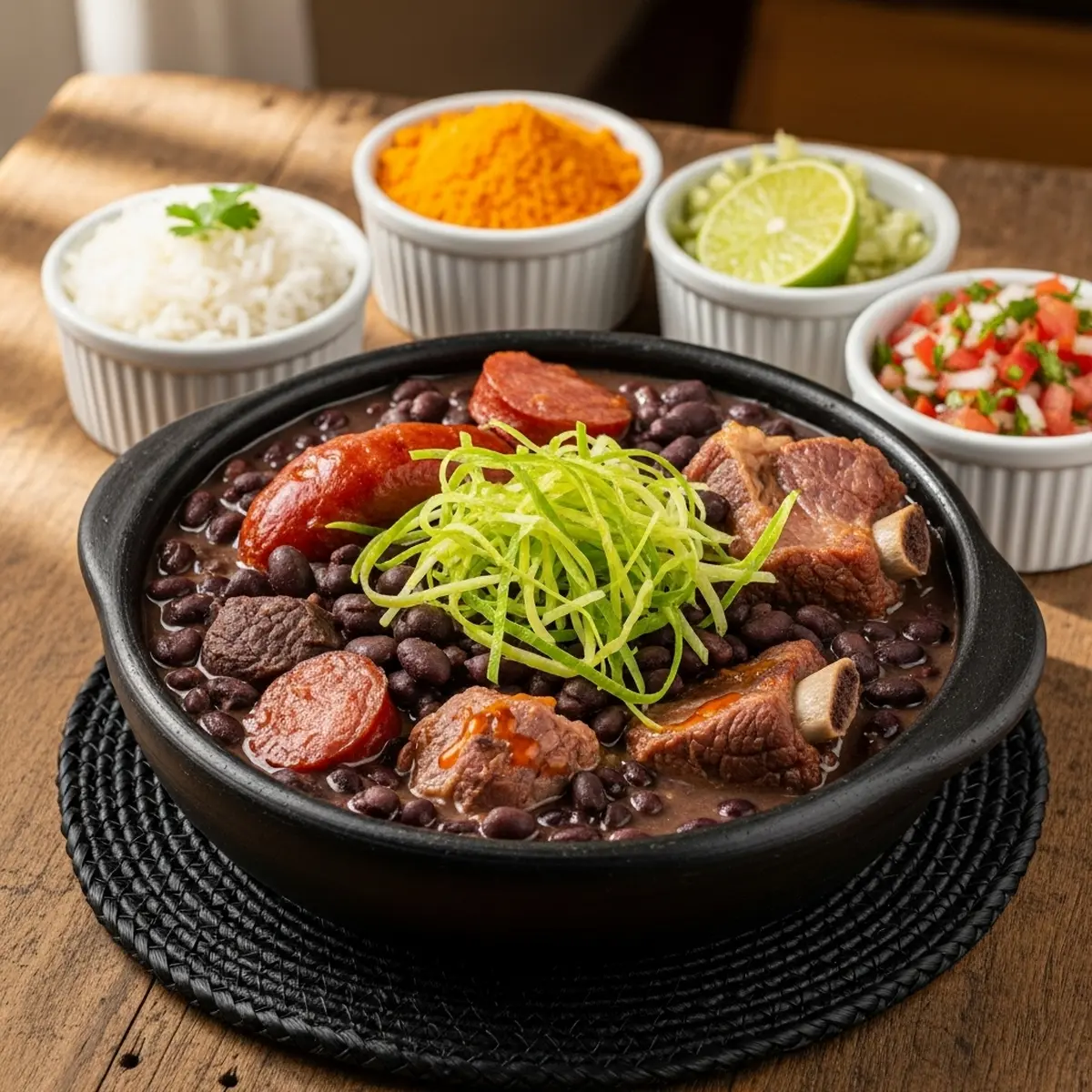
Feijoada Angolana – Black-bean stew usually enriched with driedsmoked meats, cassava leaves, and palm oil.

Feijoada Angolana

Feijoada Angolana is Angola’s version of the famous Portuguese bean stew, adapted to local ingredients. This one-pot dish simmers beans with chicken, spicy sausage, and ...
Read More →
Funje Funge – Elastic, polenta-like mound made from cassava (funje de bombó) or maize (funje de milho), eaten with almost every stew

Funje (Funge)

Funje (also spelled Funge) is the soft, sticky cassava porridge that forms the foundation of many Angolan meals. It is analogous to polenta or ugali ...
Read More →
Galinha Grelhada à Cafrial – Spatchcocked chicken marinated in chilies, garlic, and lemon, then charcoal-grilled (cousin of Mozambique’s piri-piri chicken)

Galinha Grelhada Cafrial

Galinha Grelhada à Cafrial is a celebrated dish in Angolan cuisine, reflecting a blend of indigenous African and Portuguese culinary traditions. The preparation begins with ...
Read More →
Kizaca (Saka-saka) – Cassava leaves braised in palm oil, garlic, and often peanuts; may be a side or a meatless main.

Kizaca (Saka-Saka)

Kizaca (sometimes spelled Quizaca or Kisaca) is a beloved Angolan stew made with cassava leaves and peanuts. Often described as a hearty green peanut sauce, ...
Read More →
MboKata Guisado de Ginguba – Peanut-based meat or fish stew

MboKata

Angola’s cuisine offers a tapestry of bold, earthy flavors, and MboKata (often called Guisado de Ginguba) is a shining example. This classic stew features roasted ...
Read More →
Muamba de Galinha (Chicken MuambaMoamba) – Chicken stewed in red palm-oil sauce, flavored with garlic, chili, okra, and sometimes pumpkin or sweet potato. Widely regarded as “the” national dish

Muamba de Galinha

Muamba de Galinha (often called Moamba) is a vibrant chicken stew that takes center stage in Angolan cuisine. It is widely hailed as Angola’s national ...
Read More →
Muamba de Peixe – Same palm-oil base as the chicken version but made with firm fish such as tilapia or garoupa

Muamba de Peixe

Some cooks start Muamba de Peixe over an open flame in a clay pot, seeking a touch of smoky flavor. In Angola’s coastal regions, this ...
Read More →
Mufete (or Muffete) – Whole salt-grilled fish (usually sea-bream or grouper) served with sweet potato, plantain, cassava, feijão de óleo de palma (bean-in-palm-oil sauce), and a raw onion–tomato relish.

Mufete

Mufete is a festive Angolan platter centered around grilled whole fish and an array of sides. Imagine a charcoal-grilled bream or tilapia, smoky and crisp-skinned, ...
Read More →
Pirão – Slightly thinner version of funje, made from cassava or maize flour whisked into stock; eaten like gravy

Pirão (Cassava Porridge)

Some cooks recall that Pirão’s simplicity made it a go-to dish in tough times. A pot of broth and flour could feed a family when ...
Read More →
Quibeba (Quiabo Soup) – Okra soup thickened naturally with okra mucilage, sometimes including dried fish or goat.

Quibeba (Angolan Okra Soup)

Quibeba is a traditional Angolan stew that showcases the unique texture of okra as a natural thickener. Fresh okra pods are trimmed and chopped, then ...
Read More →

Seafood &River Specialties

Caldeirada de Peixe – Fishermen’s mixed-fish stew with potatoes and peppers (1)

Caldeirada de Peixe

In coastal Angolan towns, Caldeirada de Peixe is a beloved fishermen’s stew bringing together the day’s catch in one simmering pot. This dish owes its ...
Read More →
Caranguejo de Moçâmedes – Spicy crab from the southern coast, boiled and served with lemon-butter or palm-oil sauce (2)

Caranguejo de Moçâmedes

In the coastal heart of Namibia and southern Angola, Caranguejo de Moçâmedes is a celebrated treasure from the sea. These large red crabs – a ...
Read More →
Ginga (Prawns á Luanda) – Large prawns sautéed with garlic, palm oil, and malagueta chilies

Ginga (Prawns à Luanda)

Some cooks take Ginga even further by tossing in a dash of annatto (urucum) for deeper color, or stirring in a spoon of coconut cream ...
Read More →
Muxiluanda – Angolan oyster dish, grilled or stewed with white wine and onion

Muxiluanda

On the windswept shores of Angola, Muxiluanda is a celebrated way to enjoy plump Atlantic oysters. This dish can be prepared either grilled or gently ...
Read More →
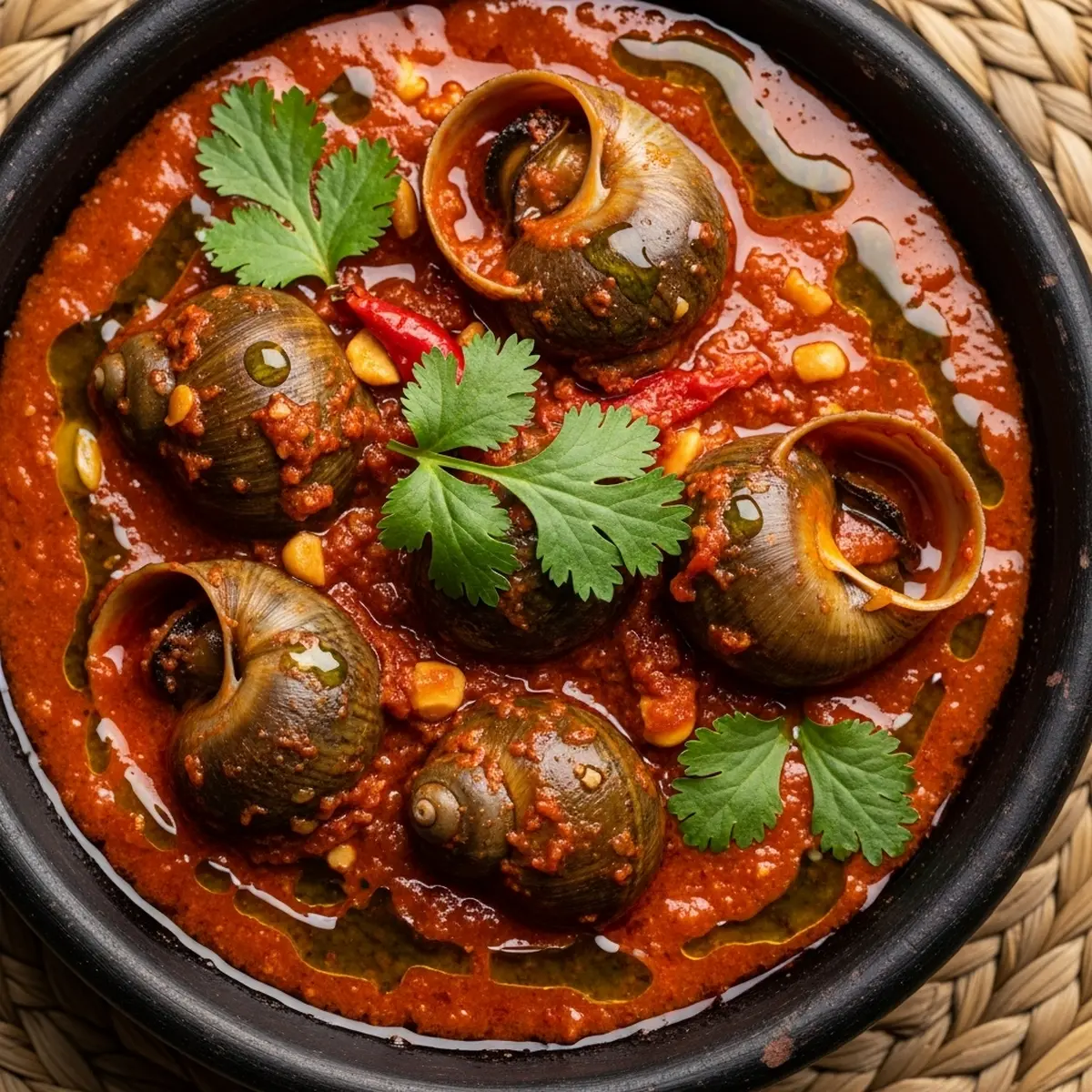
Nguri Búzio – River snails simmered in chile-peanut sauce (1)

Nguri (Búzio) – Spicy Angolan Snail Stew

In the forested regions and riverbanks of Angola’s interior, local communities have long harvested snails (nguri or búzio) as a traditional delicacy. Today, these tender ...
Read More →

Snacks Street Foods

Empadas Angolanas – Mini savory pies, usually filled with fish, chicken, or game

Empadas Angolanas

The Empadas Angolanas are miniature hand pies steeped in Angolan tradition. These golden pockets celebrate a melding of Portuguese baking and local African tastes. In ...
Read More →
Pastéis de mandioca – Fried cassava croquettes stuffed with spicy meat

Pastéis de Mandioca

Pastéis de Mandioca are a beloved Angolan snack: crispy fried croquettes made from cassava (mandioca) dough and stuffed with a fiery meat filling. In Angola, ...
Read More →

Desserts &Sweets

Arroz Doce de Coco – Coconut rice pudding with cinnamon

Arroz Doce de Coco

This creamy rice pudding, Arroz Doce de Coco, brings a tropical twist to a classic Angolan treat. Imagine tender grains of rice simmered in a ...
Read More →
Cocada Amarela – Bright-yellow coconut pudding enriched with egg yolks (shows colonial pastry influence)

Cocada Amarela

Nestled in the tropical kitchen of Angola, Cocada Amarela shines with a sunny hue and a lavish coconut flavor. This beloved pudding blends grated coconut ...
Read More →
Doce de Ginguba – Dense peanut fudge squares

Doce de Ginguba

Doce de Ginguba is a beloved Angolan sweet: chewy peanut fudge made from just roasted peanuts, sugar, and water. The name literally means “ginguba candy,” ...
Read More →
Doce de Papaya com Gengibre – Papaya-ginger preserve, often spooned over fresh cheese

Doce de Papaya com Gengibre

In Angola’s steamy climate, fresh fruits are adored. One traditional way to enjoy tropical papaya is as a sweet preserve called Doce de Papaya com ...
Read More →
Malásia – Sponge cake flavored with citrus and rum.

Malásia Cake

The Malásia cake is a light, chiffon-style sponge laced with citrus zest and a hint of rum – a perfect finale to an Angolan meal. ...
Read More →
Pudim de Leite (Angolan-style flan) – Caramelized condensed-milk custard steamed in a lidded pot

Pudim de Leite

Like many former Portuguese colonies, Angola savors rich, egg-based sweets. Pudim de Leite is a classic example: a silky custard flan caramelized with sugar. This ...
Read More →