

Affordable city break · Germany
Berlin on a Budget: A First-Time Guide That Still Feels Like Berlin
The cheapest trip is not the one that avoids spending altogether, but the one that directs money toward experiences the city genuinely does well.
A useful budget is an editorial choice: fewer unnecessary transfers, fewer generic attractions and more time in Berlin's neighbourhoods, parks, memorial landscapes and public culture.
Berlin has a reputation for being relatively accessible by the standards of major European capitals, but that reputation can mislead first-time visitors. Accommodation can rise sharply during fairs and festivals, public transport is inexpensive only when the right ticket is bought and validated correctly, and a day of small purchases can cost more than one carefully chosen museum. The city still rewards modest budgets, but it does so through planning rather than through an old myth that everything remains cheap.
The best budget strategy begins with Berlin's shape. It is polycentric, historically fragmented and geographically broad. The places that make a visit memorable are not arranged around one compact old town. They are distributed among former centres, residential districts, industrial edges, canals, memorial sites and large parks. A cheap room far from the places a visitor actually wants to explore may produce more transport, less sleep and a weaker experience than a slightly dearer bed on a useful rail or tram line.
Berlin also offers an unusual amount of meaningful public space. The Brandenburg Gate, the government quarter, surviving Wall sites, large sections of the Tiergarten, neighbourhood markets, lakeside paths and many contemporary galleries can be encountered without a conventional admission fee. That does not mean the city should be consumed for free. Museums, independent venues, cafés and cultural organisations require income. The intelligent goal is to distinguish experiences that are naturally public from those where a ticket supports access, preservation or artistic work.
This guide therefore treats cost as a system. It examines location, transport, food, free culture, paid priorities and daily rhythm together. It corrects obsolete advice—most importantly, the former monthly Museum Sunday programme should not be presented as an ongoing benefit—and avoids freezing current fares or taxes into permanent prose. The resulting trip is affordable not because every decision is the cheapest possible, but because each expense has a clear purpose.
City profile · Berlin
Berlin on a Budget
Berlin becomes affordable when its dispersed geography is treated as an advantage rather than a problem to conquer.
Best for: travellers who value history, public space, nightlife, contemporary culture and neighbourhood texture more than polished luxury
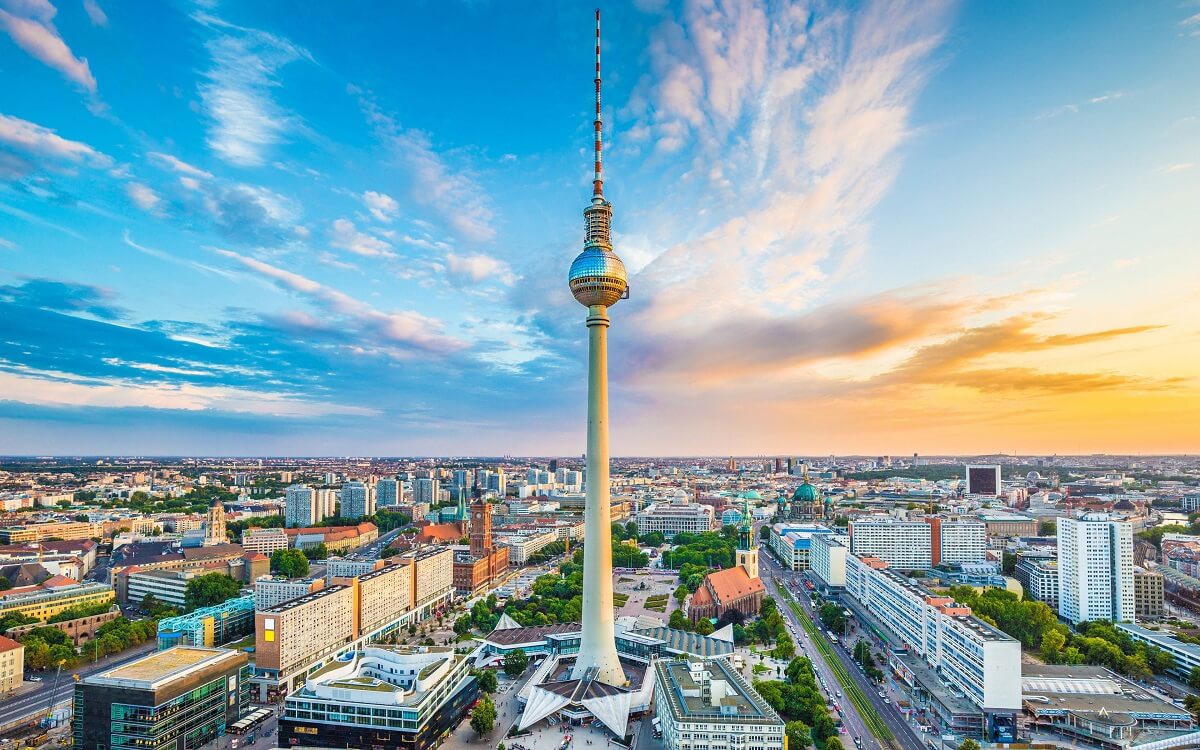
First-time orientation
Why Berlin rewards a different kind of budget travel
Berlin is not visually unified, and that is one reason it suits independent travellers. A first impression may include reconstructed historic façades, socialist-era boulevards, nineteenth-century apartment blocks, railway infrastructure, lakes, allotment gardens and new glass offices within the same day. The lack of a single dominant postcard centre allows visitors to build a trip from interests rather than from a mandatory procession of monuments. A budget itinerary can therefore be highly personal without feeling incomplete.
The city's historical depth is embedded in ordinary routes. A walk from the Brandenburg Gate toward the Reichstag crosses a landscape of imperial, Nazi, divided and reunified Germany. The East Side Gallery uses a surviving Wall section as both memorial object and open-air art site, while less famous traces appear in pavement lines, information panels and abrupt changes in urban form. Many of these encounters cost nothing, but they demand time and attention. The budget traveller's greatest resource is not a discount card; it is the willingness to walk slowly and read.
Neighbourhood identity matters more than the simplistic east-versus-west story often applied to Berlin. Kreuzberg, Neukölln, Wedding, Charlottenburg, Prenzlauer Berg and Friedrichshain each contain internal differences and have changed through migration, redevelopment and rising rents. No district is a theme park representing one permanent subculture. Staying in a residential area can reveal daily Berlin, but visitors should avoid treating local courtyards, housing blocks and late-night streets as scenery without residents.
Berlin's rough-edged reputation can also become a marketing cliché. The city is not uniformly permissive, cheap or underground. Famous clubs may have strict door policies and high total costs; popular food halls can be more expensive than ordinary neighbourhood restaurants; creative districts can be sites of displacement. A realistic budget guide does not promise access to a legendary scene. It helps visitors find alternatives, respect boundaries and avoid spending heavily in pursuit of an image.
Season changes the equation. Summer makes parks, canal banks and long evenings part of the low-cost offer, but accommodation demand can rise. Winter can bring lower rates at some times, yet cold and darkness increase the appeal of paid interiors. Spring and autumn often balance walking weather with cultural programming, although large trade fairs can distort prices. The exact month matters less than checking what major event coincides with the stay.
The city works best when days are built around clusters. Museum Island and the historic centre belong to one kind of day; the government quarter and Tiergarten to another; Kreuzberg and Neukölln can be explored through food, canals and smaller cultural venues. Grouping nearby experiences reduces the temptation to ride across Berlin repeatedly. It also makes room for accidents: a courtyard exhibition, a local bakery, a cemetery, a flea market or a street that explains the district more clearly than a guidebook highlight.
There is no single old-town circuit that contains the whole city.
Plan days by district and transport corridor.
Memorials, streets and open spaces carry much of Berlin's story.
Distance and transfers consume both time and budget.
Money before booking
Build a budget from fixed costs, daily choices and contingency
A credible total includes taxes, transport to the airport, luggage, breakfast, late-night travel and the occasional imperfect decision.
Use current official prices in a personal worksheet, not old figures copied from an article.
A Berlin budget should begin with costs that are difficult to change once booked: transport to the city, accommodation, mandatory taxes and any essential ticketed event. These form the base. Daily food, local transport and admissions sit on top, followed by a contingency reserve. Many “cheap weekend” calculations omit the airport transfer, city tax, bed linen, lockers, breakfast or the final late-night ride. The result is not frugality but inaccurate accounting.
Accommodation websites encourage comparison by nightly headline rate, yet the useful figure is the complete payable total. A hostel bed may exclude towels or require membership; an apartment may add cleaning charges; a hotel may collect tax separately. Cancellation terms have economic value. A slightly higher flexible rate can be rational when travel plans are uncertain, whereas a non-refundable bargain becomes expensive if a flight changes. Read the final payment screen and the property's own conditions.
Divide discretionary spending into categories rather than imposing one unrealistic daily ceiling. A museum day may cost more in admissions but less in transport and nightlife. A neighbourhood walking day may be almost free until dinner. This variation is normal. The objective is to protect the experiences that matter while placing limits around impulsive purchases, not to force every day into identical spending.
A contingency fund should remain accessible through more than one payment method. Berlin is card-friendly in many contexts, but small businesses, machines or temporary systems can still behave differently than expected. Carrying a modest amount of cash while retaining a separate card provides resilience. The fund is also for human realities: rain that makes a long walk miserable, a missed connection, medicine, a secure locker or a meal when low blood sugar has destroyed careful planning.
Budget discipline improves when decisions are made before fatigue. Choose a small number of paid priorities, identify inexpensive meals near them and save offline routes. In the moment, the traveller can then respond to the city rather than repeatedly comparing prices on a phone. The best plan creates freedom; it does not turn every coffee into a moral failure.
The complete-cost test
Final accommodation total
Include tax, cleaning, linen, breakfast and cancellation value.
Whole transport chain
Count airport zones, local trips, night travel and any bicycle supplement.
Chosen admissions
Preselect the museums, tours or performances that justify their cost.
Contingency
Reserve money for disruption, weather, health and a safe return.
Accommodation
The cheapest useful bed is not always the lowest nightly rate
A good base reduces transfers, protects sleep and puts ordinary food within easy reach.
Search by transport connection and total price before searching by neighbourhood reputation.
The traditional advice to “stay central” is too vague for Berlin because the centre is broad and contains areas that empty after office hours as well as districts dense with restaurants and nightlife. A more practical question is how many direct connections link the accommodation to the visitor's main interests. A room near an S-Bahn ring station, tram corridor or useful U-Bahn interchange can outperform a prestigious address that requires awkward changes.
Hostels remain valuable for solo travellers, especially when kitchens, lockers and social spaces reduce other costs. Quality varies dramatically. Bed design, ventilation, bathroom ratio, secure storage and quiet hours matter more than fashionable lobby photographs. A dorm above a bar can erase the saving through lost sleep. Read recent reviews for recurring operational patterns, but ignore complaints that simply reflect the nature of shared accommodation.
Private rooms in guesthouses or budget hotels often make more sense for two people than separate dorm beds. Compare the total, not the category label. An en-suite room saves little if it sits far beyond the area covered by the intended transport ticket. Conversely, an outer district can work well when a fast direct train reaches the centre and nearby streets provide breakfast, groceries and dinner.
Short-term apartments require particular scrutiny. Visitors should use lawful, clearly documented accommodation and understand check-in procedures before arrival. A remote key collection, late fee or unclear host contact can create both cost and stress. Apartments also shift labour to the guest through cooking and cleaning. That can be worthwhile for longer stays or dietary needs, but it is not automatically a better-value holiday.
Noise is an economic factor. Berlin's nightlife, trams, courtyards and summer street life can continue late. A cheap rate beside the desired club district may be poor value for a visitor who plans early museum days. Earplugs help, but building orientation, windows and room position matter. Asking for a quieter room is reasonable; demanding silence from a nightlife neighbourhood is not.
Finally, map the late-night return before booking. Some lines run differently overnight and during works. A direct daytime journey can become a replacement bus after midnight. Travellers planning nightlife should know whether they can return safely without relying on an expensive last-minute ride. The accommodation decision is complete only when the route works in both directions at the hours actually needed.
| Option | Usually strongest for | Check carefully | Hidden cost risk |
|---|---|---|---|
| Hostel dorm | Solo travellers and social stays | Locker, ventilation, linen and quiet hours | Sleep loss, add-on fees and paid storage |
| Private hostel room | Pairs wanting simple facilities | Bathroom arrangement and final total | Price can approach a hotel without equivalent comfort |
| Budget hotel | Short stays and predictable service | Transport access, tax and breakfast | Peripheral location or non-refundable rate |
| Apartment | Longer stays or self-catering needs | Legality, cleaning, check-in and host support | Fees, groceries, time and remote key collection |
Moving around
Berlin transport is easy after the fare logic is understood
Zones, validation and product conditions matter more than memorising a price.
Airport journeys and Potsdam often require wider coverage than central Berlin.
Berlin's integrated public transport allows travellers to combine U-Bahn, S-Bahn, tram, bus and certain ferry services within the relevant fare system. The network is one of the city's greatest budget assets because it makes peripheral accommodation and dispersed attractions practical. Confusion usually arises not from the map but from ticket conditions: zones, duration, validation, transfer rules and whether a product covers the airport.
The correct ticket depends on movement, not on the emotional appeal of “unlimited travel.” A visitor who spends most of the day walking within one district may pay more for a day product than for limited individual journeys. Someone crossing the city repeatedly can save with time-based coverage. Groups should compare small-group products, while families need to read take-along rules precisely. Tourist cards add discounts, but a discount has no value when it applies to places the visitor did not intend to enter.
Paper tickets may require validation before the first ride, while some digital or pre-dated products work differently. Inspectors do not treat unfamiliarity as automatic permission to travel without a valid ticket. Buy through official channels, read the product page and confirm that the displayed zone matches the route. The airport is a common source of mistakes because it lies outside the central AB area; the required coverage should be checked for the current system and the exact airport route.
Walking remains the cheapest connection between nearby sights, but Berlin blocks can be long and construction can alter routes. Combine walking with transit strategically. Ride across low-interest distance, then explore a coherent area on foot. Buses can provide useful surface orientation, but they are not guaranteed sightseeing tours and may be crowded. Trams in eastern districts often reveal everyday urban form better than an underground journey.
Cycling can be economical for confident urban riders, although rental fees, deposits and bicycle ticket rules must be included. Berlin has extensive cycling infrastructure by international standards, but junctions, tram tracks, pedestrians and delivery traffic require attention. A first-time visitor should not choose a bicycle merely because it appears cheaper than transit. Safety, weather, secure parking and the ability to navigate all have value.
Night services and engineering works deserve a final check each day. Replacement buses can take longer and depart from unfamiliar stops. Saving the accommodation address and an offline route prevents a late-night problem from becoming an expensive taxi journey. The goal is not to master every line but to understand the few connections that shape the stay.
Map the real journeys
List airport transfer, accommodation, major districts and any late-night return.
Identify the zones
Confirm whether AB is sufficient or whether any journey enters zone C.
Compare products
Measure single, multi-trip, day, group and visitor products against the actual plan.
Read validation rules
Know whether the chosen paper or digital ticket must be activated and when validity begins.
Check service changes
Review current works and night arrangements before depending on one route.
Culture without admission
Free experiences are strongest when they reveal how Berlin works
The city offers more than viewpoints and photo stops: its public realm carries memory, politics and contemporary life.
Free does not mean consequence-free; memorials and neighbourhoods require respectful behaviour.
The government quarter demonstrates how much Berlin can communicate without an admission ticket. Walking around the Reichstag, Federal Chancellery and Spree reveals the spatial language of reunified Germany: transparent façades, open river edges, security zones and deliberate references to historical rupture. The Reichstag dome itself has traditionally been free to visit, but advance registration, identification and security procedures apply. It should be treated as a controlled civic visit, not an unplanned walk-in attraction.
The Memorial to the Murdered Jews of Europe is another free central site, but “free attraction” is the wrong emotional category. The field of concrete stelae and its information centre demand sober attention. Climbing, performative photography and noisy group behaviour diminish the memorial environment. Budget travel never excuses disrespect. The absence of a ticket reflects public responsibility for remembrance, not an invitation to consume the site casually.
Berlin Wall history is visible through multiple locations rather than one definitive stop. The East Side Gallery is visually immediate and accessible at all hours, yet its murals, crowds and riverside setting offer a different experience from the more historically explanatory Berlin Wall Memorial on Bernauer Strasse. Combining both reveals the difference between symbolic image and documented urban division. Pavement markers and preserved fragments elsewhere become more intelligible after that context.
Parks provide the city's broadest free social spaces. The Tiergarten links central monuments through woodland paths and lawns; Tempelhofer Feld turns a former airport landscape into an immense shared ground for cycling, skating, gardening and rest; Volkspark Friedrichshain and other district parks reveal local rhythms. Visitors should not assume every open space is a festival zone. Quiet areas, protected habitats and community gardens have their own norms.
Contemporary culture also extends beyond ticketed museums. Official listings identify free exhibitions, readings, concerts and public programmes, while galleries may admit visitors without charge during normal opening periods. Availability changes constantly, which is precisely why a static list is less useful than a method: check institutional calendars, district culture pages and current city listings shortly before the visit. A small venue should not be treated as a free waiting room; attention and appropriate support matter.
Markets and neighbourhood streets complete the public city. A market visit can cost nothing, but buying one carefully chosen snack or ingredient supports traders and produces a more grounded experience than photographing stalls. Street art should be seen in relation to walls, property and change rather than collected as anonymous decoration. Berlin's free pleasures are not outside the economy; they exist because residents, institutions and public funds maintain the spaces in which they occur.
Four free routes with different meanings
Government quarter
Architecture, parliamentary history and the river landscape; dome access requires current registration.
Wall and memorial sites
Pair visual landmarks with places that provide historical documentation.
Parks and former infrastructure
Use open spaces to understand how Berlin reclaims land and shares recreation.
Free cultural programmes
Search official calendars shortly before arrival rather than relying on an old permanent list.
Value, not volume
One purposeful ticket can transform the trip
The question is not how many attractions a pass unlocks, but whether the chosen places deepen the story already unfolding outside.
Do not treat the discontinued Museum Sunday programme as a current recurring offer.
Berlin's museum landscape is too large for a first-time visitor to approach as a collection challenge. Choose according to a question. Someone interested in ancient art, nineteenth-century painting, Jewish life, German technology, photography or the former GDR will make different decisions. Reading collection and closure information before purchase prevents disappointment, particularly while major institutions undergo long renovations.
A museum pass can be excellent value for a concentrated culture itinerary, but it can also turn three days into a race. Add the admissions that would genuinely be bought and compare that total with the pass, then consider reservation requirements and closed days. A city card with transport and discounts requires the same arithmetic. Marketing percentages are not savings until they apply to a planned purchase.
Older Berlin advice often promotes a monthly free Museum Sunday. That programme ended and should not be presented as an ongoing entitlement. This correction matters because it can change a family's budget substantially. Free admission may still exist for particular age groups, permanent collections, late openings or temporary campaigns, but each institution's current page is the authority. A responsible guide distinguishes a former citywide scheme from individual offers.
Guided tours can justify their cost when they provide expertise unavailable from signage. This is especially true for complex subjects such as divided Berlin, Jewish history, migration, architecture or club culture. Evaluate the guide's credentials, group size, route and ethical approach. “Free” walking tours normally depend on tips and should be budgeted honestly. Paying a knowledgeable guide is not a failure of independent travel; it can prevent shallow or inaccurate interpretation.
Performance offers another route into the city. Berlin's classical institutions, independent theatres, music venues and clubs operate at many price levels. Last-minute programmes and concessions may exist, but availability should be checked directly. The best value is not necessarily the cheapest ticket; it is the event a traveller will attend with curiosity rather than because a discount created urgency.
Paid choices should leave space around them. A major museum followed by three more admissions often produces fatigue and weak memory. Pair one deep interior with a free walk, meal or park. This rhythm protects both budget and attention, allowing the ticketed experience to change how the surrounding city is understood.
| Product logic | Good fit | Poor fit | Decision test |
|---|---|---|---|
| Transport day ticket | Several rides within the covered period and zones | A district-based walking day | Compare with the exact number of planned rides |
| Tourist discount card | Multiple listed partners already in the itinerary | Buying attractions to justify the card | Add real discounted costs, not advertised percentages |
| Museum pass | Several included museums over consecutive days | One major museum and flexible neighbourhood time | Check opening days, reservations and stamina |
| Guided tour | A complex subject benefits from an expert | A generic route duplicating free signage | Review credentials, group size and subject depth |
Daily life
Eat economically without treating Berlin's food culture as a bargain hunt
Good value comes from ordinary businesses, sensible meal timing and a willingness to move beyond a list of famous snacks.
Prices vary by district, venue and event; quality and labour still matter.
Berlin's inexpensive food reputation is associated with currywurst, döner kebab, falafel and bakery meals, but no single item guarantees value. Tourist concentrations can charge more for weaker versions, while neighbourhood shops may offer better food because they depend on repeat customers. Look for turnover, clear pricing and the presence of local regulars rather than a viral queue alone.
Breakfast is an easy place to align cost with preference. A hotel buffet is worthwhile only when it replaces a substantial later meal or offers convenience that matters. Bakeries, supermarkets and cafés provide alternatives, but eating every meal from packaged food can make a trip feel detached from the city. A practical compromise might combine simple breakfasts, one proper midday meal and an informal evening option.
Lunch menus and canteens can provide value, though working-hour offers vary. Markets and food halls are useful for groups with different tastes, but fashionable halls are not automatically cheap. Compare portion size and seating conditions. Buying five small “tastes” can cost more than one complete meal, and standing in a crowded hall may be less satisfying than sitting in an ordinary restaurant.
Tap water, refill habits and carrying a small bottle reduce repeated purchases, subject to personal preference and current local guidance. Supermarkets are useful for fruit, yoghurt and picnic supplies, especially in summer parks. Public drinking and glass rules vary by setting, and litter should never be left beside canals or on Tempelhofer Feld. Low-cost food depends on public spaces remaining usable.
Berlin's culinary identity is shaped by migration. Turkish, Vietnamese, Arab, Polish, Balkan and many other food traditions are not “ethnic bargains” existing to feed tourists cheaply. They are businesses and community histories. Respect includes normal courtesy, not demanding off-menu customisation, and accepting that prices rise with rent and labour. A small family-run restaurant may be good value even when it is no longer astonishingly cheap.
Nightlife budgeting should include water, cloakroom charges, transport and the possibility of rejection at a door. No club is owed to a visitor who has waited or travelled. Keeping an alternative plan protects both money and mood. Bars in residential streets also require quiet exits. The right to enjoy Berlin at night is linked to the responsibility not to make residents carry the entire cost.
A balanced low-cost food day
Simple local start
Use a bakery, café or groceries according to appetite rather than paying automatically for a buffet.
Make lunch the anchor
A complete lunch can provide better value than repeated snacks.
Carry one useful snack
Avoid emergency purchases around the most expensive tourist nodes.
Choose atmosphere deliberately
Spend where the meal or venue genuinely adds to the day, not because a list demands it.
Sample structure
Build three different kinds of day
History, neighbourhood life and a chosen cultural interior create contrast without constant cross-city travel.
This sequence should be rearranged around weather, closures and accommodation location.
The first day should establish geography rather than exhaust the main sights. Begin in the government and historic centre, moving on foot between the Reichstag area, Brandenburg Gate and selected memorial spaces. Continue only as far as attention remains strong. A riverbank or Tiergarten walk can absorb delay without creating a missed ticket. The day needs one good meal and an early return to understand the route home.
The second day can belong to a neighbourhood cluster. Kreuzberg and northern Neukölln, for example, can be connected through canals, markets, streets and food, while Friedrichshain offers Wall history, residential blocks and nightlife. The exact district matters less than staying long enough to notice internal variation. Add one small exhibition or guided walk if it serves a real interest.
The third day can centre on the selected paid priority: a museum collection, historical site, performance or specialist tour. Surround it with nearby free spaces so that the ticket becomes an intellectual anchor rather than one item in a queue. If the museum is on Museum Island, explore the urban and river context; if the choice concerns divided Berlin, connect it with documented Wall traces.
Each day should contain an expendable element. A market can be skipped in rain, a park shortened in cold, or a viewpoint abandoned when clouds erase the view. This flexibility prevents sunk-cost thinking. It also makes room for discoveries that cannot be scheduled: a public rehearsal, a district festival, an exhibition opening or a conversation that changes the route.
A departure day requires special discipline. Store luggage securely, confirm the airport zone and leave a generous transport margin. The temptation to add one distant attraction can threaten the most expensive part of the trip: the flight or train home. A final local breakfast and short walk near the accommodation often provide a more satisfying conclusion than a rushed cross-city sprint.
Day one: orient
Use the central civic landscape to understand Berlin's scale and twentieth-century layers.
Day two: inhabit
Choose one or two connected neighbourhoods for food, streets, parks and smaller culture.
Day three: deepen
Give time and money to one museum, tour or performance that matches a genuine interest.
Every day: leave space
Keep one component optional so weather, fatigue or discovery can reshape the plan.
Practical cautions
Avoid the decisions that turn a cheap trip into a stressful one
Most budget failures come from bad assumptions, not from one extravagant purchase.
Clarity about rules and personal limits protects both money and time.
The first costly mistake is travelling without the correct transport ticket. A fare penalty is far greater than the saving imagined by skipping validation or guessing a zone. The second is booking an inconvenient bed based on nightly price alone. Repeated transfers, late-night rides and poor sleep compound quickly. The third is buying a pass before choosing an itinerary; discounts then dictate behaviour instead of supporting it.
Overplanning creates a different waste. Prepaid timed entries across distant districts leave no margin for delayed trains, queues or simple enjoyment. Berlin is too large and too historically dense to reward constant acceleration. One missed reservation can trigger a chain of replacement spending. Limiting fixed commitments is a financial strategy.
Safety should never be traded for a small saving. Walking an unfamiliar route late at night, leaving valuables unsecured, accepting unclear accommodation arrangements or cycling beyond one's confidence can create consequences far beyond the budget. Berlin is a major city with ordinary urban risks. Stay aware in crowded transport and nightlife areas, protect documents and use reputable services.
Finally, do not confuse low spending with low impact. Noise in residential courtyards, litter in parks, intrusive photography at memorials and pressure on local housing are costs borne by others. A genuinely responsible budget trip respects the systems that make the city accessible. It pays fairly when a service is used, follows public rules and recognises that Berlin is a home before it is a product.
Is Berlin still a cheap European capital?
It can offer strong value, but accommodation, food and nightlife are no longer uniformly cheap. Good planning matters more than the label.
Is a Berlin WelcomeCard always the best transport choice?
No. Its value depends on the zones, duration, journeys and partner attractions actually used. Compare it with ordinary BVG products.
Is Museum Sunday Berlin still a dependable monthly free-admission plan?
No. The former citywide programme ended and must not be treated as current. Check individual museums for present offers.
Can the Reichstag dome simply be visited without planning?
Official registration, identity and security procedures apply. Current availability and conditions should be checked with the Bundestag.
Which area is cheapest to stay in?
There is no permanent answer. Compare complete prices and direct transport links for the dates and interests of the trip.
The wider view
The best Berlin budget spends money on understanding and saves it on unnecessary movement.
Berlin does not need to be made affordable by stripping it of culture. Much of its meaning already exists in public: in the government quarter, Wall traces, memorials, parks, transit lines and neighbourhood streets. The visitor's task is to connect those places thoughtfully and then choose the paid experiences that add depth.
A successful first trip may include fewer famous sights than a packaged weekend, yet reveal more of the city. It uses a well-located bed, the right transport product, ordinary meals, one or two serious cultural commitments and enough unplanned time to notice Berlin's contradictions. That is not merely a way to spend less. It is a way to let a complicated city remain complicated.