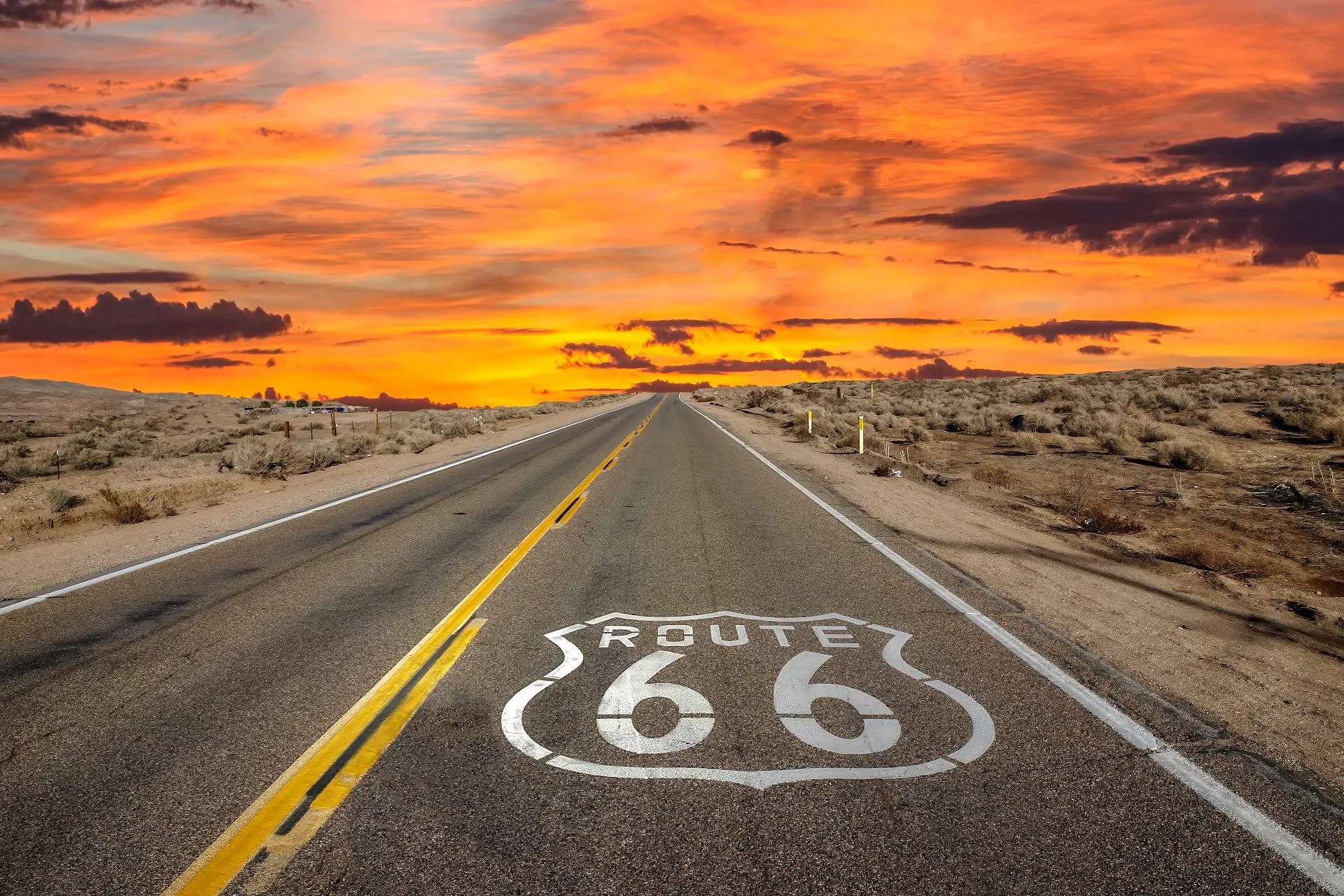

America’s byways traverse deserts, mountains, forests and coastline, linking landmarks and local culture. This guide profiles ten of the most celebrated U.S. road trips, combining practical planning and rich detail. Each route is described with its distance, recommended duration, seasonal timing, highlights and planning tips. The text draws on recent sources and local insights to make this a definitive resource. The analysis is thorough and neutral, aimed at helping travelers of all backgrounds plan the perfect trip through America’s varied terrain without overlooking any nuance.
- Route 66: The Mother Road (Chicago to Los Angeles)
- Route 66 Key Information
- Must-See Stops Along Route 66
- Where to Stay on Route 66
- Route 66 Road Trip Tips
- Pacific Coast Highway: California Dreaming
- Pacific Coast Highway Overview
- Top Scenic Viewpoints and Photo Stops
- Best Beaches and Coastal Towns
- When to Avoid PCH (Weather & Closures)
- Blue Ridge Parkway: Appalachian Beauty
- Grand Circle: Southwest National Parks Loop
- Grand Circle Route Planning
- National Parks on the Grand Circle
- Antelope Canyon and Monument Valley
- Las Vegas as Your Base
- Yellowstone to Grand Tetons: Mountain Majesty
- Yellowstone–Tetons Logistics
- Wildlife Viewing Opportunities
- Geyser Basins and Hot Springs
- Grand Teton Scenic Drives and Hikes
- Great Northern: Glacier to Yellowstone
- Deep South Musical Trail
- Florida Keys: Tropical Island Hopping
- New England Fall Foliage Circuit
- Peak Foliage Prediction Guide
- Vermont’s Scenic Route 100
- New Hampshire’s White Mountains
- Small Town Charm and Festivals
- Black Hills & Badlands: Dakota Highlights
- Mount Rushmore and Crazy Horse
- Badlands National Park Loop
- Deadwood and Historic Towns
- Custer State Park Wildlife Loop
- Road Trip Planning Tools
- Frequently Asked Questions
Selecting among these epic drives depends on time, budget, interests and season. In summer, northern and mountainous routes are optimal (e.g. Glacier–Yellowstone, Grand Tetons, Black Hills), while desert parks (the Grand Circle) shine in spring or fall when temperatures moderate. Coastal drives like the Pacific Coast Highway are accessible year-round, but winter storms can close sections of PCH. Fall foliage is best in New England and the Blue Ridge Parkway in October. Florida and the Deep South remain relatively warm in winter and spring, offering off-season escapes.
- Best Trips by Season: For spring or autumn color, consider the Blue Ridge Parkway or New England circuit. Mid-summer is ideal for high-altitude routes (Yellowstone–Tetons, Glacier). Winter vacationers often choose warm drives (Florida Keys, Deep South). Shoulder seasons (April–May, Sept–Oct) are generally ideal in parks to avoid extreme heat or crowds.
- Family vs. Solo vs. Couple Travel: Road trips suited to families often feature shorter drive segments and interactive stops (e.g. Yellowstone wildlife, Deep South museums, Keys snorkeling), whereas solo travelers might prefer scenic solitude (Great Northern, Blue Ridge). Couples may favor romantic or leisurely routes (Pacific Coast, New England foliage). All routes allow flexibility: they can be shortened or extended to match pace.
- Budget Considerations: Costs vary widely. Fuel is a major factor: AAA’s national average was $3.20/gal as of Sept 2025. At 25 mpg, 1,000 miles uses ~40 gallons (~$128). Lodging ranges from $20–$50/night for camping to $100–$250/night for motels. Urban stretches (L.A., Miami) are pricier than rural park areas. Several routes below note approximate budgets or cheap alternatives. Key tips: use apps to find discounts, share costs with travel partners, and plan some meals as picnics.
| Route | Distance (mi) | Duration (days) | Best Season | Budget | Difficulty |
| Route 66 (Chicago–LA) | 2,448 | 10–14 | Spring, Fall | $$$ | Moderate |
| Pacific Coast Highway (CA coast) | 1,650 | 7–10 | Summer, Fall | $$$ | Moderate |
| Blue Ridge Parkway (VA–NC) | 469 | 5–7 | Fall (Sept–Oct) | $$ | Easy |
| Grand Circle (SW U.S. loop) | ~1,000 | 7–12 | Spring, Fall | $$$ | Moderate |
| Yellowstone–Grand Tetons (WY) | ~500 | 5–7 | Summer | $$ | Moderate |
| Glacier–Yellowstone (MT–WY) | 467 | 5–7 | Summer | $$ | Easy–Moderate |
| Deep South (Nashville–NOLA) | 665 | 7–10 | Spring, Fall | $$ | Easy |
| Florida Keys (Miami–Key West) | 160 | 3–6 | Winter | $$ | Easy |
| New England Fall Circuit | ~800 | 7–10 | Fall (Oct) | $$ | Easy |
| Black Hills & Badlands (SD) | ~300 | 4–7 | Summer, Fall | $$ | Easy |
This table offers a rapid overview for comparison. Each route’s full details and tips are provided below.
Route 66: The Mother Road (Chicago to Los Angeles)

Route 66 embodies classic Americana. Established in 1926 and decommissioned in 1985, the historic highway runs 2,448 miles across eight states. It links Chicago (Illinois) with Santa Monica, CA, and is famed for vintage diners, neon signs and roadside kitsch.
Route 66 Key Information
- Total Distance and Duration: Route 66 covers about 2,448 miles. Many travelers allow 10–14 days to experience major attractions.
- Best Time to Drive Route 66: Spring and fall are ideal to avoid the Southwest heat. Winters can bring snow in the Rocky Mountain legs (New Mexico, Arizona, California), and sections through high desert may be chilly at night. Summer’s long daylight is appealing in the North (Illinois, Missouri).
- Estimated Budget: Fuel for the full 2,448 miles can exceed $300 at current prices. Lodging choices range from budget motels ($60–$100/night) up to $150+ for vintage inns. Classic Route 66 motels often charge extra for historic character.
Must-See Stops Along Route 66
Illinois & Missouri Highlights
Route 66 officially begins in downtown Chicago (at the Art Institute). Early stops include Joliet (a Route 66 museum) and Pontiac (Route 66 Hall of Fame). The road crosses to Springfield, IL, home to Abraham Lincoln’s presidential library and historic sites. In Missouri, iconic stops include Meramec Caverns (a vast cave system near Stanton) and St. Louis, where the Arch and Old Chain of Rocks Bridge recall the era of the road trip.
Oklahoma & Texas Landmarks
Oklahoma’s stretch retains many Route 66 motels and neon signs. Tulsa and Oklahoma City have heritage displays of mid-century culture. Traveling west, Oklahoma City’s National Memorial (for the 1995 bombing) lies just off the route. In Texas, Amarillo is a key stop: don’t miss Cadillac Ranch, an art installation of half-buried painted Cadillacs in a field, and the kitschy Big Texan Steak Ranch (72-ounce steak challenge).
New Mexico & Arizona Attractions
In New Mexico, old Route 66 towns like Tucumcari and Albuquerque preserve vintage motels with neon lighting. Albuquerque’s Old Town and Indian Pueblo Cultural Center showcase Southwest history. Heading into Arizona, Holbrook’s Wigwam Motel (concrete teepees) is a must-photograph novelty. Flagstaff, AZ provides a mountain respite; nearby, the road skirts Petrified Forest National Park (for an added stop). Further west, towns like Seligman, AZ, have lean 1950s facades. A side trip north to Grand Canyon National Park from Flagstaff can be arranged if time permits.
California Final Stretch
California’s portion is a lesson in changing landscapes. After crossing the Colorado River at Needles, the road runs through the Mojave Desert (Barstow has Route 66 museums and diners). A recommended detour is to Palm Springs (mid-century architecture). The final approach takes Route 66 down Cajon Pass into the Los Angeles basin, ending at the Santa Monica Pier where a sign marks the “End of the Trail.” Here travelers often pose with the highway’s terminus sign as proof of the cross-country trek.
Where to Stay on Route 66
Lodging is part of the experience. Period hotels with neon signs help recreate the era’s ambience. The Wigwam Motel in Holbrook, AZ and the Blue Swallow Motel in Tucumcari, NM have preserved their vintage look. Other towns maintain retro inns or roadside cabins. In major cities along the way (Chicago, Albuquerque, Los Angeles) visitors use regular hotels or chains. Campgrounds in national forests or parks can be booked for budget travelers.
Route 66 Road Trip Tips
Gas up frequently in the Southwest – stations are widely spaced between small towns. Carry water and snacks for remote stretches. GPS signal can be unreliable on old alignments; keep a detailed map or offline maps ready. Allow extra time for side stops (many diners and attractions close by mid-afternoon). Keep some cash for small fees (some museums or caves charge entry). Above all, embrace the leisurely pace: the highway’s charm lies in the myriad roadside sights from kitschy museums to neon signs, where the journey itself is the attraction.
Pacific Coast Highway: California Dreaming

The Pacific Coast Highway (PCH) delivers stunning ocean vistas along the West Coast. In California, about 800–1,000 miles of highway run along or near the Pacific shoreline. This drive traverses sunny beaches, forests and cliffside highways from San Diego north to the Oregon border.
Pacific Coast Highway Overview
- Southern California (San Diego to San Francisco): Begin in San Diego (beaches and Balboa Park) and head north through Orange County’s coast (Laguna Beach, Newport). Pass Los Angeles coastal cities (Malibu’s stretch of beach houses). Continue to Santa Barbara’s Spanish-influenced town and then cross into Big Sur. Big Sur’s winding Highway 1 features dramatic cliffs plunging into the ocean; highlights include McWay Falls (a waterfall on the beach) and iconic Bixby Bridge. Around Monterey/Carmel, Hwy 1 merges briefly with Highway 101, allowing tours of Monterey Bay’s aquarium or scenic 17-Mile Drive in Pebble Beach.
- Northern California (San Francisco to Oregon): Cross the Golden Gate Bridge and proceed through Marin Headlands. Highway 1 (and 101) winds through Sonoma wine country, then re-enters forests north of SF. Redwood forests dominate near Mendocino. Approaching the Oregon line, the highway passes the King Range National Conservation Area, with rare wild beaches and cliffs. In Oregon, US-101 parallels the rugged coast: sea stacks and lighthouses (e.g. Cannon Beach’s Haystack Rock, Cape Perpetua) appear almost constantly.
Top Scenic Viewpoints and Photo Stops
The PCH is dotted with overlooks. Central California’s vistas include Grey Whale Cove and Point Lobos (Monterey). In Big Sur, Nepenthe restaurant patio and Pfieffer Beach offer memorable views. Every few miles there are pullouts: on Highway 1, panoramic spots like Ragged Point and Andrew Molera State Park are accessible by short trails. On Northern drives, scenic stops include: Trinidad Bay Overlook (southern Oregon), Otter Rock (Devil’s Punchbowl State Park, OR) and Oregon Dunes Recreation Area (sand dunes meeting the ocean).
Best Beaches and Coastal Towns
Southern California is famed for sandy beaches: La Jolla Cove (SE San Diego), Newport’s boardwalk, Santa Monica Pier (LA, with ferris wheel) and Malibu’s Surfrider Beach. The Central Coast yields quieter beaches: Pismo Beach’s dunes, Hearst Castle’s Escondido Beach, and Morro Bay’s rock. Northern California and Oregon beaches are wilder: Glass Beach (Fort Bragg, multicolored pebbles) and Lost Coast (remote). Towns along the route (e.g. Santa Barbara, Pismo Beach, Mendocino) offer lodging and seafood cuisine for travelers.
When to Avoid PCH (Weather & Closures)
Winter storms often close segments of Highway 1. Big Sur’s segment is notably vulnerable to landslides (e.g. after heavy rains, this stretch can be closed for weeks). Always check Caltrans or park alerts in winter. Summer fog can blanket San Francisco and northward coasts; midday driving yields clearer views. Peak summer weekends (Jul–Aug) are busiest. For best conditions with fewer crowds, plan a shoulder-season trip (late spring or September).
Blue Ridge Parkway: Appalachian Beauty

Winding along the crest of the Blue Ridge Mountains, the 469-mile Blue Ridge Parkway connects Great Smoky Mountains (NC/TN) to Shenandoah National Park (VA). It is America’s most visited scenic highway.
Parkway Key Information
- Virginia Section Highlights: Entering from Shenandoah NP, early features include the Folk Art Center (MP 382) and Humpback Rocks (MP 5). The parkway crosses Peaks of Otter (MP 86, with a lake and historic cabin) and climbs Apple Orchard Mountain in Roanoke, VA. Unique pullouts include the Mabry Mill (MP 176) with a working gristmill museum.
- North Carolina Section Must-Sees: Near MP 300, the Linville Gorge and Linville Falls attract many visitors. In NC, scenic stops include Craggy Gardens (MP 364, famous for summer blooms) and Mount Pisgah (MP 408). Milepost 304 features the Linn Cove Viaduct, a modern engineering marvel curving around Grandfather Mountain.
- Best Overlooks and Hiking Trails: The Parkway has 272 overlooks (named after nearby landmarks). Popular hiking: Graveyard Fields trails (MP 419, waterfall loop) and Crabtree Falls (MP 339, a challenging trail to a 300-ft cascade). Waterfall hikes like Catawba Falls (near MP 421) are also accessible from nearby roads.
- Fall Foliage Timing and Tips: Leaf-peepers flock here in autumn. Peak fall color usually occurs by mid-October, earlier at higher elevations. For full effect, plan trips from late September through mid-Oct. Weekdays in October are less crowded. Note: the parkway’s speed limit is 45 mph, with no gas stations on the road itself.
- Blue Ridge Music and Culture: Music is woven into the region’s identity. The Blue Ridge Music Center (MP 213) hosts free lunchtime concerts of old-time and bluegrass. Appalachian cultural sites (folk art museums, logging exhibits) and traditional mountain music festivals occur seasonally in towns along the route.
Grand Circle: Southwest National Parks Loop

This southwestern loop connects Utah and Arizona’s major parks and monuments, roughly an 1,000-mile round-trip if done as a loop. Key parks include Zion, Bryce Canyon, Capitol Reef, Canyonlands, Arches, and the Grand Canyon (see below for others).
Grand Circle Route Planning
- 7-Day Itinerary: A fast 7–10 day loop can cover ~800 miles, hitting six major parks (Zion, Bryce, Grand Canyon, Capitol Reef, Canyonlands, Arches). This involves 1–2 days per park with driving in between. One source outlines an ~800-mile loop focusing on the parks near Las Vegas in about 10 days.
- 14-Day Extended Version: Taking 10–14 days allows side trips to more parks (Mesa Verde, Petrified Forest) and longer hikes. Two weeks can encompass eight parks. For example, a 12-day itinerary might visit 10–12 parks and monuments (over 3,300 miles).
- Season: Mild weather occurs in spring (April–May) and fall (Sept–Nov). Summer is very hot (often >100°F) especially in Zion and Bryce, but early morning hikes are possible. Hotels and campgrounds fill quickly in summer; shoulder seasons offer cooler temps and fewer tourists.
- Las Vegas as Base: Las Vegas (NV) is the typical hub. It’s ~160 miles (2.5 hours) from Zion’s entrance. Many travelers overnight in Vegas before or after the loop, thanks to its flights, rental cars and countless hotels (including budget options).
National Parks on the Grand Circle
- Grand Canyon (AZ): Primarily the South Rim. Key overlooks include Mather, Yavapai and Desert View. Visitors often spend a day or two. Bright Angel and Kaibab trails descend into the canyon for those seeking a hike.
- Zion (UT): Renowned for the sheer canyon walls. Shuttle buses take visitors along the Zion Canyon Scenic Drive. Hikes include the Emerald Pools (moderate) and Riverside Walk (to the Narrows entrance). Nearby, the lesser-known Kolob Canyon (north of I-15) is quieter and scenic.
- Bryce Canyon (UT): Famous for hoodoo rock formations. Sunrise and Sunset Point provide spectacular amphitheater views. A top hike is Queens Garden/Navajo Loop, which winds among the spires.
- Capitol Reef (UT): Known for its Waterpocket Fold (rock layers) and orchards. The scenic drive (a loop off the main road) features narrow Capitol Gorge and petroglyphs. Fruita Historic District has 100-year-old orchards where visitors can pick fruit in season.
- Canyonlands & Arches (UT): These Utah parks are close by. Island in the Sky district (Canyonlands) has overlooks like Mesa Arch. Arches NP’s 18-mile Scenic Drive has Delicate Arch, Balanced Rock, Double Arch, etc. (Arches requires timed entry in peak season.)
- Other Nearby Sites: Monument Valley Tribal Park (AZ/UT) and Antelope Canyon (AZ, Navajo land) are frequently included. Both require guided tours. Horseshoe Bend, near Page, AZ, is a short walk from parking to view a dramatic Colorado River curve.
Antelope Canyon and Monument Valley
These scenic highlights add character. Antelope Canyon’s slot canyons (light-beam photography spots) require Navajo tour tickets. Monument Valley’s red sandstone monoliths (on the UT/AZ border) are best seen by guided jeep tours or a drive through the Navajo Tribal Park.
Las Vegas as Your Base
Las Vegas offers practical advantages. On arrival day, many travelers stay near the airport or Strip, then stock up on supplies (water, groceries, gas) before heading to the parks. After the circuit, returning to Vegas allows for a final night of rest or entertainment. Transit through Vegas breaks up long driving days at each end of the trip.
Yellowstone to Grand Tetons: Mountain Majesty

This route combines two nearby parks in Wyoming. Many itineraries fly into Jackson Hole, WY (just south of Grand Teton NP) and drive north, looping through Yellowstone. Alternatively, some start in Salt Lake City, UT and approach Yellowstone from the south.
Yellowstone–Tetons Logistics
- Salt Lake City Starting Point: One option is to begin in Salt Lake City and drive north through Utah and Idaho to Grand Teton. For example, driving via Bear Lake and Idaho Falls is scenic. This longer approach enters Grand Teton from the south and Yellowstone via West Yellowstone.
- Jackson Hole Base Camp: Jackson, WY is a common base. Grand Teton NP is immediately north (5–10 minute drive). From Jackson to Yellowstone’s South Entrance (near Jackson Lake) is about 1.5 hours. Many trips start by exploring Grand Teton first, then head north to Yellowstone.
- Trip Duration: Plan at least a week for both parks. Yellowstone alone has half the world’s geysers and warrants 3–4 days. Grand Teton (with its peaks and lakes) needs 2–3 days. A 7–8 day itinerary covering highlights of both is feasible if timed efficiently.
Wildlife Viewing Opportunities
Yellowstone offers perhaps the best big-game viewing in the U.S. Lamar Valley hosts massive elk and bison herds, and wolves occasionally. In the Hayden Valley and along the Madison River you’ll see buffalo, bison and grizzly bears. Bison often block roads in summer; always stay back at least 25 yards from wildlife. Grand Teton, being smaller and less crowded, can be excellent for moose and black bears near lakes and meadows. For safety and success, dawn and dusk drives with binoculars (and guides from park rangers) are key.
Geyser Basins and Hot Springs
Yellowstone’s boardwalk loops in Upper, Midway and Lower Geyser Basins reveal steaming pools (Grand Prismatic Spring, Mammoth Hot Springs) and regular eruptions (Old Faithful). The landscape is otherworldly with bubbling mud pots and algae-colored terraces. Grand Teton NP, by contrast, has no geysers; instead, visitors often soak in Mammoth Hot Springs (just north of Yellowstone) or nearby Granite Hot Springs (a hot pool south of Jackson).
Grand Teton Scenic Drives and Hikes
In Grand Teton, the main loop (Teton Park Road) is only 18 miles but studded with views. Pullouts like Oxbow Bend (MP 5) frame the peaks in reflected water. Hiking trails include Jenny Lake Loop or steeper Cascade Canyon. The Moose-Wilson Road (WY-390) runs south of Jackson, forested terrain with elk and moose sightings. Farther west, the John D. Rockefeller Jr. Memorial Parkway connects to Yellowstone for a round trip.
Great Northern: Glacier to Yellowstone

This Great Northern route traverses Montana linking Glacier NP to Yellowstone. The crown jewel is Going-to-the-Sun Road in Glacier (a 52-mile mountain pass open mid-summer). From Glacier’s west entrance to Yellowstone (West Yellowstone, MT) via Missoula and Bozeman is about 446 miles by the quickest interstates. An alternate I-15 route from Glacier south toward Idaho, then east into Yellowstone, is about 457 miles.
The journey features sweeping mountain vistas and open prairies. After Glacier’s high alpine ridges (note: Going-to-the-Sun Road closes in winter), the drive on US-93 through the Bitterroot Valley (along St. Joe River) is scenic forested valley. Through Missoula and Bozeman (college towns with craft breweries), one heads east to Yellowstone. Along the way are small-town stops (Whitefish, Kalispell in MT) and historical sites (Lewis & Clark Caverns, near Helena, if adding miles).
Native American history is present: Glacier lies next to the Blackfeet Reservation, and Lewis and Clark’s C.M. Russell Museum (Great Falls) celebrates Western art. Wildlife is plentiful: bighorn sheep and elk in Glacier, and typical Rocky Mountain fauna in western Yellowstone. Early summer is prime (roads open late June), late fall close to October sees the first snows.
Deep South Musical Trail
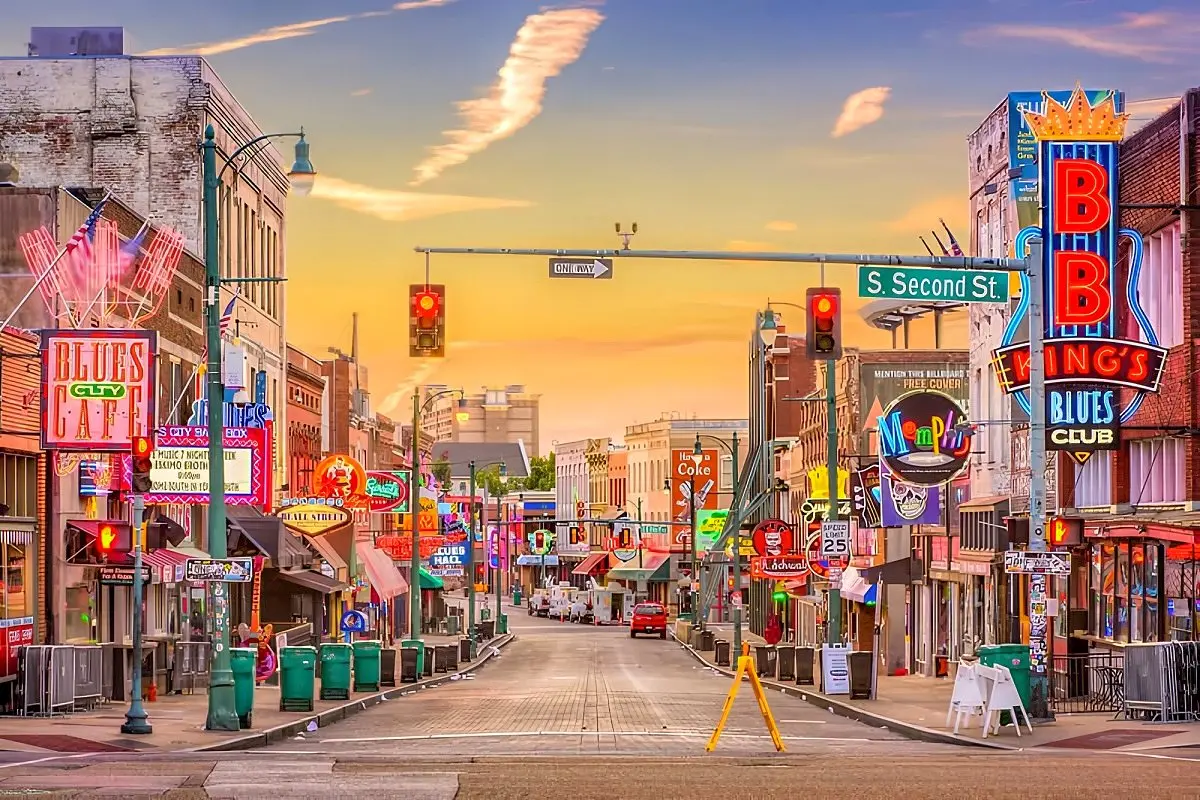
This Southern road trip follows a musical heritage trail from Nashville (TN) to New Orleans (LA), passing through Memphis (TN). About 665 miles of highway (via I-40, I-20, I-55) connect these culture-rich cities, plus side detours into Mississippi and Alabama if desired. The drive crosses six states, delving into country, blues and jazz history.
Music City Stops
- Nashville, TN: The country music capital. Visit the Grand Ole Opry, Country Music Hall of Fame and historic Ryman Auditorium. Broadway’s neon-lit honky-tonks host live bands day and night.
- Memphis, TN: The birthplace of rock ’n’ roll and blues. Graceland (Elvis’s mansion) and Sun Studio (where Elvis, Johnny Cash, B.B. King recorded) are major attractions. Beale Street’s bars feature blues music. Memphis BBQ (ribs, brisket) is famous here.
- Clarksdale, MS (Delta Blues): A detour into Mississippi reveals Clarksdale, the “Crossroads” of blues legend. Clubs like Red’s Lounge have nightly blues.
- New Orleans, LA: The endpoint of many music pilgrimages. The French Quarter and Bourbon Street pulse with jazz and brass bands. Classic Creole cuisine is a must: gumbo, jambalaya and beignets. Historic landmarks (Jackson Square, St. Louis Cathedral) add flavor.
Southern Food Trail
Food is central in the Deep South. Nashville’s hot chicken, Memphis dry-rub BBQ ribs, and Southern comfort staples abound. New Orleans contributes beignets (at Cafe du Monde) and po’boys. Along I-40/I-55 are catfish shacks and shrimp po’boy stands. Snacking between stops is part of the fun (for example, a roadside diner in rural Alabama for biscuits and gravy).
Historic Plantations and Civil War Sites
This drive is studded with history. The Natchez Trace Parkway (route) passes Civil War and antebellum sites. Natchez, MS (60 miles south of Memphis) is lined with 19th-century mansions and hosts fall festivals. Vicksburg, MS (along the Mississippi) is the site of a major Civil War battle and national park. Even the music route itself follows historic trade and travel paths dating to the 1800s.
Florida Keys: Tropical Island Hopping

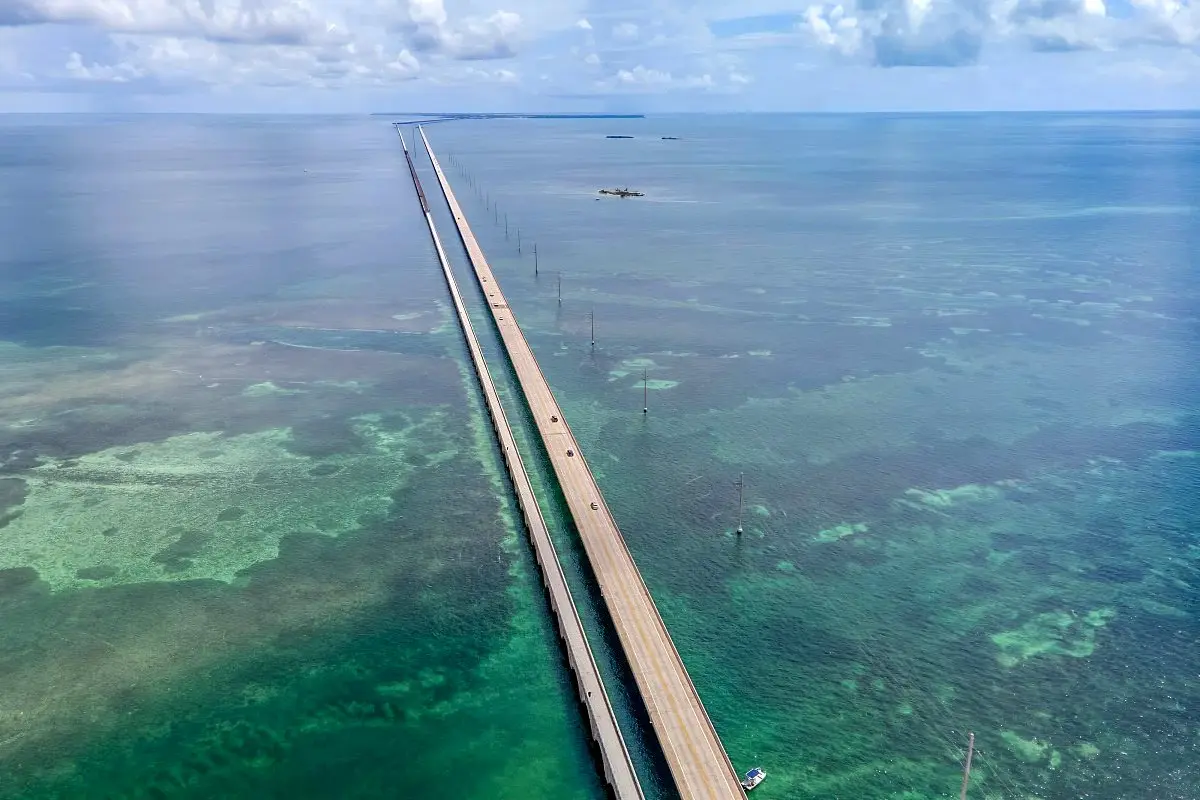
From Miami to Key West, U.S. Route 1 (Overseas Highway) connects about 42 islands over 160 miles. This one-of-a-kind drive is the southernmost U.S. highway, featuring 42 bridges (including the famous Seven Mile Bridge) over aquamarine waters.
Overseas Highway Highlights
The drive begins in Florida City, skirting Everglades water conservation areas, then hits Key Largo (John Pennekamp Coral Reef State Park) for snorkeling. The long spans across Florida Bay include Indian Key and Islamorada (known for fishing). The Middle Keys (Marathon) have Marathon Dolphin Research Center and Bahia Honda State Park (white-sand beaches). Seven Mile Bridge is the longest span, offering open-ocean views. Key West is the tropical terminus, with a lively downtown and historic sites like the Ernest Hemingway House.
Best Keys for Different Activities
- Diving & Snorkeling: Key Largo has Pennekamp Park reefs and wrecks (USS Spiegel Grove). The Lower Keys (Big Pine, Looe Key) have shallow reefs good for all levels. Dry Tortugas NP (accessible by ferry from Key West) has pristine reef snorkeling.
- Fishing: Islamorada and Marathon host numerous fishing charters (shallow water and deep sea). Sportfishing tournaments are common.
- Wildlife & Nature: The Florida Keys Wildlife and Environmental Area (Big Pine Key) protects the tiny Key deer. There are guided kayak or eco tours in mangrove creeks and mangrove tunnels (Indian Key).
- Nightlife: Key West’s Duval Street offers lively bars and live music, a fun contrast after day touring.
Water Sports and Diving Opportunities
The Keys are a global hotspot for watersports. Snorkeling and scuba are available at virtually every major key (especially Key Largo and Key West). Windsurfing and kiteboarding take place in higher winds near Key Biscayne or Islamorada. Fishing enthusiasts can target tarpon, snapper and grouper. Many visitors rent kayaks or jetskis. Warm water year-round means off-season diving too.
Note: Traffic can be slow during peak times; allow extra time per mile. Driving the Keys is an adventure that melds highway with island hopping.
New England Fall Foliage Circuit

Autumn color is New England’s signature. This route snakes through six states (Maine, New Hampshire, Vermont, Massachusetts, Connecticut, Rhode Island) on smaller highways and parkways to catch peak foliage and historic villages.
Peak Foliage Prediction Guide
Peak color varies by latitude and elevation. In northern New England (Maine, VT, NH), trees peak typically in early October. Southern New England (CT, RI) peaks a bit earlier, late September or early October. For instance, forecasts often show Vermont and New Hampshire at peak by mid-Oct, while coastal Maine’s Acadia NP may not peak until late October.
Vermont’s Scenic Route 100
Vermont’s Route 100 runs north–south through the Green Mountains and is famed for its fall vistas. Covered bridges and red barns dot the hillsides. Towns like Stowe and Woodstock host harvest festivals and exhibit classic New England architecture. The Green Mountain Byway (VT-100A/100) and passes like Smugglers’ Notch (VT 108) provide high-elevation color displays.
New Hampshire’s White Mountains
In New Hampshire, the Kancamagus Highway (US 112) is a highly visited byway. It winds through White Mountain National Forest with overlooks like Sabbaday Falls and Rocky Gorge. Interstate 93 north of Lincoln goes through Franconia Notch, offering views of flume gorges and the Old Man of the Mountain memorial (viewing spot). Nearby, the Mount Washington Auto Road (open May–Oct) provides one of the highest summit roads in the U.S.
Small Town Charm and Festivals
Massachusetts’ Mohawk Trail (Route 2 through western Mass) and Connecticut’s Litchfield Hills also rival the Northeast’s appeal. Small towns (Stowe, VT; Woodstock, VT; Woodstock, CT) feature antique shops and cider mills. Covered bridges in New England (e.g. Quechee Gorge in VT, Cornish-Windsor in NH/VT) are picturesque stops. Many towns hold foliage festivals or fairs in October. Book inns or B&B’s early, as rural lodging often sells out during prime leaf-peeping weeks.
Black Hills & Badlands: Dakota Highlights

South Dakota’s Black Hills and Badlands offer a compact road trip through national monuments, unique geology and Old West history. A loop of roughly 300 miles can include all major sights.
Mount Rushmore and Crazy Horse
Begin in the Black Hills. Mount Rushmore (near Keystone) is the famous presidential carving (2 million annual visitors). Nearby is the Crazy Horse Memorial (a gigantic ongoing sculpture of the Lakota leader). Both have visitor centers and short trails for views.
Badlands National Park Loop
Drive east to Badlands National Park. The Badlands Loop Road (SD Highway 240) takes you into a moonscape of eroded buttes and pinnacles. The layered sediment (“zebra-striped”) are visually stunning. Bison and bighorn sheep often graze near the road. A half-day or full-day stop allows short hikes (e.g. the 1.5-mile Badlands Wall Trail) and sunrise/sunset photography. One guide aptly calls the Badlands “well worth a day or two” of exploration.
Deadwood and Historic Towns
Head back west into the Hills. Deadwood, SD is a historic gold-mining town with restored 19th-century main street (with gaming halls). Nearby Spearfish Canyon offers waterfall hikes (e.g. Roughlock Falls). Sturgis (famous for its motorcycle rally) and the town of Custer (gateway to Custer State Park) also preserve frontier charm.
Custer State Park Wildlife Loop
In Custer State Park (southwest Black Hills), drive the 18-mile Wildlife Loop Road. Here over a thousand buffalo roam. Visitors commonly encounter herds up close (and pronghorn, elk and burros). The Needles Highway (scenic SD 87) passes narrow granite pinnacles, and Iron Mountain Road has tunnel “portals” framing Mount Rushmore. The combination of wildlife and carved mountain roads makes Custer State Park a fitting finale to the Dakota road trip.
Road Trip Planning Tools

Modern apps streamline the logistics. AAA’s TripTik Planner (online/mobile) lets you plan routes with up to 25 stops, find AAA-approved lodging, attractions and dining, and even display gas stations with prices. Google Maps, Waze or Roadtrippers are also useful for routing and detours. Fuel budgeting tools (AAA’s and others) are recommended. For example, AAA reported a national average of $3.20/gal in Sept 2025, which you can plug into calculators to estimate trip fuel cost.
Before departure, check official sources for road conditions. For instance, state DOT sites and NPS alerts will note closures (e.g. snow on Going-to-the-Sun Road). Service apps (GasBuddy, state tourism) also help. Prepare your vehicle: have a maintenance check, carry an emergency kit (flashlight, first aid kit, jumper cables, water) and spares (tire, coolants) especially when traveling remote highways.
Road Trip Packing Guide
Universal Must-Haves: Valid driver’s license, auto insurance and registration. Carry cash/credit cards, maps or downloaded routes, and reservations. Pack a first-aid kit, phone charger and spare phone battery. Always have water and snacks in the car. Sunglasses, sunscreen and insect repellent are essential in many areas. A flashlight or headlamp is wise if camping or exploring late.
Seasonal Gear: Summer travelers need hats, light clothing, and hydration gear (water bottles, electrolyte packs). In hot desert regions (Grand Circle, Deep South in summer), sunscreen and rehydration salts are critical. In fall or spring, bring layers and rain jackets for mountain or New England trips. Winter travelers should have warm layers, snow chains and ice scraper. Beach trips demand swimsuits, towels and water gear.
Comfort and Entertainment: A travel pillow and blanket make long drives easier. Bring cameras/binoculars for wildlife viewing or scenic photography. Pack hiking shoes for short nature walks. Audio entertainment (music playlists, podcasts, audiobooks) helps pass hours. For families, include car games or tablets for children’s amusement.
Leave extra space for souvenirs (local crafts, postcards) and picnic items. An organized car (with bins or trunk organizers) prevents chaos on a long journey. Finally, a notebook or app for travel notes can turn the trip into memories to share later.
Frequently Asked Questions
How much does the average American road trip cost? There is no fixed cost—it depends on length, vehicle and style. For budgeting, note that AAA’s gas index was $3.20/gal. A 2,000-mile trip in a 25 mpg car would need ~80 gallons (~$256). Daily costs (gas, food, lodging) can range $100–$200 per vehicle. Overnights in motels add $80–$150 each; camping is cheaper. One tip is to use mileage-reimbursed maps (like AAA) and apps to estimate each leg’s cost before the trip.
What’s the best vehicle for a cross-country road trip? Choose based on comfort and efficiency. Sedans or hybrids (Prius, Accord) save fuel. SUVs or minivans offer cargo and legroom for families or groups. Small cars excel in tight mountain roads (e.g. Going-to-the-Sun’s switchbacks), but larger vehicles handle camping gear better. If weather might turn snowy (Northern or mountain routes), all-wheel drive is prudent. Ultimately, reliability and comfort (good suspension, adjustable seats) matter most.
Can I rent an RV for these road trips? Yes. For example, Cruise America, North America’s largest RV rental company, has outlets in major cities. Peer-to-peer RV rental (Outdoorsy, RVshare) is another option. An RV provides both transport and lodging; campgrounds often have sites for RVs (with hookups). Downsides: navigating some narrow or winding roads can be tricky (Big Sur’s Bixby Bridge has height limits; Goat Canyon, California’s route, forbids RVs). Plan your route accordingly if in an RV.
Are these routes suitable for solo female travelers? In general, yes. All roads listed are major highways or well-traveled park roads. Standard safety applies: avoid remote camping alone at night, lock the car, and inform someone of your itinerary. Carrying an emergency kit and a portable charger is wise. Daytime travel is typical; after dark, one might choose lit areas for stops. Many national parks and towns are accustomed to solo visitors. Using official campsites or lodges (instead of secluded spots) adds security.
Which road trip is best for families with young children? Family-friendly trips often have educational and entertaining stops. Yellowstone–Tetons offers easy kid-approved attractions (bison herds, Old Faithful). The Deep South route has interactive museums (e.g. Country Music Hall in Nashville, aquarium in Atlanta), plus mild coastal remnants (Gulf Shores). Florida Keys is relatively short with boating activities. Routes like Route 66, with many souvenir stops and short daily drives, also suit families. In general, look for routes with good cell service, plenty of rest areas and hotels.
How far in advance should I book accommodations? In peak season (summer, fall foliage), book 3–6 months ahead. Popular parks and mountain towns fill up early (Yosemite, Glacier, Sedona). National park lodges often require reservations a year in advance. For motels in gateway towns (Bar Harbor, Gatlinburg), reserving in spring is wise. Off-season (late fall, winter) is more flexible. Always have backup lodging choices (adjacent towns or campgrounds) in case your first choice is booked.
What’s the ideal road trip duration? It depends on the route’s scale. As a rule of thumb: one week is minimum for a sizable trip. For example, Pacific Coast Highway or Smokies can be done in 7–10 days. Two weeks is ideal for sprawling routes like Route 66 or a full Grand Circle tour. Daily driving of 200–300 miles (3–5 hours) is comfortable. In national parks or scenic areas, allow extra days. A rush trip feels short; it’s often better to trim destinations than to overload the schedule.
Are there wheelchair-accessible options for these trips? Many facilities are accessible. All listed parks have at least one accessible trail, viewpoint or shuttle. For instance, Yellowstone’s boardwalks (Fountain Paint Pots) and Grand Canyon’s rim trails are wheelchair-friendly. Visitor centers typically have ramps. However, mountain roads (like Going-to-the-Sun Road) have grades and fewer amenities. Historic areas (e.g. Natchez mansions) vary in accessibility. Travelers should consult specific park and city resources; Americans with Disabilities Act (ADA) information is widely available online for each site.