
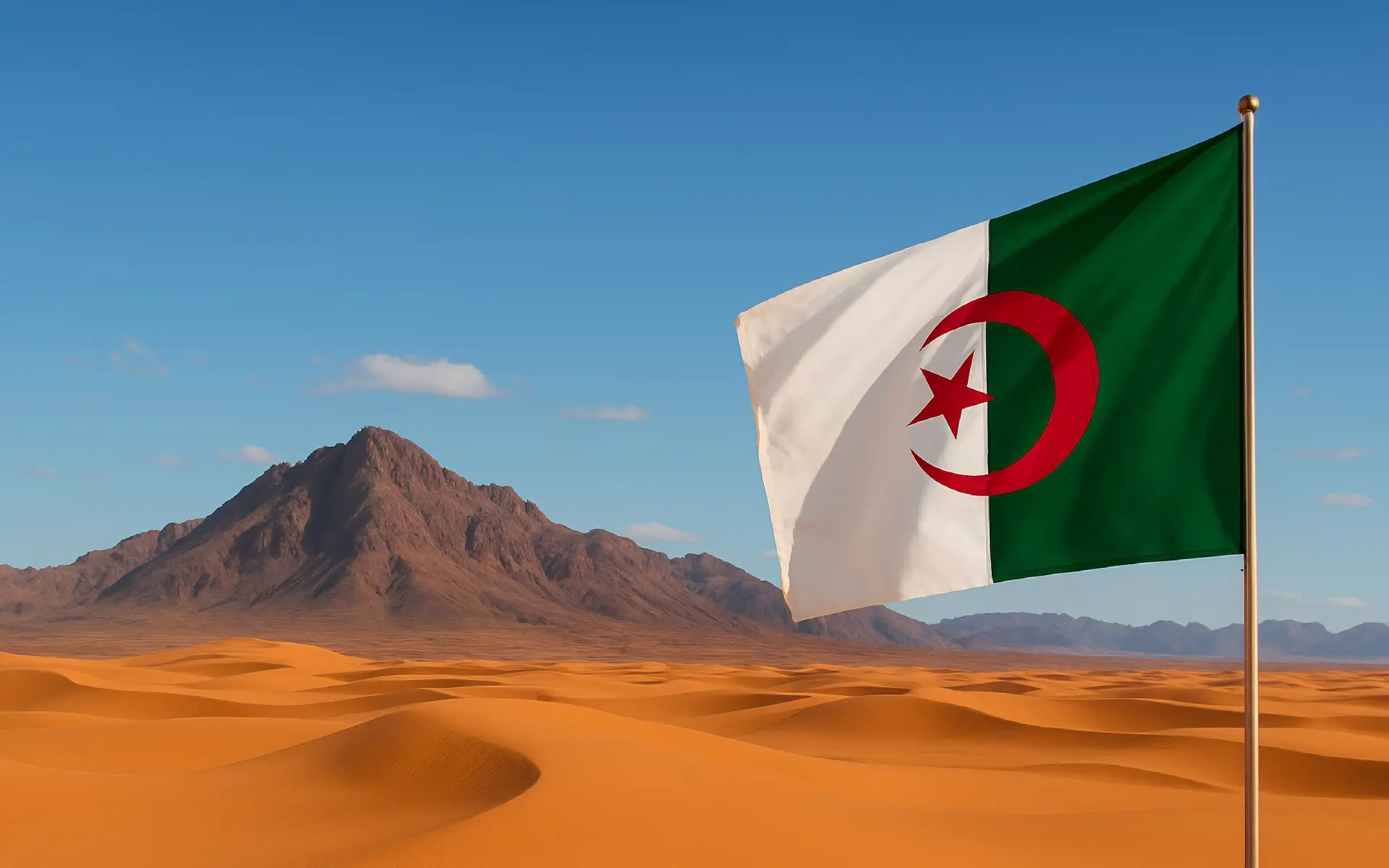

Algeria is a land of superlatives and surprises, the vast, sunbaked expanse known as Africa’s giant. At 2,381,741 square kilometers, Algeria is the largest country on the African continent and the tenth-largest in the world. Its name conjures the Sahara Desert – indeed, over 80% of Algeria’s territory is desert. Yet the nation’s story stretches from ancient kings to modern revolutions, from snow-capped peaks to tropical coastlines. This guide peels back Algeria’s many layers – geographical, historical, cultural, economic, and quirky – with rigorously sourced detail and a measured, journalistic tone.
- Geography & Physical Characteristics
- Historical Facts: From Numidia to Independence
- Political & National Symbols
- Language & Cultural Identity
- Demographics & Population
- Economy & Natural Resources
- UNESCO World Heritage Sites
- Wildlife & Natural Environment
- Food, Cuisine & Culinary Traditions
- Sports, Arts & Notable Achievements
- Unique & Unusual Facts
- Women’s Rights & Social Progress
- Travel & Regional Highlights
- Modern Algeria & Contemporary Issues
- Fascinating Quick Facts
- Conclusion
Geographers and travelers alike will find surprises: Algeria’s Mediterranean coast runs some 1,335 miles (2,148 km) long, bearing waves that never reach the Sahara sands far inland. North of the Sahara lie lush “Tell” Atlas ranges, while in the south the Hoggar (Ahaggar) highlands loom, anchored by Mount Tahat (3,003 meters) – the country’s highest point. Snow even falls in the Sahara: in 2018, the desert town of Ain Sefra (the “gateway to the Sahara”) was blanketed by about 40 centimeters of snow. Such extremes – searing heat by day, freezing cold by night, dust storms and torrential floods – define Algeria’s climate. This article will lay out Algeria’s geography, history, and culture in depth. You will discover not only statistics and dates, but the lived reality behind them – like urban Algerians living in sprawling cities on the coastal plain, and nomadic Amazigh peoples shepherding herds beneath the same stars that watched ancient stone tools.
Geography & Physical Characteristics
Algeria’s sheer scale dominates any discussion of its geography. It covers 2,381,741 km² (919,595 mi²), a footprint larger than many European countries combined. This vast land is divided into four major physical regions: the fertile Mediterranean north, the arid highlands and plateaus of the interior, the rugged desert massifs to the south, and the Sahara proper (which itself is split into sub-regions). In practical terms, the heart of Algeria is the Sahara: over 80% of the nation’s surface is desert or semi-desert. Yet most Algerians live far north. Roughly 91% of the population inhabits the narrow coastal strip that accounts for only about 12% of the land.
- Size and comparison: Algeria spans 2,381,741 km². It is the largest country in Africa and tenth-largest globally. In fact, Algeria is larger than the combined areas of France, Spain, Sweden, and Germany.
- The Sahara Desert: More than eight out of ten square kilometers lie under desert sand. The Algerian Sahara is not just the dunes of the classic Sahara but also rocky plains and mountain peaks like the Hoggar. Much of this territory is virtually uninhabited.
- Topography: Mountain chains ring the north. The Tell Atlas (Algeria’s coastal mountains) and the Saharan Atlas merge in the east to form the Aurès Massif. Farther south, the Hoggar Mountains (in central Sahara) rise dramatically – home to jagged peaks like Tahat (3,003 m) and even frozen mountaintops in winter. El Oued, a town in the southeast, sits in an oasis valley where all houses have domed roofs – earning it the nickname “City of a Thousand Domes”.
- Coastline: Algeria’s northern flank meets the Mediterranean. The coast measures about 1,335 miles (2,148 km), with white-sand beaches near Oran and rocky capes near Annaba. This strategic position has meant centuries of trade and conquest by Phoenicians, Romans, Ottomans, and others.
- Climate extremes: From the humid, mild Mediterranean north (wet winters, hot summers) to truly extreme desert conditions, Algeria’s climate varies wildly. Summer highs in the Sahara can soar above 50°C (122°F), while winter nights in the desert fall below freezing. Remarkably, snow has fallen at high elevations. In January 2018, the desert town of Ain Sefra (1,000 m elevation) awoke to 40 cm of snow – only the third recorded Saharan snowfall in decades (previous instances were 1979 and 2017).
- Borders and neighbors: Algeria has seven neighbors. Clockwise from the west: Morocco and the disputed Western Sahara, Mauritania, Mali, Niger, Libya, and Tunisia. Its western border with Morocco has been closed since 1994 (reflecting long-running political tensions). To the north and east, Algeria shares the Mediterranean with Europe.
Algeria’s land area is enormous – bigger than nearly any other nation. The Sahara dominates the south (over 80% desert) while nearly all people live in the narrow coastal zone. Despite its aridity, even the Sahara sees snow (Ain Sefra, 2018). High points include Mt. Tahat (3,003 m); Algeria’s vast Mediterranean coastline stretches 1,335 miles, connecting the country to the blue waterways of the north.
Key Geo Facts
Historical Facts: From Numidia to Independence
Algeria’s modern geography belies a layered history that stretches back to antiquity. In ancient times much of what is today northern Algeria was Numidia, the first Berber kingdom and one of Africa’s early states. Around 200 BCE, King Masinissa united rival Numidian tribes and allied with Rome in the Punic Wars. The Numidian kingdom evolved over centuries: it alternated between Roman province and local client kingdom until finally the Roman Empire annexed it in 46 BCE. Roman ruins (like the cities of Timgad and Djémila) still dot the landscape, testifying to 400+ years of Roman rule. After Rome’s fall, Vandals and Byzantines held sway for a time, but by the 7th century Arab Muslim armies arrived from the east. The Arab conquest (c. 680 CE) spread Islam through North Africa; Arabic gradually became dominant, mingling with indigenous Berber culture.
- Medieval empires: Between the 8th and 15th centuries, Algeria saw the rise of powerful Berber-led dynasties (e.g. the Zirids and Almohads) and long-lasting connections with Andalusian Spain. Coastal cities like Tlemcen and Alger became vibrant centers of trade and scholarship.
- Ottoman rule: In 1516 the Barbarossa brothers (corsair captains) seized Algiers. They and their successors established the Regency of Algiers – an Ottoman vassal state that lasted until 1830. For three centuries the Mediterranean was Algeria’s maritime highway: North African corsairs struck European ships, and Ottoman governors (deys) maintained a strong, if locally organized, Ottoman presence.
- French colonization (1830–1962): In 1830 France invaded and began 132 years of colonial rule. The war to conquer Algeria was brutal and protracted. By 1875, Algeria was largely pacified by force, with massive loss of life. (One estimate puts colonial-era casualties around 800,000 indigenous Algerians.) The colonists declared Algeria part of France, yet discriminated harshly against the Muslim majority.
Key Chronology: Ancient Numidia (Berber kingdom) ▶ Roman Africa (Roman province) ▶ Arab-Muslim dynasties (7th–16th c.) ▶ Ottoman regency (1516–1830) ▶ French Algeria (1830–1962) ▶ Independence (1962).
- War of Independence: A nationalist struggle erupted in 1954 when the Front de Libération Nationale (FLN) began guerrilla war against France. Eight years of conflict ended with independence via the Évian Accords (signed March 1962) and the formal declaration of the People’s Democratic Republic of Algeria on July 5, 1962. Estimates of the war’s human cost are still disputed: French sources often cite about 400,000 deaths (both combatants and civilians), while Algerian accounts claim up to 1.5 million Algerians killed.
- Civil War (1992–2002): In the 1990s Algeria suffered a bloody internal conflict. As violence flared between the government and Islamist insurgents, more than 150,000 people were killed. The war devastated communities, yet modern Algeria has since gradually returned to stability.
- Prehistoric discoveries: Recent archaeology has pushed Algeria’s story even farther back. In the northeastern plateaus near Sétif, researchers uncovered Oldowan-style stone tools 2.4 million years old at the site of Ain Boucherit. This means hominins (early humans or relatives) inhabited Algeria long before Homo sapiens existed, challenging old ideas about early human migrations out of East Africa.
Throughout these eras, Algeria’s cultural heritage accumulated. From the rock art of Tassili n’Ajjer (dating back 10,000+ years) to the Casbah citadel of Algiers (a fortified medieval city), Algeria’s past is engraved in its landscape. Each layer of history – Berber, Arab, Ottoman, French – adds to the nation’s complex identity.
Political & National Symbols
Algeria today is officially the People’s Democratic Republic of Algeria. It is a semi-presidential republic with a multi-party system. Administratively, the country is divided into 58 provinces (wilayas) and over 1,500 municipalities. Key modern facts and symbols:
- Flag: The Algerian flag is green and white with a red star and crescent. The green stands for Islam, the crescent and star also Islamic symbols, the white for purity, and red for the blood of martyrs. (The colors recall earlier resistance banners.) The crescent & star tie Algeria to wider Arab and Islamic heritage.
- Anthem – “Qassaman”: Algeria’s national anthem is Kassaman (“We Pledge”), written in 1956 during the war of independence. Unusually, its lyrics explicitly name another country: France. In the anthem’s verses and chorus the struggle against French colonial rule and the memory of martyrs are invoked. (Tradition has it that when the President of France visits, Algeria omits the stanzas that mention France.)
- National Day: November 1 (Revolution Day) is Algeria’s top national holiday. It commemorates the FLN’s coordinated attacks on French targets in 1954 that launched the independence war. Another patriotic date is July 5, the day independence was declared in 1962.
- Legal system: Algerian law is a blend of French civil law (from the colonial era) and Islamic (Sharia) law. Civil courts handle most cases, but personal status matters (marriage, inheritance) are governed by religious law.
- International affiliations: Algeria punches above its weight diplomatically. It was a founding member of the Arab Maghreb Union (with Morocco, Tunisia, Libya, Mauritania) and is an active member of the African Union, Arab League, and OPEC. Its state oil company, Sonatrach, is the largest corporation in Africa, underscoring Algeria’s role as a leading energy exporter.
Algeria’s flag is rich in meaning: green for Islam, white for peace and purity, red for sacrifice. The national anthem “Qassaman” refers directly to Algeria’s struggle against France. Revolution Day (Nov. 1) marks the 1954 uprising. Algeria retains ties to its history through these symbols and through membership in regional and global bodies (AU, Arab League, OPEC).
Symbol Spotlight
Language & Cultural Identity
Modern Algeria has a complex linguistic and cultural mix. The constitution recognizes two official languages: Modern Standard Arabic (MSA) and Tamazight (Berber). (In 2016 the Algerian government fully recognized Tamazight in the constitution.) In daily life, Algerian Arabic – a Maghrebi dialect (Darja) – is the mother tongue for most people. Berber languages are spoken by Amazigh communities mainly in the Kabylie and Sahara regions.
Another legacy of history is French. Algeria has no official colonial language, but French is widely used in media, education, and business. An estimated 15 million Algerians speak or understand French. Its role is hotly debated: younger generations often learn some English or French at school, and Algeria is now rapidly introducing English into education. But for now, French remains the main second language.
Algeria’s identity is also strongly Islamic (99% of Algerians are Sunni Muslim), and Islam is ingrained in daily life and law. Yet there is room for secularism: Algerian women have remarkable educational achievements (see below) and religious minorities have some rights. Algerian cuisine, arts, and music reflect Berber, Arab-Andalusian, Ottoman, and French influences. For example, rai music from Oran blends Arabic vocals with Western instruments, and Algerian literature (from Albert Camus to contemporary writers) is part of a broader francophone and Arabic intellectual world.
In summary, Algeria’s cultural fabric is layered: ancient Amazigh roots, Islamic traditions since the 7th century, and vestiges of French colonial and European influence. This blend is visible in the Algerian psyche: proud of Arab-Islamic heritage, fiercely independent (shaped by the anti-colonial struggle), but also generally open to global culture.
Arabic (MSA) and Tamazight (Berber) are official. Algerian Arabic (Darja) is spoken by virtually everyone; about 15 million Algerians also speak French. English is growing in schools. Culturally, Algeria identifies strongly with Islam (99% Sunni) but shares Mediterranean and African ties through cuisine, music (rai), and arts.
Language Facts
Demographics & Population
As of the 2020s, Algeria’s population is around 48 million, making it the third-most populous Arab country after Egypt and Sudan, and the tenth-most in Africa. It has a young population: roughly 29% are under age 15 (about one child in three) and median age is only in the mid-20s.
Algerians are overwhelmingly urban: cities and towns hold about 75% of people. The largest city is Algiers, the capital on the coast, with an urban area exceeding 4 million. Other major cities include Oran (northwest coast, ~1 million), Constantine (east, ~500k) and Annaba (near Tunisian border, ~300k). Often these cities have districts known for whitewashed buildings, giving nicknames like “Alger la Blanche” – “Algiers the White” – for the bright stone casbah overlooking the bay.
Ethnically, around 73.6% of Algerians are Arab-Berber and 23% are Berber/Amazigh. Virtually 99% of the population practices Islam, almost entirely Sunni. Small Christian and Jewish communities exist but are tiny. There is a long-standing community of Chaoui, Kabyle, Tuareg and other Amazigh peoples with distinct languages and traditions. Many rural inhabitants in the Sahara are nomadic or semi-nomadic (e.g. Tuareg herders, Sahrawis in the southwest).
Notably, literacy and education rates have soared: over 80% of Algerians can read, and women now slightly outnumber men among university graduates. In fact, Algerian women overall are extremely well-educated (see next section). Life expectancy is around 77 years, and Algeria’s Human Development Index is the highest on the African mainland (reflecting years of investment in education and health).
48 million people; 91% live in the Mediterranean north. Capital Algiers: ~4.3M (urban) and nicknamed “The White City”. Nearly 99% Muslim (mostly Sunni). Arabs (often mixed with Berber ancestry) ~74%, Berber/Amazigh ~23%. Very young: ~30% under 15. Over 80% literacy.
Population at a Glance
Economy & Natural Resources
Algeria’s economy is heavily shaped by its energy wealth. The country holds vast hydrocarbon reserves: as of the 2020s, it is among the world’s top producers of oil and especially natural gas. Specifically, Algeria is the 4th-largest natural gas exporter globally (after Russia, Qatar, Norway) and has the 9th-largest proven gas reserves in the world. It also ranks around 16th in proven oil reserves (about 12.2 billion barrels).
Accordingly, oil and gas dominate Algerian exports and government revenues. Around 95–98% of export earnings come from petroleum and natural gas. State energy giant Sonatrach is Africa’s largest company; it runs the oil fields and pipelines and is a major gas supplier to Europe (especially pipeline gas to Spain and Italy). Algeria is a member of OPEC partly for these reasons.
This oil wealth gave Algeria substantial foreign currency reserves. For years Algeria was debt-free: its reserves cover over a year’s worth of imports, and the country has essentially no foreign debt. This fiscal strength has been a notable achievement – most countries of Algeria’s size carry large debts, but Algeria’s strategic hydrocarbon sales have funded infrastructure, subsidies, and welfare.
Yet Algeria faces economic challenges. Heavy reliance on energy makes it vulnerable to oil-price swings. When oil prices fell sharply in mid-2010s, growth slowed. Moreover, wealth is uneven. Despite public spending, about 25% of Algerians live on $1.90/day or less (World Bank data) – reflecting poverty pockets and regional disparities in services. Agriculture is limited: only ~3.5% of Algeria’s land is arable, and droughts (exacerbated by climate change) frequently hit farming areas.
Some key economic indicators and facts:
- Gas exporter: 4th-largest globally. Gas and oil together make up over 95% of exports.
- Natural gas: Algeria holds about 4th-largest proven reserves (and exports vast quantities via pipeline and LNG).
- Oil: Proven reserves ~12.2 billion barrels (often ranked around 16th worldwide).
- Sonatrach: National energy company, state-owned, is the largest company in Africa. It manages virtually all oil/gas production and refining.
- Economic rank: Algeria has the highest Human Development Index in continental Africa, reflecting its oil-funded education and health investments. Its economy is often ranked 2nd or 3rd largest in Africa (after Nigeria and South Africa).
- Currency: The national currency is the Algerian Dinar (DZD). It trades freely since 2022, after years of an official peg to the Euro.
- Agriculture: With only 3.5% arable land, Algeria still produces large quantities of wheat, citrus, olives, and livestock, but must import many food staples.
Despite oil riches, unemployment (especially among youth) is a chronic issue (see Modern Issues). Economic diversification – into tourism, manufacturing, renewable energy – is a top government goal.
Algeria’s wealth comes from gas and oil. It is OPEC’s 3rd-largest African oil producer. Natural resources account for ~98% of exports. Sonatrach is the continent’s biggest firm. These riches have even made Algeria virtually debt-free. Still, the economy struggles with high youth unemployment and poverty. Notably, only about 3.5% of land is farmed, making the country reliant on food imports.
Economic Snapshot
UNESCO World Heritage Sites
Algeria boasts a remarkable number of UNESCO World Heritage sites – reflecting its diverse history. In fact, 7 cultural sites are recognized (plus the Great Mosque of Algiers, completed in 2021, which has the world’s tallest minaret – a fact we note below). Each UNESCO site is a window into a different era:
- Al Qal’a of Beni Hammad (M’Sila Province, inscribed 1980): A ruined 11th-century fortified city in the Hodna Mountains. It was the first Hammadid capital, and its palm-lined main street, grand mosque foundations, and luxurious palace remains speak to a medieval Berber kingdom.
- Tassili n’Ajjer (Illizi Province, inscribed 1982): Perhaps Algeria’s most famous UNESCO site. It is a vast sandstone plateau in the southeast Sahara, famed for 15,000+ prehistoric rock paintings and engravings dating from 10,000 BCE to the Roman era. These vivid images (of long-horned cattle, hunter-gatherers, and mythical creatures) make Tassili one of the world’s largest “open-air” galleries.
- M’Zab Valley (Ghardaïa Province, inscribed 1982): A unique oasis settlement in the northern Sahara. Founded in 1012 by Ibadi Muslims, it consists of five fortified towns (ksars) built with local stone and brick in perfect harmony with the desert. The narrow alleys, whitewashed mosques, and date palms exemplify traditional desert urbanism.
- Djémila (Sétif Province, inscribed 1982): A beautifully preserved Roman mountain town (ancient Cuicul) founded around 100 CE. High in the Tell Atlas, Djémila’s ruins include temples, a basilica, a theatre, triumphal arches and elaborate houses, all set amid olive groves and hills. It is often called the “Pompeii of Africa.”
- Tipasa (Tipaza Province, inscribed 1982): Ancient Tipasa sits on a coastal plateau. It was first a Phoenician trading post (6th c. BCE) and later a thriving Roman city. Today it is a haunting tableau of ruins: a large amphitheatre, basilicas, a mausoleum (the Royal Mausoleum of Mauritania), and Christian catacombs, all overlooking the sea. The juxtaposition of Mediterranean waves and ancient stones is striking.
- Timgad (Batna Province, inscribed 1982): Another Roman foundation (founded 100 CE by Emperor Trajan). Timgad was a planned military colony, famous for its orthogonal grid layout (streets crossing at right angles). Highlights include a majestic Triumphal Arch, forum, temples, and one of the best-preserved Roman theatres in North Africa.
- Kasbah of Algiers (Algiers Province, inscribed 1992): The historic heart of Algiers, a hilltop citadel and medieval city dating to the 10th century and later expanded by Ottomans. The Kasbah’s maze of narrow alleys, elegant Ottoman palaces, domed mosques and balconies exemplifies Andalusian-Islamic heritage. From the Casbah’s ramparts you see modern Algiers sprawling below white houses – the blend of old and new is UNESCO-worthy.
- Djamaa el Djazaïr – Great Mosque of Algiers (Grand Mosque, inaugurated 2021): Though not yet a UNESCO site, it is noteworthy. This massive modern mosque on the waterfront has the world’s tallest minaret (265 m/870 ft) and can hold 120,000 worshippers. It symbolizes Algeria’s contemporary revival and homage to Islamic architecture.
Each of these sites tells a story: from prehistoric Saharan farmers (Tassili) and Roman colonists (Djémila, Timgad) to medieval Berbers (M’Zab, Beni Hammad) and Ottoman-era city-builders (Casbah). Together they show how Algeria was a crossroads of civilizations.
Tassili n’Ajjer – 15,000 ancient rock drawings (10,000 BCE to 1st c.). M’Zab Valley – 5 compact Ibadite ksour from 11th–12th c.. Djémila and Timgad – Roman-era towns with temples and theatres. Tipasa – Phoenician-to-Roman ruins by the Mediterranean. Kasbah of Algiers – medieval citadel of white stone and mosques. And the new Great Mosque of Algiers boasts an 870-foot minaret, the world’s highest.
World Heritage Highlights
Wildlife & Natural Environment
Algeria’s vast landscapes support diverse life – from coastal forests in the north to desert flora and fauna in the south.
- Fennec Fox: The fennec fox (Vulpes zerda) is arguably Algeria’s best-known animal. This small nocturnal fox – distinguished by enormous ears (up to 15 cm) – is perfectly adapted to the Sahara. It retains water efficiently and hunts insects by night. The fennec is so emblematic that Algeria’s national football team is nicknamed “Les Fennecs” (The Fennecs) in its honor. The fox’s images adorn stamps and logos, symbolizing resilience in a harsh land.
- Endangered Cheetah: Algeria is one of the last refuges of the Saharan cheetah (Acinonyx jubatus hecki), a critically endangered subspecies. Surveys estimate fewer than 250 individuals remaining in the wild (some estimates as low as ~190 split between Algeria and Mali). These light-colored cheetahs roam remote desert areas. Conservationists are racing against poaching and habitat loss to save them.
- Other wildlife: In the Atlas and coastal woods you find wild boars, jackals, foxes, hyenas and rich birdlife (e.g. flamingos on wetlands). Oases host date palms and acacia groves. Camels of course are iconic: the one-humped dromedary (Camelus dromedarius) was domesticated in North Africa. Reptiles like adders and spiny-tailed lizards scamper across dunes. Among plants, the Saharan fig and desert shrubs survive with minimal water. Historically the Barbary lion and Atlas bear roamed here; they are now extinct locally.
- Environmental issues: Algeria faces serious environmental challenges. Desertification is advancing, fueled by climate change and overgrazing. Decades-long droughts have “decimated agriculture and livestock,” especially in eastern Algeria. Water is extremely scarce: surface water is limited to a few rivers (like the Chelif, Algeria’s longest) and scarce groundwater. Pollution from oil/gas operations and urban waste also affects ecosystems. In response, Algeria has begun initiatives in reforestation and solar power, but much remains to be done to preserve soil and water resources.
Despite these pressures, Algeria’s conservation efforts have had successes: for instance, in 2019 Algeria was declared malaria-free by the World Health Organization – becoming the second African country (after Mauritius) to achieve this. It has also created several national parks (Hoggar, Ahaggar, Tassili) to protect wildlife hotspots.
Algeria’s national animal is the tiny desert fennec fox. The Sahara also harbors the critically endangered Saharan cheetah (fewer than ~250 left in the wild). Oasis groves of date palms and desert shrubs dot the south, while forests of pine and oak lie in the north. Desertification and drought are ongoing threats, but the country’s vast parks aim to safeguard its unique desert ecosystem.
Wildlife Highlights
Food, Cuisine & Culinary Traditions
Algeria’s food scene is a rich tapestry woven from Berber, Arab, Mediterranean and European threads. Here are some standout culinary facts:
- Couscous: Often cited as Algeria’s national dish, couscous is central to Algerian cuisine. These tiny semolina granules, usually steamed with lamb or chicken, vegetables and chickpeas, are a staple on festive tables every Friday (the holy day) and on holidays. Algerians take pride in their couscous recipes, which vary from region to region (some add squash, others carrots, turnips, or spicy merquez sausage).
- Dates: Algeria is one of the world’s top date producers. It harvested ~1.3 million tons of dates in recent years, which puts it near the top globally. The famed Deglet Nour variety (often called the “queen of dates”) is grown in the northern Sahara oases. Dating back thousands of years, date palms are called the “tree of life” in Algeria. Because of their sweetness and nutrition, Algerians traditionally greet visitors with dates and milk as a sign of hospitality. Dates also feature in sweets: makroud (date-stuffed pastries) are popular all over North Africa.
- Bread: Bread is so important in Algeria that the country has one of the highest per-capita bread consumptions worldwide. Wheat (in flatbreads and baguettes) and semolina bread are common. Algerians will tell you never to leave crumbs, as wasting bread is traditionally seen as disrespectful.
- Spicy stews and more: Beyond couscous, famous dishes include chakhchoukha (pieces of thin flatbread stewed with lamb and chickpeas), brik (a fried pastry with egg and herbs, often eaten at Ramadan), tajines (slow-cooked stews), harira (a hearty tomato-lentil soup, especially in Ramadan), and chakchouka (Tomatoes, peppers, egg – known worldwide by a variant name “shakshuka”). Algeria is also famous for mechoui (whole lamb roasted over coals). Spices like cumin, saffron, cinnamon and ras el hanout are widely used.
- Tea culture: Mint tea (often simply called atay b’naanaa = “tea with mint”) is the quintessential Algerian drink. It is poured from a silver teapot into small glasses, creating a froth on top. Offering three cups of tea to a guest is customary – it’s part of the ritual of hospitality. Tea-time is an occasion for family and socializing. Notably, alcohol is rare; Algeria has laws restricting wine and liquor (which, combined with its conservative culture, means most Algerians drink very little alcohol).
- Other specialties: Algeria grows olives (for oil and snacking), citrus fruits, grapes, and grapes for sweet wine (again a Mediterranean influence). Harissa (chili paste) is commonly used to add heat. Algerian cookies (like gazelle horns filled with almond paste) are famous during Ramadan and weddings.
Couscous with lamb or chicken is Algeria’s national meal. Dates (Deglet Nour) are a top export – Algeria produces over a million tons per year – and are served with milk in greeting rituals. Mint tea with three sips is the hallmark of hospitality. Despite a French colonial legacy, Algerian food is closest to wider Maghrebi cuisine (shared with Morocco/Tunisia), with lots of grains, spices, and stewed sauces.
Cuisine Quick Bites
Sports, Arts & Notable Achievements
Algeria has made its mark in international culture and sports:
- Football (Soccer): Football is the most popular sport. The national team (“Les Fennecs”) has won the African Cup of Nations twice: first in 1990 (at home) and again in 2019. Algeria has qualified for multiple FIFA World Cups. Algerian clubs like ES Sétif and JS Kabylie have also won continental championships.
- Olympics: Algerian athletes have steadily competed on the Olympic stage since 1964. The country has won five Olympic gold medals (as of 2024), and four of those came in the 1500-meter race. These include Hassiba Boulmerka (women’s 1500m, 1992), Noureddine Morceli (men’s 1500m, 1996), Nouria Merah-Benida (women’s 1500m, 2000), and Taoufik Makhloufi (men’s 1500m, 2012). The fifth gold was in boxing (Featherweight, Hocine Soltani in 1996). In total Algeria has won around 20 Olympic medals (most in athletics and boxing).
- Nobel Laureates: Remarkably, two Nobel Prize winners hail from Algeria. Albert Camus (Literature, 1957) was born in Mondovi, French Algeria. (Camus’s writings, though in French, often explore themes of Algerian life and colonial tensions.) Claude Cohen-Tannoudji (Physics, 1997) was born in Constantine in 1933. Their achievements add a layer of international scholarly prestige to Algeria’s legacy.
- Music and Arts: Algeria is the birthplace of rai, a music genre blending traditional and modern styles (young people danced to rai in the streets of Oran in the 1960s). Famous rai singers like Cheb Khaled became international stars. Additionally, Algeria has a rich tradition of Arabic poetry and Andalusian classical music. In literature, apart from Camus, authors like Ahlam Mosteghanemi (the most widely read Arab female novelist) and Assia Djebar (novelist, filmmaker) have brought Algerian voices to the world.
Overall, Algeria’s contributions to sports, literature, and culture far outweigh what one might expect from a country that was only “re-born” as a modern state in 1962. Its artistic scene – though less known globally – is vibrant, with theaters, art galleries and festivals in Algiers, Oran, and elsewhere.
Unique & Unusual Facts
Algeria has its share of trivia and oddities that often catch outsiders by surprise:
- Camels and Cavalry: In the 19th century the U.S. Army famously imported camels from North Africa for experiments in the desert Southwest. In 1856 the USS Supply brought camels (sourced from Ottoman North Africa) to the United States. Although this Camel Corps project was short-lived, some camels remained in Texas after the U.S. Civil War. In Algeria itself, the French colonial army maintained a Méhariste cavalry of camel-mounted troops, who patrolled the Sahara until independence in 1962. (The Foreign Legion had its own camel units as well.)
- Sheep Fighting: Surprisingly, sheep fighting (combat taa lkbech) is a traditional rural sport in parts of Algeria. Two rams butt heads for dominance while villagers bet on them. Though technically illegal, authorities have often tolerated the gatherings. It became known during the 1990s as a one of the only “public entertainments” allowed under curfews, reflecting countryside culture.
- Internet Blackout: Algeria once shut off the internet nationally for two days during the 2018 secondary-school exam period, to prevent cheating. This unusual measure drew international attention to Algeria’s control measures in the digital age.
- Malaria-free: In May 2019, Algeria was certified malaria-free by the WHO. It was the second African country (after Mauritius) to achieve this status. Today indigenous malaria transmission no longer occurs in Algeria.
- Camouflage of Protests: Algerians are known for their humor in dissent. During the 2019 Hirak protests, demonstrators used memes and brand-parody banners. One famous sign read “Only Chanel can be No. 5” (mocking Bouteflika’s fifth presidential bid). Another co-opted the Camel cigarette logo (Camel in Arabic slang meaning “all of us”); it declared “The people are Camel (all) against you”. These witty stunts went viral online.
- Film Scenes: Parts of the original 1932 Tarzan the Ape Man were filmed in Algeria, around Algiers. (This is a bit of Hollywood trivia rather than common knowledge, but film scholars have noted Algeria’s Sahara served as a stand-in for the American jungle.)
- Temperature Record: Algeria’s official hottest recorded temperature is 3°C (124.3°F), measured in Ouargla in July 2018. In September 2021, even hotter air thermometers in Burkina Faso briefly surpassed this on the same Saharan heat wave. Still, the Algerian figure is among the highest reliably measured on Earth.
- US Camel Import: (Already covered above under Camels.)
These facts often appear as quiz questions about Algeria, but each underscores a facet of Algerian life – the fusion of ancient tradition (sheep and dates), colonial legacies (camels, French cavalry, Overseas missions) and modern quirks (internet shutdown, protest art).
Algeria’s Sahara heritage is seen in unusual facts – the U.S. Army’s 1850s “Camel Corps” used camels brought from North Africa; rural communities practice illegal sheep fights. In 2019, Algeria became malaria-free, and protesters have a reputation for creative humor (e.g. pirate memes mocking officials). The world’s hottest desert temperature (51.3°C) was recorded in Algeria (Ouargla, 2018).
Oddity Highlight
Women’s Rights & Social Progress
One of Algeria’s most remarkable social facts is the high status of women in education and the professions – especially relative to other countries in the Arab-Muslim world. Since independence, Algeria has heavily promoted female education. Today, Algerian women account for about 60% of university students. In professions: roughly 70% of lawyers and 60% of judges in Algeria are women, the highest ratios in the Arab world. Women also dominate medicine and science fields.
Despite these strides, challenges remain. Female participation in the workforce beyond the classroom is lower (legal and social barriers persist). One UNESCO report notes only about 50% of female graduates find jobs, and just 7% of Algerian entrepreneurs are women. Traditional attitudes still influence family roles. For example, equal inheritance rights under Sharia for sons and daughters have not been fully realized, and the family law still places some restrictions on women.
Nonetheless, Algerian women contribute more household income than men, and their educational achievements give them new influence. The shift over the past few decades – from strict conservative norms to now having women at the helm of top legal and medical professions – is one of the most striking stories of modern Algeria. It reflects both state policy (laws encouraging female schooling) and Algerian society’s unique balance between tradition and modernity.
Algeria is an outlier: women make up roughly 60% of judges and 70% of lawyers. They also exceed men in universities (women are ~65% of university students). Algerian women generally have high literacy (81%) and education. Yet labor force participation and entrepreneurship lag behind men. The country is often held up as a case of a Muslim-majority nation achieving greater gender parity in education and the professions.
Women’s Progress
Travel & Regional Highlights
Algeria’s regions differ greatly. A brief tour would note:
- Northern Algeria (the Tell): Fertile coastal plains and mountains. Algiers (capital) is here, with its Ottoman-era Casbah citadel, modern mosques (including the new Djamaa El Djazaïr), French-built boulevards, and the patriotic Martyrs’ Memorial. Nearby are towns like Blida (gateway to Chréa national park in the Atlas), Béjaïa (beautiful Mediterranean bay), and Tipasa (ancient ruins by the sea). The weather is Mediterranean: hot dry summers, mild wet winters with snow on the high peaks of the Atlas.
- Eastern Algeria: Key cities include Constantine (perched on deep gorges, famous bridges and Arab-style architecture – it’s known as the “City of Bridges”), Sétif (notable Roman ruins at Djémila), and Annaba (with Roman Hippone ruins and a basilica dedicated to St. Augustine). This region touches Tunisia, and its climate is still Mediterranean turning to semi-arid inland.
- Western Algeria: The most European-influenced city is Oran (once a Spanish colony). Oran has a scenic hilltop fortress (Santa Cruz), lively port, and is the heart of Rai music culture. Other highlights are Tlemcen (with Moorish palaces, the Grand Mosque and Sidi Boumediene shrine), and coastal summer resorts near the mountains. The Algerian-Moroccan border area (closed) is mountainous and green.
- Central Algeria (Hodna and High Plateaus): This belt of steppe and small ranges includes Setif and M’sila. It has semi-desert plains; agriculture here depends on rainfall or irrigation. Little tourism but important for farming (fruits, grains) between north and the Sahara.
- Southern Algeria (the Sahara): The great desert. The main gateway towns are Ghardaïa (inhabited by the Mozabite Berbers – UNESCO M’Zab Valley), Timimoun (red mudbrick town with palm groves), Adrar (edible cacti and palmeries), and the deep south cities. Most famous is Tamanrasset (in the Hoggar Mountains) – home of Tuareg nomads and base for desert trekking. Far to the southeast lies Djanet, the jump-off point for Tassili n’Ajjer’s rock art canyons. The desert is Algeria’s adventure frontier (camel treks, 4×4 expeditions, sand skiing).
A visitor might note that Algerians seldom say “Bonjour” like Moroccans or Tunisians do; here it’s often “Salam” (peace). Hospitality is genuine – if you accept dates and mint tea and stay for three cups, you will be respected. However, always be mindful: Algeria is conservative. Women should wear modest clothes; public displays of affection are frowned upon. Algeria is generally stable; tourism is reopening after decades of neglect. Yet one should register with one’s embassy, avoid border areas (with Mali/Niger) unless guided, and heed local advisories. The greatest modern challenge on travel is bureaucracy and visa rules (most nationalities need a visa and must register with police on arrival). Entry usually requires a visa in advance, except for a few visa-exempt African and Middle Eastern countries.
Regional Summary: The north brings the Algerian coastline and historic cities (Algiers, Oran, Constantine). The south is the Sahara—vast dunes, oases (Ghardaïa, Timimoun) and mountain refuges (Tamanrasset, Djanet). Travel is still niche but rewarding. Key must-sees include the Casbah of Algiers (UNESCO), the Roman ruins of Timgad/Djémila, and Sahara highlights like Hoggar and Tassili. Visa and security policies are more restrictive than in neighboring Morocco/Tunisia, so preparation is essential. Spring and autumn (March–May, September–October) are the ideal times to visit, avoiding the searing summer and the cool, wet winter.
Modern Algeria & Contemporary Issues
Today’s Algeria is a land of contrasts. Its oil revenues brought schools and hospitals and high literacy, but they also bred corruption and an economy not fully diversified. Key issues:
- Hydrocarbon dependence: Roughly 90% of Algeria’s export earnings and 60% of government revenue come from oil and gas. This creates a paradox: when prices were high (2000s–2014), Algeria grew quickly; when prices collapsed in 2014, unemployment and budget deficits shot up. The government periodically announces plans for “industrialization” (investing in factories, tourism, mining, IT) but progress is slow. Youth and graduates complain of limited job options outside the public sector or military.
- Employment: Unemployment remains stubbornly high, especially for young people. As of 2024, nearly 30% of Algerians aged 15–24 are without work, one of the highest youth jobless rates in the world. Overall unemployment is in the mid-teens. Finding employment requires connections or diaspora networks – one reason many young Algerians emigrate (often clandestinely) to Europe.
- Protests and politics: Since independence Algeria has had only a few presidents. Long-time leader Abdelaziz Bouteflika (in power 1999–2019) was a controversial figure; his 2019 attempt to seek a fifth term led to massive street protests (the Hirak movement). Beginning February 22, 2019, Algerians took to the streets nationwide every Friday, peacefully demanding systemic change. Bouteflika resigned in April 2019 under pressure, but the protests continued for months, showing the public’s insistence on more accountability and freedom. As of 2025, the government of President Tebboune has made some concessions (new elections, constitutional reforms) but many Hirak activists say their goal of a new political system remains unmet. Algeria’s political scene is thus in flux: more open than a decade ago, yet still dominated by the ruling party’s old guard.
- Social challenges: Despite progress in women’s rights and education, generational divides are widening. The median age is low and many young people in cities face housing shortages, inflation, and underemployment. Rural areas, especially in the deep south, lack infrastructure. Infrastructure in the north is better: paved highways link major cities, and high-speed trains (projected between Algiers and Oran) are under construction. However, public administration can be sluggish, and corruption remains a public concern.
- International relations: Aside from Morocco (see Unique Facts), Algeria plays an important role in the region. It mediates disputes (e.g. in Mali), supports Palestinian rights, and balances relations with Europe (supplying Europe with gas) and powers like China. The Western Sahara issue still drives its foreign policy: Algeria is the main backer of the Polisario Front (Western Sahara’s independence movement), leading to strained ties with Morocco.
- Environment & energy transition: Alarmed by global warming, Algeria is beginning to invest in solar and wind energy. It has set targets to increase renewables (already it has abundant sunshine and wind along the coast). Nonetheless, oil/gas power plants still generate most electricity. Water shortages are another looming crisis; Algeria must import some wheat to feed its people during drought years. Conservation and renewables are mentioned by officials, but the hydrocarbon economy still dictates most policy.
In short, modern Algeria is riding the new resources-for-education economy it built after 1962, but searching for a diversified path and a more inclusive political system. The society is complex: urbanizing fast, religiously conservative but increasingly liberal in other respects, proud of its independence struggle, yet eager for the opportunities of the 21st century.
Oil and gas dominate the economy, funding free education and healthcare, but leaving youth unemployment (~29%) high. The 2019 Hirak saw millions demand political reform. The country remains socially conservative on some issues (strict dress codes in rural areas) but progressive on others (women’s education, internet access). Algeria’s current leaders promote gradual change; many citizens push for more.
Contemporary Algeria in Brief
Fascinating Quick Facts
- Africa’s Giant: Algeria covers 2.38 million km² and is the largest country in Africa.
- Desert Nation: Over 80% of Algeria is Saharan desert. Most people live in the green 12% of land along the Mediterranean.
- White Capital: Algiers is called “Alger la Blanche” (“Algiers the White”) because of its bright buildings.
- Mountain Peaks: The highest point is Mt. Tahat (3,003 m) in the Hoggar mountains.
- Snow in Sahara: Snow fell in the Sahara in January 2018 (40 cm in Ain Sefra).
- Neighbors: Algeria borders 7 countries (Morocco, Western Sahara, Mauritania, Mali, Niger, Libya, Tunisia).
- Ancient Berbers: The kingdom of Numidia (united by King Masinissa) was based in northern Algeria in the 2nd–1st c. BCE.
- Phoenician & Roman Ruins: Algeria’s coast has ancient ruins at Tipasa (Roman amphitheatre and Punic foundations) and Cherchell (Roman Caesarea).
- Ottoman Regency: From 1516 to 1830, Algiers was an Ottoman regency. It had semi-independent Deys (rulers) until the French conquest.
- Colonial era: France invaded in 1830; 132 years of rule followed. Independence came in 1962 after a bloody war (independence day is July 5).
- Massive War Toll: Algerians estimate about 1.5 million died in the 1954–62 war. French historians give about 400,000.
- Official Name: The country’s full name is People’s Democratic Republic of Algeria.
- National Motto: “By the people and for the people,” reflecting revolution and independence ideals. (Not widely known outside.)
- Flag: Green-white-red with a red star/crescent, Islamic symbols.
- Anthem: “Kassaman” (We Pledge) was written by a young nationalist in 1956; it mentions France by name.
- UNESCO Sites: Home to 7 UNESCO World Heritage sites (see above) – including Tassili rock art and Roman ruins.
- Great Mosque: Algiers’ new Great Mosque has the world’s tallest minaret (265 m).
- National Animal: The fennec fox (small desert fox with huge ears).
- Team Name: Algeria’s football team is called “Les Fennecs” (The Fennecs).
- Trees: Date palms thrive in oases; Algeria is a top date producer (over 1.3 million tons/year).
- Clothing: Traditional women’s dress is often the haik (a large white veil) or embroidered robe (karakou). Urban styles follow France/Turkey.
- Dress Code: Hijab and modest dress are common; public nudity/swimwear accepted only on beach. Alcohol is legal but limited.
- Largest Province: Tamanrasset (Province of Tamanrasset, in the south) is Algeria’s largest province by area (over 500,000 km²).
- Largest City: Algiers (~4.3M urban), followed by Oran (~1.5M metro).
- Airports: Houari Boumediene Intl. in Algiers is the main hub.
- Languages: Official: Arabic (MSA) and Tamazight. French widely spoken.
- Religion: 99% Muslim (mostly Sunni).
- Women: 70% of lawyers, 60% of judges are women. Women are >60% of university students.
- Education: Literacy ~81% (UNESCO).
- Currency: Algerian Dinar (DZD).
- Daylight: Time zone is Central European Time (UTC+1).
- Olympics: Algeria has won 5 Olympic gold medals; four were in the 1500m run.
- Africa Cup: Champions in 1990 and 2019.
- Notable Figures: Albert Camus (Nobel 1957) and Claude Cohen-Tannoudji (Nobel Physics 1997) were born in Algeria.
- Unique: France once imported Algerian camels to Texas in 1856.
- Sheep Fighting: Rural men fight rams in a forbidden spectator sport.
- Hottest Spot: Ouargla, 123.8°F (51°C) in 2011, one of the highest recorded globally.
- Martyrs: July 5 (1962) and November 1 (1954) are national holidays commemorating revolution anniversaries.
- Literacy: Among the highest in Africa (overall adult literacy ~80%).
These quick facts scratch only the surface. Algeria’s true character emerges in the details above – from backstories of ancient sites to everyday customs like tea drinking and family feasts.
Conclusion
Algeria is a land of striking contrasts and deep history. It is at once “old” – with millennia of civilization carved into its ruins and rock art – and “new”, having forged a modern republic only in 1962. Its expansive deserts and Mediterranean coast give it a unique geography. Its people – overwhelmingly Muslim Arabs-Berbers – are proud of both ancient Amazigh roots and later Arab culture. The oil and gas under its sands have brought wealth, but also inequality and dependency that Algeria continues to navigate. Meanwhile, Algerian society surprises outsiders: women dominate the legal profession, children grow up learning ancient Amazigh traditions and French pop culture alike, and a young generation carries on the “Revolution of Smiles,” pushing quietly for more democratic change.
Above all, Algeria demands careful attention. It is neither a Middle Eastern nor a sub-Saharan country, but a North African mosaic in its own right. The white minaret piercing Algiers’ sky, the whisper of the desert night, the call to Friday prayers in a sea of white-clad devout – each tells a story. Through this deep exploration of geography, history, culture, and contemporary life, we see Algeria as a land of layers: each fact unfurls another, revealing a country both richly distinct and unmistakably connected to wider human journeys.









