
Greece National Food
Greek Pocketless Flatbread

Last updated: 2026-02-28 21:08:24
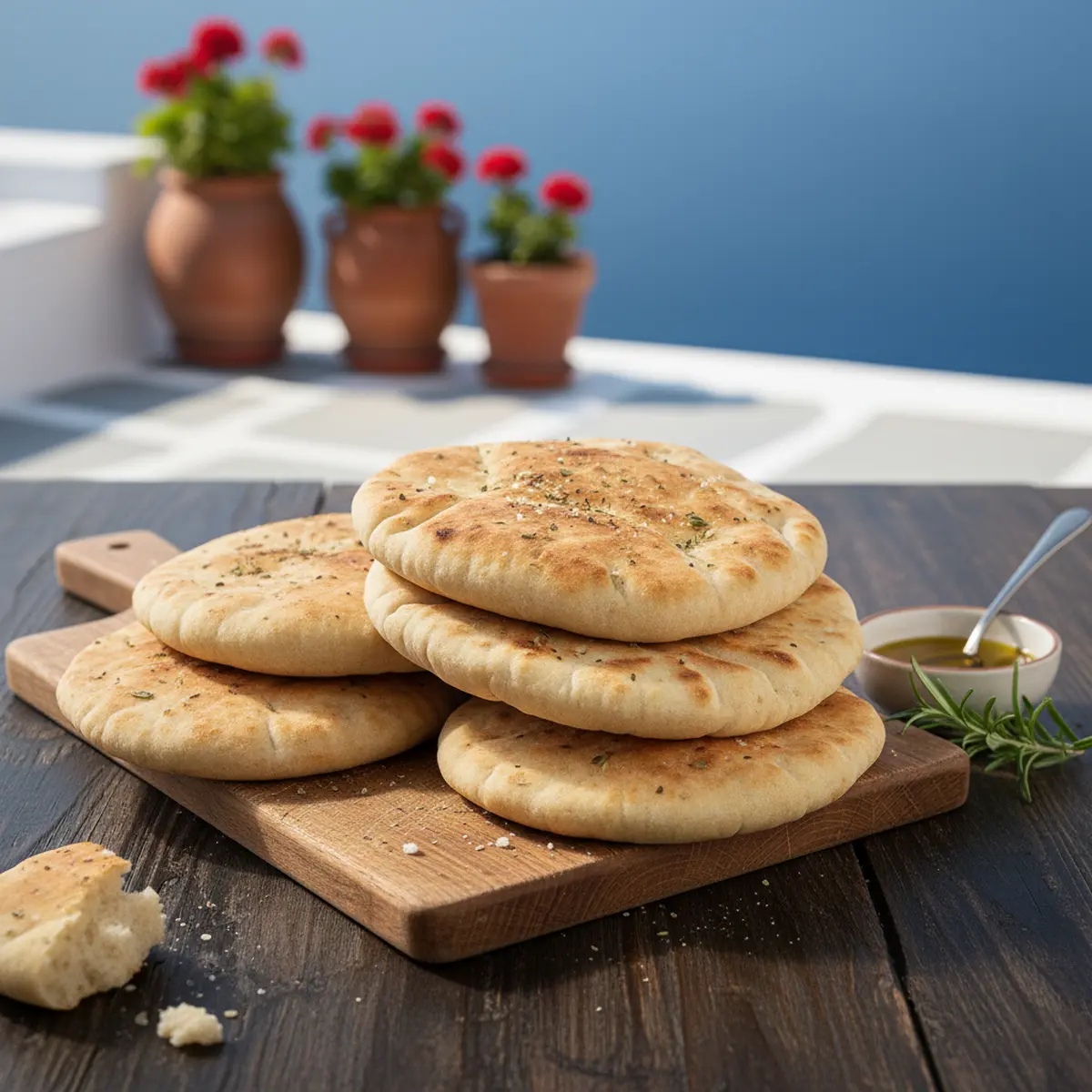
Recipe at a glance
Greek Pocketless Flatbread
Key recipe details from the source.
- Servings
- 8
- Preparation
- 15 minutes
- Cooking
- 15 minutes
- Calories
- 200 kcal
Greek recipe
Pita (Greek Pocketless Flatbread)
Greek pita is a soft, pocketless flatbread made from a simple dough of flour, yeast, water, and olive oil (often with a touch of yogurt or milk). These homemade rounds bake up warm and pillowy, perfect for wraps, dips, or any Mediterranean dish. Each pita puffs slightly on the hot skillet, creating a tender interior. Ready in about 30 minutes, they pair beautifully with grilled meats like souvlaki or spreads like tzatziki and hummus. Naturally vegan (unless dairy is added), this pita brings an authentic, fresh-from-the-oven taste to every meal.

01 · Overview
Overview
Greek pita is a soft, round, pocketless flatbread that forms the foundation of many Mediterranean meals. Unlike Middle Eastern pita, the Greek version typically lacks a fully formed pocket; instead it puffs slightly when cooked, creating a warm, tender round. It’s a daily staple in Greece – used for wrapping souvlaki or gyros and for scooping up tzatziki and dips. Homemade pita has a subtle wheaty flavor and a chewy, pillowy texture that store-bought loaves often lack. This simple bread has been baked in Greek kitchens for generations, appearing at every meal from a bustling breakfast to a late dinner. The dough, enriched with a bit of olive oil (or sometimes yogurt or milk), rises until billowy. Rolled thin and quickly cooked on a hot skillet, each pita comes off the pan warm and soft with golden spots. Fresh from the skillet, pita invites you to tear it apart and enjoy it while warm. In essence, Greek pita embodies simplicity – just flour, yeast, water, and a touch of fat – transformed by a bit of time and heat into a comforting bread that ties the meal together.
02 · Ingredients
Ingredients
- 3 cups (360 g) all-purpose flour , plus extra for dusting – forms the dough. (Substitute whole wheat for a heartier bread.)
- 1 packet (7 g) active dry yeast – provides leavening.
- 1 tablespoon sugar – feeds the yeast and gives a slightly sweet note.
- 1 teaspoon salt – balances flavor.
- 3/4 cup warm water (about 110°F/43°C) – activates the yeast; adjust as needed for dough consistency.
- 1/4 cup warm milk or plain yogurt (optional) – makes the pita softer and richer (omit for vegan bread).
- 2 tablespoons extra-virgin olive oil – adds moistness and flavor.
03 · Directions
Directions
Directions
Mix dry ingredients
In a bowl, combine the flour, yeast, sugar, and salt. Stir in the warm water (and milk or yogurt, if using) and olive oil until a shaggy dough forms.
Knead the dough
Turn it onto a floured surface and knead until smooth and elastic, about 8–10 minutes. (Time: ~10 min)
First rise
Place the dough in a lightly oiled bowl, cover with a clean towel, and let it rise in a warm spot until doubled in size, about 1 hour. (Time: 1 hr)
Shape the pitas
Punch down the dough and divide it into 8 equal pieces. Roll each into a ball and let them rest under a towel for about 10 minutes.
Roll out
On a floured surface, roll each dough ball into a thin circle (about 1/8 inch thick).
Cook
Heat a dry skillet or griddle over medium-high heat. Cook each pita for 1–2 minutes per side, until puffed and lightly browned in spots. Stack the cooked pitas and cover with a clean towel to keep them warm and soft.
Serve
Enjoy the pitas warm or at room temperature. They’re best eaten fresh, but can be briefly reheated in a hot oven or on a skillet if needed.
04 · Nutrition
Nutrition
- Calories
- 200 kcal