
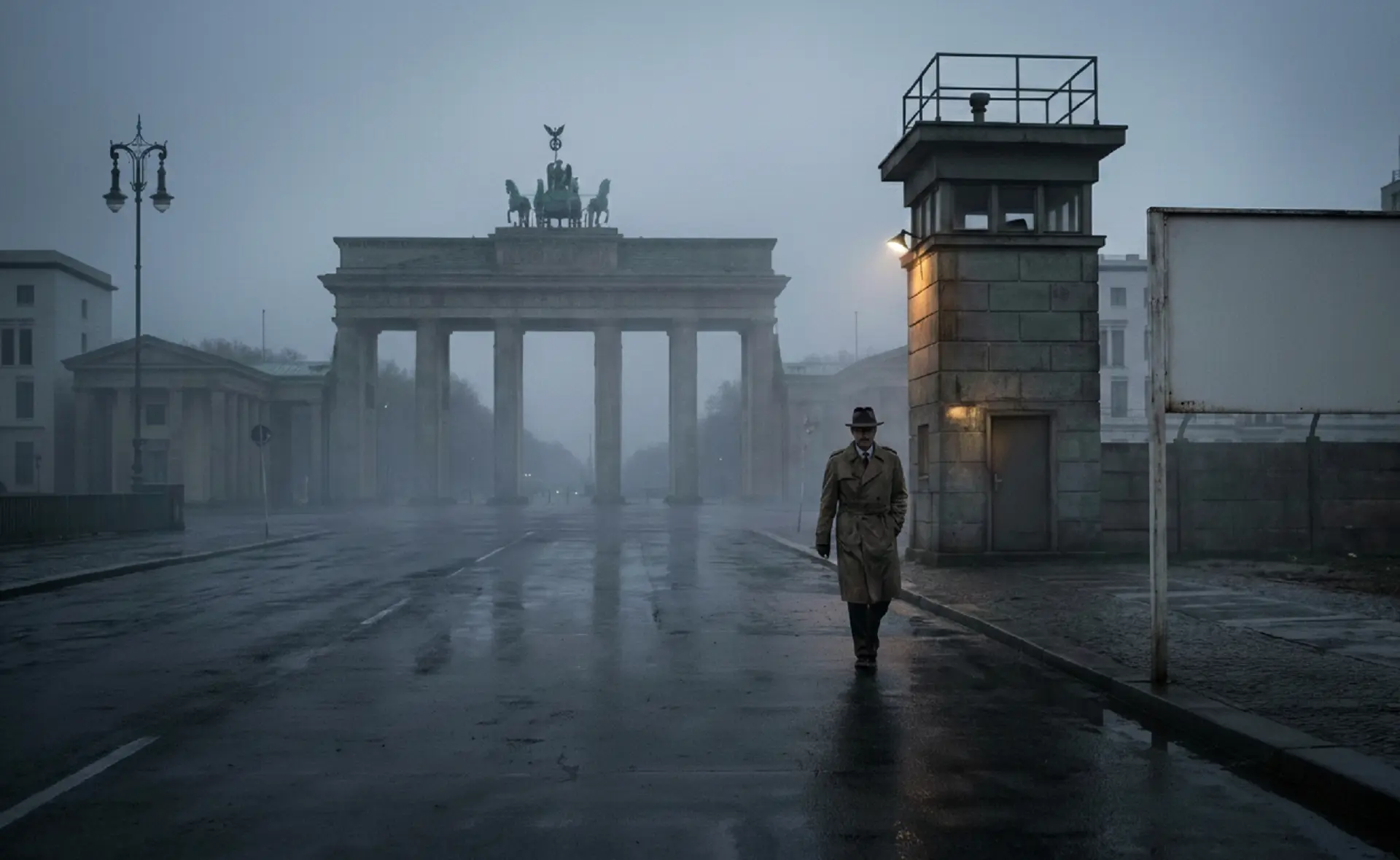

Berlin’s unique status as a four-power city put it at the very front line of the Cold War, making it the “capital city of international espionage”. From 1945 on, Berlin lay divided between the Soviet sector and the three Western Allies, forcing East-West representatives into constant, immediate contact within one city. This made the city a recurrent flashpoint where both sides mounted major intelligence operations. The result was a dense tapestry of spy activity: the U.S. CIA, Britain’s MI6, the Soviet KGB (and GRU military intelligence), the East German Stasi and emerging West German BND all operated here. Geography and politics combined: the border between East and West Berlin was often only a few feet wide, and mass refugee flows through the city gave fertile opportunity for both debriefing and recruitment. In the decades after 1961’s Wall, technical surveillance stations (notably Teufelsberg’s Field Station) became crucial listening posts. Even today, Berlin still claims the nickname “Capital of Spies” with numerous agents estimated to be active on all sides.
- Quick timeline: 1945–1991 (spying milestones in Berlin)
- Who were the players: agencies & actors in Berlin
- Major operations and case studies (deep dives)
- Operation Gold (the Berlin spy tunnel) — what happened?
- Tunnel 57 & escape tunnels — methods and human stories
- Double agent scandals (George Blake et al.)
- The Teufelsberg listening station (Field Station Berlin) — ELINT explained
- Technology & tradecraft: how espionage was done in Berlin
- Glienicke Bridge & prisoner/agent exchanges
- The Stasi: surveillance, informants and society
- Ghost stations, ghost trains & urban terrain of intelligence
- Museums, archives & where to see artifacts
- Self-guided & guided spy tours: itineraries
- Site-by-site guide: what to see, what to know
- Checkpoint Charlie (Friedrichstraße)
- Bernauer Straße & Berlin Wall Memorial
- Palace of Tears (Tränenpalast, Friedrichstraße station)
- Teufelsberg (Field Station Berlin)
- Glienicke Bridge (Potsdam)
- Allied Museum (Clayallee, Zehlendorf)
- Stasi HQ (Lichtenberg) & BStU archives
- Spy Museum Berlin (Leipziger Platz)
- Tunnel 57 / Tunnel 29 sites (Mitte/ Wedding)
- How espionage shaped everyday Berlin life
- Research & sources: primary documents, books and media
- Modern legacies: intelligence in Berlin today
- Practical visitor section: tickets, hours, safety & tips
- FAQ
- Conclusion: why Berlin’s espionage history still matters
In short, Berlin’s front-line position and the open Berlin border made it a magnet for intelligence work. As early as 1945 it was divided “between the Soviets and the leading NATO powers,” and by the 1950s its leaders freely called it the Cold War frontier. Agents on both sides recognized Berlin as “unique” – it was the only place where Soviet and Western spies could mingle, recruit, and exfiltrate almost at will. The postwar division of Germany had created a bubble of Western territory deep inside the Communist East. The Berlin “marathon” border (often just a wall or wire trench) allowed people to cross back and forth in the 1950s; every refugee or defector was hauled into debriefing centers like Marienfelde in West Berlin. In fact, the emerging myth of Berlin’s espionage role was anchored by that slogan: “Berlin soon acquired a reputation as the capital city of international espionage”.
By 1961, Berlin’s fate was cemented by the Wall. That barrier made clandestine crossings nearly impossible, but it only intensified the spy war. Western agencies pivoted to technical collection – installing giant antenna domes on Teufelsberg to intercept Warsaw Pact communications – and poured energy into human assets on both sides of the border. Meanwhile, the Soviets built their own listening posts (Zossen, Wünsdorf, and others) on Berlin’s fringes. All agreed that Berlin’s stakes were high: every spy swap, wiretap, or drop could shift the Cold War balance. In short, the raw mix of politics, people, and location made Berlin incomparable as a spy playground – far more so than any other city in Europe.
Quick timeline: 1945–1991 (spying milestones in Berlin)

- 1945 (May): Nazi Germany surrenders. The victorious Allies divide Berlin into four sectors (US, UK, France, USSR) even as they occupy the rest of Germany. A joint occupation appears temporary, but the city’s fate becomes a touchpoint for Cold War tension.
- 1948 (June): Berlin Blockade and Airlift. Stalin cuts off all ground access to West Berlin. In response, Western air forces fly in 4,000 tons of supplies daily during the Airlift (June 1948–May 1949). The blockade fails, but the siege shows how Berlin is at the center of superpower confrontation. (The first Soviet “test” of Western resolve in Berlin.) Intelligence during the airlift: both sides monitored each other’s flights and communications; Western intercept teams kept close watch on Soviet air corridors.
- 1949 (Oct): Formation of two German states. West Germany (FRG) and East Germany (GDR) are created, but Berlin remains a divided city in the East. This cements Berlin’s status as an isolated Western enclave—an obvious target for espionage.
- 1953 (June): East German Uprising. Workers in East Berlin and surrounding regions revolt and Soviet tanks intervene. The uprising shows how fragile East German rule is, and Western intelligence teams rushed to gather insights from the chaos. Surviving East Berliners flooding to the West were thoroughly debriefed for insights into Soviet and GDR plans.
- 1953–1956: Operation Gold (Berlin Tunnel). In early 1954, America’s CIA and Britain’s MI6 secretly begin to dig a 450-meter tunnel under East Berlin to tap the central Soviet communications trunk. Though ultimately betrayed by double agent George Blake, the “Berlin Tunnel” operation gathers over 441,000 hours of telephone conversations. The Soviet discovery of the tunnel in April 1956 (which they choreographed as a propaganda coup) makes headlines around the world.
- 1961 (August): Construction of the Berlin Wall. Facing a mass exodus, East Germany seals its half of Berlin. Overnight the open border disappears. Western intelligence must now rely on spies, sabotage, and signals-gathering rather than easy crossings. (One dramatic intelligence moment: U.S. and Soviet tanks face off at Checkpoint Charlie in October 1961, as both sides test each other’s resolve.)
- 1962 (Spring): Tunnel 29 escape. West Berlin tunnellers (helped by NBC news crews) construct a 135-meter passage under the “death strip” of the Wall. On one weekend in summer 1962, 29 East Berliners – including mothers and children – crawl through to freedom. This operation proves the audacity of the escape network; the CIA quietly assisted such tunnels, viewing them as psychological warfare as much as logistics.
- 1963–1964: Teufelsberg Field Station. Western NATO builds up a massive signals-intelligence (SIGINT) complex on Teufelsberg, a man-made hill in the former British sector. By 1964 it houses enormous radomes and advanced receivers. Allied crews tap almost all Warsaw Pact military communications in the Berlin area.
- 1964 (Oct): Tunnel 57 escape. Perhaps the most famous tunnel, 145 m long and 12 m deep, is excavated under Bernauer Straße. Over two nights 57 East Berliners escape to the West. Tragically a Soviet border guard is killed (the East German regime immediately uses the incident for propaganda). Western press actually funded part of this tunnel, seeing it as exposing the GDR’s brutality. The fallout brings headlines and raises stakes for both sides.
- 1960s–1970s: The height of intel competition. Berlin remains a hive of spy drama. Allied and East German agents infiltrate each other’s sectors through smuggling, bribery, and coded radio. The KGB also recruits Germans – for example, Colonel Oleg Penkovsky (GRU officer) provided crucial intel to the West on missiles – though his main activity was in London. Western intercept stations (rooftop antennas on the Teufelsberg and elsewhere) continuously monitor Soviet radio, while the Stasi create their own domestic surveillance network.
- 1970s–1980s: Spy swaps and détente. Cold War tensions mellow somewhat, and Berlin’s Glienicke Bridge becomes famous for prisoner exchanges: U.S. and Soviet agents are exchanged face-to-face in 1962, 1970, 1985, etc. (En route was usually Moscow.) These swaps – dramatized in media as the “Bridge of Spies” – underscore the city’s role in East-West negotiations and the human cost of espionage. (A total of some 40 agents swapped by 1986.)
- 1989: Fall of the Wall (Nov 9). East Berliners storm the Wall in scenes broadcast worldwide. The collapse ends GDR border guards and suicide tunnels; it also opens all East archives to Western scrutiny. For the intelligence community, Berlin’s secret war is suddenly exposed.
- 1990 (Oct): Reunification. Berlin becomes capital of unified Germany. Former intelligence agencies (CIA, KGB, Stasi, BND) turn from covert operations in Berlin to historical research. The release of Soviet and Stasi records opens a new era of scholarship. Berlin’s espionage history becomes a subject of public museums and tours.
Each of these milestones changed the character of Berlin’s intelligence scene, but at every turn the city’s symbolism and geography kept it at the center of spycraft.
Who were the players: agencies & actors in Berlin

Berlin’s “spy game” involved the great intelligence services of East and West, often operating side by side in the same streets:
- CIA (United States): The CIA’s Berlin station was one of its most important Cold War posts. West Berlin’s proximity to Soviet-ruled territory made it ideal for SIGINT and HUMINT. CIA teams worked closely with U.S. Army Intelligence units (notably Field Station Berlin) to intercept Warsaw Pact communications. They also ran case officers among refugees and espionage networks. Early on, CIA supported rebel forces (East German uprising) and funded escape operations. Later, CIA shifted focus to tech: in the 1960s–80s it operated the massive listening arrays on Teufelsberg and in Bavaria (for wider coverage). Notable CIA figures in Berlin included Allen Dulles (CIA director who approved Operation Gold) and William “Wild Bill” Harvey, who oversaw spy tunnel projects.
- MI6 (UK Secret Intelligence Service): MI6’s Berlin operations were tightly linked to the CIA’s. British officers participated in Operation Gold alongside CIA. MI6 handled local recruitment of anti-Communist refugees and ran agents in East Berlin. In the 1950s, British MI6 and the Americans formed a joint Berlin Committee for coordination. MI6’s local station worked under diplomatic cover (often at the British embassy or military attaché). Its senior officer Peter Lunn was instrumental in negotiating spy swaps. MI6 also collaborated with fellow NATO services on SIGINT, including access to NSA/ALLIED listening posts.
- Stasi (MfS, East German Ministry for State Security): The Stasi was perhaps the most pervasive spy apparatus in Berlin. Headquartered in East Berlin (Lichtenberg district), by the 1980s it boasted hundreds of thousands of full-time employees and citizen informants. The Stasi’s remit was both external (counterespionage) and internal (population control). It monitored all communication in East Berlin via a vast wiretapping and postal inspection network. Citizens were encouraged — often by coercion — to spy on neighbors, workplaces and even family. The East Berlin Stasi branch ran residential surveillance teams, bugged homes, and used cameras hidden in common objects (bugs inside radios, fountain pens, etc.). Famous Stasi chief Erich Mielke (in power 1957–1989) turned the service into an omnipresent state within the state. Stasi records after reunification (preserved by the BStU archive) reveal the extent: one estimate suggests every eighth East German was an informant in some way.
- KGB/GRU (Soviet services): The Soviet Union maintained its own intelligence operations in East Berlin. The KGB had officers under cover in the Soviet embassy and at Moscow-controlled sites (for example, the giant communications center at Zossen-Wünsdorf, near Berlin). The Warsaw Pact powers shared many communications, so GRU and KGB officers sat in East Berlin listening posts and LESC cards, copying Soviet Army radio nets. They also ran operations into West Berlin. Perhaps the most notorious case was Colonel Oleg Penkovsky, a GRU officer who provided secrets to the West (though his work was mostly out of Berlin). The Soviets also cooperated with the Stasi: many East German spies were trained by or directed by the KGB.
- BND (West Germany) & Allemand intelligence: After 1949, West Germany (FRG) formed its intelligence service, the Federal Intelligence Service (BND), led by Reinhard Gehlen (former Wehrmacht general). In Berlin, the BND initially operated in the American sector under U.S. guidance, eventually working with CIA and MI6 on targeting East Germany and the Soviet Union. BND’s activities were more restricted (officially it focused on foreign intel), but it recruited German agents in East Berlin and analyzed Stasi communiques (later via defectors and intercepted radio). By the 1970s, BND operatives in West Berlin also ran back channels for diplomacy and prisoner swaps, liaising with allied services.
- Allied military/intelligence units: In addition to agencies, the occupying forces themselves maintained intelligence units in Berlin. The U.S. Army’s 66th Military Intelligence Group ran SIGINT sites (e.g. Crazy Horse, and Field Station Berlin on Teufelsberg). The British Army’s Rhine Army Intelligence Corps and the French Corps d’armée de Brandenbourg had liaison offices. The National Security Agency (NSA) used Berlin-based stations in its global communications network. And within West Berlin, the military liaison was sometimes the only channel open to East Berliners needing to contact the West.
Each of these players clashed and cooperated in turns. Their rivalry and alliances – the U.S. and UK partners against Soviet/Stasi; BND supporting allies – defined Berlin’s espionage mosaic. Personalities on all sides (spymasters and defectors alike) left their mark on the city’s history.
Major operations and case studies (deep dives)

Operation Gold (the Berlin spy tunnel) — what happened?
Operation Gold (known by the Soviets as “Stroebel” or the Berlin Tunnel) was the largest clandestine wiretapping operation of the early Cold War. In 1953 the CIA and MI6 agreed to tap into the main Soviet communications trunk running through Berlin. Working under military and diplomatic cover, the allies secretly dug a 450‑metre tunnel from West to East Berlin. It began in a nondescript warehouse in the American sector (near Schönefeld, south of Berlin) and emerged in a courtyard in East Berlin’s Soviet zone. Along the way, British engineers installed taps on the buried landline carrying Soviet Army telephone and telegraph traffic.
For nearly a year (late 1955–April 1956), the tunnel transmitted the Soviets’ conversations back to Allied listening posts. They collected some 67,000+ hours of audio (per declassified records). The intelligence yield was impressive: it included daily orders to East German and Soviet commanders, communications to Moscow from the Soviet embassy in East Berlin, and even messages for Stalin’s headquarters. It helped Western analysts monitor Warsaw Pact force levels. The CIA later called it “one of the greatest intelligence successes of the Cold War”.
However, Operation Gold was fatally compromised. George Blake, a high-level MI6 officer who was secretly a KGB mole, warned the Soviets from the outset. Rather than immediately ending the operation, the KGB let it continue to protect Blake’s identity. In April 1956, Soviet agents feigned a routine cable repair and “discovered” the tunnel, an act they used to embarrass the West. In theory it was a Soviet victory, but by then Western intelligence had already learned vast volumes from the wiretap. The incident made headlines, but analysts later judged it a net gain for the allies despite the tunnel’s seizure.
The original tunnel itself was partly excavated after reunification. Today visitors can see sections of its lining and equipment at the Allied Museum in Berlin (which displays recovered pieces). The story of Gold is well documented – memoirs and declassified CIA files (CIA’s FOIA site includes the entire “Berlin Tunnel Operation 1952–56” dossier) tell the tale of nerves, betrayals, and technical ingenuity beneath Cold War streets.
Tunnel 57 & escape tunnels — methods and human stories
In contrast to spy tunnels, Berliners also built escape tunnels under the Wall – physical passages for people fleeing East Berlin. The most famous is Tunnel 57, named for the 57 East Germans who escaped through it in October 1964. Private citizens (mostly West Berlin engineering students) dug this tunnel from a bakery basement on Bernauer Straße (West Berlin side) to a outhouse in a courtyard on Strelitzer Straße (East Berlin). The vault was 12 m deep and 145 m long, making it a massive engineering feat. Over two nights, dozens crawled through on hands and knees, escaping the regime. Tragically, during the second night two Stasi officers attempted to board the tunnel. In the ensuing firefight, an East German border guard was killed by friendly fire. The East German press immediately labeled the diggers “terrorists” and staged the guard’s death as martyrdom – only after reunification did researchers confirm the actual story from Stasi files.
Another notable case is Tunnel 29 (summer 1962). A group of West Berliners dug a 135 m tunnel under the “death strip” of the Wall between a factory and an East Berlin apartment cellar. It was financed in part by American TV crews (who filmed the dig secretly) and assisted by CIA intelligence. Over the course of one weekend, 29 men, women and children escaped through it, making it “the biggest and most spectacular escape mission since the erection of the Wall”. The story of Tunnel 29 later inspired a bestselling book and BBC documentary, highlighting both the determination of the diggers and how Western agencies subtly aided such efforts.
These escape tunnels illustrate the intersection of espionage and human courage. They were buried under apartment buildings (so that East Berlin guards could not easily detect them from above) and had ventilation, lighting, and concealed exits. Volunteers (often called “Fluchthelfer” or escape helpers) organized by churches, student groups, or intelligence operatives managed these networks. In total, Western historians count hundreds of tunnels or cellars used for escapes (with over 5,000 people fleeing through clandestine routes by 1989). Each tunnel had to avoid Stasi detection, requiring lookouts and often insider tips on border patrol schedules. The drama of discovery or collapse was ever-present: some tunnels were found prematurely, leading to arrests or deaths. (The Summer 1962 tunnel’s exposure led to such risks that the builders delayed its completion by bribing border guards and using bear traps to deter intruders.)
Double agent scandals (George Blake et al.)
No discussion of Berlin espionage is complete without mentioning its notorious double agents. George Blake is perhaps foremost: a MI6 officer secretly working for the Soviet KGB. He joined British intelligence after the war and was posted to Berlin, but in 1950 he traveled to North Korea and was captured. During captivity, he was convinced (or coerced) to become a Soviet mole. For years he passed MI6 secrets to Moscow, including presumably knowledge of the Berlin Tunnel.. When Blake finally fled to the USSR in 1961, he confessed to betraying Operation Gold. His treachery (betrayal of dozens of Western agents) was catastrophic and became a symbol of Cold War paranoia. Another famous case tied to Berlin was Hanssen (no direct Berlin context) or Aldrich Ames (primarily CIA in DC). But in the Berlin theater, there were others like Conrad Schumann, the East German border guard who defected at Checkpoint Charlie (though not a spy, his leap symbolized the desire to escape East control).
A double-agent scandal from the Soviet side involved Oleg Penkovsky, a Soviet GRU officer codenamed “HERO” by CIA. While most of Penkovsky’s work was London-based (he provided invaluable missile intelligence during the Cuban Missile Crisis), he had a period in 1958–60 serving in East Berlin as a Soviet liaison officer. Allegedly, he was unhappy with the Soviet regime and made overtures to British intelligence while in Berlin. (He later became one of the West’s top assets worldwide.) When his treason was discovered in 1962, Penkovsky was executed – a grim warning that spies ran both ways. Other Berlin-related spies include CIA KGB plant Roger Hollis (British head of MI5 believed by some to be KGB) or Blowveld, but their stories are beyond Berlin’s scope.
In Berlin’s tug-of-war, double agents represented the ultimate espionage gamble. Some, like Blake, had long-term impact; others were uncovered quickly. Their betrayals often led to wholesale operation failures and ushered in counter-intelligence sweeps on both sides.
The Teufelsberg listening station (Field Station Berlin) — ELINT explained
After the Wall’s erection, physical infiltration into East Berlin plummeted. Western agencies compensated by electronic listening (ELINT). The centerpiece was Teufelsberg, an artificial hill in the British sector topped with a massive U.S.-run listening post. Built atop war rubble, by the mid-1960s Field Station Berlin had multiple radomes (large spherical antenna covers) and dormitories. This station could intercept radio, microwave, and even satellite signals from across East Germany and Warsaw Pact countries. It was effectively the Allies’ “ear on the East.” Reports from former staff (and the abandoned-Berlin exposé) describe how each radome housed huge 12‑m antennas tuned to Soviet transmitters, feeding super-sensitive receivers. The location was ideal: nearly 120 m above sea level gave clear line-of-sight to Soviet bases.
Technicians at Teufelsberg logged hours of encrypted and unencrypted chatter daily. Much of the Soviet high command’s communications (seen and unseen) passed overhead, and analysts rotated in shifts to decode traffic. The operations were so secretive that even decades later former operators still refuse to discuss details. In practice, Teufelsberg fed intercepted data into the global ECHELON network (run by the NSA, GCHQ, etc.). It was perhaps the West’s most formidable eavesdropping installation on the Iron Curtain. The Soviets, aware of Teufelsberg from the start, had limited response: they built redundant communication paths and occasionally jammed frequencies, but there was little they could do.
By the 1980s Field Station Berlin processed so much traffic that it became the envy of NATO. Its domes (iconic white balls seen from afar) became visible symbols of the clandestine Cold War. After reunification, the Americans promptly abandoned the station (1992) and it stands derelict today. But historians credit Teufelsberg with vast intelligence gains. It illustrates how Berlin espionage evolved from human spying to the technology-age “super-spy” listening.
Technology & tradecraft: how espionage was done in Berlin

Berlin espionage used all the classic Cold War tradecraft — often with local twists. At street level, Berlin’s agents placed dead drops in park benches or lining bricks in Wall sections to exchange documents and microfilms. Photographers smuggled miniature cameras (“spycams”) hidden in ties or fountain pens to photograph classified pages. For communications, cutouts and clandestine radio (the famous numbers stations and shortwave transmitters) were common. The CIA’s homemade kryptography team (led by Frank Rowlett in Washington) sent encoded messages via diplomatic pouches in Berlin. Conversely, the Stasi used mail interception (pre-opening letters) and secure radio nets of its own to coordinate with Moscow.
Physically, the inner German border walls themselves were scientific engineering. Before the Wall, agents would attach ultrasonic listening devices to West Berlin phone junctions or insert bugs in streetlamps to capture Soviet conversations. After 1961, tunnel-digging was a huge effort (Operation Gold aside, dozens of civilian-run escape tunnels appeared). Wiretapping was done both by underground tunnels and by covert road-deep cable taps in the four-power strip.
In the museums of today one can find some of this kit: bugs disguised as fountain pens (Berlin Spy Museum has one) and micro-cameras no bigger than a matchbox. Cipher machines (the Allies collected captured Enigmas during WWII, and the Soviets had their own rotor machines) were used to encrypt messages. Field agents often carried Bulgarian-made “Torn” cipher pads for one-time pads and concealed explosives for emergency sabotage.
On the higher-tech side, espionage in Berlin demanded signals surveillance gear. Teufelsberg’s domes contained elaborate spectrum analyzers and tape machines (it’s said the Allies recorded over a hundred hours of signals each week). The Soviets matched this with their own listening posts in or near East Berlin, though details remain obscure. The Stasi developed local wiretapping vans and mobile intercept trucks to eavesdrop on Western radio and phone lines. Both sides used jammer transmitters: the East German government jammed West German radio and TV to keep propaganda out of Berlin’s air.
Counterintelligence became a science: agents learned to detect tailing cars or “brush passes” (sidewalk exchanges of info) by meeting in crowds near Checkpoint Charlie. Meetings were planned by phoning third parties at fixed times, or by hiding messages in library book returns. The layered surveillance meant that the best tradecraft was often to use mundane cover: a delivery truck driver, a repairman, or even an East-West TV studio employee could be a perfect courier. Museums like the Allied Museum and Spy Museum display many of these artifacts — from CoCom-control tech to concealed microphones — letting visitors appreciate the material side of spycraft.
Glienicke Bridge & prisoner/agent exchanges

The Glienicke Bridge over the Havel River (connecting Berlin’s Wannsee suburb to Potsdam) earned the title “Bridge of Spies” for its Cold War role. Although only officially in West Berlin traffic, it was chosen (from 1962 on) as the meeting point for high-level exchanges of captured agents and prisoners between East and West. The bridge had symbolic weight: it lay near the East German border (then part of East Berlin and East Germany), yet on a West Berlin-controlled route.
Three major exchanges took place here (all impromptu negotiations, not part of treaties). The first, in February 1962, was symmetric: the U.S. traded Soviet spy Rudolf Abel for downed pilot Francis Gary Powers (shot down over USSR). A second swap occurred in June 1964: 24 East Germans held by West Berlin were exchanged for 11 West Berliners (including alleged East German spies) held by East. The final famous swap was June 1985: KGB Colonel Oleg Gordievsky was flown out in exchange for Bulgarian dissident Georgi Markov, plus the exchange of Visas for Anatoly Shcharansky (Natan Sharansky, a Soviet dissident) in private. Each exchange followed a tense hour where cars slowed to parallel, exchanged packages (often blindfolding the inbound side), and parted.
These swaps were the ultimate diplomacy in Berlin’s espionage story. They underscored that agents were valuable and that negotiation was sometimes preferable to execution. The legendary 1996 film Bridge of Spies dramatized the 1962 Abel/Powers exchange. Today, visiting the Glienicke Bridge (closed to general traffic, now a museum site) you can stand where those deals happened. It reminds us that Berlin’s espionage legacy includes both cloak-and-dagger and rare moments of negotiation and prisoner welfare.
The Stasi: surveillance, informants and society

The Stasi’s power in East Berlin and the GDR was pervasive. By the 1980s it employed tens of thousands in Berlin alone – a network of officers, drivers, tailors, librarians and secretaries. The state security service built a wall of eyes. In daily life, ordinary East Berliners could barely escape its gaze. Mail could be steamed open and copied; phone calls recorded via bugged hotel rooms or tapped landlines (the Allies bragged they intercepted thousands of East German calls from the Tunnel). Even on the street, the Stasi’s civilian spies walked among citizens. Neighbors were urged (with rewards or intimidations) to watch each other, report on odd political comments, or host unauthorized gatherings. Over its existence, the Stasi amassed an archive of about 100 million files on 16 million people – nearly every adult East German had a dossier.
How did East Berliners cope? A culture of secrecy and suspicion grew. People invented coded speech (“Between you and me, everything is fine” was catchphrase for “Stasi knows all”). Churches and Western radio were secret meeting places – ironically some parish churches concealed audio bug detectors and shortwave radios in laundry baskets. The Stasi also ran elaborate surveillance technology: tiny glassfibre microphones could be strewn in offices, and the Intelligenzkompanien (special forces) once even dipped entire neighborhoods’ telecommunications in chemicals that triggered smoke if letters were opened. Post-reunification, scholars found that up to one in fifty citizens was an official informant; many more were coerced into brief, anonymous reports.
Today, the remains of the Stasi main office (Lichtenberg) is now a museum. Its exhibitions display the tools of repression – from fingerprint machines to the infamous typewriters used to produce arrest warrants. The contemporary Stasi records agency (BStU) has digitized millions of these documents. New technology is transforming them: researchers have reassembled shredded files with computer vision and even allowed family members to view their own files via controlled access. This “monster of bureaucracy” is still being unraveled, revealing the human stories of victims and perpetrators alike.
Ghost stations, ghost trains & urban terrain of intelligence

Berlin’s division turned even its subway into a battleground. Ghost stations were once-operational U-Bahn/S-Bahn stations located in East Berlin territory that Western trains still passed through without stopping. (Northern Line’s Nordbahnhof and Potsdamer Platz were key examples.) To passengers riding between West Berlin stations, these East-era stops were dim, patrolled shells – apparitions of normalcy vanished. Spies exploited this infrastructure. West Berlin agencies secretly placed listening devices in tunnel walls or used the quiet of an empty station to surveil passing trains. For East Berlin escapees, some ghost station tunnels were repurposed into detours or ad-hoc hideouts. One dramatic plan even involved dropping a West Berlin-born mole from a ghost station platform into an oncoming eastern patrol, as a sting (though it never fully played out).
The “ghost trains” concept is less famous, but in late 1950s, both sides ran special urban trains. West Berlin occasional “Freedom Train” rides carried visitors to see behind-the-scenes Berlin, including tours of Checkpoint Charlie (giving Western civilians direct sight of the border). The Stasi’s Berlin branch sometimes fed altered maps to their personnel, downplaying ghost stations’ existence.
More broadly, the city’s very layout was peppered with intelligence points. High-rise buildings near the border often hosted radio intercept arrays. East Berlin’s rooftops sometimes had triangulation receivers listening in on West Berlin transmissions. Key transit hubs (Friedrichstraße station, for example) were became meeting points but also spying opportunities: East German watchman boards and hidden platforms let border guards observe each Western visitor. Even ordinary city landmarks – the Brandenburg Gate, the Victory Column – were laced with embedded wiretaps or cameras during major summits.
Visitors today can still sense this “hidden geography” on tours – perched on an S-Bahn bridge and looking at a series of East German checkpoints, one can imagine how a western operative might have scanned the scene for spy targets. In sum, every corner of urban Berlin was potential spy terrain, from the rooftops down to the sewers.
Museums, archives & where to see artifacts

Berlin now celebrates its spy history with rich museum collections and archives. Key stops for a visitor are:
- Deutsches Spionagemuseum (German Spy Museum): Located on Leipziger Platz (formerly in the Wall’s death strip), this museum offers a broad interactive history of espionage. Highlights include Hitler’s Enigma cipher machine, GDR spy gadgets (lipstick mic, miniature cameras), and a simulation of the Berlin Tunnel. Its signature “SpyMap” exhibit maps espionage incidents across the city. Guided tours here tie Cold War history to these exhibits. The museum emphasizes experiential learning (laser mazes, code puzzles) alongside actual artifacts.
- AlliiertenMuseum (Allied Museum): Located in the former U.S. sector, this museum focuses on the Western Allies in Berlin (1945–90). Its centerpiece is an original segment of the Berlin spy tunnel (Operation Gold) recovered in Pasewalk. You can see the 7‑meter-long concrete tunnel section and cable taps up close. The exhibit explains Operation Gold with declassified documents and guides. The museum also has displays on Berlin Airlift, NATO presence, and the U.S. Checkpoint Charlie building. It houses archives (open to scholars) and often hosts talks on Cold War topics.
- Stasi Museum (Berlin-Lichtenberg): Housed in the former Stasi headquarters, this museum shows how East German state security worked. Exhibits include the office of Erich Mielke, a wiretap van, surveillance cameras hidden in everyday items, and art made from destroyed dictatorship artifacts (for example, Shredded DDR passports). Visit to witness how the Stasi spied on civilians and to view some recovered Stasi records (of course, these are sanitized for public). The associated Stasi Records Agency (BStU) center next door allows researchers to access confiscated files (on request) and see microfilm reels of GDR documents.
- Museums for Communication (Berlin-Mitte): This museum covers the history of mail and telecommunication. Its Cold War section features East German microfilm secret transfer techniques and a mock Stasi suitcase used to inspect mail. It also has info on wiretapping tools. While not exclusively Cold War, it highlights the postal side of espionage.
- Berlin Wall Memorial / Documentation Center: Not a spy museum per se, but this memorial includes exhibits on surveillance along the Wall (e.g. floodlights, bunkers). Its open-air Wall exhibition has sections of radar fence and guard towers, illustrating the militarized context for espionage. Guided tours often mention the Stasi’s role in border security.
- CIA FOIA and other archives: For serious researchers, many Cold War files are now public. The CIA’s FOIA library (online) has entire collections – e.g. The Berlin Tunnel Operation 1952–1956 and declassified intelligence reports on Berlin. The U.S. National Archives and Germany’s Bundesarchiv hold captured documents (trading, prisoner lists, etc.). The AlliiertenMuseum has a research library of allied and Soviet records. In Germany, the BStU (Stasi archives) holds 111 km of files from the GDR; researchers can request subject files (subject to privacy laws). The Bundesarchiv in Potsdam holds Soviet occupation records.
For tours, note: the Deutsches Spionagemuseum, Stasi Museum, Allied Museum and Wall Memorial all offer visitor info and sometimes English audio tours. Tickets are typically modest (10–15€ each), and opening hours may vary. Check online before visiting; many sites have free entry once or twice a month.
Self-guided & guided spy tours: itineraries

Berlin’s espionage heritage is now a major tourist draw. Many guided tours (walks, bike tours) focus on Cold War espionage sites. For a self-guided experience, one can connect these dots:
- 3-hour walking tour (essential sites): Starting at Friedrichstraße station (the “Palace of Tears” border crossing), head south to Checkpoint Charlie (a museum and photo-op), then walk along Wilhelmstraße to the Topography of Terror site (former Gestapo/Stasi barracks), and cross to Potsdamer Platz area. Here you will find sections of the Wall (Wall Museum) and some remnants of Soviet and U.S. influence. A quick train ride (U6 or S-Bahn) north to the Wall Memorial at Bernauer Straße lets you visit where Tunnel 57 began. Finish at the Allied Museum (bus 316 or S-Bahn to Dahlem-Dorf) to see the real tunnel segment and U.S. exhibits. This loop hits the highlights: Wall sites, escape tunnel location, and a Cold War museum. Viator’s “Espionage, Berlin Wall, and a Divided City” tour covers many of these points in 3 hours.
- 1-day deep tour: Add the Stasi Museum and Teufelsberg. Morning at Stasi HQ (Lichtenberg) then U-Bahn to Potsdamer Platz for lunch. Early afternoon, head to Teufelsberg (bus 218 from Heerstraße station): visit the domes (guided tour only, weekends) and enjoy panoramic views. Return via Wannsee and walk the last section of Glienicke Bridge. Late afternoon can cover the Berlin Spy Museum in city center (multi-faceted exhibits). Depending on daylight, finish with a stroll along Bernauer Straße’s Wall park or the cold war section of the wall memorial.
- 3-day researcher itinerary: Day 1: Timeline and topography: walk the Wall memorial, Checkpoint Charlie, allied museum. Day 2: Archive visits. At the BStU archive (Lichtenberg) view declassified files, and the Bundesarchiv or CIA Reading Room (online) for documents. Day 3: Extended trips. Take a day trip to Potsdam to see where some Glienicke exchanges occurred, and visit the Kaiser Wilhelm Institute (site of early signals labs) or the MI6–NKVD history tour. Use maps from the Spy Museum’s interactive SpyMap or Whitlam’s Berlin Tours guide (Whitlam’s provides a Cold War map of 100+ sites on Google) to pick lesser-known spots like former listening posts and training sites.
Guided spy tours are available daily. Companies like GetYourGuide and Original Berlin Tours offer 2–4 hour spy-themed walks (often combining general Cold War history with espionage points). Private tours (100–200€ for a couple hours) can tailor to interest. Most tours include a ticket to Friedrichstraße station’s Palace of Tears museum and often end at Unter den Linden for a café debrief. For modern tours, insiders recommend Rainer of Berlin Spy Tours and the Cold War Tour guides (with backgrounds in intelligence). Prices range from ~€20 per person for group walks to €300 for a private half-day (up to 6 people).
- Mapping routes: A convenient 8-point walking loop starts at Friedrichstraße station (Traenenpalast), then heads to Checkpoint Charlie, the Wall Museum at Niederkirchnerstraße, the US Embassy area (Embassy has modern signal antennas), Potsdamer Platz Remnant of Wall, Topography of Terror (Allied signboard), then by bus to Heidestraße for Allied Museum, finishing at Bahnhof Berlin-Lichterfelde Süd near Teufelsberg. Google Maps with layer “Cold War Berlin” helps visualize these. The Viator and GetYourGuide itineraries closely overlap on Friedrichstrasse, Wall Memorial (Bernauer Str.), and Stasi HQ. Berlin’s transit network (purchase an AB-zone day pass) makes it easy to connect distant sites.
Site-by-site guide: what to see, what to know

Checkpoint Charlie (Friedrichstraße)
- What: The famous crossing point between East and West Berlin (1945–91). Now a replica guardhouse and museum.
- Why visit: Witness spot where spies and diplomats were vetted. See iconic photos of this border.
- Highlights: The Checkpoint Charlie Museum (Mauermuseum) displays escape gadgets (mini-helicopters, hot air balloons) and documents on espionage cases.
- Tip: It’s touristy – try to go early or late. Admission ~€12. Most artifacts here are replicas, but the real guard booth (Berlin’s original) is only at the Allied Museum. Remain aware this site is commercialized; focus on the original spy stories in the exhibits.
Bernauer Straße & Berlin Wall Memorial
- What: A preserved stretch of the Wall with a watchtower and memorial.
- Why visit: Location of Tunnel 57 escape (from the pavement on Strelitzer Straße). The memorial center has exhibits on escape attempts and border guards.
- Highlights: See the plaster outlines marking where people died trying to cross. The documentation center explains border security tech.
- Tip: In the basement exhibit, look for a model of Tunnel 57. Admission free. The adjacent park walking route traces the full “death strip.” Ghost station (Nordbahnhof) is accessible via a guided tour from the Unterwelten group (book in advance).
Palace of Tears (Tränenpalast, Friedrichstraße station)
- What: The former East-West passenger transit hall at Friedrichstraße. (People reunited with tears after border crossings).
- Why visit: It exemplifies how everyday life was interwoven with espionage. Refugees were processed here and often recruited or questioned.
- Highlights: Displays on escapes via this route, and East German border checkpoints. Old films of departing Berliners.
- Tip: Admission ~free/low. Combine with nearby Wall Memorial sections and lunch spots (railway station area).
Teufelsberg (Field Station Berlin)
- What: Abandoned Cold War listening station on an artificial hill in Grunewald.
- Why visit: One of Berlin’s most dramatic spy sites – giant bulbous radomes once housed electronic intercept gear.
- Highlights: The derelict domes (climb to rooftop cafe for view). Peaceful forest park surrounds offer sense of scale.
- Visiting: Public allowed on weekends with guided tours (book at teufelsbergberlin.de). Unescorted entry is technically forbidden by a fence, but many tourists climb anyway (beware injuries). There’s a small entrance fee for tours.
- Tip: Wear sturdy shoes; check schedule (tours fill quickly). The hill offers sweeping Berlin vistas. No restrooms on site — plan ahead.
Glienicke Bridge (Potsdam)
- What: Bridge connecting Berlin and Potsdam used for Cold War spy swaps.
- Why visit: Stand where high-stakes exchanges occurred. It’s an idyllic countryside setting today, belying its tense history.
- Highlights: Informational placards. Nearby visitor center (on Potsdam side) hosts a small exhibition on the swaps.
- Tip: Combine with a stroll in Potsdam’s Schlosspark for the day. Access via S-Bahn to Nikolassee + bus. It’s free to view, but tours are rare (mostly photo-ops).
Allied Museum (Clayallee, Zehlendorf)
- What: Museum of the Western Allies in Berlin.
- Why visit: Houses the last remnants of the Berlin spy tunnel (two large concrete segments and communications gear).
- Highlights: Other Cold War artifacts: jets from Airlift era, U.S. Checkpoint Charlie house, authentic spy plane (Globe Swift).
- Visiting: Lower profile than city museums, but rich in history. It has open hours Tue-Sun, ~€8 entry.
- Tip: In summer, pair with a visit to neighboring Spandau or U.S. Embassy. The cafe is pleasant for lunch. Ask staff about archive tours if researching.
Stasi HQ (Lichtenberg) & BStU archives
- What: The former East German Secret Police headquarters.
- Why visit: The rooms here are preserved as they were: a Stasi prison cell, interrogation rooms, surveillance equipment display.
- Highlights: Authentic tools of spycraft – eavesdropping devices, tape recorders. Holocaust-era cipher machines repurposed.
- Visiting: The museum is free and has English descriptions. The attached BStU archive center has a research library (appointments needed).
- Tip: Combine with nearby Brandenburg Gate / Alexanderplatz area. Allocate 1–2 hours. No photography allowed inside.
Spy Museum Berlin (Leipziger Platz)
- What: Contemporary museum with global espionage theme.
- Why visit: Though not Cold War-specific, it includes a dedicated Cold War wing and interactive experiences.
- Highlights: Enigma machine, Cold War spy gadgets, an immersive spy challenge game.
- Tip: Tickets ~€15. Good for families and younger visitors. It anchors Leipziger Platz (the old death strip), so you’re at the heart of historical division.
Tunnel 57 / Tunnel 29 sites (Mitte/ Wedding)
- What: Markers at 55 Strelitzer Straße (Tunnel 57 end) and an information panel at 37 Rudolfstraße (Tunnel 29 start) in Wedding.
- Why visit: They are subtle reminders of these dramatic escapes.
- Visiting: Walkable from Bernauer Straße. The Tunnel 57 site has a plaque on the pavement. Tunnel 29’s info is less obvious (look for a sign or a house number plaque).
- Tip: Guided tours may note these. Otherwise, include them on a longer Wall Memorial walk. They are not touristy sites – more for history buffs.
How espionage shaped everyday Berlin life

Espionage was woven into Berliners’ daily routines. People on both sides developed coded social customs: for example, knocking a certain number of times on a door to signal spy recruitment. East German citizens knew casual criticism (“In a few years, the Wall will fall”) could brand them a traitor; they adjusted their speech accordingly. In West Berlin, agencies sometimes quietly bankrolled cultural events (jazz concerts, plays) that doubled as recruitment venues for students and intellectuals. Even events like the Berliner Festwochen festival would have Stasi informants in the audience.
Berliners also lived under streetwise ambivalence: a neighbor might be a tourist or a spy. Escape helpers (“Fluchthelfer”) – often ordinary professionals who led relatives to the Wall at night – risked their jobs, yet their efforts were tolerated by some West Berlin officials (who later quietly encouraged tunnellers). When the Soviets and Allies faced off at Checkpoint Charlie, Westerners flocked to watch – for them a spy drama unfolding live, albeit dangerous. Families of GDR defectors were sometimes interrogated after reunification about why their relative left.
In essence, espionage turned Berlin’s citizens into both observers and objects of the intelligence war. The divided city’s lifeblood – messages, travel routes, even Berlin’s tram schedules – had to be protected or faked. Despite the secrecy, some Berliners managed a dry humor about it. One West Berliner quipped in the 1960s, “Everybody spies on everybody. Even my tailor listens in as he fits my coat.”
Research & sources: primary documents, books and media

For those eager to delve deeper into Berlin’s spy legacy, here is a starting point of authoritative resources:
- Declassified archives:
- CIA Reading Room: The CIA has made many Cold War documents public. Collections of interest include “The Berlin Tunnel (Gold) Operation 1952–56”, and declassified editions of Studies in Intelligence with articles on Berlin.
- AlliiertenMuseum Archives: Their library contains artifacts and original reports on Allied operations. Some of their “Object Histories” (like the spy tunnel) are online.
- Stasi Records (BStU): The East German archives in Berlin hold 111 km of files. Researchers can request files about individuals or topics; the BStU site (in German) has guides on how to search.
- Bundesarchiv: Houses Soviet occupation records (SMAD files), as well as Western counterintelligence reports.
- Books: Seminal works include “Operation Gold” by Anne Nelson (tunnel story), “Berlin Spy Packets” (memoir of NSA TB-107 station), “Stasi: Shield and Sword of the Party” by John Koehler, and “Betrayal in Berlin” by Steve Vogel (Cold War spy history). For escape tunnels, try “Tunnel 29” by Helena Merriman. Academic texts include Donald Steury’s “On the Front Lines of the Cold War” (CIA doc collection) and Christopher Andrew’s “The Sword and the Shield” (history of KGB).
- Documentaries & Podcasts:
- Bridge of Spies (2015 film) – dramatizes Glienicke exchanges.
- The Man Who Saved America (documentary, about Oleg Penkovsky).
- Tunnel 29 (BBC Radio 4 podcast, 2019) – gripping true story of the 1962 escape tunnel.
- “BND-Einsätze in Ost-Berlin” – a German documentary on West German spies.
- “History Flakes: Berlin History Podcast” – specifically episode on Cold War Berlin.
Modern legacies: intelligence in Berlin today

Even though the Cold War ended, Berlin retains a dense intelligence presence. NATO and EU agencies still maintain branches here, and various countries keep embassies with security teams and listening posts. In 2013 Germany’s interior intelligence chief Maaßen declared Berlin the “European capital of intelligence operatives”, citing continuing espionage activity. The BND’s new headquarters (completed 2018) signals that Germany now plays a global intelligence role, partly harking to the postwar Gehlen legacy.
Technologically, new tools are reshaping what we know about Cold War Berlin. AI and digital forensics have been used to piece together shredded Stasi files much faster than human archivists could. Initiatives like OpenStasi (crowdsourcing transcription) mean more secrets from East German archives will surface. Meanwhile, Western countries steadily declassify formerly secret audio recordings and cables. For example, NSA document dumps and formerly classified CIA “VENONA” transcripts (decoded Soviet messages) have clarified some Berlin stories.
On the public side, espionage history fuels documentaries, exhibitions, and even art (graffiti-covered Teufelsberg, spy-themed street art tours). Annual commemorations (30th anniversary of the Wall, etc.) now include espionage lectures. In pop culture, Berlin remains a favorite Cold War setting (in films like Atomic Blonde or the series Deutschland 83), though these must be taken with a grain of reality.
Practical visitor section: tickets, hours, safety & tips

- Tickets & hours: German Spy Museum (Leipziger Pl.) is open daily 10am–8pm; check for tickets (~€12 online). Allied Museum (Clayallee) closed Mondays, open 10am–6pm; entry ~€6. Stasi Museum (Lichtenberg) open Tue–Sun 10am–8pm free, Stasi archives by appointment (BStU.de). Palace of Tears (Friedrichstrasse) Tues–Sun 10am–6pm, ticket ~€4. Berlin Wall Memorial grounds are open 24/7 (exhibit hall 10–19h, ticket ~€9).
- Tickets: Pre-book Spy Museum to save time; Allied Museum and Stasi Museum allow walk-ins. Several sites (Wall Memorial, Tunnel 57 plaque) are free. A Berlin WelcomeCard (public transit + discounts) may save on transport. Many Cold War tours begin at Friedrichstrasse or Checkpoint Charlie – confirm exact location and lanyard color as described by the provider.
- Safety & logistics: Berlin is very safe, but espionage sites like Teufelsberg are semi-ruins. Always follow tour guide instructions there. If touring solo, stick to official paths (Teufelsberg’s fence can be hacked, but avoid risking injuries). During winter, some tours run less frequently – check schedules. Most museums are wheelchair-accessible. Tour groups often leave from Friedrichstraße.
- Legal notes: Teufelsberg is officially off-limits to casual hikers without tickets, and climbing its domes is illegal. Respect “No Trespassing” signs on any former military or embassy sites. Photography is allowed at most museums, but not in restricted archive areas. When in East Berlin memorials (e.g. at Stasi prison sites), behave solemnly – these are often also graves or memorial spaces.
Recommended walking route (sample)
- Morning: Start at Friedrichstraße Station (visit Palace of Tears). Walk south to Checkpoint Charlie (museum). Continue to the Topography of Terror (former Gestapo HQ exhibit).
- Lunch: Pottsdamer Platz area; remnants of Wall along Niederkirchnerstraße are nearby.
- Afternoon: Take S1/S25 to Nordbahnhof, visit Bernauer Straße Wall Memorial (Tunnel 57 site). Then U8 to Jannowitzbrücke, stroll Unter den Linden for Cold War landmarks (Russian Embassy has antenna array).
- Evening: Finish at Spandau (U7 to Altstadt Spandau) to see the smallest West Berlin territory and stories of border comings and goings.
Swap order for West/East as needed. For a 3-day itinerary, add day trips: NATO signal park at Cochem (some US radio towers) or the CIA Listening Station museum in Wiesbaden.
FAQ

What made Berlin the “capital of spies” during the Cold War?
Berlin’s unique frontier status – a four-power city behind Soviet lines – concentrated espionage activity. Both blocs had ambassadors and officers living literally on top of each other. This intense proximity, plus the open pre-1961 border, meant agents on both sides could operate simultaneously in the same city. Refugee flows and checkpoints (like Marienfelde camp) also fed intelligence resources.
What was Operation Gold / the Berlin spy tunnel?
Operation Gold was a joint CIA–MI6 project (mid-1950s) to dig a 450m tunnel under East Berlin and tap into Soviet landlines. Western intelligence installed cable taps and recorded over 441,000 hours of Soviet communications. It functioned undetected until April 1956, when the Soviets “discovered” it, having been forewarned by mole George Blake.
Who betrayed Operation Gold and why did the Soviets “discover” the tunnel?
MI6 officer George Blake, secretly working for the KGB, informed Moscow about the tunnel. The KGB, valuing Blake’s continued access, allowed the tunnel to operate and gather info before staging its discovery. In April 1956 Soviet troops cut through the tunnel, ending Operation Gold – but only after substantial intelligence was already gained.
What intelligence did the Berlin tunnel produce and was it valuable?
The tunnel recorded thousands of Soviet Army and East German communications – orders, military movements, embassy dispatches to Moscow. Analysts gained insights into Soviet command networks, Warsaw Pact readiness, and political signals (e.g. how harshly East Berliners complained). Despite the tunnel’s exposure, CIA historians regard its haul as a significant intelligence success. Notably, the Soviets never realized how much the allies had learned until years later.
Where can I see parts of the Berlin spy tunnel today?
Original segments of the Operation Gold tunnel are on display at the Allied Museum in Berlin’s Dahlem neighborhood. A 7m concrete section (with taps) sits in its lobby. Nearby is also the former U.S. Checkpoint Charlie guard booth. Check the museum’s current exhibits – they rotate artifacts and have docents explaining the operation.
What were the major intelligence agencies operating in Cold War Berlin? (CIA, MI6, KGB, Stasi, BND, GRU)
At least six agencies ran Berlin operations: the U.S. CIA, Britain’s MI6, the Soviet KGB and GRU, East Germany’s Stasi (Ministerium für Staatssicherheit), and West Germany’s BND. (Many others had small roles: e.g. Poland’s SB, Czechoslovak StB.) CIA/MI6 collaborated on major projects (like the tunnel) and supported West Berlin’s security. The KGB and GRU divided duties on Soviet side (KGB handled political espionage, GRU military). The Stasi focused inward on East Berliners but also ran agents against West. The BND, formed in 1956, soon became the West’s lead on gathering intel on the East Germans, often sharing info with Allies.
What was the role of the Stasi in East Berlin? How did they spy on their own citizens?
The Stasi was the GDR’s secret police and intelligence service – a domestic spy agency first and foremost. In East Berlin it tapped phone lines, intercepted mail, placed hidden cameras in public spaces, and built a massive network of informants (estimated at one informer per ~60 citizens). They conducted house searches under false pretenses and used psychological methods to isolate and control dissidents. East Berlin buildings often had multiple wiretaps and microphones in apartments. The Stasi even maintained Zersetzung (“decomposition”) programs to destabilize suspect individuals through harassment and manipulation. After 1990 many survivors documented how everyday life was penetrated by Stasi observation.
What is Teufelsberg and why was it important for listening/ELINT operations?
Teufelsberg (“Devil’s Mountain”) is an artificial 120m-high hill in the British sector, topped by a former U.S./British listening station (Field Station Berlin). It became one of the Western Allies’ prime electronic surveillance posts. Giant radomes on Teufelsberg housed satellite dishes and receivers that eavesdropped on Warsaw Pact military communications and air traffic. Because of its height and location in West Berlin, it offered clear vantage on East German and Soviet signal networks. Teufelsberg remained secret from the public during the Cold War; only after reunification did urban explorers find its decaying domes.
What sites should I include on a Cold War espionage walking tour of Berlin? (site list & map)
Key sites: Checkpoint Charlie; the Berlin Wall memorial (Bernauer Strasse); Friedrichstrasse/Palace of Tears; Glienicke Bridge; Deutsches Spionagemuseum; Allied Museum (Dahlemer Allee); Stasi Museum (Lichtenberg); Teufelsberg (requires bus/taxi or guided visit); and Ghost Train stations (U-Bahn stations on U6/U8 that passed through East Berlin). A walking tour can link Checkpoint Charlie → Wall Memorial → Spy Museum → Brandenburg Gate (with brief stop for historical context) → and end near Potsdamer Platz for Allied Museum by transit. Guided spy tours often cover Friedrichstrasse, Checkpoint Charlie, Wall Memorial, and discuss dead drops in Tiergarten.
What are the best museums for Cold War espionage in Berlin? (German Spy Museum, Stasi Museum, Allied Museum, etc.)
– Deutsches Spionagemuseum (Leipziger Platz) for gadgets and big-picture Cold War narrative.
– Stasi Museum (Lichtenberg) for East German surveillance.
– AlliiertenMuseum (Dahlem) for Allied perspective and Operation Gold exhibits.
– Berlin Wall Memorial (Bernauer Strasse) for escape history and political context.
– Palace of Tears (Friedrichstrasse S-Bahn) for border crossing stories.
Each offers something different. (Tip: The Allied Museum has the most authentic spy artifacts [tunnel segment], while the Spy Museum has the interactive fun.)
How did Glienicke Bridge become the “Bridge of Spies”? Which exchanges took place there?
Glienicke Bridge was the site of Cold War spy swaps. On a select occasion in 1962, Rudolf Abel (trapped KGB agent in US) was exchanged there for U-2 pilot Francis Gary Powers. In 1964 and 1985 further swaps occurred (including Anatoly Shcharansky in 1986, though that took place away from Berlin). The bridge’s publicity came largely from the Abel/Powers case. It stands out in memory because these exchanges were done simultaneously face-to-face – an unusual spectacle of the spy world.
What were “ghost stations” and why were they important for intelligence?
“Ghost stations” were former S-Bahn/U-Bahn stations in East Berlin that West Berlin trains continued to pass through without stopping (e.g. Nordbahnhof, Potsdamer Platz S-Bahn). They became literally stations with lights off and sealed platforms. Intelligence significance: they provided covert locations and infrastructure under the East side. For example, Western agencies could use radio equipment near these deep tunnels (since few East Berliners would enter them), and escape tunnels sometimes connected to ghost station shafts (as another route out). The secrecy of these stations also meant East German authorities had to guard them, sometimes with hidden listening posts. In tours, ghost stations illustrate the eerie separation of the city. (They are seldom directly mentioned in spy reports, but they factored into how Berliners physically experienced the division.)
What were the most famous spy cases tied to Berlin? (George Blake, Oleg Penkovsky — context, names of famous agents & double agents)
Famous Berlin-linked cases include:
– George Blake: MI6 officer turned Soviet mole; betrayed Operation Gold. He fled to East Berlin in 1961.
– Oleg Penkovsky: Soviet GRU Colonel (operation name HERO/YOGA) who spied for West; his Berlin stint preceded his work in London and his 1963 execution.
– Vladimir & Inna Baturin (East German spies in West) arrested in Berlin in 1980s.
– William Balfour: British citizen who spied for Stasi.
– Manfred Severin: East German diplomat who spied for CIA.
– And many Berliners who leaked information – e.g., Iron Curtain activists like Günter Guillaume (ultimately not a spy for East as initially suspected, but alleged by Western press).
How did escape tunnels (Tunnel 57, Tunnel 29, etc.) work — technique, stories, outcomes?
Escape tunnels were dug clandestinely under the Wall and border fortifications, typically from a West Berlin building into an East Berlin yard. Volunteers worked in shifts, moving soil in sandbags to avoid suspicion. The Tunnel 57 group dug 12m down under Bernauer Str., with ventilation and lighting, allowing 57 people to crawl through on Oct 3–4, 1964. Tunnel 29 (summer 1962) was 135m under a factory and escaped 29 people. These tunnels often used wagons on rails for spoil removal. Typically, each escapee was guided into the entry cellar by a “courier” who used a secret code word. Many escapees were pre-selected sympathetic citizens (students, clergy, dissidents). If intercepted by Stasi, punishments included death or prison. Each successful tunnel bolstered morale; each failure usually ended in tightened border security. Memorial plaques at the sites today commemorate these efforts.
Were there KGB or Soviet listening posts in East Berlin? (Zossen, Soviet HQ)
Yes. The Soviets had a large command center at Zossen (Saarmund) just south of Berlin, which coordinated Eastern Bloc forces. Allied intelligence actually tapped Zossen’s lines via the tunnel. In East Berlin itself, the Soviets placed intercept teams in the embassy and in East German ministries. Also, during the 1950s the Soviets used “Block radio towers” near Potsdam to eavesdrop on Western communications. After 1961, their own installations became more interior; the famous massive “Adlerhorst” bunker near Zossen was effectively a communication hub. However, detailed records of Soviet listening in East Berlin are less public than Allied ones. The best known Soviet listening post in Germany was actually the massive HQ at Zossen, monitored by the West.
How did the Berlin Wall change espionage tactics after 1961?
The Wall shut down easy crossings, so human intelligence became riskier. Western spies began using (and increasing) technical methods: wiretaps (via tunnels, raiding utility lines), radio broadcasts, and surveillance stations like Teufelsberg. Agents inside East Berlin had to rely more on dead drops, espionage cameras, and coded correspondence. The role of RAF and Stasi patrols meant exotic infiltration (glider landings, hot air balloons carrying spies) were attempted but often failed. The Wall actually concentrated espionage on border crossings (Friedrichstraße, checkpoints) – over-heard gossip at cafes near the Wall could become intel. In short, espionage went underground (literally) and into the airwaves more than before.
What was the role of the Berlin Airlift (1948–49) in shaping the city’s intelligence environment?
During the Airlift, Allied intelligence extracted intelligence from Soviet reactions. The Soviets had sealed off Western access, so Western agencies monitored any Soviet military movements around West Berlin’s perimeter (e.g. troop convoys) for signs of a propaganda or military push. Also, intercepting Warsaw Pact communications about negotiating tactics. The crises around the Airlift ingrained the idea that Berlin would constantly flash between confrontation and secret operations. After the Airlift, both sides kept a heavy intelligence presence due to the showdown experience. (While espionage per se during the Airlift was overshadowed by supply flights, it set the stage for Berlin as a crisis hub, as later worked by historian Donald Steury.)
How did Western agencies (CIA/MI6) recruit assets and run operations inside East Berlin?
Western intelligence used East Berlin defectors and sympathizers as assets. Refugees arriving at Marienfelde (West) were screened; promising candidates were sometimes trained and sent back covertly into the East as spies. (These agents would live under deep cover in East Berlin.) Others were recruited through backchannels: Western services used Church networks (like the Berlin Wall Memorial’s Capella of Reconciliation, where priests sometimes secretly met East dissidents) and Western embassies as fronts. Dead drops in discrete locations (e.g. embankments near the Wall, or tubeless sewage pipes) were common. In the 1970s–80s, Western intel also supplied East Germans (via black market) with fake passports and Western currency to bribe officials or survive undercover. Liaison usually happened via intermediaries in third countries (like Helsinki or Prague) who met Berlin assets and handled payments.
Where are the top archival sources and declassified documents for Cold War Berlin espionage? (CIA FOIA, Allied Museum, German Federal Archives, Stasi archives)
Top sources include:
– CIA FOIA Reading Room: declassified CIA histories (e.g. the “Front Lines” Berlin volume, Operation Gold files, oral histories).
– Allied Museum Archives: holds Western military and intelligence docs; exhibitions cite them.
– BStU (Berlin): the Stasi archive lets you request personal files or files on operations (though German-language only). Copies of Stasi interrogation records and intercepted letters are there.
– Bundesarchiv (BArch): contains Allied Control Council and German intelligence records (e.g. GHQ/NHQ documents, military intelligence reports).
– National Archives (US): post-war Soviet and GDR documents captured by Allies.
– British archives: MI5/K files on East German spies (some declassified).
– Historians often cite these primary sources; some are now online. The Allied Museum often digitizes its collections (e.g. CIA/MI6 reports on Berlin).
How do modern technologies (AI, document reconstruction) change our understanding of Stasi records and Cold War files?
Advanced tech is revolutionizing Cold War history. Projects using AI and computer vision are un-shredding Stasi files (the infamous hundreds of thousands of microscopic confetti). Repositories are partially using OCR to index typewritten pages. For instance, the Stasi Data online platform allows keyword searches of millions of digitized pages. Declassified Soviet audio tapes can now be enhanced and auto-translated. Big data analysis of communication metadata from Berlin (where available) is also being attempted by scholars. These tools accelerate research tremendously, turning laborious archive visits into database queries. However, they also raise privacy concerns: AI might identify innocent people in surveillance photos. Ethically, tech forces a reckoning on whether to show all raw Stasi transcripts publicly or edit sensitive parts. Overall, technology is peeling back layers of secrecy faster than ever, bringing buried stories of Cold War Berlin into daylight.
Can I visit Teufelsberg and the former listening station today? Are guided tours allowed?
Yes, Teufelsberg is accessible to the public (but only by guided tour in many areas). The site is partly fenced with a paid entrance for tours (weekends at set times). Walkers can climb the hill unofficially but are technically trespassing. The radome compound itself is unsafe and locked. Guided tours (book online, in German or English) let visitors go inside select buildings and ascend the radome platforms. These tours are legal and recommended for safety. Do not attempt solo exploration of the domes – the site is crumbling and dangerous.
What ethical considerations should writers take when telling stories about spies and victims of surveillance?
(See “Ethics” section above.) In summary: avoid romanticizing spy work at the expense of human cost; respect privacy of living individuals; avoid cliché terms (like “soft target”), and contextualize actions within the oppressive systems. Always cite or clearly attribute allegations (e.g. “X is alleged to be a double agent” if not proven). When describing Stasi victims, be factually precise and sensitive. The goal is informed understanding, not sensationalism.
How did deception, double agents, and counterintelligence shape the Berlin espionage landscape?
They were central. The Soviet operation to stage-discover Gold after Blake’s betrayal is one example of chess-like deception. Both sides routinely ran false-flag operations (e.g. the Stasi sometimes sent fake escapees into West Berlin to entrap contacts). Counterintelligence units (CIA’s Counterintelligence Staff, Stasi’s Hauptverwaltung Aufklärung) constantly investigated their own allies. Each spy trial had ripple effects: a compromised network would be restructured and new methods adopted. The presence of double agents meant Berlin operations were often second-guessed, paranoia was high, and secret cells (like Western “Safe Houses”) became more sophisticated (e.g. having walls of lead to block microphones). Spying in Berlin often involved deception-on-deception: it was a labyrinth of fake identities and betrayals.
What artifacts and spy tech should I look for in a museum visit? (bugs, micro-cameras, cipher machines)
Look for classic Cold War gadgets: the tiny Minox camera (German-made spy camera), audio bugs hidden in lamps or pens, Enigma and Fialka cipher machines, Morse keys, one-time pad books. The Spy Museum has collections of concealed weapons (lipstick gun, cane gun) and listening devices. The Stasi Museum shows items like letter-steaming machines, breathalyzers for border guards (to catch spies faking drunkenness), and forged IDs. The Allied Museum’s Berlin Tunnel display includes examples of how telephones and cables were tapped. Always read labels for context: e.g. a “sigint receiver” might just look like a radio if unlabeled.
How should I plan a 1-day vs 3-day Cold War spy itinerary in Berlin?
For 1 day, focus on walking sites in the center: Checkpoint Charlie, Wall Memorial, Palace of Tears, Spy Museum. Catch a late afternoon at Allied Museum or Stasi Museum by transit.
For 3 days, extend to outskirts: Day 1 central sites/museums; Day 2 Teufelsberg and southern sites (Allied Museum, Wannsee); Day 3 Potsdam/Glienicke Bridge and archival libraries or specialty tours. Factor travel time – Teufelsberg and Potsdam each need a half-day. Use Berlin’s efficient S-Bahn/U-Bahn (buy a day pass). Book tickets for museums in advance if possible.
What walking route best covers Glienicke Bridge, Checkpoint Charlie, Stasi Museum, Teufelsberg, Allied Museum?
It is long and requires transit: Start at Checkpoint Charlie, head north to the Wall Memorial (ghost stations nearby), take S-Bahn (Ringbahn) to Gesundbrunnen (Nordbahnhof), then U8 to Alexanderplatz for Stasi HQ. From there U5 to Hackescher Markt and change to S-bahn to Wannsee, bus to Teufelsberg (or taxi). For Glienicke Bridge, travel further west via S1 to Potsdam (Nikolassee) then local bus. Alternatively: cover Spandau (West Berlin enclave), then U7 southeast to Dahlem (Allied Museum), and on to Teufelsberg. In short, a spy-themed route spans the city and is best done as a loop over time rather than one walk.
What books, podcasts and documentaries are authoritative on Cold War Berlin espionage? (list examples)
– Books: “Berlin Station: A. Dulles, the CIA, and the Politics of American Intelligence” (David F. Rudgers); “Spy Tunnel” (Peter Duffy, on Operation Gold); “Spies in the Vatican” (similar era context); “Betrayal in Berlin” (Steve Vogel); “The Man Who Broke Purple” (Michael Ross, on Enigma in Berlin postwar).
– Podcasts: History Flakes: Berlin Cold War episodes; BBC’s Cold War Archive; German-language Der Geheimdienstkrimi (on Berlin spies).
– Documentaries: “Spy Wars: East vs West” series, “The Cold War” PBS (John Lewis Gaddis episodes on Berlin), “Das Stasi-Geheimarchiv” (German DR documentary), and films like “Bridge of Spies.”
Are there guided “spy tours” that focus exclusively on espionage? (options & price ranges)
Yes. Besides general Cold War tours, some operators offer exclusively spy-themed routes. For example, Cold War Berlin Tours by Rainer (guided by an ex-intelligence officer) focuses on KGB/Stasi. Berlin Spy Tours (by Thierry) is another. Prices vary: ~€15–20pp for group walks (2–3 hrs), and €200–300 for a private half-day. Websites like GetYourGuide list “Cold War Spy” or “Berlin Secret Spy” tours. Viator’s “Capital City of Spies” is one I found. Always check reviews. Many tours are in English, and many guides speak from family stories of division-era Berlin.
Which sites are historically accurate vs tourist-stage-managed replicas (e.g., Checkpoint Charlie)?
– Replicas: The Checkpoint Charlie guardhouse and signs are reproductions; the original house is in the Allied Museum. The Trabi cars & museum at Checkpoint Charlie are tourist kitsch.
– Historic: The wall pieces at Niederkirchnerstr. and Bernauer Str. are authentic. Teufelsberg’s structures and Allied Museum’s tunnel are original. Palace of Tears is original (museum restored the hall). Stasi HQ is authentic. Glienicke Bridge is the original bridge (though now restored).
In short, trust museum contexts: if it’s in an actual former building (Palace of Tears, Stasi HQ) it’s genuine; if it’s on a busy tourist street (Checkpoint Charlie corner), probably a recreation.
How many spies are in Berlin today? (modern intelligence presence and public estimates)
No official count exists, but security services keep an eye on each other even now. NATO’s intelligence units are in Berlin as capitals, and Russia clearly has officers in its embassies. The German Interior Ministry in 2020 estimated thousands of Russian intelligence officers across Germany; Berlin likely hosts a significant share (hence Maaßen’s comment). So perhaps dozens to hundreds of active case officers by modern estimates, even if mostly unadvertised.
How did German agencies (BND) evolve from the early post-war period and operate in Berlin?
The BND (West Germany’s foreign intelligence) emerged from General Reinhard Gehlen’s wartime Eastern Front intel unit. Berlin’s proximity to East gave it early focus: Gehlen oversaw operations in Berlin until 1956, running a network of ex-Wehrmacht agents in the East. After 1956, BND worked more via U.S./British channels in Berlin. It ran informants inside East Berlin through churches and blockwald villages. In reunified Germany, the BND absorbed intelligence from the FRG’s foreign service and now maintains a Berlin office coordinating with partners (it is relocating its HQ to Berlin).
What safety and legal tips for visiting controversial or abandoned Cold War sites (e.g., trespass on Teufelsberg)?
Always follow local laws. Officially, avoid walking off-marked trails at Teufelsberg or any fenced military ruins – guided tours exist for a reason. Respect the memory of victims at memorials (no graffiti). If you cross into any ex-GDR land (e.g. Soviet memorial parks), stay on public roads; local police do not tolerate hikers in restricted Cold War border zones. On ghost station tours (offered by Berliner Unterwelten), do not attempt urban exploration alone as it is illegal. For adventure-seekers: awareness that some “Cold War graffiti” spots (Tankensberg bunker, Teufelsberg wrecks) are privately owned or protected. Stick to permitted areas.
What were “listening posts” and how did ELINT work during the Cold War?
Listening posts were stations equipped with antennas and receivers to intercept enemy communications. ELINT (electronic intelligence) meant intercepting radio waves, radar emissions, and microwaves. In Berlin, Allied listening posts (Teufelsberg, Station Berlin) recorded everything from ham radio to military microwave links. The Soviets and Stasi had their own posts (for example, East Germany had Soviet-supplied SIGINT vans hidden in villages). These posts would filter and record signals, then linguists and cryptologists would decipher or analyze them. Tower radar sites (like at Seelower Heights outside Berlin) also counted as listening stations when aimed at East German air corridors. The West even flew spy planes (RB-17s) to pick up Soviet air traffic around Berlin in the early 1950s. In museums, typical ELINT artifacts include captured radar receivers, antenna arrays, and “MAGIC” tapes (listening tapes from SIGINT).
What role did Berlin play in East–West prisoner swaps and diplomacy beyond the spy exchanges?
Berlin was also the venue for non-spy negotiations. The city’s quadripartite framework meant that big negotiations (like the Four Power Agreements of 1971) used Berlin conference rooms. On prisoner swaps: aside from spies, Berlin exchanges included political prisoners and nationals on both sides. For example, in June 1985 the West returned ten imprisoned East German dissidents in return for 10 juvenile criminals convicted in East Germany (an unofficial deal signed in Berlin). At one point, the IRA kidnapped a West Berliner, and East German stasi diplomat Markus Wolf allegedly helped negotiate safe release via Berlin channels. Berlin’s neutrality (among Al lies) made it a diplomatic bridge, not just for spies but also for securing the freedom of innocents caught up in Cold War conflicts.
How to critically separate myth/fiction (spy novels & films) from verified Cold War espionage facts?
Treat novels and movies (e.g. James Bond in Berlin) as entertainment. They mix history with fantasy. To fact-check: rely on declassified archives and credible historians. For instance, many spy films claim huge shootouts at Checkpoint Charlie – in reality, official confrontations there rarely used live fire. GDR propaganda often exaggerated Stasi’s “heroic” actions (like framing a death as a “West Berlin murder”). Conversely, Western thrillers sometimes underplayed the East’s brutality. A rule: if an account sounds too cinematic or one-sided, look for a reference. Scholarly works and memoirs by retired officers give more measured accounts. Always compare multiple sources (e.g., Stasi museum explanations, CIA historical reviews, and joint German-American publications on Berlin).
Conclusion: why Berlin’s espionage history still matters
Berlin’s story teaches that geography can define intelligence as much as ideology. The city’s Cold War role – on the razor’s edge between freedom and repression – spawned tactics, personalities and legacies that still resonate. Today’s intelligence challenges (cyber-espionage, terrorism) differ, but Berlin’s lessons endure: spies thrive where societies are divided, and where everyday people encounter secrecy and surveillance. By understanding Berlin’s past, visitors gain insight into how the competition for information shaped not only global politics but also the fabric of a city and its people. Berlin is a living classroom: its museums, streets, and archives invite us to learn from history, honoring both the clever feats and the human costs hidden in plain sight.









