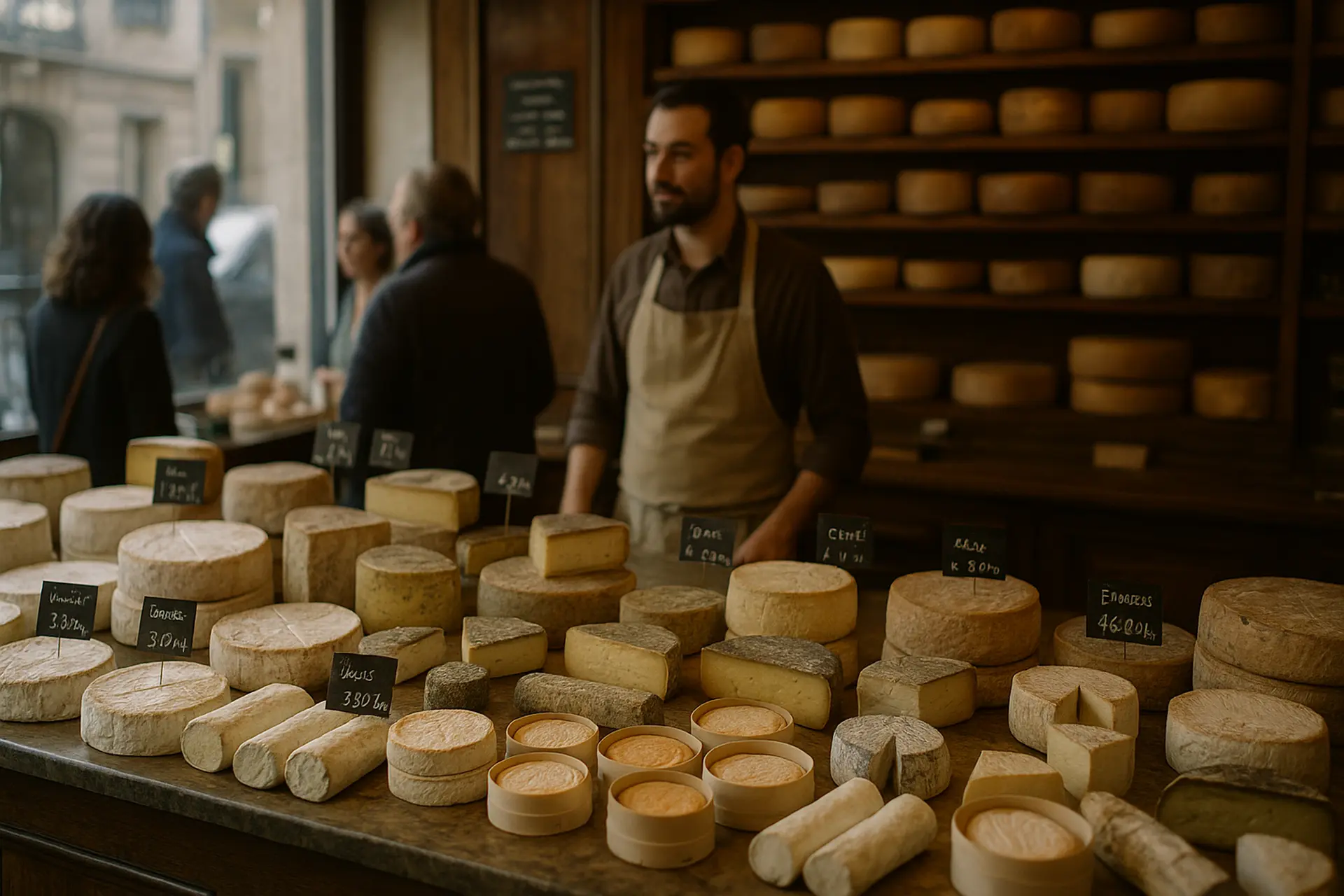

Paris is often called a capital of cheese, with well over a thousand varieties made in France. Its storied fromageries (cheese shops) reflect this heritage, combining craftsmanship, regional pride, and personalized service. Below is a comprehensive, arrondissement-by-arrondissement guide to shopping Parisian fromage like a local — from top-rated boutiques to bustling market stalls, with tips on what to ask, what to buy, and how to bring it home.
- Quick Guide: Paris’s Top 10 Must-Visit Cheese Shops
- Understanding Parisian Cheese Culture
- What Makes Parisian Cheese Shops Special?
- The Art of Affinage (Cheese Aging)
- Complete Guide to Shopping for Cheese in Paris
- The Essential French Cheese Primer
- 7th Arrondissement: Near the Eiffel Tower
- 14th & 15th Arrondissements: Local Favorites
- Right Bank Cheese Shops (Rive Droite)
- 1st & 2nd Arrondissements: Central Paris
- 3rd & 4th Arrondissements: Marais and Surroundings
- 10th & 11th Arrondissements: Hip and Emerging
- Cheese Shops in Paris Markets
- Specialty and Innovative Cheese Shops
- Budget Guide to Paris Cheese Shopping
- Creating the Perfect French Cheese Board
- Cheese Tourism: Planning Your Fromagerie Route
- Bringing Cheese Home: Travel Tips
- Insider Tips from Parisian Cheese Experts
- Frequently Asked Questions
Quick Guide: Paris’s Top 10 Must-Visit Cheese Shops
- Fromagerie Laurent Dubois – Multiple locations (Saint-Germain 5th, St-Antoine 4th, etc.). One of Paris’s most celebrated fromageries, Dubois offers rare finds (e.g. an ewe’s-milk cheese layered with black truffle) and top-quality staples. Staff are multilingual and will vacuum-pack your selections.
- Barthélémy (7th arr.) – A Paris classic known for inventive in-house products (such as a cherry-studded Fourme d’Ambert and fig-stuffed Brie). Inside a cozy marble-and-wood shop (pictured above), you’ll find an array of French favorites; the service is friendly and personal.
- Fromagerie Monbleu – “Père Lacheese” (11th arr.) – A modern shop-and-bistro hybrid run by MOF cheesemaker Pierre Gay. Monbleu is known for hearty Alpine cheeses and friendly prices (they cater to all budgets). In winter it hosts all-you-can-eat raclette dinners with fun flavors (truffle, black garlic, Espelette). For take-home, don’t miss its juniper-smoked goat cheese.
- La Fermette (2nd arr.) – A small shop on Rue Montorgueil with a loyal following. Friendly staff guide you through selections, and the street is lined with nearby bakeries and wine shops – ideal for assembling a picnic.
- Chez Virginie (18th arr., Montmartre) – A three-generation family shop in a traditional Montmartre storefront. It offers unusual regional cheeses (e.g. a pepper-crusted “Brie façon Tigre” or a goat tomme dressed in flowers). Travelers love that the attentive staff vacuum-seal purchases free of charge.
- Hardouin-Langlet (Marché d’Aligre, 12th arr.) – Inside the Marché Beauvau food hall, this counter carries about 350 cheeses (over 90% raw milk). Owner Cyrille Langlet maintains strong ties to all dairy farmers, highlighting local butter and farmhouse cheeses. The chalkboard menu of seasonal specialties (and a little planning) helps shoppers navigate the bounty.
- Fromagerie Paroles de Fromagers (10th arr., near République) – More than a shop, Paroles is a tasting bar and learning center. Run by passionate artisan Pierre Brisson, it carries some 150 handcrafted cheeses and offers wine-pairing workshops. Downstairs is a vaulted cellar for affinage and cheese classes – perfect for sampling flights or a casual board while chatting with knowledgeable staff.
- Fromagerie Quatrehomme (9th arr., Rue des Martyrs) – A landmark boutique led by Marie Quatrehomme (France’s first female “Meilleur Ouvrier de France” in cheese, 2000). Quatrehomme is famous for creative products (for example Manchego infused with black garlic) and even operates a wine bar on weekends.
- Androuet (7th arr., Rue de Verneuil) – A bright-red-doored fromagerie with Alpine flair. Inside, tiled walls and a map of France’s cheese regions welcome tasting. Proprietor Stéphane Blohorn (MOF 2008) helped secure cheese’s status as a French cultural treasure. The store is known especially for goat crottins and seasonal gems like raw milk Soumaintrain, plus unlimited tastings encouraged by staff.
- La Fromagerie du Louvre (1st arr.) – A spacious boutique steps from the Louvre/Samaritaine. Open daily (Monday–Saturday 10am–8pm), it offers a wide range of AOP cheeses plus charcuterie and produce. The shop also runs daily cheese-and-wine pairing sessions in the nearby historic “Caves du Louvre” cellars, an engaging way to taste Paris.
Each of the above shops has its own character, price level, and specialties, but all are highly rated by locals and visitors alike.
Understanding Parisian Cheese Culture
In France, cheese is more than food – it’s heritage. Even today, Parisian fromageries have a communal atmosphere. Many Parisians visit the same local shop weekly, so the staff often know them by name. These shops emphasize craftsmanship and terroir, sourcing cheeses by traditional methods from specific regions. Indeed, French cheeses bear labels like AOP (Appellation d’Origine Protégée, a guarantee of origin and method) and IGP (Protected Geographical Indication), signals of authenticity. (For example, Camembert de Normandie is AOP-certified.)
Parisians buy a wide array of cheeses – typically a mix of cow, goat, and sheep varieties. Shops will often group cheeses by milk type: look for a wedge of Camembert in the cow’s-milk section, Roquefort in the sheep’s section, and a fresh chèvre in the goat section. Seasonality is key: aged winter cheeses (like Mont d’Or) give way to lighter spring chèvres, and the pastures’ changes even subtly alter flavor. In practice, each fromagerie offers something of everything, but the emphasis is on local specialties — for instance, Mont-Saint-Michel cheeses in shops near Notre-Dame, or Alpine comtés in Saint-Germain.
Two terms can cause confusion: “fromagerie” vs. “crèmerie.” Both may appear on shop signs, but there’s little distinction today. Originally, a crèmerie sold dairy products (milk, butter, yogurt, some cheeses) and a fromagerie focused on cheese. In Paris, though, you’ll find cheese under both names. And don’t be surprised to see “affinage” (the art of cheese aging) mentioned; many top shops age cheeses themselves in on-site caves or specialized cellars. This ensures every wheel is ready to eat.
Another unique title is Maître Fromager (“Master Cheesemonger”), awarded in the Meilleur Ouvrier de France competition. For example, Pierre Gay (head of Monbleu) and Stéphane Blohorn (Androuet) are Maîtres Fromagers. Such honors reflect the care that goes into selecting and maturing cheeses.
In short, a Paris fromagerie is a blend of shop, school, and stage. The atmosphere is relaxed but knowledgeable. Unlike a generic grocery store, a fromagerie is a place to learn: cheesemongers here will happily explain the subtleties of each wedge and guide you through choices. As one traveler put it, a clerk at a Rue Cler fromagerie whisked her through tasting Chabichou and Selles-sur-Cher while teaching “affinage” (aging) terms on the fly. That scene exemplifies Paris shopping: personal service, small education, and the sharing of passion for fromage.
What Makes Parisian Cheese Shops Special?
Paris fromageries differ from ordinary stores in a few ways. First, variety and quality: even small shops will stock dozens of cheeses, from ubiquitous Camemberts and Comtés to hard-to-find regional specialties. Second, personalized service: fromagers enjoy educating customers. At La Fromagerie Cler (7th arr.), for instance, an enthusiastic clerk guided a tourist through three types of goat cheese by asking if she wanted “young or mature” and explaining that longer-aging meant a stronger flavor. In Paris, such one-on-one attention is the norm.
Third, novelty and creativity: many shops produce or commission unique creations. As examples, Barthélémy sells a “Brie façon Tigre” — a Brie encrusted in pepper and herbs — and Laurent Dubois offers an herb-decked Epoisses and a Brillat-Savarin topped with salted black truffle. These combinations go beyond standard fare. For adventurous customers, there are even winter-only truffle cheeses (see “Truffle Cheese” later) or local collaborations (like goat cheeses smoked with juniper). This blend of tradition and innovation gives Paris shops a special flair.
In the end, the charm of a Paris cheese shop lies in its people as much as its products. Many fromageries welcome English speakers, especially in tourist neighborhoods. You’ll often find younger staff in t-shirts with cheesey slogans (e.g. Monbleu’s “Père Lacheese” and its “Eat Raclette” tees), as eager to talk cheese as their longtime counterparts. In short, each fromagerie is a little world: its own story, selection, and character, all built around a love of cheese.
The Art of Affinage (Cheese Aging)
A key art in a fromagerie is affinage – the careful aging that develops flavor and texture. Many Paris shops mention affinage explicitly or display aging caves. For example, Taka & Vermo (10th arr.) built its own affinage room so the owners could experiment with ripening. Similarly, Paroles de Fromagers has 17th-century cellars where cheeses slowly mature between workshops.
What does this mean for you? It means that when you buy a cheese in Paris, the cheese has often been aged to perfection. A semi-firm cow’s cheese could be tender and creamy if young, or drier and piquant if aged longer; the fromager will usually tell you. Don’t hesitate to ask how long a cheese has been aged — a good affineur will explain why that matters. (As one Paris cheese expert noted, soft young cheeses need one cut for each day of age, so you get optimum ripeness right away.) In short, affinage is what lifts Paris’s cheeses from ordinary to extraordinary, and many fromageries take pride in aging on-site or curating ideal aging conditions.
Complete Guide to Shopping for Cheese in Paris
Exploring a Paris fromagerie should be an immersive experience. Follow these practical tips to shop like a pro.
- Learn a few French phrases. A polite “Bonjour” upon entering sets a friendly tone. Key phrases include “Je voudrais…” (“I would like…”), “Quel fromage me conseillez-vous ?” (“Which cheese would you recommend?”), and “Pouvez-vous me couper environ 200 grammes de ce fromage ?” (“Could you slice about 200g of this cheese for me?”). Cheese shop staff appreciate the effort. (Good news: many will switch to English if needed, so you won’t be lost.)
- Be prepared to answer questions. Paris cheesemongers often turn the tables to guide you. They may ask what you plan to serve with the cheese – wine, charcuterie, or just bread – and when you intend to eat it (now, or days later). Such details affect which cheeses are ready to eat. They will also ask about maturity: for a goat cheese, do you want it mild or very tangy?. In fact, they expect this interaction. For example, if you say “I want something I haven’t tried,” a clerk at a Cler market fromagerie will gladly point out new goat cheeses (Chabichou, Pouligny, Valençay, etc.) and explain the differences.
- Ask for samples. Never assume you can’t taste. Paris traditions encourage sampling. Cheeses with a rind are typically sold by the wedge and can be sliced open for a tiny taste. Don’t be shy to say “Est-ce que je peux goûter, s’il vous plaît ?” (“May I taste, please?”). A friendly fromager will happily cut a piece of a Camembert or say, “Go ahead, try this!”. (The Everyday Parisian guide notes that “you won’t love every cheese you taste” and that cheesemongers know this, but encourage trying before buying.) Note: very small, whole cheeses sold as single pieces usually can’t be unwrapped for a taste.
- Shop by the season. French cheeses are highly seasonal. The La Cuisine Paris team advises asking “Qu’est-ce qu’il y a en ce moment ?” (“What’s in season now?”). For example, fresh goat cheeses peak in spring and soft-washes in summer, while Mont d’Or and raclette are winter highlights. Don’t miss seasonal stars: in winter ask for Mont d’Or (creamy cheese from Franche-Comté, often served warmed) or truffled Brie; in summer look for honey-flavored chèvres or alpine Tommes.
- Mind pricing and portions. Cheese is sold by weight. The price per kilogram is usually displayed. As a rule of thumb, expect older or more labor-intensive cheeses to cost more. Aged Comté at 36 months may be far pricier than the same cheese at 12 months. (One shopper notes the staff will even ask “How old would you like your Comté?” and “the price increases as it gets older”.) On the other hand, everyday favorites like Camembert or young goat cheese are very affordable by comparison. You can buy as little as you like – even 2–3 slices (~100g) is common – though often shops have a minimum slice (e.g. 50–100g) for cleanliness.
- Timing matters. Most fromageries close on Sundays (a common shop holiday) and many are closed or open only in the afternoon on Mondays. For example, Barthélémy and Androuet do not open Sunday, and Barthélémy is closed all Monday. (Androuet opens on Mondays from about 4–7:30pm.) If shopping on Monday, focus on places that explicitly open then – the Fromagerie du Louvre, for instance, is open Monday–Saturday. In general, you’ll find the widest selection midweek; late afternoons, many shops take a service break around lunch, so mornings are often best for full shelves. Finally, peak tourist season (summer) can mean crowds in famous shops; early morning or just before closing can be quieter.
The Essential French Cheese Primer
Before you shop, a quick review of French cheese basics will help you make good choices.
- Milk types and flavors. French cheeses derive from cow, goat, or sheep milk (cow’s milk cheeses are by far the most numerous). Each milk gives a distinct profile. In general, goat’s cheese is whiter, slightly tangy and acidic, becoming crumbly as it ages. Sheep’s cheese is typically richer and nutty (high fat content gives it a buttery flavor). Cow’s milk cheeses range from creamy and mild (like Brie) to robust and savory (like aged comté). If you’re building a board, aim to include different milks for variety.
- Texture categories. French cheeses are also categorized by texture. Fresh chevre (goat curds) are spreadable; bries and camemberts have soft, edible rinds; hard cheeses include Alpine Alpine-comtés and Gruyères; blue cheeses (e.g. Roquefort) have characteristic veins. In shops, cheeses are usually grouped in display cases by texture or milk. You can ask “soft or hard?” to indicate your preference.
- Raw (cru) vs pasteurized. Look at the label or ask. In France, many traditional cheeses are made from raw milk (lait cru) – this often yields more complex flavors. On labels, “Lait cru” means unpasteurized milk was used. Pasteurized cheeses are labeled “lait pasteurisé”. (Note: raw-milk cheeses are legal in France and prized for taste, but some countries restrict their import.)
- AOP & Quality Labels. Many famous French cheeses carry an AOP/ PDO label, ensuring they were made to age-old specs in a defined area. For example, Camembert de Normandie AOP is made in Normandy from raw milk. There’s also IGP (Protected Geographical Indication) which links a cheese to a region, though with slightly looser rules. You might also see “Fermier” (made on a single farm) or “Label Rouge” (superior quality). These labels can guide you to authentic, high-quality cheeses.
- Seasonal highlights. Ask your fromager, but know a few classics: Mont d’Or (a spoonable cheese in a wooden box) appears each autumn; Tomme de Savoie and young Tommes (wheels) dominate winter markets; mild chèvres are at their best in spring; summer often brings light wines and cheese plates. Blue cheeses and heavier Comté remain available year-round, but even their character shifts with the seasons (alpine cows’ diet changes the milk flavor).
- Rare and unusual finds. Paris shops often carry hard-to-find curiosities. If you seek something exotic, ask for “les fromages rares”. For example, some stores stock older Tommes de chèvre truffées or serrano-aged goat cheeses. In season, look for truffle-infused specialties: the shop Taka & Vermo makes its own truffle-stuffed Brie and Mont d’Or using Périgord truffles. Laurent Dubois offers a luxurious goat’s cheese layered with shaved black truffle. For something truly different, many shops highlight unpasteurized regional cheeses: try an unpasteurized Corsican ewe’s cheese (like Calenzana) at Fromagerie Goncourt. Don’t hesitate to ask your fromager for offbeat recommendations – they know what’s rare this week.
7th Arrondissement: Near the Eiffel Tower
- La Fromagerie (Rue Cler). Tucked away at 31 rue Cler, this family-run shop has been a Left Bank staple for decades. Rows of round Camemberts, Reblochons, and jars of potted goat cheese greet you at the entrance. The staff here operate like expert sommeliers of fromage: they will listen to your taste (strong or mild, cow or goat) and enthusiastically guide you through samples. As one visitor described, the experience can feel like a whirlwind cheese encyclopedia, with the clerk rattling off names like Chabichou and Selles-sur-Cher while explaining age and texture. In other words, be ready for an immersive encounter. After deciding, your cheeses are neatly gift-wrapped with the shop’s chic paper, and you leave feeling very satisfied.
- Androuet (Rue de Verneuil). Just around the corner at 37 Rue de Verneuil is an Androuet location, easily spotted by its bright red door and Alpine chalet decor. Inside (see photo below), the air is fragrant with aging comté and munster. The owner Stéphane Blohorn was instrumental in obtaining UNESCO recognition of French cheese-making as cultural heritage. Here you’ll find a comprehensive map of France’s cheese regions and shelves of uncooked hams and chocolates alongside the cheeses. Androuet is famous for its crottins de chèvre – dozens of tiny goat cheeses that look almost like candies. Visitors are encouraged to taste and compare varieties: Androuet won’t rush you, and often the staff will open a fresh round for a sample.
14th & 15th Arrondissements: Local Favorites
These southern arrondissements are more residential, with hidden neighborhood shops rather than tourist draws. Paris locals here treasure independent fromageries that fly under the guidebook radar. While none match the fame of Dubois or Barthélémy, you will find well-stocked counters and competitive prices.
- Fromagerie Laurent Dubois (Lourmel, 15th). A second Dubois branch on rue de Lourmel serves local Parisians. It offers the same excellent cheeses as its Saint-Germain namesake, just slightly scaled down. Locals often mention it as a convenient high-quality stop with familiar faces at the counter.
- La Fromagerie 14ème/15ème (Rue Raymond Losserand). On the edge of Petit-Montrouge, this shop has earned praise for friendly service and good cheeses at modest prices (often rated “€” by ParisUnlocked). Its case includes local Parisian favorites: Camembert, Saint-Nectaire, and seasonal chèvres, plus some Italian burrata and Greek feta. It’s a good example of the mid-priced style of shop Parisians frequent daily.
- Aux Délices du Palais (Paris 15th). A smaller cremerie in Montparnasse known to be open Monday–Friday. It carries farm-sourced chevre and local tommes. The clientele is mostly neighborhood residents, and the owner will help novice buyers by slicing a few different cheeses to sample, in case you feel overwhelmed.
These Left Bank shops may not be in every travel guide, but they demonstrate Parisian daily life: casual, high-quality cheese shopping in the arrondissement where you live or stay.
Right Bank Cheese Shops (Rive Droite)
The Right Bank neighborhoods (north of the Seine) also brim with outstanding fromageries. They range from historic boutiques in the Marais to hip new stores in emerging districts.
1st & 2nd Arrondissements: Central Paris
- Fromagerie du Louvre (1st arr.). A stone’s throw from the Louvre Museum, this fairly new shop (under the Edonist group) opened around 2014. It stocks a carefully chosen selection of AOP classics and some rare aged cheeses. The counter is sleek and modern. Uniquely, Fromagerie du Louvre partners with a wine bar next door (the “Caves du Louvre”), and they jointly offer guided tastings pairing ten cheeses with French wines in historic cellars. This setup makes it popular for tour groups and curious foodies. If you pop in casually, note that it’s open Monday–Saturday (10am–8pm), a plus in this area.
- Crèmerie Terroirs d’Avenir (2nd arr.). Situated near the Grands Boulevards (8 Rue du Nil), this is part of a chain originally known for sustainable produce. It’s less of a tourist spot and more a local hangout offering organic and farm-direct foods. In the crèmerie section you’ll find raw-milk artisanal cheeses and quality dairy products, plus around back a tiny rotisserie and organic butcher. The ethos here is social: they often promote cheeses from small farms and sustainable practices (hence the name Terroirs d’Avenir). You may have to hunt a bit, but this shop rewards curious buyers with products (fromage frais, cultured butter, fromage blanc) you won’t see on every street corner.
3rd & 4th Arrondissements: Marais and Surroundings
- Fromagerie Laurent Dubois (Saint-Antoine, 4th arr.). Across the river from the Saint-Germain store, Dubois also has a 4th arrondissement branch on Rue Saint-Antoine (near Bastille). It’s somewhat smaller but carries much the same roster of cheeses. If you’re strolling the Marais or visiting Place des Vosges, this is the Dubois location you’re likely to encounter. It remains a magnet for French-affine cheese lovers, but tourists discover it too (so same caveats about higher prices and demand-driven service apply).
- Saisons Fromagerie (Rue du Grenier Saint-Lazare, 3rd arr.). In the heart of the Marais, Saisons is a relatively new shop (founded ~2018) run by passionate young cheesemongers. It has quickly gained a reputation for an équipe souriante that welcomes customers with a smile. They curate a sharp selection of fromages de terroir (regional farm cheeses) and even biodynamic wines, plus house-made charcuterie and the famed Stéphane Perrotte’s artisanal jams. Their philosophy is to source directly from producers: the owners speak of a “tour de France of small farms” to find cheeses. The shop also offers picnic baskets (cheese+wine+bread) on demand. Importantly for travelers, Saisons will vacuum-pack your selections for flight luggage.
10th & 11th Arrondissements: Hip and Emerging
- Taka & Vermo (10th arr.). This stylish shop (61 bis Rue du Faubourg Saint-Denis) is run by a young French couple who toured France in search of top raw-milk and farmhouse cheeses. It has a modern, minimalist interior and an emphasis on naturally made cheeses. Taka & Vermo prioritizes raw-milk and traditional methods, even aging some cheeses in its own on-site cellar. It’s also a center of innovation: their own creations include a fresh chèvre topped with yuzu and lime, reflecting the owners’ creative spirit. In winter they make their own black-truffle Brie and truffled Mont d’Or. The shop’s clientele is young and eclectic, and they sometimes host pairing classes (wine and even sake with cheese). Expect to pay chef’s-kiss prices, but also find cheeses you can’t get elsewhere.
- Fromagerie Monbleu (“Père Lacheese”) (11th arr.). As described above, Monbleu (151 bis Rue de la Roquette) combines a shop and café. It’s beloved by hip Parisians for its approachable vibe and Alpine selection. In this neighborhood, you’re also steps from Rue Oberkampf, so it’s common to combine dinner and drinks here after shopping. (Another branch opened near Bastille in 2021, also called “Père Lacheese.”)
- Fromagerie Goncourt (11th arr., Belleville). A bit off the beaten path, this boutique on Rue Abel Rabaud has a bright cerulean facade. It specializes in Corsican cheeses – think punchy ewe’s milk varieties like Brocciu or a robust Calenzana goat cheese. The selection is smaller but highly curated, with each cheese thoughtfully placed. There are also crusty sourdoughs, charcuterie, and even sparkling ciders on offer, making it easy to assemble a full picnic while you explore trendy bars on Rue Oberkampf and Canal Saint-Martin. The hours are favorable (open Monday afternoons, see FAQ below).
- Crèmerie Saint-Félicien (Halles, 1st arr.). Though inside the giant Marché des Enfants Rouges is more known for Moroccan food, nearby there’s a tiny fromagerie (andré?) focusing on Mont d’Or and seasonal items – worth a stop if you happen to be exploring the 1st from this side.
Each Right Bank district has its charms and cheese specialties. The Marais is the most touristy, yet shops like Saisons keep it local. The 10th/11th have the vibe of craft and creativity. And Belleville in the north offers exotic finds thanks to its diverse immigrant populations (Italian ricottas, Middle Eastern goat labneh, etc.) alongside French classics.
Cheese Shops in Paris Markets
Paris’s covered and open-air markets are treasure troves for cheese lovers, each with its own character. Here are a few highlights:
- Marché d’Aligre (12th arr.) – Hardouin-Langlet. We mentioned this one above. In this lively market hall by Place d’Aligre, Hardouin-Langlet operates a full fromagerie stall with dozens of wheels and logs. It opens in the morning and is especially good on weekends. After shopping, many people pause at nearby Square Trousseau or Parc Montsouris to picnic on the cheeses and charcuterie they’ve bought.
- Marché couvert Saint-Germain (6th arr.) – Sanders Fromagerie. Down in Saint-Germain-des-Prés, the year-round market at Rue Lobineau houses Fromagerie Sanders. Run by Michel and Twiggy Sanders, this stall is beloved by locals. They are always smiling and generous with advice, and they carry an excellent range of raw-milk cheeses. Frequent customers praise their perfectly ripe Saint-Marcellin and Saint-Félicien. Prices here tend to be better than small boutiques, and you can often see tiny goats hanging from the ceiling (a sign they’re also selling fresh goat’s milk yogurt nearby). The market is open 6 days a week (closed Monday); plan your visit Tuesday–Sunday morning.
- Marché Saint-Denis (10th/18th) – Barthélémy & others. South of Barbès, the Saint-Denis covered market includes a branch of Barthélémy behind glass. It’s a convenient stop if you’re shopping fabric or antiques at nearby markets. Other fromageries sometimes pop up on place St-Quentin too. Check individual stands on site.
- Marché Raspail (6th arr., Sundays only) – Organic Market. This upscale market has periodic artisanal fromageries (look for Fromagerie Danard, which often sets up here). It’s open Sundays 7am–3pm and attracts a health-food crowd; you can find great goat cheeses from Normandy or taramas around here.
- Other notable markets. The Marché Beauvau (Aligre) above, Marché d’Oberkampf, Marché Bastille. Many covered markets (St-Quentin, Batignolles, etc.) have fromageries, though often smaller. Your best bet is to arrive when the market opens (usually 8–9am) to get the peak selection.
Market sellers tend to offer slightly lower prices than boutiques for comparable cheeses, since there are fewer overheads. If you find a fromage stand in a market, feel free to ask for advice just like in a shop. Remember that market vendors may close by early afternoon, so mornings are the safest time to shop.
Specialty and Innovative Cheese Shops
Beyond the “classics,” Paris also has niche fromageries pushing boundaries or serving particular niches:
- Shops supporting small producers. Many modern fromageries emphasize farm-to-shelf sourcing. As noted, Saisons boasts a selection from their own “tour de France of producers”, and Taka & Vermo handpick cheeses from artisan farms. Paroles de Fromagers also focuses on petits producteurs, carrying cheeses made in small batches. Even larger names have caught this trend: these shops will often proudly tell you the farm name (e.g. “made this morning at Ferme XXX in Burgundy”). If supporting local and artisanal is important, look for buzzwords like “fermier”, “artisan”, or simply ask “Vos producteurs, qui sont-ils ?” (“Who are your producers?”).
- Fusion and creative offerings. Some Paris stores specialize in novel flavor combinations. For example, Barthélémy regularly comes up with quirky fusions: you might find their “Brie au poivre” (pepper-coated Brie) or a Gorgonzola layered with fig jam. Laurent Dubois has even carried cheeses stuffed with exotic ingredients like ginger or cranberries. If you want the weird and wonderful, ask for “specialités maison” (house specialties) when you shop. Taka & Vermo’s yuzu goat cheese (a fusion of Japanese and French tastes) is one of the most talked-about new creations in Paris.
- Cheese-Shop–Bistro combos. A growing trend is pairing shops with dining. Monbleu (11th) mixes its fromagerie with a sit-down restaurant area; in winter it serves tables of melted raclette for walk-in groups. Paroles de Fromagers (10th) has a tasting bar upstairs where you can sample pre-arranged cheese plates or wine pairings with friends, in a lounge setting. Another example: La Fromagerie d’Alexandre (6th) is a small shop that also acts as a café. These hybrid venues are essentially mini-cheese academies where you can both buy and immediately enjoy cheese with others.
- Cheese + charcuterie plate shops. Several fromageries also sell ready-made plateaux de fromages (cheese boards) and charcuterie snacks, especially before dinner hours. For instance, Saisons will prepare picnic baskets that include meats, cheeses, bread, jam and wine – ready for a day out. Even if you’re on a time crunch, keep an eye out for a stack of pre-packed boards in glass cases; they can be a quick way to try a sampler of a shop’s best cheeses (and sometimes cost less than buying multiple wedges).
These specialty shops often sit at the intersection of tradition and innovation. Visiting them means meeting cheesemongers as curators or artists, not just grocers. Even if you go for a quick purchase, it’s worth chatting with them – many have deep knowledge of both classic forms and avant-garde flavors.
Budget Guide to Paris Cheese Shopping
Paris cheeses range from everyday to luxurious. Here’s how to think about cost:
- € – Casual shops and markets. If you’re on a tight budget, head to markets or supermarkets. Standard French supermarket chains (Monoprix, Franprix) have a respectable selection: basic Camembert, small goat logs, young Comté, etc. They charge by the kilo but often sell smaller individually-wrapped portions. In markets like Aligre or St-Germain you’ll find farm cheeses priced a bit lower than boutiques (sometimes labeled simply as “fromage de pays”). Shops like Monbleu explicitly market themselves as budget-friendly (it “welcomes cheese lovers of all budgets”). You can often fill a basket here with picnic staples for a moderate sum – for example, a mini Camembert, a chevre log, and some Saint-Nectaire might each be around €2–4 per 100g at value-minded places.
- €€ – Mid-range fromageries. Many beloved neighborhood fromageries fall here. These shops sell high-quality cheese but try to keep prices reasonable. For instance, La Fermette (Montorgueil) and many crèmeries in residential areas would be in the “€€” category. You’ll pay a bit more (maybe €6–12/kg on most bries and Comtés), but the experience is polished. These shops often source directly and sell by slice. They may add a small fee for vacuum packing, or none at all.
- €€€ – Top-tier boutiques. This includes heritage shops like Laurent Dubois, Barthélémy, Laurent Ballot (near Bastille), etc. They pride themselves on premium imports and rare affinés. Expect to pay a premium here: cheeses at €20–40/kg are common (some truffle or specialty aged cheeses even higher). The atmosphere is “serious gourmet,” and staff might advise smaller buys (e.g. 150g of Comté at €30/kg rather than a larger wheel). Many of these shops maintain the option to slice a thin portion so you pay exactly for what you need. If you want to splurge on an extraordinary cheese (e.g. 36-month-aged Comté, old Gouda, or a truffled brie), this is where to find it. But note that quality can also be found off the beaten path – some “€” or “€€” shops quietly carry outstanding selections at friendlier prices, and will be happy to point them out.
- Value tips: Watch for fixed-price deals – for example, a plateau of three cheeses for a set price, or promotions on certain days. Buying directly from a market stand (as mentioned earlier) usually saves a few euros versus a boutique. Also, if you’re shopping for travel, consider that vacuum packing (free at places like Chez Virginie) allows buying cheeses you might otherwise think too expensive to fully consume.
Creating the Perfect French Cheese Board
Putting together a plateau de fromages (cheese board) is an art in itself. Here are some guidelines:
- How many cheeses? Traditionally, 3 to 5 varieties is a good range. This allows guests to taste a range without overloading their palates. Aim for at least one cheese from each milk type (goat, sheep, cow) and mix textures (soft, semi-soft, hard, blue). As one Paris foodie recommends, choose an odd number of cheeses and vary the colors and milks.
- Portion size: A typical serving is about 50–75g (2–3 oz) per person per cheese. So a board for 4 might have around 200g of total cheese, divided among 3–5 cheeses. If you’re buying in a shop, you can simply tell the monger how many people; they’ll usually start with about that total weight and slice it into a pretty sampling of cheeses. It’s polite to ask if you want each cheese cut in order of firmness (harder first, fresh/soft last). Many guides say “easier to digest cheeses go last,” but in practice guests can eat at any order.
- Wine pairing. Paris cheesemongers will talk pairing if asked. A few classic notes: Loire Sauvignon (Sancerre) or equally crisp white is perfect with young chèvre. A medium-bodied red (Pinot Noir or Beaujolais) pairs well with semi-soft washed rinds or mild cow cheeses. Richer reds (Bordeaux, Burgundy) can stand up to nutty aged comté or morbier. For blue cheese, try a sweet dessert wine or fruit liqueur wine (Sauternes, Banyuls) to balance the salt. As the Fromagerie du Louvre tasting highlights state, the interplay of tannins, acidity, and creaminess can be learned on-the-fly. But a simple rule of thumb is: white wines for soft chèvres or camembers; light reds for bries and hard cheeses; sweet wines or port for bleu.
- Accompaniments. A French cheese board often includes:
- Bread: Fresh baguette is classic – medium-sliced, crusty on the outside, soft inside. Crackers or toasted slices (pains aux graines) are fine alternatives.
- Fruit: Grapes, apple slices, or pear slices help cleanse the palate. Seasonal jams or honey (especially with goat cheese) add sweetness. Fig jam is a common French pairing with blue or aged gouda.
- Nuts: Walnuts or almonds add crunch and richness, pairing especially well with hard cheeses like comté.
- Olives & charcuterie: If you’re doing a larger spread, saucisson sec (dry sausage) and jambon cru (cured ham) are natural companions. Or try marinated olives and cornichons (pickles) for a tangy touch.
- Wine or cider: Don’t forget a local beverage. Normandy cider goes nicely with Camembert; a light red or rosé suits most boards.
Above all, plate your cheeses appealingly. Label them if possible (a little tent card or toothpick) so guests know what they’re tasting. Drawers of color and shape — a round Brie wheel next to a log of chèvre, a triangle of blue next to a cube of comté — make the board inviting. And remember: a little goes a long way. These elements help guests enjoy each cheese’s distinct profile without overwhelming flavors.
Cheese Tourism: Planning Your Fromagerie Route
For travellers, mapping a cheese route through Paris can be almost as fun as visiting the Louvre or Eiffel Tower. Here are some strategies:
- Neighborhood rounds. Instead of crisscrossing the whole city, pick one or two areas each day. For example, a Saint-Germain Tour could include Fromagerie Laurent Dubois (5th arr.), then walk south to Barthélémy or Androuet in the 7th, followed by a detour to rue Cler (La Fromagerie) by the Eiffel Tower. Another day, explore the Marais & Bastille: hit Dubois Saint-Antoine (4th arr.), then Saisons (3rd arr.), then you’re halfway to Fromagerie du Louvre (1st arr.) near the Seine. Likewise, a Hipster Paris Tour might go from Taka & Vermo (10th) to Paroles de Fromagers (10th) and then to Monbleu or Goncourt in the 11th, with dinner afterward on Rue Oberkampf or Canal St-Martin.
- Combine with sights. Parisians have favorite cheese shops near famous landmarks. For instance, rue Cler market by the Eiffel Tower has several fromageries, so you could hit La Fermette and Barthélémy, then pop over to the tower. Near Notre-Dame, one can stop at the small shop on Ile St-Louis (La Ferme Saint-Aubin) on the way to the cathedral. If visiting the Louvre museum, swing by the Fromagerie du Louvre on your return – it’s right next to Les Halles. Montmartre visitors should not miss Chez Virginie around Rue Damrémont. Essentially, ask your tour guide (or Google Maps) what the nearest fromagerie is to each landmark on your itinerary.
- Walking tours by arrondissement. Some blogs even outline “cheese shop routes”: e.g. a 1st-2nd arr. route might start at Fromagerie du Louvre, then head to Marché d’Aligre (Aligre) in the 12th; a 10th-11th arr. route focuses on Canal Saint-Martin and Oberkampf (Taka, Paroles, Monbleu). ParisUnlocked’s book (and others) also map cheese tours. But a practical approach: when you’re out, keep an eye out for signs “Fromagerie” or “Crèmerie” – you’ll often see them clustered near food markets or food streets (Rue Montorgueil, Rue Cler, Rue Daguerre, etc.). A random stop can yield a delightful find.
- Avoiding crowds. If a shop looks packed with tourists at midday, consider swinging by later (many stay open till 7pm or later) or try sister branches (Dubois and Monbleu both have multiple locations). Cheese shops are slightly more relaxed in the evening. Remember also: foreign languages are common at the busiest stores, but in quieter shops you might practice your French!
Ultimately, any walk through Paris can include cheese. A casual plan: start with a bakery (croissants), then a fromagerie for cheese and butter, then perhaps a charcuterie or olive stall, and finish at a wine shop. Many of Paris’s lively markets and streets make this loop easy.
Bringing Cheese Home: Travel Tips
Taking cheese back on a plane or train requires some prep. Here are key tips:
- Vacuum-pack your cheese. As noted, many shops will seal your purchase. This is not only convenient but often required by some countries (traveling with vacuum-sealed cheese is easier customs-wise). Free vacuum-sealing is offered at Chez Virginie, Saisons, La Fermette Saint-Aubin, and a few others. Always ask the shop “Pouvez-vous emballer sous vide pour moi ?” (“Can you vacuum-pack this for me?”). The staff usually do it on the spot, wrapping the cheese in plastic and then a thick plastic pouch with the air removed.
- Best cheeses to travel with. Hard, aged cheeses endure travel best. Comté, Beaufort, aged Tommes, Parmesan – these will survive being in a suitcase overnight and are usually well within carry-on weight limits. Semi-soft cheeses (Tomme de Savoie, Roblochon, Saint-Nectaire) can work if vacuum-packed. Soft cheeses with bloomy rind (Camembert, Brie) are more delicate: eat them first after arrival or still cool them well. Fresh chèvre and mozzarellas are very sensitive; skip these unless vacuumed and kept cold. Blue cheeses can be travel-friendly if they aren’t too creamy. Also consider whether your destination forbids unpasteurized dairy: some countries (e.g. USA, Japan) ban raw-milk cheese longer than 60 days. If you’re not sure, opt for pasteurized or be ready to declare it.
- Customs regulations. In the EU it’s usually fine, but check the rules of your home country before buying. Many travelers limit themselves to 2–4 kg total of cheese. Keep the receipt (just in case) and declare at customs if required. For air travel: put the cheese in carry-on (not checked) so it stays cool in the cabin. You can also pad it in insulated bags with a gel pack. Some people remove the rind before traveling, but that’s not really necessary if it’s vacuum-sealed.
- Storage until departure. If you have a day or two in Paris before leaving, plan your shopping for the last day. Otherwise, store cheeses in the coolest part of your lodging (a fridge is ideal; hostels often let you use a shelf in their kitchen fridge). Re-wrap opened cheeses well to prevent drying. Hard cheeses should be fine for 3–4 days unrefrigerated if well wrapped. Just remember: the sooner you eat it back home, the better the quality.
- Cheese packing gear. If you plan to do serious cheese shopping, consider bringing a small insulated lunchbox or cooler bag. Some travelers carry a plastic knife and a mini cutting board. Also, always carry sachets of antiseptic wipes – you’ll likely handle a lot of paper and plastic.
Insider Tips from Parisian Cheese Experts
Learn from the aficionados:
- What Parisians really buy. Locals tend to have favorites. A neighborhood family might buy the same camembert and goat log every weekend, supplemented with one new item. It’s common to choose at least one cow’s-milk cheese (brie or comté) and one goat or sheep cheese at each visit. Parisians often choose cheeses from AOP appellations they grew up with. Don’t feel bad ordering exactly the same cheese you always do — it’s the norm. Also note: Parisians often bring their own containers for épicerie items, but for cheese they usually use the paper or plastic the shop provides. Carrying a sharp utility knife or cheese-cutting board is overkill (the shop will slice for you, usually free of charge).
- Hidden gems known only to locals. For a truly local tip, ask a French friend or your hotel concierge. For example, in recent years a small stand at Marché Saint-Denis has gained a cult following among Belleville residents for its Armenian sheep’s cheeses; or the grilled raclette truck near Trocadéro (open seasonally in winter) is beloved by students. Another secret is that many Paris fromageries carry produits laitiers like fresh beurre doux (unsalted butter) and yaourt de ferme. Buying a village butter from Isigny (Normandy) is a treat often reserved for the grocery aisle. The “fromagerie hack” is to pop in just before 7pm (closing time): sometimes shops put leftover cheeses at reduced price (they don’t want to throw them away).
- Mistakes to avoid. The top faux pas is not asking questions. Paris fromagers are eager to help, so asking “Que me conseillez-vous ?” can lead to great discoveries. On the flip side, avoid overwhelming the monger by pointing at everything; try to narrow it down (e.g. by milk type or firmness). Don’t assume vacuum packaging is automatic – you must request it. Also, many first-timers buy too much thinking all cheese is a souvenir – learn to portion out how you’ll eat it before it spoils. Finally, don’t fret over ripeness: if a cheese is too young or too ripe for your taste, the monger can often swap it or cut less. They want you to be happy, not clog their cases with returns.
With these tips and this guide, you are now ready to navigate Paris’s fromage scene with confidence and delight. Enjoy each bite of French cheese and the rich culture that surrounds it.
Frequently Asked Questions
Which cheese shops are open on Mondays?
Most Paris fromageries rest on Sunday, and Monday hours vary. However, a few open Monday afternoon. For example, Fromagerie du Louvre is open Monday–Saturday (10am–8pm). Androuet and Paroles de Fromagers open Monday afternoons (around 4–7:45pm). Barthélémy is closed Monday. If you plan to shop on Monday, check each shop’s hours in advance or aim for late afternoon.
Do cheese shops have English-speaking staff?
Many do, especially those in tourist areas. As ParisUnlocked notes, the featured fromageries “welcome English speakers,” ensuring you can ask questions easily. David Lebovitz also found that top shops “welcome cheese-loving visitors from all over the globe, so staff are multilingual”. In any case, French staff often speak basic English or can make themselves understood. Learning a few cheese-related French words (fromage, chèvre, comté) helps the conversation flow.
Can I sample cheese before buying?
Yes! Parisians would never expect you to pay for a mistake. As one guide says, “Don’t be afraid to ask for a taste of a specific cheese you want to purchase”. Most semi-soft and hard cheeses on display can be sliced for you to taste. Just point and ask “Goûter, s’il vous plaît.” (Restaurants often charge for tastings, but shops generally do not.) It’s a smart way to avoid regrets — Paris cheese is wonderfully diverse, and you may love something you’ve never heard of. (The most common refusal is for whole small chèvres or soft-ripened newbies that aren’t cut open, but even then you can ask the ideas behind them.)
What’s the minimum purchase amount?
There is usually no strict “minimum.” You can buy just 50–100 grams of a cheese if you like. Many shops won’t bat an eye if you only want a couple of slices of Brie or a small piece of Comté, though very occasionally a shop might have a €2 surcharge for very small purchases. It’s polite to say “Je voudrais environ 200 grammes, merci” (“I’d like about 200 grams, please”) and the monger will slice accordingly. The real minimum is more practical: do bring cash or card for at least a small buy.
Which shops offer cheese tastings or workshops?
Check Paroles de Fromagers (10th arr.) – they regularly hold cheese-and-wine nights and classes. Fromagerie du Louvre offers tasting sessions in the historic cellars nearby. Monbleu has started weekend raclette feasts (reservation recommended). Some shops post sign-up sheets or flyers – so look for “dégustation” notices on the counter or ask the staff, “Avez-vous des ateliers ou dégustations bientôt ?” (“Do you have any tastings or workshops soon?”). Tourist offices and websites also list public cheese tours around Paris.
Which arrondissements have the best fromageries?
The answer is: they’re scattered! Major clusters include Saint-Germain (5th/6th arr.) for classics like Dubois and Barthélémy; the Marais (3rd/4th) for Saisons and Dubois St-Antoine; the Ternes/Eiffel area (7th arr.) for Androuet and Rue Cler shops; and Montmartre (18th arr.) for Chez Virginie. Emerging hotspots are the Canal Saint-Martin/Republic (10th/11th) with Taka & Vermo and Monbleu, and Belleville (19th arr.) for local charm like Goncourt. Basically, you’ll find a great shop in almost every part of Paris.
Which cheese should I definitely try in Paris?
This depends on taste, but some must-try categories are: raw-milk Brie de Meaux, aged Comté, runny Saint-Nectaire, Pyrénées Ossau-Iraty (sheep), tangy Crottin de Chavignol (goat), and blue Roquefort or Persillé de Tignes. Seasonal hits include Mont d’Or in winter and fresh crottins de chevre in spring. Don’t leave without sampling at least one raw-milk cheese (where legal) – these express terroir most. Your fromager can guide you.
What are good cheese-and-wine pairings in Paris?
As mentioned, Loire Sancerre (white) with goat cheese is a classic.[55] Soft cow’s cheeses (Camembert, Chaource) go with fruity reds (Pinot Noir or Merlot). Washed-rind cheeses (Maroilles, Pont-l’Évêque) like a mellow red or a Gewürztraminer. Blue cheese (Roquefort) is famously paired with sweet dessert wine or dry Champagne. The Fromagerie du Louvre even teaches pairing techniques in tastings. In practice, ask your vendor; often they have a local wine shop next door for pairing suggestions.
How should I store French cheese?
If you don’t eat your cheese immediately, wrap it in waxed paper or re-sealable plastic (the way the shop does) and refrigerate. Cheese likes humidity but breathable wrap; avoid aluminum foil alone (it can sweat and degrade the flavor). A small crisper drawer or a cooler spot in the fridge is ideal. Take it out 30 minutes before serving so it comes to room temperature. When in doubt, refer to each cheese’s paper bag or label – shops usually write a cut-off date or best-eaten-by. Generally, hard cheeses last longest, and very soft cheeses should be eaten soon after purchase.
What to do if I only have a little time or luggage space?
– Time: If you can visit only one fromagerie, go to a well-regarded one near where you are staying or sightseeing. Or pick a market hall with multiple stands (Aligre or St-Germain).
– Space: Choose a few special cheeses you can’t get at home rather than loading up. Vacuum-pack your buys (most shops will do it free). Hard cheeses pack well and lose little weight. Semi-soft Brie or Camembert can be packed tightly and will survive. Bring an insulated bag on the plane if possible. Even a small nylon tote or grocery bag is better than nothing. Keep cheeses separate from non-edibles in your luggage to avoid contamination and odor.