Indonesia’s islands stretch endlessly across the equator: officially 17,508 of them, making it the world’s largest archipelago. Beyond Bali’s famous beaches lie countless hidden gems. This sprawling nation has more coastline than any other – roughly 80,000 km – and a nearly unfathomable variety of landscapes. Yet its most famous island is also one of its most crowded. Bali now draws over 6 million foreign visitors a year, sparking concern. Experts call Bali overtouristed, noting rampant development and erosion of culture. With each passing year, travelers face congested roads, water shortages, and shrinking rice fields in Bali. In this climate, off‐the‐beaten‐path destinations gain appeal. The promise of quieter beaches, pristine reefs and intact traditions is a powerful draw for those who will soon explore more remote shores. In many corners of the archipelago, authentic village life thrives and empty sands await – but only a few intrepid visitors have ventured here. As sea lanes improve and airlines add routes to the East, now is the time to discover Indonesia’s lesser-known islands, before word spreads.
- Why Explore Indonesia’s Hidden Islands
- The 25 Most Spectacular Undiscovered Indonesian Islands
- Raja Ampat Islands – The Ultimate Diving Paradise
- Togean Islands – Central Sulawesi’s Hidden Gem
- Belitung Island – Sumatra’s Secret Beach Paradise
- Sumba Island – Land of Ancient Traditions
- Labengki & Sombori Islands – Sulawesi’s Best-Kept Secret
- Wakatobi Islands – Sulawesi’s Marine Biosphere
- Mentawai Islands – Indonesia’s Surfing Secret
- Siau Island – Volcano & Wildlife Frontier
- Flores Island – Beyond the Komodo Dragons
- Selayar Island – South Sulawesi’s Beach Haven
- Derawan Islands – Borneo’s Undiscovered Reefs
- Halmahera – The Heart of North Maluku
- Sumbawa Island – Volcanic Surf & Serenity
- Bunaken & Lembeh – North Sulawesi’s Marine Twins
- Kei Islands – Maluku’s Remote Paradise
- Banda Islands – Spice Islands Reborn
- Pulau Weh – North Sumatra’s Tranquil Tip
- Island Categories: Finding Your Perfect Escape
- Transportation Guide to Remote Islands
- Best Time to Visit Indonesian Islands (Seasonal Guide)
- Budget Guide: Real Costs of Visiting Remote Islands
- Accommodation Guide: Where to Stay on Remote Islands
- Essential Practical Information
- Marine Life and Diving Opportunities
- Cultural Experiences on Undiscovered Islands
- Sustainable Tourism: Protecting Hidden Paradises
- Frequently Asked Questions
- Conclusion: Indonesian Island Adventure Awaits
Why Explore Indonesia’s Hidden Islands

Island travel experts note a rising turn toward sustainable tourism and authentic experiences. In practice, visiting an uncrowded island can yield rewards that Bali no longer offers. Travelers return impressed by the contrast: deserted beaches that rival postcard beauty, dives through reef gardens teeming with life, and genuine smiles from locals untouched by mass tourism. For example, Flores – long overshadowed by nearby Bali – has been described as “authentic, rural, and low-key,” offering cultural immersion and quiet countryside. Beyond personal enrichment, there’s a practical calculus: with Eastern Indonesia gaining new hotels and flights (e.g. new Bali–Sorong links to Raja Ampat), competition is set to rise. In short, 2025 may be one of the last chances to experience some of these islands in near-solitude.
The Problem with Bali’s Overtourism
Bali’s success has a downside. Conservationists warn that Bali’s rapid growth is eroding what made it special. A 2024 report notes Bali’s population swells from 4 million residents to over 6 million visitors annually, straining water and waste systems. Fodor’s Travel even placed Bali on its “No List 2025” for destinations to avoid, citing unchecked development and pollution. Rice paddies are replaced by villas, sacred sites are overwhelmed, and even sunset spots like Tanah Lot can feel overly crowded. For travelers seeking serenity, this means Bali’s unspoiled charm is fading.
Benefits of Lesser-Known Islands
By contrast, remote islands still offer authentic experiences. On islands like Sumba or the Togeans, the pace of life is measured and community traditions remain strong. Many such islands actively pursue eco-tourism, meaning each visitor can feel like a partner in conservation. Resorts and homestays on these islands often practice sustainable agriculture or cultural education. Fewer boats and flights mean the coral reefs, forests, and wildlife remain intact. In practice, a trip to a lesser-known island can feel like discovering a new world: sunrise treks lead to deserted hilltops, local craftsmen still build canoes by hand, and at dusk communities gather for traditional dances. This privacy also allows for more meaningful interactions; local guides (often fishermen) welcome visitors gladly, eager to share the island’s history, rather than fend off crowds. Simply put, the benefit of exploring a hidden island is finding a quieter paradise and still being able to claim you were among the first to reveal it.
Overview of Hidden Islands
Indonesia’s 17,000+ islands span five major regions: Sumatra and its satellite islands in the West; Java and its offshoots; Kalimantan (Borneo) straddling the equator; Sulawesi with its tentacular peninsulas; and the far East Indies (Maluku and Papua). Within each are clusters of “secret” islands. In West Indonesia, off-Sumatra gems like Pulau Weh and the Mentawai Islands lie. Around Java, the Thousand Islands (Kepulauan Seribu) form a maritime park north of Jakarta. In Central Indonesia, the massive Sulawesi yields the Togean Archipelago, Selayar, and Lembeh-Bunaken. Eastward, Wallace’s Line marks the biodiverse zones of Flores, Alor, Komodo, and beyond. Finally in the Eastern region, Maluku’s Spice Islands (Halmahera, Kei, Banda, and more) and Papua’s coral reserves (Raja Ampat) await.
A quick breakdown:
– Western Indonesia: Sumatra’s neighbors (Weh, Mentawai), Bangka–Belitung, and Kalimantan’s diving sites (Derawan).
– Central Indonesia: Sulawesi and its scattered isles (Togean, Wakatobi, Lembeh-Bunaken, Siau), plus Java’s nearby archipelagos (like Thousand Islands).
– Eastern Indonesia: Lesser Sunda islands (Flores, Sumba, Sumbawa, Alor, Komodo), Maluku’s exotic atolls (Halmahera, Morotai, Banda, Kei), and the far Papuan gems (Raja Ampat, Cenderawasih Bay).
Distances vary. For instance, Raja Ampat is ~4,000 km east of Jakarta; Flores is only a short ferry or flight from Bali; the Togeans are ~300 km north of Makassar; Belitung lies a 90-minute flight from Jakarta. Each island’s remoteness shapes its access: some require multi-leg flights and boats, others share airports with larger islands. A map (not shown) would reveal clusters: e.g. Wakatobi lies in Southeast Sulawesi’s waters; Kai & Banda scatter across the Banda Sea; the Thousand Islands rim Jakarta Bay. Many are closer to smaller hubs (like flying to Sorong for Raja Ampat) than to international gateways. In practice, planning such trips often means piecing together domestic flights and local ferries.
The 25 Most Spectacular Undiscovered Indonesian Islands
Raja Ampat Islands – The Ultimate Diving Paradise

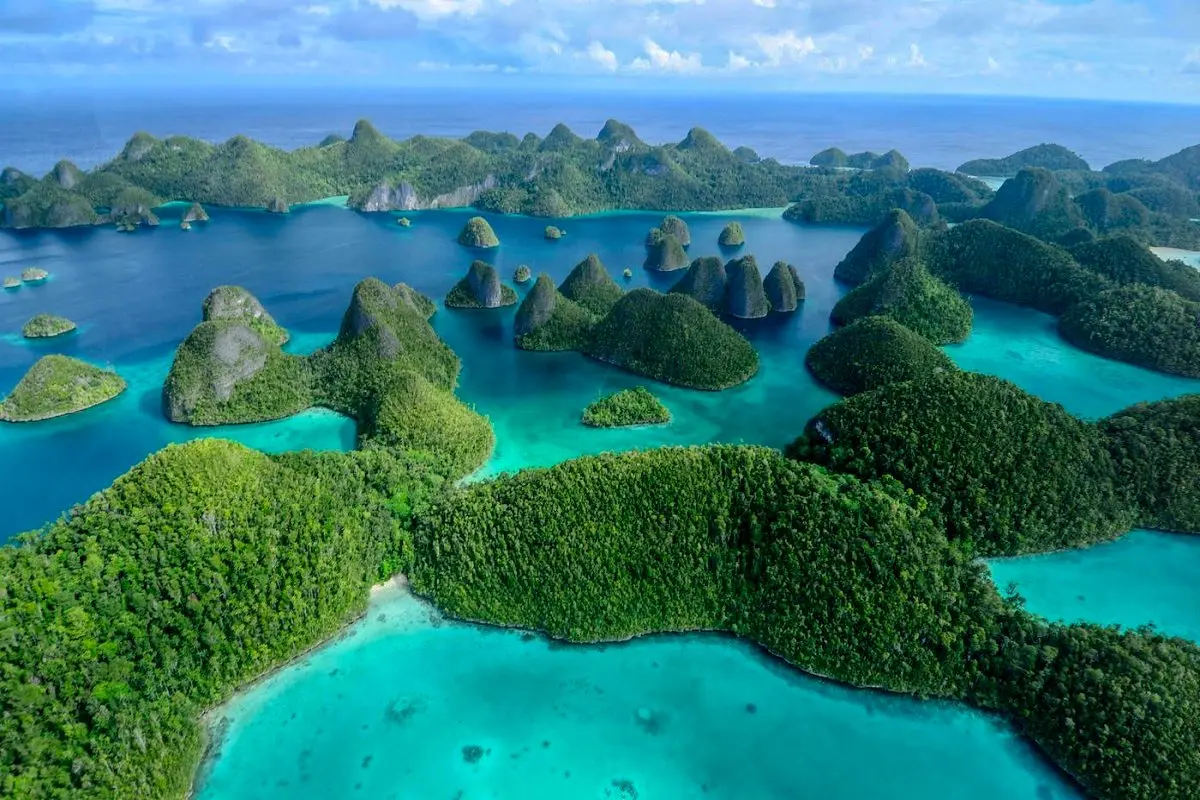
Raja Ampat (West Papua) is legendary underwater, often called the “Heart of the Coral Triangle”. Its four main islands (Waigeo, Waigeo, Salawati, Batanta, Misool and Kofiau) sit in pristine Waisai Harbor. Divers flock here because 75% of all known coral species live in these waters, along with ~2,500 fish species. In short, the reefs are unrivaled anywhere on earth. One conservation group notes Raja Ampat boasts 540 hard coral species (over 75% of the world’s coral). You can swim amid vibrant coral gardens, encounter Manta rays year-round, and even glimpse rare coelacanths in this “last paradise”.
- Getting There: Almost everyone starts in Sorong (West Papua). Fly to Sorong Airport (SOQ) from Jakarta or Makassar; Garuda even launched a direct Bali–Sorong flight. From Sorong city, take a local taxi to the ferry port. Public ferries run twice daily to Waisai (the Raja Ampat capital) – a 2-hour scenic ride through island-studded waters. Once in Waisai, smaller speedboats shuttle guests to resorts or homestays on nearby islands. (Higher-end resorts sometimes offer private boat transfers from Sorong, but usually at extra cost.) The journey is long but smooth; arrange help from your accommodation for tickets and schedules.
- Dive Sites & Marine Life: Raja Ampat lives up to its hype. Sites like Cape Kri or Manta Sandy teem with reef sharks, schools of barracuda, and hundreds of parrotfish. Check out Melissa’s Garden, a shallow reef exploding with color, or the nutrient-rich currents of Blue Magic for pelagics. Tiny critters abound too – pygmy seahorses, nudibranchs, even the elusive wobbegong shark. Bird-watchers can spot Wilson’s Bird-of-Paradise on Waigeo Island. On land, dense rainforests hide birds and marsupials; the famous Cendrawasih National Park conserves birds of paradise here.
- Where to Stay: Options range from rustic homestays to overwater luxury. Many villages on Kri, Arborek or Gam Island host simple homestay lodges with fan-cooled bungalows. They offer diving and snorkeling for modest prices. At the high end, resorts like Papua Paradise or Misool Eco Resort feature air-conditioning and fine dining, though at a luxury price. Whichever you choose, plan and book well in advance – this is a remote place with limited rooms. (Tip: dive insurance is a must due to Raja Ampat’s limited medical facilities.)
Togean Islands – Central Sulawesi’s Hidden Gem

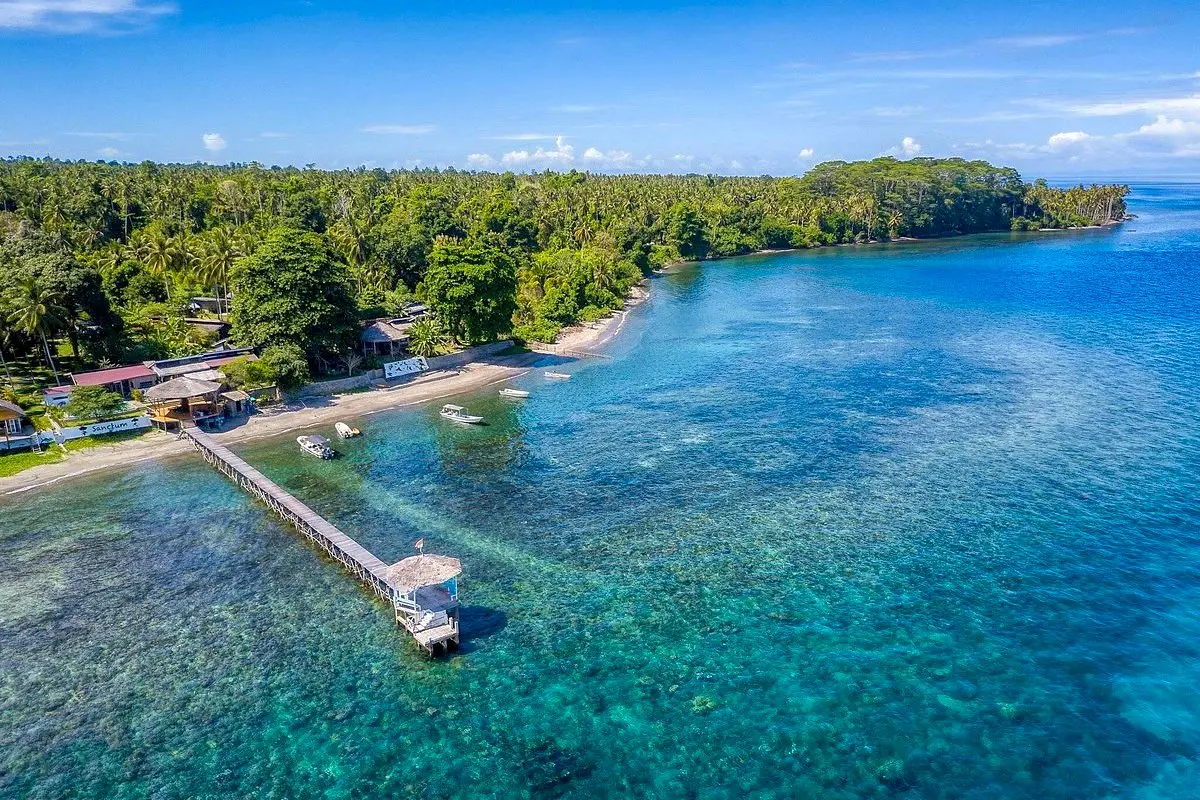
East of Sulawesi’s long spine, the Togean Islands lie in Tomini Bay, shimmering with turquoise reefs. This archipelago of about 56 islets is largely accessible only by boat. Its remoteness has preserved wild beaches and the gentle life of the Bajo sea-gypsy people. The Togeans have become a magnet for divers and snorkelers: clear waters reveal splendid coral walls and frequent manta rays. Endangered hawksbill and green turtles nest here. An especially unique spot is Pulau Mariona, home to a “jellyfish lake” where millions of harmless jellyfish drift, a true oddity. On land, one can hike to the rim of the Una Una volcanic island or encounter nomadic Bajau families living in stilted village homes on Pulau Papan.
- Getting There: The journey to the Togians requires patience. First, reach Sulawesi’s city of Palu (air connections to Jakarta) or Makassar. From Palu you can travel by road to Ampana (about a 6-hour drive). Alternatively, fly to Gorontalo and road-trip to Wakai, the Togean ferry port. From Ampana or Gorontalo, catch a public ferry to Wakai; these are slow overnight ships that roll and creak. Wakai, on Batudaka Island, is the main Togean hub. From there, local wooden boats (quite simple) whisk travelers to resorts on nearby islands (journey times range from 30 minutes to 3 hours, depending on destination). If budget allows, some dive resorts charter private speedboats directly from Ampana or Gorontalo for faster access.
- Highlights: Island-hop among as many of the picture-perfect isles as time allows. Kadidiri, Una-Una, Malenge, Papan and others each have their charms: white-sand beaches, jungle trails, and reefs that drop into azure depths. Dive sites like Donggala Reef and Maubear offer sheer walls and vibrant coral bommies. Low coral heads make snorkeling easy for beginners. Unique encounters abound: aside from the famed manta, look for dugongs grazing seagrass beds and giant coconut crabs scuttling onshore. Even with the rising tide of divers, the islands feel sleepy and unspoiled. At night, bioluminescent plankton light the waves. Accommodations are simple: think beach bungalows with mosquito nets, solar power, and fresh-caught seafood meals. Some newer eco-resorts even feature overwater cabins—rare in Sulawesi—where you can sleep to the sound of lapping waves.
Belitung Island – Sumatra’s Secret Beach Paradise

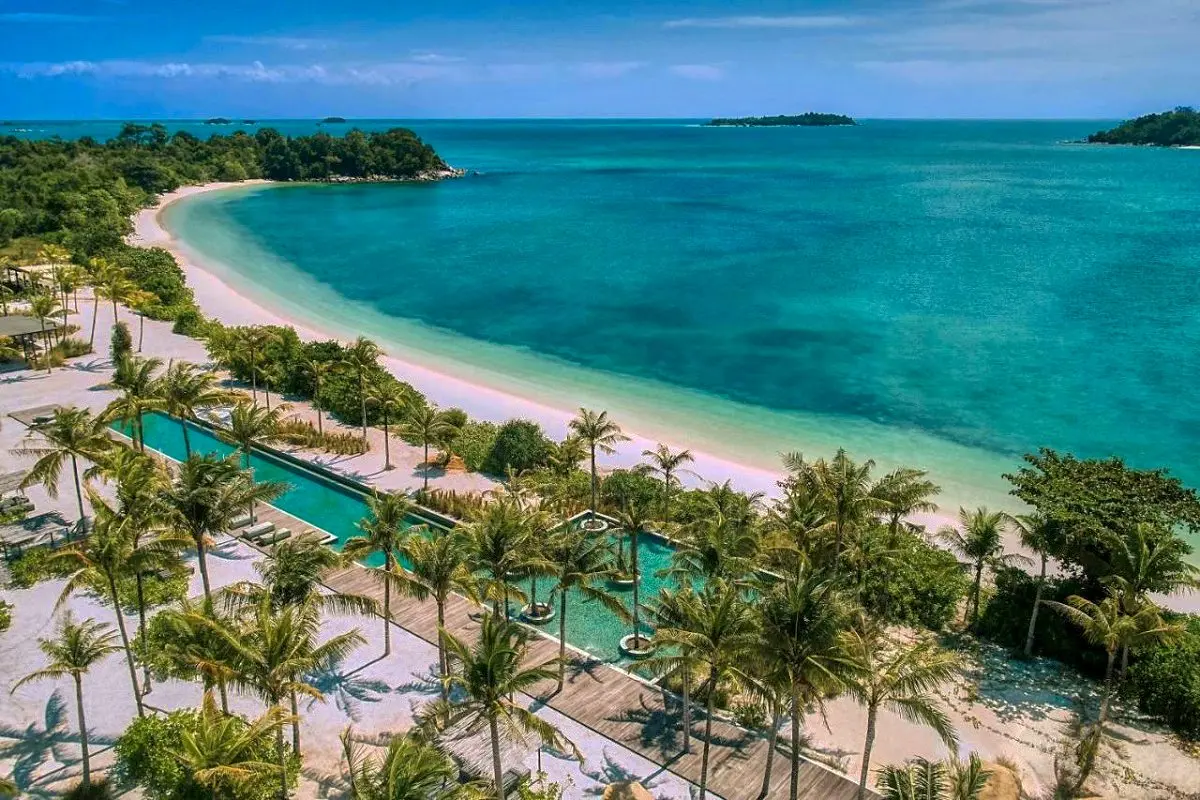
East of Sumatra and south of Borneo lies Belitung, a gentle island famed for its granite boulders and storybook beaches. Visitors often dub it the “Seychelles of Indonesia” or “Indonesia’s Maldives”. It earned UNESCO Global Geopark status in 2021 for its blend of tropical coastlines and history. Lush vegetation caps enormous granite rocks that cluster offshore; beneath, reef flats are rich in fish and corals. The sand is pure white, the waters crystal-clear, but the crowds are slim. Belitung’s capital, Tanjung Pandan, has retained a quaint charm – seaside markets, Malay-Chinese temples, and colonial remnants await.
- Getting There: Most travelers reach Belitung by air from Jakarta (Curug Sembilan–H.A.S. Hanandjoeddin Airport, code TJQ). Daily flights (about 1 hour) link Jakarta’s main airport to Belitung. In late 2024 the airport regained international status, and direct flights to Singapore are planned soon. Alternatively, ferries connect Belitung to Bangka Island, though schedules can be erratic. Once on the island, roads are good, and motorbikes or drivers make it easy to island-hop.
- Attractions: Belitung’s top draws are natural. Tanjung Tinggi Beach is a classic photo: gentle waves amid colossal rock formations sculpted by centuries of surf. Nearby Tanjung Kelayang has powdery sands and clear snorkeling patches. A boat trip to Lengkuas Island (Pulau Lengkuas) reveals a 19th-century Dutch lighthouse and pristine reefs – bring goggles to spot turtles swimming off the jetty. Just outside Tanjung Pandan lies the surreal Danau Kaolin (Kaolin Lake): a milky aquamarine pit formed from old tin mines, ringed by rust-colored earth. (It’s unsafe to swim, but the contrast with jungle backdrop is striking for photos.) Inland, grab a durian ice cream from a roadside stall or tour a pepper farm.
- Where to Stay: Belitung’s accommodations range from modest guesthouses to upscale resorts. Leebong Island (a private island off the north coast) now hosts a boutique resort with overwater villas and kayaks, perfect for romance. On main Belitung, small sea-view bungalows are common, often family-run. Beachfront homestays offer simple rooms in exchange for loyalty and home-cooked meals. Prices tend to be lower than Bali, reflecting Belitung’s emerging status.
Sumba Island – Land of Ancient Traditions

Far from Bali’s bustle, Sumba (in East Nusa Tenggara) feels almost mythic. Rolling savannahs sweep into rocky sea cliffs, and isolated thatched villages still perform rituals unchanged for centuries. Sumba is famous for its annual Pasola spear-fighting festival (a horse-riding ceremony tied to rice planting) and Marapu ancestral traditions. It also boasts striking beaches like Walakiri – a white-sand stretch lined with stunted mangrove “dancing” trees at sunset. Photographers travel here for that image alone. Inland, you’ll find ikat weavers and megalithic tombs clustered around traditional “megalith villages”. Forbes even named Sumba among the top 12 travel destinations for 2025 due to its captivating landscape.
- Getting There: Sumba has two airports (Waingapu and Tambolaka) with flights from Bali, Lombok, and Kupang. A common route is a 90-minute flight from Bali’s Denpasar to Waingapu. Ferries from Flores to Waingapu run a few times per week (a long 12-hour journey). Once on Sumba, renting a car or scooter is popular because sights are spread out. Roads exist but many interior tracks are rough.
- Cultural Sites & Beaches: Inland, visit the villages of Wai and Ratenggaro to see high-peaked uma mbatangu houses and elaborate bamboo tombs. Local guides (often family heads) explain Marapu beliefs as you sip palm wine. On the southern coast, Walakiri Beach glitters under sunset, framed by rare Mangrove forests. Here, water recedes to reveal a pattern of white ivory sand and dark mangroves. To the east, Pandawa Beach hides under limestone cliffs, accessible by boat or a steep stairway. Each beach sees just a trickle of visitors, so sunrise and sunset are peaceful.
- Where to Stay: Sumba’s hospitality ranges from spiritual eco-lodges to seashore glamp-tents. Luxurious coastal resorts (like those in Nihi Sumba) offer all-inclusive pampering within a sustainable ethos; staying at one often means true immersion with local staff. More modest travelers can find basic homestays in villages. Fresh seafood BBQs over coconut husks are common, and many accommodations will cook your catch. Be mindful: Sumba is much less developed than Bali, so expect simpler amenities (no 24h hot water, for example) but warmer human hospitality.
Labengki & Sombori Islands – Sulawesi’s Best-Kept Secret

Hidden in Southeast Sulawesi’s Wakatobi regency are Labengki and Sombori – twin paradises so obscure that many call them “Sulawesi’s Raja Ampat”. Labengki actually consists of two islands (Labengki Besar and Kecil) featuring steep jungle-clad hills and endless rocky inlets. Sombori, nearby, is an archipelago of lagoons and coves with towering limestone walls. Fittingly, a travel blog describes the pair as “one of the last hidden paradise destinations… unique blend of natural beauty, pristine beaches, and vibrant marine life”. Importantly, these islands see almost no tourists. One author wrote, “It’s the only place we visited where we haven’t encountered another tourist”.
- Getting There: Reaching Labengki/Sombori is challenging – part of the fun. Fly to Kendari (Sultra) from Makassar or Java, then take a 45-minute taxi to Unaaha Harbor. From Unaaha, hire a wooden boat (about 2 hours) to Labengki. Many travelers pre-arrange this with a local operator – Oji of Kelas Vakansi is a common contact. The ride itself is rustic (bring earplugs – the old motors roar) but scenic, passing emerald bays. Because access is so limited (there are no roads between Sombori’s lagoons), most guests book 3–4 night boat tours. These include lodging on Labengki and day trips into Sombori’s secret coves.
- Natural Wonders: The payoff is immense. Labengki’s clear waters reveal true coral gardens – giant clams, Napoleon wrasse and reef sharks. Snorkel or dive sites like Angel Reef and Mangrove Pond; expect rock islands emerging abruptly from the sea. In Sombori, navigate limestone canyons and step ashore at white-sand beaches accessible only by boat. Kayak through hidden blue lagoons like Chera and Malesinga (often with flocks of egrets and fruit bats overhead). The jewel of Sombori is Tanjung Kenanga, a cantilevered sunset viewpoint reached by a short hike (or boat disembark).
- Why It’s Special: This pair lives up to the “best-kept secret” label. One traveler wrote the islands “offer not only natural beauty… but thanks to their remote location and hard access, they haven’t been spoiled by tourism yet”. You truly feel like an explorer here. Sunset views across Labengki’s lagoon, circled by pointed peaks, are among Indonesia’s most unforgettable. Accommodations are basic but charming: a handful of homestays or beach huts on Labengki Besar, and the new Nirwana Resort (mid-range, built in local style). On Sombori there are no lodgings – day-trippers anchor at Labengki at night. Bring everything you need (cash, sunscreen, reef shoes), as shops are sparse. The journey is a bit arduous, but for many it’s a “mission accomplished” moment: these are sights unseen by most travelogues.
Wakatobi Islands – Sulawesi’s Marine Biosphere

In contrast to remote Labengki, Wakatobi (Southeast Sulawesi) is famous among divers yet still feels off-radar. Wakatobi is an acronym from its four main islands: Wangi-Wangi, Kaledupa, Tomia and Binongko. The region is part of a national marine park spanning 1.4 million hectares, named a UNESCO Biosphere Reserve in 2012. Its location in the Coral Triangle means unparalleled reef biodiversity. A dive report notes 20 km of pristine reef with over 700 fish species and 400 coral species, marking it as a world-class dive locale. Among underwater highlights are sheer walls (e.g. Fan 98 and Lorenzo’s Delight) and an unmatched house reef by Wakatobi Resort (giant clams, pipefish, dozens of butterflyfish).
- Getting There: The easiest access is via Wangi-Wangi Airport (Kaledupa has an airstrip). Airlines fly from Makassar or Kendari; the flight often stops in Kendari (Sultra) first. From Wangi-Wangi you can catch a ferry or resort boat to the other islands. Many visitors lodge at Wakatobi Dive Resort on Hoga (near Kaledupa) or at Tomia’s beach bungalows. For those planning, note that Wangi-Wangi has more connection and small hotels; Kaledupa’s Rikuhubesi Island (Tomia’s house reef) has fewer amenities.
- Diving & Resorts: Wakatobi made its name with high-end diving. The original Wakatobi Dive Resort pioneered eco-friendly design here. The resort’s founder established local conservation and won UNESCO support. Non-divers need not feel left out: snorkelers can explore the shallow house reef and mangrove lagoons, and you may spot sea turtles on almost every dive. For accommodations, Wakatobi Resort is luxury, but smaller spots also exist on Tomia and Binongko (e.g. seaside bungalows run by local families). Visitors rave about the underwater “drift dives” where fish clouds and healthy hard coral reign.
Mentawai Islands – Indonesia’s Surfing Secret

Stretching down Sumatra’s west coast are the Mentawai Islands, a chain of about 80 islets deep in the Indian Ocean. These islands deliver famous offshore surf breaks, earning a reputation among surfers as a secluded paradise. It’s often said the Mentawais have “some of the world’s last untouched surf breaks”. Indeed, storms from the southern Indian Ocean send perfect waves across hollow reefs from April through November. Iconic breaks like Macaronis, Lances Left and Rifles are world-renowned. Even beginners can find gentler waves on exposed sandbars or at resorts offering surf lessons. Many surf lodges on islands like Siberut or Sipora cater exclusively to ride-chasers.
- Local Culture: Beyond waves, Mentawai is also one of Indonesia’s most culturally unique areas. The Mentawai people have lived here for thousands of years, maintaining an animist tradition and a forest-hunting way of life. Visitors often arrange a homestay in an uma*, the communal longhouse of a Mentawai village. There you may witness traditional tattooing, ceremonial dances, and even a fishing demonstration by bite-poison darts. (The bucket-list experience: spending several days living in the jungle with a Mentawai family, guided by local tour operators.) These tribal visits are carefully organized by ethical tour companies – a chance to see Indonesia’s “pre-modern” life that is fading everywhere else.
- Getting There: Mentawai is reached from Padang (West Sumatra). First, fly into Minangkabau Airport (Padang), then take a 2–3 hour taxi to Siberut Harbor. From Padang harbor, an overnight wooden ferry leaves around 9 pm to Mentawai (a rocky, 12-hour voyage). In the morning you land on Siberut, Mentawai’s largest island. From there, speedboats shuttle surfers to smaller islands. Note: In the high season, travelers book surf camps months ahead. There are few rooms, and conditions (boat seas) can be rough. But for many, Mentawai’s combination of empty waves and living tribal culture makes the trip life-changing.
Siau Island – Volcano & Wildlife Frontier

In the far north of Sulawesi (near the Philippines) lies Siau Island, a remote gem dominated by its stratovolcano, Mount Karangetang. Siau is tiny (about 160 km²) but dramatic: the volcano looms everywhere, with twin peaks often belching smoke. Despite its potency, Karangetang hasn’t had a major destructive eruption in decades. Hiking to its summit is a true adventure (no marked trails, only guides can do it). In the lowlands, thick forest covers most of the island. Siau is home to endemic wildlife: rare maleo birds nest in the sand on neighboring islets, and in the jungle one can spot Sulawesi’s tiny tarsier primate, as well as a unique population of Sulawesi hornbills.
- Beaches & Hot Springs: The coastline of Siau alternates from rugged headlands to quiet bays. One bizarre feature is
- Temboko Lehi Beach: here volcanic fissures heat the seawater to near 40°C, creating what may be Asia’s only marine hot spring. Only brave souls will swim where lava gases bubble up beneath their feet! Otherwise, most beaches are tranquil, with dark sand fringed by fishing huts. Snorkelers enjoy nearly pristine reefs – dugongs and reef sharks have been spotted close to shore.
- Getting There & Lodging: Siau remains off the tourist radar. There is one small resort (on a private cove), a few homestays, and no ATMs. To visit, fly to Manado (Sulawesi) then take a ferry or a small plane (charter) to Siau. Travel blogs note that internet and transport are minimal on Siau. This is travel “at the edge”: no crowds, no frills, but the reward is isolation. Camp on a deserted beach if you dare, or stay in a simple wooden bungalow in a local village. If you crave remoteness and raw nature (a volcano you can see glowing at night!), Siau is a true adventure.
Flores Island – Beyond the Komodo Dragons

The island of Flores (East Nusa Tenggara) is emerging as much more than its world-famous Komodo National Park. Flores offers everything from mountain treks to cave swims. Its rugged interior is dotted with lakes like Kelimutu, three volcanic crater lakes each a different color (teal, black, and scarlet – a UNESCO site). To reach Kelimutu, hike at dawn from the village of Moni and watch sunrise light the tri-colored lagoons.
- Komodo & Marine Life: Off Flores’s west coast lies Komodo Island and Rinca Island, home to the legendary Komodo dragons (the world’s largest lizards). These prehistoric creatures bask on pink sandy beaches or doze under thorn trees. Nearby reefs brim with large marine life. In fact, recent research found over 1,000 manta rays frequent Komodo’s waters – the most mantas recorded at any site on Earth. In Komodo NP’s currents, divers encounter reef sharks, turtles, and even mola mola (sunfish) in season. Underwater photographers call spots like Kri Island “the Seraya Secrets” and Castle Rock dive brilliant coral pinnacles. For those tired of crowded dive boats elsewhere, Komodo’s underwater world is a dream.
- Access & Stay: Conveniently, Flores has two airports. Labuan Bajo (west) is the jumping-off point for Komodo cruises; flights from Bali arrive daily (about 1.5 hours). Maumere and Ende (north) link to Bali and Jakarta. Roads are improving: a coastal highway now circles Flores. Budget travelers can make day trips by road or small planes. Accommodations range from simple seaside inns in Labuan Bajo to boutique hillside eco-lodges (some perched above the sea). On the east end, village guesthouses near Kelimutu welcome trekkers. Island-hopping charters are common: expect to pay for boat shuttles between islands if you want to explore more than one area.
Selayar Island – South Sulawesi’s Beach Haven

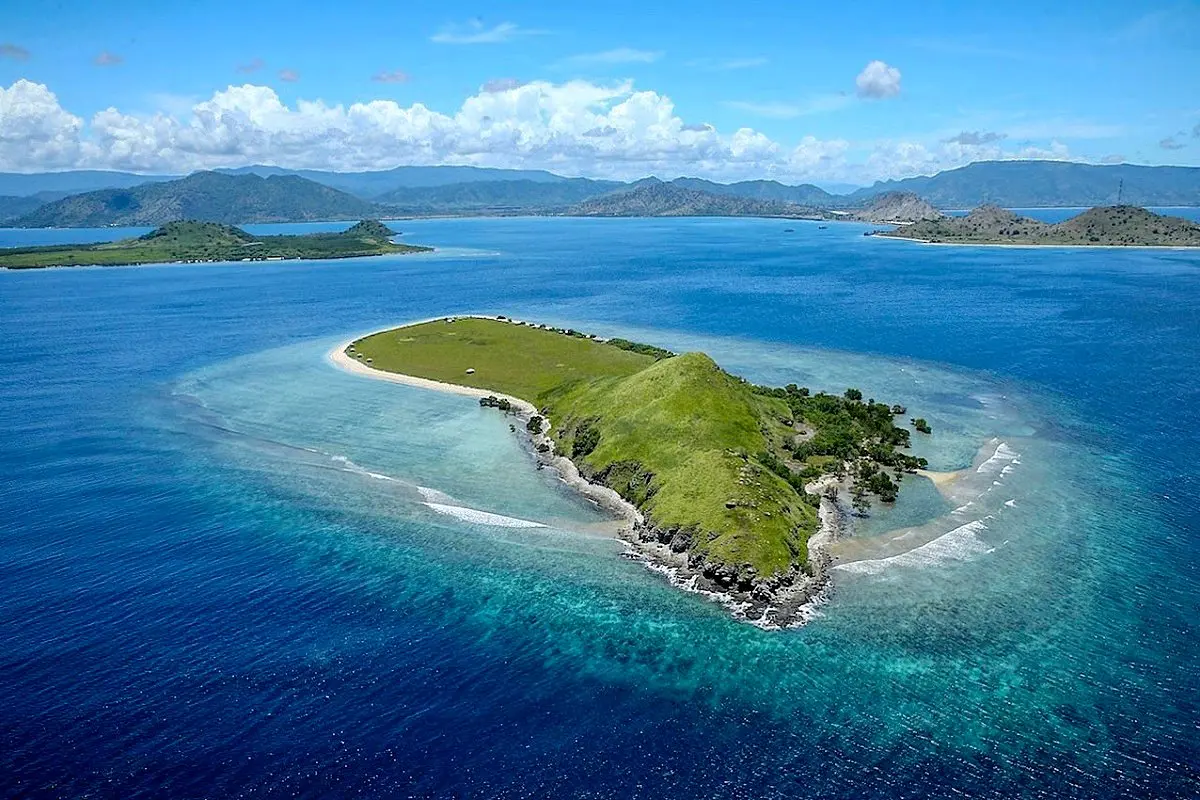
Due south of Makassar, Selayar Island is a long thin strip that few tourists visit. It feels like Sulawesi’s private getaway, with 85 km of fine sandy beaches and swaying palms. The reef is the star attraction: coral gardens just off shore teem with giant clams, reef manta rays, and turtles. Selayar’s house reef is so rich that shore divers at the local dive resort often see turtles on every dive. In clearer weather, you might glimpse passing dugongs while snorkeling. Inland, Selayar has a wilder side – forested hills (some dotted with ancient megaliths) and waterfalls fall into jungle ravines. The main town, Benteng, has a laid-back harbor vibe and fish markets.
- Getting There: Ferries run between Selayar and Benteng (the port city) from Sungai Raya near Makassar (about 3 hours travel). Alternatively, one can take the larger Makassar–Selayar ferry from Paotere Harbor (overnight trip). A smaller airport at H. Aroeppala (Selayar town) has occasional flights from Makassar. Once on the island, rentals and drivers are available. Distances are short (the island is ~100 km long), and the coastal road is mostly paved.
- Where to Stay: Surfers and divers love Selayar Dive Resort (east coast), which caters to scuba enthusiasts with bungalows on the beach. It advertises world-class snorkeling: “giant clams, eagle rays, nudibranchs… turtles on almost every dive”. Other options include the Selayar Eco Resort on the west coast (overlooking a drop-off called Magic Wall) and small beachfront cottages in villages. The island is almost car-free (no busy traffic), so stay near the sand if peace is what you want. Fresh seafood is Selayar’s specialty. It has a rustic charm: imagine nights spent around a bonfire under the stars, with only the sound of surf and locals playing traditional Sulawesi music.
Derawan Islands – Borneo’s Undiscovered Reefs

In East Kalimantan (Borneo), the Derawan archipelago lies in the vast Derawan-Dabia National Park. This group of 31 islands (only 5 inhabited) is a hidden dive and snorkel haven. Derawan Island itself has star-sand beaches and a giant turtle-watching site. Nearby Sangalaki Island is famous for reef manta rays; Maratua Island has a marine lake dotted with soft corals and barracuda schools. Muck diving with frogfish and ghost pipefish is a draw – unique critters thrive in these clear tropical waters. Even the ocean currents are friendly, allowing drift dives along manta cleaning stations.
- Getting There: The quickest access is via Berau Regency. Fly from Balikpapan or Samarinda to Kalimarau Airport (Tanjung Redeb). From the airport, it’s about 1 hour by car to Derawan’s port. Local speedboats connect Derawan, Maratua and Sangalaki daily. Some remote dive resorts even offer chartered transfers. The islands are low-key – accommodation ranges from homestay huts to rustic dive lodges. Because roads don’t exist, everything revolves around boats. Visitors often stay 4-7 nights to fully explore underwater. Derawan was once little-known but is now attracting more eco-travelers; unlike Bali, its beaches remain uncrowded and its reefs largely intact.
Halmahera – The Heart of North Maluku

Halmahera is the largest island in North Maluku, a rugged landscape of volcanoes, rainforests, and spice farms. Its remoteness has kept it “Indonesia’s most underrated paradise”. The main draw is the sea: diving in Halmahera’s bays reveals sheer walls and giant sponges. Weda Bay (on Halmahera’s eastern peninsula) is becoming known among technical divers for unspoiled reefs and WWII wrecks. At Wofoh Beach, monkeys will scurry over your shoulders as you snorkel in emerald shallows. Inland, Bobanege Beach hosts turtle nesting, and folk tale-shrouded lakes like Sidangoli lie under forest canopies.
- Getting There: Halmahera has several small airports. Flights connect to Ternate (Maluku’s main hub) or Manado. Once on Halmahera, travel is by boat: ferries ply between islands (Ternate–Tidore–Halmahera) and local speedboats serve the coast. Road links are patchy; renting a 4×4 and driver from Labuha or Tobelo allows reaching hidden spots. Because infrastructure is sparse, Halmahera is best for experienced adventurers: camping gear, cash, and flexible schedules are advised.
Sumbawa Island – Volcanic Surf & Serenity

West of Flores lies Sumbawa, an island often skipped in guides but adored by surfers and hikers. Gunung Tambora (on Sumbawa’s north shore) famously erupted in 1815 with global climatic effects; its summit is hikeable now for adventurous trekkers. Sumbawa’s south coast (e.g. Lakey Peak near Dompu) offers powerful left-breaking waves for surfers, yet sees only a trickle of visitors. East of Dompu, the bays of Masokut and Tambak have quiet beaches fringed by pandanus. Sumbawa also has serene inland lakes like Danau Satonda, whose strange hypersaline water yields crystal formations (akin to the legendary Stapilisa on Komodo).
- Getting There: Sumbawa has two airports: Sultan Muhammad Kaharuddin III (Sumbawa Besar) and Sultan Tambolaka (near Bima). Both see flights from Lombok or Bali. Ferries also sail from Lombok to Sumbawa Besar or Poto Tano daily. Once there, national roads wrap around the island’s spine, but many beaches require secondary roads. Bikes or hired cars are common. The island remains mostly rural; expect local warung (food stalls) rather than resorts. Accommodations range from simple bungalows to boutique villas overlooking surf breaks.
Bunaken & Lembeh – North Sulawesi’s Marine Twins

Off the northeast tip of Sulawesi, two underwater kingdoms lie in sight of each other. Bunaken Island (in Bunaken Marine Park) is famous for wall dives with massive schools of fish and coral-clad pinnacles. Just offshore, Lembeh Strait is the famed “Critter Capital”, where muck dives reveal hundreds of bizarre macro creatures (like mimic octopus and seahorses). Together, these two islands offer a one-two punch for divers: on Bunaken you drift among reef sharks and turtles, while in Lembeh you search the sand for tiny cuttlefish and frogfish.
- Access: The jumping-off point is Manado (North Sulawesi). Ferries and speedboats run from Manado to Bunaken (20 minutes), or to Lembeh Island (Bitung City is the usual disembark point). Bunaken’s steep coral walls are day-trip dives from boats, and on the island modest resorts (Bunaken Cha Cha or Bunaken Exotic) provide basic huts with ocean views. On Lembeh, virtually every dive lodge offers direct shore entry to the muck, plus dive boats. Bunaken Marine Park fees apply to both.
- Why They’re Special: Divers here say once you’ve seen Bunaken’s schools of barracuda or a Lembeh blue-ring octopus, you’ll return. Yet these islands stay relatively quiet. Villages are small, connecting trails are just bits of asphalt, and night life is sunset over the pier. Both islands lack party scenes; travelers come for scuba or snorkel gear, not nightlife. For a complete underwater odyssey in minimal space, Bunaken & Lembeh are unrivaled on Earth’s “Coral Triangle” frontier.
Kei Islands – Maluku’s Remote Paradise

South of Seram, the Kei (or Kai) Islands lie in the Banda Sea as Maluku’s southeastmost archipelago. Untouched white-sand beaches and an arch of coral reefs define these islands. Ngur Bloat Beach is a crescent of powdery sand hugged by hills, often named one of the world’s most beautiful beaches. Surrounded by clear shallows, it’s perfect for snorkeling. Ngurtafur and Ohoidertawun are similarly stunning and largely empty. Dive sites offshore are spectacular: plate corals and gorgonians fan out in water that can reach 50m visibility. Hawksbill turtles feed at coral holes by day. At night, the plankton glow around your fins.
- Access: The main airport is on Kai Kecil, with flights from Ambon or Jakarta (often via Ambon). The flight is just over an hour from Ambon. Once there, island ferries and occasional speedboats connect between Kai Kecil and Kai Besar. Roads have improved; you can rent a car to skirt around the island’s villages and beaches. Food options include fresh fish and tropical fruits; many homestays serve traditional Ambonese spicy curries.
Banda Islands – Spice Islands Reborn

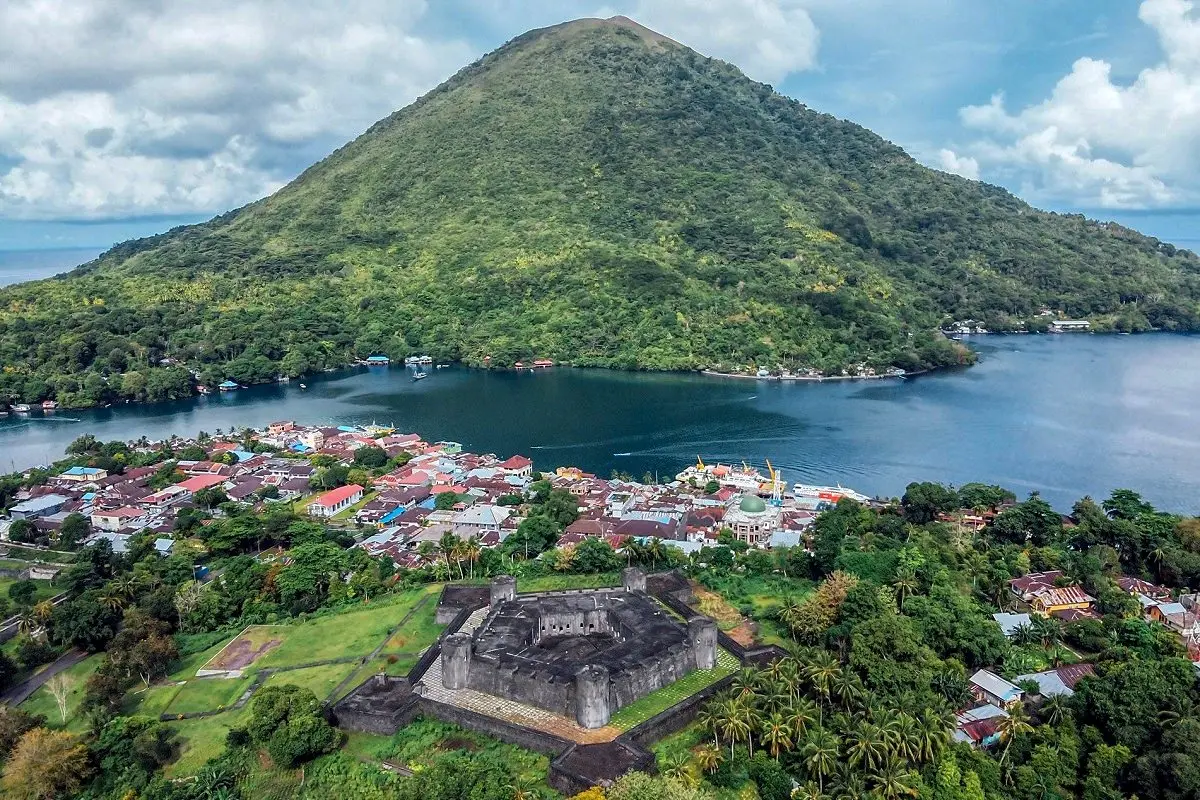
The tiny Banda Islands (five volcanic islands in the Banda Sea) were once the world’s only source of nutmeg and mace, coveted by 17th-century traders. Today they are a secluded cluster of emerald bays and brackish mangroves. The central island, Gunung Api, still smolders with sulfur fumes. The others – Banda Besar, Neira, Run – have charming Dutch colonial ruins and sea fortresses from spice-era battles. Underwater, Banda’s coral reefs are remarkably intact: blue trevallies and reef sharks patrol the drop-offs, and divers rave about the huge schools of bannerfish at sites like Chicken Village. On Banda Besar, a simple homestay sits on a beach fronting such a site.
- Access: Banda Besar has a small airport (accessible via Ambon or Ternate flights). Most travelers instead arrive by ferry: a weekly night boat runs between Ambon and Banda Neira (Banda’s main town). In Banda Neira, you can rent kayaks or guides to visit other islands. The pace is painfully slow and authentic: there are no modern resorts, only guesthouses (often run by the descendants of Dutch planters). For history buffs and divers alike, Banda feels like a time capsule – Indonesian fishermen still gather clove leaves much like their forebears.
Pulau Weh – North Sumatra’s Tranquil Tip

Just off the tip of Sumatra’s northern Aceh province, Pulau Weh is a small volcanic island of jungle and coves. It lies only 45 minutes by fast ferry from Banda Aceh city but feels another world away. Weh’s strong points are diving and quiet beaches. A handful of dive shops around Iboih Village offer liveaboard trips to coral-rich sites like Rubiah (a marine park famed for hunting for wobbegong sharks and turtles). Above water, nearby beaches (Gapang, Sumur Tiga) are sandy and usually empty. On calm nights, the bioluminescent plankton sparkle, and rustic stilt-houses offer cheap seafood meals.
- Getting There: Regular ferry service (and fastboats) run between Banda Aceh and Sabang (Weh’s capital). The ride takes 1–2 hours depending on vessel. There is also a small airport on Weh (wings-air service from Medan, via Gunung Sitoli). From Sabang, you can rent a scooter to explore – roads circle the island in about 2 hours total. The interior has trails up the volcanoes (Weh has two peaks), but most visitors stay on the western shore. Because it sees many local tourists, there are reliable homestays and small resorts (some with pool) that maintain a laid-back vibe. Weh is ideal for those who want near-Bali-level beaches and diving, but with only Acehnese and Indonesian tourists.
Island Categories: Finding Your Perfect Escape

With so many options, travelers benefit from picking islands by interest. Here’s a quick guide:
- Best for Diving & Snorkeling: Raja Ampat, Wakatobi, Bunaken-Lembeh, Derawan, Komodo NP (Flores), Togean Islands.
- Top Beach Havens: Belitung, Pulau Weh, Labengki, Sumba, Kefalas (Kai islands).
- Active Volcanoes/Trekking: Siau (Karangetang), Flores (Kelimutu, Kelimutu), Sumbawa (Tambora), Halmahera (Mount Ibu).
- Wildlife & Nature: Raja Ampat (marine biodiversity), Sumba (savannah horses), Siau (tarsiers), Cenderawasih Bay (whale sharks), Mentawai (tribe culture).
- Cultural Heritage: Sumba (Megalithic tombs, ikat weaving), Mentawai (shamans and tattoos), Flores (trans-Oceanic traditions in villages), Wakatobi (island traditions).
- Surfing Paradise: Mentawai, Sumbawa, Bali’s lesser-known Nusa islands, Southern Sulawesi (Bira).
- Most Remote/Untouched: Labengki-Sombori, Siau, Morotai, Alor, Pulau Seram (Maluku’s highest peaks).
This list is by no means exhaustive; even a “non-tourist” cruise through Maluku or Papua can reveal islands unseen by most travelers. The key is alignment: match your interests (beach combing vs. scuba vs. culture) with islands known for those traits.
Transportation Guide to Remote Islands
Getting to remote Indonesian islands often requires patience and planning. Major hub airports include Jakarta (CGK), Bali (DPS), Makassar (UPG), Manado (MDC), Jayapura (DJJ), and Ambon (AMQ). From these hubs, domestic airlines (Garuda, Lion Air group, Wings Air, etc.) fly to regional airports. For example, to reach Wakatobi one flies from Makassar or Kendari to Wangi-Wangi; to reach Labengki one flies to Kendari, then taxis and boats. Always check which islands require transfers: e.g. Raja Ampat requires a flight to Sorong then ferry.
Ferries and fast boats are the workhorses of island hopping. Most large islands have ferry terminals: Sulawesi has Pelni ships connecting to the Togians, Bunaken and Morotai. Java’s Tanjung Priok is the gateway for the Thousand Islands. In Sumatra, ferries run from Medan to Pulau Weh, Padang to Mentawai, Java’s east coast to Lesser Sunda islands. Many smaller islands rely on charter boats arranged through hotels or local agents – expect to negotiate and confirm schedules in person. Private speedboat charters (often costing a few hundred dollars per day) can save time, especially on a tight itinerary.
Which airports to note:
– Sorong (SOQ) – West Papua, gateway to Raja Ampat.
– Palu (PLW) or Gorontalo (GTO) – for Togean Islands (then ferry to Wakai).
– Tanjung Pandan (TJQ) – Belitung (int’l flights pending).
– Waikelo/Komodo (LBJ) – Labuan Bajo (Flores, Komodo access).
– Kupang (KOE) – Nusa Tenggara (East Timor flights too).
– Biak (BIK) – Cenderawasih Bay region, Raja Ampat alternative approach.
Ferries: Indonesia has an extensive network. The public Kapal Pelni system (once weekly from major ports) offers cargo-style ships to far-flung islands. Speedboats operate more frequently but often with no fixed schedule until only days before departure. When planning ferries, have flexibility: overloaded boats can cancel, and timetables change with the seasons. Thankfully, many island resorts will assist in booking transfers.
Booking Tips: Always allow at least a day of buffer when island hopping. A canceled flight or missed ferry can strand you. Local booking sites like Traveloka help with flights, but boat tickets are usually bought in person. Once on an island, many travelers rent scooters or hire motorcycles with drivers to get around (especially on Sumba, Bali’s neighboring islands, and Belitung). Rentals may not be advertised online; ask hotel staff. In very remote spots (like Labengki), even basic services may only be arranged via your tour operator.
Best Time to Visit Indonesian Islands (Seasonal Guide)

Indonesia straddles two main seasons: a dry season (roughly April–October) and a rainy season (Nov–March), but the exact timing and intensity vary by region. In general, Western Indonesia (Sumatra, Java, Kalimantan) sees heavier rain in the core monsoon months (Dec–Feb), while Eastern Indonesia (Bali, Nusa Tenggara, Maluku, Papua) has its wettest weather around Dec–Feb.
Western Islands:
– Sumatra & West Kalimantan: Best Nov–Mar for diving (visibility), but watch for rain. Avoid May–Oct if possible, as heavy rains can ground small planes to Pulau Weh and Mentawai.
– Bangka-Belitung: Very pleasant June–Sept; monsoon rains less severe here.
Central Islands:
– Java & Bali: Peak season July–Aug and Christmas (though Bali and Lombok see crowds). Hidden gems like Karimunjawa (Java Sea) or Nusa Islands (near Bali) actually thrive Jun–Sept with little rain.
– Sulawesi: North Sulawesi (Bunaken, Lembeh, Sangihe, Siau) is best Mar–Oct (when the seas are calm and inland hills green). The famous Celebes Sea dives are year-round, but avoid the rough monsoon period (Dec–Feb). Central Sulawesi (Togeans) is most accessible June–Sept; note occasional August typhoons can affect Gorontalo region.
Eastern Islands:
– Nusa Tenggara (Flores, Sumba, Sumbawa, Komodo, Alor): Dry season June–Sept is peak, ideal for beaches and trekking. Komodo’s famous April–Nov surf season overlaps this, yielding bigger swells. Avoid Jan–Mar – gates may flood, and Kelimutu’s lakes are less visible.
– Maluku & Papua: These see more scattered rains year-round. Raja Ampat and Halmahera can be drier in October–March (the “local summer”). Wakatobi’s dive season is Apr–Sept, with south winds later. Cenderawasih Bay is usually best June–Sept for clear visibility with whale sharks.
Special wildlife/marine events: Manta ray sightings often peak in shoulder seasons. For example, Raja Ampat mantas gather in Manta Sandy mostly June–Sept. Whale shark season in Cenderawasih Bay is year-round, but research notes a robust population at any time. Komodo’s manta migrations peak May–Sept. If seeking mola mola (sunfish), note these come to Nusa Penida (Bali) in summer – but other sites (Komodo, Wakatobi) see them unpredictably.
When to avoid crowds: By definition, these islands have few crowds, but you can avoid any local influx by traveling off Christmas/New Year and outside the July–Aug holiday in Indonesia. For cultural festivals (like Sumba’s Pasola or Mentawai ceremonies), check local calendars – visiting during a festival offers insight but may mean no beds available, whereas after a festival can be quieter.
Budget Guide: Real Costs of Visiting Remote Islands
Cost expectations vary widely, but remote islands generally mean higher prices for essentials (transportation, lodging, imported fuel) and lower costs for local guides and food. Here are some ballpark figures (all in USD):
- Accommodation: Basic homestays or bungalows start at $10–25 per night on tiny islands (Weh, Togeans, Sumba local inns). Mid-range resorts or dive lodges run $50–150/night (Labengki, Sulawesi, Belitung resorts). Luxury eco-resorts on Sumba or Raja Ampat can be $200–500+ per night. Islands with very limited options (Labengki Nirwana, Bunaken Dive Resort) often package lodging with dives/meals, sometimes $300+ per day. In general, remote areas see fewer cheap hostels, so budget a bit more.
- Food: Local meals (nasi goreng, grilled fish) cost $2–5 in simple warungs; fresh fruit or coconuts are often free or $1. Resort dining is pricier, $10+ per meal. In many homestays, cooking service is available (as little as $5 for a basic full meal).
- Flights: Domestic flights add up. A one-way hop from Jakarta to a regional hub (Sorong, Kupang, Manado) often costs $100–200. Even a short island flight (Makassar–Togean area) is $50+.
- Ferries/Boats: Public ferries are cheap (a few dollars for Sangihe–Sulawesi, or $20 for Bali–Lombok ferry), but not always available. Chartering a boat (e.g. Sorong–Raja Ampat) can be $150–200 one way. Book group transfers when possible.
- On-island: Renting a scooter may cost ~$10/day (if available); hiring a driver $30–50/day. Always clarify fuel is extra.
- Activities: Diving is often the biggest budget item. Rental gear and day dives run $30–50 per tank/dive in remote areas; multi-day liveaboards (Raja Ampat, Komodo) $150–250 per day all-inclusive. Snorkeling is cheaper ($5–10 to hire gear & boat for a few hours). Park fees apply at many sites (e.g. Raja Ampat fee, Komodo NP fee, Wakatobi park fee).
- Hidden Costs: In cash-centric islands, ATM access can be nonexistent (Labengki has no ATM; bring rupiah). Some places charge “eco” or “entrance” fees not widely advertised (e.g. a small fee on Siau, extra tax on Moyo Island). Always have a buffer for boat fuel surcharges, mandatory guide fees (some marine parks require local guides), or boat charter premium during off-schedules.
Comparison: Expect at least double the cost of traveling a similar amount of time on Bali. Itineraries here rely on boats and pilots, not buses. That said, local living costs (food, simple transport) remain low. If you are on a shoestring, island-hopping on local ferries and staying in homestays will keep daily budgets under $50. But if you want comfort or speed (private boats, pricier resorts), budgets of $100–200 per day are common. Always check if flights/regional fees are extra, and consider that every connecting leg (flight or ferry) adds to the total trip cost.
Accommodation Guide: Where to Stay on Remote Islands
Options range widely. In the most hidden places, you may find only one resort (e.g. Labengki Nirwana) or basic village homestays. In somewhat more visited areas (Belitung, Wakatobi), a handful of resorts mix with guesthouses. Here are categories:
- Eco-Resorts: Many offbeat islands now boast luxury eco-resorts. Sumba’s renowned Nihi and Lelewatu come to mind, as do Raja Ampat’s high-end eco-lodges. These have overwater bungalows or cliff villas, fine dining, pools – prices from $200–600/night. Their unique value is sustainable design and investment in local communities. If budget permits, staying at such a resort means skip planning logistics (they arrange boats/guides).
- Mid-range Resorts: Private bungalow resorts ($50–150/night) exist on Belitung, Labengki, Sumbawa, etc. They often offer packaged tours and equipment rental. Example: Selayar Dive Resort offers beachfront bungalows with meals included.
- Homestays & Guesthouses: On truly remote isles like Labengki, Togians, or Siau, homestays (local family homes with spare rooms) are common. These are very basic (think fan, shared bathroom, homecooked food) but authentic. Prices $5–20/night. They often only take cash and may require advance notice by phone (or have local agent help book). Remember: on many islands, “resorts” mean the only place to stay, so those menus and prices become your only choice.
- Campgrounds: Rarely, camping is an option. Some guides let you camp in exchange for a small fee, especially in volunteer-run parks. Example: Sleeping in tents on remote beach islands with no accommodation infrastructure at all. Always check legalities and safety (wildlife, tide changes).
Booking: Hotels on these islands are often not listed on big booking sites. Use niche travel blogs or local Indonesian sites. If possible, email or message the property directly (many have Facebook or WhatsApp contact). Local tour operators often bundle lodging with tours (e.g. a 4D/3N Labengki boat tour including homestays).
Eco & Homestay Highlights: If sustainability is a priority, look for small homestays that advertise solar power and waste recycling. On Wakatobi and Raja Ampat, several lodges operate under “conservation lodges” programs. Homestays in villages (Bajau communities in Togians, Mentawai longhouses, Sumba ikat villages) offer not only a bed but a cultural exchange. They usually include traditional meals and will gladly show you their way of life. This directly benefits the villagers rather than external companies.
Essential Practical Information

Traveling to far-flung islands requires careful prep. Here’s a checklist of practicalities:
- Visa Requirements: Most visitors can get a 30-day visa exemption on arrival at international entry points (Jakarta, Bali, Medan, etc.). Remote islands have no immigration offices, so your visa must be valid prior to arrival. Extensions must be arranged on bigger islands (Makassar, Denpasar) before heading out. Check up-to-date Indonesian visa rules, as they change with pandemic policies.
- Health & Safety: Many remote islands lack hospitals or clinics. Bring a well-stocked medical kit. Vaccinations for hepatitis and typhoid are advised. Anti-malarials may be recommended (certain areas of Sulawesi, Maluku are low risk; coastal tourism zones generally are safe, but always check current health maps). For diving spots, ensure your dive insurance covers medevac (Raja Ampat and remote areas have limited emergency facilities). Beware of raw fish or street food hygiene in very small villages.
- Connectivity: Expect patchy internet/phone service. On some islands (Siau, Labengki) mobile signal is nearly nonexistent. If you must stay connected, choose accommodations in towns or near a cell tower. Otherwise, plan for digital detox – often locals also disconnect.
- What to Pack: Essentials include a flashlight/headlamp, travel water filter or tablets, reef-safe sunscreen, sturdy sandals (for reefs), lightweight rain gear, and mosquito repellent. Always pack a good daypack for island hikes or beach gear (snorkel mask, dry bag). Credit cards are mostly useless beyond big cities – carry rupiah cash.
- Safety: Crime is low on tiny islands, but always practice normal precautions with valuables. Beware of drinking water hygiene (boil or treat water on rustic islands). Wildlife: on land watch for monkeys or wild pigs (they may approach campsites). In the ocean, be mindful of currents; never snorkel alone. For islands with active volcanoes (Siau, Sumbawa’s Tambora), pay attention to local evacuation alerts.
Additional notes: Many remote islands have no ATMs; on Labengki for instance, the travel guide explicitly advises bringing all needed cash. Travel insurance that covers emergency flights is strongly advised when venturing beyond the mainstream. Even the best tour operators remind travelers to be self-sufficient: bring any specialized gear (diving masks, lens glasses) that might be hard to replace off the beaten path.
Marine Life and Diving Opportunities

Indonesia sits in the heart of the Coral Triangle, the marine realm’s biodiversity hotspot. Many undiscovered islands serve as gateways to this richness. Raja Ampat and Halmahera alone boast 75% of the world’s coral species. Across Indonesia, expect to encounter iconic megafauna: reef mantas, whale sharks, dugongs, and reef dolphins are all found within these waters. For example, Wakatobi was the first site declared a UNESCO Marine Biosphere Reserve for protecting over 700 fish and 400 coral species in its marine park. Komodo National Park has become a manta capital – one survey identified 1,085 individual manta rays in its waters, more than the number of Komodo dragons on land.
For divers and snorkelers, each island offers something special. In Sekandars at Alor or the Banda Islands you may see unusual critters like walking sharks or piping-asped stonefish. Southern Raja Ampat has coral gardens teeming with pygmy seahorses. Weh Island can treat divers to encounters with blacktip reef sharks and the rare pygmy pipehorse. Many regions (Togeans, Wakatobi, Bunaken) feature shallow reefs ideal for beginners as well as deeper channels for advanced divers. No certification? Plenty of island operators offer PADI courses even at remote resorts.
Marine life also changes with seasons: February–April bring mola-mola (sunfish) to Bali’s Nusa Islands (Bali-adjacent), while March–May are peak whale shark months in Cenderawasih Bay. If possible, match your trip to a wildlife event: witness Komodo dragons hunting deer at dawn in Flores, swim with whale sharks in Papua, or snorkel with friendly manta rays in Nusa Penida. On any island, always ask local guides where to spot the best marine life – their knowledge of currents and hideouts is invaluable.
Do you need certification? Not for snorkeling – you can see coral gardens and fishes with just mask and snorkel at places like Raja Ampat’s sheltered bays. But if scuba sounds appealing, note that many dive shops operate out of island homestays or liveaboards. Beginner courses (Open Water) can be done on nearly every island with diving (Labengki, Mentawai, Sumbawa, etc.), often on a liveaboard which doubles as accommodation. Certification not only enhances safety, it’s sometimes required at certain dive sites.
Cultural Experiences on Undiscovered Islands
Beyond nature, Indonesia’s islands offer rich cultural encounters. Many remote islands have preserved tribal traditions that now attract cultural tourism. In Sumba’s inland villages, giant wooden marapu tombs and conical houses show a living ancestor cult. Visitors can attend Pasola spear fights in February (a remarkable, chaotic ritual) or learn ikat weaving from local grandmothers. The isolated Mentawai and Tobelo tribes welcome respectful tourists into their longhouses (umes), where animist rituals and tattoos are still practiced. The Togean islands let you meet the sea-nomad Bajau people, who live in floating villages like Pulau Papan and fish with spears passed down generations. In North Maluku’s Tidore or Ternate, spice markets and ancient sultanate palaces recall the era of clove trade with Europe.
Each island has its festival calendar: spring brings sea ritual ceremonies in Tanimbar; August sees a massive poetry reading and boat race festival in Papua’s tribal Marind people. Even small islands have adat (custom) days. Travelers are welcomed at mosque ceremonies on Aceh’s Weh or at Catholic processions in Flores.
- Etiquette: Always ask before entering a traditional village; remove shoes, and wear modest clothing. Many islands have conservative communities (Aceh, Sulawesi) where touching a head or pointing is taboo. A local guide can easily advise on etiquette and arrange homestays. Participating sincerely – dancing, trying local games or food – enhances respect and friendships. After all, these cultural threads are what make “undiscovered” islands truly unique.
Sustainable Tourism: Protecting Hidden Paradises

Many of Indonesia’s endangered ecosystems lie in these lesser-known islands. Travel here comes with a responsibility. Threats include overfishing, plastic pollution washing up even on remote beaches, and pressure to develop resorts. The good news is that many islands are now conservation areas: Raja Ampat, Wakatobi, Derawan and others have national park status. Underwater, responsible dive operators have introduced no-touch policies and reef restoration. On land, community-run eco-lodges demonstrate that tourism can generate income for villagers. For example, Sumba’s luxury resorts famously funnel part of their profits into local schools and clinics.
- How to be responsible: Support local by buying crafts (woven textiles, carving, spices) rather than imported souvenirs. Use reef-safe sunscreens to avoid bleaching corals. Never disturb wildlife – do not feed monkeys or manta rays. Dispose of trash properly (or carry it out); consider bringing a few garbage bags or biodegradable cleaners in your kit. Respect local culture by dressing modestly around villages and learning a few basic words (“Terima kasih” for thank you goes far). Choose tour operators and hotels that pay fair wages and give back to the community.
Environmental challenges remain pressing. Some islands, even remote ones, experience illegal fishing. Sulawe’s Togeans once suffered blast-fishing but now have no-blast enforcement. Plastic often drifts across the Indian Ocean, littering Sumatra’s western beaches and the eastern reefs. To mitigate this, some islands have beach cleanup days; travelers can join. Water use should be minimized in places without desalination plants.
At heart, being a responsible visitor means recognizing that you are a guest in fragile habitats. By leaving no trace and supporting locals, travelers help ensure these paradises stay undiscovered – in the sense of unspoiled – for the next generation of adventurers.
Frequently Asked Questions
Are these islands safe for solo travelers? Most are very safe by Indonesian standards. Crime is low and locals are friendly. However, the safest general advice applies: secure your belongings, avoid nighttime boat rides alone, and stick to settled villages after dark. Infrastructure (roads, medical) can be minimal, so a solo female traveler should be particularly aware of hiring trusted guides or staying in known guesthouses. Local men are often hospitable and will even walk women home at night. Check the political situation too: some areas of Aceh, Papua, or Maluku have had occasional unrest; always check current travel advisories.
Can you visit remote islands with children? Yes, many families do – though it means extra planning. Facilities (child-friendly lodging, medical care) are scarce, so prepare accordingly. Islands like Belitung or Bunaken are family-friendly (calm waters, snorkeling). Infant food and supplies can be hard to find – bring special formula or medicines with you. The slow pace and new experiences can be wonderful for kids, but be prepared for mosquitoes and cultural differences. Simple homestays may require patience: children might not be used to Western beds or foods. But generally, Indonesians are very welcoming of children.
What about medical emergencies on remote islands? This is the biggest worry. Some islands (Raja Ampat, Komodo, Togeans) explicitly warn that serious incidents require evacuation. For diving, ensure you have full dive insurance covering hyperbaric evacuation. Carry a stocked first-aid kit and any personal medications, since pharmacies are rare. In many parks (Wakatobi, Bunaken, Raja Ampat) only small clinics exist if any. The nearest major hospital may be days away by speedboat. Thus, the golden rule is: don’t push limits. Stay sober enough to swim safely, stick to marked trails, use a lifejacket on boats, etc. A little caution ensures these adventures stay positive.
How far in advance should you plan? That depends on the island. For hotspots like Raja Ampat or Sumba in high season, book 2–3 months out. For truly off-grid places (Labengki, Morotai, Kei), sometimes last-minute can’t hurt—few visitors means flexible rooms and boats. However, flight schedules might be erratic, so once you pick dates, lock in tickets. For visas, ensure you check any new requirements at least a few weeks ahead. If you need to arrange homestays (like Mentawai tribe visits), research and book the tour 1–2 months early; some specialty tours only run weekly.
Which islands are closest to Bali? Outside the obvious Lombok and Nusa Penida, the nearest truly undiscovered islands are westward: Komodo (Flores) is just 1h by plane. Sumbawa sits next-door. Nusa Tenggara Timur (like Alor or Lembata) are reachable via short flights. Kalimantan (Borneo) is a 2–3h flight (to Pontianak, or Balikpapan then ferry to Derawan). Sulawesi’s Togians require an overnight on Palu or Gorontalo (so think 12–18h). To Sumatra, you’d need a flight to Medan or Aceh then a ferry, making it 8+ hours.
Conclusion: Indonesian Island Adventure Awaits

Indonesia’s hidden islands are quietly beckoning a new generation of travelers. Each is a world unto itself – whether it’s the dancing mangroves of Sumba, the sky-blue volcano lake of Kelimutu, or the underwater theatre of Raja Ampat. We have navigated through the logistics and highlights, but the final push is up to you. Plan diligently, pack light, and keep an open mind. The remoteness that once deterred travelers is the same quality that preserves these places’ magic. Explore respectfully, tread lightly, and the gift of solitude – those empty beaches and undisturbed traditions – will be yours. Your next adventure need not compete with crowds or nightlife; it will be defined by discovery. As we’ve seen, Indonesia’s hidden islands are not just scenic footnotes – they are havens of biodiversity, culture, and serenity. Now is the perfect time to set sail to them, before most of the world hears their stories.