

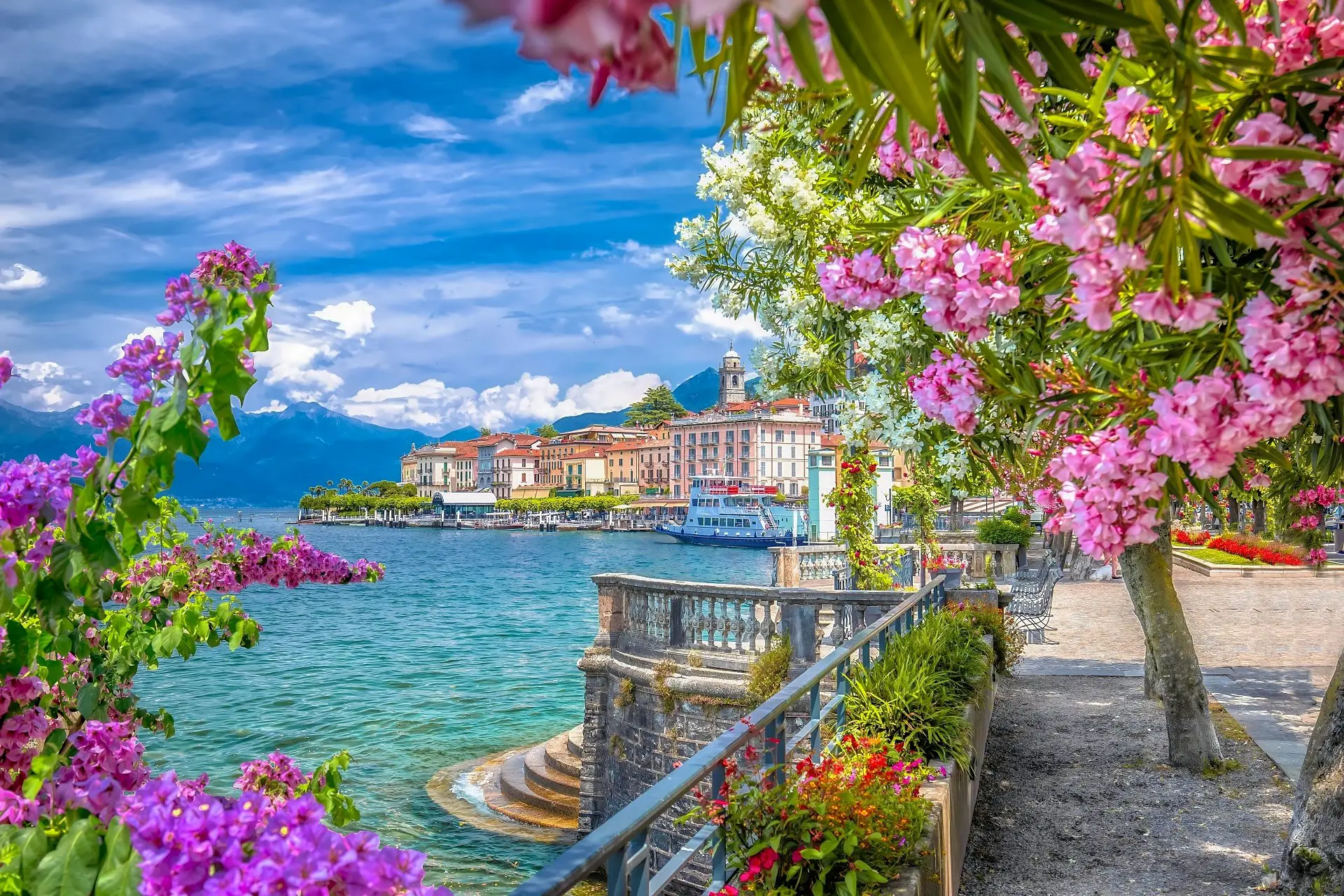
Freshwater summer in Italy
15 Italian Lakes for a More Thoughtful Summer Escape
From Alpine ferry routes to volcanic beaches and Adriatic lagoons, Italy's inland waters ask for different expectations rather than one universal ranking.
Fifteen independent lake profiles, followed by a practical comparison and planning framework.
Italy's lakes are often sold as a single dream of villas, boats and blue water. The reality is richer. Lake Como and Garda are large transport landscapes with towns, ferries and distinct shores; Braies and Carezza are fragile mountain destinations where observation matters more than swimming; Lesina and Varano are coastal lagoons whose value lies in habitat, fisheries and proximity to the Gargano peninsula. A useful guide must separate these experiences instead of forcing them into the same checklist.
Summer also changes the meaning of each place. Lower volcanic lakes can feel warm and languid while high Dolomite water remains cold enough to make an impulsive swim dangerous. Famous villages can become crowded by late morning, yet a quieter base a ferry stop away may preserve the pleasure of the same lake. Thunderstorms, wind, parking controls, bathing rules and seasonal transport all need current checking.
The profiles below retain the source article's broad north-to-south coverage while clarifying what each lake is actually best for. They favour train-and-ferry travel where it works, acknowledge when a car or regional bus is more practical, and treat conservation areas as living environments rather than scenic props.
Before the profiles
An Italian lake is not a single type of holiday
Scale, altitude, transport and legal access matter more than a ranking number.
The first planning distinction is between a transport landscape and a destination viewpoint. Como, Garda, Maggiore and Iseo are large enough that ferries and shore bases structure the visit. Braies and Carezza are primarily mountain landscapes with controlled or delicate access. Lesina and Varano are lagoons with ecological and working identities. A list that calls all of them beaches creates false expectations.
The second distinction is between looking at water and entering it. Attractive colour does not certify water quality, safe temperature, legal access or supervision. Mountain lakes can be dangerously cold; shallow central lakes can experience changing ecological conditions; protected lagoons may have limited bathing zones. Local authorities and official tourism offices should be consulted for current notices.
Transport changes the emotional quality of the trip. On the great northern lakes, trains and boats can remove parking stress and reveal the shoreline as a sequence. In the Dolomites and around smaller central lakes, a car or regional bus may be more practical, but access controls can still apply. The best base is often the place that simplifies the next morning, not the town with the loudest reputation.
Finally, summer is not one fixed block. Late June can offer long days before the heaviest domestic holiday period; July and August bring maximum services and maximum pressure; September may retain warm lower-elevation conditions while becoming less predictable in the mountains. Every plan should include heat, thunderstorms, wind and a graceful alternative to the intended boat or hike.
Four questions before booking
What is the main experience?
Choose among ferries and towns, swimming, water sports, mountain scenery or wetland nature.
How will the shore be crossed?
Compare rail, ferry, bus, walking and car access before choosing accommodation.
Is the water actually accessible?
Check designated bathing points, local quality notices and conservation limits.
What is the crowd strategy?
Use early starts, weekdays, secondary bases and shoulder-season dates rather than wishful thinking.
Lombardy · Alpine foothills
Lake Como
Fame concentrates visitors in a few names, but the lake makes more sense as a network of shores and boat connections.
Best for a rail-and-ferry itinerary with early starts and a base chosen for transport rather than celebrity.

Summer character
Ferries, villas and steep-sided branches
Lake Como's inverted-Y shape creates three journeys rather than one continuous resort strip. Como city gives the easiest urban gateway; the central lake brings Bellagio, Varenna and Menaggio into a compact ferry triangle; the northern arm opens toward quieter landscapes and stronger winds. The celebrated villas and gardens are real attractions, but the experience is governed just as much by boat queues, stairways and the distance between a rail station and the water.
A successful summer plan resists the urge to visit every famous town in one day. Varenna can work well for rail arrivals, while Menaggio offers useful connections across the lake and Como provides the broadest city services. Swimming is possible at designated beaches and lidos, yet deep mountain-fed water stays cool and entry points are not uniformly supervised. Ferry timetables, last boats and capacity should be checked before setting out, especially when the return journey depends on a connection.
Lombardy, Veneto and Trentino
Lake Garda
The north belongs to wind and cliffs; the south opens into beaches, vineyards and easier family travel.
Best for travellers who choose one shore deliberately instead of treating the whole lake as a day trip.

Summer character
Italy's largest lake and its most varied shores
Lake Garda is large enough to punish vague planning. Riva del Garda and Torbole sit beneath steep mountains and attract sailors, windsurfers, climbers and cyclists. Farther south, towns such as Desenzano, Peschiera and Sirmione face a wider, more Mediterranean-looking basin with beaches, promenades and rail access. The western shore is dramatic but slower to navigate, while the eastern shore is useful for combining lake time with Monte Baldo.
Wind is part of Garda's identity, not background decoration. Local patterns support water sports, but they also affect paddling, swimming and small-boat decisions. Beginners should use qualified schools rather than infer safety from a calm morning. On land, summer traffic can make short road distances surprisingly slow, so ferries and regional buses deserve a place in the plan. Families may prefer the service-rich south; active travellers often choose the north; neither choice represents the entire lake.
Piedmont, Lombardy and Switzerland
Lake Maggiore
A stately lake whose cultural centre of gravity lies around Stresa, the Borromean Islands and the western shore.
Best for garden lovers, boat excursions and travellers who want an elegant but less compressed alternative to central Como.

Summer character
Island gardens and an international shoreline
Lake Maggiore stretches across a border and through several distinct landscapes. Stresa is the classic gateway to the Borromean Islands, where palaces, terraced gardens and fishing-village fabric create a concentrated cultural excursion. Verbania and the surrounding western shore broaden the choice of bases, while the lake's northern end continues into Switzerland. The scale feels spacious, and the boat is often the most coherent way to understand it.
Summer travellers should distinguish an island visit from a general lake tour. Palace admission, garden access and boat schedules can change independently, and popular departures may be busy. A slower plan assigns a full day to the islands and another to lakeside towns or mountain viewpoints. Swimming is available at beaches and lidos around the lake, but the strongest reason to choose Maggiore is the conversation between water, gardens and architecture rather than beach life alone.
Piedmont · Cusio
Lake Orta
Small scale, a pedestrian old town and an island monastery give Orta an intimacy the larger lakes cannot imitate.
Best for couples, walkers and travellers who value one deep day over a rapid circuit.

Summer character
A compact lake centred on Orta San Giulio
Lake Orta's appeal comes from concentration. Orta San Giulio descends through lanes and stone houses to a waterfront square, while boats cross the short distance to San Giulio Island. Above the town, the Sacro Monte adds wooded paths and devotional architecture. The lake can therefore combine walking, art, water and a long meal without requiring a complicated transport plan.
That intimacy also makes timing important. The historic centre is best in the morning or after day visitors leave, and parking sits outside the pedestrian core. Visitors should expect slopes and uneven surfaces. Beaches and swimming points exist around the lake, but Orta works especially well for travellers who do not need a resort programme. A two-night stay allows the place to become quiet again, revealing why its restraint is more persuasive than any claim that it is a secret.
South Tyrol · Dolomites
Lake Braies
The view is immediate and magnificent; the responsible visit is planned around access, weather and restraint.
Best for an early walk and landscape observation, not for expecting a private wilderness at midday.

Summer character
A famous mountain lake under intense visitor pressure
Lake Braies sits in a bowl of forest and pale Dolomite rock, with a path circling the water and a historic hotel near the main access. Its image has travelled farther than the lake itself, producing heavy seasonal pressure. Traffic controls, shuttle arrangements, parking reservations and access rules may operate in summer, so spontaneous arrival by car can be the least reliable option.
The lake is cold, mountain weather changes quickly and the shoreline includes exposed or uneven sections. The experience is better framed as a walk and viewpoint sequence than as a conventional beach day. Early or late light softens both crowding and contrast, but visitors should remain on permitted paths and avoid creating unofficial photo positions. Braies rewards acceptance of limits: one circuit, a weather-aware pause and a departure that leaves the shore no more worn than it was found.
South Tyrol · Latemar
Lake Carezza
Carezza is a viewing landscape, not a swimming destination, and its scale asks visitors to tread lightly.
Best for photographers, short walkers and travellers combining several Dolomite landscapes.

Summer character
A small protected lake known for colour and reflections
Lake Carezza is tiny compared with Italy's great lakes, yet the Latemar cliffs, spruce forest and shifting green-blue water create an unusually complete composition. A short path circles the viewpoint area, and the visit can be brief without feeling superficial. The lake's appearance changes with water level, sun angle and cloud, so a postcard promise should never be treated as a guaranteed condition.
Fences and conservation rules protect the shore; entering the water or crossing barriers would destroy the very delicacy visitors have come to see. Carezza therefore belongs in a Dolomite day that also includes walking, a mountain village or a quieter trail, rather than as a full resort stay. Public transport may be possible seasonally, and parking arrangements should be checked. The best memory is not a staged reflection but an attentive look at how quickly mountain light remakes the scene.
Umbria
Lake Trasimeno
Trasimeno offers a lived-in central Italian landscape where cycling, ferries and evening promenades matter as much as swimming.
Best for families, cyclists and travellers linking lake time with Umbrian food and medieval towns.

Summer character
Shallow water, islands and hill towns
Lake Trasimeno is broad and shallow, ringed by olive country and towns such as Castiglione del Lago and Passignano. Boats connect inhabited Isola Maggiore and other permitted destinations, while cycling routes use the relatively gentle landscape around the basin. The lake feels less theatrical than the Alps and more integrated into ordinary regional life.
Shallow water can warm quickly, but bathing quality and designated access should still be checked locally. Wind supports sailing and other water sports, while summer heat argues for early riding or cycling. A useful itinerary combines one shore town, an island excursion and a countryside meal rather than attempting a continuous drive. Trasimeno's strength is variety without spectacle: castle walls, reeds, fishing traditions and long horizons that become most expressive at dusk.
Lazio · Tuscia
Lake Bolsena
Clear-looking water, dark volcanic beaches and hill towns make Bolsena one of central Italy's strongest alternatives to the coast.
Best for swimming, slow road trips and combining lakeside days with the landscapes of northern Lazio.

Summer character
A large volcanic lake with accessible shore life
Lake Bolsena fills a vast volcanic depression, with the towns of Bolsena, Marta, Capodimonte and Montefiascone offering different bases. Beaches mix sand, pebbles and dark volcanic material; small marinas and promenades make the water easy to approach. Compared with the northern resort lakes, the mood is agricultural and local, connected to fishing, wine country and the Via Francigena.
The lake is large enough for weather to matter. Wind can build waves, and unsupervised entry points require sober judgement even when the surface looks benign. A car provides flexibility around the shore, though the best days are not spent circling continuously. Choose one town, swim at an authorised area, explore a historic centre after the heat and leave room for the evening light. Water-quality notices and local restrictions must be checked, especially after unusual weather.
Lazio · north of Rome
Lake Bracciano
Bracciano offers a real escape from Rome without needing to pretend that proximity makes logistics effortless.
Best for a car-free day based on the regional railway or a longer stay split among three shore towns.

Summer character
A volcanic lake within reach of the capital
Lake Bracciano sits close enough to Rome for a day trip but has its own geography and pace. Bracciano town rises above the water beneath the Orsini-Odescalchi castle; Anguillara Sabazia follows a promontory; Trevignano Romano faces the northern shore. Regional rail reaches the area, although the final descent to a beach or waterfront may require walking or local transport.
Restrictions on motorised navigation help protect a water body important to the metropolitan area, giving the lake a quieter surface than many resort destinations. Visitors can swim at designated beaches, paddle where authorised and explore historic centres, but should not assume every stretch of shore is public or supervised. On hot weekends the most accessible points fill quickly. An early train and a clearly chosen town are more effective than arriving with a vague idea of finding an empty beach.
South Tyrol · Val di Landro
Lago di Landro (Dürrensee)
Landro is a scenic pause and walking base, not a warm-water resort despite misleading summer descriptions.
Best for cyclists, hikers and road travellers moving between Dobbiaco and Cortina d'Ampezzo.

Summer character
A cold mountain lake on the road through the Dolomites
Lago di Landro lies along the high valley route between Dobbiaco and Cortina, framed by Dolomite massifs and connected to cycling and walking corridors. The source article's English naming can cause confusion: Lago di Landro and Dürrensee are the Italian and German names for the same lake, distinct from nearby Lago di Dobbiaco.
Its water is Alpine and conditions vary; calling it reliably warm creates the wrong expectation. The lake is better valued as a landscape stop, picnic point and element of a broader active day. Road traffic, limited parking and changeable mountain weather all affect the visit. Cyclists should use designated routes and remain visible at crossings, while walkers need layers even in midsummer. The surrounding protected landscapes deserve more time than a quick roadside photograph.
Puglia · Gargano
Lake Lesina
Lesina is a wetland and fishing landscape whose summer appeal differs fundamentally from an Alpine bathing lake.
Best for birdwatching, local food and a combined lagoon-and-coast itinerary.

Summer character
A shallow coastal lagoon behind the Adriatic shore
Lake Lesina is a long, shallow lagoon separated from the Adriatic by a narrow coastal strip. Its identity is ecological and productive: reeds, channels, birds and traditional fishing connect the water to the town of Lesina and to the northern edge of Gargano. The lagoon should not be marketed as though every shore were a conventional swimming beach.
A thoughtful visit uses local nature information, observes access restrictions and combines the wetland with authorised coastal beaches beyond the barrier. Heat and insects are part of summer conditions, while birdlife is often most active at cooler hours. Food traditions linked to lagoon fishing can provide cultural context, but species, seasons and conservation rules should be respected. Lesina's beauty is horizontal and subtle, rewarding visitors who slow down enough to notice habitat rather than demand spectacle.
Puglia · Gargano
Lake Varano
Varano pairs expansive wetland water with the forested Gargano promontory and nearby Adriatic beaches.
Best for nature-focused road trips and travellers willing to separate lagoon observation from sea bathing.
Summer character
Italy's largest coastal lagoon by area
Lake Varano lies farther east than Lesina and occupies a broader basin beneath the Gargano promontory. Channels connect it with the Adriatic, while low shores, wetlands and fishing activity shape the scene. Nearby coastal settlements and beaches make it possible to combine nature observation with a summer sea stay, but the lagoon's conservation value should remain central.
Road travellers need to plan exact access points because the water is not continuously visible or publicly approachable. Birdwatching and photography work best from permitted locations without entering sensitive reed beds. Local operators can add meaning through knowledge of fisheries and habitat, provided their practices are responsible. Varano belongs in a Gargano itinerary that also allows time for forest, coast and villages; treating it as an isolated swimming attraction would miss its character.
Lombardy · between Bergamo and Brescia
Lake Iseo
Iseo offers the scale and transport pleasure of a northern lake with less international theatre than Como or Garda.
Best for walkers, cyclists and travellers pairing lake towns with the wine landscapes of Franciacorta.
Summer character
Monte Isola, ferries and Franciacorta nearby
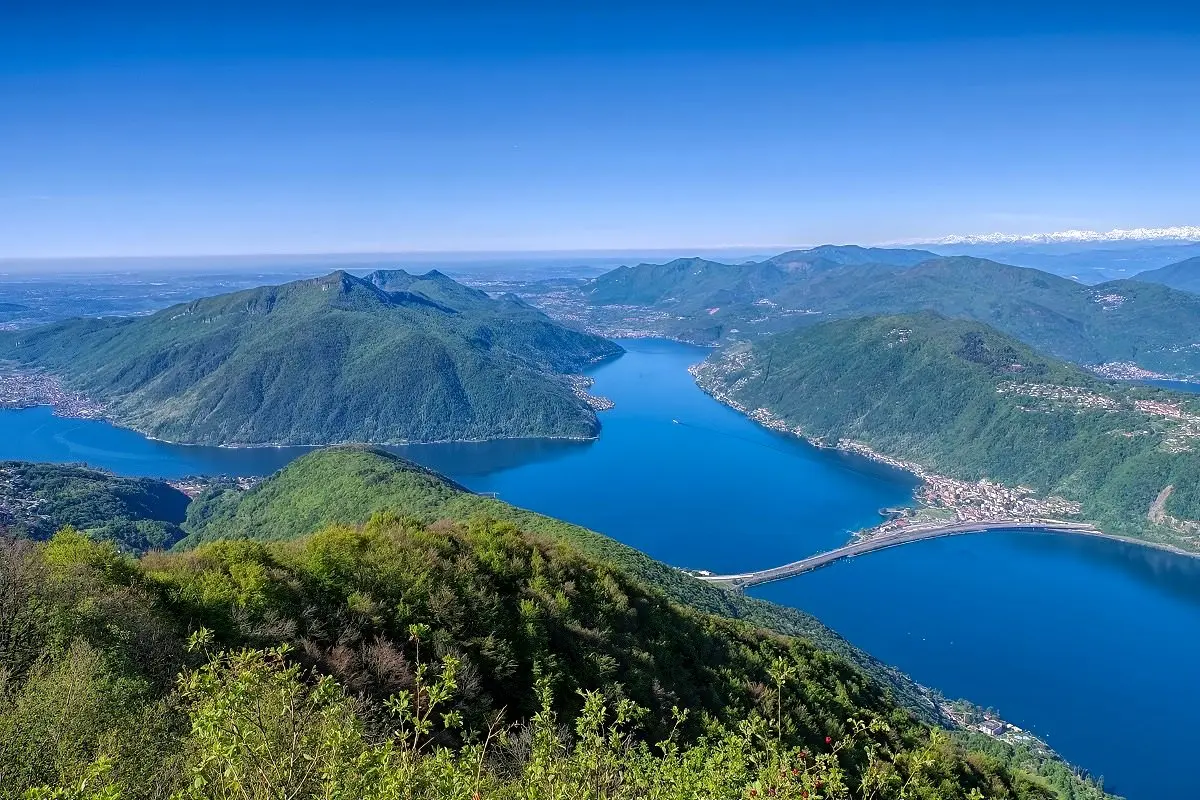
Lake Iseo sits between two better-known giants and has a strong organising feature of its own: Monte Isola, the inhabited mountain island rising from the water. Ferries connect shore towns with island settlements, enabling walks that combine lake views, villages and elevation. Iseo and Lovere make contrasting bases, while the southern end approaches the vineyards of Franciacorta.
Summer planning should account for island transport and the fact that motor access on Monte Isola is restricted. Walking shoes matter more than a resort wardrobe, and bicycle use should respect local rules and narrow lanes. Beaches and swimming points exist around the lake, but Iseo's most coherent day combines a boat crossing, a measured walk and time in one shore town. It is not empty or undiscovered; it is simply easier to experience without the mythology attached to Como.
Abruzzo · Apennines
Lake Scanno
Scanno replaces northern glamour with Apennine scale, local traditions and a compact outdoor day.
Best for travellers crossing Abruzzo by car and combining water with the historic village of Scanno.
Summer character
A mountain lake below a celebrated stone village
Lake Scanno lies in a mountain valley of Abruzzo, below the historic village that shares its name. The lake's famously heart-like outline appears only from selected elevated viewpoints; at water level the experience is one of wooded slopes, small beaches and pedal boats. The nearby village adds steep lanes, traditional architecture and a cultural reason to stay after the midday outing.
This is a mountain environment, so water temperature, storms and road conditions should be assessed rather than inferred from summer heat elsewhere in Italy. A car is usually the practical way to integrate the lake into a regional journey, although local services may operate seasonally. Visitors should use marked paths and avoid pursuing an aerial shape from unsafe unofficial viewpoints. Scanno's appeal lies in the relationship between lake, village and landscape, not in a single photograph.
Lazio · Monti Cimini
Lake Vico
Vico is the quietest Lazio choice in this guide, with nature-reserve priorities and a modest visitor footprint.
Best for travellers with a car who want a low-key lake day near Viterbo and the Cimini hills.
Summer character
A protected volcanic lake in a wooded crater
Lake Vico occupies a volcanic basin surrounded by the Cimini hills and protected landscapes. Compared with Bolsena or Bracciano, settlements and services are less dominant, which makes the lake attractive to travellers seeking woods, birdlife and a quieter shore. That reduced development also means access, facilities and bathing points should be identified in advance.
The nature-reserve setting asks for simple conduct: remain on authorised roads and paths, take waste away, keep distance from wildlife and check whether particular shore areas are closed or sensitive. A summer visit can combine a walk, an authorised swim and a meal in the surrounding hill country. Vico works poorly as a hurried detour with no access plan, but well as a deliberate day shaped around shade and silence.
Decision table
Compare by experience, not by fame
The table is an orientation tool; live access, bathing and transport information still needs official confirmation.
A comparison is most useful when it admits trade-offs. Large lakes offer more transport and accommodation but require stronger geographic choices. Mountain lakes provide immediate drama but little of the conventional beach infrastructure implied by a summer-lake label. Central volcanic lakes can support relaxed swimming days, while the Gargano lagoons are strongest as nature and cultural landscapes.
No row should be treated as a guarantee. Wind, water quality, seasonal services, road controls and protected-area rules can alter the experience. The purpose is to identify the next question to research, not to replace that research.
| Lake | Region | Best for | Access pattern | Summer caution |
|---|---|---|---|---|
| Como | Lombardy | Ferries, villas, towns | Rail plus boats | Crowds and cool deep water |
| Garda | North-east Italy | Water sports and varied shores | Rail, bus, ferry or car | Wind and slow shore traffic |
| Maggiore | Piedmont/Lombardy | Island gardens | Rail plus boats | Coordinate admissions and boats |
| Orta | Piedmont | Compact romance and walking | Rail/bus or car | Pedestrian slopes and limited parking |
| Braies | South Tyrol | Mountain scenery | Controlled road, shuttle or bus | Cold water and visitor pressure |
| Carezza | South Tyrol | Short scenic walk | Road or seasonal transit | Protected shoreline; no bathing assumption |
| Trasimeno | Umbria | Cycling, islands, families | Rail, ferry and car | Heat and changing water notices |
| Bolsena | Lazio | Swimming and road trips | Primarily road access | Wind and unsupervised entry points |
| Bracciano | Lazio | Day trip from Rome | Regional rail or car | Busy weekends and protected water |
| Landro | South Tyrol | Cycling and mountain views | Road, bus or cycle route | Cold water and fast-changing weather |
| Lesina | Puglia | Wetlands and food culture | Road access | Lagoon is not a continuous beach |
| Varano | Puglia | Nature and Gargano coast | Road access | Sensitive habitat and limited approaches |
| Iseo | Lombardy | Monte Isola and walking | Rail plus ferry | Island access and summer capacity |
| Scanno | Abruzzo | Mountain village plus lake | Road or seasonal local service | Storms and viewpoint safety |
| Vico | Lazio | Quiet nature reserve | Car and local roads | Check authorised access and bathing |
The useful logistics
Build a lake day around margins
Heat, queues and last connections are easiest to manage before they become emergencies.
Accommodation should be selected with the first and last movement of the day in mind. On Como or Maggiore, a room near a rail station or ferry landing can be more valuable than a remote view reached by repeated taxis. On Garda, the chosen shore determines whether the trip feels active, family-oriented or logistically scattered. Around volcanic and mountain lakes, parking, bus stops and walking distance deserve explicit checking.
A lake bag needs sun protection, water, a light layer, footwear suitable for pebbles or uneven paths, and a dry method for carrying documents. Children and weak swimmers need properly fitted flotation appropriate to the activity, not inflatable toys used as safety equipment. Paddling and boat rental should be matched to wind forecasts and local rules. Thunder is a reason to leave exposed water immediately.
Ferries are transport, not an unlimited hop-on promise. Seasonal timetables, capacity, bicycle carriage, ticket validation and last departures vary. A screenshot should not be the only copy of essential information because mobile signal and battery can fail. When a same-day rail connection matters, build in a buffer rather than planning the final boat to meet the final train.
Responsible travel is practical rather than decorative. Use marked access, avoid private docks, keep music low, support local businesses beyond the most photographed square and never enter fenced or ecologically sensitive water margins for a better angle. At the famous lakes, dispersing time and money to secondary towns can improve the journey. At the quieter lakes, restraint helps keep them quiet.
Which lake is easiest without a car?
Como, Maggiore, Iseo and parts of Garda work well with rail and ferry planning; Bracciano is also reachable by regional train. Exact connections must be checked.
Which lakes are primarily scenic rather than swimming destinations?
Braies, Carezza and Landro are best approached as mountain landscapes, with cold water, protected shores or limited conventional beach facilities.
Are Lesina and Varano normal freshwater resort lakes?
No. They are coastal lagoons with wetland, fisheries and conservation identities. Sea beaches nearby are a separate experience.
When are crowds lower?
Weekdays, early mornings and shoulder-season dates generally help, but service levels and mountain weather should be checked.
Fifteen different waters
The best Italian lake is the one understood on its own terms
Italy's lake map is generous enough that no traveller needs to force the wrong destination into the wrong holiday. A ferry-based cultural journey, a family beach week, a Dolomite walk and a wetland excursion can all be excellent, but they are not interchangeable.
Choosing precisely makes the trip calmer. It also produces more respectful behaviour because visitors arrive with expectations aligned to access, climate and ecology. The famous view then becomes part of a living place rather than a product to be consumed at speed.
The strongest summer route may include one great lake and one quiet alternative, or simply several days on a single shore. Depth of attention is the common luxury: enough time to learn the boats, notice the evening wind and recognise when the water should be admired rather than entered.