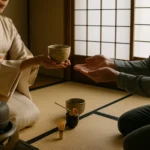

Across Japan’s archipelago, onsen (温泉) – literally “hot springs” – are everywhere. The term refers both to the geothermal springs themselves and the public baths fed by them. In fact, Japan is home to roughly 25,000 natural hot spring sources and about 3,000 commercial bathing facilities. Onsen culture is woven into daily life: for centuries people have bathed in mineral waters for relaxation and health. Thanks to Japan’s volcanic geology, almost every region boasts its own springs – from snowy mountain streams to tropical sands (for example, Ibusuki sand baths). Today onsen evoke tradition and ritual even for first-time visitors, who must learn both the practical steps and the subtle rules of this unique cultural experience.
- Quick primer: What is an onsen?
- A short history of bathing culture in Japan
- Types of onsen & how they’re classified
- The science: minerals, temperatures & health claims
- How to use an onsen — step-by-step
- Onsen etiquette: the rules (and the reasons behind them)
- Tattoos and onsen: policies, workarounds & finding tattoo-friendly baths
- Gender, kids & mixed bathing (family needs)
- Private onsen, ryokan stays & booking logistics
- Best onsen towns & regional picks (destination guide)
- Accessibility & special needs (safety & inclusion)
- Health, safety & what medical professionals say
- Sustainability, water scarcity & modern pressures
- Money, booking & planning (practical tips)
- Glossary: Onsen terms you must know
- FAQ
- What is an onsen?
- How is an onsen different from a sento or a spa?
- What legally qualifies water as an onsen in Japan?
- What types of onsen exist (indoor/outdoor/mixed/private/rotenburo/sand/steam)?
- What minerals are found in onsen water and what are their effects?
- How do I use an onsen (step-by-step)?
- What should I bring to an onsen?
- Can I wear a swimsuit in an onsen?
- Is nudity required in onsen?
- Where do I put my clothes and towels?
- Can I bring my small towel into the water?
- Should I shower before or after soaking?
- How long should I stay in an onsen?
- What temperature is normal and is it safe for everyone?
- Is it okay to drink alcohol before/after an onsen?
- Are tattoos allowed in onsen?
- How strict are onsen about tattoos — are there exceptions?
- How can a tattooed person find tattoo-friendly onsen?
- Can tattoos be covered with a bandage or sticker?
- Are private onsen a good workaround for tattooed visitors?
- Where to find konyoku (mixed baths) and etiquette?
- Kids & infants: what’s allowed and rules?
- Which are the best onsen towns to visit (top towns and why)?
- How to include onsen visits in a Japan itinerary (1-day, 3-day, week)?
- Can you go to an onsen day-trip from Tokyo? From Kyoto?
- How much does an onsen visit cost?
- Do hotels/ryokan include private onsen? How to book one?
- Which onsen are best in winter vs summer?
- What are the health benefits of onsen? Are they medically proven?
- Is it safe to use an onsen during pregnancy?
- Can people with high blood pressure, heart conditions, or medical implants use onsen?
- Are onsen safe for elderly or mobility-impaired visitors?
- Are onsen safe for children and infants?
- What is the history of onsen in Japan?
- Why are onsen important in Japanese culture?
- What social rules or etiquette are rooted in culture (e.g., silence, modesty)?
- What is rotenburo, konyoku, ryokan, sento, kaiseki, yukata, irezumi?
- How does Japanese law regulate onsen water and facilities?
- Are there closures or restrictions due to water shortages or drilling restrictions? (current events)
- How is climate change / tourism growth impacting onsen towns?
- Can foreigners use onsen if they don’t speak Japanese? How to navigate signage?
- How to use an onsen if you have a visible tattoo (small/large)?
- How to use an onsen if you have long hair? (hair & hygiene rules)
- Can you bring cameras/phones into onsen? (privacy rules)
- Is tipping expected at ryokan and onsen?
- What are the most common mistakes first-timers make?
- Where to find onsen that accept guests with piercings or prosthetics?
- Are there onsen with private rental times (kashikiri) and how to book?
- Are there apps / websites to search onsen by feature (towel provided, private bath, tattool-friendly, wheelchair accessible)?
- Sample itineraries & packing checklists
Quick primer: What is an onsen?
To outsiders, an onsen may simply look like a hot tub, but it is defined very precisely in Japan. By law, onsen must be natural geothermal water emerging from underground and meeting strict criteria: the source temperature must be at least 25 °C, and the water must contain certain minerals (sulfur, sodium chloride, iron, and others). In practice this means an onsen is fed by a volcano-heated spring, not by ordinary tap water. In contrast, a sento (public bath) in a city typically uses tap water heated artificially. As one guide explains, “what makes a sento different from an onsen is what goes into the water and where it comes from” – onsen water must be from a spring, while sento water is drawn from the municipal supply. Thus the scent and feel of onsen – rich in minerals – are owed to nature’s geology.
Japan’s status as a volcanic nation explains the abundance of onsen. In fact, being “a highly volcanic country, [hot springs] are a common natural phenomenon here”. Mountains of volcanic rock crisscross the islands, heating underground water. This gives Japan an extraordinary variety of thermal baths – from steaming sulfur pools to iron-tinted spring streams – and accounts for why almost every part of Japan has its own onsen culture.
Definition: onsen vs sento vs spa
The word onsen simply means “hot spring” in Japanese. Unlike a foreign spa or Jacuzzi, an onsen must meet Japan’s Hot Spring Act standards – it is not a luxury bath but a legal designation. By contrast, a sento is a city bathhouse where the water is typically ordinary tap water heated and often softened with added minerals. In a sento you buy admission to a communal bathhouse; in an onsen you bathe in geothermally heated mineral water. Essentially, an onsen is the natural source itself (and the facility around it), whereas a sento is the public-utility bath that anyone can use.
Legal criteria for an onsen
Under Japanese law, onsen water must be at least 25 °C at the source and contain specified minerals, which currently number nineteen categories. For example, sulfur springs (硫黄泉) are one category, iron-rich springs (鉄泉) another, and so on. If a spring’s water meets at least one mineral criterion, it can be legally certified as an onsen. A helpful summary: “To be classified as an onsen the water has to be natural volcanic spring water… at least 25°C, and meet one of 19 mineral-content criteria.”. When you visit an onsen, you may see signs listing the water’s mineral content (like pH, sulfur, sodium chloride, carbonate, etc.), reflecting this regulation.
Why Japan has so many onsens
Japan’s rugged terrain lies where tectonic plates collide – part of the so-called Ring of Fire – so there is frequent volcanic activity and geothermal heat. In practical terms, this means steam and hot water bubble up from cracks underground all over the islands. No wonder onsen appear coast to coast: every prefecture has famous springs, whether framed by snow-capped mountains or lush forests. The local geology even gives each onsen a unique mineral profile. In short, Japan’s volcanoes have gifted the country an immense hot-spring network.
A short history of bathing culture in Japan
Bathing in hot springs is an ancient practice here. Archaeological and textual records trace onsen use back well over a millennium. The first known written record is from the Nihon Shoki (8th century), which notes that early emperors would stay at onsen to cure illnesses. By the 7th and 8th centuries, onsen were already famous; legends say Empress Suiko (r. 593–628) visited one, and monks touted their healing effects. These hot springs (called tōji, 湯治, literally “hot water cure”) were considered sacred, and people made pilgrimages for their restorative waters.
Over time, more onsen towns and inns (ryokan) developed around these springs, and social bathing became ingrained in life. In the Edo period (1603–1868), woodblock printmakers famously depicted crowds bathing in hot springs. By then, the use of onsen had shifted in the public mind: it was no longer purely religious, but seen as a way to clean oneself, relax, and socialize with others. City life also gave rise to sento, the heated-tap public baths in the towns.
In modern times, onsen are tied to leisure and tourism. Domestic travel boomed in the 20th century, and today visiting onsen towns is one of the most popular vacation activities. Even in the 1980s bubble era there was an “onsen boom” as families flocked to resorts. These days, thousands of hotels and ryokan center their hospitality around hot spring baths. While the core of the experience (communal bathing) remains similar, contemporary onsen integrate comforts like hotel-style amenities. Yet the historic glow of steam and the sense of age-old healing have endured into the 21st century.
Types of onsen & how they’re classified
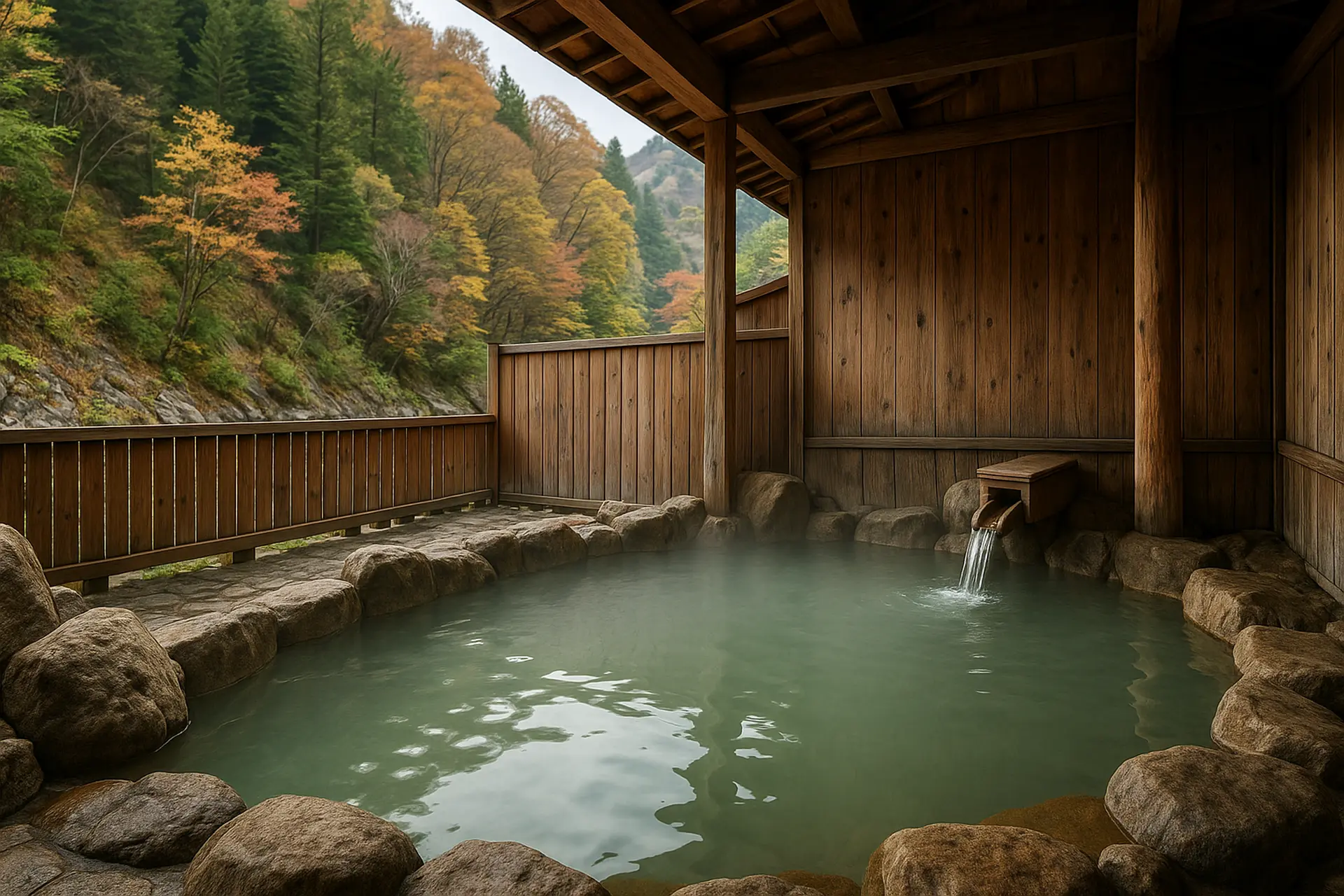
Japan’s hot springs come in many forms. The simplest division is by location: – Indoor vs. outdoor: A bath inside a building is called uchiburo (内風呂), while an open-air bath is a rotenburo (露天風呂). Traditionally, many onsen were outdoors (even ofuro carved into river rocks) because fresh spring water pours right outside. Today most inns have indoor baths for year-round comfort, but many also boast a rotenburo to enjoy nature. The image below shows a classic outdoor onsen beside a mountain river (Takaragawa Onsen in Gunma). Bathers soak as steam rises in the cold air, blending bathing with scenery.
- Special locations: Some onsen are quite unusual. For instance, sand baths (sunamushi) are natural thermal sand pits (famous in Ibusuki, Kagoshima) where you lie in steaming sand. Others use steam saunas (steam bath in a cave or hut). You’ll also find ashiyu (foot baths) at station plazas – shallow hot pools for dangling your feet.
Next, gender and privacy classifications: – Gender-segregated (separate men’s/women’s baths): Almost all public onsen are divided by sex. They may be separate pools side by side or different floors entirely. Look for the kanji 男 (otoko, men) and 女 (onna, women) or color-coded curtains (red for women, blue for men). – Mixed-gender (konyoku): Some rural onsen still allow men and women to bathe together. These konyoku baths were once common but are now rare. In konyoku onsen, modesty rules vary: often people wear a small towel or light swimsuit in the water. Examples include some traditional baths in the Japanese Alps and remote areas. – Private/family (kashikiri): Many ryokan provide rentable private baths for couples or families, known as kashikiri (貸切). These are enclosed pools you reserve by the hour for exclusive use. They solve modesty concerns (especially for tattooed guests) and let families bathe together.
Finally, water composition categorizes onsen by their minerals. Signs often advertise the spring’s primary mineral content. Typical types include sulfur springs (the classic iou-sen known for that “rotten egg” smell), iron springs (tetsu-sen, which may turn skin slightly brownish), sodium chloride (salt) springs, sodium bicarbonate springs (tansan-sen, yielding silky water), and more. Each type was traditionally believed to have different effects (for example, iron springs for fatigue, bicarbonate for smooth skin). In reality, people judge an onsen by its feel and color: some baths are milky white, others clear green or tea-colored, depending on minerals.
The science: minerals, temperatures & health claims
What does soaking in onsen water do to the body, really? Japan has folklore and some science around this. On the surface, bathing in hot water naturally relaxes muscles, improves circulation, and cleans pores. The minerals in onsen (sulfur, sodium, hydrogen carbonate, etc.) are said to enhance these effects, but rigorous evidence is mixed. Some research has found mild benefits: for example, one study in Beppu found that regular onsen bathing could lower blood pressure and improve circulation in chronic patients. Another survey near Atami reported that residents who often bathed needed less blood pressure medication. These hint that warm, buoyant water can ease cardiovascular strain and soothe pain. Anecdotally, many people report relief from joint or skin complaints after soaking.
However, science cautions that much of onsen lore is unproven. Modern onsen enthusiasts tend to focus on hydrotherapy effects: the warmth warms blood vessels (helping blood flow) and hydrostatic pressure from immersion can reduce swelling in limbs. Heating the body to around 40 °C causes arteries to relax and heart rate to adjust, which some say relieves muscle tension and increases metabolism. But overheating is a risk: medical guidelines warn that plunging into very hot water can stress the heart and breathing, especially if one is weak or ill.
According to Japan’s Ministry of Environment, certain groups should be cautious or avoid onsen: people with severe heart, lung or kidney disease, advanced tumors, tuberculosis, or those who are bleeding or very weak. For example, “the elderly, persons with hypertension or with cardiac diseases… should avoid high temperatures of 42 °C or more,” and even healthy individuals should start with just a few minutes and gradually extend time. Likewise, pregnant women can use onsen, but should not stay in hot water too long or use the hottest pools. The official advice is typically: “Do not bathe after heavy drinking or if ill, and hydrate before and after bathing”.
In summary, onsen are pleasantly hot and buoyant, which some studies associate with improved mood and circulation. But they are not a miracle cure. Visitors should treat onsen as a soothing rest — listen to your body, limit soak time (10–15 minutes is common), and cool down gradually. With moderate use, most people (even novices) simply find onsen rejuvenating.
How to use an onsen — step-by-step
For many first-timers, the ritual of onsen bathing feels exotic. Here is a practical walk-through, from preparation to finishing.
- Before you go: Pack the basics – two towels (a large bath towel and a small hand towel), a 100-yen coin for lockers, and a hair tie if you have long hair. The large towel is for drying afterward; the small towel is for washing and modesty in the bathing area. (Most onsen provide towels, but if it’s a small local bath you may need to bring your own.) If you’re staying at a ryokan (traditional inn), they will supply yukata robes and toiletries. Dress simply: the ryokan yukata or a t-shirt and shorts makes undressing easy. At the entrance, remove your shoes and place them in the provided rack or locker. Slip on the slippers given, which you’ll wear just into the changing area (no shoes on tatami).
- Entering the changing room: You will find separate men’s and women’s changing rooms, often labeled 男 (men) and 女 (women). Step inside, hang up your clothes in the wooden locker or basket (lock it if needed), and note any signs. Many onsen outfits provide shampoos, soap, a wash basin, and a mirror at each station. Grab a small hand towel or washcloth from the shelf – this is what you’ll carry to the washing area. (Don’t bring towels into the pool.) Keep your large towel stowed for later.
- Step 1: Shower and wash thoroughly. Before ever touching the onsen water, cleanse your body. You’ll see rows of low stools and handheld showers by the wall. Sit down and use soap and shampoo to scrub yourself completely from head to toe – hair (tied up), underarms, feet, everywhere. Rinse off all soap with fresh water. This is mandatory: “as at a sento, at an onsen all guests are expected to wash thoroughly before entering the hot water.”. Be efficient but gentle; you do not enter the pool dirty.
- Step 2: Entering the water & soaking. When clean, it’s time to step into the bath. Move slowly – the water is hot and your blood pressure will drop a bit, so give yourself a moment to acclimate. Lower yourself gradually until water covers as much of your body as you like (women often stick to shoulder-deep). Keep your small towel nearby (some people wrap it around their heads or cover discreetly outside the water), but never wear the towel in the bath or let it touch the water. It’s used for washing and modesty only; the bath itself is for unclothed soaking. Relax and enjoy: sit back, breathe slowly, and admire the surroundings. Do not splash, swim, or dunk your head – onsen bathing is about tranquility. Quiet conversation is allowed, but many treat the onsen as a peaceful retreat. Feel free to ladle hot onsen water gently over shoulders with a cup if you need a break from the heat.
- Step 3: Exiting the bath. When you’re ready to leave (typically after 5–15 minutes; gauge by comfort), exit carefully. The Japanese custom is often to not rinse off after soaking, in order to leave the beneficial minerals on your skin, but you may rinse if needed. Some onsen encourage a quick shower to remove sweat. Either way, gently pat yourself dry with your large towel before re-entering the changing room to avoid dripping water. No running or loud behavior as you leave – treat the onsen area with respect.
- Step 4: Dressing & after-care. Return to the changing room, where you will find toilets, dryers, and extra amenities. Wrap yourself in the robe or towel. Don’t forget to thoroughly dry between toes and body folds (onsen water leaves the skin very slippery). Now put on your clothes. It’s customary to leave the locker key or coin in its slot (the attendant will return it to you). Finally, hydrate – drink water or tea, since soaking can dehydrate. Many people enjoy a non-alcoholic onsen drink (soda or milk) afterward. If you feel lightheaded, sit for a while before doing anything strenuous.
Throughout the process, pay attention to common dos and don’ts: don’t wear jewelry or glasses in the water (they heat up quickly), don’t splash or dive, and definitely do not swallow the water. Leave your valuables locked up, as you would at a gym. The whole sequence might feel elaborate at first, but it becomes natural after a bath or two. If in doubt, just follow what others are doing, and you’ll fit right in.
Onsen etiquette: the rules (and the reasons behind them)
Japanese onsen have etiquette rooted in respect for others and the communal setting. Understanding the “why” behind these rules makes them easier to follow:
- Nudity and modesty: Onsen require full nudity for everyone. This can be surprising to foreigners, but it’s almost universal practice. Bathing suits or underwear are not allowed. The reason is hygiene: clothing traps dirt and fibers. You might see many newcomers uneasy, but locals treat the bath as clothing-optional only in specific mixed or family pools. (If modesty is a concern, book a private bath.) Use your small towel for covering yourself as you move between the washing area and the bath, or drape it lightly when sitting on the stool. But remember: the towel stays out of the water. This rule, though strict, ensures the water itself remains clean for all.
- Quiet and respectful conduct: Onsen are places for relaxation. Keep your voice low – friendly chatting is fine, but think “library tone,” not party volume. Don’t run or splash. Avoid any roughhousing or throwing water. If children are present, they are usually expected to behave calmly as well. Also, avoid any activities like shaving, brushing teeth, or washing socks in the onsen. These are considered unsanitary. Treat the bath as a shared shrine of rest: one guide puts it this way, “bathing is done au naturel…and the onsen is for relaxing, not washing, so be respectful”.
- Towels and hygiene in the bath: Only bring a small towel into the bathing area, and use it sparingly. Never dunk or wash the towel in the onsen – it defeats the purpose of cleanliness. Most people wipe off with the towel after exiting. Towels should not touch the water because they carry soap or dirt. If your hair is long, tie it up high or use a shower cap if you have one – the rule is simple: hair must not touch the water. Likewise, remove any sweatband or swimming goggles. Basically, only your clean body goes into the bath.
- Photography and privacy: Out of courtesy and legal privacy norms, do not take photos or videos in the bathing area. The onsen environment is intimate, and many facilities strictly prohibit phones or cameras. Observe any posted rules. If you must bring a phone to the locker (for example, to coordinate with friends), turn off its ring and stow it away. Sometimes onsen provide lockers or bags for valuables. Remember that onsen etiquette values modesty and consent – never stare at or photograph others.
In short, onsen etiquette revolves around cleanliness, courtesy, and calm. If you keep these principles in mind, you’ll blend in. The common mistakes are easy to avoid: wash thoroughly, don’t swim with the small towel, and keep noise to a whisper.
Tattoos and onsen: policies, workarounds & finding tattoo-friendly baths
Tattoos (irezumi) in Japan have a complex history with bathing. Traditionally, tattoos were associated with the yakuza (organized crime), so public baths began banning them to deter gang members. To this day, many onsen enforce a strict no-tattoo policy. (This policy is often cited simply as “no tattoos” rather than “no criminals.”) A 2015 study found that about 56% of onsen operators barred guests with any visible ink. If you show up with large tattoos uncovered, you will usually be turned away. Exceptions and rules vary by place, so don’t assume foreigners are automatically allowed – the majority still require ink coverage or refusal.
However, there are workarounds. Many guidebooks advise covering small tattoos with a waterproof plaster or “tattoo seal” sticker. If your tattoo is small or on an arm/leg, you can buy flesh-toned bandages or specialized stickers at drugstores in Japan. They’re not foolproof, but some baths will accept you if the ink is fully concealed. Another solution is to use private baths: staying at a ryokan or renting a family bath lets a tattooed person bathe alone in privacy, so the rules don’t apply. Indeed, many sources suggest booking a kashikiri (private) onsen by the hour if you have prominent tattoos – it’s hassle-free.
If neither covering nor private rental is possible, you can seek out tattoo-friendly facilities. A growing number of hot springs openly welcome inked guests (often a selling point on their websites). For example, Kinosaki Onsen in Hyōgo and Beppu Onsen in Kyushu have several tattoo-okay baths. Online resources and forums now list “tattoo-friendly onsen.” Some tourism bureaus even encourage this change – in 2016 Japan’s government asked operators to at least permit foreigners with tattoos on a case-by-case basis.
In practice, the safest strategy is planning ahead: search for “tattoo-friendly onsen” or “tatooes allowed onsen” in English/Japanese, or email your accommodation beforehand. If booking through travel sites, filters or tags sometimes indicate which resorts are tattoo-tolerant. In big cities like Tokyo, there are even special spa facilities (unlike traditional onsen) that openly accept inked bathers. Ultimately, respectful compliance with each facility’s rules will ensure the best experience – many travelers with small tattoos have had no problem after learning about these workarounds and planning.
Gender, kids & mixed bathing (family needs)
Most onsen are segregated by gender, but some accommodations are designed for families. In a typical bathhouse, there are separate areas for men and women, and you enter the one matching your gender. However, small children often accompany a parent without concern.
Mixed (konyoku) onsen and etiquette
A mixed-gender onsen, or konyoku (混浴), allows men and women to bathe together. Traditionally, almost all hot springs were mixed long ago, but today konyoku baths are rare and usually found in older, countryside inns. In a konyoku pool, modesty rules apply: women usually wear their small towels or a light swimsuit in the bath (if the onsen permits), and men may do the same or simply be nude as usual. If you hope to try a konyoku experience, research beforehand – some remain open in places like Aomori or Gunma. If you enter a konyoku by accident (signs sometimes say “Mixed”), cover yourself until you get accustomed.
Children and families
Families are welcome in onsen, but policies on children vary. A common guideline is that children in diapers are not allowed in public baths, so infants usually stay out. Most onsens allow school-age kids (around age 6 and up) to enter the same-sex bath with a parent. If your child is very young, ask about private family baths (kazoku onsen). In fact, many ryokan offer reservable family baths specifically so parents can bathe with small children privately. These are excellent for toddlers or nervous swimmers.
The only special rule: if your child is old enough to be potty-trained, they should generally follow the same gender division as adults (e.g. a 7-year-old boy would go into the men’s bath, or a private family bath instead). And of course, never leave a child alone in the hot spring. Always supervise little ones. Many travelers report that as long as kids are clean and well-behaved, onsen proprietors are quite accommodating. In sum, bring swim diapers if necessary (though they usually won’t allow even those in the water) and consider booking a family or private bath if you have any doubt.
Private onsen, ryokan stays & booking logistics
For those who prefer complete privacy or special service, private onsen and traditional inns offer a step up. Many ryokan (especially mid-range and luxury ones) provide small onsen baths attached to guest rooms, or rentable private pools on site. These private baths are usually not included in the room rate but can be reserved by hour. Terms vary by establishment: some are included for guests, others charge a fee. To find these, look for listings labeled kashikiri buro or “private onsen.” (Some travel booking sites allow filtering by “onsen attached” or “private baths available.”)
At a ryokan, expect a different pace than a city hotel. Check-in is often in the late afternoon; you will be shown to your tatami-floored room, which normally includes yukata robes and slippers. The inn will explain the bath hours and etiquette. Many ryokan rates are per person, typically including a multi-course kaiseki dinner and breakfast served in your room or the dining hall. Kaiseki is a traditional Japanese multicourse meal showcasing seasonal ingredients – think of it as a formal, beautifully presented feast.
Booking tip: During high season or holidays, popular onsen hotels sell out quickly. Many ryokan require a full prepayment or deposit, with strict cancellation policies. If you need flexibility, check the cancellation terms carefully. Also note that pricing may be per night per person and often excludes local taxes. For example, many hot-spring towns impose an “onsen tax” (around ¥150 per adult per night) that is paid in cash at the inn.
It’s also easy to arrange day visits to onsen resorts. In many famous onsen towns, larger bathhouses or even ryokan allow non-guests to buy an entry-only ticket (often 500–2000 yen). These tickets generally include the use of communal baths and basic amenities (if you need a towel, it may be extra). When buying a day-use ticket, you typically leave your street clothes and large towel in a locker and proceed like any overnight visitor. This can be a great option to try a renowned onsen without an overnight stay. For private baths, inquire directly – some inns welcome day spa reservations for their kashikiri tubs, though at a premium.
In short, planning an onsen stay or visit involves standard travel prep (book accommodations or buy train tickets early) plus onsen-specific checks: confirming tattoo policies, figuring out gender rules for mixed baths, and packing the right kit. But once arranged, the onsen is usually a relaxing centerpiece of the trip.
Best onsen towns & regional picks (destination guide)
Japan’s onsen resources are so vast that entire travel lists are devoted to top hot-spring towns. Here are a few that stand out (with reasons why each is special):
- Kusatsu Onsen (Gunma Prefecture) – Often called Japan’s best-known hot spring town. Kusatsu is famed for its extremely large volume of spring water (thousands of liters per minute) that constantly flow into many baths. The hot water is said to “cure every illness,” a nod to its high sulfur and quality. The Yubatake (hot water field) in town center is iconic. Kusatsu’s alleyways bustle with traditional bathhouses and inns. In winter the town becomes a snowy hot-spring haven.
- Hakone (Kanagawa Prefecture) – Very accessible from Tokyo, Hakone is a mountainous onsen resort near Mount Fuji. It offers scenic outdoor baths overlooking pine forests, lakes or even Mt. Fuji. The area has dozens of ryokan and public baths. (Note: if you want swimsuits, Hakone’s theme-park spa Yunessun allows them, but most Hakone onsen are nude.) Aside from hot springs, Hakone attractions include the nearby lake cruise and volcano valley, making it an easy short-trip circuit.
- Beppu Onsen (Oita Prefecture, Kyushu) – Kyushu’s onsen capital, Beppu has arguably the largest concentrated collection of different hot springs in one city. It boasts eight distinct hot spring areas, each with its own properties, and some wildly colored pools known as the “Hells of Beppu.” Visitors can try sand baths (being buried in steamy sand) and steam baths, and see vividly hued pools like the cobalt-blue one shown below. Beppu’s diversity of baths and family-friendly resorts make it famous for onsen tourism.
- Yufuin (Oita Prefecture, Kyushu) – A more relaxed, smaller town near Beppu. Yufuin sits in a valley at the base of scenic Mt. Yufu, and the town’s open-air onsen often look out at rice fields and mountains. It has a refined countryside charm (art galleries, cafes, and onsen ryokan) and gentle riverside baths. Many come here for a quieter experience and photogenic scenery.
- Kurokawa Onsen (Kumamoto Prefecture, Kyushu) – A “retro” onsen village set in a forested valley. Kurokawa is car-free and centered around a stream lined with traditional inns. Visitors can roam in yukata from one communal open-air bath to another (a system called the “engai-kai,” or hot-spring pub). The water here is alkaline and said to be great for nerve pain. The atmosphere is very traditional, emphasizing rustic wooden baths and whispered tranquility.
- Noboribetsu Onsen (Hokkaido) – Hokkaido’s best-known resort town. Noboribetsu is part of a vast volcanic valley called Jigokudani (Hell Valley) that supplies many springs. Its waters are rich in sulfur, hydrogen sulfide and iron. Several parks with steam vents and bubbling pools create a dramatic landscape. Nearby, one can enjoy both outdoor rotenburo and footbaths. Its volcanic “devil’s bath” theme and forest setting make Noboribetsu memorable.
- Kinosaki Onsen (Hyogo Prefecture) – A charming onsen town famous for seven public bathhouses connected by willow-lined canals. Visitors “onsen-hop” in yukata, strolling old-school arcade streets. Kinosaki has the unique distinction of welcoming tattooed guests openly and of having many barrier-free inns (see below). It exemplifies a picture-book hot-spring village where tradition is preserved.
- Dōgo Onsen (Ehime Prefecture, Shikoku) – The oldest onsen bathhouse in Japan, with roughly 3,000 years of history. Its main bathhouse is an elaborate castle-like wooden structure dating to the late 19th century. Dōgo’s sulfuric waters were once enjoyed by Empress Shōken, and its story inspired scenes in the film Spirited Away. The water is supposed to relieve fatigue and skin ailments. It’s the centerpiece of Matsuyama city and a national treasure.
- Ibusuki Sand Baths (Kagoshima Prefecture, Kyushu) – Not a traditional onsen town, but famous for its unique geothermal sand baths. Here you lie on the beach and get “buried” in naturally heated black sand. The hot steam warms your body through the sand. Nearby is a more conventional open-air onsen. Ibusuki is a coastal seaside onsen experience, ideal in winter.
- Other picks: For snow–onsen combined, places like Shirahone (Nagano) offer milky-white thermal pools under conifers, and the tiny Kuroyu onsen in Tochigi is eco-friendly and remote. For cold-season relaxation, Ginzan Onsen in Yamagata or Yugawara near Tokyo in summer can be appealing.
Which onsen is “best” depends on what you seek: be it mountain scenery, seafood, snowy vistas, or cultural atmosphere. A safe strategy is to include at least one famous resort (like the above) and one lesser-known village in your trip. Many travelers pair neighboring onsen areas: e.g. Beppu and Yufuin in Kyushu, or Hakone and Atami near Tokyo.
Seasonal hints and day trips
- Winter: Many onsen towns shine in winter – think of soaking outdoors in steam while snow falls. Togura-Kamiyamada (Nagano) and Nyuto Onsen (Tohoku) are noted for this. In summer, altitude and cooler regions like Kamikochi (Nagano) or Hokkaido’s Sounkyo can be very pleasant.
- One-day trips: From Tokyo, Hakone (with an onsen at a day spa or ryokan) and Kusatsu (2–3 hours by train/bus) are doable. From Kyoto or Osaka, consider Kinosaki Onsen (around 2.5–3 hours train) for a quick overnight. Both can be slotted into a short itinerary.
(For detailed itineraries, see our Sample Itineraries section below.)
Accessibility & special needs (safety & inclusion)
The Japanese onsen industry has been increasingly attentive to accessibility. Some hot springs and ryokan now offer barrier-free facilities: ramps, chair lifts, and spacious showers. For example, in Beppu one bathhouse was retrofitted with a pool lift and even provides a special hot-spring wheelchair so visitors with mobility challenges can enjoy the bath. Another Beppu onsen has level access throughout and high-grade toilets for wheelchair users. In Kinosaki Onsen, many ryokan boast elevators and wheelchair-friendly rooms with modified bathrooms.
That said, traditional onsen architecture is often step-heavy (think: stairs into baths, sunken tubs, and no handrails). If you or a travel companion use a wheelchair or walker, plan ahead. Look for hotels advertising “universal rooms” (as Nishimuraya Honkan in Kinosaki or Sakaki Lodge in Nagano do). Local tourism websites can list barrier-free onsen – for instance, the Beppu tourism board details accessible bath options. Even if no special facilities exist, some helpful services often are provided: handrails in showers, bath chairs, and attendants to assist. It’s wise to call or email ahead: Japanese owners are generally helpful if they know your needs.
Signage and language for non-Japanese speakers
Most onsen use a few universal symbols and words. Men’s baths are labeled 男 (blue noren or sign), women’s 女 (red). You may also see 大浴場 (daiyokujō) meaning large communal bath, or 露天風呂 for outdoor onsen. Changing rooms for men might say 脱衣所 男 and for women 脱衣所 女. Smaller signs might have pictures of a shirt and skirt (female) or trousers (male). Inside, instructions are often in simple English or Chinese as well. If you ever doubt, the safest approach is to stand back and observe: many temples have noren split (一文字) for men and women.
Even without Japanese skill, the process is fairly intuitive once you see it. Photos or instructions in English are sometimes posted on walls or provided by the front desk. If anything is unclear (e.g. a robotic water faucet or a special shampoo dispenser), do not hesitate to ask staff – they can usually translate key phrases. Overall, lack of Japanese should not stop you from enjoying onsen; visual cues and polite miming often suffice.
Health, safety & what medical professionals say
Onsen are generally beneficial for healthy adults, but caution is advised for certain health conditions. The Japan Environment Ministry explicitly lists contraindications. Do not bathe if you have acute illness (fever, infection), advanced tuberculosis, or active malignant tumors. People in very weak health or severe anemia should also avoid onsen. The hot water places extra stress on the cardiovascular system, so anyone with heart problems, uncontrolled hypertension, or recent stroke should check with a doctor.
Even minor issues deserve attention. High blood pressure or heart disease patients are warned not to use the hottest baths above 42 °C. If you have joint pain or other chronic conditions, short soaks (3–5 minutes) are recommended at first. The ministry’s guidelines suggest beginning with 3–10 minutes and limiting to 15–20 minutes once accustomed. For example, elders or people with circulatory issues might start with just a few minutes and stay only once or twice.
- Pregnancy: Expectant mothers can use onsen, but with precautions. The general view is that warm water can ease pregnancy discomfort, but you should keep both water temperature and soak time moderate. A pregnant woman should especially avoid very hot water and lengthy soaks; limit time to under 10 minutes at a reasonable temperature, and never bathe if feeling faint. If the onsen has any chemical additives, consult a doctor first. In Japan, many women continue hot-spring bathing during pregnancy, but listen to your body – if you feel dizzy or overheated, exit immediately.
- Children and elderly: As mentioned, children should not bathe unsupervised. For toddlers, private family baths or a parent’s help is needed. After age ~6, most children can join their gender’s bath. The elderly and physically impaired are advised to enter slowly, maybe partially (just lower legs) and sit immediately if needed. Hydration is critical: always drink water before and after onsen to prevent dizziness. It’s surprisingly common to feel light-headed if you stay seated up to your neck too long without fluids.
- Allergies and skin: If you have very sensitive skin, be aware that onsen waters (especially acidic or sulfur springs) can sting cuts or irritated areas. Rinse off gently if your skin feels too tight. Bring your own soap/conditioner if you have dermatological needs, as some hotels provide basic toiletries but you may prefer your own brand.
In summary, onsen are safe and healthful for almost everyone when used wisely. Treat it like a gentle heat therapy: don’t rush, listen to your body, and take breaks. For any serious condition (heart issues, pregnancy complications, medication like beta-blockers, etc.), consult a doctor about onsen use beforehand. Many onsen operators post simple warnings (e.g. “do not bathe if feverish”). By following these precautions, you can soak with both relaxation and safety.
Sustainability, water scarcity & modern pressures
Japan’s onsen are not endless. In recent years, a few hot spring areas have faced environmental strains. For example, Kusatsu Onsen (Gunma), one of the most famous hot spring towns, imposed temporary usage restrictions on some baths due to low rainfall and water pressure issues in 2019. Likewise, onsen in Iwaki, Fukushima Prefecture have been shut down since the 2011 earthquake because their water sources were damaged. Even beyond natural disasters, the sheer volume of tourism is a concern: a South China Morning Post report notes that as foreign visitor numbers surged, some hot springs have struggled to replenish fast enough, leading to operational limits.
Local governments have begun to respond. Some towns restrict new drilling for hot springs to protect aquifers, and others encourage water-saving measures like shorter soaks. On the positive side, many onsen ryokan are now marketing conservation – for instance, by recycling bathwater for toilets and not replacing all bathwater between each guest (baths naturally refresh). Guests can help by following the etiquette to shower thoroughly before entering (this not only is polite, but it means the bath water remains cleaner longer, reducing the need to drain it as often).
As a visitor, you can also minimize impact: don’t leave taps running longer than needed, and reduce mini-bottle toiletries (prefer refillable). Supporting onsen that source sustainably is wise. The good news is that current closures are the exception, not the rule. Onsen culture remains robust. High-profile cases like the temporary fall in overnight onsen stays in 2018 were usually short-term or regional. By and large, Japan’s local communities treasure their hot springs and work hard to keep them flowing for future generations. As onsen travelers, we contribute by traveling respectfully and being mindful that we share these springs with locals.
Money, booking & planning (practical tips)
- Typical costs: A standard public onsen bathhouse costs on the order of ¥300–800 for adults (children usually less). More upscale resorts and ryokan day-spas may charge ¥1,000–2,000. For comparison, an average Hakone or Kyoto public bath is often around ¥600–¥800. Day-use private baths (kashikiri) can run extra, say ¥500–¥1,500 per hour on top of the entry fee. If staying overnight, onsen ryokan prices vary widely: you might pay anywhere from ¥8,000 to over ¥30,000 per person per night (with dinner) depending on luxury and season.
- Taxes and surcharges: Many hot spring towns levy a small “onsen tax” (∼¥150 per adult, per night) on top of hotel rates. This is legally mandated in each municipality and is paid in cash at check-out. You may not see it in the booking price, so budget extra. Also note that Japan’s consumption tax (10%) applies to ryokan stays and facilities; some inns tack on a 10–15% service charge automatically. Tipping is not expected at onsen or ryokan. Staff are paid wages, and exceptional service tips could even cause embarrassment. Focus instead on saying “arigatō gozaimasu” (thank you) when you leave.
- How to book: Japanese onsen lodging can be booked via global platforms (Booking.com, Expedia) or domestic sites. Two popular Japanese booking sites with extensive onsen listings are Rakuten Travel and Jalan Net (English interfaces available). These allow filtering by onsen town, room type, and even features (like open-air bath or tatami room). If you want specific amenities – for instance, an onsen with a view of Mt. Fuji, wheelchair access, or a “tattoo-friendly” policy – check the hotel’s details page or call the front desk. Many smaller inns do not list English names prominently, so searching by area or rail station can help. For day-trip reservations (some places only allow a limited number of day guests), it’s wise to call ahead or go early.
- Useful resources & apps: A few websites are especially handy for onsen planning. The official Japan Onsen Association site (often called “Onsen Japan”) has a search tool for hot springs across Japan, though mainly in Japanese. Travel blogs and sites like Japan Guide or Japan National Tourism Organization (JNTO) also offer curated onsen directories by region. Smartphone travel apps (e.g. Gurunavi, or Japanese lifestyle apps) sometimes include filter options for hot springs (e.g. open-air baths, women-only, etc.). There are even apps showing the current crowd levels at some public baths, or guides to onsen etiquette. Don’t overlook local tourism pages: many town or prefectural travel sites have sections on their famous hot springs (for example, EnjoyBeppu for Beppu, VisitNagano for Nagano’s baths, etc.).
Glossary: Onsen terms you must know
- Onsen (温泉) – A natural hot spring bath. Legally, water must be ≥25 °C at source and contain certain minerals. The term also refers to the bathing facility around that spring.
- Sentō (銭湯) – A community public bathhouse in town (usually in cities). Water is heated tap water. Unlike an onsen, a sentō is not a mineral spring but simply a heated bath for daily washing.
- Rotenburo (露天風呂) – An outdoor hot spring bath. “Roten” means outside (露天), and “buro” is bath. Many inns have a rotenburo set in nature. As the travel blog notes, “open-air onsen are called rotenburo”.
- Konyoku (混浴) – A mixed-gender bath. Historically common, these allow men and women to bathe together. As JapanExperience explains, a konyoku onsen lets “men and women bathe together in the same pool”. These are now rare and usually offer modesty options.
- Kashikiri (貸切) – A private-reserve onsen bath. Kashikiri buburo are hot spring pools you can book for exclusive use (hourly). Some ryokan advertise rooms with in-room onsen (貸切露天風呂付客室), meaning the tub is private. The HappyTravelMom site calls kashikiri onsen “a type of onsen you can rent,” often used by families.
- Irezumi (刺青・入墨) – Traditional Japanese tattoos. (The term literally means “inserting ink.”) Historically, these were large, elaborate tattoos associated with Yakuza gang members. Onsen often mention irezumi in their rules – essentially a code word for tattoo bans.
- Yukata (浴衣) – A light cotton robe often worn in ryokan after bathing. Most inns provide guests with a yukata to wear around the room and even to onsen (until undressing at the bath entrance). It’s simpler than a kimono and used as casual loungewear and nightwear.
- Kaiseki (懐石) – A traditional multi-course Japanese dinner served at ryokan. It’s an elaborate, seasonally themed meal. Guests at an onsen ryokan often experience kaiseki as part of their stay. (Each small dish is prepared artfully, from appetizers to grilled fish to soup and sweets.)
FAQ
What is an onsen?
An onsen is a natural hot spring and the bathing facility around it – water geothermally heated underground. By Japanese law, it must be at least 25 °C at the source and contain specified minerals. In other words, it’s a hot spring bath (not an ordinary spa).
How is an onsen different from a sento or a spa?
A sento is a municipal public bathhouse where the water is regular tap water (even if they add some odorless minerals). An onsen must use genuine spring water. Spas abroad can have jets and filters; in Japan only onsen promise volcanic water. Simply put, onsen = natural spring. (Source water is key.)
What legally qualifies water as an onsen in Japan?
The Japanese Hot Springs Act says spring water must be at least 25 °C and contain at least one of a list of minerals (sulfur, sodium, iron, carbon dioxide, etc.) to call it “onsen”. Water falling short can’t use the onsen label.
What types of onsen exist (indoor/outdoor/mixed/private/rotenburo/sand/steam)?
There are indoor baths (様內風呂) and outdoor baths (露天風呂, rotenburo) – some have both. By gender: almost all are separated by sex, though some rural konyoku (mixed-gender) baths remain. For privacy, many facilities offer kashikiri (private/family) baths you rent by the hour. Unique variations include sand baths (sunamushi, where you bury yourself in hot sand, e.g. Ibusuki) and steam cave baths.
What minerals are found in onsen water and what are their effects?
Onsen are often rich in sulfur, iron, sodium chloride (salt), hydrogen carbonate (bicarbonate), and more. Traditional beliefs credit them with benefits: sulfur springs for skin, iron springs for fatigue, etc. Some small studies suggest gentle health effects – improved circulation and mood – but most claims remain anecdotal. The mineral content mainly gives each onsen its color, smell, and unique feel.
How do I use an onsen (step-by-step)?
In short: bring towels and a coin for lockers; undress in the changing room; shower and rinse thoroughly; then slowly enter the hot water; soak calmly (no towel in water); dry off and dress. The detailed sequence is in our main guide.
What should I bring to an onsen?
Bring a large towel for drying and a small towel for washing and modesty. Also have a ¥100 coin for the locker or bathhouse entrance. If you have long hair, bring a hair tie. Guests at inns typically get yukata robes and basic toiletries provided, but day spas may charge extra for towel rental, so a personal towel set is safest.
Can I wear a swimsuit in an onsen?
No. Traditional onsen bathing requires full nudity. Wearing swimsuits is not allowed in regular hot springs. (One exception: Hakone’s Yunessun theme park has swimsuit-required baths, but that is not a typical onsen.)
Is nudity required in onsen?
Yes, usually. Everyone bathes nude in a communal onsen. Onsen expect you to strip completely (aside from certain private or family baths where modest coverings might be allowed). This rule applies to all genders and nationalities.
Where do I put my clothes and towels?
Leave your clothes in the changing room locker or basket provided. These lockers often use a 100-yen coin key. Keep your small towel with you (fold it and carry it to the bath area); stow your large towel and belongings in the locker. After soaking, you’ll return to the locker to dress.
Can I bring my small towel into the water?
No. The small towel is for washing and covering yourself outside the bath. It should never enter the hot-spring water. Most people place it on their head or at the side of the pool while soaking.
Should I shower before or after soaking?
Before: Absolutely wash and rinse off all soap at the shower stalls prior to entering. This is mandatory etiquette. After: It’s common in Japan not to rinse off again; you simply dry yourself. This leaves the minerals on your skin. However, if you feel sticky or used a lot of shampoo, a quick rinse is fine.
How long should I stay in an onsen?
Start short: a few minutes is fine for the first soak. Often 10–15 minutes is recommended for most people. Listen to your body – if you feel dizzy or overheated, get out. Spa guides suggest limiting each soak to under 20 minutes, and taking breaks between soaks.
What temperature is normal and is it safe for everyone?
Onsen are generally around 38–42 °C (100–108 °F). The water in a ryokan bath might be kept near 40 °C. Nearly all adults can handle this, but very hot baths (42 °C+) should be avoided by the elderly and anyone with heart disease. If you have medical concerns, choose a cooler bath or sit in a shallower part of the pool.
Is it okay to drink alcohol before/after an onsen?
Avoid heavy drinking before bathing. Alcohol expands blood vessels and dehydrates, which can make the hot bath unsafe. It’s best to bathe sober. Moderate sipping after soaking (like beer in a beer garden, or a post-bath drink) is fine once you have cooled down and rehydrated with water. Never bathe in an onsen if you feel drunk or ill.
Are tattoos allowed in onsen?
Most onsen traditionally do not allow visible tattoos. This rule (rooted in historical concerns about Yakuza) is still enforced at many facilities. So if you have a tattoo, be prepared that some baths may refuse entry.
How strict are onsen about tattoos — are there exceptions?
Strictness varies. Some places will turn you away for any ink, while others may allow it if your tattoo is small and fully covered with a bandage. In 2016 the government even encouraged onsen to be more flexible with foreign guests. Check ahead: some onsen explicitly state they welcome customers with tattoos (if covered).
How can a tattooed person find tattoo-friendly onsen?
Use online guides and filters. Websites like Onsen Japan or travel blogs often list “tattoo OK” onsen. The tourist info for towns like Kinosaki or Beppu explicitly names open-minded baths. Key search terms are “tattoo-friendly onsen” or “tattoos OK kyōfū” etc. Travel agencies in Japan may help, too.
Can tattoos be covered with a bandage or sticker?
Yes, many travelers cover small tattoos with waterproof bandages or special “tattoo seal” stickers (available in drugstores). In many cases, if the ink is completely concealed, staff will let you bathe. This is not guaranteed, but it works often enough to be recommended by onsen guides.
Are private onsen a good workaround for tattooed visitors?
Absolutely. Booking a kashikiri (private bath) means you’re alone, so tattoo rules don’t apply. This is the simplest solution if you have large or many tattoos. It costs extra, but many ryokan and even day spas offer private tubs for couples or families by the hour.
Where to find konyoku (mixed baths) and etiquette?
Mix-gender onsen (konyoku) do exist but are uncommon. If you want to try one, research specific resorts (some onsen towns still have one or two mixed pools). Etiquette in konyoku is like in any onsen: wash first, stay quiet. People often use swimwear or towels here for modesty. If you accidentally enter a konyoku, simply be respectful – cover yourself with your towel outside the water, and settle in quietly.
Kids & infants: what’s allowed and rules?
Children are welcome, but infants in diapers are typically not allowed (water contamination risk). A general guideline is: babies should be at least 6 months (if private bath) or ~1 year (public bath) old and potty-trained to join. Most places permit older children. Often, children under 6 may share with a parent of either gender. Again, a private family bath is best if you have a small non-toilet-trained child. Note: “children” usually means up to about age 12.
Which are the best onsen towns to visit (top towns and why)?
Some famous onsen towns include Kusatsu (Gunma) for its ample spring flow and legendary healing qualities, Hakone (near Tokyo) for mountain views and convenience, Beppu (Kyushu) for variety of springs and sand baths, Yufuin (Kyushu) for scenic rural atmosphere, Noboribetsu (Hokkaido) for dramatic volcanic setting, Kinosaki (Hyogo) for a quaint riverside onsen-hopping experience, Dōgo (Ehime) for history and architecture, and Ibusuki (Kagoshima) for its famous sand bath. Each town has its own appeal – for snow, try Alps resorts; for seaside, try Atami or Izu.
How to include onsen visits in a Japan itinerary (1-day, 3-day, week)?
For a short trip, pick one region. From Tokyo, a day-trip could be Hakone (with a morning hike or art museum, afternoon bath). For 3 days, maybe Osaka→Kinosaki (one night in Kinosaki), or Kyoto→Beppu (via Fukuoka). A week could cover Kyushu (Fukuoka→Yufuin→Beppu→Kurokawa), Hokkaido (Sapporo→Noboribetsu→Shiretoko), or central Japan (Tokyo→Hakone→Nagano→Yuzawa). Always try at least one overnight stay at a ryokan to fully experience kaiseki dining and early-morning bath.
Can you go to an onsen day-trip from Tokyo? From Kyoto?
Yes. From Tokyo: popular short trips include Hakone and Atami (on the coast), or Gunma’s Kusatsu (requires transfer via Takasaki). From Kyoto: Kinosaki Onsen in northern Hyogo is often done as a 1–2 night detour by train. Other Kyoto-area options include Oku/Arashiyama (Arima Onsen). Beyond that, almost any onsen town is reachable by shinkansen or local trains with a day’s planning.
How much does an onsen visit cost?
Public bath entrance typically costs ¥300–¥800 for adults, children less. Private baths (kashikiri) are extra – often ~¥500–¥2,000 per time slot. Room rates at onsen ryokan vary widely (¥8,000 up per person per night, plus meals). Towel rentals or toiletries at small baths are usually ¥100–¥200 each if not provided.
Do hotels/ryokan include private onsen? How to book one?
Many ryokan feature an onsen bath inside certain rooms (sometimes advertised as “private indoor onsen”). These are included if you book that room. If you want a separate private onsen (outside the room), ask when booking or at check-in; some places let guests reserve the family bath by the hour. If it’s not mentioned on the website, email or call ahead to confirm.
Which onsen are best in winter vs summer?
In winter, snowy onsen are a draw: think Nagano mountain springs, Ginzan Onsen (Yamagata), or Aomori’s Sukayu. In summer, milder regions or higher altitude are nice (Hokkaido’s Boiling Water Valley is cool even in summer, or coastal seaside onsen like Iwate’s Tsunai). Coastal onsen (e.g. Izu Peninsula or Toyama bay) can be pleasant in warmer months. Onsen towns often highlight their best season on tourism sites, so check climate when planning.
What are the health benefits of onsen? Are they medically proven?
Claims include improved circulation, relief of muscle/joint pain, stress reduction, and skin benefits. A few studies show modest results (lower blood pressure, better joint pain), but no magic cure. In essence, soaking in warm water is relaxing and can gently support cardiovascular health.
Is it safe to use an onsen during pregnancy?
Generally yes, with caution. Pregnant women are encouraged to enjoy mild onsen (it warms the body) but should limit time and water temperature. Avoid overheating: keep the soak under 10–15 minutes and stay in cooler pools if available. Always inform the facility and consider any medical advice you’ve received. If you feel faint or uncomfortable, exit and rest.
Can people with high blood pressure, heart conditions, or medical implants use onsen?
They should consult a doctor first. The onsen ministry advises heart/diseased patients to avoid very hot water. If cleared, use the milder baths, soak partially (only legs), and keep sessions short. Pacemakers and most implants are fine in water, but be sure to move slowly and stay hydrated.
Are onsen safe for elderly or mobility-impaired visitors?
Many elderly enjoy onsens safely, but entry and exit should be done slowly to avoid falls or dizziness. As noted above, railing or chairs can help. If necessary, use a family bath or a bath equipped with a lift. Drinking water and resting between soaks is especially important for older bathers.
Are onsen safe for children and infants?
Children over about age 1 (and potty-trained) are fine in onsen. Young toddlers do well under supervision (often parents hold them in one arm). Infants in diapers should not be in public baths (hygiene issue). Many parents wait until the child can use the toilet unaided before introducing them to onsen. The water might feel very hot to a small child, so always test first and perhaps bring extra water to cool the tub.
What is the history of onsen in Japan?
Onsens have been used for at least 1,300 years. Early records (8th century) describe emperors and pilgrims visiting springs for cures. Over time, the practice spread – by the Edo era hot springs were popular leisure spots for all classes. Ryokan inns grew up around onsen, and bathing evolved from a religious healing ritual to the social activity we see today.
Why are onsen important in Japanese culture?
For Japanese people, bathing in nature’s hot springs is both tradition and relaxation. It embodies respect for purification and nature. Onsen towns historically served as communal meeting places, and bathing together (sans clothes) is seen as an equalizer, free of social ranks. To this day, many Japanese visit their hometown onsen regularly for routine healing and family bonding. In short, onsen reflect values of community, ritual cleansing, and harmony with nature.
What social rules or etiquette are rooted in culture (e.g., silence, modesty)?
Many rules are about manner. Silence or low voices show respect. Nudity reflects the idea that everyone is equal in the bath. Washing thoroughly first is about communal cleanliness. These customs stem from a cultural emphasis on harmony (wa) and cleanliness. Following them shows you honor these values.
What is rotenburo, konyoku, ryokan, sento, kaiseki, yukata, irezumi?
- Rotenburo (露天風呂): An open-air hot spring bath. Often outdoors in nature.
- Konyoku (混浴): Mixed-gender bathing (men and women together).
- Ryokan (旅館): A Japanese-style inn, typically with tatami floors, futon beds, and often onsen baths.
- Sento (銭湯): A neighborhood public bathhouse (heated tap water). Different from onsen (spring water).
- Kaiseki (懐石): A traditional multi-course Japanese dinner. Many ryokan include kaiseki meals with the stay.
- Yukata (浴衣): A light cotton robe worn at ryokan (after bathing or in place of clothes). Usually provided to guests.
- Irezumi (刺青・入墨): Traditional Japanese tattoo. Often mentioned in onsen rules (tattoos are generally banned).
How does Japanese law regulate onsen water and facilities?
The Hot Springs Act (1980) defines onsen water standards (25 °C, mineral content) and lets local governments certify baths. Municipal authorities inspect onsen periodically to ensure those standards. There are also laws requiring posting of water quality (pH, minerals) at each bath. Facilities must follow these rules to legally call themselves an onsen.
Are there closures or restrictions due to water shortages or drilling restrictions? (current events)
Yes, there have been recent cases. For instance, Kusatsu Onsen at one point had to temporarily reduce flow to protect its spring source after consecutive dry seasons. Smaller onsen villages near major cities have also limited new spring drilling to conserve groundwater. On rare occasions (like after the 2011 earthquake) some areas lost springs entirely. Generally, closures are local and temporary. Check current news for any particular town you plan to visit; overall onsen industry remains open.
How is climate change / tourism growth impacting onsen towns?
Climate trends (warmer winters, less snow) can shift onsen seasonality. More critically, heavy tourism puts pressure on water supplies and parking in small towns. Some communities are managing this by visitor caps or by promoting off-season travel. On the positive side, tourism revenue funds many onsen preservation projects. Responsible travel – staying overnight and respecting curfews – helps keep delicate onsen towns sustainable.
Can foreigners use onsen if they don’t speak Japanese? How to navigate signage?
Yes. Signage for gender is usually simple (男 for men, 女 for women). Changing rooms are obvious. Many large facilities have English instructions (e.g., “Please shower first”). If you’re unsure, just note the colored noren or ask staff in simple English: Japanese onsen workers are generally helpful to tourists. Also, print or PDF checklists (like this guide) are handy to bring. Remember, many foreigners visit onsen every year, so most places are used to non-Japanese patrons.
How to use an onsen if you have a visible tattoo (small/large)?
Cover small tattoos with bandages as mentioned above. If they’re large, choose a private or family bath instead. Some onsen may let you stay in the washing area or outside the bathed if covering isn’t enough – it varies. The key is to be upfront: some travelers discreetly show the staff their bandaged tattoo and ask permission. It’s best not to argue; either move on to another onsen or use a private pool.
How to use an onsen if you have long hair? (hair & hygiene rules)
Tie your hair up high in a bun or ponytail so it doesn’t drag into the water. Bathhouses provide combs and hair ties at sinks, so you can adjust before entering. In the shower, wash your hair thoroughly and rinse out shampoo/conditioner completely. This ensures no soap gets into the shared bath (and avoids allergic reactions to others).
Can you bring cameras/phones into onsen? (privacy rules)
No, not into the bathing area. At best you leave your phone in your locker or on dry land. Cameras and phones are strictly forbidden in the pools and changing rooms – it’s a serious privacy issue. Even taking pictures of the exterior or entrance without permission can be frowned upon. Many baths post a “no cameras” sign. So plan to go in without them, or just use them responsibly outside the bath area.
Is tipping expected at ryokan and onsen?
No. Unlike in some countries, you do not tip bathhouse staff. (If you want to thank a personal attendant for exceptional service, a small gratuity in an envelope is possible but not required.) Generally, gratuities are not part of the etiquette. Instead, showing gratitude verbally (お礼) is appropriate.
What are the most common mistakes first-timers make?
Common missteps include: not washing first; wearing towels in the bath; going in with cuts or sweat still on; speaking loudly; and entering too fast (causing dizziness). Some also misunderstand signage or end up in the wrong gender bath. The best approach is to observe others and follow each step from this guide.
Where to find onsen that accept guests with piercings or prosthetics?
Piercings: Small body jewelry usually isn’t an issue at onsen (just remove dangling earrings if possible). They generally won’t care about ear or nose studs. Of course, don’t spit them out – treat them as you would clothing (clean them first).
Prosthetics/medical devices: If you wear a pacemaker, or have plates/screws – this is fine; onsen won’t affect them physically. However, be cautious with electric wheelchairs or equipment: remove batteries and keep electronics safe from water. If you have an ostomy bag or something similar, be discreet and ensure the exit area is clean. Many people with medical implants soak without problem, but ask a doctor if you’re unsure.
Are there onsen with private rental times (kashikiri) and how to book?
Yes. Search for the term kashikiri onsen or check your hotel’s amenities. Many traditional inns advertise private baths. To book, either reserve through your lodging site or at the front desk upon arrival. In some cases you can walk up (if available) or ask at a day-use counter. Private baths usually cost extra (often an hour rental). If you specifically want a private soak, mention it early when booking your trip or accommodations.
Are there apps / websites to search onsen by feature (towel provided, private bath, tattool-friendly, wheelchair accessible)?
Yes. For example, the “Onsen Map” or “Onsen Finder” apps (Android/iOS) allow filtering by amenities. The Japan National Tourism Organization site and Japan Onsen Association site also have searchable listings. Booking platforms like Jalan and Rakuten let you filter for baths, private pools, or wheelchair access. For tattoos, websites like OnsenJapan.net sometimes tag tattoo-welcoming venues. Travel blogs and local tourism offices often maintain updated lists too.
Sample itineraries & packing checklists
Packing Checklist: Two towels (bath + hand); swimwear only if you plan to visit an unusual onsen that allows it (normally not needed); hair tie; coin for lockers; change of clothes; any personal toiletries. Ryokan guests should pack a phone charger (baths have outlets outside). (Most inns supply yukata, slippers, towels, shampoo/soap.)
24-hour onsen day trip (Tokyo)
- Morning: Depart Tokyo by train or bus. Options include Hakone (Romancecar or shinkansen + local line), Atami (shinkansen). Travel time ~1–2 hours each.
- Afternoon: Arrive at onsen resort. If Hakone: visit an outdoor bath (ex. Tenzan or a ryokan day spa). If Atami: try a seaside bath (Ajigaura or similar).
- Evening: After soaking, wander a bit (Hakone Shrine or Atami castle). Return to Tokyo late evening.
3-day onsen & ryokan loop (Kyoto/Kansai)
- Day 1: Travel from Kyoto/Osaka to Kinosaki Onsen (train ~2.5h). Check into a ryokan. Bath at multiple public onsen (they are within walking distance in yukata).
- Day 2: Morning soak at another bathhouse. Explore town, maybe a local sake brewery or crab (if season). Afternoon train to a second onsen (e.g. Amanohashidate in Miyazu, or back toward Kobe). Overnight near another hot spring (Arima Onsen near Kobe is an option, ~1h from Kinosaki by train).
- Day 3: Enjoy Arima’s gold-salt spring or Gin no yu (two famous baths), then return via train to Kyoto/Osaka.
7-day onsen road trip (Kyushu highlights)
- Day 1: Fly into Fukuoka. Afternoon train to Yufuin. Evening soak in local onsen.
- Day 2: Morning hike around Mt. Yufu. Afternoon train (30m) to Beppu. Check into a ryokan. Evening at the sand baths or steam baths.
- Day 3: Explore Beppu’s “hells” sightseeing, try a hot-spring-steamed onsen lunch (vapor-cooked foods are famous here). Evening onsen bar hopping (Yatai stalls).
- Day 4: Train or drive to Kurokawa Onsen (2–3h). Spend two nights in this forest onsen village, bathing in different outdoor baths.
- Day 5: More Kurokawa soaking, river paddle, temple visits.
- Day 6: Head south to Kagoshima, stopping in Kirishima Onsen on the way (approx. 3h total drive). Overnight near Kagoshima city.
- Day 7: Take a morning ferry to Ibusuki, enjoy the sand bath, then return to Kagoshima to fly out or continue travel.
(Note: Always carry cash for small baths and onsen taxes. Check train/flight times and onsen closing hours on travel days.)
Resources, apps, official guidance & further reading
- Japan National Tourism Organization (JNTO) – Official travel guides (including onsen etiquette and regional hot spring info).
- Japan Onsen Association / Onsen Japan – Comprehensive database of hot springs across Japan (primarily in Japanese, with some English).
- Tourism Bureau websites – Many prefectures and towns have pages in English detailing their onsen (e.g. EnjoyBeppu, VisitNagano, Kinosaki Onsen official site).
- Rakuten Travel / Jalan / Rurubu – Popular booking sites with English portals and filters for onsen inns.
- Selected Ryokan – A Japan travel site (English) listing top hot spring inns by region (good for private baths, views).
- Recommended books: Onsen: Japan’s Finest Hot Springs and Inns by De Lange & Koide (Tuttle) gives in-depth on ryokan culture.
- Blogs and forums: Sites like Japan Guide forum, LonelyPlanet, or GaijinPot have personal experiences and tips (e.g. how to handle tattoos). They are useful supplements but confirm facts via official or news sources when possible.