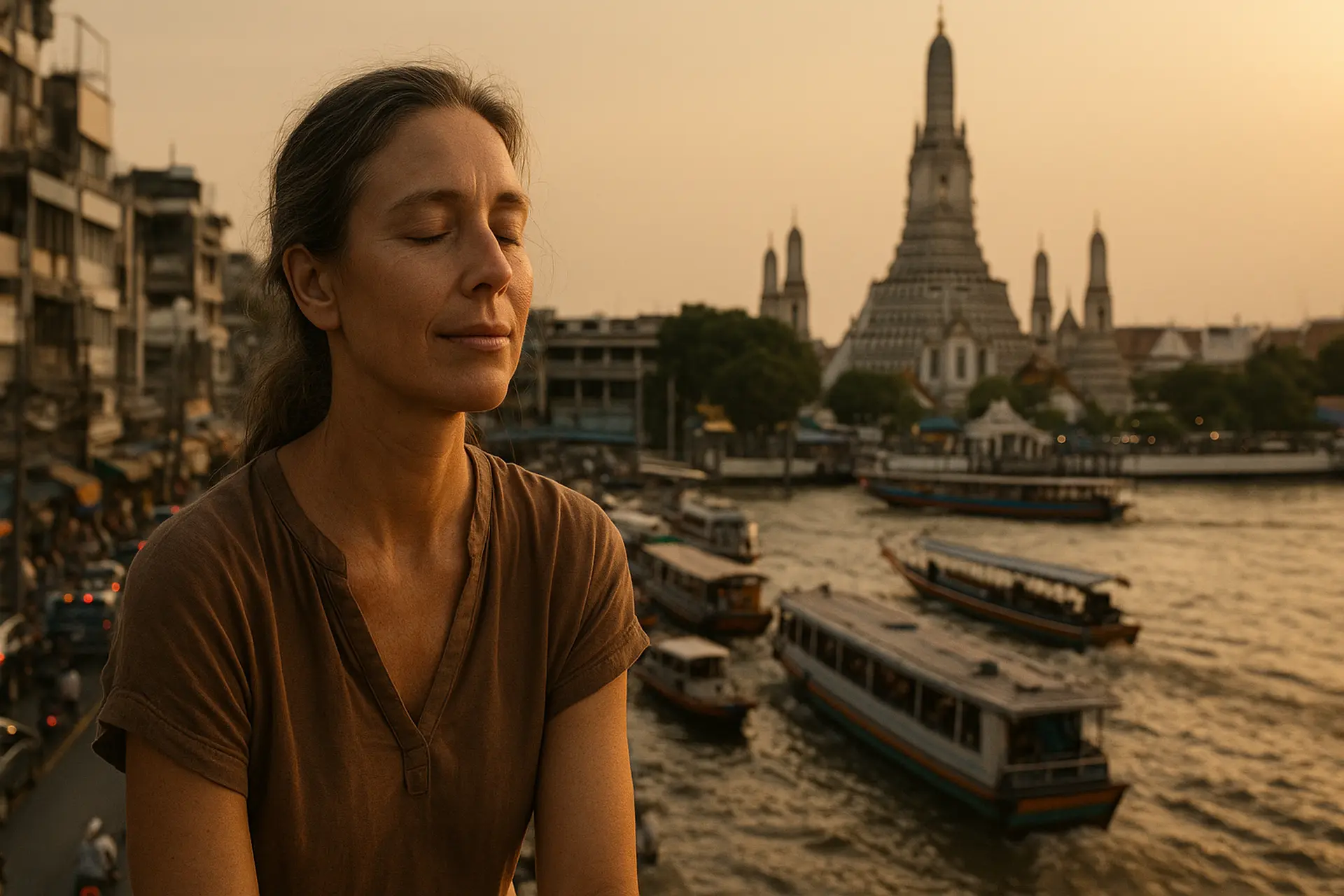

Bangkok’s ancient temples are often the city’s quietest spaces — one travel article notes that amid the city’s intensity one can “find peace … by stepping into any of the Buddhist temples like Wat Arun”. The same piece even calls Bangkok “a sensory overload”, which underscores how special those tranquil pockets are. Indeed, in 2024 Bangkok received some 32.4 million visitors, a number so large that guides say the city is “crowded in some areas”. Little wonder that tourists and expats alike search actively for calm corners. This guide will serve as a playbook for finding those spots: it lays out schedules and routes for a “quiet day,” highlights the leafy parks, temples and canals where the city’s frenetic energy falls away, and even provides local insights on customs and logistics. In short, it is aimed at travelers who want not just a list of serene locations, but a practical, on-the-ground plan for actually experiencing peace in Bangkok’s chaos.
- Quick 1-Day Calm Itineraries (Budget / Mid / Luxury)
- Budget Calm Day in Bangkok (itinerary & timings)
- Mid-Range Calm Day (canal + temple + park)
- Luxury Calm Day (spa, rooftop at sunset)
- Designing a Calm Day: Morning → Siesta → Evening
- Top Calm Neighborhoods & Where to Stay
- Riverside (Bangrak/Silom) — best for vistas (quiet hotels)
- Bang Rak & Thonburi (canal life) — local authenticity
- Thonglor / Ari / Sathorn — quiet pockets & cafes
- Where to book: budget vs boutique vs luxury
- Temples That Give Peace (Practical Guide + Etiquette)
- Wat Arun, Wat Pho, Loha Prasat — low-crowd strategies
- Hidden temples: Wat Phutthabucha & local gems
- Temple etiquette & dress code (How to behave respectfully in temples?)
- Parks, Gardens & Green Lungs — Where to Breathe
- Bang Krachao — getting there & what to do
- Lumphini Park & smaller pocket parks
- Botanical gardens & museum gardens
- Canal (Klong) Life — Quiet Boat Tours & Community Visits
- Klong tours that feel peaceful (Captain Tai-style electric boat)
- Canal-side communities to visit (Bang Mod, Bang Prathun)
- Safety, cost and best times for canal trips
- Meditation & Retreats — Where to Learn to Sit Still
- Short drop-in meditation classes
- 1-day & multi-day Vipassana options
- Practicalities: language, clothing, registration
- Massage, Spas & Bodywork — Fast Paths to Calm
- Traditional Thai massage: what to expect & recommended places
- Floatation tanks, sound healing and modern wellness options
- Price ranges, tipping & safety
- Mindful Food & Slow Meals (Eat like a local to slow down)
- How Thai meal-sharing helps reset pace
- Quiet cafés and waterside restaurants (Supatra River House, Sala Rattanakosin)
- Markets to visit mindfully (Klong Lat Mayom vs touristy floating markets)
- One-Day Escapes from the City for Immediate Calm
- Ayutthaya & Bang Pa-In Palace
- Kanchanaburi mini-escapes & waterfalls
- How to choose based on time & energy
- Low-Sensory Activities & Urban Retreats
- Bookshops, small museums and galleries (Passport Bookshop, Jim Thompson House)
- Rooftop sanctuaries that actually feel calm
- Private experiences: in-room spa, park picnic, guided silent walks
- Practicalities — Safety, Accessibility & Budgeting for Calm
- Is Bangkok safe for solo exploration of quiet spaces?
- Accessibility: mobility & sensory needs
- Budget vs luxury options (pricing & hacks)
- Packing & Prep: What to Bring for a Calm Day in Bangkok
- Sample 3-Day “Find Calm” Bangkok Trip Plan
- Day 1 (temples, slow meal, rooftop at sunset)
- Day 2 (Bang Krachao bike + canal village, evening massage)
- Day 3 (meditation morning, museum garden, quiet farewell dinner)
- FAQ
- How can you find peace in busy Bangkok?
- What are the most peaceful temples in Bangkok?
- When is the best time of day to visit temples to avoid crowds?
- Are there quiet parks in Bangkok for meditation or relaxation?
- How do I get to Bang Krachao (Bang Kachao) and is it worth it for peace?
- Which canals (klongs) offer the calmest boat tours?
- Where can I find authentic Thai massage (and how much does it cost)?
- Are there places to do Vipassana or sit meditation near Bangkok?
- Can tourists join meditation retreats in Bangkok? What do I need to know?
- Which neighborhoods in Bangkok are quiet and good for a slow stay?
- Are rooftop bars ever peaceful or are they noisy? Which ones are tranquil?
- Which museums/gardens in Bangkok are calm (e.g., Jim Thompson House, MOCA)?
- How to behave respectfully in temples (etiquette/dress code)?
- What are recommended one-day escapes from Bangkok for calm (e.g., Ayutthaya, Bang Pa-In)?
- How to design a calm day in Bangkok (itinerary: morning, rest, evening)?
- Where can I find quiet cafés, bookstores or hidden urban retreats?
- What are family-friendly calm activities in Bangkok?
- Are there sound-healing, floatation or holistic wellness centers in Bangkok?
- How to find affordable peaceful experiences vs luxury wellness (budget options)?
- Where are the least touristy floating markets and how to visit them mindfully?
- Is Bang Pa-In Palace a peaceful day trip from Bangkok? How to get there?
- Are there spas with authentic Thai therapies (vs tourist traps)?
- How safe is it to explore quiet neighborhoods on foot at sunset?
- Which hotels offer the most peaceful stays in Bangkok (riverside, park-adjacent)?
- How can digital detox / mindfulness be practiced while traveling in Bangkok?
- What apps or local guides can help me find quiet experiences?
- How accessible are peaceful spots for travellers with reduced mobility?
- Where to find local community rituals or alms-giving experiences?
- How to avoid tourist traps when searching for calm spaces?
- How to avoid tourist traps when searching for calm spaces?
- Which botanical gardens and green spaces in/near Bangkok are best for solitude?
- How to cope with sensory overload (practical tips for noise/heat/crowds)?
- Which temples are less photographed and more meditative (off-the-beaten-path)?
- How long should I plan for a calm day or a short mindfulness escape?
- What are the language considerations when joining meditation classes?
- Are there guided “calm tours” (yoga + temple + canal) and are they worth it?
- Can I rent a bicycle and safely explore calm neighborhoods/park islands?
- Where to see monks’ alms and how to respectfully observe or participate? (FAQ: alms-giving)
- What to pack for a calm day in Bangkok (practical checklist)?
- Pre-trip mindset: how to plan to preserve energy
Quick 1-Day Calm Itineraries (Budget / Mid / Luxury)
Here are three exemplar 1-day itineraries to choose from, paced for minimal stress. Each is broken into timed blocks; adjust as needed for your hotel location or interests. (Travel times assume taxi or BTS/MRT transit; Bangkok traffic can be heavy, so plan 30+ minutes between distant points.)
Budget Calm Day in Bangkok (itinerary & timings)
- 6:30 AM: Grand Palace & Wat Phra Kaew. Start at opening (8:30AM). Exploring the gilded stupas and pagodas here in silence is a spiritual way to begin. Crowds of tour groups usually arrive later; as one traveler guide recommends, “go first thing in the morning to avoid the crowds”. Remember modest dress (no bare shoulders/shorts).
- 9:30 AM: Riverfront breakfast. Walk or ferry to Tha Tien Pier for a simple Thai breakfast of congee or an iced coffee by the river. The Sala Rattanakosin cafe has a nice view of Wat Arun and is quiet if you time it before 10 AM.
- 12:00 PM: Midday rest in Lumpini Park. Take a taxi or MRT/BTS to Lumpini Park (Silom). By lunchtime it’s best to retreat into shade. Stroll under the trees, sit by the lake, or even nap on a bench. This avoids both the heat and the early afternoon downpour (common in rainy season). Pack a light lunch or grab a park-side food stall.
- 3:00 PM: Jim Thompson House Museum (access from BTS National Stadium). This teakwood estate and silk museum has well-kept gardens and a canal-side cafe. It is usually uncrowded. As National Geographic notes, Jim Thompson’s home is “about as peaceful as it gets”, with its tranquil gardens and leafy setting. Enjoy an iced Thai tea in the yard before leaving.
- 6:30 PM: Riverside dinner & sunset. Hop on a Chao Phraya ferry to Asiatique or Sathorn Pier and dine at an inexpensive riverside spot (for example, Supatra River House in Thonburi or the Sala Rattanakosin cafe facing Wat Arun). Watch dusk settle over the river.
- 8:00 PM: Above Riva rooftop (optional). If you still have energy, head to the Above Riva bar (Sathorn) for a final drink. Its skyline terrace has cushioned lounges and live acoustic music. In travel guides it’s praised as “the ideal spot for a drink…with sunset views of the river”—not a throbbing nightclub, but a laid-back place to end the day.
Mid-Range Calm Day (canal + temple + park)
- 7:00 AM: Bang Krachao cycling. From BTS Krung Thon Buri (Silom Line) take a taxi to Khlong Toei Pier. Catch the ferry (2฿) to Bang Krachao, a 3×5 km “green lung” island of mangroves. Rent a bike (50฿/hour) or join a guided bike tour. Ride along palm-lined roads and ponds. A guide recommends cycling the island’s 2 sq mi parkland (Sri Nakhon Khuean Khan) past villages and orchards.
- 10:30 AM: Botanical garden and orchards. Circle back to the island’s center: visit the Sri Nakhon Khuean Khan Park and botanical gardens. It has landscaped lawns, a small butterfly garden, and coconut orchards. Stop for a fresh coconut or banana snack at a riverside stall; it feels like a village market rather than a tourist trap.
- 12:30 PM: Lunch in Bang Prathun village. Head to Bang Prathun, a traditional coconut farming community in Thonburi. Try local specialties like roasted coconut meat or betel nut. (Bang Prathun was noted as one of the last coconut orchards inside Bangkok, and tours allow sampling its homemade treats.)
- 2:00 PM: Midday break at hotel. Return to Bangkok (taxi + short ferry back). Take a siesta or leisure time at your hotel or a nearby mall/cafe.
- 4:30 PM: Longtail boat canal tour. Meet a quiet canal boat operator in Thonburi. Take a solar-powered longtail on Khlong Bang Mod or Khlong Dan. These boats glide at only ~5 knots – “silent and slow going” as one reporter noted. Pass under vines and past stilt houses; birds and breeze are the only sounds. A calm evening cruise makes for a restful contrast to busy city roads.
- 7:00 PM: Dinner & massage. Back on land, dine at a laid-back Thai restaurant. Then treat yourself to an hour-long Thai oil massage (select a reputable spa such as Health Land or a hotel spa). At night the city streets are quieter and the cool air makes a short walk home or a taxi ride easy.
Luxury Calm Day (spa, rooftop at sunset)
- 9:00 AM: Spa and wellness. Begin with a deluxe spa session. Many five-star hotels (Mandarin Oriental, Banyan Tree) and wellness centers (e.g. Divana Spa) offer 2–3 hour packages combining Thai massage, aromatherapy, and body treatments. Choose one that includes steam or hydrotherapy to maximize relaxation.
- 12:00 PM: Quiet river lunch. Have a leisurely meal on a riverside terrace. Choose a boutique hotel restaurant (such as Arun Residence) that uses local cuisine ingredients. Take your time over dishes; order dishes a la carte, not in one big plate.
- 2:00 PM: Private yoga/meditation session. Arrange a short private session at a yoga studio or in your hotel (some resorts offer in-room yoga or meditation instructors for hire). Even 45 minutes of guided breathing or gentle stretches can restore calm.
- 4:30 PM: Rooftop sunset. Head to Above Riva (or similarly serene rooftop) for golden-hour views. Order a signature drink or iced tea and enjoy the panorama of temple spires and river traffic slowing down. This elevated vantage point offers a final dose of serenity.
- 6:30 PM: Fine dining dinner. End with an elegant dinner in a quiet venue. Luxe options like fine-dining Thai restaurants (Bo.Lan, Nahm) or a private dinner cruise can cap the day in peace. Opt for a riverside table or a small private room in a high-end hotel to avoid crowds.
Designing a Calm Day: Morning → Siesta → Evening
Why split the day? (local pacing)
Bangkok’s climate and culture favor a two-part day. Travel advice consistently recommends temple visits early or late, rather than midday. One guide to Wat Pho warns that the site “can get quite busy”, so it’s best to come right at opening or in the late afternoon. Another source bluntly advises: “Go first thing in the morning to avoid the crowds”. This mirrors Thai custom: shop and sightsee before lunchtime, then break for rest or a long lunch (often indoors). By scheduling a leisurely afternoon nap or quiet meal break from roughly 11–3 PM, travellers keep energy and mood up for a calmer evening. The result is a relaxed rhythm: explore in cool mornings, withdraw during peak heat, and enjoy gentler activities in the late afternoon and dusk.
Heat, noise and energy preservation (practical hacks)
Bangkok’s heat and noise can tax anyone’s nerves. To cope, hydrate often and wear breathable fabrics — a common tip is to always carry a bottle of water and a personal misting fan or wet towel. Using sun protection (hat, sunscreen, umbrella) extends your endurance in parks or on temple walks. For noise, don headphones or earplugs on the BTS or in markets; choose air-conditioned spots for breaks (malls or temples). If traffic or crowds rise to an uncomfortable level, pause: find a shaded street corner, a quiet café, or even step into a convenience store to regroup. Deep breathing helps too: inhale slowly through the nose, hold a count, then exhale; repeat several times to recenter. In sum, recognize your limits and plan for downtime. A rested traveler will perceive the same city as far more peaceful than an exhausted one.
Top Calm Neighborhoods & Where to Stay
Riverside (Bangrak/Silom) — best for vistas (quiet hotels)
Staying along the river can be surprisingly tranquil, especially on the Bangkok side of the Chao Phraya. Neighborhoods like Bang Rak and Silom (west of the financial district) have stretches of low-rise buildings and parks, and quieter roads after dark once the office workers leave. Hotels here (from mid-range to luxury) often have river views and gardens. For example, the Shangri-La and Arun Residence boast waterside pools and courtyards sheltered from street noise. A riverside hotel also makes it easy to take a morning temple boat or an evening quiet ferry ride. By nightfall, these areas have a calm charm: locals practicing tai chi by the river or a mellow café serving herbal tea at sunset.
Bang Rak & Thonburi (canal life) — local authenticity
Across the river in Thonburi, canal-side communities define a different, slower Bangkok. As one blogger puts it, Thonburi offers a “slower, softer side” of the city — almost an “oasis within the city”. Canal-side alleys lined with temples and old shophouses remain calm, and few Western tourists venture this far. Lodging here tends to be boutique: wooden guesthouses, small riverfront inns or homestay-style bungalows. Staying in this area means waking to bird calls and temple bells rather than traffic. Try sites like Kudi Chin (an old ethnic enclave) or along Khlong Bang Luang, where artisanal communities run galleries and cafes at a gentle pace. In short, Bang Rak (the riverside district) and Thonburi provide a local atmosphere and heritage away from the downtown roar.
Thonglor / Ari / Sathorn — quiet pockets & cafes
These neighborhoods (Sukhumvit’s upscale lanes and central Bangkok’s residential zones) can also hide calm nooks. Ari and Ekkamai, for example, are filled with shady streets and leafy restaurants, far from the skytrain’s push. Thonglor and Ekamai have boutique hotels and creative cafes tucked down lanes — by midday you might hear only soft jazz or quiet conversation. Across the river, Sathon’s backstreets and Soi Charoenkrung also have small inns and yoga studios that are surprisingly tranquil. In general, choose lodging one or two blocks off the main avenue, and you can wake up to silence. Many Thai expats choose to live in these neighborhoods for precisely that urban-quiet feel.
Where to book: budget vs boutique vs luxury
- Budget stays: Look near parks or hostels tucked behind main roads. Examples include guesthouses around Lumpini or Chinatown (quiet after markets close), or budget riverside hotels in Bang Rak. These often have basic but clean rooms, AC and helpful staff.
- Boutique hotels: Character stays in old houses or innovative new designs can be surprisingly affordable. Try Thonburi’s teakwood inns, or boutique chains like Siamodom (Old City) or Anajak Bangkok (Thonglor). These are small, often owner-run, and built around courtyards or pools that create a private retreat vibe.
- Luxury escapes: If splurging, choose riverside or parkside grand hotels. The Mandarin Oriental, Shangri-La, and Four Seasons (on the river) or The Athenee (near Lumpini) offer spacious suites, spa services, and lush grounds. Their price tags are higher, but the level of service and amenities (gardens, pools, fine dining) can make Bangkok feel as calm as any five-star retreat elsewhere.
Temples That Give Peace (Practical Guide + Etiquette)
Wat Arun, Wat Pho, Loha Prasat — low-crowd strategies
Even among temples, timing is everything. Arrive at Grand Palace and Wat Pho in the first hour of opening. One blog explicitly advises visiting these in the cool dawn to “avoid the tour groups”. By contrast, visiting after lunch (when tour buses depart) yields a bit more breathing room. The Wat Arun (Temple of Dawn) on the river can be peaceful at sunset if you go right at closing. As for lesser-known shrines: Loha Prasat (the “Iron Castle” multi-tiered temple) and Wat Ratcha Orasaram in the old city almost never appear on itineraries, so they often have only “a handful of people bowing their heads in silent respect”. In practice, any Bangkok temple off the standard tourist loop can be surprisingly quiet; look for ones beyond Rattanakosin Island or in small neighborhoods.
Hidden temples: Wat Phutthabucha & local gems
Beyond the guidebook classics lie many “secret” temples. For example, Wat Phutthabucha in Thonburi (accessible by motorbike or taxi) is an ornate little shrine with fish ponds and few visitors. Other hidden gems include quiet alley temples like Wat Patum Wanaram (adjacent to Siam area), or Wat Kalayanamit (with its giant Buddha by a canal in Thonburi). These are never packed — they function as local community temples. The simpler and farther from main roads, the more meditative the experience. Seek out random wats in old villages (e.g. by Bang Krachao’s villages) and you will often find calm rituals and green shrines with almost no tourists.
Temple etiquette & dress code (How to behave respectfully in temples?)
Respect is paramount. Dress must be modest: no bare shoulders or knees, no shorts or sleeveless tops. One guide bluntly warns: “it’s considered disrespectful to wear revealing clothes. That means no short skirts, no tank tops”. Temples commonly have loaner shawls or wrap-skirts at the entrance in case visitors are under-dressed. Always remove shoes before entering prayer halls. Inside, keep voices low and move slowly. Do not point your feet toward a Buddha (sit cross-legged or with feet behind you). If monks are present, stand aside and let them enter rooms first — never disturb them. If taking photos, avoid intrusive strobe or flash. Donating a small amount at each temple box (฿20–฿50) and lighting incense respectfully is appreciated by locals. By following these simple local customs, visitors ensure the temple remains a place of peace for everyone.
Parks, Gardens & Green Lungs — Where to Breathe
Bang Krachao — getting there & what to do
Bang Krachao is Bangkok’s famous green escape. To visit, taxi to the Khlong Toei pier (or BTS Krung Thonburi), then take the short ferry (just a few baht) across to the island. The absence of traffic is immediate — instead of highways, you see vegetable plots and mangrove palms. Rent a bicycle (or bring one) and explore the 6.2 square miles of parkland. The loop passes Sri Nakhon Khuean Khan Park at the center (a landscaped area with a lake) and small villages like Bang Nam Phueng. Along the way, enjoy forest paths where the only sounds are birds and breezes. One NatGeo guide highlights this ride: “pedal through 6.2 sq. miles of mangroves, through [the] park, past small villages and markets”. For maximum calm, arrive early (store often open by 9AM) and stop at farm-stand restaurants or coconut vendors. Leave by mid-afternoon or dusk so you’re back in town by dinner. Bang Krachao is definitely “worth it” — a Thai journalist even calls its park “a tranquil escape from city life”.
Lumphini Park & smaller pocket parks
Lumphini Park is Bangkok’s classic “Central Park.” In the early morning it is largely empty except for joggers and tai chi groups. You can wander wide lawns and lotus ponds under skyscrapers, suddenly “hear birds chirping instead of car horns” once you slip inside. The park also has ponds with paddleboats (a relaxing family ride) and paths where you might spot monitor lizards on the banks. Apart from Lumphini, other quiet green spaces include Santichaiprakarn Park on the river (Banglamphu), which is noted for a “relaxing vibe and magnificent views” of the Rama VIII bridge. Benjakitti Park (next to Asoke MRT) is another lush, pedestrian-friendly park where rowboats and koi ponds distract you from traffic. Even small playground parks hidden in Sukhumvit or Phra Khanong can serve as shady nooks for a few moments of calm.
Botanical gardens & museum gardens
Beyond parks, Bangkok offers several botanical and museum green spaces. Suan Luang Rama IX (Bangkok’s largest park and botanical garden) is vast and landscaped. One travel blogger calls it Bangkok’s greatest green lung, with themed gardens and a large lake. It hosts an annual flower fair, but on a typical morning you’ll find more gardeners and joggers than crowds. On Bang Krachao island itself, the Sri Nakhon Khuean Khan Park and Botanical Garden is also highlighted as a “tranquil escape from city life”. For an intimate refuge, consider the gardens at the Jim Thompson House (quiet teak gardens by the canal) or even the green courtyard inside MOCA (Museum of Contemporary Art Bangkok) which travelers describe as “calm, quiet and cool” on weekday afternoons. Lastly, the Butterfly Garden in Chatuchak Park (though small) offers a cool conservatory to watch butterflies and avoids street noise. All these spots have admission fees under ฿300 or are free, making them accessible places to breathe and unwind.
Canal (Klong) Life — Quiet Boat Tours & Community Visits
Klong tours that feel peaceful (Captain Tai-style electric boat)
The most soothing way to experience Bangkok’s waterways is on a slow, low-noise boat. Traditional longtails (noisy diesel) are fine for canal transport, but electric longtails have become popular for calm tours. In fact, a NatGeo travel writer praises one operator’s solar-powered boat: it “never exceeds five knots, so it’s sustainable, silent and slow going”. Book a mid-morning or late-afternoon trip (when winds are gentlest) on Khlong Dan, Khlong Bang Mod or Khlong Bang Pratun. On these cruises, vendors selling fruit or street food might appear, but the overall pace is languid. A boat’s slow drift allows time to absorb riverside details — old wooden homes, orchid nurseries, orchid nurseries, and occasionally elephants (near Safari Park). In short, choose a canal tour explicitly marketed as “electric” or “quiet” to ensure the focus is on relaxation rather than adventure.
Canal-side communities to visit (Bang Mod, Bang Prathun)
For a step beyond the boat, visit traditional canal communities. On a quiet klong like Bang Mod, life proceeds almost unchanged by city time. One traveler’s account describes gliding “down the peaceful Khlong Bang Mod”, passing stilt houses with jasmine vines. Locals fish or plant orchids along the banks in these zones. Nearby Bang Prathun (along the Saen Saeb canal) is one of Bangkok’s last coconut groves; families there still harvest coconuts and produce sugar. Visitors to Bang Prathun can witness coconuts being roasted over coals or chewed as betel nut. These villages offer a glimpse of historic Thai canal life — they don’t have tour boats docked or flashy shops, only small stands selling local snacks. (Longtail tours often pause here.) By contrast, canals closer to the city center (e.g. Khlong Rop Krung) are lined with modern condos and less of the old-world charm. In summary, seek Thonburi’s side canals like Bang Mod and Thawi Watthana’s Bang Prathun if you want old-style canal villages.
Safety, cost and best times for canal trips
Generally, canal tours are very safe — you remain in a guided boat, so the main concern is staying seated. Operators provide life jackets. Prices vary: private tours start around 800฿ per couple for 1 hour on an electric boat; group tours (with 6–8 people) may charge 300–400฿ each. Bargain a bit for off-peak times (weekday afternoons are cheaper than Saturday morning). Plan around weather: avoid tours in heavy rain. Late afternoon (around 3–5PM) often has gentler winds and cooler temperatures. If you speak some Thai or have translation, try asking a local captain for a custom slow tour (some captains will wander through tiny side canals not in guidebooks, truly away from it all).
Meditation & Retreats — Where to Learn to Sit Still
Short drop-in meditation classes
Even in the city center one can find stillness through meditation centers. For example, the Bangkok Meditation Center in Sukhumvit 52 and the Shambhala Meditation Center in Soi Asoke both offer weekly group sittings for anyone (often by donation). A particularly open venue is Wat Prayong (Nong Chok district). Its “International Meditation Center” conducts Vipassana courses and dharma talks in English, making it accessible to foreigners. Another example is The House of Dhamma in Chatuchak, which runs 1–2 day insight meditation retreats with English instruction. These are all walk-in friendly: no long commitment, just show up in modest dress. For a quiet experience, go during off-peak hours (mid-morning or after work hours). You’ll find locals and some expats meditating alongside, and often soft chant music or a bell to signal intervals.
1-day & multi-day Vipassana options
For deeper immersion, Bangkok’s outskirts have established retreat centers. The most famous nearby is Dhamma Dhānī (in Thavorn district, north of the city). It is a large Vipassana meditation center run by the Vipassana Foundation (the Burmese tradition) and has one of Thailand’s few lakeside meditation campuses. Dhamma Dhānī offers courses of 1, 3 or 10 days, open to everyone. The 10-day course (which begins at dusk on Day 1 and ends at dawn on Day 11) is the classic full retreat — it will consume two weeks of your life but many participants say it’s transformative. Importantly, foreigners can join; classes are offered in English (though they fill up fast). Other Thai temples such as Wat Mahathat have occasional retreats, and the Wat Ratcha Orasaram hosts silent retreats. Note: all these retreats emphasize noble silence (no phone, no eye contact, no speaking), so they suit serious practitioners. For a shorter taste, there are 1-day workshops (often Sat–Sun 10am–4pm) at city centers or temples; an example is at Wat Prayong’s Thai/Burmese center, or The House of Dhamma.
Practicalities: language, clothing, registration
Some logistics are unique to meditation retreats. Dhamma centers require online registration and may have a waiting list. They insist on a code of discipline: before joining you read rules (no killing, no sexual activity, no talking, etc.) and you volunteer donations rather than pay a fee. As notes, Dhamma Dhānī’s courses run “solely on the basis of donations”. Bring loose white or light-colored clothes (long sleeves, long pants) as required. At the center, men and women meditate separately. Most instructions are given in Thai, but English instruction is usually available — one should check in advance on their website. (Keep in mind that a 10-day course may have limited English teachers, so early booking is recommended.) For day or evening classes in Bangkok, there is no sign-up needed: just arrive by the start time in modest attire and follow along.
Massage, Spas & Bodywork — Fast Paths to Calm
Traditional Thai massage: what to expect & recommended places
Getting a Thai massage is almost a rite of passage — and a fast way to melt away stress. In Thailand, a traditional Thai massage is quite vigorous and you remain fully clothed (loose pants/shirt). However, the therapists also offer gentler approaches like oil aromatherapy massages where you lie on a table. One travel writer observes that “Bangkok is a haven for wellness enthusiasts and relaxation seekers alike”. Even on a budget, you can find reputable parlors where the masseurs are certified and hygiene is good. Many seasoned travelers recommend these for authenticity: the Wat Pho Thai Traditional Medicine School (within Wat Pho) gives excellent massages in the temple grounds, and nearby Health Land Spa has multiple branches run by the Thai government, which follow authentic techniques. Prices vary: a basic one-hour foot or Thai massage at a clean neighborhood shop is roughly 200–400 THB. Oil or herbal massages usually run 500–800 THB at mid-range establishments. In top-tier hotel spas, a full massage may cost 2,500 THB and up, but often in a very private room with high-end oils. Whatever the price, a few minutes of stretching and pressure will do wonders for tired limbs and mind.
Floatation tanks, sound healing and modern wellness options
Beyond traditional therapy, Bangkok also offers high-tech serenity. Floatation therapy (sensory deprivation tanks) is available at centers like Bangkok Float Center, where you lie in warm Epsom-salt water to unwind completely. Some upscale spas include sound healing sessions: for example, Divana Spa and other holistic spas may offer gong baths or tuning-fork meditations. Yoga studios sometimes incorporate Tibetan bowls or crystal singing bowls in their classes. These experiences are usually pricier (an hour in a float tank can be ~1,200 THB), but they attract people specifically seeking mental calm. If you have tried float therapy or a sound bath before, Bangkok can match any city in the world in these amenities — check reviews and safety credentials before you go, as you would any specialized spa.
Price ranges, tipping & safety
In general, Thai massages are a bargain by Western standards, but prices can guide your choice. A massage parlor near Khao San or touristy areas might overcharge (500+ THB for a Thai massage) or offer “extras,” so it’s safer to go a few blocks off the beaten track. Locals would pay around 250–350 THB for a basic Thai massage; high-end spas in malls or hotels may charge 2,500–4,000 THB for the same time. Tipping is appreciated but not mandatory — for a good massage, a tip of 50–100 THB (about 5–10%) is common. Always confirm the price before the session. Check safety and hygiene: the room should have clean linens and the bathroom separate. And please note: reputable Thai spas strictly forbid any sexual services despite rumors; if anything feels off, leave immediately. Trust licensed operations or ones recommended by travelers to avoid scams or disappointments.
Mindful Food & Slow Meals (Eat like a local to slow down)
How Thai meal-sharing helps reset pace
Thai dining culture naturally encourages slowing down. Instead of ordering one dish and finishing it alone, Thais order several dishes at once to share family-style. This means you eat a few bites of one dish, then pause to try the next. Conversations and smiles flow between bites. Such sharing automatically inserts breaks into a meal. To emulate this, travelers should order at least 3–4 dishes for 2 people, and place them on the table simultaneously. This way, one dish is eaten while others simmer or await tasting, giving everyone time to chew and chat. Locals also linger over dessert or a pot of tea after the main course. Practically, resist eating in a rush: savor each flavor slowly, perhaps even ask servers to bring one dish at a time, or share street-food finger foods that force slower eating. The act of social eating in small portions is itself a mindfulness practice in Thai culture — use it to your advantage to reset your speed.
Quiet cafés and waterside restaurants (Supatra River House, Sala Rattanakosin)
For a serene meal setting, Bangkok has several niche spots. A hidden gem is Supatra River House (on a narrow canal in Klong San district). This century-old teak house turned restaurant offers a lush garden dining area. It serves traditional Thai and Mon cuisine (think coconut curries and fish dishes) in an open-air terrace under trees. The vibe is unhurried — many visitors are locals or Thai expats. Another is Sala Rattanakosin Eatery: a compact pavilion right opposite Wat Arun. With only a few tables, its open front lets you gaze at the river while dining on Thai fusion fare. Because it’s tucked on a side street (Phra Athit Road), it never feels overrun by crowds. In general, look for places with outdoor seating by water or greenery. Many boutique hotels (like Arun Residence) have riverside restaurants that are quiet early or late. The key is timing: book lunch before 11:30am or dinner after 7pm at these spots to avoid tourist rushes. Then you can dine slowly to the sound of trickling fountains or distant temple bells.
Markets to visit mindfully (Klong Lat Mayom vs touristy floating markets)
Traditional markets are part of Bangkok’s soul, but some are frenetic and others peaceful. Among the floating markets on the Bangkok outskirts, Khlong Lat Mayom (west Bangkok) is consistently cited as a calm one. A travel writer describes Khlong Lat Mayom as “a haven for relaxation”, noting you get a floating-market feel “minus a lot of the hustle and fuss”. It’s open only on weekends from ~9:30am to 4pm. To visit it mindfully, go by 10am when the atmosphere is easy and many stalls are just setting up. Focus on local food — southern-style curries, grilled fish, coconut sweets — served fresh. Take your time at each stall, and consider eating next to the canal. Another option is Taling Chan Market (west of Bangkok), which is boat-only access and mostly Thai vendors. Avoid Damnoen Saduak or Amphawa (near Bangkok) on holidays — those are picturesque but tend to be very busy. In any market, the trick to calm is to walk slowly, sample rather than gorge, and pick a spot by the water to sit between bites. If you plan to ferry between markets, note they usually offer shared boats as a meditative ride.
One-Day Escapes from the City for Immediate Calm
Ayutthaya & Bang Pa-In Palace
A one-day trip north to Ayutthaya is a classic remedy for city fatigue. The ancient capital’s temple ruins are spacious and silent — here cars and scooters don’t go, only faraway birds and breezes over moats. As one guide emphasizes, “Ayutthaya… is Thailand’s former capital… now a UNESCO World Heritage site… truly an absolute must-see”. You can rent a bike or tuk-tuk in Ayutthaya and drift among tree-shaded brick chedis at your own pace. Nearby is Bang Pa-In Summer Palace, the royal gardens. Travel writers often describe Bang Pa-In as “a peaceful oasis away from the bustling city life”. Its manicured lawns, lily ponds and diverse architecture (Thai, Chinese, even a European Baroque castle) make for a fairy-tale calm. Many day tours cover both sites by bus or boat. To maximize serenity, start early: visit Ayutthaya’s temples at dawn (the light is beautiful and very quiet), and save the palace for late afternoon when tour groups have thinned.
Kanchanaburi mini-escapes & waterfalls
If you have a spare half-day or more, Kanchanaburi province (2–3 hours west) offers nature and history. Famous attractions like the River Kwai Bridge and WWII museums are striking but can also be seen calmly in off-peak times (arrive by 9am). However, for sheer greenery, head to Erawan Falls (in Erawan National Park). This series of seven emerald pools in the jungle is a favorite for cooling off. Arriving early means you often have the falls to yourself except for birds. Travelers recommend at least a few days here, but even a day trip “serves endlessly with nature escapes”. Another day-trip spot is Sai Yok Noi Falls (90 minutes by train from Bangkok) for riverside peace. In short, Kanchanaburi’s waterfalls and park trails let you hear only rushing water and insects — a stark contrast to Bangkok’s traffic.
How to choose based on time & energy
- If you have only one day, Ayutthaya (+ Bang Pa-In) is the easiest. Trains are frequent and it’s a short trip. You’ll cover a lot of ruins by bike or tuk-tuk before a river cruise home.
- With two days, include Kanchanaburi’s nature as well. For example, Day 1 could be Ayutthaya and Bang Pa-In (Thailand’s cultural heart), Day 2 a Kanchanaburi loop (waterfalls and river history).
- If you prefer minimal planning, consider a combined guided tour. Many operators offer an Ayutthaya day trip (with or without Bang Pa-In) or a Kanchanaburi package from Bangkok. These handle transport and often include meals. Just read reviews to ensure they keep a gentle pace.
- For a true break (3+ days), treat one day as a silent retreat (e.g. meditation course or spa); another as a sightseeing day with the outlined escapes; and one as pure leisure (jungle lodge or beach excursion outside Bangkok, such as Hua Hin).
Low-Sensory Activities & Urban Retreats
Bookshops, small museums and galleries (Passport Bookshop, Jim Thompson House)
For inner-city serenity, think of cultural nooks. The Passport Bookshop (near Phra Sumen Fort) is a two-story used-book cafe that locals praise as being “quiet and leisurely”. Its shabby wooden decor and upstairs coffee tables encourage slow browsing and sipping tea away from street noise. Another low-key pick is Jim Thompson House, as mentioned above — it doubles as an art museum with a songbird-filled garden. The Bangkok Art and Culture Center (BACC) is centrally located yet usually tranquil on weekdays; you can slowly wander contemporary Thai art halls or sketch in its lobby lounge. Other peaceful retreats include small private museums (like the Talad Noi Printing House museum) and hidden galleries (Thonglor’s Toot Yung Art Center). Essentially, look for places rated as offbeat or ‘hidden’ — these tend to have fewer tourists. Sipping coffee in any of the city’s numerous indie cafes (many spring up in Ari, Phra Khanong or Thonglor) can also be a restful pause, especially between 10am–5pm when the streets empty.
Rooftop sanctuaries that actually feel calm
Many Bangkok rooftop bars are designed for nightlife, but a few exceptions exist. Above Riva (Sathorn) is one: it’s more lounge than club, with only a few tables and acoustic music in the early evening. Similarly, the small rooftop bar at Sala Rattanakosin, being right at temple level, manages to stay mellow (no pounding music, just calm river breeze). As a rule, avoid the giant party rooftops (like the Sky Bar at Lebua or Vertigo at Banyan Tree) if you want true quiet. Instead, target hotels or restaurants that advertise dinner-only rooftop dining. Sunset is usually the calmest time on any rooftop: not crowded, warm golden light, and softer drink playlists. If you must go upscale, pick a hotel rooftop (e.g. Sala Daeng’s small bar) where reservations are required — that helps keep things limited and quiet.
Private experiences: in-room spa, park picnic, guided silent walks
For ultimate control, some travelers craft entirely private calm activities. Booking a mobile spa is one way: many high-end hotels and wellness companies will send a masseuse or therapist to your room. Imagine lying in your own bungalow while a jade-stone massage melts away tension. Another idea is a self-made park picnic: some companies can deliver a pre-packed picnic basket (Thai fruits, sandwiches) to a park location of your choice. You can set it up on a blanket under a tree in Lumpini or the Botanic Garden by BTS On Nut, for instance. There are also guided yoga/meditation sessions available by hour-long booking; a couple of studios offer private yoga or Qi Gong lessons in your hotel. Perhaps the simplest is a silent walking meditation: just put your earbuds in (play a calm soundscape) and take a slow walk through a quiet neighborhood or in Bang Krachao. These personalized options tend to cost more, but they ensure every minute is tailored to your comfort level.
Practicalities — Safety, Accessibility & Budgeting for Calm
Is Bangkok safe for solo exploration of quiet spaces?
In general, Bangkok is considered safe to explore, even solo. Violent crime is rare in tourist areas. Locals will tell you that there are essentially no “forbidden” neighborhoods — Thai society has very few truly off-limits zones, even after dark. Of course, common sense is key: avoid poorly lit alleyways at night and keep valuables secure. Quiet neighborhoods like Ari or the riverside by day turn very peaceful at night. Thonburi’s canals and Bang Krachao’s villages are calm by sunset — travelers report feeling secure there, as Thonburi has an old “oasis” atmosphere. As a precaution, you might use ride-hailing apps (Grab) for evening trips instead of walking unfamiliar streets. Overall, you should feel comfortable walking from a quiet café to your hotel within one of these tranquil areas at dusk — just stay aware of your surroundings as you would anywhere else in the city.
Accessibility: mobility & sensory needs
Bangkok’s main sights are gradually improving in wheelchair accessibility, but challenges remain. Many parks have paved paths (Lumphini, Suan Luang) and are manageable by wheelchair or walker. The newer BTS and MRT subway lines are wheelchair-friendly, with elevators and ramps. However, many sidewalks are uneven or have obstacles, so take care or use vans/taxis for transfer. Temples often have steps (the Grand Palace and Wat Arun have ramps at their gates but stairs to inner areas). Some temples (Wat Pho) have ramps for handicapped visitors. Many modern malls and museums are fully accessible. For reduced hearing or vision, note that Bangkok is very loud at times: earplugs can help in markets or on boats. In peaceful places like parks and museums, visual cues (signs in English/Thai) are usually clear. If you have specific needs, plan ahead: most major sites list their accessibility features online, and staff in big hotels can recommend routes or transport. Overall, many quiet spots are reachable — just confirm each venue’s access if it’s crucial.
Budget vs luxury options (pricing & hacks)
Calm experiences can fit any budget. On a shoestring, focus on the free or almost-free: public parks (Lumpini, small temples with no entry fee), open-air markets, and street food (a full cheap lunch for two can be under ฿100). Even a local Thai massage is only a few dollars. Hostels and budget guesthouses with quiet locations (such as near temples or parks) can cost as little as ฿500/night. On the luxury side, you can spend lavishly: a riverside spa hotel room, a high-end spa package (฿5,000+), or a private longtail cruise. To maximize calm on a budget, visit high-end places during off-season when rates drop, or look for Bangkok Package deals (some spas bundle massage + dinner at a discount). Sites like Agoda often list quiet hotels at lower prices if you book early. In short: the experience of peace is not price-dependent, but be prepared to spend for privacy and extra comfort.
Packing & Prep: What to Bring for a Calm Day in Bangkok
Minimalist checklist
- Sun protection: A wide-brimmed hat, sunglasses, and high-SPF sunscreen are essential, even for short walks. A lightweight scarf or shawl can double as sun/rain protection and temple cover-up.
- Comfortable clothing: Loose cotton shirts and long pants are best. They keep you cool and meet temple dress codes. At night, a light cardigan can ward off air-con chill.
- Water and snacks: Always carry a refillable water bottle and some high-energy snacks (nuts, dried fruit). Even short waits can be draining in the heat.
- Gear: A small folding fan or battery-operated mist sprayer is a budget lifesaver on hot afternoons. Earplugs or noise-canceling headphones can help on loud trains or for city din. An umbrella (folding rain umbrella) protects against sun and sudden rain.
- Tech and meds: Bring portable phone charger and offline maps (download Google Maps offline for your itinerary). Pack basic meds: pain reliever, rehydration salts, motion-sickness pills if you do long boat rides.
- Extras: A notebook/journal or a simple puzzle (deck of cards, book) gives you something peaceful to do during breaks. Finally, a lightweight sarong or temple vest wraps (readily available in Thai shops) is handy if a site requires extra coverage.
Pre-trip mindset: how to plan to preserve energy
Remember, the goal is to stay calm. Mentally prepare to go slower than usual. Build flexibility: allocate more time than needed to walk somewhere so delays don’t fluster you. Try setting your phone to silent or airplane mode at night to ensure real downtime (digital detox helps). Before the trip, identify one thing in each day that could trigger stress (e.g. rush-hour traffic, a rigid schedule) and plan alternatives or avoidance. During the trip, keep a gentle attitude: if a long queue or honking traffic annoys you, treat it as a sign to rest (find a nearby cafe and sit for 10 minutes). Ultimately, calming Bangkok is as much about mental pacing as it is about location. If your mind remains flexible and accepting — even when plans change — you’ll find even ordinary moments can feel peaceful.
Sample 3-Day “Find Calm” Bangkok Trip Plan
Day 1 (temples, slow meal, rooftop at sunset)
- 6:30 AM: Morning alms and prayer. Join local worshippers at a nearby temple (e.g. Wat Pho) as they offer alms to monks. This quiet ritual lets you begin the day mindfully.
- 7:00 AM: Grand Palace & Wat Phra Kaew. Arrive at the Grand Palace the moment it opens. The early hour means far fewer people and cooler air. (One travel tip is to be “first thing in the morning” here to avoid crowds.) Spend 1–2 hours on the complex’s painted halls and golden chedis.
- 9:00 AM: Riverside breakfast. Walk to Tha Tien Pier and relax at a quiet café along the river. Savor a Thai iced coffee or a plate of sai krok (northeastern sausage). This is a good time to slow down and refuel.
- 11:00 AM: Rest or museum. Return to your hotel or nearby air-conditioned spot for rest (even a short nap) to escape the midday heat. Alternatively, visit the Jim Thompson House (open until 6 PM) for its tranquil garden.
- 3:00 PM: Wat Arun at dusk. Take the ferry across the river to Wat Arun. Climbing its steep stone steps is meditative as the sky turns pink. The temple will be closing soon, so the last rays of sun often bathe the Khmer-style prang in golden light.
- 6:00 PM: Early dinner. Eat at Sala Rattanakosin or a nearby Thai restaurant. Choose milder dishes (like tom yum soup or fish fillet) that won’t upset digestion before bedtime.
- 7:30 PM: Rooftop relaxation. Finish the day at Above Riva (address: 95 Sathorn Soi 12). It offers a peaceful view of Wat Arun across the water. Settle into a cushioned corner with an herbal iced tea and watch the city lights emerge.
Day 2 (Bang Krachao bike + canal village, evening massage)
- 7:00 AM: Bang Krachao excursion. Taxi to Khlong Toei Pier and ferry to Bang Krachao. Rent bikes and cycle the island’s green lanes (no cars allowed on most roads). Glide under banana trees and through the Sri Nakhon Khuen Khan park. (This island is often called Bangkok’s “green lung” for good reason.)
- 10:00 AM: Botanical gardens. At the park’s center, wander its botanical garden paths and take a moment by the lake. If you brought fruit, feed the fish.
- 11:30 AM: Village lunch. Bike to a village eatery in Bang Prathun. Try the local specialties like coconuts cooked with sticky rice. Watching villagers roast coconut halves over charcoal is a simple pleasure.
- 1:00 PM: Return and rest. Head back to Bangkok (ferry + taxi). Spend the hottest hours chilling in air-conditioning at your hotel, or by the pool if you have one. A brief nap or quiet reading in your room will recharge you.
- 4:30 PM: Canal boat ride. Switch to a Thonburi mode: book a private longtail boat on a quiet canal (we recommend Khlong Dan or Bang Mod). As the boat drifts, you’ll see wooden stilt houses and maybe orchard gardens — a real step back from city life. (Remember, as reported in travel journals, this kind of boat travels “at a leisurely five knots”, ensuring a silent ride.)
- 7:00 PM: Traditional Thai massage. Dinner at a neighborhood Thai restaurant, followed by a 1-hour Thai oil massage at a reputable spa (around 400฿). The soothing pressure will ease any muscle tension from cycling. By 9 PM you should be back at your hotel, relaxed and ready to sleep.
Day 3 (meditation morning, museum garden, quiet farewell dinner)
- 6:30 AM: Morning meditation. Attend a meditation class (e.g. at Wat Prayong or The House of Dhamma). Even 30 minutes of guided breathing and mindfulness can make the morning peaceful.
- 8:00 AM: Leisurely breakfast. Enjoy a laid-back breakfast at your hotel or a café near a park. Observe local families eating slowly together.
- 10:00 AM: MOCA Bangkok. Take a taxi to the Museum of Contemporary Art (Chatuchak). Its five floors of art galleries are usually uncrowded, and you can pause in the airy garden courtyard. (One guide notes MOCA as a place that feels “calm, quiet and cool”.) Browse Thai modern art or simply sit on the verandah and reflect.
- 1:00 PM: Butterfly garden picnic or café. Head to Chatuchak Park or Benchasiri Park. In Chatuchak, the Butterfly Garden has a café inside where you can quietly drink tea surrounded by butterflies. Or pack a picnic (from a nearby supermarket) and eat on a shaded bench, taking time to watch people practice tai chi or walking dogs.
- 3:30 PM: Passport Bookshop stop. Swing by the Passport Bookshop (Phra Sumen Rd.) for a calm late-afternoon coffee among old books. This spot is praised as “quiet and leisurely”, ideal for one last slow cup.
- 6:00 PM: Farewell dinner. Conclude your calm journey at a quiet Thai restaurant. For example, Sala Rattanakosin’s main dining room offers views of the lit-up temples by night, with soft music and attentive service. Take your time over a slow meal of curry or fish soup, toasting a tranquil stay in Bangkok.
FAQ
How can you find peace in busy Bangkok?
Even in the city’s chaos, peaceful pockets exist. One travel writer observes that in some Bangkok temples “a handful of people bow their heads in silent respect”, suggesting tranquility remains. In practice, finding peace means deliberately seeking quieter scenes: visit shrines at dawn, stroll hidden canals, or sit by the Chao Phraya at sunset. This guide highlights how: by knowing which spots to go and when to go (see below), you can dial down the noise. Treat Bangkok like a rich tapestry of contrasts — one thread of which is unexpected stillness — rather than a single overwhelming jolt of activity.
What are the most peaceful temples in Bangkok?
Temples rarely thronged by tourists tend to be calm. For example, Loha Prasat (Wat Ratchanatdaram) and Wat Ratcha Orasaram are almost never on mass itineraries, so you might find only “a handful of people” there. Other low-key temples include Wat Kalayanamit (a huge seated Buddha by a canal) and Wat Mahathat Yuwararam in Bang Phrom (surrounded by lotus ponds). Even smaller local wats in neighborhoods — those without grand pagodas — can offer serene meditation. Essentially, skip the flashy ones (Grand Palace, big tourist temples) and try modest community shrines; their silence can be surprisingly profound.
When is the best time of day to visit temples to avoid crowds?
Morning and evening are best. Arriving at opening time is often recommended. Guides frequently stress visiting temples “first thing in the morning to avoid the crowds”. By contrast, mid-day sees tour buses and local shoppers pour in, plus the strongest sun. Another strategy is the late afternoon lull (around 4–5PM), when some visitors leave and the light softens. Late opening (just after lunch) is usually still busy, so either early start or after 3PM is ideal. Most temples are open by 8AM, so aim for a sunrise visit when possible. This way you enjoy the peace of dawn or dusk, with far fewer people around.
Are there quiet parks in Bangkok for meditation or relaxation?
Yes. Lumphini Park is Bangkok’s prime green space; early mornings it is mostly locals doing tai chi or jogging, with very few tourists. One writer notes you can “step off the buzzing streets… and suddenly hear birds chirping instead of car horns” in Lumpini. Other oasis-like parks include Suan Santi Chaiprakarn (near Tha Phra Chan) which has river views and is described as having a “relaxing vibe”. Benjakitti Park (near Sukhumvit) has a large lake with shaded paths. Even smaller garden squares or temple grounds can serve — for example, the grounds of Wat Saket (Golden Mount) have benches with city views. For meditation, any quiet corner of these parks at dawn or dusk works well; they have benches or lawns where one can sit undisturbed.
How do I get to Bang Krachao (Bang Kachao) and is it worth it for peace?
You reach Bang Krachao by going to the Chao Phraya river. Take a taxi or MRT to Khlong Toei pier, then hop on a small local ferry (~฿2) to the island. Once there, the little roads are for bicycles and scooters only; no traffic intrudes on the lanes. Rent a bike or e-bike to explore the large park and villages. Travel articles strongly praise it for calm: you “pedal through 6.2 sq. miles of mangroves” and often hear only nature sounds. It is definitely worth it if you enjoy cycling and nature. Remember to go early in the day when it’s freshest and spend at least half a day (the cycling loop takes 2–3 hours to do slowly). Bring snacks and water, or eat at one of the floating restaurants inside (most serve Thai food with fresh coconut).
Which canals (klongs) offer the calmest boat tours?
Several of Bangkok’s lesser-used canals feel peaceful. For example, Khlong Dan and Khlong Bang Mod in Thonburi are noted for quiet scenes. A travelogue describes gliding down “the peaceful Khlong Dan, Khlong Bang Mod and Khlong Bang Khuntian” past stilt houses. A tour of Bang Nam Pheung Market (weekend market on a khlong near Bang Krachao) is also gentle, as is a Khlong Lat Mayom tour (a floating market in a quiet neighborhood). When booking a boat tour, ask specifically if it avoids the busier tourist waterways (like the Chao Phraya main river channels). Also, electric longtail tours by operators such as Captain Tai are designed to be quiet and unhurried. The calmest experiences are on side-canals where local life unfolds slowly, rather than on highways of water.
Where can I find authentic Thai massage (and how much does it cost)?
Authentic Thai massage is easy to find. For classic technique, head to places favored by Thais: e.g. the Wat Pho massage school or small clinics run by Thai operators. A typical Thai massage at a local shop costs around 200–400 THB per hour. Oil or herbal massages at mid-range spas run 500–800 THB. Many travelers describe Bangkok as “a haven for wellness enthusiasts”, and indeed even budget travelers can indulge. To ensure authenticity, choose parlors that have Thai names (avoid English-sounding “spa massage”) and see local customers going in. After the massage, tip if you like (50–100 THB is common), though it’s not required. Lastly, be clear about what you want: say “traditional Thai massage” (no oils) versus “aromatherapy oil massage” (for gentler experience) when you book.
Are there places to do Vipassana or sit meditation near Bangkok?
Yes. Bangkok has both short urban meditation centers and full retreat venues. In the city, the Bangkok Meditation Center and Wat Prayong (practicing English-speaking monks) offer regular sit-down sessions. Chatuchak’s House of Dhamma runs weekend retreats. Outside the city, Dhamma Dhānī (Pathum Thani province) is a major Vipassana center with countryside stillness. It holds courses of various lengths (including 10-day silent retreats) open to all. Tourists are welcome at these centers; many courses are offered in English or with translation. Even dropping into a temple’s morning chanting ceremony can count as a sit-meditation if you just observe quietly. The key is to find a teacher or center that aligns with your language needs and schedule. The DiscoverWalks blog lists several Bangkok meditation venues for beginners and shows that it’s quite feasible for visitors to join short courses in the city.
Can tourists join meditation retreats in Bangkok? What do I need to know?
Yes, absolutely. Vipassana retreats like Dhamma Dhānī are open to anyone. What you need: simple clothing (long pants/shirt, no jewelry), an open mind, and awareness of the rules. At 10-day courses, there is no talking, no reading, no electronic devices — it’s a commitment to silence. Check the retreat center’s schedule online; many post English dates. You must register in advance (often online) and usually donate a set amount for meals and lodging. Before joining, read the code of discipline on the center’s site. For a one-day or weekend city retreat, just show up on time (wear modest clothes); these are less strict and often taught in English. Note that teaching style varies: some instructors maintain absolute silence, others allow a bit of gentle background. In any case, your phone will be turned off and you’ll spend time in seated meditation, so be prepared mentally to let the city quieten for a while.
Which neighborhoods in Bangkok are quiet and good for a slow stay?
Several areas are known for relative calm. Ari and Ekkamai (Sukhumvit) have tree-lined streets, community cafes and few tourist attractions, making them peaceful by day. Bang Rak (the riverside side of Silom) at night is quiet away from the party streets. Thonglor (Sukhumvit Soi 55) has boutique hotels and lounges that wind down by 11pm. In contrast, skip Khao San Road or Silom’s nightclub zone if you want quiet. Choose lodgings just outside major hubs: for instance, stay on Soi Convent (Silom) instead of Silom Road itself, or in a small guesthouse near Lumpini Park rather than right on the busiest street. Suburban-like Thonburi (see above) is an entire quiet district. In short, look for areas filled with residential condos and local markets — these tend to sleep early and have laid-back cafes, rather than bright nightlife.
Are rooftop bars ever peaceful or are they noisy? Which ones are tranquil?
Most famous rooftop bars in Bangkok aim for a party vibe after dark. However, a few maintain a serene ambience. As mentioned earlier, Above Riva (Sathorn) is largely tranquil, with background guitar music and an open-air view (no dancing). Similarly, the rooftop restaurants of boutique hotels often have quiet lounges if you avoid the prime dinner-hour. For a tranquil experience, go at sunset (when the crowd is thinner) and look for the cocktail lounge section rather than the dance floor. Avoid top-tier nightclubs (Sky Bar, Red Sky) if your goal is silence. Always check if a venue has a rooftop patio open-air style — these tend to feel calmer than enclosed “disco” rooftops. A tip: small hotels in Ari or Sathorn sometimes have a rooftop bar with only a few tables — these rarely get rowdy and can be booked for a quiet dinner in advance.
Which museums/gardens in Bangkok are calm (e.g., Jim Thompson House, MOCA)?
We already noted Jim Thompson House Museum for its serene canal-side garden. MOCA Bangkok (Museum of Contemporary Art) is usually quiet on weekdays; it has five floors of Thai art and a leafy outdoor sculpture garden. The National Museum (beside Sanam Luang) is cavernous and seldom loud, especially in evening visits. The Bangkok Butterfly Garden (in Chatuchak Park) is another tranquil spot — you walk among plants and butterflies in silence. Also consider the boutique Museum of Floral Culture or Museum Siam in old Bangkok; they are less visited and air-conditioned. In general, any museum that is not a blockbuster is likely quiet; use your hotel concierge or Google to see if they have a garden or cafe attached (those are good for sitting).
How to behave respectfully in temples (etiquette/dress code)?
To show respect at Buddhist temples: always remove your shoes before entering any indoor hall (look for shoe racks). Cover your shoulders and knees (for women: carry a shawl or wear a sarong; for men: avoid shorts). Speak softly or not at all in the worship areas; the mood should be meditative. Do not point your feet at any Buddha statue or monk — sit cross-legged or kneel instead. If you see monks, do not hand things directly to them (Thai tradition is to place offerings on the monks’ alms bowl when they pass by). No photography is allowed in many Thai temples inside the main halls; if in doubt, ask (usually there will be signs). As one reliable guide advises: “no short skirts, no tank tops”. Remember also to take off hats indoors. Finally, avoid climbing on sacred structures for photos. By following these simple courtesies, you help keep the temple experience calm and sincere for everyone.
What are recommended one-day escapes from Bangkok for calm (e.g., Ayutthaya, Bang Pa-In)?
Yes — see Ayutthaya and Bang Pa-In as detailed above. Also consider Ko Kret, a small island in the Chao Phraya (north of Bangkok) reachable by taxi and ferry; it has a peaceful rural Thai village vibe. Near Bangkok, the Erawan Falls in Kanchanaburi make a relaxing hike/swim. Closer still, the Suan Luang Rama IX park hosts flower exhibitions (quiet, especially on weekdays). A surprising calm spot is Bang Khen Canal: an artist village and temple in northern Bangkok that few tourists know. Basically, nearby temple towns and garden parks make great escapes. When you leave, watch the scenery transition from gray urban to green fields — that contrast itself can feel meditative.
How to design a calm day in Bangkok (itinerary: morning, rest, evening)?
Divide the day into two main parts. Morning: active or sightseeing (temples, markets, parks) in the cooler hours. Noon to early afternoon: rest (siesta, lunch in AC, spa visit). Late afternoon to evening: lighter exploration or relaxation (another park walk, a canal trip, a sunset viewpoint, dinner). For example, start at 8 AM with a temple, break at noon for lunch and nap, then visit a museum or park at 4 PM, ending with an early dinner. Travel advisors note that locals follow this pattern: they cover ground quickly in the morning then recharge at home or a cafe midday. By contrast, tourists often exhaust themselves by doing everything back-to-back. Slow design means fewer sites but more enjoyment at each. In practice, pick one major attraction for morning and one for evening, with ample downtime between.
Where can I find quiet cafés, bookstores or hidden urban retreats?
Look off the main roads. In old Bangkok, side streets near Phra Arthit or Sukhumvit have charming cafes hidden behind trees. Bookshop-cafés like Passport Bookshop and Ink & Lion Cafe (near Bayoke Tower) are beloved by locals for being peaceful. The artsy area around Charan Sanitwong (Bangkok Noi) has silent retreat cafes. University campuses (Chula, Thammasat) have quiet libraries/cafes open to public. Many gardens around hotels double as cafes (for instance, the park garden at Bangkok Tree House). Scan Instagram hashtags like #QuietBangkok or #HiddenCafe and verify on Google Street View to spot small shops. Finally, some buddhist temples also run simple vegetarian cafes — these are rarely crowded and often in quiet temple courtyards.
What are family-friendly calm activities in Bangkok?
Even with kids, Bangkok has serene options. A morning bicycle ride around Lumphini Park (feeding fish and renting paddleboats) is fun and peaceful. The Children’s Discovery Museum (Chatuchak) is calm on weekdays. Visiting the Bangkok Butterfly Garden (Chatuchak Park) lets children marvel at insects in a quiet setting. A canal boat ride (with life jackets for children) can be restful if you choose small klongs. Evening light shows at Disney-themed malls (Mega Bangna’s artificial river show is free and low-key). Also consider a kite-flying session at a park (public kites can be bought cheaply on the spot). These activities engage kids but at a pace where the whole family isn’t rushed or jostled.
Are there sound-healing, floatation or holistic wellness centers in Bangkok?
Yes. The Bangkok Float Center near Sukhumvit offers float therapy (sensory deprivation tanks) for deep relaxation. They also provide oxygen bars and gentle yoga. Sound healing sessions (gongs, bowls) are offered at studios like Peace Training Center (multiple branches). Spa hotels like Renaissance Riverside or So Bangkok sometimes run gong-baths or crystal bed sessions. For a unique experience, try a sound bowl massage (e.g., at Bumrungrad Hospital’s wellness clinic). These modalities can be booked on platforms like Klook or Trazy. Prices vary (float tank ~฿1,200/hour, sound therapy around ฿500–฿1,000/class), but they provide a quiet, meditative ambiance that complements the city’s calm-side exploration.
How to find affordable peaceful experiences vs luxury wellness (budget options)?
Focus on free or low-cost sanctuary offerings. Free: sunrise temple visit (only donations), public parks, Buddhist temple meditation (often donation-based). Very cheap: Thai massage at local salons (฿300/hr), shared group yoga classes (฿200/class), green market stroll (฿0 entrance), quiet local eateries (฿30–50/dish). On the other hand, luxury experiences are plentiful: spa resorts (฿5,000+ packages), private VIP tours (costly drivers/guides), rooftop gourmet dinners. You can mix and match: for example, book a splurge spa visit on one day and use public bus and market food on others. Many deluxe hotels also have occasional promotions on wellness packages—watch deal sites if you want a luxury treat on a budget. In short, the attitude of mindfulness is budget-friendly, and you can layer on as much comfort (or expense) as you want.
Where are the least touristy floating markets and how to visit them mindfully?
Khlong Lat Mayom (in Thonburi) is often touted as Bangkok’s most authentic floating market. It’s open only weekends (9:30AM–4:30PM), and caters mostly to Thais. As a travel blog notes, it feels “minus a lot of the hustle” of bigger markets. To visit calmly, go early (around 10AM) so you can slowly browse food stalls and take a boat ride without jostling crowds. Another quieter market is Taling Chan (also weekends only) which features local vendors and small boat tours. (Avoid the ultra-touristy Damnoen Saduak and Amphawa if seeking peace.) Always be respectful: take only what you plan to eat, keep noise low, and if boarding a longtail, remain seated and let locals get on/off first. These markets are about enjoying local produce and riverside life, so treat them as a communal picnic rather than a photo-op for selfies.
Is Bang Pa-In Palace a peaceful day trip from Bangkok? How to get there?
Yes. Bang Pa-In Royal Palace (Ayutthaya province) is often listed as a calm attraction. It’s architecturally scenic and set by the river; one description calls it a “peaceful oasis away from the bustling city life”. To visit, take an early air-conditioned bus or train from Bangkok’s Victory Monument or Hualamphong Station to Ayutthaya. From Ayutthaya, there’s a local songthaew or taxi up to Bang Pa-In. Organized tours also combine it with Ayutthaya’s temples. Spend the morning at Bang Pa-In (the palace itself opens at 8:30AM), then continue to Ayutthaya ruins after lunch. Go on a weekday if possible, as it’s less crowded with domestic tourists then. By being there in the morning light, you’ll have wide walkways and manicured lawns almost to yourself — a gentle counterpoint to Bangkok’s bustle.
Are there spas with authentic Thai therapies (vs tourist traps)?
Yes — look for places frequented by locals or certified by official bodies. Examples include Health Land Spa & Massage (state-approved chain), Baan Dalah Massage (female-only massage chain), and Wat Po Traditional Medical School (as mentioned). These use genuine Thai techniques. Also, neighborhood health spas (sometimes called “nua paen thai”) under Thai management are usually honest. Avoid small storefronts on busy tourist streets that advertise cheap deals or “oil and wash.” Those can be fronts for unauthorized services. If in doubt, check if the spa’s website is in Thai and mentions qualifications. Spa resorts (like Anantara Spa or Mandarin Oriental Spa) of course do authentic massage, but at luxury prices. In summary: if you see many Thai customers or local reviewers praising a spa, it’s likely authentic.
How safe is it to explore quiet neighborhoods on foot at sunset?
Generally very safe — Bangkok has low violent-crime rates. Even quiet neighborhoods are usually fine after dark as long as you stay in public areas. A Bangkok travel blog emphasizes that some areas (like Thonburi) serve as an “oasis” of calm within the city, not danger zones. During early evening, families might still be out and shops open. Standard advice applies: walk on lit sidewalks, keep an eye on your belongings, and maybe buddy up with someone if you’re uneasy. If you feel nervous, hail a metered taxi or Grab rather than walking across poorly lit roads. In short, it’s normally not risky; use streetwise caution as you would anywhere, and enjoy the cooler air.
Which hotels offer the most peaceful stays in Bangkok (riverside, park-adjacent)?
Hotels that back onto green or water spaces are the calmest. Riverside hotels naturally fit this: the Mandarin Oriental, Shangri-La, and Arun Residence have poolside lounges and gardens where traffic noise is distant. By the parks: Four Seasons and Hotel Muse (Silom) border Lumpini Park, so some rooms overlook trees instead of streets. In Ari/Thonglor, look for quiet boutique places like Porcupine Hotel or The Salil, which sit on small sois (side streets) rather than the main drag. Even budget hotels in old Bangkok can be peaceful if on a tiny sois off Rattanakosin Road; e.g. the Baan Chart hotel (near Khao San but shielded by a quiet courtyard). To choose wisely, view the hotel’s map on Google: if it’s near a park or canal and away from highways, it’s a good bet for peace.
How can digital detox / mindfulness be practiced while traveling in Bangkok?
Bangkok may tempt you into constant photo-taking and checking apps. A deliberate way to counter that is setting boundaries: for example, agree with yourself to put the phone away after each temple visit. Try using the “Focus” mode on your phone to mute notifications during lunch or meditation. Alternatively, some travelers use meditation or breathing apps right in the city (for instance, setting an alarm to do a 5-minute guided breath break when traffic is loud). You can also install “offline maps” so you can navigate without internet and resist the urge to browse at stops. Ultimately, schedule some pockets of “no-screen time”: read a physical book in a café, journal about your experiences, or simply listen to your steps on a quiet walk. Even skipping social media for one day (taking pictures only for memory, not posting) can amplify the sense of calm.
What apps or local guides can help me find quiet experiences?
Aside from standard map and ride apps, there are niche tools. Eatigo can suggest restaurants with discount slots at off-peak times (often quieter). Eventbrite or Facebook Events sometimes list meditation sessions or sound healing workshops in Bangkok. Meditation centers often have their own sites (e.g. www.dhamma.org for retreats). Local-language forums (like Pantip.com) can point to hidden gems if you translate them. For organized tours, apps like Klook or WithLocals offer yoga + temple experiences. Finally, offline PDF guides or e-books focused on “local Bangkok” may give clues on laid-back spots. In short, a combination of map apps, wellness apps and community forums will yield the best tailor-made findings.
How accessible are peaceful spots for travellers with reduced mobility?
Many parks and newer attractions have wheelchair ramps (Lumpini and Benjakitti parks have fully paved loops). The BTS/MRT are wheelchair-accessible; however, note the distance from stations to some temples can be a few hundred meters and sidewalks are not always smooth. The Grand Palace has provided ramps to its entrances, but historic temple interiors often have steps (though you can still admire statues from outside). Some meditation centers have shuttle service to the main hall. Tourist ferries to islands like Bang Krachao are accessible via a ramp, but once on Bang Krachao, roads are flat enough for easy cycling or driving. For sensory accessibility: Buddhist chants or city sounds can be buffered with earplugs. Many quiet spots (parks, hotel spas, rooftop cafés) are indoors and have assistance for the disabled. In planning, contact a hotel concierge for advice — they are generally helpful arranging accessible transport (Toyota Coaster van) or routes.
Where to find local community rituals or alms-giving experiences?
Every dawn in Thailand, monks go on their rounds collecting alms (tak bat). In Bangkok, this happens near most temples around 6:00–6:30 AM. To respectfully observe or participate: arrive early at a temple courtyard (Wat Pho’s front or any neighborhood wat). Buy small food packets (sticky rice, bananas, or bought morning-journal style items) from nearby vendors. Line up on the sidewalk as the monks pass by in silence. Gently drop one portion of food into each monk’s alms bowl, then step back with a bow. It’s customary to kneel or sit quietly with hands together until all monks have passed. Do not interrupt the procession for photos. Besides alms, you can sometimes join morning chanting (around 7:00 AM in major temples) or weekly prayer circles — just dress modestly and follow along in silence. These rituals are community events, not tourist activities, so observe quietly and participate only if you feel moved to.
How to avoid tourist traps when searching for calm spaces?
The main trap is assuming all calm spots are hidden on a map; in reality, savvy planning beats guesswork. Read up and cross-check: if a site is “listed in every guidebook” it might already have some crowd. For eateries and cafes, check Google reviews for words like “quiet,” “local,” or “hidden,” rather than “best view” or “trendy.” Use Google Street View ahead of time to see if the neighborhood looks residential (good) or mega-tourist (e.g. Khao San – skip it for peace). Trust places that advertise themselves as “garden,” “retreat,” or “sanctuary.” Also, be cautious of any service that seems too good (for example, a massage + dinner deal for $10 is unlikely to be a top-quality spa). When in doubt, lean on recommendations from travel blogs or National Geographic-style journalism (quotes we’ve used above) rather than random listicles. The word “calm” or “hidden” in a trustworthy source is a better flag than “bangkok must-see.”
How to avoid tourist traps when searching for calm spaces?
As noted, Khlong Bang Mod (north Thonburi) is one quiet artist-and-village enclave accessible by longtail boat. It has craft workshops and an old-fashioned market. Bang Prathun, near central Thonburi, still maintains coconut orchards and Buddhist (Mon Thai) heritage — it was featured as a “coconut community”. Other low-key canalside areas include Khlong Lat Mayom’s neighborhood, Bang Nam Chuet (non-touristy market area), and small communities along Khlong Phasi Charoen (southwest Bangkok). In general, the canals of Thonburi District (the area west of the river) have pockets of traditional villages. You can tell them by looking for long wooden houses on stilts and families wearing traditional clothing. Staying overnight in a homestay by a canal in those areas will definitely feel a world apart from downtown Bangkok.
Which botanical gardens and green spaces in/near Bangkok are best for solitude?
Some top green havens stand out. Suan Luang Rama IX Park (on the eastern edge of Bangkok) is the largest botanical garden, featuring themed plant collections and a big lake. Despite occasional flower festivals, on a weekday it is a quiet oasis. Sri Nakhon Khuean Khan Park on Bang Krachao has been called a “peaceful haven near Bangkok” thanks to its wetlands and forest trails. Within the city, the Bangkok Butterfly Garden and Insectarium in Chatuchak and the Queen Sirikit Park behind it offer shaded flora with few crowds. The Her Royal Highness Princess Mother Memorial Park (Thonburi) has fragrant herbs and orchids. Even universities like Kasetsart University (chatuchak area) have large, accessible green campuses. If you can venture a bit farther, the Phu Khae Botanical Garden in Saraburi is Thailand’s original botanic garden and remains peaceful (though it’s 2 hours out of town). In short, the bigger the park and the more unusual (like botanical research centers), the higher the chance of finding true silence.
How to cope with sensory overload (practical tips for noise/heat/crowds)?
Prepare in advance: expect heat and noise, and plan to mitigate them. Stay hydrated with electrolyte drinks, and eat light — spicy salads and fruit help maintain energy. Break your day frequently: if noise ramps up, head inside or to a park for 10 minutes. Over the day, practice brief meditation: even 3 slow breaths can reset your stress response. Slow your pace of walking when streets are packed; speed only invites stress. Dress in layers or carry a scarf so you can adjust to AC blasts in malls or taxis. Flip-flops or slip-on shoes let you drop them easily in sacred places without fumbling laces. Earplugs will muffle sounds on boats or in traffic. Mentally, remind yourself that discomfort (sun, crowds, spammy sellers) is temporary; focus on little joys (cool architectural detail, a smile from a local monk, the scent of jasmine). By managing your physical needs (water, shade, rest) and using mental “time-outs,” you can prevent sensory bombardment from derailing your calm.
Which temples are less photographed and more meditative (off-the-beaten-path)?
Think small and residential. For example, Wat Ratcha Orasaram (near Wat Pho) is seldom visited by tour buses; it has no golden Buddha, but its reflective frescoes and quiet courtyard are soothing. Wat Phutthabucha (Thonburi) is nearly unknown to most guides — it’s got colorful chedis and large Buddha images but only local worshippers around. Wat Paknam in Phasi Charoen has a giant reclining Buddha but is far south and seldom on itineraries; its giant stupa can be climbed for silence. In general, avoid Rattanakosin Island’s central temples after 10 AM; instead, wander into midtown neighborhoods where community wats sit between condos. Another tip: on Sundays, many Thais gather at their local temple for communal meals — you could participate. In each case, the key is to be respectful of worshippers, sit on the steps, and let the monks chant — you might find yourself entering a meditative state simply by observing.
How long should I plan for a calm day or a short mindfulness escape?
A single “calm day” in Bangkok can span about 8–10 hours of activities, but it should feel like much less because of all the breaks. For example, plan one or two main stops (a temple and a park) and intersperse 2–3 hours of downtime. If you have only a morning or afternoon, focus on one site and one park. If you want a short multi-day retreat, 2–3 nights is ideal: one full day to unwind, one day to sightsee gently, and a buffer morning/evening to transition. For a true mindful reset, some travelers go for a week, but even a weekend with two half-days can significantly reduce travel stress. Bottom line: quality over quantity. Better to have a couple of leisurely hours in one place than to skim many places rapidly. Tailor your schedule so that each day has no more than two “high-energy” slots; the rest should be slow down or leisure time.
What are the language considerations when joining meditation classes?
Most centers catering to foreigners offer English instruction. As noted above, Dhamma Dhānī and Wat Prayong have English-speaking teachers. Even city meditation classes in Bangkok often use English in their manuals or announcements. However, some Thai monks teach strictly in Thai or use Thai chants. If you don’t know Thai, aim for “international meditation” programs or those run by foreign monks (for instance, Wat Prayong has an Austrian nun teacher). If you end up in a Thai-only session, you can still follow the basic steps (sit cross-legged, follow hand signals, use the counting mantra technique). Many centers provide an English schedule on their website or via email inquiry — do that before you go. In short, language shouldn’t stop you from joining; at worst, treat it as a purely non-verbal experience and learn a few Thai words (e.g. nam jai for compassion) to help.
Are there guided “calm tours” (yoga + temple + canal) and are they worth it?
Such packages exist (for example, “Mindful Bangkok Retreat Day”) but results vary. A well-run tour will include some meditation or yoga class led by a genuine instructor, plus visits to quiet temples or a scenic canal boat, without trying to fit in too much. However, many so-called “calm tours” simply label a regular itinerary with a yoga class tacked on. They often charge premium prices, so research carefully. Key questions: How many people per guide? (Less is better.) Are transit times factored in? Does it specify no hurry or downtime? Sometimes it’s easier to DIY: arrange a personal driver and build in an hour at a park or spa. If booking a package, use reviews from past customers. Ask exactly how the yoga/meditation is handled — for example, a 20-minute guided breathing meditation somewhere scenic can really help set a calm tone. Ultimately, tours can save you planning, but they must focus on slowing the pace rather than cramming more “highlights.”
Can I rent a bicycle and safely explore calm neighborhoods/park islands?
Yes, with caution. Many parks and green areas have bike rentals. Lumpini Park has bicycle kiosks (around 20฿/30 min). Bang Krachao has rental shops and even guided bike tours. Cycling along wide park loops or dedicated bike lanes (e.g. at Chatuchak Park, Bang Krachao’s ring road) is safe and quiet. Some quiet neighborhoods (Ari, Charoen Krung road near BTS Saphan Taksin) are bike-friendly during daytime, but watch out for motorbikes. In general, avoid cycling on major city roads where motorists are impatient. Helmets are required by law (though often ignored), but strongly recommended. If not confident in traffic, stick to parks or even hotel-branded e-bikes for garden rides. Having a bicycle lets you move at a relaxed pace and stop wherever you like — a definite way to personalize your calm exploration.
Where to see monks’ alms and how to respectfully observe or participate? (FAQ: alms-giving)
Every morning just before dawn, monks walk in procession to receive food. To observe, go to a temple or wat during the 5:30–6:30AM window. For example, locals in old Bangkok gather at Sanam Luang (near Grand Palace) or around Wat Pho to offer rice or snacks. Buy food from a morning market stall: prepare small portions (packed sticky rice, fruits). Stand on the sidewalk alongside Thai worshippers with your hands together in prayer. When each monk passes, quietly drop your offering into the monk’s alms bowl — do not hand it directly (Thais usually place it on his plate). Wait in silence for all monks to pass by. Afterwards, you may receive a blessing (the monk will slightly bow). The atmosphere is serene, like a moving meditation. Tourists are welcome to join as long as they remain silent and act with humility. Avoid flash photography or loud talking; even your phone should be on mute. This ritual, done briefly before dawn, can be a profoundly peaceful way to start a day.
What to pack for a calm day in Bangkok (practical checklist)?
For a comfort-focused day:
– Sun essentials: wide-brimmed hat, sunglasses, high-SPF sunscreen. An umbrella (collapsible) can serve as sun or rain shield.
– Clothing: light long-sleeve shirt or cardigan (evening chill or temple cover-up), loose pants or long skirt, and a scarf/shawl for extra cover. Clothes should dry quickly if you get sweaty.
– Footwear: easy slip-ons or sandals (for temples) plus one pair of comfortable walking shoes.
– Technology: portable phone charger, offline maps (download Google Maps area in advance), and a smartwatch or timer (for silent meditation reminders).
– Hydration/Health: reusable water bottle (fill at hotel taps or convenience stores), electrolyte sachets, basic first-aid (bandages, pain reliever, anti-diarrhea pills), and hand sanitizer.
– Extras: earplugs or noise-cancelling earbuds (to block horn & music), a tiny travel towel (for wiping sweat), and perhaps a small journal and pen. A lightweight tote or daypack will carry all these. Optional: a thai massage oil sample or balm, in case your body needs a quick rub-down. Packing these will keep both your body and mind more at ease.
Pre-trip mindset: how to plan to preserve energy
Ultimately, the best preparation is mental. Accept that the city will push your limits, and vow to take it slow. When planning, pad your schedule generously: build 30–60 minute buffers between every activity. Designate one gadget-free day or half-day: even if just a phone-free dinner. Set one goal per day (e.g. “visit one temple and one park”), rather than a laundry list of attractions. Practice brief meditations leading up to the trip (apps like Calm have quick exercises) so you know how to calm yourself anywhere. Remind yourself to breathe deeply whenever you start hurrying or feeling stressed. Embrace spontaneity if it feels right: if you find a leafy plaza that looks inviting, allow an unscheduled stop there. In short, plan thoughtfully but remain flexible, and you’ll conserve more energy. Bangkok need not be conquered; treat it as a friend you explore slowly.