
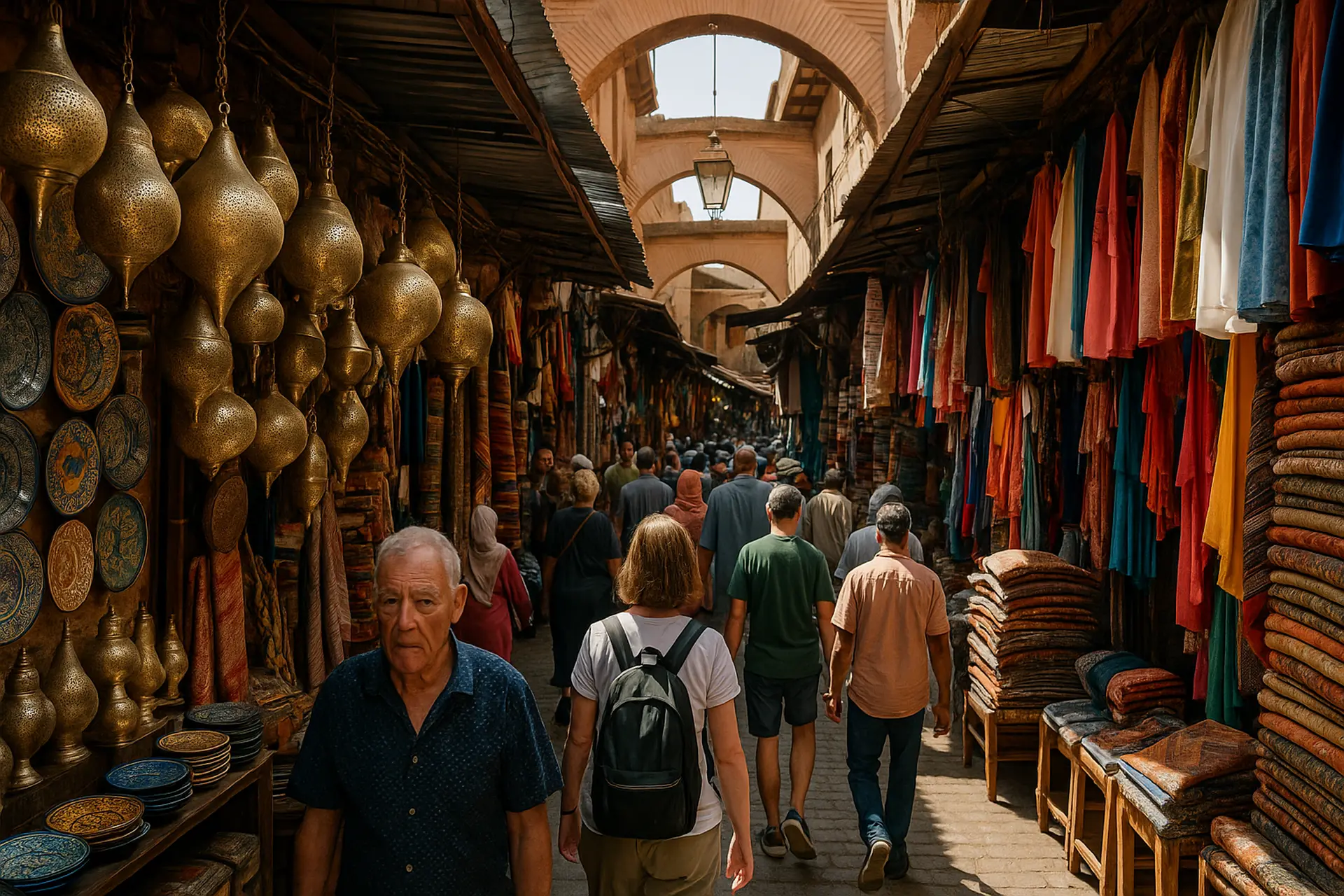

What is a Bazaar, a Souk, and a Market?
The words “bazaar,” “souk,” and “market” each refer to centers of commerce, but their nuances hint at history and region. Bazaar comes from Persian bāzār, originally meaning a public marketplace or commercial quarter. It entered European languages via Italian in the 16th century. Historically it denotes a covered marketplace or district of shops, especially in Central and West Asia. Souk (Arabic sūq) similarly means marketplace, often open‑air and at the heart of a Middle Eastern city. In Spanish or Portuguese contexts, mercado refers to an open marketplace or hall. Across Asia, terms like haat (India/Bangladesh) or pasar (Malaysia/Indonesia) signal a similar concept.
- What is a Bazaar, a Souk, and a Market?
- How the World’s Markets Are Categorized (Taxonomy)
- Iconic Global Bazaars: A Curated Master List
- Middle East & North Africa
- South Asia
- East & Southeast Asia
- Europe
- Americas
- Central Asia & Silk Road Markets
- Deep Profile: Grand Bazaar (Kapalıçarşı), Istanbul
- Deep Profile: Jemaa el‑Fna & Marrakesh Souks
- Deep Profile: Dubai Gold Souk & Spice Souk
- How to Haggle Like a Pro
- What to Buy Where: Commodity Cheat-Sheets
- Safety, Scams & Practical Conduct
- Logistics: Money, Cards, Shipping & Customs
- Authenticity & Quality: How to Avoid Fakes
- Ethical & Sustainable Market Shopping
- Accessibility, Families & Special Needs
- Food & Night Markets: What to Eat and Where
- Sample Itineraries & Route Maps
- When to Visit: Seasonality & Crowd Avoidance
- Guided vs Independent Souk Visits
- Frequently Asked Questions (FAQ)
These markets are far older than modern tourism. Many grew from caravanserais or caravan lodges that once dotted trade routes. Along the ancient Silk Road – a vast network linking China to Rome – merchants exchanged silk, spices, porcelain and ideas as they passed through outposts. Even today, marketplaces along these routes are cultural crossroads. For example, Persia’s historic bazaar system flourished under the Safavids (16th–18th centuries), while Ottoman sultans established bedestens (covered bazaars) in Istanbul, Cairo and beyond.
Over the centuries, bazaars evolved. Medieval and early‑modern markets were as much social hubs as shopping centers – places where guilds and caravans met. In the 20th and 21st centuries, many bazaars have partially modernized: some open‑air souks now run automated checkout lanes, and covered markets may even host malls attached. Nonetheless, traditional styles often remain. UNESCO recognizes squares like Marrakesh’s Djemaa el‑Fna as intangible cultural heritage, and Istanbul’s Grand Bazaar is still sometimes called one of the world’s first “shopping malls”. Understanding this evolution helps travelers see bazaars as living museums of trade, where ancestral patterns mingle with digital price tags.
How the World’s Markets Are Categorized (Taxonomy)
Not all markets look alike. A practical way to frame the bazaar universe is by physical form and by specialty. At one end are covered bazaars – labyrinths of indoor streets under vaulted brick or wood roofs. Examples: Istanbul’s Grand Bazaar and Cairo’s Khan el‑Khalili. These often arose in capitals or crossroads cities. In contrast, open-air markets (agoras, piazzas, or pasars) spill out into squares or open pavilions (e.g. Barcelona’s Boqueria, Delhi’s Chandni Chowk bazaar). Many cities have night markets (common in Asia) that only open after dusk, like Taipei’s Shilin or Bangkok’s Rod Fai Market; these bustle with street food and live entertainment.
Another axis is commodity specialization. Historically, traders organized markets by goods: spice bazaars (packed with turmeric, saffron, pepper), gold souks (chunks of bullion and jewelry), cloth souks (layers of silk and wool), food markets, or even caravanserai bazaars devoted to travelers’ needs. Today many markets still follow such niches. In Istanbul one quarter might brim with carpets and kilims, another with silverware and scarves. Dubai’s Deira Gold Souk is famed for its gleaming jewelry, while nearby Spice Souk overflows with incense and exotic teas. In Delhi, vibrant open markets sell everything from silk shawls to Ayurvedic oils.
Practical taxonomy by region/specialty:
- Food markets: Covered stalls selling produce, meats, and prepared foods. La Boqueria (Barcelona) is famed for seafood, charcuterie and local cheeses; Tokyo’s Toyosu (formerly Tsukiji) is a high-tech fish auction hall. Bangkok’s Or Tor Kor is a fresh-fruit market known for durians, and Taiwan’s night markets (Shilin, Raohe) are street‑food wonderlands.
- Textile markets: Asia’s bazaars often highlight textiles. In Istanbul and Tehran, markets offer hand-woven carpets and kilims (with knot count as a quality marker) or printed cottons. Central Asian bazaar towns like Bukhara or Samarkand are havens for ikat silks and embroidered robes.
- Jewelry & metalwork: Middle Eastern bazaars frequently have dedicated gold/silver souks. In Cairo’s Khan el-Khalili, one alley is a famous goldsmith quarter. The Dubai Gold Souk operates under strict UAE hallmark laws guaranteeing purity. In India, markets like Udaipur’s Hathi Pol and Kolkata’s New Market sell silver and beadwork.
- Carpet bazaars: Iran, Turkey, Afghanistan and Morocco are renowned for rugs. Markets in Tabriz, Istanbul, Fes and Marrakech allow buyers to inspect weave density, natural dyes, and tribal patterns. (Cheap imitations abound, so quality-check skills matter.)
- Antiques & crafts: Some flea markets or antique souks flourish in cultural capitals. Paris’s Marché aux Puces St-Ouen and Athens’ Monastiraki market offer antiques and vintage wares. Morocco’s Marrakech souks blend craftsmen’s workshops (leather goods from the tanneries, brass lanterns from metalworkers) with tourist stalls.
- Artisan cooperatives: Increasingly, fair-trade sections appear. For instance, many northern Thai Hill Tribe markets or Guatemalan markets will note which handicrafts directly support indigenous weavers or painters.
A simple table (region × specialty) can guide travelers:
- North Africa / Middle East: Spices (Morocco, Egypt), carpets (Turkey, Iran, Morocco), textiles (Morocco, Turkey), gold/jewelry (Egypt, UAE, Turkey).
- South Asia: Textiles & embroidery (India, Pakistan, Bangladesh), jewelry (India), street food markets (India, Pakistan).
- East / Southeast Asia: Seafood & fruits (Japan, Taiwan, Thailand), souvenirs & crafts (China’s Silk Street), textiles (Lao textiles at Luang Prabang market), night markets (Thailand, Taiwan).
- Europe: Gourmet food (Spain’s Boqueria, Italy’s Mercato Centrale), antiques (London’s Portobello, Paris’s flea markets), local crafts (Turkey’s Spice Bazaar).
- Americas: Artisanal crafts (Otavalo, Ecuador), produce markets (Seattle’s Pike Place, Mexico City’s La Merced), textiles (Peruvian markets in Cusco, Mexican textiles in Oaxaca), native handicrafts (Navajo rugs, Andean alpaca knitwear).
Each market’s character comes from this mix of setting and wares. Later sections will unpack dozens of notable markets by region – each mini-profile will note “what to buy, how to get there, hours, safety.”
Iconic Global Bazaars: A Curated Master List
Below is a by-region survey of landmark markets. Each entry sketches location, history and specialties.
Middle East & North Africa
- Istanbul Grand Bazaar (Kapalıçarşı), Turkey – One of history’s great markets. Founded 1461, it sprawls under five domes of Ottoman architecture. Inhabiting 61 lanes, it offers carpets, ceramics, teas and crafts. What to buy: Turkish kilims, Iznik tiles, silverware, lanterns, leather bags. Pro tip: Haggle from about half the asking price (then meet in the middle). Open daily roughly 9:30–19:00.
- Cairo Khan el-Khalili, Egypt – A medieval souk dating to the late 14th century, Khan el-Khalili became Cairo’s merchant quarter. Today its narrow alleyways teem with jewelry shops and souvenir stalls. What to buy: Gold and silver (the adjoining Gold Souq remains active), brass lanterns, perfume oils, hookahs. Tip: Avoid obvious tourist traps (like overpriced pyramidal alabaster souvenirs) and try genuine sheesha or a coffee in El Fishawi, one of the world’s oldest cafes (1475!). The goldsmiths’ lane (Muizz Street end) is graded safe and vetted.
- Marrakech Djemaa el-Fna & Souks, Morocco – The famous Jemaa el-Fna square, a UNESCO “Living Heritage” site, anchors Marrakech’s souk maze. By day snake-charmers, story‑tellers and orange‑juice vendors animate the square; by night dozens of food stalls appear. The surrounding covered souks (spanning leather, carpet, spice markets) trace back to 11th‑century medina life. What to buy: Red Berber rugs, silver Berber jewelry, leather babouche slippers, vibrant lanterns, argan oil, saffron and spice mixes. Tip: In the maze, keep a local map. Dust off bargaining role-play: both buyer and seller perform; start low and smile (it’s part of the fun). Watch for the famous “coin trick” at food stalls (always inspect your change). Most souks open ~9am–9pm (longer in summer), but early morning and late afternoon are least crowded.
- Dubai Gold Souk, UAE – A dazzling stretch of stalls and shops in old Deira district, specializing in jewelry. All shops are government‑licensed and products hallmarked by Dubai’s assay office. What to buy: Gold (22K or 24K ornaments), diamonds, and uniquely designed jewelry at tax‑free prices (tourists can claim VAT back at the airport). Prices change daily with the gold rate. Tip: Verify hallmarks (916 for 22K) and insist on a detailed invoice. Emirates requires declaring imports over AED 3,000 (≈US$820). The adjacent Spice Souk (Bur Dubai) has heapings of saffron, curry powders and local dates. Both open ~10am–9pm daily.
- Fez Tanneries & Souks, Morocco – North of the main medina square, the Chouara Tanneries produce hand-treated leather (dyed by VOC‑free oak bark method). Nearby souks sell leather jackets, poufs, and slippers. Clamber up the viewing terraces for a kaleidoscope scene. What to buy: Leather, Moroccan slippers. Barter and inspect colorfastness (the horn of a tannery vendor is used to show dye mixing).
- Istanbul Spice Bazaar (Egyptian Bazaar) – Dating to Ottoman era, this covered bazaar near Galata Bridge is filled with spices, Turkish delight, lokum, nuts and dried fruits. Though touristy, stalls often sell small tin cans of saffron, herbal teas and nougat. Tip: Taste before you buy, especially teas.
- Jerusalem Old City Souk, Israel/Palestine – In the Arab Quarter of the Old City, lanes converge around the Dome of the Rock. Visitors find spices, olive wood crafts, and religious items (prayer rugs, rosaries). What to buy: Handmade olive-wood nativity sets, pashmina scarves, aromatic za’atar herbs.
South Asia
- Chandni Chowk, Old Delhi, India – A centuries-old market district around Red Fort. Each bazaar street has a focus: Dariba Kalan for jewelry, Khari Baoli (Asia’s largest spice market), and Chandni Chowk proper for textiles and housewares. What to buy: Spices (cardamom, chili, saffron), silver jewelry, embroidered textiles, jalebi (sweetmeats) and paratha (stuffed bread).
- Yazd or Tehran Bazaar, Iran – Persian bazaars are often under long, domed brick vaults. In Tehran’s Grand Bazaar, trade guilds still operate. Colors of Persian rugs, Qashqai shawls and inks from Isfahan tile studios dominate. What to buy: Fine Persian rugs (high knot-count, vegetable dyes), miniature paintings, saffron and halva. Check if rugs come with official certificates of origin (Iran maintains authenticity docs).
- Mysore or Jaipur Silk Bazaars, India – Southern India (Mysore) is famous for silk sarees. In Rajasthan, markets for block-printed textiles and blue pottery flourish.
- Patan Durbar Square, Nepal – Ancient Newari markets sell Thangka paintings, silverwork and pashmina.
- Kolkata New Market (Esplanade), India – British-era colonnaded market hall for fabric, fish, street snacks and electronics.
East & Southeast Asia
- Tokyo Toyosu Fish Market (formerly Tsukiji) – The ultra-modern wholesale fish market on Tokyo Bay. Early-morning tuna auctions are famous (advance ticket needed), and downstream is the outer market full of sushi stalls and kitchenware shops. What to buy: Fresh sushi for breakfast, high-grade knives, sake.
- Taipei Shilin Night Market, Taiwan – A temple-lined street market starting at dusk. Try stinky tofu, oyster omelette and bubble tea. What to buy: Funky T‑shirts, bamboo-crafted souvenirs, snacks.
- Bangkok Or Tor Kor Market, Thailand – High-quality government-run food market near Chatuchak. Clean and air‑conditioned, it sells tropical fruits (durian, mango), exotic vegetables, and packaged sauces.
- Chiang Mai Sunday Walking Street, Thailand – A weekly evening market along the old city moat. Handicrafts from hilltribe villages – scarves, ceramics, bronze Buddha statues – make popular buys.
- Seoul Namdaemun & Dongdaemun, South Korea – Large markets. Namdaemun has traditional goods (hanbok cloth, kitchenware); Dongdaemun operates late-night for fabrics and fashion.
- Beijing Silk Street and Pearl Market, China – Tourist hubs selling knockoff designer goods, watches, and pearls. Bargaining is expected, but these have “tourist prices.” For genuine silk and jade, official store labels and certificates are safer.
Europe
- Barcelona La Boqueria, Spain – One of Europe’s most famed food markets. Covering a city block off Las Ramblas, it dates back to the 13th century. What to buy: Slices of Jamón Ibérico, local cheeses, freshly shucked oysters, pastries and fresh fruit smoothies.
- Paris Marché aux Puces de Saint-Ouen, France – The enormous flea market on Paris’s northern edge. Over a dozen “villages” cluster: some focus on antiques, others on vintage fashion or mid-century furniture. What to buy: Antique finds (mirrors, books, textiles), retro posters, vintage Chanel (with caution). Late mornings on weekends are best; carry cash (some vendors only do euros).
- Milan Mercato di Porta Genova, Italy – Weekly antiques and vintage clothing, a hotspot for Italian designers seeking retro inspiration.
- Amsterdam Waterlooplein, Netherlands – Daily flea market with secondhand books, toys and souvenirs.
- London Camden Market, UK – A quirky mix of fashions, art, and global street-food in North London.
Americas
- Mexico City La Merced & Jamaica, Mexico – La Merced for groceries and textiles, Jamaica for flowers. Both are open-air chaos during the day. What to buy: Mole spices, Mexican vanilla, Talavera pottery, silver from Taxco (in jewelry shops).
- Cusco San Pedro Market, Peru – Mountainside vendor stalls with Andean corn, alpaca wool sweaters, and massive bouquets of local flowers. What to buy: Alpaca ponchos, woven tapestries, hand-carved gourds (mate cups), a taste of chicha corn beer.
- Otavalo Market, Ecuador – Famous for indigenous Otavalo weavings. Textiles, ponchos, wooden masks and tagua nut jewelry flood the central square on Saturdays.
- Seattle Pike Place Market, USA – Historic farmers’ market by the waterfront. Pike Place is as much an experience (flying fish and street performers) as a place for specialty foods. What to buy: Smoked salmon, local cheese, fresh flowers, artisan soaps.
- New York Chelsea Market, USA – Indoor food hall and shopping arcade in NYC, housed in a brick former factory. Gourmet shops offer everything from tacos to doughnuts to cooking tools.
- Portland Saturday Market, USA – Large regional crafts market in Oregon, open weekends, featuring Native American jewelry, pottery, and wood crafts.
Central Asia & Silk Road Markets
- Bukhara Trading Domes, Uzbekistan – Covered domed bazaar dating to 16th century. Three domes (Cotton, Silk, Jewelry) each have traders’ lodges. What to buy: Ikat textiles, embroidered skullcaps (tubeteika), dried melons (national snack) and turquoise inlay crafts.
- Samarkand Siyob Bazaar, Uzbekistan – Next to Registan Square, a green-tiled entrance leads to spice vendors and apricot stalls. Central Asia’s famed handwoven carpets (often with Turkic floral motifs) are sold here too.
- Ashgabat Tolkuchka Bazaar, Turkmenistan – An enormous open market on city outskirts. Rugs and horse-trappings are big sellers (Turkmen carpet is a national treasure). Bargaining is customary and even expected as a friendly ritual.
Deep Profile: Grand Bazaar (Kapalıçarşı), Istanbul
In the heart of old Istanbul sprawls the Grand Bazaar, a 15th-century creation whose 61 covered streets formed the beating heart of Ottoman trade. Commissioned by Sultan Mehmet II in 1461, its cavernous stone halls once stored gems, spices and silk from across the empire. Today it remains a traveler’s wonderland: around 4,000 shops line the aisles, each tended by a family weaving multigenerational know-how into every sale.
- History & architecture. The Bazaar’s original core was the two bedestens (stone vaulted halls) for textiles and elite goods. Over centuries it grew in an irregular grid. Bit Pazari (tentmakers’ street) and kürkçüler (fur sellers) street are legacy names from those guilds. World War II-era restorations removed an outer ring, but the covered core looks much like it did by the 1700s. Architecturally, the Bazaar is a fairy-tale brickwork labyrinth lit by domed skylights. Intricate archways, carved wood shutters and painted signs preserve an Ottoman ambiance. (Photos of its passageways today still hint at centuries of incense smoke and human bustle.)
- What to buy here. The Grand Bazaar is a one-stop treasure trove. Carpets and kilims are prime buys – both new looms and antique stock reside here. Devotees will count knots per square inch and test dyes under daylight. Ceramics and Iznik pottery studios abound, ideal for blue-white bowls and tiles. Silver jewelry, copperware (tea sets, trays), and mother-of-pearl inlay boxes catch the eye. Keep an extra suitcase: fine textiles (silk scarves, velvet embroidered shirts, pashminas) fill velvet-lined shops, while countless spice merchants sell saffron and Turkish spice blends. Out-of-towners should try Turkish delights, baklava or roasted chestnuts. Even if not buying, one can linger at a coffeehouse and watch traders weigh 30-gram gold bars or pour eyes onto recitals of haggling – for many, the real shop is the experience itself.
- Navigating the maze. It’s easy to feel lost. Tip: grab a free map at the main entrances (or use Google Maps offline) to mark exits. During business hours (roughly 9:30–19:00), a constant flow of local and tourist shoppers moves through. For a half-day itinerary, one might start at Nuruosmaniye Gate (west side), head east through Zincirli Han (antique jewelry hub), pause for mint tea at Bekir, the historic sweet shop (since 1777), then exit via Kapalıçarşı Gate near Beyazit Square. Allow time to detour into each khan (caravanserai annex) for a quieter gem, where workshops still handcraft leather and glassware. Keep small bills on hand: cash (TL) is king, and asking about credit-card acceptance is wise when buying big items.
- Haggling and pricing. Bargaining is expected. A common formula: ask for 50–70% off the sticker price, and gradually meet mid-range. Show respect and patience – a smile can disarm even a tough shopkeeper. Don’t be afraid to say “La shukran” (no, thanks) and walk away if price stalls; often the shop will call you back with a better deal. As you shop, have an approximate budget. For high-end carpets, as a rule of thumb, hand-knotted 6×9 rugs might range from a few hundred to several thousand dollars. Fine silverware can also cost hundreds to thousands; ask for weight and 925 or 835 purity stamps.
- Shipping a rug from Istanbul. Grand Bazaar vendors commonly arrange shipping if you wish. Upon purchase, ask the merchant about logistics: many tie up with international freight companies (often DHL, FedEx or local rug shippers). They typically give a box and invoice, charge weight plus insurance. A reasonable estimate might be US$7–15 per kilogram for air freight to the US (so a 20 kg rug, 6×8 ft, around US$200–300) – cheaper by sea if time allows. Whatever the method, insist on an itemized freight receipt and track it until it’s in your home country. Turkish customs forbids exporting any carpet over 100 years old, so by law all sellers should provide a “New goods” declaration. (If a seller claims a rug is antique, confirm it’s <100 years, or you might face seizure.) Small purchases require no permit, but keep all receipts for VAT refund processing at Istanbul airport (currently about 18% VAT on non-gold items can be reclaimed by foreign tourists at departure).
- Expert voice. One long-time merchant emphasizes patience: “In our bazaar, bargaining is a friendly dance, not a duel,” he says. “Start with a smile and an offer well below the asking price, and we will meet in the middle – but always with respect.” Tourists who remember this often come away both pleased with bargains and charmed by the warm negotiations.
Deep Profile: Jemaa el‑Fna & Marrakesh Souks
At sunset the great square of Jemaa el‑Fna in Marrakech transforms into a sensory whirlwind. Once a caravan assembly area, today hundreds of food stalls block the square and dozens of performers create a carnival atmosphere. Adjoining this plaza is a warren of souk alleys, dating to the 11th century and framed by earthen ochre walls. Many artisans still live above their shops: dyers, carpenters and dyers’ fondouks (hostels/workshops) pepper the medina.
- What to buy (souvenirs & spices). Moroccan souks are famed for leather and textiles, and Marrakech leads the pack. Bargain for a thick Berber wool rug (handmade Berber carpets often have slightly uneven geometric patterns). Silken pashminas and embroidered kaftans hang in aisles. The lamps and lanterns of Marrakech are legendary: dozens of shops here display every imaginable style of metal lantern – buy the brass or bronze kind, and check that the glass inserts (often colored) are complete. Leather goods abound: from hand-tooled poufs to jackets and scented leather slippers (babouches). After that, spices call. Squared barrels of turmeric, cinnamons sticks and powdered saffron lurk around corners. Don’t miss the dried herbs used in Moroccan cooking – fresh ras el hanout (spice blend) and zahra tea (mint plus verbena) are must-tries. Finally, barakah (blessing) items: silver turquoise crosses, khamsa (hand) amulets, and silver anklets for women (brass ones for kids to ward off spirits).
- Food stalls & etiquette. The night food market at Djemaa el‑Fna is an attraction in itself. Grilled skewers (lamb or chicken), steaming couscous, fresh orange juice, fried snail soup (babbouche) and sweet pastries are all offered. Usually you order at the stall and either eat standing by or on small plastic stools they provide. Practicing basic Arabic (as-salamu alaykum “hello”, shukran “thanks”, kam in dirhams for “how much?”) is appreciated. As in all markets, carry small bills and count change carefully to avoid the old switcheroo. (One tip: carry an LED flashlight or use your phone’s to examine brightly colored spice “blends” – sometimes cheaper ground turmeric is fraudulently mixed in.)
- Safety & etiquette. Marrakech’s medina is very crowded. Pickpockets can operate in a crowd, so use a money belt or keep small change in a front pocket. Generally, men visitors will find everyone very friendly – female visitors should dress modestly (cover shoulders/knees) in the souk to show respect, though Marrakech is more liberal than rural Morocco. Scams exist: most famous is the “tea trick,” where a vendor offers free mint tea, then accuses you of stealing sugar or honey jars unless you pay. The cure is to politely decline tea, or if it comes, a simple refusal and a firm yet polite la shukran, ana musafir (“no thanks, I am a traveler”) usually ends it. Avoid touts offering extremely cheap tours or factory visits – instead, independently verify any excursion.
- Averting tourist traps. Real local artisans exist side by side with shops reliant on tourists. One rule of thumb: if shopkeepers approach you as you walk by and insist loudly to see your hand or heel size, they likely sell leather slippers by commission – politely say shukran and move on unless interested. Also, the “Spice Women” at the souk exit may grab your hand saying it’s cold – they then demand payment. A firm “No thank you” and stepping back usually suffices. It’s helpful to go with a local guide at least once: a guide can point out authentic family workshops (e.g. for silver silversmithing or carpet knots) and navigate the souks far corners. Most guides will then be content to leave you free shopping on your own.
- Human perspective. An alumna of the American University in Cairo who’s visited Marrakesh notes how alive the souks feel: “Behind every stall there’s a story. One old man told me as he poured tea that selling these lanterns is the only way he’s kept a roof over his family’s heads since the 1980s. When I haggled, I actually felt connected—like part of that long tradition. In Marrakesh souks, it’s not just shopping, it’s joining a conversation that’s been going on for centuries.”
Deep Profile: Dubai Gold Souk & Spice Souk
Dubai’s traditional souks give a glimpse into Emirati commerce that predates the skyscrapers. In the historic Gold Souk (Deira district), over 300 shops line pedestrian streets, each window gleaming with necklaces, bracelets and bullion bars. A visitor sees karat stamps on every item: UAE law mandates that licensed gold products carry a hallmark certifying purity (e.g. “916” for 22K gold). Trust is built in writing: any purchase comes with a certified invoice.
- Gold standards and appraisal. Shoppers can buy instantly — you name the weight and design, and the counter prints a detailed bill. The invoice will list metal purity, weight and making charges. Prices are updated daily per international gold rates. In practice, to avoid confusion, check that the invoice matches the item’s weight and hallmark. Many shops also sell high-end diamond jewelry and gemstones. VAT & refunds: The UAE imposes 5% VAT, but tourists can claim refunds at the airport via the KSA-backed scheme. Expect to pay the 5% upfront and submit your receipt at DXB before departure. For bullion and investment coins (Gold Dirhams), VAT is exempt, making Dubai’s prices globally competitive.
- Spice Souk. A short walk away is the Spice Souk, where the air is heavy with cinnamon, sandalwood and dried rose petals. Merchants sell bulk herbs and teas from India, Iran and Africa. Saffron – sold by the gram from Oman or Iran – is a prized find. Sample little cups of tea to compare blends. The Perfume Souk is adjacent, offering attars (undiluted perfume oils) and incense sticks. Though the spices here are generally genuine, tourists should beware “cheap saffron” – a vendor might test a few threads in hot water to show deep color, but invisible additives can lurk. For true saffron, count the filaments in a test dose or buy unopened sealed tins from reputable names (many shops will brand their product).
- Price expectations and consumer tips. Dubai’s souks are competitive; if one shop’s price seems too high, a neighbor’s may offer a slightly better deal. However, realize that mass-market gold is already tightly regulated. Bargaining on precious metals is limited to bargaining out taxes or the making fee, and is always done politely. When buying gold, accept the printed price and focus on haggling over craftsmanship fee. For spices, haggling is more accepted: start at about half of the asking price and meet the seller halfway. Always ask for your change or balance from the new price if you pay in cash.
- Customs & export. Tourists should note customs laws: UAE law requires declaring goods over AED 3,000 to customs. There is no limit on exporting personal jewelry (though excessively large pieces might invite questions). Shipping large gold or diamonds home is done through secure channels (DHL-like services). For smaller purchases, many travelers simply pack jewelry in carry-on.
- Human voice. A long-time Dubai trader comments, “Here, gold is not hidden under the floor—it’s out front. We greet customers with coffee and even show them purity stamps ourselves. The trick is that you trust the process. If you want gold here, you should know prices and then relax – we deal in transparent numbers.”
How to Haggle Like a Pro
Haggling is integral to market culture in many regions. The process can be friendly, even playful. Keep in mind this is a cultural performance as much as a negotiation. To excel:
- Do your research. Before visiting a souk, note typical prices. Online forums or local shops can help. If buying a common item (scarves, bracelets, spices), know roughly what a fair price is in local currency.
- Psychology: Politeness matters. Approach each stall with a smile and greeting. Courtesy goes far more than confrontation. Use friendly phrases: in Arabic countries try “As-salamu alaykum” (peace be upon you) and “shukran” (thank you); in Turkey a jovial “merhaba” works; in Thailand “mai pen rai” (no problem) can defuse conflict. The tone should be light; haggling is considered part of the experience, not an insult.
- Scripts and strategies. A standard tactic is to initially quote much lower – around 40–60% of the asking price. The seller may refuse. Then meet a little higher each time. For example, if silver bracelets are asked at 200 MAD each, offer 80 MAD, then 100, then agree at around 140–150. Always do this in increments, as a back‑and‑forth game. Never offer too high; the point is to arrive at a compromise. If buying multiple items from one vendor, combine them for a bulk deal – sellers often give discounts for larger purchases.
- Use local phrases. Learning a few key words shows respect. For example, in Arabic markets: “Kam?” (“How much?”), “la shukran” (no thank you), “ma fi/mashi mushkila” (“no problem” in Moroccan dialect) add goodwill. In Istanbul, a Turkish phrasebook line like “ne kadar?” (“how much?”) and “tamam” (deal/okay) is useful. A vendor might entice with “absolutely best price” – respond with a laugh and another number, keeping light banter.
- When to give in. Not all shops are open to haggling. High-end or chain stores will have fixed pricing. If the seller won’t budge after reasonable offers, consider if it’s still a fair deal. You should feel satisfied you tried your best. If not, walking away often yields an unexpected call after you depart – but be prepared to say firmly “no” a second time. Over-negotiation can come off as rude.
- Cash is key. In most markets, cash (local currency) wins a better rate. Having small bills and exact change prevents you from accidentally paying extra because of a lack of small change. In fact, when the Trafalgar guide says “Cash is king”, it’s true: vendors often lower price by a few percent for immediate cash payment. If you only have big bills, try to break them elsewhere first.
- Spot the fakes. If shopping for branded goods (bag, electronics), watch out. A “too good to be true” price probably is. Check stitching and labels. For example, knockoff leather bags often have cheap zippers or glue marks. Many souks today have inspection lamps so you can look closely at gold items. Always ask for authenticity papers or warranties if offered. If unsatisfied or feeling pressure, thank the seller and walk away – better safe than overpay for a fake.
- Cultural norms. Remember, bargaining customs vary: in many Asian night markets or Western flea markets, prices might already be low or set, and haggling is minimal. Conversely, in Middle Eastern and North African souks, haggling is expected and usually polite. Always observe locals – if you see Turkish or Moroccan customers haggling actively, that’s your cue.
What to Buy Where: Commodity Cheat-Sheets
Travelers often wonder where to find the best of a particular commodity. Here are quick guides:
- Carpets & Rugs: Buy hand-knotted Persian or Turkish rugs where they are made. Iran (Persian rugs): fine knot density, wool pile; look for a “sellers’ certificate” (ettelaat) naming region (Tabriz, Qom, Isfahan). Turkey: Anatolian kilims with geometric tribal designs are popular. In Istanbul’s bazaars, insist on “el dokuma” (handwoven) and check for knots on rug’s back – machine-made will have a uniform grid back. Morocco: Souks of Marrakech or Fez sell Berber rugs (often priced by color and knot type). Ask about wool type (zerafat wool is high quality) and be aware that many are made by cooperatives. Always check care instructions (citrus or soap cleaning), as chemical dyes can stain.
- Spices & Teas: For saffron, go to Iran (markets in Tehran or Shiraz) or Morocco (Marrakech). Look for long red threads – the golden tip is a prized stigma. Beware yellow dyed strands (fake saffron). Cardamom, cinnamon, vanilla – each region has its pride: Sri Lankan cinnamon in Colombo markets, or green cardamom in Omani souks. Tea: India (Darjeeling tea leaves in Kolkata markets), China (Pu’er tea cakes in Yunnan markets), Japan (matcha on Nishiki Market, Kyoto). Always sniff and taste a little if possible before buying.
- Gold & Jewelry: Dubai and Istanbul are gold capitals. For 22K/24K, Dubai Gold Souk offers clarity: items are hallmarked and invoices list purity. Istanbul’s Grand Bazaar similarly sells 18K–24K. In India (Delhi or Mumbai), buy uncut diamonds (from Surat) and Kundan-style jewelry; in Thailand (Bangkok’s Chinatown), you’ll find gem-set Thai gold. Tip: Always ask for a hallmark or certificate. Compare prices among 3–4 shops: fine jewelry varies widely by vendor.
- Textiles & Embroidery: Central Asian fabrics (Uzbek ikat, Turkmen suzani) come from Silk Road bazaars (Bukhara, Ashgabat). Indonesian Batik is best bought in Java’s markets (Yogyakarta’s Beringharjo). Guatemala’s woven textiles (Mayan) are rich with color – buy directly from weavers in Chichicastenango market. South American alpaca & vicuña wool (sweaters, blankets) are Ecuador’s Otavalo or Peru’s markets in Pisac/Cusco. Check that alpaca items aren’t acrylic blends by pulling a small fiber.
- Ceramics & Pottery:
- Morocco: Fez’s pottery quarter (near Chouara). The cobalt blues of Fes ware are iconic.
- Turkey: Cappadoccia’s Avanos for earthenware. Istanbul sells Iznik-style (ceramic tiles).
- Spain: Andalusian tiles (Seville, Granada) or Valencia ceramics.
- Mexico: Talavera pottery from Puebla or Dolores Hidalgo.
- China: Jingdezhen porcelain (though official outlets, not street stalls, are recommended).
Always inspect for cracks and ask if pieces are dishwasher-safe (some have lead glaze). - Leather Goods: Marrakech souks are legendary for dyed leather poufs and jackets; Fez also has fine tanneries. Check smell (should be earthy, not chemical). In Turkey, women’s leather coats and men’s jackets can be tailored on the spot; negotiate the price and fitting time. Italy’s Florence has leather markets (San Lorenzo), but beware high luxury pricing.
- Antiques & Antiques: If hunting antiques, great sources are London (Jumblies Market), Paris (Village St. Paul’s brocante), or Beijing Panjiayuan (flea market, though buy small decorative pieces). In Middle East, g., Damascus’s old souk has antiques, but export laws are strict. Always get a provenance or deed of sale, especially for things like old coins, artworks or religious icons – many countries ban export of antiques (e.g. Turkey forbids selling carpets older than 100 years, or any antiquity without permit).
- Food specialties:
- Europe: For gourmet eats, remember La Boqueria in Barcelona for Spanish ham and cheeses, or Milan’s Mercato Centrale for olive oil, truffles and salamis.
- Asia: Tokyo’s Toyosu – best fresh fish; Bangkok’s street markets – fruit (durian, mango sticky rice) and noodle dishes.
- Americas: Mexico City’s markets for chiles and mole sauces; Lima’s Mercado de Surquillo for Peruvian coffee and ají amarillo paste; Seattle’s Pike Place for Pacific salmon and artisanal chowders.
Above all, if uncertain whether a market vendor is reputable, check for membership in trade associations or ask for a store brochure (many shops have laminated info packets in multiple languages). When in doubt, a polite “No, thank you” and step back is better than impulse buying.
Safety, Scams & Practical Conduct
- Pickpocket prevention. Busy markets attract pickpockets. Men often work in pairs or small teams: one may bump you or distract with a “funny” demonstration (like the friend on the ground trick), while another nabs wallets or phones. To stay safe, do not display large sums of cash or valuables. Use a crossbody bag in front, or a zipped money belt under clothing. Keep track of your bags at all times (in tight alleys, a shoulder bag can be cut by a thief in seconds). When possible, tuck your passport in your accommodation safe and carry a copy.
- Common scams. Beyond pickpockets, typical scams include: – Switch-and-scam: A vendor gives free tea or candy then claims you owe a large fee. Avoid accepting freebies that become an obligation. Politely refuse unsolicited offers. – “Generous tourist” scam: In some North African souks, a stranger might “offer” a guide’s help or send you to a friend’s store, ending with a bill for services or overpriced items. Always agree on a price beforehand (and clarify if they expect tip or commission). – Tampered change: Especially in chaotic souks, tellers may hand over ambiguous change or math-ehile counting confusion to shortchange you. Always count bills/coins in front of them. – Tea and luggage drop: In Turkey or India, someone may offer free tea but then steal your luggage while you drink. Don’t accept unsolicited hospitality; keep your belongings always in sight. – Counterfeit goods: As noted, if a deal sounds too cheap for brand-name purses or electronics, assume it’s fake. In fashion markets, double-check logos – e.g. Cartier rings should have serial numbers, Rolex watches must have details and often come with a box and docs. – Time-sink tactics: Shady shops may falsely claim they need you to meet their manager (or call customs) about your purchase, buying time to look up your details and price-gouge. Insist on going directly to the point of sale if pressed. If politely refused, do not follow the salesman into any hidden area.
- Health & hygiene. In food markets, street food is usually safe to try (vendors cook to order in front of you). In hot climates, eat from stalls with high turnover. You may use hand sanitizer before eating. In wet markets (meat, seafood), avoid raw juices on your hands. Some markets provide sinks – use them. Check that restaurants or cafes have clean tableware (hot water is used to rinse cups in tourist areas of Asia). For water, use bottled, not tap (in many countries tap water is not potable). If you experience stomach issues, use oral rehydration packets and see local pharmacies (ubiquitous worldwide) for remedies.
- Cultural etiquette. Behavior rules vary. In Muslim countries, it’s polite for men to remove hats and speak softly when indoors; women should cover shoulders and knees. In conservative areas (e.g. Cairo Khan el-Khalili), a woman alone might be approached for conversation – it’s fine to answer politely, or simply say “Ana musafir” (I am a tourist) and back off if you feel uncomfortable. Many vendors are curious and welcoming to foreigners, but always ask before photographing someone’s face (some women or religious artisans prefer not to be photographed).
- Photography. In general, asking is polite. Some gold or spice vendors mind if you photograph their prices (for fear of copying), so avoid using your phone at point-of-sale. For picturesque scenes (like market stalls or artisans at work), most will be happy to pose – often in exchange for a small tip. Never take pictures in restricted zones (temples, mosques, or security zones). Using a smartphone discreetly (with a friendly greeting) can yield more genuine shots.
Logistics: Money, Cards, Shipping & Customs
Most bazaars operate in local currency only. In Marrakech or Istanbul, US dollars or euros might be accepted only in a very few upscale shops, and at poor exchange rates. Plan to carry the local currency (Moroccan dirhams, Turkish lira, UAE dirham, etc.). ATMs are usually near big markets (e.g. outside Istanbul’s Grand Bazaar or Dubai’s souks). Bring new, unmarked bills – old or torn notes may be refused.
Tip: Carry a mix of bills (small and medium denominations) and coins; vendors often give the very smallest change back or toss coins, and may round down if you can’t pay exact. Watch out: in some countries (e.g. Morocco), there are two lines of yellow or gold-colored coins in denominations of 1, 2, 5 or 10 in the local currency; name your coin when paying “3 dirham” rather than “3” to avoid confusion.
While carrying cash, also bring a backup credit card hidden in a secure pocket. Most modern bazaar areas have vendors or shops that accept cards (especially gold and spice souks in Dubai or upscale lanes in Istanbul). However, expect that small stalls and food carts require cash. If bargaining for a large purchase (like carpets or furniture), saying “I have cash” can encourage a better deal.
VAT refunds. In Europe and some Asian cities, tourists can reclaim Value-Added Tax on bigger purchases. Typically this requires spending above a threshold (e.g. €50 in EU shops) and getting a tax-free form stamped at the airport. For example, if you buy a designer handbag in a souk-style store in Barcelona for €200, you might get back ~€30 after showing the receipt and passport at departure. Procedures vary: in Turkey or UAE, only raw materials or exported gold (with invoice) may be VAT-exempt. Always ask the store: “Tax-free for tourists?”
Shipping bulky items. Many markets sell heavy items (rugs, antiques, furniture). If you plan to ship them: – Ask the store: Reputable carpet or antique dealers usually offer shipping services. They pack and schedule sea freight (cheaper) or air cargo. They may insure the item. Expect to pay full shipping cost up front plus a commission.
– DIY mailing: In cities like Istanbul or Cairo, one can also find shipping offices (DHL, Aramex) that offer crate packing. Get several quotes. Shipping a large carpet (10 kg) by air might be ~$50–100 internationally; by sea it could be $30–50 but takes months. Always account customs duties at home (the shipping agent should let you know duties in advance).
– Export permits: For antiques/art, check laws. Many countries (Turkey, India, Nepal) require a permit to export antiques or art over a certain age. If a shop is genuine, they will not sell you an illegal artifact (and will warn you if you ask for something too old). If in doubt, stick to “new” or recently made pieces. Sometimes a dealer will provide an export certificate if needed (e.g. Turkish Ministry of Culture paperwork for carpets older than 50 years). – Insurance: Consider transit insurance for high-value items. Some shops offer it (an extra percent of value), or your credit card company might cover “lost or damaged goods” if paying by card.
Local phrase cheat sheet. Small gestures build trust. Besides greetings (see Bargaining), learn: – Somethings/kahtay khoob? (“How much is this?” in Urdu) when in Pakistan souks.
– Qemti dāneh (قیمتی دانه) for “gold piece” in Persian markets for gold.
– In Spanish markets (e.g. La Boqueria), “¿Cuánto vale?” for price, “¡Está caro!” for “that’s expensive.”
– Thai: “Thaan arai khrap/kha?” (“What are you selling?” used in markets).
Authenticity & Quality: How to Avoid Fakes
Bazaars are notorious for replicas. Here are product-specific tips:
- Designer knockoffs: In markets from Cairo’s Khan el-Khalili to Bali’s Ubud, you’ll find “famous” labels (Louis Vuitton belts, Rolex watches, Nike shoes). Remember: if the price is half of retail, it’s almost certainly a fake. Check details: hallmarks on metals, spelled labels on purses, stitching quality. For brands, avoid purchasing if any logo looks slightly off (fonts and spacing are trademarks). Some sellers will offer fake “certificates”; these mean nothing legally. For electronics (solar chargers, cameras), buy only from licensed stores.
- Carpets & rugs: Truly hand-knotted carpets have no sewn-on fringe; the fringe is the warp edge of the weave (you can see it if you look at the back of a carpet). On the back, in a real knotted rug you can see the individual knots. High quality rugs often use natural vegetable dyes: colors are rich but not perfectly uniform. If dye bleeds into water, it’s synthetic. Knot density is a gauge: fine Persian rugs can have 200–800 knots per 10cm². Ask about “kpsi” (knots per square inch), and for tribal pieces, check that motifs are crisp (fuzzy or tangled patterns could mean machine weave). If in doubt, ask the merchant to demonstrate authenticity: legitimate carpet shops often have UV lights or microscopes to check fibers.
- Gold & jewelry: This is safer in regulated markets. Still, you should know basic hallmark numbers: 24K = 999 or 9999 (pure gold), 22K = 916, 18K = 750, 14K = 585. In UAE and Turkey, all jewellery should have an assay office stamp (e.g. Dubai’s “Dubai Central Laboratory” mark). If the piece feels lighter than it looks, ask the seller to test it on the spot (many have mini gold-testing kits). On gems: pearls should be weighed on sale slips, and labs exist for diamonds – but a cursory check is to look at clarity with a jeweler’s loupe or ask if the stone has GIA or IGI certification (often only with larger diamonds).
- Leather & textiles: Smell and feel help. Real leather has a supple, slightly grainy scent and texture. Faux leather will crack if pinched hard. For sheepskin/feathers (coats or rugs), note that real Mongolian sheep-wool items are very insulating; imitation polyester ones feel plasticky. In textiles like pashminas, real cashmere (pashmina) will feel very fine and may have a label “Pashmina Pure” with a union tag (in India/Nepal). You can sometimes do the burn test (real wool burns slowly to ash, synthetic melts).
- Spices: As noted, only genuine saffron has the tiny pistil shape; if powdered it’s hard to fake, but a trick is to mix turmeric into paprika or cinnamon. A test is to soak threads in warm water: saffron will slowly release bright color and aroma. Ground spices should have a natural scent – if dry or musty, they’re old or adulterated. Buy from a reputable merchant.
- Antiques: Always ask for provenance or a certificate from the country’s antiquities authority. Authentic antiques will often bear museum “no export” labeling on documentation. Check styles: in Islamic art, for example, the fabric of an antique Ottoman carpet would have certain natural wear that a brand-new vintage-looking rug does not. For antiquities like statues or coins, consult an on-the-spot expert if possible – museums or universities may list trusted appraisers.
When something seems suspiciously cheap, the best approach is to nod politely and step away. The small cost of letting go of a bad deal is far lower than the regret of buying a fake artifact or overpriced scam.
Ethical & Sustainable Market Shopping
Modern travelers increasingly seek to shop responsibly. Bazaars offer a window into local crafts, but ethical consideration helps keep traditions alive and fair.
- Support artisans. Whenever possible, buy directly from artisans or from shops that pay fair wages. In some markets (e.g. textiles in Oaxaca, Peru or rugs in Morocco), you can often meet the weaver or at least see a family-owned stall. Ask about the maker, or look for cooperatives (sometimes labeled as “handmade” or “co‑op”). Avoid stalls run by middlemen who don’t reinvest profits in the community. A locally handed item with a story (e.g. woven by a grandmother in a mountain village) has a deeper connection.
- Certifications and fair trade. Some fair‑trade organizations certify souvenir production (Fairtrade, WFTO labels). For example, the Thailand-only OTOP (One Tambon One Product) program ensures certain goods are locally made. In Europe and America, look for phrases like “Direct trade” or “Non-toxic dyes” on baskets and fabrics. Organizations like UNESCO or National Geographic have lists of recommended artisan markets in many countries. If a price feels too low to pay a living wage, it probably is.
- Avoid loot. Many countries ban removal of cultural heritage (fragments of archaeological sites, ivory, etc.). Never buy ivory, reptile skins, or religious artifacts unless they have export papers. For instance, Islamic manuscript pages or ancient coins may require government export permits (and such artifacts should be sold in licensed antiquities shops with clear docs). Avoid anything labeled “illicit”: ambergris, rhino horn, or even certain woods (rosewood, sandalwood) may be restricted. In short, follow the same rules you would at home for antique auctions.
- Sustainable souvenirs. Pick items that are useful or have longevity: a well-made rug or metal lamp, for example, versus cheap plastic trinkets. Local foods that travel well (spices, coffee, tea) are fine, while perishable sweets might not make the journey. Opt for natural materials: wooden or ceramic pieces over synthetic. When possible, seek out markets known for organic or recycled goods – e.g. Bali’s Ubud Market has many upcycled crafts.
- Give back. Some travelers use markets to find local charities or projects to support. For example, buying direct from an artisan co‑op in Chiang Mai might mean the profits go to community schools. Or you might donate an item to a museum or cultural center (e.g. a local rug if it’s of a certain type) as part of collaborative preservation. Even simply patronizing a market stall is a way to foster a living tradition.
Shopping ethically is both mindful and enriching. As one Bhutanese artisan told a visitor, “This pouch I make can carry coins. If you buy it, it carries our hope too.”
Accessibility, Families & Special Needs
Busy bazaars often present physical challenges. Yet with preparation, almost anyone can experience their wonders.
- Many traditional markets have uneven surfaces. Cobblestones, steps into domed entrances, and narrow passages are common. Some larger modern markets (e.g. Dubai Spice Souk area) have ramps at main gates and sidewalks. If you have difficulty walking, choose morning hours (before midday heat) and avoid peak Friday prayer times when stalls may crowd narrow lanes. In some places (e.g. Istanbul’s Grand Bazaar), wheelchair rentals or guided tours with accessibility options exist. Checking Google Street View beforehand can help anticipate steps or barriers. When riding a mobility scooter or wheelchair, use helpers (porters) or family members; small local markets seldom have elevators or paved ramps. For families with strollers, bring one with large wheels that can handle rough ground; collapsible ones fit most shop entrances.
- Sensory sensitivities. Markets can overwhelm with smells and sounds. If that is an issue, plan a route that allows easy exits (e.g. stick to perimeter aisles first). Noise-canceling earplugs (in a purse or backpack) can be handy. For light-sensitive visitors, sunglasses and a hat are advised in open-air souks. Plan extra restroom stops: many large markets (Tokyo, Bangkok) have public facilities, but in smaller bazaars, plan accessible break at cafés in advance.
- Family tips. Markets are colorful classrooms for kids, but keep children close amid crowds. Point out local crafts so they learn context (“These carpets were dyed with flower petals!”). Many markets sell kid-friendly treats (candied fruits, local cookies) to try. In hot regions, carry water and let kids play in safe open spaces (some squares have fountains). Always carry a card or tag in the child’s pocket with your contact info, as a precaution.
- If you use mobility aids, show kindness from vendors is common – a polite “salem” (hello) or wave will elicit friendly help. Learning local terms for “please carry” (e.g. “help push” in Thai) might be useful. Many market vendors use hand signals too; a smile and pointing usually works across language barriers.
In short, plan, ask locals for shortcuts or help, and pace yourself. The goal is to enjoy, not race. With slight extra care, everyone in your group can soak up the market’s life.
Food & Night Markets: What to Eat and Where
Food is often the richest portal into a market’s character. Whether it’s a steaming bowl of pho at a Vietnamese street stall or freshly shucked oysters at La Boqueria, markets deliver local flavors.
- Spotting clean stalls. Aim for bustle: a busy food cart turnover usually means fresher ingredients. In hot climates, avoid anything left out uncovered at midday. Look for vendors cooking on the spot (live fire or grills) rather than those pre-frying and reheating unknown hours-old items. Use chopsticks or tongs rather than bare fingers, and carry hand sanitizer. If water concerns you, drink bottled or boiled beverages (many street teas or coffee are safe).
Signature dishes by market:
- Southeast Asia night markets: In Taiwan, shilin or Raohe’s big hits include stinky tofu, gua bao (pork buns) and grilled squid. In Thailand, try mango sticky rice or a pad Thai from Bangkok’s Talad Rot Fai.
- East Asia: Japan’s Tsukiji/Toyosu – fine sushi breakfast. Also miso soup on a cold morning. China’s wet markets often have dim sum vendors early, or hand-pulled noodles (watch the show!).
- South Asia: Indian markets: local street food, e.g. Mumbai’s vada pav or Kolkata’s momo Street chaat (snack mixtures) are common: for instance, Delhi’s Chandni Chowk is famous for parathas and jalebis.
- Middle East & North Africa: In Marrakesh’s Jemaa square try tanjia (slow-cooked meat in urns) or rfissa (lentils and chicken with spices). In Istanbul’s covered markets, café standbys like Turkish coffee, roasted chestnuts and simit (sesame bread rings) are easy pickups. Cairo’s Khan el-Khalili has local sweets (basbousa, kahk biscuits) and falafel stands.
- Europe: Barcelona’s Mercat de Sant Josep (Boqueria): patatas bravas, fresh jamón slices, or a cecina (cured meat) sandwich. London’s Borough Market: oysters on the half shell, or a pie from artisanal bakers.
- Americas: Mexico City markets: tacos al pastor (pork with pineapple) and churros. US farmers’ markets often have crepes or gourmet food trucks now: e.g. a lobster roll at Seattle’s Pike Place.
- Vegetarian/vegan tips. Many cities now have clearly marked vegetarian stalls. In Asian markets, tofu dishes or vegetable dumplings are common. In Muslim areas, look for vegetable samosas, falafel, hummus, herb-wrapped breads. India is mostly vegetarian-friendly: dosas (rice crepes) and curries with paneer or lentils. If allergic, communicate simply – e.g. Thai “mai sai man ngai” means “no MSG.”
- Eating safely: When in doubt, stick to cooked items. Grilled satay sticks, rice dishes, breads, and fried items served immediately after cooking. Juices from street stands can be safe if freshly squeezed and served with clean ice (better to skip ice cubes if unsure of water quality). Many experienced travelers advise: if you feel queasy, stop eating street food and just hydrate or take probiotic tablets.
Enjoyment is the goal: as one Bangkok street-food guide quips, “the best bite is the hot one you eat at midnight on an empty stomach.”
Sample Itineraries & Route Maps
Bringing markets into your travel plan can be literal fun. Here are a few sample itineraries (with approximate timings):
- Half-day Bazaar Walk: Pick one major market. Arrive early (many open by 8 or 9 am). Wander slowly through main streets of the bazaar, break for a mid-morning snack in the market food stalls (local breakfast special). Spend remaining time probing specialty lanes (e.g. spice lane or fabric alley). Exit for a late lunch in a nearby café. Example: 9:00 AM start at Istanbul’s Grand Bazaar, tour silk carpets and lamps, 11:30 AM relax at a rooftop café overlooking the bazaar with Turkish tea, then by 1:00 PM exit to Blue Mosque (across the street) for an afternoon mosque visit.
- Full-day Market & Museum Combo: Combine a market tour with cultural visits. Morning at an iconic souk, afternoon at a cultural site nearby. Example: In Marrakech, spend 8:00–11:00 AM exploring the souks and Jemaa el‑Fna. Grab lunch (tagine or couscous). At 1:00 PM head to the nearby Bahia Palace or Saadian Tombs (both in the old city). The contrast highlights how trades fueled the cities’ wealth and art.
- Two-day Bazaar Immersion: Use Day 1 for one city’s markets, Day 2 for another specialty area. Example: In Istanbul, Day 1 cover Grand Bazaar and Spice Bazaar (morning), then take the Bosphorus cruise in late afternoon. Day 2 sample Kadıköy Fish Market on Asian side and Nişantaşı designer boutiques.
- Souk-Centric Multi-day: If you have a week centered on markets, plan mornings for shopping, afternoons for relaxation. Example: For a Morocco trip, Day 1 fly into Marrakech; Days 2–3 explore Marrakech souks and Djemaa el‑Fna. Day 4 take a guided day-trip to Essaouira’s fish market, Day 5 travel to Fes and see the Fes el Bali souk, Day 6 explore Fez Tanneries and craft quarters. Interleave breaks at hammams or cafes.
Mapping & timing: Use Google Maps to plot markets (often listed) and see walk routes. Note opening hours – e.g. Bangkok night markets only awaken around 6 PM. In hot regions (MENA, S. Asia), late afternoons are intolerable; plan outdoor souks before 11 AM or after 4 PM. Also account for prayer time closures on Fridays in Muslim countries (many souks pause midday on Friday).
Luggage & packing tip. Leave room for finds! If flying, bring an empty duffle or vacuum bags to compress textiles. For week-long trips, plan one extra carry-on or checked bag for market buys. If traveling overland, you can send bulky items ahead via courier to your next hotel. Place fragile ceramics in clothes or bubble wrap (many hotels have extra linens to pad fragile items). Keep receipts and declare oversized shipments as needed at customs of home country.
A small packing checklist for market travel: comfortable walking shoes, daylight lamp/flashlight (for gem inspection or night markets), hand sanitizer/napkins (for street food), local currency (some markets require cash), a tape measure (to gauge if a rug fits your space), a camera with close-up lens (for documenting bargains), and a note of emergency phrases (e.g. “help, police, translator”).
Use the downloadable itinerary PDFs provided (see Resources) to adapt these into your own schedule.
When to Visit: Seasonality & Crowd Avoidance
The best time varies widely by climate and culture:
- Seasons: Hot markets (Dubai, Marrakech) are best visited in the cooler months (October–March). In Istanbul, spring (April–May) and fall avoid extremes of summer heat and winter damp. High-altitude markets (Tibet, Nepal) are closed in winter. For local festivals: Beijing’s Longtan fair or Nepal’s puja markets spike around holidays (e.g. Diwali/New Year sales in India/Nepal, which can mean both special goods and extreme crowds).
- Times of day: As a rule, early morning is freshest for food (but souks often don’t open until 9 or 10 AM). In hot countries, after 4 PM the sun eases, but tourism surges. Late afternoon (2–4 PM) is often a lull: shops may close for tea break, giving you some respite. In night markets (Taipei, Bangkok) the prime time is 7–9 PM, though fights common after midnight.
- Avoiding crowds: In heavily touristed bazaars (e.g. Istanbul’s Grand Bazaar), weekdays see more locals and fewer big tour groups. In Marrakesh, avoid midday Friday (Muslim prayer) when many shops close or crowds thin. After Ramadan, during Islamic pilgrim season or Eid holidays, many markets swing between closed afternoons (for fasting) and explosion of shoppers in evenings. Learn the local calendar: e.g. in Egypt, Souk al-Gom’a (Friday Market) in Cairo happens every Friday.
- Climate factors: Rice and grain markets flood in rainy season; outdoor stalls may relocate. During monsoon periods, South Asian markets can be muddy or closed. Windy season in Middle East (Khamsin winds) may empty outdoor bazaars. Check weather forecasts – a dusty sandstorm in Dubai, a typhoon in Taiwan, or snowfall in Nepal can change market accessibility on a given day.
In summary, do your homework on the local climate calendar and ask your hotel or tourism office. The right timing can mean the difference between a magical, uncrowded market and a frustrating crush.
Guided vs Independent Souk Visits
Should you hire a guide or go solo? It depends on your needs.
Advantages of a guide:
– Language & negotiation: A guide fluent in the local language can bridge the gap. In markets where bargaining is intricate (say, Cairo or Bangkok), a guide ensures you don’t get lost in translation. For example, a guide in Marrakech might correctly use “meziane” (good) and identify prime rug sections.
– Cultural insight: Guides (often licensed by tourism boards) will share history and stories behind market trades. They can point out hidden gems – a family-owned silversmith in Cairo or a secret rooftop tile atelier in Istanbul – that a flyer might skip.
– Safety & trust: In labyrinthine markets, a guide acts as your compass and security blanket. This is invaluable for travelers unfamiliar with local customs or worried about getting scammed. Some tours also include tea breaks or lunches at vetted local eateries.
– Time-efficient: If your itinerary is tight, a guide will streamline your shopping – you can say which items interest you (spices, carpets) and they’ll take you to the best sources directly.
When to go independent:
– Casual browsing: If you enjoy wandering aimlessly and chatting with shopkeepers, going solo (or with travel companions only) allows lingering over finds.
– Budget travel: Guides cost money. If you’re comfortable with language apps and street smarts, you can navigate major markets on your own. Many markets have signage in English or other languages these days.
– Evenings and off-peak: Night markets and local bazaars often have fewer guided tours operating. If you’re only in a location briefly (e.g. on a cruise port stop), a guide ensures you make the most in limited time. But if you have days, splitting your time (guided first day, then independent on second) offers both learning and autonomy.
Choosing a guide: If you opt for one, look for official or highly-reviewed tours: – Check platforms like TripAdvisor or Viator for vendors with many positive reviews.
– Ensure the guide is licensed (some countries require it by law). For example, in India Madhya Pradesh, only government-licensed guides can conduct official tours.
– Agree on the fee upfront, and whether it includes any tips, lunch, or a “service fee” at shops. Reputable guides should not require you to buy anything.
– Small group tours (6–8 people) are often ideal: big enough for social vibe, but small enough that you can slip out of the group if needed.
In short, a guide “adds sauce” but is not always necessary. Many veteran market-goers enjoy split strategies: e.g. take a guided market tour early in a trip, then revisit favorite stalls later alone.
Frequently Asked Questions (FAQ)
What is the difference between a bazaar and a souk?
“Bazaar” and “souk” both mean market, but derive from different languages. Bazaar is Persian in origin (via Italian), and often refers to a large covered marketplace or shopping district (as in Istanbul’s Grand Bazaar). Souk is Arabic, often implying an open-air or street market (e.g. the Gold Souk of Dubai, or a covered suq in an Arab medina). In practice today they are interchangeable: Marrakech has souks, Istanbul has bazaars, but both are basically clusters of stalls and shops for trade.
Which are the world’s most famous bazaars and souks?
The “most famous” include Istanbul’s Grand Bazaar (Turkey), Marrakech’s Jemaa el‑Fna & souks (Morocco), Cairo’s Khan el-Khalili (Egypt), Dubai Gold Souk and Spice Souk (UAE), Delhi’s Chandni Chowk (India), Tehran Grand Bazaar (Iran), Tokyo’s Tsukiji/Toyosu Market (Japan) and Beijing’s Silk Street (China). Also notable: Barcelona’s La Boqueria (Spain) for food; Mexico City’s La Merced; Sydney’s Rocks Markets (Australia) is more boutique. (See the Iconic Markets section above for details on all these and more.)
What should I buy at ___ (specific market)?
Each market has specialties. E.g. Grand Bazaar Istanbul: carpets, Turkish delight, spices; Jemaa el‑Fna: leather goods, lanterns, argan oil; Khan el-Khalili: papyrus art, spices, gold jewelry; La Boqueria: jamón ibérico, saffron paella ingredients, olives; Shilin Night Market (Taipei): stinky tofu, hot-star fried chicken, bubble tea; Tsukiji/Toyosu (Tokyo): sushi, wasabi, Japanese knives. (Refer to the regional market sections above for detailed lists by market.)
How do I haggle in a souk? What are bargaining tips?
Good rules: (1) Be polite and friendly. A smile or greeting puts seller at ease. (2) Start with a low initial offer – often around 50% of the asking price – then gradually move up. (3) Show willingness to walk away if price isn’t right; vendors sometimes call you back with a better price when they see you leaving. (4) Use local currency cash for best deal. (5) Do basic phrasebook: “How much?”, “No, thank you”, “Too expensive”, or local dialect terms. (6) Buy multiple items from same shop to get a bulk discount. (7) Watch body language – both you and the vendor will enjoy this dance if kept friendly. (See “How to Haggle” section above for scripts and examples.)
What are typical opening hours for bazaars and souks?
This varies. Many Middle Eastern souks open around 9–10 AM and close mid-afternoon for a break (especially during hot summer). They often reopen late afternoon until 7–10 PM. Friday congregational prayer (Friday midday) may halt business in Islamic countries (souks often close from noon to 2 PM). Western food markets usually open early (7–9 AM) and close by late afternoon. Thai night markets typically start after 6 PM and run until midnight. Always check a specific market’s schedule online or at your hotel, as hours can differ by city or season.
Is it safe to visit bazaars and souks? (Safety tips, pickpocketing)
Generally yes, if usual travel precautions are observed. Markets can be crowded, so watch your belongings for pickpockets (use hidden pockets or money belts). If possible, carry only minimal cash. Be aware of your surroundings during bargaining – friendly shoppers around you are OK, but if someone gets overly close, move away. Dress modestly in conservative regions to avoid unwanted attention. Most stallkeepers are honest, but always count change and compare items. Follow safety tips mentioned above for scams: decline unsolicited offers of tea or help.
Are bazaars accessible for people with limited mobility?
Traditional bazaars often are not. Many were built centuries ago without concern for ramps. Wheelchair users will find narrow alleys, steps and heavy doors common. Some modernized markets (like covered sections of Dubai souks) have disability access. Check if the market has entrances with ramps. Ask locals for less steep routes or elevators (Istanbul’s Grand Bazaar has elevator access to a mosque overlooking it). For families, bring a sturdy stroller (it will be jostled on cobbles). Tourist offices or guides may know “accessible routes” for key markets in big cities. Otherwise plan on short sessions (take frequent breaks in cafes) or hire a porter locally if needed.
Can I take photos in bazaars and souks? Any cultural etiquette?
Photography rules differ. In general, non-sensitive areas allow casual photos. In Middle Eastern markets, avoid snapping people (especially women) without permission – always ask first. Many vendors won’t mind a quick shot of their colorful displays. Flash photography is usually fine unless a stall has fragile goods (ceramics) – if unsure, ask. In some markets (e.g. Delhi’s Chandni Chowk) cameras aren’t officially forbidden, but check for “no photo” signs around shrines or religious sections. If an artisan is working (weaving carpets, tanning hides), many will happily show you their craft process; a small tip after is courteous.
How to spot fake goods vs authentic handicrafts?
Cheating does happen. For branded goods (watches, handbags), the rule is: if it’s hugely underpriced, assume fake. Legitimate handicrafts usually have subtle irregularities (an uneven knot or pattern), whereas machine-made imports look too perfect. Ask about origin: e.g. true Persian carpets come with a sellers’ certificate or tag. Metal goods might be hallmarked (gold at 916/750; silver at “925”). Check product quality: real spices should smell intensely natural (if a cumin smells dusty, it’s old or diluted). For souvenirs, look for official stamps – for instance, some cities issue “Made in Morocco” labels or have tourism board certificates for authentic goods. If the seller resists showing details (like the back of a carpet or the inside of a ring), that’s a red flag.
Can I ship large purchases home? Costs, customs, trusted shippers?
Yes, with prep. As noted, big rug vendors or antique dealers often offer to pack and ship via international carriers. Alternatively, you can use local postal or courier services. Air freight is fastest (days) but pricey; sea freight is slow (weeks) but cheaper per kilo. Costs: Roughly $3–$5 per kg to ship a rug by sea from Istanbul to Europe; perhaps 3× more by air. Customs duties at home vary: carpets over a certain value may incur import tax (check your country’s regulations – U.S. has low duty on floor coverings but duty rates apply beyond exemptions). For antiques, a customs appraiser may require proof of origin; always keep export documents. Trusted shippers include DHL, FedEx, local recommended rug transport firms (e.g. in Istanbul, some well-known carpet shipping outfits have booths near the bazaar). Insure pricey items as well.
What items are best to buy in which region? (e.g., carpets, spices, gold)
This we covered partly: – Carpets/rugs – Turkey and Iran offer the widest, high-quality range (Isfahan, Tabriz, Fars-area in Iran; Oushak, Kayseri in Turkey), also Morocco for Berber rugs.
– Spices – Morocco (ras el hanout, saffron), India/Pakistan (black pepper, turmeric), Southeast Asia (lemongrass, galangal in Thai markets; dried chili, ginger in China/Indonesia).
– Gold/jewelry – Middle East (UAE Gold Souk, Cairo Khan el-Khalili), also India’s Mumbai or Delhi for gold (18–22K) with official hallmarking.
– Textiles – Central Asia (Uzbek ikats, Kyrgyz felt), Peru for alpaca wool and Andean embroidery, Peru/Guatemala for weavings, India for cotton prints and pashminas, Thailand for silk scarves (Chiang Mai), Mexico for hand-embroidered blouses.
– Food & tea – Spain for saffron and tapas staples, Japan/Taiwan for green teas, Turkey/India for teas and sweets, etc. Each region has specialties (the “What to Buy” sections above list many).
How much should I pay? What’s a fair price?
This depends entirely on item and locale. As a ballpark: very cheap souvenirs (postcards, small trinkets) might be 1–3 USD equivalent. For handcrafted items: a small pashmina shawl might run $15–$30 in Asia, but $50 in Europe. A complex rug (8×10 ft, antique or high knot count) might be thousands of dollars. The best practice is still guided by haggling: if the seller’s initial price makes you wince, try starting at half or one-third of that price. Fairness emerges from meeting somewhere. The cited travel sites and forums above note that in many tourist markets “fair price” often means a bit above what locals pay, accounting for overhead and a bit of margin. When in doubt, seek a second or third opinion in a rival shop.
Do bazaars accept cards or is cash required?
Mostly cash. Many shops in major markets now have portable card readers (especially Dubai or Istanbul). But small vendors usually don’t. Always carry local cash for most purchases and for tips. In small markets of developing countries, ATMs may be scarce inside the medina; withdraw beforehand. Beware dynamic currency conversion – insist on local currency on the card terminal to avoid poor rates. Also keep some coins or small bills for tips or bargaining line gifts (e.g. a vendor may accept a $1 as a goodbye gesture).
What is the best time of day or year to visit a souk to avoid crowds?
Early mornings (soon after opening) and late afternoons tend to be quieter. Sundays (Christian majority countries) or Fridays (Muslim majority countries post-noon) can either be dead (if businesses close) or booming (if it’s a weekly market day). Many markets thin out around lunch hour. In extreme heat regions, mid-afternoon sees locals taking siesta. Tourist high seasons (summer in Europe, winter holidays globally) naturally crowd any major market. Off-season visits (shoulder months) often yield more space to browse. If lucky, one of your hosting hotel’s staff can recommend a day/time when tours are light (many travel blogs suggest Tuesdays as light for Grand Bazaar, because many cruise ships dock Mondays/Thursdays, but check current patterns).
How to prepare/what to wear for a souk visit?
Dress comfortably and respectfully. Breathable fabrics for hot climates; covered shoulders/legs in conservative areas. Good walking shoes (no heels) – souks are labyrinthine. Carry a lightweight backpack instead of one shoulder bag (security). Bring sunscreen and a hat for open markets. Travel insurance that covers theft/loss is wise. For women, a light scarf (not just for modesty but to cover hair if entering a mosque) can be multifunctional. A reusable water bottle is sensible in long souk ramblings.
Are there food-safety concerns when eating at market stalls? What to try?
As mentioned above, stick to freshly cooked, hot foods. Traditional delicacies are usually safe because sellers know their reputation is on the line in their own communities. However, be cautious with raw salads or very oily foods. If in doubt, ask locals what their favorite stall is (they usually know which dish is just right). Bottled water is safest; for juices, ensure it’s freshly pressed. A good rule: if a stall provides a communal finger-bowl or a plate of salt that everyone touches, skip it. Try signature dishes: Moroccan tagine at Jemaa el-Fna, Turkish simit with tea in Istanbul, Spanish jamón and manchego at Boqueria, Thai pad krapow (basil stir-fry) at a Bangkok night market, Ethiopian injera and stews at Addis Ababa’s Mercato dining area. Street vendors may not want you to beg for a recipe, but admire their skill and it’s the most authentic meal you’ll have in many countries.
Can I bargain at food stalls? (vs craft stalls)
Rarely. Food prices in souks and street stalls are typically fixed (though some fruit sellers might allow tiny discounts for big purchases of bananas or dates). Trying to haggle a bowl of noodles is usually seen as petty. Instead, tipping is normal. After eating, a local-level tip is appreciated: e.g. a few coins on a low-transaction meal, or 10-15% in a modest sit-down cafe.
Are there local laws or rules (e.g., trading bans, restricted items)?
Yes, knowledge of export laws can save trouble. Many countries forbid buying antiquities (old coins, manuscripts, archaeological items). Ivory and turtle shell are usually illegal everywhere. In Morocco, carpets older than ~100 years cannot legally leave the country (ask certificate age). In China, certain gemstone and coral products are controlled. Cuba had strict limits on art & cigars export (check current). Always ask the vendor for export papers on antiques. Some nations allow personal purchase of cultural goods only under threshold values (EU law, for example, allows duty-free import of artworks under €150,000 with paperwork).
Additionally, certain markets have trade restrictions: e.g. Delhi’s Kurta bazaars sell leather, but if you’re vegetarian this might bother you. Indonesian markets used to ban sales of non-halal items during Ramadan (though this is lifting). On a city level, some medinas (like old Jerusalem) are divided by faith zones – wear respectful attire in the Muslim Quarter.
How have bazaars changed with tourism and modernization?
Many historic markets have seen gentrification. Souvenir-focused stalls line streets, sometimes at the expense of old-style shops. Franchise shops or fast-food joints sometimes creep into tourist markets (e.g. an international coffee chain on Istanbul’s Beyazit square). Conversely, some markets have been pedestrianized or roofed to attract visitors. Modern credit-card machines and multilingual signs are everywhere now. Tourism has also led to new market concepts: guided “food walks,” boutique artisan markets inside souks (e.g. a Moroccan handicraft social enterprise selling fair-trade goods inside a souk), or museum-markets where artisans sell inside a restored caravanserai.
However, these changes often create tension with tradition: locals complain of price inflation and loss of authenticity. This can be a good thing for travelers (better infrastructure, English signs) but a caution: always try to find parts of the market that remain “real” – ask locals or step slightly off the main drag.
Which bazaars are UNESCO sites or historically protected?
Several: Jemaa el‑Fna (Marrakech) is a UNESCO Intangible Cultural Heritage site. Old City markets in Fez and Aleppo are UNESCO World Heritage Sites (thus under conservation). Cairo’s Khan el-Khalili lies within the “Historic Cairo” UNESCO area. Note: UNESCO protection mainly means restrictions on altering historic fabric – it doesn’t prevent commerce. It does, however, mean any major changes (like demolishing a section) require government approval. Often these markets have on-site guards to keep heritage safe.
What’s the history of bazaars — origin and role in trade routes (Silk Road)?
Bazaars grew from simple caravan stops and town plazas. Ancient caravanserais (roadside inns for camels) had adjacent markets. Along the Silk Road (2nd c. BCE onward), goods like silk, spices and metals moved city to city, and each city’s bazaar evolved to serve arriving caravans and local populations. Over time, empires like the Ottomans formalized them: Sultan Suleiman and his successors built and taxed bedestens in Istanbul. Medieval European merchants sometimes passed through Ottoman bazaars to sell wool or ceramics. Bazaars also served social and political functions: guild halls were often inside or next to markets, and local news was exchanged. Some historians say bazaars were the centers of cities – around them grew mosques and government buildings. (For a full history, see sources like the “Silk Road” entry in Britannica or scholarly works listed in Further Reading.)
How to read and use local measurement & quality terms (e.g., carat, knot density, thread counts)?
– Carat (karat) for gold: 24K is pure gold, 18K is 75%, 22K is 91.7%. Vendor invoices will use the number (e.g. 750 for 18K, 916 for 22K). Always clarify whether “carat” or “karat” is meant – diamond carat (weight) vs gold karat (purity) are different contexts.
– Carpet knots: Often given in KPSI (knots per square inch) or KPSM (per square meter). A fine Persian rug might be 1200 KPSM (approx 75 KPSI). Hand-knotted is valuable; machine-made rugs often tout thread count (which isn’t a good quality marker). Ask about wool vs cotton foundation.
– Fabric thread-count: If buying bed linens, thread-count indicates fabric smoothness: above 200 is good. But in markets, linens are often sold by GSM (grams per square meter) – 180–220 GSM is lightweight cotton, 400–500 is heavy percale. Feel the fabric weight.
– Jewelry alloys: Besides karat, ask if silver is .925 sterling (the norm in Europe/US) or 800/830 for continental pieces (less pure). Platinum items will have a “Pt” hallmark. Pearl “saltwater” vs “freshwater” is a big quality difference; always ask origin if from Asia.
– Precious stones grading: If offered “AAA” sapphire, ask to see it under magnification; often AAA just means high quality to the seller. Certified diamonds (with GIA or similar report) are rare in bazaars; instead judge by clarity and color.
– Spice units: Most sold by weight (grams or ounces). Carats here is irrelevant.
If uncertain, many markets have small jeweler’s or gemologist shops for testing, and fabric merchants will demonstrate weave and dye. The glossary (Resources) has more terms if you need them on the spot.
Are there ethical/sustainable ways to buy from bazaars?
Yes. Seek out handicrafts cooperatives or fair-trade stalls (often signposted). Avoid wild-harvested goods (like coral or rare woods) that harm ecosystems. Support items with natural dyes or organic textiles. Ask if any part of the product is imported – e.g. a garment sought to be “all local”; if not, consider it less authentic. Remember that paying a fair price (asking price / 2 vs / 10) is part of ethical shopping. Tip: if a local NGO runs a shop in the souk, 100% of proceeds might go to social causes. A few markets even list their artisans’ backstories to help you make informed choices.
How to plan a souk-centric trip (sample itineraries: ½ day, full day, multi-day)?
See the Sample Itineraries section above. For a quick visit (½ day), choose one premier market and arrive as it opens. For a full day, combine morning market + afternoon cultural site. For a multi-day focus (for example, “48 hours in Istanbul”), divide by neighborhood: Day 1 – Grand Bazaar and Spice Bazaar (morning/afternoon), with evening in a nearby Turkish bath or the Blue Mosque; Day 2 – Kadıköy & Asian-side markets (morning), then Galata Antique Market in afternoon. In Marrakech, allocate two half-days: one for souks + square, another for the Mellah (Jewish quarter crafts and spice market). If traveling cross-region, you might “chase” the sunrise: e.g. start in Dubai mornings at Gold Souk, then hop a short flight to Cairo midday for Khan el-Khalili afternoon.
What are the best markets for food vs antiques vs textiles vs jewelry vs spices?
Refer to the commodity cheat-sheets and region lists above. Some quick pairings: – Food markets: Asian wet markets and Europe’s open-air markets (e.g. Antwerp or Barcelona); night markets in Taiwan/Thailand.
– Antiques: Paris’s flea markets, London’s Portobello, Beijing’s Panjiayuan (for Asian antiques).
– Textiles: Suzani bazaars of Central Asia, silk bazaars of India, Hmong markets of Southeast Asia.
– Jewelry: Dubai Gold Souk, Istanbul Grand Bazaar’s Korukhan (gold street), Jaipur’s Bapu Bazaar (semi-precious stones).
– Spices: Jaipur’s Johari Bazaar, Istanbul’s Spice Bazaar, Oaxaca’s Mercado 20 de Noviembre (chili market).
How much luggage space should I reserve for market buys? Packing tips.
This depends on your interests. If you plan serious shopping, bring an extra duffle bag or weigh your suitcase. A guide: expect each person to buy 2–3 kg of small items (spices, scarves) and perhaps one large item (e.g. small rug, ceramic). If on a flight, consider mailing large items ahead via international post to avoid excess baggage fees. Vacuum‑pack clothing at home to free up space. Use compression cubes for new linens or clothes. Always reserve at least 5% of weight allowance for “imports” if you can; some travelers ship their worst-fitting clothes back home cheaply after buying souvenirs.
Can I bargain in modern tourist markets (vs local markets)? Are prices fixed?
In strictly modern setups (malls, duty-free shops, big-chain stores) prices are fixed. But if “tourist market” means a souk set up for visitors (e.g. a Caribbean craft market or a Bollywood-themed bazaar in India), small haggling is sometimes expected but not large discounts. Many countries allow little or no bargaining in officially regulated markets (e.g. government-run markets like Bangkok’s Or Tor Kor). If the vendor appears under another larger corporation (like a shop with national brand license), assume fixed. If it’s a street stall or small independent shop, always try gentle bargaining. When unsure, ask “Can you do something special?” politely.
Are there guided tours of bazaars — are they worth the cost?
Yes, many cities offer guided bazaar tours (walks or tuk-tuk circuits). They range from free-group tours (with optional tip) to paid experiences. For first-time visitors to a complex souk, a guided walking tour can quickly orient you, like free orientation tours that start at a city’s info center and walk through markets. Paid tours can provide historical context and skip lines at busy spots. If the cost is reasonable (often $20–$50), it may be worth it just for the insights and tidbits (you learn which stall has the best deals, for instance). Check reviews for things like “food markets tour Bangkok” or “Marrakech cooking + souk tour.”
How to avoid scams (tea trick, fake workshops, taxi drop-offs)?
We addressed many above. In summary: – Always decline unsolicited offers. If someone invites you to “sister shop” or “cafe,” it’s likely a ruse. Politely say you prefer to decide on your own.
– For taxis in medinas, agree on a flat fare before entering, or ask the hotel to call one. Beware the “arranged by friend” taxi after market – they might drive off-road to overcharge.
– Write down a trusted taxi number or ride-share app in advance. If taking a tuk-tuk or felucca (boat), make a bargain first.
– If a vendor insists an item is “last piece” or “special price just today,” gently remain skeptical. Genuine antique dealers will wait for real buyers, so pressure tactics signal a tourist trap.
– And again, walk away when things feel wrong – in a good bazaar, a genuine merchant will still call you back with a fairer price. If not, politely leave and go elsewhere.
What local phrases to know (basic bargaining phrases)?
See our phrase sheet: But a few examples by region: – Arabic: “Kam?” (How much?), “shukran” (thank you), “Bargain” (naqs, or simply negotiate price). – Turkish: “Ne kadar bu?” (How much this?), “Cok pahali” (too expensive), “Tamam” (OK/deal), “Lütfen indirim yapar mısınız?” (Please can you discount?). – Thai: “Tao rai?” (How much?), “Lod noi dai mai?” (Could you go a little lower?), “Mai thong!” (No price). – Hindi/Urdu: “Kitne ka hai?” (How much is it?), “Sasta kijiye” (make it cheap), “Bahut mehenga hai” (too expensive), “Aram se” (go easy; a friendly word when bargaining). – Spanish: “¿Cuánto cuesta?”, “Está caro”, “¿Me lo deja en [price]?” (will you take [price] for it?). Haggling in local language goes a long way. Even “high, high!” (raising hand) is universally understood to mean “Too expensive!”.
Which bazaars offer workshops/demonstrations?
Yes, several do. Istanbul’s Grand Bazaar has carpet demonstrations in certain shops (watch weavers knotting). Marrakech Souks: some riads and cooperatives (like Dar Bellarj) show tile crafting or wood carving live. Delhi: one or two shawl workshop showrooms in Chandni Chowk demonstrate wool dying. Many markets now have “experience” shops: e.g. a Turkish textile shop where you can try weaving a few rows. If you see a craftsman with spare loom space, politely ask to observe for a minute. Often they’ll welcome a foreign witness (it may draw curious buyers too).
How to verify provenance for antiques/art before buying?
First, ask for paperwork. Reputable dealers provide export certificates from the country’s culture ministry for high-value or old items. If not, consider it a red flag. Look for known hallmarks or inscriptions: e.g. a vintage Ottoman sword might have an imperial tughra carved. For paintings, ask about the artist or date – unscrupulous sellers sometimes list generic or famous-sounding names (like “School of Rembrandt”) with little evidence. Trusted dealers often have membership in antiquities societies or salesroom. If in a major country, trust auctions or vetted bazaars more. When in doubt, keep the price relatively low or skip the purchase.
Are there special permits required to export antiques or cultural goods?
Yes, and they vary. Turkey, India, Nepal, Morocco, etc. have restrictions. Generally: artifacts older than 100 years often need export permits. Raw antiques (coins, manuscripts) typically require paperwork from a culture ministry. If the seller is honest, they’ll handle it: for instance, Turkish carpet dealers fill out a form for customs. If a vendor shrugs off any question about age or origin, doubt their knowledge. Many countries fine or even jail tourists who take out illegal antiques. Always get a written receipt stating “sold to customer, antique age <100 years” if applicable.
What insurance options exist for expensive purchases?
Major items (like rugs, jewelry) can be insured via the shipping carrier or a specialized insurer. Some credit cards offer purchase protection for 90 days on items bought by card (if mailed home); check your card’s benefits. For antiques or art bought abroad, international insurance (like Clements Worldwide) can cover transit. If not insured, keep meticulous photos and paperwork; that helps if something goes missing. Also, many large market countries have an ombudsman or consumer court – they’re rarely used, but as a theoretical recourse, a shop’s refusal to honor a sale agreement (e.g. if a storefront sells “18K gold ring” that’s not pure) could be contested locally, though in practice not many tourists pursue it.
What are good souvenir ideas from bazaars that travel well?
– Non-perishable: Tea tins, spices in sealed jars, local chocolates (vacuum-packed) from mountain markets, dried flowers.
– Small linens: Scarves, tablecloths, wall hangings (rolled tightly). Use them first to cushion fragile buys.
– Metal goods: Brass or silver bowls are light and durable.
– Packable arts: Small paintings or prints (rolled, in a tube).
– Handicrafts: Wooden puzzles, bead jewelry, or knotted friendship bracelets.
– Avoid: Loose liquids, powders (customs wary), or plants. If you buy ceramics or glass, wrap in clothing for the flight.
Major differences between Asian night markets and Middle Eastern souks?
Asian night markets (Taipei, HK, Bangkok) focus heavily on street food and often run nightly, selling affordable snacks, clothing, and gadgets. They are usually more informal stalls without branded shops, and haggling is either nonexistent (stickers on clothes) or soft. They stay open late (8 PM–midnight) and often have entertainment (street performers). Middle Eastern souks (Cairo, Marrakech) often occupy permanent markets or city quarters dating centuries, selling a broader range of goods from food to jewelry to fabrics. Bargaining is a centuries-old art, and the market is as much a social forum as a shopping place. Souks may open by day and (in tourist districts) again after a midday break, but generally wind down by evening (though cafes/lounges open then).
Etiquette for women in conservative bazaars?
Women should dress modestly (cover shoulders, cleavage, and midriff; kneel-length skirts). In very conservative medinas (Riyadh or parts of Jakarta), even covering hair might be expected. Avoid overly tight or revealing attire. In mixed crowds, maintain friendly but polite demeanor – a nod or smile is fine, but prolonged eye contact in some cultures could be misunderstood. Female shoppers may experience extra attention in very male-dominated markets; having a male companion (if culturally comfortable) can sometimes deflect unwanted advances. Still, in most tourist-heavy souks, the atmosphere is accustomed to female visitors, so travel solo confidently but aware. If using photography, women should not take photos of headscarved women without permission.
How to avoid counterfeit designer goods?
Again: if the deal is shockingly cheap, it’s fake. For specific brands, learn one detail: e.g. authentic Gucci belts have a serial number and certain hardware feel. If possible, purchase luxury brands in their own boutiques (with tax refunds) and not a bazaar. If you do seek downmarket designer lookalikes (which many shoppers do for fun), inspect stitching and hardware. A truly expensive leather handbag will smell like leather (vinyl not). Most wise travelers treat “designer bags in a bazaar” as a novelty purchase, not an investment.
Where to find contemporary artisan stalls vs tourist souvenir stalls?
Walk deeper into the medina or away from major tourist sites. Local artisans often have co-ops or “foundouks” further in (e.g. carpets woven up in Marrakech’s Sidi Ghanem area). Some souks have an “art corner” building or gallery (for example, the Bab Loshita in Fez showcases crafts in a museum-like setting). Conversely, stalls near main attractions (facing entry gates) are more touristy. Travel blogs sometimes pinpoint such “local’s alleys” – if in doubt, ask a local café owner or a hotelier for a market recommendation that’s “not full of tourists.”
How to plan for language barriers? Are translators/apps helpful?
Smartphone translator apps (Google Translate with camera input) work well for short phrases or reading signs (though not reliable for complicated bargaining dialogue, best for quick words). Alternatively, hire a local guide who speaks your language even if just for the first day. In many markets, basic English is common among vendors; if English fails, hand gestures and calculators can bridge a lot. Phrasebooks and apps help. Learning numbers 1–10 in the local language will let you confirm prices. In countries like China or Japan where English is limited, some metro station area markets cater to foreigners (they’ll have multilingual menus). A pocket Wi-Fi or local SIM is invaluable if you rely on apps and maps.









