


Muxiluanda
On the windswept shores of Angola, Muxiluanda is a celebrated way to enjoy plump Atlantic oysters. This dish can be prepared either grilled or gently stewed: the result is tender oysters bathed in a simple but elegant white wine and onion sauce. The name Muxiluanda comes from local dialect and speaks to its Angolan roots, though the concept of wine-poached…

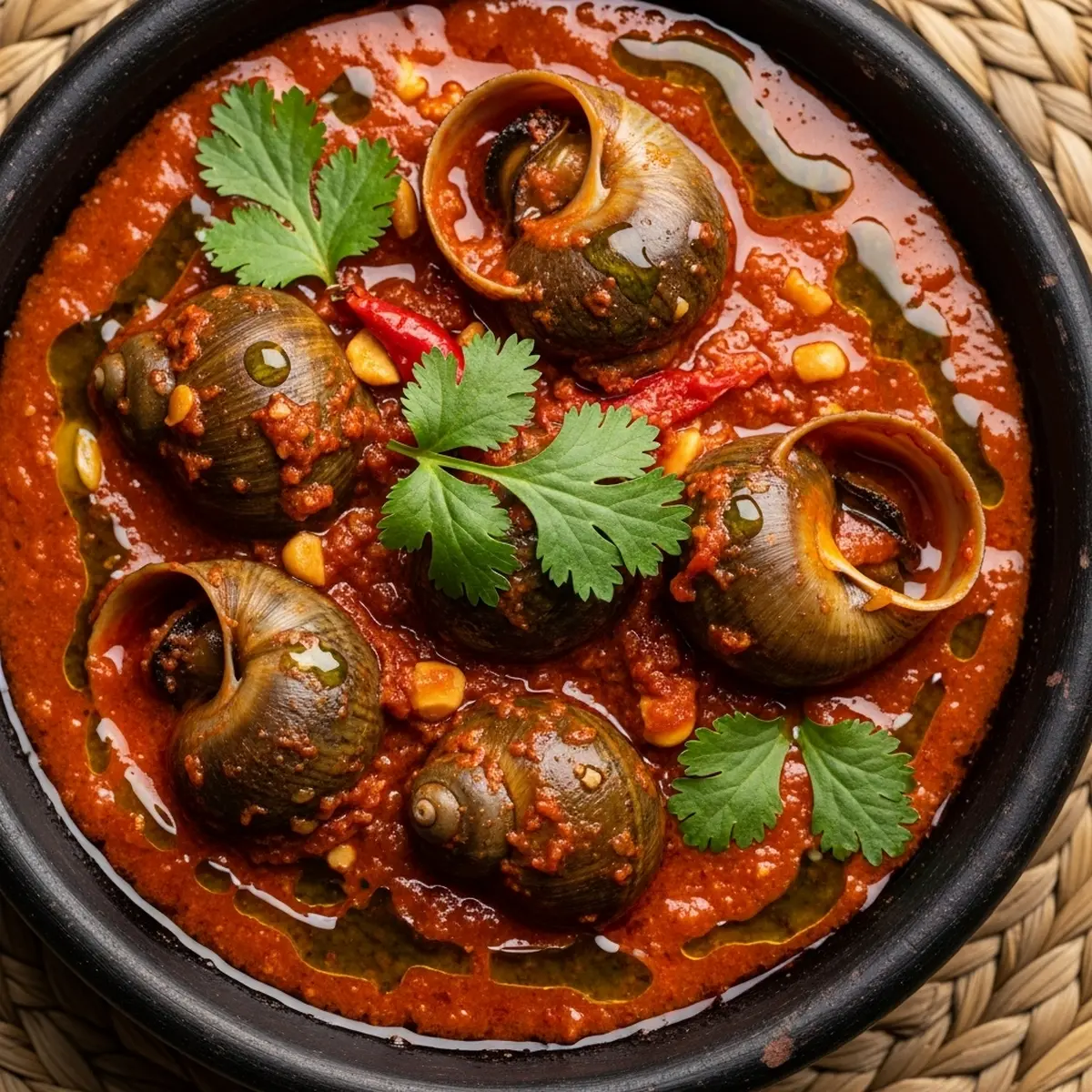
Nguri (Búzio) – Spicy Angolan Snail Stew
In the forested regions and riverbanks of Angola’s interior, local communities have long harvested snails (nguri or búzio) as a traditional delicacy. Today, these tender freshwater snails are transformed into a savory stew that highlights two quintessential African ingredients: peanuts (ginguba) and piri-piri chilies. The snails (after careful cleaning and boiling to remove slime) are simmered in a thick, vibrant…

Caranguejo de Moçâmedes
In the coastal heart of Namibia and southern Angola, Caranguejo de Moçâmedes is a celebrated treasure from the sea. These large red crabs – a prized catch from the deep waters off Namibe (formerly Moçâmedes) – have sweet, succulent meat and are traditionally boiled alive then served tableside. The ritual begins by seasoning seawater or salted water with a mix…

Caldeirada de Peixe
In coastal Angolan towns, Caldeirada de Peixe is a beloved fishermen’s stew bringing together the day’s catch in one simmering pot. This dish owes its name and style to Portugal, but Angolan cooks have made it their own by layering local ingredients and spices. Early morning fish markets on the Atlantic coast offer everything from fresh snapper and corvina to…

Chikuanga
Chikuanga (also known as cassava bread or kikwanza) is a storied Angolan staple with roots in rural tradition. This fermented cassava loaf, steamed in banana leaves, has a dense, chewy texture and a mild sour aroma. In northern Angola, households prepare it days ahead: freshly harvested cassava tubers (manioc) are peeled and soaked in water for 2–3 days to ferment…

Mufete
Mufete is a festive Angolan platter centered around grilled whole fish and an array of sides. Imagine a charcoal-grilled bream or tilapia, smoky and crisp-skinned, surrounded by boiled tubers and a scoop of stewed beans. The dish typically includes sweet potatoes, plantains, cassava, and a tangy onion–tomato relish. Each component adds color and flavor: the golden fried sweet potato and…

Doce de Ginguba
Doce de Ginguba is a beloved Angolan sweet: chewy peanut fudge made from just roasted peanuts, sugar, and water. The name literally means “ginguba candy,” with ginguba being the local word for peanut. Despite its simple ingredients, the result is a treat that’s crunchy, nutty, and deeply satisfying. It is similar to peanut brittle but has a more even, fudge-like…

Couscous / Seksou / Kesksu
Couscous (called seksou or kesksu in some regions) is more than a recipe in Algeria – it is a centuries-old ritual woven into daily life and communal gatherings. Legend has it that ancient Berbers knew how to make couscous with simple ingredients of wheat semolina and water. Today each family has its own technique (some even steam it with saffron…

Mchawcha (Kabyle Tahboult)
Mchawcha (sometimes called tahboult) is a traditional Kabyle honey cake often described as an “omelette” cake. The simple batter contains eggs, flour, semolina, a little oil, and a hint of orange blossom water or lemon zest. It is cooked slowly in a well-greased skillet until puffed and golden on the outside. While still warm, the cake is generously drizzled with…
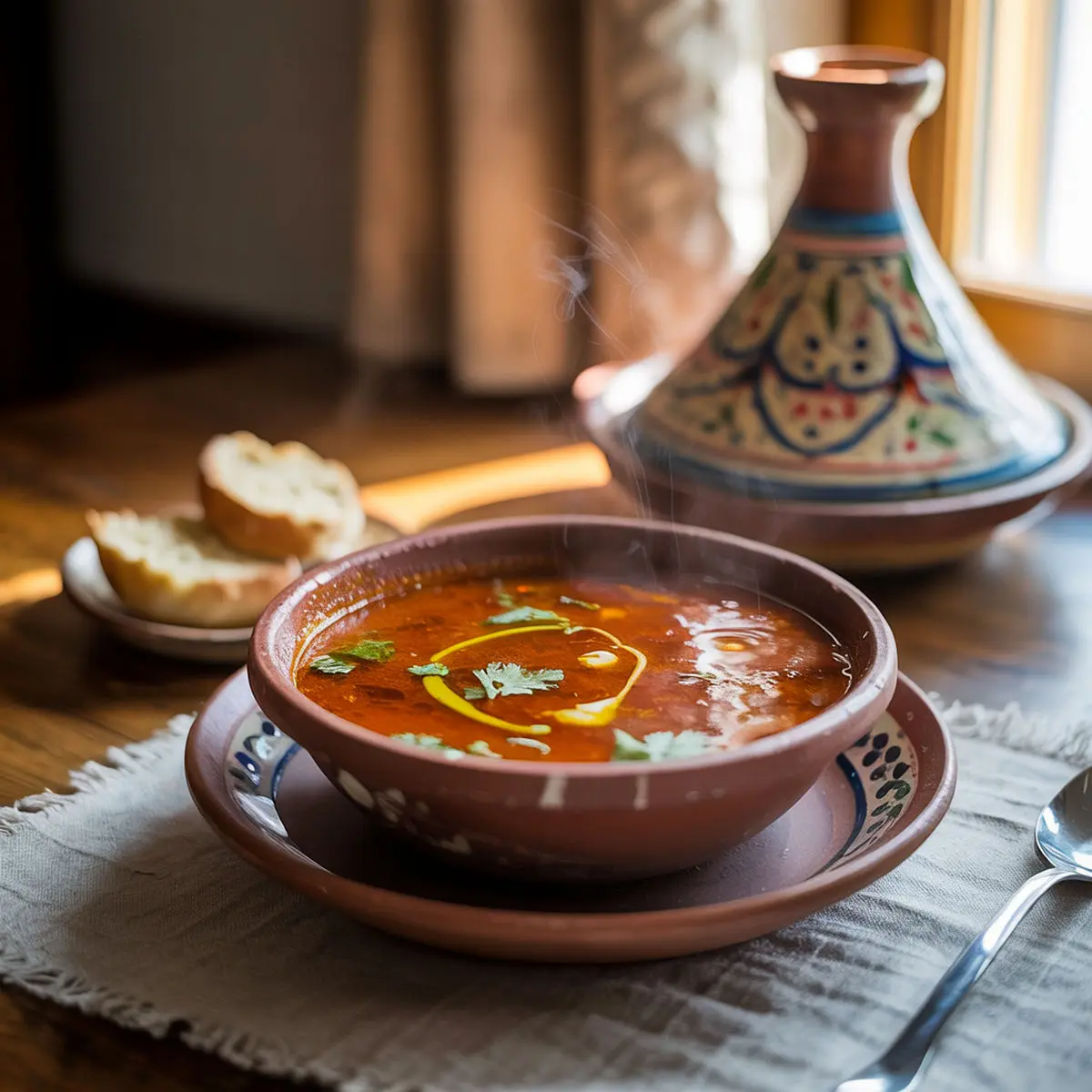
Harira (Algerian-Style Soup with Egg & Flour)
Harira is a beloved North African soup served at Ramadan, and the Algerian version is hearty and warming. In this recipe, tender lamb and aromatic vegetables are simmered in a tomato broth with chickpeas and fragrant spices like ginger and cinnamon. The broth is then enriched with a mixture of beaten egg and flour (called al-’aqda) to give the soup…







