

Soutzoukakia Smyrneika – Greek Cumin-Spiced Meatballs in Tomato Sauce
Course: MainCuisine: Greek, SmyrnaDifficulty: Moderate4
servings20
minutes40
minutes450
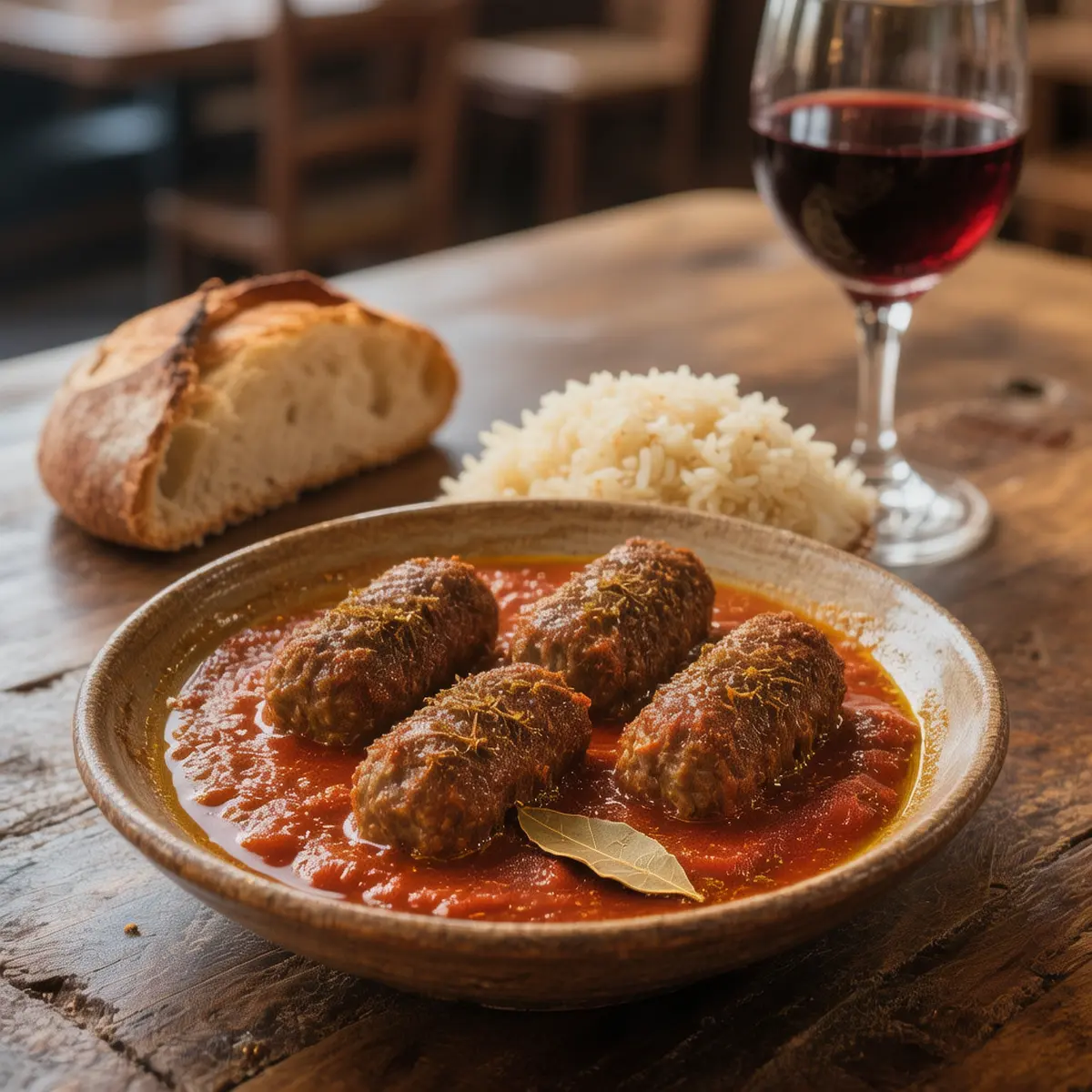
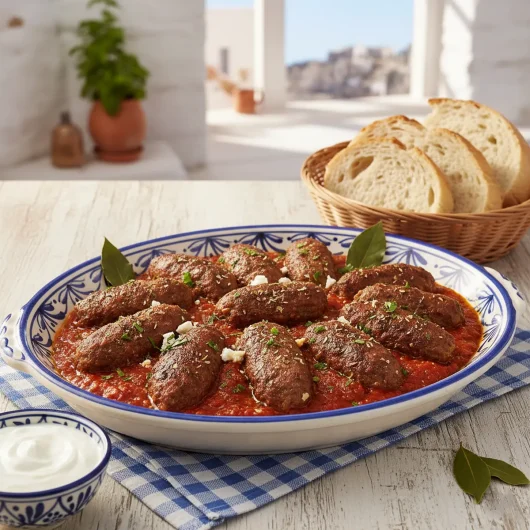
kcalIn this recipe, ground beef (or a mix of beef and lamb) is combined with soaked bread, garlic, cumin, and other seasonings, then formed into small, elongated meatballs. These are lightly fried in olive oil, then cooked in a homemade tomato sauce scented with onion, garlic, and a touch of cinnamon. The sauce thickens around the meatballs over about 30 minutes. Serve the soutzoukakia piping hot, garnished with parsley, alongside rice, orzo, or roasted potatoes for a warming meal.
Ingredients
1 lb (450g) ground beef: For richer flavor, mix half beef and half lamb if desired. (Substitute ground pork for a milder taste.)
1 slice stale white bread (about 1/4 cup breadcrumbs), soaked in 2 tablespoons red wine: Adds moisture and tenderness. (Use gluten-free bread if needed.)
Juice of 1 small lemon: Brightens the meat’s flavor. (Alternatively use 2 teaspoons white vinegar.)
1 small onion, finely chopped: Adds moisture; divide between the meat mixture and the sauce. (Onion powder could substitute if desired.)
3 cloves garlic, minced: Flavorful and aromatic; divide between meat and sauce.
1 tablespoon olive oil (plus more for frying): Fat for cooking and flavor.
1 teaspoon ground cumin: Signature spice of soutzoukakia.
½ teaspoon ground cinnamon: Adds warmth.
½ teaspoon ground allspice (optional): Adds depth (or use a pinch).
Salt (about 1 teaspoon) and freshly ground black pepper (¼ teaspoon): Seasonings for the meat and sauce.
- For the tomato sauce
1 tablespoon olive oil: For sautéing the base.
½ onion, chopped; 1 clove garlic, minced: Continue the flavor base.
1 (14 oz) can crushed tomatoes or tomato sauce: Forms the sauce base. (Use grated fresh tomatoes if preferred.)
½ cup water or stock: To thin the sauce as needed.
¼ teaspoon ground cinnamon (or a cinnamon stick): Echoes the spice in the meat.
Sugar (pinch, optional): Balances acidity if the tomatoes are very tart.
Parsley, chopped (for garnish): Adds fresh color at the end.
Directions
Prepare the meatball mixture. In a bowl, add the soaked bread (squeeze out excess liquid) to the ground meat. Add lemon juice, half of the chopped onion, minced garlic, olive oil, cumin, cinnamon, allspice, salt, and pepper. Mix gently with your hands until combined (about 2 minutes). If the mixture feels very soft, chill it for 10 minutes.
Form the meatballs. With damp hands, shape the mixture into oblong meatballs about 1.5–2 inches long and ¾ inch thick. The logs should be compact but not tightly packed. You should get roughly 12–15 soutzoukakia.
Fry the meatballs. In a large skillet, heat 1 tablespoon of olive oil over medium heat. Add the meatballs (working in batches) and fry, turning occasionally, until lightly browned on all sides (about 5–6 minutes total). They will finish cooking in the sauce, so a light brown color is fine. Remove them to a plate.
Make the tomato sauce. In the same skillet, add another tablespoon of oil. Sauté the remaining chopped onion until translucent (about 3 minutes). Add the remaining garlic and cook for 30 seconds. Stir in the crushed tomatoes and ½ cup water. Season with salt, pepper, and a little sugar if using. Sprinkle in the ¼ teaspoon ground cinnamon. Bring to a simmer.
Simmer meatballs in sauce. Return the fried meatballs to the pan, nestling them into the sauce. Cover and let simmer gently for 25–30 minutes, turning the meatballs halfway through, until they are cooked through and the sauce has thickened around them. Add more water if the sauce reduces too much.
Finish and serve. Remove from heat. Sprinkle chopped parsley over the soutzoukakia. Serve them hot with plenty of sauce spooned over a bed of rice, orzo, or mashed potatoes. Lemon wedges on the side brighten the dish.
Tips, Troubleshooting & Variations
- Serving Suggestions & Pairings - Accompaniments: Traditionally, soutzoukakia are served over a pile of rice that soaks up the sauce. Mashed potatoes or couscous are also good bases. A wedge of lemon on the side brightens each bite. Sides: A simple salad (e.g., cucumber and tomato with olive oil) cuts the richness, or roasted vegetables add variety. Grilled zucchini or eggplant would complement the spices nicely. Drinks: A dry red wine or a cold beer pairs well. For a fun twist, serve with a glass of ouzo or tsipouro and perhaps a sweet dessert like Greek honey cake or loukoumades.
- Storage & Reheating - Make-ahead: Soutzoukakia can be made a day ahead; the flavors deepen overnight. Refrigeration: Cool completely, then store in an airtight container (meatballs covered in sauce) for up to 3 days. Freezing: Freeze cooked meatballs and sauce (with extra sauce to prevent drying) in a sealed container for up to 3 months. Thaw overnight before reheating. Reheating: Warm gently on the stove over low heat, adding a splash of water if needed. The meatballs will stay juicy in the sauce.
- Variations & Substitutions - Alternate meats: Use a mix of beef and lamb for classic flavor, or try pork. For leaner meatballs, use turkey and add an extra egg or binder. Baking option: For less fat, bake the meatballs instead of frying. Place them on a baking sheet and bake at 375°F for 15 minutes before adding to the sauce. Vegetarian version: Create “meatballs” from cooked lentils and rice with Greek seasonings. Form and bake them, then simmer in the same tomato sauce. Spice level: For heat, add crushed red pepper or cayenne to the meat. For a milder taste, use less cinnamon. Herb tweaks: Mix fresh mint or dill into the meat for extra aroma.
- Chef’s Tips - Soak the bread: Ensure the bread is fully soaked in wine (or water) so it blends smoothly into the meat. Squeeze out extra liquid before mixing to avoid sogginess. Oil temperature: Use medium heat for frying; too hot and the outside will burn before the inside cooks. Shape gently: Keep the meatballs compact but not over-packed. Chill the mixture if it’s too soft to help shape them easily. Check doneness: Tear one cooked meatball open to ensure the rice inside is fully done before adding eggs or serving.
- Optional Add-Ons - Shopping list: Ground beef (or lamb), stale bread, onion, garlic, tomatoes, rice, lemon, parsley, olive oil, spices (cumin, cinnamon). Prep ahead: The meatball mixture can be formed and covered in the fridge a day ahead. The sauce can be made and kept to simply add meatballs and reheat. Tip: Keep extra sauce warmed on the side, as youvarlakia sauce sets.
- Equipment Needed - Large mixing bowl, Skillet or frying pan, Spatula or tongs, Baking sheet (if opting to bake meatballs), Knife and cutting board, Measuring cups and spoons.









