

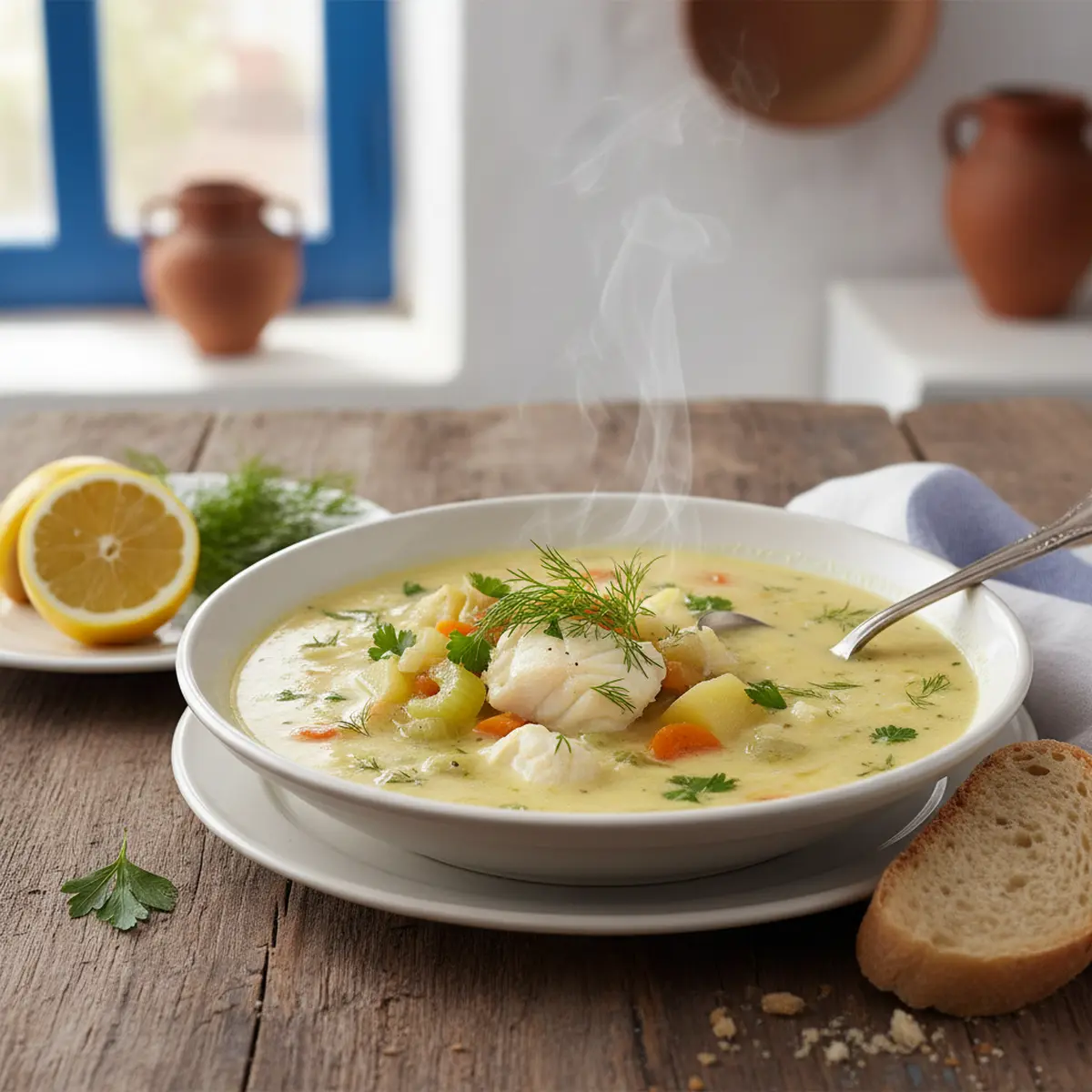

Greek Fish Soup with Avgolemono (Psarosóupa Avgolemonó)
Course: SoupsCuisine: GreekDifficulty: Easy6
servings20
minutes45
minutes330
kcalThis Greek fish soup combines tender white fish, vegetables, and rice in a lemony egg-cream broth. To prepare, sauté onions, celery and carrot in olive oil until softened. Add pieces of cleaned fish (whole small fish or fillets) and enough water to cover. Simmer until the fish is cooked through and begins to flake. Remove the fish and set aside. Then add rice (or cubed potato) to the pot and simmer until tender. Meanwhile, whisk together eggs and lemon juice in a bowl. When the rice is cooked, gradually stir a ladleful of hot broth into the egg-lemon mixture to warm it, then slowly whisk this creamy mixture back into the soup pot. Heat gently until the soup thickens slightly (do not boil). Flake the reserved fish into bite-size pieces and return it to the pot. Season and serve hot. The result is a silky, bright soup that’s comforting and full of Greek island character.
Ingredients
2–3 cups mixed white fish pieces: small whole fish (cleaned) or fillets (snapper, cod, or bass work well); adjust quantity for 6 servings.
3 Tbsp extra-virgin olive oil
1 large onion: finely chopped
2 celery stalks: finely chopped
2 carrots: peeled and diced
1 large potato: peeled and diced (or 1/2 cup rice as an alternative thickener)
4 cups water or fish stock: (use stock from cooking the fish heads/bones, or use a light broth)
2 bay leaves (optional)
Salt and freshly ground black pepper: to taste
3 large eggs (or 4 egg yolks): lightly beaten
Juice of 2 lemons (about 1/2 cup): freshly squeezed
Chopped dill or parsley: for garnish
Directions
Sauté the vegetables. In a large soup pot, heat the olive oil over medium heat. Add the chopped onion, celery, and carrot. Sauté for 5–7 minutes, stirring occasionally, until the vegetables soften and the onion turns translucent.
Poach the fish. Gently place the fish pieces in the pot on top of the vegetables. Add the water or stock and bay leaves if using. Bring to a gentle boil, then reduce heat and simmer for about 12–15 minutes, until the fish is just cooked and beginning to flake. Season lightly with salt and pepper. Carefully remove the fish with a slotted spoon, and set aside covered to keep warm. Leave the soup base simmering.
Cook the potato or rice. Add the diced potato (or rice) to the simmering broth. Continue cooking until the potato is very tender or the rice is fully cooked (about 10–15 minutes). The broth will thicken slightly from the starch. Taste and adjust seasoning. Remove and discard the bay leaves if used.
Prepare the avgolemono. In a separate bowl, whisk together the eggs (or yolks) and lemon juice until combined. Very slowly drizzle a ladleful of the hot soup broth into the lemon-egg mixture, whisking constantly, to temper the eggs. Continue adding broth by the tablespoon until the egg mixture is warmed (this prevents scrambling).
Combine and finish. Slowly pour the tempered egg-lemon mixture back into the soup pot, stirring gently. Heat the soup over low heat until it thickens slightly and becomes silky (do NOT let it boil, or the eggs will curdle). Flake any bones or skin from the reserved fish and stir the fish meat back into the soup. Remove the pot from heat.
Serve hot. Ladle the soup into bowls, making sure each serving has plenty of fish and vegetables. Garnish with chopped dill or parsley and a grind of black pepper. Serve immediately with extra lemon slices on the side.
Tips, Troubleshooting & Variations
- Serving Suggestions & Pairings: Serve psarosóupa piping hot in deep bowls. A spritz of extra lemon juice and a pepper mill at the table lets everyone adjust brightness and spice. This soup pairs well with a light salad (cucumber-tomato or a simple green salad) and warm crusty bread or kalamata olives. A crisp Assyrtiko white wine or a cold beer is a classic accompaniment. Leftovers can be eaten the next day for a quick comfort meal.
- Storage & Reheating: Store any leftover soup in the refrigerator for up to 2 days (keeping the fish separate from the broth can help preserve texture). Reheat gently on the stove; stirring will re-emulsify the avgolemono. The soup will thicken as it cools, so you may need to thin it with a bit of water or extra broth when reheating. The flavor is often even better the next day as the lemon and garlic meld.
- Variations & Substitutions: Feel free to use different white fish (sea bass, snapper, grouper) or a mix for complexity. If no potato or rice is available, cooked orzo or other small pasta can be added before the eggs. For a more herbaceous soup, add dill, celery leaves or a bay leaf while simmering. Vegetarian version: omit fish and use vegetable broth, then add steamed cauliflower or beans to the avgolemono for substance. Some cooks add a teaspoon of butter at the end for richness (non-fasting).
- Chef’s Tips: Do not boil once the egg-lemon mixture is added, or it will separate. Whisk the eggs and lemon thoroughly first to avoid clumps. Tempering is key: add warm broth to eggs slowly while whisking to gently raise their temperature. Use a whisk and steady motion when adding the eggs back to the pot. Adjust the lemon amount to taste – Greek soups tend to be quite tart. Always taste the soup before adding salt, since both the fish and lemon contribute saltiness and sharpness.
- Optional Add-Ons: Shopping list: Extra lemons, fresh dill or parsley, a bottle of ouzo or white wine. Make-ahead: You can prepare the broth base and poach the fish a day ahead (cool and refrigerate). Just before serving, reheat, add the potato or rice, and finish with the eggs and lemon.
- Equipment Needed - Large soup pot or Dutch oven, Cutting board and knife, Ladle and whisk, Colander or slotted spoon (to remove fish), Bowl for tempering eggs, Serving bowls.









