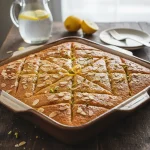
Portokalopita – Greek Orange Phyllo Cake (Traditional Recipe)
Course: DessertCuisine: GreekDifficulty: Medium12
servings35
minutes45
minutes450
kcalThis traditional Greek Portokalopita is a syrup-soaked orange phyllo cake that marries crispy pastry with bright citrus. Bits of dried phyllo are mixed into an egg-yogurt-orange batter, baked into a fluffy sponge, then drenched in an aromatic orange sugar syrup. The cake is best served the next day when fully syrupy and tender. Every forkful delivers a balance of sweet and tangy: layers of phyllo softened by rich orange-infused syrup. Portokalopita brings a sunny, fragrant finish to any meal, perfect topped with a scoop of ice cream or a spoonful of yogurt.
Ingredients
Phyllo dough (450 g): Torn into small pieces and dried; creates the cake’s light, flaky structure. (Can use leftover phyllo scraps from other recipes.)
Granulated sugar (1¼ cups, ~250 g): Provides sweetness both in the batter and the syrup. Fire-roasted sweetness is not needed here—plain white sugar works best to let the orange flavor shine.
Large eggs (4): Lightly beaten and folded into the batter, eggs help hold the cake together and yield a custardy texture.
Greek yogurt (1 cup, ~245 g): Thick, tangy yogurt adds moisture and tender richness. Use plain whole-milk or 2% yogurt; Greek-style gives a denser crumb.
Orange zest (2 tablespoons, from ~2 oranges): Freshly grated zest adds intense citrus aroma. Avoid the bitter white pith; just grate the colored peel.
Fresh orange juice (3/4 cup, ~180 ml): Use freshly squeezed juice for natural orange flavor. Concentrate the juice by simmering it in the syrup.
Vanilla extract (1 teaspoon): A touch of vanilla rounds out the citrus notes and adds warmth to the batter.
Baking powder (1 teaspoon): Gives the cake a little lift; ensure it’s fresh for best rise.
Pinch of salt: Balances the sweetness in the batter.
Vegetable oil (or sunflower oil, 1 cup, ~240 ml): Neutral oil is mixed in for moistness. Olive oil can be used for authenticity (especially in Greece) but yields a heavier flavor; vegetable or sunflower oil keeps the cake lighter.
- Orange sugar syrup
Water (1½ cups, ~360 ml) – Forms the base of the syrup.
Granulated sugar (1½ cups, ~300 g) – Sweetener for the syrup.
Fresh orange juice (1 cup, ~240 ml) – Concentrated by simmering, adds more orange flavor.
Cinnamon stick (1) and whole cloves (3–4) (optional): Spice the syrup with a warm note. Remove whole sticks before pouring.
Honey (1 tablespoon, optional): Stirred in at the end for a floral touch and to help the syrup set.
Lemon peel (thin strip) (optional): Adds a hint of complexity; remove before using syrup.
Directions
Prepare the phyllo: Preheat oven to 200°F (95°C). Layer each phyllo sheet on a baking tray and “scrunch” gently. Bake 10–12 minutes, flipping halfway, until phyllo is dry and crumbly. Remove and cool. Tear or crumble into bite-sized flakes. (Drying time: 20–25 minutes.)
Make the syrup: In a saucepan, combine water, sugar, orange juice, and spices. Bring to a boil, then lower heat. Simmer until sugar is fully dissolved and syrup is fragrant, about 5–10 minutes. Stir in honey and lemon peel; remove from heat to cool. (Let cool at least 15–20 minutes.)
Mix batter: Preheat oven to 350°F (175°C). In a large bowl, whisk eggs and sugar until pale and slightly frothy (about 1 minute). Stir in orange zest, yogurt, and vanilla until smooth. Whisk in baking powder and salt. Drizzle oil in a thin stream while stirring until emulsified. Stir in orange juice.
Combine with phyllo: Add the dried phyllo flakes to the batter. Fold gently to coat; the phyllo will puff and absorb moisture. Try not to overmix – the goal is that flakes remain distinct. Transfer batter to a greased or parchment-lined 9×13-inch pan. Smooth the top evenly. (Prep time: 15 minutes.)
Bake the cake: Bake in preheated oven for 45–50 minutes, until the cake is golden and a toothpick comes out with very moist crumbs (some syrup must still be absorbed). If cake browns too quickly, cover loosely with foil for the last 10 minutes. Remove from oven. (Bake time: 45–50 minutes.)
Add syrup: Immediately after baking, cut the hot cake into squares or diamonds. Slowly ladle the cooled orange syrup over the hot cake, aiming to cover every piece. Pour evenly, adding more if needed until the syrup is absorbed. The cake will hiss as syrup hits it – this ensures it seeps deep.
Cool and serve: Let the cake rest at room temperature until the syrup fully absorbs (at least 2 hours, preferably overnight in refrigerator covered). By serving time the cake will be juicy but fully set. Serve slices at room temperature, optionally topped with vanilla ice cream or Greek yogurt.
Tips, Troubleshooting & Variations
- Serving Suggestions & Pairings: Portokalopita shines with plain accompaniments. A scoop of vanilla ice cream or a dollop of thick Greek yogurt contrasts the sweet, tangy cake. It is customarily served with coffee or herbal mountain tea. For color, sprinkle chopped pistachios or slivered almonds atop each slice. Guests enjoy it on dessert plates with a mint leaf garnish.
- Storage & Reheating: Store leftovers covered in the fridge for up to 3–4 days. The cake actually softens with time, becoming even juicier. Reheat gently (15 seconds) if desired in microwave or a few minutes in a low oven – but it’s delightful served cold too. The syrup will thicken slightly when chilled, so slices can be enjoyed without running syrup. Frozen: tightly wrap individual pieces and freeze up to 1 month; thaw and warm briefly before serving.
- Variations & Substitutions - Gluten-Free: Substitute almond flour (or a GF flour blend) for a portion of the phyllo (you’ll lose the flakiness but gain a moist cake). Omit phyllo altogether and bake a semolina cake instead (see Revani). Vegan: Replace eggs with flaxseed “eggs” (3 tbsp ground flax + 9 tbsp water, chilled) and use coconut or plant yogurt. Use agave or maple syrup with fruit juice for the soaking syrup. Less Sugar: Reduce sugar by 25–30% in both cake and syrup; offset sweetness with a splash of lemon juice or more orange zest. Use 100% Greek yogurt to lower sugar content. Orange-Leak Twist: Stir a handful of shredded orange segments or marmalade into the batter for extra texture. Alternatively, make a lemon or lime version by swapping citrus.
- Chef’s Tips - Dry Phyllo is key: Ensure phyllo is fully dried (crispy) before mixing. Any residual moisture makes the cake soggy. If too moist, spread flakes on a pan and bake at 100°C for 5–10 more minutes to crisp. Syrup test: To check syrup readiness, drip a bit on a cool plate – it should hold shape slightly (not completely runny). Remember that syrup thickens a bit more as it cools. Even syruping: Pour syrup slowly and in stages, allowing cake to absorb in between. This avoids pooling on top and ensures bottom pieces get syrup. A bamboo skewer poked into the cake helps syrup sink faster.
- Optional Add-Ons: Shopping List: 2–3 large oranges (for zest and juice); plain Greek yogurt; a cinnamon stick. Make-Ahead: The syrup can be made 1 day ahead and refrigerated (warm again to use). The cake itself improves if baked and then refrigerated overnight. You can assemble phyllo flakes up to 1 day ahead, keeping them in a sealed container.
- Equipment Needed - Large mixing bowl and whisk, 9×13-inch baking pan (or similar), Small saucepan (for syrup), Rubber spatula (for folding batter), Zester or microplane (for orange zest).