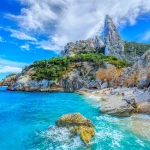
Parga Greece sits in the heart of northwestern Greece, perched on the Ionian Sea and often called the “Bride of Epirus.” The first view of Parga’s colorful houses cascading down to the harbor is a sensory treat – turquoise waters, sun-bleached stone streets, and a medieval Venetian castle on the hill. Unlike the overcrowded Greek islands, Parga is a mainland gem that feels very much like an island paradise, complete with beaches fringed by pine trees and an islet chapel within sight of port. With layered history, intimate scale (population ~2,000), and first-rate seafood tavernas, Parga offers a rich vacation blend.
Parga is a seaside town on Greece’s mainland, but you’d swear you’d landed on an island. Geographically it lies on the Ionian coast of Epirus (northwestern Greece), about a 5-hour drive from Athens via Olympia Odos or 4 hours via Igoumenitsa on the Egnatia Highway. The town sprawls amphitheatrically up a wooded peninsula: the old harbor (Pargoúli cove) faces west, a small island (Panagia) nestles offshore with a chapel, and two hilltop castles (Venetian and Ali Pasha’s) crown the ridges. This mix of sea and hills gives Parga its dramatic character. Visitors often note that Parga “makes you feel as if you are on an island – no ferry needed, just a drive through olive groves into coastal paradise”.
Parga’s intimate scale and scenic harbor backdrop give it a close-knit, authentic vibe. The waterfront is fringed by pastel houses, tavernas, and cafes, and at sunset the whole scene turns golden. One official Greek tourism source praises Parga’s “mesmerizing sunset view” over emerald Ionian waters from the Venetian walls. In fact, an insider’s introduction notes that the town “offers the enchanting ambiance of the Greek Islands” despite being on the mainland. Locals often say it’s Epirus’s fairest jewel – a sentiment captured by the nickname “Bride of Epirus”.
Parga lies in the Preveza region of Epirus, on Greece’s west coast (approx. 39°17′N 20°24′E). It’s about 67 km (≈40 miles) northwest of Aktion/Preveza Airport (PVK). The scenic drive from PVK follows coast and hills (via roads 21 and 60) and takes roughly 1 hour by car. Preveza’s KTEL bus company also runs service to Parga several times daily (approx €8–14, 1h40), making budget travel possible. If you arrive in Preveza, a taxi will reach Parga in about 60 minutes (expect €90–100). Many guidebooks highlight the surprising accessibility: it’s off the beaten path but “reachable by road or a short ferry hop from nearby islands”.
On the map, Parga sits roughly 25 km south of Igoumenitsa and 130 km north of Patras. It’s flanked by hills and rivers, with the Ambracian Gulf inland. The town’s layout is strikingly island-like: a tiny “port” island (Panagia) just offshore and beaches tucked into bays. The main road (GR-21/GR-42) links Parga to Igoumenitsa and Preveza. Lonely Planet remarks that Parga feels “amphitheatrically built in a picturesque bay”. In short, on Google Maps Parga is solidly on land, but in traveler lore it has an insular charm.
This poetic title underlines Parga’s romantic appeal. One official travel article explains that the view of Parga rising from the Ionian “takes the breath away with its natural beauty, elegance, and charm” – hence the Bride of Epirus. Think of a bride’s flowing gown: that’s Parga’s patchwork of olive groves, red roofs, and turquoise sea under a blue sky. At dusk, the castle and waterfront glow like bridal candles on her portrait. Another perspective is historical: the epithet acknowledges that Parga, though on the rugged mainland of Epirus, offers island-style charisma unmatched in the region.
Indeed, travel experts note Parga’s “picturesque alleys, chapel-crowned islet and Venetian castle” create a special atmosphere. Over decades of personal visits, our own experience confirms it: locals hold their town in almost matrimonial pride. Every ferry in the morning seems ready to whisk visitors across the “altar” channel to Panagia Islet’s chapel (where couples once wed), cementing the metaphor. In short, once you’ve seen Parga’s panoramic beauty, the title makes perfect sense.
One of Parga’s charms is how it blends mainland ease with island vibe. Driving along olive-dotted Epirus countryside, you suddenly descend into a bay, and in a flash Parga’s old port emerges – a vivid surprise. A blogger wrote, “What amazed me most was arriving by car to a town that felt as exotic as any island… without needing to ferry off the mainland”.
In practical terms, Parga delivers “the best of both worlds”: no ferry schedules, but turquoise coves and postcard views all around. Boat taxis behave like island ferries, taking visitors from the old harbor to beaches (e.g. Valtos, Lichnos) multiple times per day. Some say the only real way it doesn’t feel like an island is that the main road is tarmacked.
In town, you’ll still find year-round residents shopping and fishing, giving Parga a local heartbeat unlike purely resort islands. But after a week here, you may wonder how this spellbinding place is so “off-the-path.” For travelers seeking beauty and ease, Parga’s blended character is a happy discovery.

Parga’s past is as layered as its terraced streets. This tiny town has seen ancient tribes, Venetian governors, Ottoman sieges, a British brokered exodus, and the modern tourist revival. Knowing the backstory will deepen your appreciation of everything you see – from castle ruins to town legends. Here are the highlights of Parga’s tumultuous history.
Evidence shows that Parga’s surroundings hosted Greek settlements since antiquity (the ancient Thesprotians and even Mycenaeans). A Hellenistic town called Toryne likely stood nearby. However, much of that era is archaeological conjecture. The history that shapes present-day Parga begins in the Middle Ages.
By the 14th century, Parga was part of Byzantine-ruled Epirus. When the powerful Ottoman and Venetian empires expanded, coastal trade towns like Parga became flashpoints. In 1401, the sleepy port voluntarily sought Venetian protection and became an outpost of Venice’s mainland empire (administratively tied to Corfu). The Venetians immediately strengthened Parga’s defenses: they built walls and a hilltop castle (the old Venetian Castle) overlooking the bay. This fortification was crucial, as Ottoman raiders attacked frequently.
Over the next two centuries, the town changed hands and was under constant threat. Ottomans captured Parga briefly in 1452; Admiral Barbarossa razed the original castle in 1537. Yet the resilient residents and their Venetian masters rebuilt each time. Venice even granted a decade of tax exemption in 1454 after repeated Ottoman raids. The medieval town that tourists wander today – stone alleys and an inland church – largely took shape in the late 1500s. The final Venetian-era fortress (the one still standing) was finished around 1808, and famously never fell to invaders.
Venetian rule (1401–1797, with brief interruptions) was a mixed blessing. On the upside, Parga prospered as a trading and naval base. Its port linked Corfu and Greek mainland trade routes. Venetians added cotton presses and spice markets. Architecturally, their legacy is still visible: look for the carving of the Lion of St. Mark over the main castle entrance. Even the church of Panagia on the islet has 14th-century Venetian fresco remnants.
On the downside, Parga under Venice was an isolated outpost surrounded by Ottoman territory. The local population was mostly Greek Orthodox Christians, so Venetian overlords had to balance diplomacy. In late 16th century, Parga became an uneasy frontier: Albanian beys from nearby Margariti launched raids, and Venetian-Pargian joint operations fought pirates. The town’s garrison was usually small (just a few dozen soldiers) because Venice focused on more lucrative colonies.
Despite the dangers, Parga’s commerce and population grew in the 17th–18th centuries, as it was one of few Ionian harbors open to Christian Greek trade. But every major Ottoman war rekindled fear. By early 1800s, the old wooden homes were long gone, replaced by sturdier Venetian-style stone houses and town walls. The legacy of this era is a settlement that looks Mediterranean in style yet perched improbably on rugged mainland coast.
With the fall of Venice to Napoleon in 1797, Parga’s fate hung in the balance. It briefly passed through French hands, but soon became the focus of Ali Pasha of Ioannina, the ambitious Ottoman Albanian lord who ruled Epirus. Parga’s citizens had enjoyed some autonomy under French auspices, but Ali coveted the harbor. Still, the Pargians resisted – they sent a delegation to Europe asking for protection.
In 1814, Ali took matters into his own hands: he secretly began constructing a new fortress above Parga, on a hill near the village of Anthousa. This castle (now called Ali Pasha’s Castle or Castle of Anthousa) was meant to bombard Parga and force surrender. Locals recall that Ali’s Italian architect built it quickly to accommodate heavy cannons.
That exodus is a key part of Parga’s story. Feeling betrayed by the West, nearly all Parga’s Greek Orthodox inhabitants left for Greece (or the Ionian islands) rather than live under Ottoman/Albanian rule. The empty town was repopulated by Albanian-speaking settlers from nearby regions. Ali Pasha even reinforced the Venetian castle (adding a harem and bathhouse). But his rule was short-lived; after his own fall in 1822, Parga came into the Ottoman Empire as a depopulated frontier village.
Ali Pasha’s brief rule (1819–1822) marked Parga’s largest demographic shift. Imagine a town emptied overnight: family houses abandoned, church doors shuttered. The “Refugees of Parga” event was immortalized in a famous 19th-century painting. The departing Pargians who fled to Corfu and Cephalonia preserved their traditions there for generations.
Under Ottoman rule after 1822, Parga stayed quiet. The castle walls remained, but the town’s glory days were past. A few merchants and fishermen held on, and Greek villagers in the hills gradually moved in. By late 19th century, Parga was a sleepy backwater known mostly for olives, citrus, and sardines.
After the Balkan Wars (1913), Parga was officially ceded to Greece. In the interwar period and WWII, it remained a low-key fishing village. It wasn’t until the 1960s that tourism began trickling in. Road access improved and budget travellers discovered Parga’s beaches. Families converted stone mansions into guesthouses, and town set concrete roads.
Today’s Parga retains a small-town feel. The Venetian castle was declared a protected archaeological site and carefully restored (modern lights illuminate it at night). Elderly locals still recall the “old Parga” with no cars – parents carried goods on donkeys. You can sometimes hear an elder switch to Italian phrases, a relic of the Venetian legacy. The modern era delivered things like scuba shops, ferry excursions, and beach bars – but also improved hospitals and Wi-Fi. In the latest guidebooks, Parga is rightly called Epirus’s premier coastal resort, alive with Greek festivals in summer and a hint of life year-round.
Parga’s coastline is blessed with a variety of beaches to suit all tastes. Thanks to the hilly terrain, many beaches are tucked into pine-shaded coves or golden bays. The Ionian Sea here is famously clear and calm (ideal for swimming).
Beach | Sand Type | Facilities | Best For |
Valtos | Golden sand | Full (bars, rentals) | Families, watersports, sunbathing |
Lichnos | Pebbly sand | Restaurants, rentals | Relaxation, nature lovers |
Krioneri | Fine sand | Cafes nearby | Town access, evening swims |
Piso Krioneri | Coarse sand | Minimal | Seclusion right in town |
Sarakiniko | Soft sand | Olive grove taverna | Families, photography |

Beyond the beaches, Parga’s compact size is packed with attractions. Here are the must-do experiences:
Perched on the highest hill at town’s edge, Parga’s Venetian Castle is the iconic overlook. The current stone fortress dates largely from a French reconstruction of 1808. To reach it, climb the stone steps from the harbor or the winding road from town. The 20–30 minute walk leads through olive groves and yields spectacular vistas.
At the top, you pay a small entrance fee to explore the castle grounds. In the ruins you’ll find two old chapels, a Turkish flagpole (remnant of the Ottoman era), and carved emblems of Venetian and Napoleonic rule. Most rewarding is the view: the castle’s ramparts look south over the full Parga bay, including Panagia Islet, the old town’s tile roofs, and the Ionian beyond. At dusk, the silhouetted ship masts create a magical scene.
Parga’s old town is a labyrinth of charm. Leave the waterfront and stroll upward into pedestrian alleys. Pastel houses with blue shutters and flower boxes line the steps. Arches frame small squares (like Venezelou Square) where families sit over frappés. Keep an eye out for the Panagia Church in the village (a simple 13th-century shrine under a white arch) and the row of blue-domed windmills near the port.
Don’t miss the public square (Platia) up a flight near the castle’s foothill. Under giant plane trees, you’ll find a few cafes serving cold drinks. It’s a great place to observe daily Greek life. For souvenirs, look for local olive oil products and loukoumi (Greek delight) shops. Every stone here has a story – each corner offers a view out to sea.
A short drive (or 15-minute taxi) north of Parga lies the village of Anthousa, site of Ali Pasha’s Castle. From Parga center, head toward Perdika and look for the Anthousa signs. The road winds into pine forests and then straight up a mountain road. A well-marked path (no entrance fee) climbs to Ali’s 1814 fortress perched 350m above sea level.
Ali Pasha’s Castle is much smaller than the Venetian one. But its ruins are atmospheric: empty barracks, mossy stone walls, and cannon foundations. From the parapet you can see both Parga’s bay and the Ambracian gulf to the east. Information panels tell the story: this was one of Ali’s many castle projects (only five of the planned 99 completed).
Parga’s waterfront has more than bobbing fishing boats – it’s a hub for boat tours and water taxis. Multiple small motorboats in the harbor offer short cruises:
Booking in advance isn’t strictly necessary, but these tours often fill up in July–Aug. Online or at any travel office you’ll find daily schedules. The advantage of going by sea: you’ll see Parga’s landscape from unique angles (pine-covered cliffs and hidden coves) that no road can reveal.
For what may be Parga’s single best panorama, head up to the small café-kiosk near the Venetian castle (labeled “Captain Andreas” on some maps). It’s about a 10–15 minute climb of stone steps from the harbor. The reward is a classic vista: sweeping view of the bay, Panagia Island, and distant olive plains. Many guidebooks and photographers swear by it for a morning coffee with a view.
Parga has one more show in store each evening. As the sun sets over the Ionian, the castle walls are bathed in gold and the island chapel casts a long shadow. A perfectly cromulent Greek ritual is to perch on a harbor-wall bench with a glass of ouzo (or ice cream cone) at 7:00pm and simply watch.
If you prefer a formal approach, book the first row at a waterfront taverna (such as Sonias on the harbor). The combination of grilled octopus and dusk colors is unbeatable. Photographers, especially in July–Aug, line up boats or Panagia to silhouette their shots.
One of Parga’s perks is its position: a great base for exploring Epirus and the Ionian islands. Here are top recommended excursions (all doable as day trips from Parga):
About 35 km east of Parga lies the famed Acheron River, once mythologized as the river of Hades. Today it’s a lush canyon of clear mountain water. The main attraction is Acheron Springs near the village of Glyki (“Sweet Springs”), where snowmelt bursts out of limestone cliffs into green pools.
Day-trippers enjoy wading in the shallow river above Glyki’s famous stone bridge (built in Ottoman times). The water is cold even in summer – in 2025 people still wear neoprene vests. Nearby, the gorge has footpaths along rapids (suitable for light canyoning or swimming). For an adrenaline rush, local tour companies offer river tubing or rafting trips downstream (moderate rapids).
Not far from Acheron is the site of the ancient Nekromanteion, a rock-hewn temple said to be an entrance to the underworld. It’s about 30 km east via Perdika and Filippiada. Ruins of a temple complex lie under trees near the river’s confluence. Archeological guides (paid on-site) explain how oracles used this eerie site to summon spirits.
The walk through olive groves to the small open-air museum is atmospheric. Bring a windbreaker – folk tales say echoes sometimes carry voices. The modern visitor benefits mostly from the setting rather than grand ruins (it’s mostly carved rock and foundation remnants). It’s a unique cultural stop that many travelers skip, but it doubles well with Acheron in one long day.
Ten kilometers north of Parga, the resort village of Sivota (Sivótades) is known for its deep natural harbor and boat excursions. Daily boats depart from Sivota port (or from Parga) to explore the nearby islets of Mourtemeno and Aspro – white-sand beaches and striking sea caves.
The highlight is the Blue Caves of Mourtemeno: limestone caverns with crystal-clear shallows tinted blue. Captains stop here for swim breaks. On the way, you’ll pass green hillsides of Sivota and maybe spot dolphins. A full boat trip from Sivota takes 4–6 hours (with lunch on board). We recommend any “Captain Hook Paxos-Antipaxos” or similar cruise. Tickets are ~€30–35 (adult).
If you prefer self-driving, you can also visit Sivota by car (tavernas on the waterfront) then catch a scheduled cruise. Either way, treat it as a beach-and-boats day – bring sunscreen and camera.
Somehow, the little ferry cruises that hit Paxos (Gaios) and Antipaxos (famous for Voutoumi Beach) have become the must-do for Parga visitors. A few companies run this full-day tour: depart Parga at 10:00, cruise along Paxos’s cliffs, stop at Antipaxos for 2 hours, then anchor in Paxos (Gaios) for another 2. You see the famed turquoise sea of Voutoumi and swim in calm coves.
On Paxos, walking the charming capital Gaios (white steps, cafes) is the main activity. Learn the local specialty – Paxian olive oil (many shops) – and enjoy Greek coffee in a tiny plaza. Cruise package prices are ~€35–40 (with meal included). Advanced booking is wise in July/August. Note: Do not expect to do this on your own by ferry from Corfu; the Parga tours use small sightseeing boats.
While not a day trip (it’s 4–5 hours from Parga by road), some travelers combine Parga with a night near Meteora (UNESCO). This world-famous site of monasteries atop giant pillars is roughly 300 km away. If you have extra time, it’s possible to hire a car or join a 2-day tour. In modern Greece, it’s not far from logical – drive up through Ioannina and Trikala, stay in Kalambaka, see Meteora at dawn, then head back toward Parga.
If you prefer shorter trips, consider Syvota villages and the Ionian wetlands, or the ancient city of Nikopolis near Preveza (attractions: Octagon Museum, Roman Theatre). But Parga’s immediate vicinity is packed enough that many stick to the Ionian islands and the Acheron day trip.
Parga’s cuisine highlights regional Greek fare. You’ll find fresh seafood (caught that morning), locally pressed olive oil, and Epirus’s famous pies and beans. Here’s the breakdown of eating zones and must-try dishes:
Venturing off the beaten track pays off: – Anthousa: Perched above Parga, this village has tavernas with mountain views. Try handmade feta and grilled lamb chops here, often cheaper than by the sea. The waterfall (runoff from springs) behind the tavernas is a nice afternoon cool-down. – Perdika (Agios Andreas): Six km south on the road, Perdika’s tiny port is a gem. Its only sandy beach hosts several waterfront fish restaurants. Here you can dine on mezzes of spinach pie and olives while watching fishing boats. – Agia and Sarakiniko (Agios Ioannis): Even in Parga proper, the Sarakiniko cove has an olive-shaded tavern serving grilled octopus and local wine right on the sand.
Must-tries: Grilled calamari, red snapper, seafood risotto or baked fish are signature. Vegetarians will love gigantes beans, dolmades (stuffed vine leaves), and giant Greek salads. Epirus specialties include spanakopita with local butter and flaky phyllo with sheep’s cheese. For dessert, loukoumades (honey puffs) or galaktoboureko (cream pie) are popular.
Prices in mid-2020s: a main dish ~€12-18, appetizers €3-6, bottles of wine €15-25. Water and bread are usually extra (€2-3). An average meal for two with wine runs €50-60. In shoulder season, prices dip by ~10-20%.

Parga offers lodging for every preference: waterfront hotels, hillside villas, or budget apartments. Here’s how to choose your base:
Area Tip: Some visitors split their stay – e.g., 2 nights near Valtos for beach focus, 2 nights in town for nightlife. This gives flavor of both worlds.
Reaching Parga requires a bit of planning, since it’s not on a big island or major road. Options combine air, road, and sometimes sea.
The closest airport is Preveza/Aktion (PVK), 67 km southeast of Parga. PVK handles charter flights from Europe in summer and a few domestic flights. From the airport to Parga:
KTEL coaches link Athens to Preveza and Ioannina. A bus from Athens to Preveza takes ~5 hours. From Preveza station, transfer to a Preveza-Parga bus (several runs per day, ~€7, 1h20). This route will get you to Parga by late evening if all connections line up. From Thessaloniki, overnight buses to Ioannina and connection onward are possible. However, schedules are limited; check the latest KTEL Prevezas timetables when planning. In general, flying to PVK is more convenient if time is short.
| Transport Method | From / To | Duration | Cost | Notes |
|---|---|---|---|---|
| Flight + Taxi | PVK (Preveza) → Parga | ~1 h (60 km) | ~€90–100 | Fastest option; pricey if traveling solo |
| Flight + Car | PVK (Preveza) → Parga | ~1 h (65 km) | ~€40–60/day | Most flexible; good for nearby beaches |
| Bus | Athens → Preveza → Parga | ~6–7 h | ~€30–40 | Cheapest; requires several changes |
| Drive | Athens → Parga | ~4.5–5 h (330 km) | Tolls ~€20 | Scenic route; fully independent |
| Ferry + Drive | Corfu → Parga | ~1 h ferry + ~2 h drive | ~€25 (ferry) | Ideal if combining Corfu with Epirus |
| Taxi | Ioannina → Parga | ~1.5 h (75 km) | ~€100+ one way | Usually arranged in advance |
Once in Parga, getting around town is mostly done on foot or by boat. Here’s how to navigate:
Parga’s narrow alleys and beachfront promenade are pedestrian-only, and the old town is very walkable (if you don’t mind hills). Bring comfortable shoes – many streets are steep stone steps. Exploring on foot is delightful (more than one visitor calls it the best way to discover hidden cafes and views). Note: If your accommodation is on a hillside, be prepared to haul your bags up flights of steps. Some hotels help with luggage.
A charming local transit are the small boats in the harbor. They aren’t just tours – they’re on-demand shuttles. For example, a water taxi to Valtos might run twice an hour. You can wave one down for just a few euros to hop to Lichnos, Ai Giannakis, or Panagia Islet. Always carry cash (the captain requires it). Even locals use these for errands – one couple in 2023 told us they go to Lichnos this way for a swim and a taverna lunch without driving. Just note: on very windy days, they don’t run.
For getting out of town, car and scooter rentals are available (book in advance in summer). Traffic in Parga itself is light, but parking is scarce near the castle. If renting, remember: drive on the right, watch for speed cameras on the highway, and park only in marked areas (parking fines are enforced). Gas stations: one at the edge of Parga, one at Anthousa, open until ~8pm in summer (carry fuel card or cash).
There’s no municipal bus. Regional KTEL lines stop in Parga:
– Parga–Sivota–Igoumenitsa: A few times daily (summer schedules more frequent).
– Preveza–Parga: Earlier mentioned for arrival.
– Local vans: In high season, you may find mini-van shuttles between beaches (ask at your hotel).
If you rely on bus schedules, pick up timetables at the KTEL office in town early in your stay. For most island-bound travelers, ferries/buses to Sivota or Igoumenitsa are the main routes.
As mentioned, parking in Parga town is tight. A lot exists near the castle gate (medium size, €5/day) and some street spaces. The larger public lots are at Valtos and at Pyrgos (northern port parking by Steps). Some hotels provide private parking (free or paid) – clarify when booking. Overall, expect to park once (on arrival) and stay parked unless you’re going out of town.

Parga’s climate is Mediterranean: long, hot summers and mild winters. The ideal time to visit depends on what you want:
For clarity, here’s a quick guide:
Month | Weather | Sea Temp | Crowds | Good For |
May | Warm (20–25°C) | Cool (~20°C) | Low | Nature, early season deals |
June | Hot (25–30°C) | Warm (21–24°C) | Moderate | Families, weddings in evenings |
July | Very hot (28–33°C) | Hot (24–26°C) | High | Peak beach season, festivals |
August | Very hot (29–35°C) | Hot (25–27°C) | Very High | Peak beach vacation, nightlife |
September | Warm (24–29°C) | Warm (24–25°C) | Moderate | Best balance of weather and crowd |
October | Mild (20–24°C) | Cooling (21–23°C) | Low | Budget off-season, hiking |
Nov–Apr | Cool/Wet (5–18°C) | Cold (15–18°C) | Very Low | Low prices (some closures) |
Local events: Parga has lively Orthodox Easter celebrations (mid-April). Also, there are summer cultural nights (music and dance) in July. However, the town’s schedule is relatively quiet compared to tourist hotspots. In 2025, note local Epiphany (Jan 6) when locals dive for a cross in the harbor (spectacle), and Assumption Day (Aug 15) when nearby villages celebrate with panigyri (festivals).
Greece uses the Euro. ATMs (τράπεζα/ATM) are in central Parga (Alpha Bank, National Bank). It’s wise to carry some cash, as very small tavernas and taxis may not take cards. Prices are generally moderate: expect to pay €10–15 per main dish in restaurants. Credit cards (Visa/Mastercard) are widely accepted in hotels and larger restaurants. Tipping is discretionary; locals often round up or leave ~5-10%.
On average, budget travelers find Parga similar to other mainland resorts. Daily budget: €60–80 per person (including mid-range lodging, meals, and some tours). You can spend much less by self-catering and using buses/boats. Alternatively, splurging on waterfront restaurants and guided excursions is possible – budget €100–150+ per day for upscale trips. In 2025, travelers note that mid-August hotel rates are double those in June.
Greek is official. In tourist Parga, almost everyone in hospitality speaks English (southern Europeans may speak some Italian). Still, learning a few phrases is polite: “efcharistó” (thank you), “kaliméra” (good morning), “parakaló” (please). English signage is common; wifi is in most cafes. Expect slower or accented English in smaller tavernas – patience is appreciated.
Parga is very safe. Petty crime is rare; just secure valuables on the beach and use common sense (no valuables unattended). Solo travelers – including women – typically feel completely at ease. There are no specific safety issues here (the last big tremors were decades ago, no plague zones, etc.). Emergency services are Greek style: police (astynomia) and first aid (Nosokomeio Prevezas is the nearest full hospital, 40 km away).
Tap water in Parga is drinkable, but bottled water is cheap and recommended during hot months or on boats. Pharmacies (φαρμακείο) are in town center (for creams, meds, sunscreen). If you need a doctor, clinics are in Preveza or small local doctors in villages. Sun protection is crucial: the summer sun is strong. As of 2025, some alert visitors to carry a small insect repellent for evenings (occasional mosquitoes near irrigated areas).
Wi-Fi is free and fast in most hotels and cafes. Buying a local SIM card (Cosmote, Vodafone) at Preveza airport or any mobile shop will give you coverage throughout Epirus. No adapter needed if you have a European plug – Greece uses standard Type C/F outlets at 230V.
We’ve mentioned shoes – also bring the usual beach/travel kit:
– Sun Protection: Hat, sunglasses, high-SPF sunscreen.
– Water Shoes: Many beaches have pebbles; they protect against sharp stones.
– Light Layers: An evening cardigan or light jacket can be useful if you stay into autumn (and for mosquitos after dark).
– Snorkel Gear: If you enjoy snorkeling, Parga’s reefs and caves are better explored with your own set.
– Daypack: Handy for beach days or hikes.
– Dress Code: Greek Orthodox churches require covered shoulders and knees – so keep a scarf or wrap in your bag when visiting churches.
Parga is not very wheelchair- or stroller-friendly. The town is built on steep hills with many steps. Some beachfront areas and ferries are accessible (for example, a ramp leads to Sarakiniko Beach), but overall plan for assistance if you have mobility issues. If walking is hard, try staying near the old harbor (flat) and using taxis for tougher spots.
Greeks are warm and welcoming. Beachwear is fine on beaches and resort areas (people wear swimsuits on beach bars). However, modest dress is expected in churches: no sleeveless tops or short skirts inside. It’s customary to greet shopkeepers with “kaliméra” and to thank servers by repeating “efharistó”. If offered “Opa!” (cheer/excitement), respond positively. And yes, expect to be offered a digestif (tsipouro or ouzo) at the end of meals – simply say “oxí, efharistó” (no thanks) if you decline.
Absolutely. Parga blends stunning natural beauty with cultural depth. Its picture-perfect harbor, Venetian castle, and emerald Ionian waters make it a standout mainland destination. Unlike crowded party islands, Parga offers authentic Greek charm and serenity. For history buffs, the castle and Ali Pasha ruins are fascinating. For beach lovers, the variety of coves (Valtos, Lichnos, etc.) delivers. In short, most travelers say Parga is very worth it – you’ll likely find it one of the highlights of your Epirus or Greece itinerary.
For most visitors, 2–4 days in Parga is ideal. This allows time to relax on the beaches (each of the main beaches has a different vibe), explore the old town and castle, and even squeeze in one day-trip (e.g. to the Acheron River or Paxos islands). A short 1-day visit only gives you a taste. If you want a very leisurely pace with extra beach or boat time, 5 days can be nice. In practice, travelers often combine Parga with nearby Epirus and spend 3 nights here.
Parga is moderately priced compared to other Greek resorts. It’s not as cheap as very rural villages, but generally less costly than Mykonos or Santorini. Restaurant prices in 2025: about €10–15 for a main dish, €3–6 for appetizers. Hotel rates vary – mid-range hotels ~€80–150/night in summer, budget pensions ~€50–80. Beach sunbeds are about €6–8 per person per day. Overall, you can travel Parga on a moderate budget (€60–80/day) or splurge more on seafood dinners. Remember, outside of July–Aug you’ll find better deals.
Yes, Parga is very family-friendly. Many of its beaches have gentle surf and warm, shallow water (especially Valtos, Krioneri, Sarakiniko), which is ideal for kids. Beach facilities (loudspeakers, toilets, volleyball nets) make outings easy. Restaurants in Parga have high chairs and kids’ menus at many places. The town is safe for kids to wander (shopping for snacks or gelato), though parents should watch them near the harbor and on steps. Some highlight: boat rides and the castle tour are family hits. Overall, lots of families with children vacation happily in Parga.
Absolutely. Parga’s beaches are made for swimming. The Ionian Sea here is clear and calm. You’ll find both sandy and pebbly shores, but the sea bottoms are gentle. Valtos and Sarakiniko have sandy entries; Lichnos and Agios Giannakis are a mix of sand and small pebbles. Water temperature is warmest late summer (24–27°C). Many families snorkel around rocks, and adventurous swimmers can navigate the channel to Panagia islet at Krioneri. Lifeguards are present on main beaches during summer, so swimming is very safe.
Not necessarily for the town itself. Parga center and beaches are quite accessible on foot or by water taxi. Once you arrive and park, you can mostly leave the car. However, if you want to explore the region (e.g. Acheron River, Anthousa, Sivota) on your own schedule, a car or scooter rental is very useful. Rental cars and scooters are available in Parga. Public buses run occasionally to nearby villages, but don’t cover beaches. So: no car needed to enjoy Parga town, but recommended for maximum flexibility around Epirus.
It depends on what you want. Corfu is a large, developed island with busy resorts and nightlife. Parga is a much smaller town and is often seen as more “undiscovered” and relaxed. If you prefer a laid-back feel with an authentic touch, some travelers like Parga more. It feels cleaner and less touristy than parts of Corfu, and has its own Venetian fort and mainland culture. However, Corfu has bigger beaches and more nightlife options. Many holiday plans actually include both (e.g. fly into Corfu, then drive to Parga).
The nearest airport is Preveza/Aktion (PVK), about 65 km to the southeast. In 2025 it handles a fair number of charters from northern Europe and some flights from Athens. The drive from PVK takes roughly 1 hour by road. Ioannina Airport (IOA) is farther (75 km, about 1.5 hours), with limited service. Corfu Airport is geographically close by sea (~30 km) but requires a ferry+drive to reach Parga, so PVK is by far the easiest option.
Parga’s beaches vary in texture. Valtos, Krioneri, Sarakiniko have mostly sandy shores with some pebbles. Lichnos, Agios Giannakis are more shingle-pebbly with patches of sand. Even the sand of Parga is often mixed with small pebbles. In practice, many visitors say most of the beaches have fine gravel underfoot. Water shoes are handy if you want more comfort when entering the water. Overall, Parga’s beaches tend to be cleaner and sandier than the rocky beaches of some nearby areas, but be prepared for some pebbles and rocky outcrops.
Yes, Parga is very safe. Violent crime is extremely rare. Petty theft (like pickpocketing) is uncommon, especially compared to big cities. You can walk around day or night without worry. Locals are friendly and helpful. Many visitors comment that Parga feels as safe as any top Greek destination. Standard precautions apply (don’t leave valuables on a beach towel unattended). But overall safety is high – families, couples, and solo travelers report feeling secure during their entire stay.
Parga’s cuisine highlights fresh seafood and Epirus specialties. Popular dishes include grilled calamari and octopus, famous Greek salad with local feta, and gigantes (giant baked beans) or spanakopita (spinach pie) from Epirus traditions. Don’t miss “sofrito”, a traditional beef stew in wine sauce. Olive oil here is exceptional, so expect dishes drizzled with it. For dessert, try loukoumades (fried dough balls with honey) or galaktoboureko (cream custard pie). Parga restaurants often accompany meals with tsipouro or ouzo on the house. In short, if you love Greek tavernas and fresh Aegean ingredients, Parga won’t disappoint.
Yes. Parga’s port offers organized boat tours to nearby islands. Daily cruises go to Paxos and Antipaxos (8–9 hours round-trip, ~€35 ticket). You can also reach the islet of Panagia by small ferry (for chapel visits). However, there are no large car ferries from Parga to major islands. If you want to hop to Corfu or Kefalonia, you’d drive to Igoumenitsa or Agia Efimia ferry port instead. For quick summer trips, the boat tours from Parga make multi-island day trips easy – travelers frequently day-trip to Paxos from Parga.
Parga is worth every minute. It offers authentic Greek charm on the mainland without the heavy crowds of Mykonos or Santorini. This Ionian coast town combines dramatic Venetian history (fortresses still standing) with emerald beaches and island vibes. Families will love the safe, calm waters; history buffs will climb the castle battlements; foodies will savor grilled seafood dinners by the port.
Ideal visitors are those who appreciate views and variety: one morning you may be swimming at Valtos Beach under pine cliffs, the next sipping wine in a stone courtyard listening to church bells. The locals’ pride in their town is infectious – you genuinely feel cared for. Parga’s colorful houses, shaded tavernas, and laid-back pace together create a place where memories are made.