
Opera houses stand at the crossroads of art and society, combining grand architecture, acoustic innovation, and cultural history. For centuries they have symbolized a society’s artistic ambition, often housing some of “the most opulent and iconic architecture in the world”. Originating in 17th-century Italy, opera houses introduced a new building type with standard features – stacks of private boxes, a sunken orchestra pit, and a deep stage – designed to accommodate elaborate spectacles and the social rituals of the era.
- Top 25 Opera Houses — Profiles & Visitor Guides
- Teatro alla Scala — Milan (Italy)
- Metropolitan Opera House — New York City, USA
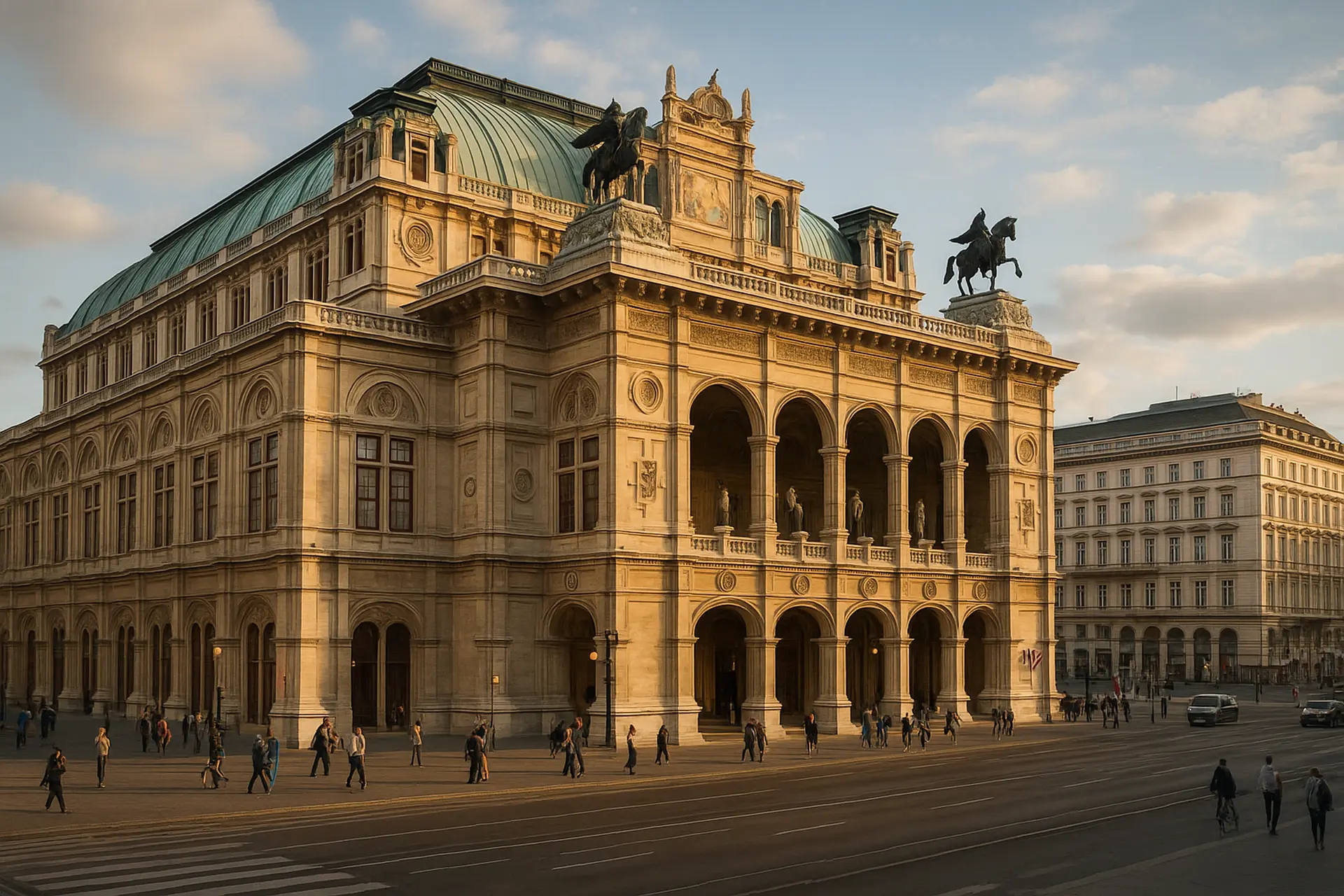
- Wiener Staatsoper — Vienna (Austria)
- Palais Garnier (Paris Opera) — Paris (France)
- Opéra Bastille — Paris (France)
- Teatro Colón — Buenos Aires (Argentina)
- Sydney Opera House — Sydney (Australia)
- Teatro La Fenice — Venice (Italy)
- Teatro Real — Madrid (Spain)
- Royal Opera House (Covent Garden) — London (UK)
- Mariinsky Theatre (formerly Kirov) — St. Petersburg (Russia)
- Bolshoi Theatre — Moscow (Russia)
- Teatro di San Carlo — Naples (Italy)
- Teatro Massimo — Palermo (Italy)
- Semperoper — Dresden (Germany)
- National Centre for the Performing Arts (NCPA) — Beijing (China)
- Gran Teatre del Liceu — Barcelona (Spain)
- Deutsche Oper Berlin — Berlin (Germany)
- Arena di Verona — Verona (Italy)
- Opera de Lyon — Lyon (France)
- Hungarian State Opera House — Budapest (Hungary)
- Národní Divadlo (National Theatre) — Prague (Czechia)
- Royal Danish Opera (opera house in Copenhagen, Denmark)
- Opera House Muscat — Muscat (Oman)
- Comparative Guide: Acoustics, Sightlines & Best Seats
- History and Architecture of Opera Houses
- How Opera Productions Are Mounted (Backstage & Production)
- How to Visit: Tickets, Tours & Etiquette
- Accessibility, Safety & Family-Friendly Options
- Costs, Pricing Strategies & Budgeting an Opera Visit
- Premieres, Famous Performances & Cultural Impact
- Opera Houses & World Events: War, Disaster & Restoration
- Regional Guides & Suggested Itineraries
- Modern & Contemporary Opera Houses to Watch
- FAQ
- Conclusion
These theatres spread rapidly after Venice opened the world’s first commercial opera theatre in 1639. Today the legacy of that innovation endures globally: from the gilded Beaux-Arts Parisian palaces to modern shell‑shaped marvels, opera houses remain cultural landmarks. This guide explores 25 of the world’s leading opera houses, blending history, architectural notes, famous premieres, and practical visitor advice. Readers will learn why each house matters, how to experience it (from ticketing to tours), and what makes its acoustics or design special, with authoritative, up-to-date information for travelers and opera enthusiasts alike.
We have chosen 25 opera houses across Europe, the Americas, Asia, and beyond that represent architectural innovation, storied repertoires, and visitor interest. Selection was based on historical importance, unique design or acoustics, and contemporary prominence. Each profile is organized with the same subheadings (History; Architecture & Acoustics; Premieres & Artists; Visiting & Tickets; Accessibility & Tips) to allow easy comparison. Dates of opening, renovation status, and capacities are given; icons or bold notes flag museums, tours, and best‑seat charts where applicable.
Top 25 Opera Houses — Profiles & Visitor Guides
Teatro alla Scala — Milan (Italy)
- History. Milan’s La Scala opened in 1778, commissioned by the Duke of Milan to replace a burned‑down court theatre. Designed by Giuseppe Piermarini, its official title was Nuovo Regio Ducale Teatro alla Scala. The inaugural performance on 3 August 1778 was Salieri’s Europa riconosciuta. Over the 19th century La Scala became Italy’s leading opera house, hosting premieres of works by Rossini, Bellini and Verdi (e.g. Bellini’s Norma, Verdi’s Otello). The theatre was rebuilt in 1779 after fire and modernized in 1907 (notably adding upper galleries). It famously opens its season each Dec 7 (St. Ambrose’s Day).
- Architecture & Acoustics. Piermarini’s neoclassical facade conceals a classic Italian‑style horseshoe auditorium. Its nearly 2,030 seats wrap around the stage, prioritizing intimacy and symmetry. La Scala is renowned for bright, direct acoustics; the tight horseshoe shape and modest size mean even mid‑level balconies hear unamplified voices clearly. (Opera insiders also note that “La Scala’s loggione,” the cheap gallery at the very top, can be demanding – famous tenors have been met with jeers or cheers from these loggionisti.) A museum on site displays the original stage curtain and historical costumes.
- Famous Premieres & Artists. Besides Salieri’s opening work, La Scala saw many premieres: Bellini’s Norma (1831), Donizetti’s Lucia di Lammermoor (1835), and Verdi’s Otello (1887) and Falstaff (1893) among them. Legendary singers like Maria Callas and Joan Sutherland graced its stage, and conductors from Toscanini to Abbado led its orchestra.
- Visiting & Tickets. La Scala’s season runs roughly Dec–July (with a summer break). Tickets must be booked well in advance. The stalls and front-circle boxes are most desirable (and priciest), while the palchi (side boxes) and back rows remain more affordable. The museum is open daily to visitors (advance booking recommended). Seasonal tours show the backstage, the gilded boxes, and the famous La Scala museum.
- Accessibility & Tips. La Scala has limited elevator access; patrons needing step-free entry should contact the theater ahead of time. Dress tends to be formal (black‑tie not required but common). Italian‑language surtitles have been standard since the late 20th century, aiding foreign visitors.
Metropolitan Opera House — New York City, USA
- History. The Metropolitan Opera House at Lincoln Center (the current building) opened in 1966. Its predecessor (1883–1966) on Broadway had outgrown capacity, so New York built a modern venue. Designed by Wallace Harrison, the new Met is clad in white travertine with five soaring concrete arches marking its glass facade. The first staged opera was Puccini’s La fanciulla del West on April 11, 1966 (a student production), but the official opening gala was Samuel Barber’s new opera Antony and Cleopatra on Sept. 16, 1966. The House seats ~3,800, making it one of the world’s largest opera theatres.
- Architecture & Acoustics. The Met Opera’s boxy, modernist design contrasts with traditional theatres. Its cavernous auditorium has four ring levels plus a large orchestra section. At first critics noted a “marmoreal” clarity in acoustics (some found it crisp but severe), but today it is praised for excellent clarity across all seats. Its stagehouse is among the largest globally: multiple hydraulic lifts and fly systems allow simultaneous productions (e.g. sets for Wagner’s Ring cycle can reside hidden above stage). The lobby features Anish Kapoor’s “Cloud Gate” sculpture (the famous “Bean”) visible outside.
- Famous Premieres & Artists. The Met opened to the world premiere of Barber’s Antony and Cleopatra. Throughout the 20th century it premiered works by William Schuman and Gian Carlo Menotti. Legendary Met figures include Maria Callas, Leontyne Price, and Luciano Pavarotti. It has also been home to famous productions (Zeffirelli’s Tosca, Franco Zeffirelli’s Turandot). The company’s orchestra and chorus are world-renowned, and in 2024 the Met embarked on a major upgrade of its pit acoustics to further refine sound.
- Visiting & Tickets. Met Opera tickets range from inexpensive in the Family Circle (upper balcony) to premium boxes and Orchestra Front. Standing-room seats (very limited) are sometimes available at $20. The Met offers surtitles in English on a large screen above the stage. Public tours run year-round, showing backstage areas, the grand lobby, and costume shops. Opt for a visit on Met Colors Night (first Wed of each month, free drinks in the lobby) or a free brown-bag lecture in the Rotunda for added enrichment. Attendees typically dress cocktail‑formal; the old tradition of tuxedos and gowns lingers on Gala nights.
- Accessibility & Tips. The Met is fully wheelchair accessible, with elevator access to all levels. Service animals are allowed. Latecomers are seated only at natural breaks. Because it’s so large, don’t be shocked if applause from the family circle is faint compared to ground level. The opera house closes early, and Lincoln Center offers pre-concert dining (American cuisine) in the Fountain Terrace Café overlooking the plaza.
Wiener Staatsoper — Vienna (Austria)
- History. The Vienna State Opera (“Staatsoper”) was inaugurated in 1869 on the grand Ringstraße boulevard. Originally called the Vienna Court Opera (Wiener Hofoper), it was financed by Emperor Franz Joseph I to replace the older Burgtheater’s opera performances. The building was designed by August Sicard von Sicardsburg and Eduard van der Nüll and opened with Mozart’s Don Giovanni. Under directors like Hans Richter and Gustav Mahler (late 19th c.), the Staatsoper became a global leader, especially noted for Wagner and Mozart performances. In WWII the opera house was hit by bombing in 1945; only the main foyer and surviving walls remained. It was rebuilt and reopened in 1955, with Strauss’s Fledermaus as the first post-war performance.
- Architecture & Acoustics. The Staatsoper’s neo-Renaissance facade and elegant horseshoe auditorium (capacity ~2,284) reflect its 19th-century origins. The interior was lavishly decorated (seats in red plush), though it was somewhat overshadowed by later Hall renovations. Acoustically, the house balances warmth and projection; Viennese voices and orchestras are known to sound natural even in the rear circles. Modest revisions in 1990 updated stage technology, but the basic 1950s acoustical design remains, with clear sound emphasizing strings and voices.
- Famous Premieres & Artists. The Staatsoper has hosted premieres of major works: notably Richard Strauss’s Die Frau ohne Schatten (1919) and Alban Berg’s Wozzeck (1925). Renowned directors like Herbert von Karajan and conductors such as Claudio Abbado and Riccardo Muti have led its ensemble. The resident ballet and chorus are top-tier.
- Visiting & Tickets. This is one of the busiest houses in Europe, offering 50–60 operas per season. Tickets range widely: stall and stall‑box seats are premium, while the “Galerie” (5th balcony) seats are affordable (~€10–15) and often standing‑room enthusiasts gather there. Annual seating lottery (Walzersaal-Verlosung) grants local youth free tickets by raffle. Guided tours highlight the opulent Foyer, Gustav Mahler Room, and the Grand Staircase (famous from Mission: Impossible).
- Accessibility & Tips. Wheelchair seating is available by advance reservation. Dress code is smart-casual (suits or dresses common); Viennese tend toward black or dark colors. The opera uses German surtitles. Advice: arrive early to stroll through the adjacent opera plaza or pre‑party at nearby cafés.
Palais Garnier (Paris Opera) — Paris (France)
- History. Emperor Napoleon III commissioned Charles Garnier’s grand opera as part of Paris’s 19th-century modernization. Construction ran 1861–1875 under the Second Empire. It officially opened on 5 January 1875 with Auber’s opera Don Quichotte. Dubbed “Le nouvel Opéra” during construction, it soon became Palais Garnier, noted for its extraordinary opulence. For over a century it was the home of the Paris Opera (its ballet and opera companies), before major productions moved to the modern Opéra Bastille in 1989. Today the Garnier is primarily used for ballet and is a major monument historique (listed 1923).
- Architecture & Acoustics. The Palais Garnier is a visual feast of marble, gold, and sculpture. Its grand staircase and chandelier are iconic. The horseshoe auditorium and layered balconies (nearly 2,000 seats) produce a rich but clear sound. Though large, its brass-and-wood interior yields good resonance for orchestral opera. The ceiling’s later addition of Chagall’s painted panels adds to the magic. Beneath the stage lies the famed underground basin (the “lake”) – an architectural oddity needed to stabilize the swampy site. (Legend: the Phantom of the Opera story was inspired by this subterranean water.)
- Famous Premieres & Artists. Opera classics premiered here include The Tales of Hoffmann (Offenbach, 1881) and Massenet’s Manon (1884). Legendary performers from Adelina Patti to Maria Callas have sung on its stage. Today it hosts the Paris Opera Ballet year-round.
- Visiting & Tickets. Guided tours of Palais Garnier are available daily, covering foyer, grand staircase, auditorium and the Opera Library-Museum. They often include the chandelier and chandelier lift station. Tickets for performances (ballet or opera) range from front‑stall seats to “grand balcon” cheap seats; discount standing room (parterre debout) was offered until 2017. Dress tends to be formal (cocktail attire).
- Accessibility & Tips. Elevators serve most public floors, but the Grand Staircase has many steps. The opera provides hearing enhancements for some shows. A small gift shop offers souvenirs like costumes, and the bookshop has musical scores and histories. Nearby cafés (like Angelina) offer pre-show meals for traditional Parisian “opera dining.”
Opéra Bastille — Paris (France)
- History. In parallel to preserving Garnier, Paris opened Opéra Bastille in 1989 as a modern opera house at Place de la Bastille. President François Mitterrand inaugurated it on July 13, 1989 with Robert Oppenheimer-themed works. Architecturally simple and functional (by Carlos Ott), it contrasts sharply with the ornamented Garnier. Its volume and stage facilities allow larger-scale contemporary works.
- Architecture & Acoustics. Bastille seats ~2,700 under a plain but high ceiling. The sound is generally clear but somewhat dry (typical of many modern theatres); it can feel less intimate than Garnier. The design was guided by acoustic specialists, and some walls incorporate wood panels to enhance warmth. It features one main horseshoe‑shaped hall with five levels. The glass facades and spacious foyer were intended to make opera more democratic and visible to passersby.
- Notable Performances. Since 1989 it has hosted premieres of modern operas (e.g. Dialogues des Carmélites revival, world premieres like Dutilleux’s Tout un monde lointain…). Its large pit has accommodated Nureyev’s and Noureev’s productions and high-tech stagings.
- Visiting & Tickets. Bastille’s first rows (stalls and lower circle) provide the best sound; side boxes and higher balconies still offer solid views. Seats are more affordable than Garnier, reflecting the venue’s contemporary ethos. Guided tours highlight the hydraulic stage platforms (one of Bastille’s engineering feats) and control rooms. Bastille’s location by the Bastille prison monument makes it easy to combine with sightseeing (the nearby Vincennes market is lively on Sundays).
- Accessibility & Tips. The Opéra Bastille is fully accessible with ramps and lifts. Performances often have English surtitles (especially international works). Casual dress is common; local Parisians often come in weekend attire. It has a cafeteria and bar in the foyer; many visitors have an espresso break here before curtain. Bastille is the only Paris opera accessible by RER (Line A to Bastille station).
Teatro Colón — Buenos Aires (Argentina)
- History. Argentina’s Teatro Colón opened 25 May 1908 with Verdi’s Aida, replacing an earlier house (1857) that had become inadequate. The Italianate building (eclectic in style) was designed by architects Tamburini, Meano and Dormal. It quickly became South America’s cultural hub. Colón was declared a national historic monument in 1991. After decades of wear, a major renovation ran 2006–2010; it reopened in May 2010.
- Architecture & Acoustics. Colón’s grand horseshoe auditorium seats ~2,478. Its ranks of red‑velvet boxes climb steeply, focused toward the stage. The acoustic properties are legendary: a 2006 study by Leo Beranek found Colón’s opera hall “has the room with the best acoustics for opera” of any major house worldwide. Musicians and singers frequently praise the warm, balanced sound. The stage, at 60 ft wide, is large enough for full Wagner productions, yet the lavishly decorated interior retains clarity. The Lorenzo Fernandez canopy above the stage is a 1930s addition with an iconic carved relief of Apollo; above it is a “paradise” chamber for managing the massive curtain.
- Famous Premieres & Artists. International stars flocked here: Caruso, Pavarotti, Callas, along with the Bolshoi and Mariinsky companies on tour. Colón premiered works by Latin composers like Alberto Ginastera. Today it hosts the annual Teatro Colón Opera Season (April–November) and the Argentina Philharmonic Orchestra concerts in summer.
- Visiting & Tickets. Tours of Teatro Colón are available daily in several languages; highlights include the Grand Foyer (ideal for selfies under the crystal chandelier) and a visit to the stage pits. Ticket prices span from the promenade (gallery) at a few USD to premium seats. In 2025 a free museum exhibit near the entrance displays historical posters and costumes. In December, Buenos Aires hosts a New Year’s Eve gala at Colón with the Buenos Aires Philharmonic.
- Accessibility & Tips. The Colón is accessible (ramps, lifts). Surreal bonus: a small mammoth skeleton (Phorusrhacos) was discovered on site and is displayed in a museum corner! Visitors should note that Argentine teatros often hold applause during dark scenes – it’s part of local etiquette. Nearby Café Tortoni (1890) offers a classic spot for pre-opera coffee.
Sydney Opera House — Sydney (Australia)
- History. Designed by Danish architect Jørn Utzon after a 1957 competition, the Sydney Opera House is an icon of modern architecture. Construction (1959–1973) was notoriously challenging; it finally opened 20 October 1973. In 2007 UNESCO designated it a World Heritage Site as “a great architectural work of the 20th century”. The complex contains multiple venues: the 2,679‑seat Concert Hall (home to the Sydney Symphony Orchestra), the 1,507‑seat Joan Sutherland Theatre (main opera stage), plus smaller studios.
- Architecture & Acoustics. The Opera House’s exterior comprises overlapping concrete “shells” or sails perched on a monumental podium. Inside, acoustic design varies by hall. The Concert Hall features the world’s largest mechanical acoustic canopy (hundreds of panels above the stage) and adjustable reverberation chambers, accommodating orchestral symphonies. The opera theatre’s acoustics are good but can be a bit dry; the stage’s sidewalls include reflectors to aid singers. Concert Hall and Opera Theatre seats have excellent sightlines thanks to the steep fan-shaped layout.
- Notable Performances & Events. Since 1973 it has hosted thousands of operas, ballets, concerts and events. Famously, Maria Callas gave her final performance here in 1974. Sydney Opera House is home to Opera Australia, the first Asian/Pacific opera company to win a production at the U.S. Met Opera Award (2012). It hosts the annual Sydney Festival and New Year’s fireworks above the harbor.
- Visiting & Tickets. Guided tours are highly recommended: basic tours show the outside shells and main foyers, while backstage tours access dressing rooms and even walk on stage (no performances). Tickets range from low‑tier stalls (~$50 AUD) to plush boxes (>$200). Outdoor seating at Bennelong Point restaurants offers harbor views between venues. Audience members may bring a drink into the theatre but cellphones must remain off. Dress in Sydney tends to be smart‑casual.
- Accessibility & Tips. The site is fully accessible; lifts reach each level, and there are hearing‑assisted devices. Tours and performances have sign‑interpretation or captioning options on request. Because it’s on the water’s edge, wind can be strong on the forecourt, so bring a wrap if attending an open-air bar. Next door, the Royal Botanic Garden provides a scenic pre- or post-opera stroll.
Teatro La Fenice — Venice (Italy)
- History. Venice’s La Fenice (Italian for “The Phoenix”) was inaugurated in 1792, named to evoke rebirth after earlier theater disputes. In its first century it became Italy’s premier opera venue: Rossini, Bellini and Donizetti premiered key works here, and Verdi’s La Traviata (1853) and Macbeth (1847) debuted on its stage. The theatre has literally embodied rebirth: it burned down in 1836 (rebuilt by 1837) and was destroyed by arson in 1996, leaving only outer walls; it was fully rebuilt and reopened in Nov 2004. Its New Year’s Eve concert tradition began after the 2004 reopening.
- Architecture & Acoustics. Located in central Venice, La Fenice is relatively modest in scale (capacity ~1,100). The horseshoe auditorium and ceiling height give it a warm, somewhat dry acoustic – intimate, with clarity for singers. The decor is lavishly gilt with red-velvet seating. Today’s interior, by architect Aldo Rossi, faithfully recreated the original 1792 design (except chandeliers and seating); visitors will see the bust of Rossini on the proscenium as a homage.
- Famous Premieres & Artists. La Fenice’s fame rests on its premieres: Bellini’s Il Pirata and Norma, Donizetti’s Don Pasquale, and Verdi’s La Fenice namesakes like Ernani (1844). International stars (from Patty Pratt to Callas) have graced its stage. The Venice Biennale sometimes uses La Fenice for contemporary opera presentations.
- Visiting & Tickets. Evening performances typically sell out months ahead, especially during the spring opera and autumn opera seasons. Public tours (in English and Italian) take you behind the scenes to the royal box and the long tiers of boxes, plus stage access if lucky. Ticket tiers: front stalls and boxes offer best sound, with tickets in the side balcony (“palchi”) among the cheapest. The foyer has historic portraits of 19th-century composers.
- Accessibility & Tips. Access can be tricky: La Fenice is reached by a narrow calla (canal) footbridge, so allow extra time. There is one elevator to the orchestra level. The opera employs surtitles in Italian and English. Dress code is formal (Venice society adheres to dress elegantly). After the show, nearby Campo San Marco offers restaurants and late-night bars.
Teatro Real — Madrid (Spain)
- History. Madrid’s Teatro Real (Royal Theatre) opened in 1850, built by Queen Isabella II on former palace grounds. Its inaugural performance was Verdi’s I Lombardi. It struggled financially and closed several times in the 19th century. From 1925 to 1966 it functioned mainly as a cinema. In 1997–2003 it underwent a complete modernization and reopened (2004) with strong acoustic engineering. Now it hosts a full opera and ballet season.
- Architecture & Acoustics. The neoclassical facade conceals a modern interior after renovation. The horseshoe auditorium (capacity ~1,784) features individual seats on steep balconies, giving nearly ideal sightlines. Acoustic engineers installed specialized wood and fabric panels to ensure warm resonance. Today, the Real has acoustics often compared to La Fenice: intimate but rich, supporting Spanish-language opera clearly.
- Notable Productions & Artists. Spain’s leading performers (Placido Domingo, Montserrat Caballé) have been regulars here, as have international stars. It staged Spanish composer de Falla’s La vida breve in 2005 and other culturally significant works. Each year it hosts the Madrid Opera Festival (mid-year).
- Visiting & Tickets. The Teatro Real offers guided tours focusing on its rooftop view of royal gardens, the restored 18th-century carriage entrance, and the orchestral pit. Tickets go from €10 in the top gallery to over €100 for best stalls. Its foyer has a modern restaurant, and a costume museum is opening next to the stage in late 2025.
- Accessibility & Tips. The theatre is fully accessible, with ramps from street level and hearing loops. Subtitles in Spanish and English are used, but expect many shows to still be sung in original Italian or French (with surtitles). Madrid opera‑goers tend to dress smart-casual; jackets optional. Pre-show drinks can be enjoyed at the Patio Central, a glassed atrium open to the public foyer.
Royal Opera House (Covent Garden) — London (UK)
- History. London’s grand Royal Opera House (Covent Garden) is the third on its site. The first Covent Garden theatre (1732) burned in 1808; rebuilding began immediately under architect Robert Smirke. It opened in Dec. 1809 (Shakespeare’s Macbeth). In 1847 it was remodeled and began focusing on Italian opera. A second fire in 1856 destroyed it again. The current building (by E.M. Barry) opened May 1858 with Meyerbeer’s Les Huguenots, showcasing Barry’s large classical portico and adjacent Floral Hall. In 1892 it officially became the Royal Opera House.
- Architecture & Acoustics. The Victorian auditorium seats ~2,256. Its four tiers of boxes and balconies provide close sightlines. The Hall (Stalls) extends close to the stage, giving a sense of intimacy despite size. Acoustically it is fine for opera — warm and balanced — though the shape means some distance for the Dress Circle. In the 1990s major refurbishments by architects Dixon/Jacobs modernized the stage machinery and added new foyers. A public roof terrace and multimedia installations integrate the building with bustling Covent Garden square below.
- Premieres & Artists. Covent Garden hosted premieres of 19th-century works like Rossini’s Le comte Ory (1828) and Verdi’s Falstaff (1893 London premiere). Famous long-time directors include Kenneth MacMillan (ballet) and Alexander Gibson (opera). The resident companies (Royal Opera and Royal Ballet) are world-leading. Notably, the 1946 reopening gala (post-WWII renovation) featured Margot Fonteyn dancing Sleeping Beauty to reacclimate London to opera and ballet.
- Visiting & Tickets. Guided tours cover the auditorium, Royal Box, and costume department. Ticket prices range from standing (patron seats, ~£30) to stalls (~£150) to boxes (£200+). The Linbury Theatre (added 1999) offers smaller experimental productions at low cost. Dress code in the House is formal to business dress, especially for premieres and galas.
- Accessibility & Tips. The Royal Opera House has full lift access and induction loops. Strollers must be left in lobby; disabled patrons may keep small wheelchairs. Intermission refreshments (terrace or café) are a tradition. The on-site restaurant (OYO) serves pre-theatre menus. For budget visitors, cheap standby seats are sometimes released on performance day, but these sell out quickly.
Mariinsky Theatre (formerly Kirov) — St. Petersburg (Russia)
- History. The Mariinsky Theatre opened in 1860 as the Imperial Mariinsky Theatre (named after Tsar Alexander II’s consort). It quickly became the heart of Russian opera and ballet. Home to composers Tchaikovsky and Rimsky-Korsakov, it premiered many of their operas (e.g. The Golden Cockerel, Sadko). In Soviet times (1935–1992) it was renamed the Kirov Theatre. After restoration, it reclaimed “Mariinsky.” The original building still stands with its Italian-inspired facade.
- Architecture & Acoustics. The 1,625-seat horseshoe auditorium is often praised for its acoustics: warm with rich reverberation. (Leo Beranek once placed its concert hall near the top for orchestras and operas.) The decor is gilded and richly patterned; gold balconies and plush upholstery create visual opulence. In 2013 a new adjacent concert hall (Mariinsky II) opened under Fish and Sheffield architects, with a modern minimalistic auditorium for contemporary works.
- Premieres & Artists. Legendary Russian artists (Feodor Chaliapin, Anna Netrebko) have performed here. Ballets by Petipa and Kirov-era choreographers debuted, as did Stravinsky’s early works. The Mariinsky Orchestra under Valery Gergiev is world-renowned.
- Visiting & Tickets. Mariinsky tickets for opera and ballet are affordable compared to the West. Orchestra seating ~4,000 roubles (~$50), with stalls a bit less. Balconies can be as low as ~$10. Guides are available in English. The newly-added Mariinsky II (across the street) hosts recitals and concerts; tours allow glimpses of Gergiev’s famous rehearsal room.
- Accessibility & Tips. The original Mariinsky has historic staircases and limited elevator use, but Mariinsky II is fully accessible. Audioguides often handle translation. Surprised visitors may find many Russians still dress formally (dark suits, dresses) for the opera. English surtitles are usually provided for operas; arrival by Metro to Admiralteyskaya station is convenient.
Bolshoi Theatre — Moscow (Russia)
- History. Moscow’s Bolshoi Theatre is Russia’s other iconic house. Founded in 1776, the current building dates from 1856 (rebuilt after fires). The word Bolshoi means “big.” It reopened in 1856 under architect Alberto Cavos, premiering Glinka’s A Life for the Tsar. Over time it staged world premieres by Russian masters (Tchaikovsky’s Queen of Spades, Prokofiev’s Semyon Kotko). Closed in Soviet times for decades of restoration, the Bolshoi reemerged in 2011 with a new acoustic ceiling (from which the chandelier descends during performances) and restored 1950s design.
- Architecture & Acoustics. The massive 2,153-seat auditorium is lavish: red and gold decor with Corinthian columns. The 2011 renovation installed a multilayered ceiling cloud to enhance sound. Now its acoustics are renowned: Russian critics often call it as good as Colón’s. The orchestra pit houses the famed Bolshoi Ballet Orchestra.
- Premieres & Artists. The Bolshoi was home to ballet legends Nijinsky, Nureyev, Baryshnikov, and many prima ballerinas. In opera, legends like Chaliapin and Sobinov were stars. Today the Bolshoi Opera and Ballet companies (resident ensemble) tour globally.
- Visiting & Tickets. Evening performances usually sell out, but a small number of standing-room (platcyk) tickets are sold cheaply on performance day at the box office (the famed Bolshoi tradition). Without language barriers (if you can read Cyrillic, surtitles are sparse), some visitors just listen. Tours (in Russian/English) show the Grand Foyer, Tsarina’s Box and backstage halls.
- Accessibility & Tips. The Bolshoi’s branch and the annex have elevators, but the historic theatre itself has many stairs. Dress is formal on opening nights and festivals (coats and ties); everyday shows are more business-casual. Note security checks are strict. If lucky, ask the attendant about the chandelier – in older times it would ascend on wires to avoid conductor collisions; now it descends gradually to the ceiling.
Teatro di San Carlo — Naples (Italy)
- History. Founded in 1737, Teatro di San Carlo is the world’s oldest continuously active opera house. King Charles VII commissioned it; it opened with a gala of Scarlatti and Porpora. Its age makes it older than Milan’s La Scala. San Carlo survived a 19th-century rebuild (1816) after a fire, and another renovation in 2010. It was the model for many European houses (Naples’ Royal Box is said to have inspired Vienna’s design).
- Architecture & Acoustics. The horseshoe auditorium (approx. 1,386 seats) is an intimate, towering stack of 6 tiers of boxes. The sound is warm and enveloping; Neapolitan audiences traditionally respond very enthusiastically (often banging on chairs for applause). The proscenium is relatively small, reflecting baroque scale.
- Premieres & Artists. The San Carlo premiered many early works: Haydn’s oratorios, Rossini’s William Tell (1829) and Donizetti’s Caterina Cornaro (1844). famed singers like Enrico Caruso launched their careers here.
- Visiting & Tickets. It is sometimes possible to buy same‑day tickets at the box office for popular productions (often Rossini/Verdi season in winter). Standing room (piazza) exists but is very small. Guided tours (daily) showcase the opulent Royal Box (gold-plated) and the cascading balconies. Many operas are sung in Italian, with surtitles in Italian only; being a local audience, minimal English translation is offered.
- Accessibility & Tips. San Carlo’s historic design means many narrow stairs; however, there is an elevator to the main foyer. Patrons should try local customs: enjoying a Neapolitan espresso at Intermezzo (stage right) during intermission is a ritual. Locals often bring applause and cheering throughout an aria if they like it, so don’t be surprised by spontaneous ovations mid-act.
Teatro Massimo — Palermo (Italy)
- History. Italy’s largest opera house, Teatro Massimo Vittorio Emanuele in Palermo opened in 1897. Designed by Giovan Battista Filippo Basile (and completed by his son), it was the last great Bourbon palace theatre. Notably, it was one of first to be fire‑resistant (steel frame, concrete, etc.). Sanctions for being unfinished during World War II delayed complete opening until 1897.
- Architecture & Acoustics. The horseshoe auditorium of ~1,350 seats is celebrated for its acoustic clarity – some even compare it to Colón. It features minimal decoration compared to northern Italian opera houses (pale stone columns, simple ornament). A broad proscenium and chandelier anchor a grand but airy space. A modern extension houses rehearsal rooms.
- Premieres & Artists. It staged world premieres of Ponchielli’s I Promessi Sposi and others. More famously, the final scenes of The Godfather Part III were filmed here, bringing it international recognition.
- Visiting & Tickets. The Massimo reopened fully in 1997 after decades of closure for restoration. Today its schedule alternates opera (especially Verdi and Puccini) and ballets. Guided tours are excellent, showcasing the Great Foyer mosaic floors and the gilded Royal Box. Tickets are moderately priced, with stalls ~€50-€120. Palermo’s mild climate means balconies may occasionally remain open at night (dress warmly though).
- Accessibility & Tips. The theatre offers accessible seating and tour accommodations. The main lobby café is popular at intermission (especially for cannoli and coffee). Palermo’s opera-goers often view a performance as an excuse to dress up — a sociable event in the big city center after dark.
Semperoper — Dresden (Germany)
- History. The Semperoper on Dresden’s Theaterplatz has a dramatic history. Architect Gottfried Semper’s first opera house (1841) burned in 1869. He rebuilt it almost identically, opening 1878 (with Wagner’s Lohengrin). This second opera house was destroyed by bombing in 1945; it remained a gutted ruin until reunified Germany restored it 1977–1985, again using Semper’s designs. Its first concert after restoration was Wagner’s Ring conduct by Kurt Masur.
- Architecture & Acoustics. The Semperoper (capacity ~1,330) combines Renaissance and Baroque details with large arches and statues. The current interior (rebuilt 1980s) emulates the 19th-century style. Its acoustics are highly regarded, with a bright clarity well-suited to German repertoire. The orchestra is only 110 players (smaller than Met or the big Italian houses), allowing intimate and transparent sound.
- Premieres & Artists. Dresden’s court ensemble premiered many German classics: Weber’s Der Freischütz (1821) and Strauss’s Salome (1905). Richard Tauber was a famous tenor here, and Rudolf Kempe a notable conductor. Today the Semperoper company often performs works by Wagner, Strauss and Mozart.
- Visiting & Tickets. The Semperoper presents German operas in the original language (surtitles in German/English). Standard tickets are affordable (~€10-€80). Backstage tours reveal the rich tapestries and the 19th-century stage machinery (still in use). Culture tip: do not eat during an intermission inside; Dresdners bring fine wine and cake to enjoy in the elegant orchestra foyer (a local habit).
- Accessibility & Tips. The building has ramps and an elevator for wheelchair levels. Note: there is usually one dress circle at ground level. Smoking is banned inside (with large ashtrays in foyers). The nearby Dresden Frauenkirche or Zwinger Palace make ideal walking companions to an opera evening.
National Centre for the Performing Arts (NCPA) — Beijing (China)
- History. Beijing’s National Centre for the Performing Arts (国家大剧院) was completed in December 2007. Architect Paul Andreu’s design of a smooth ellipsoid shell encircled by water draws immediate comparisons to the Sydney Opera House, though its form is unique. Reputedly costing about $300 million, it houses three main venues and serves as China’s flagship opera hall, expanding Beijing’s cultural district beyond its historic Forbidden City backdrop.
- Architecture & Acoustics. The “Egg” shape is made of titanium panels and glass, spanning 212 meters. Underneath are the Grand Theatre (2,416‑seat opera house), a Concert Hall (2,017‑seat) and smaller theatre (1,040‑seat). The Grand Theatre auditorium is a classic horseshoe form; its acoustic design is world-class, marrying Chinese and Western acoustical principles. Reflective ceiling panels and adjustable curtains tailor the reverberation. The building sits in an artificial lake (porous bed below reduces sound leakage to outside).
- Programming & Artists. NCPA hosts both Western opera and Chinese works. The first Chinese opera written for the house was The Grand Canal (2005). Western premieres include Butterfly Lovers’ Violin Concerto staged as opera. Beijing Opera troupes also perform in the “Chinese Theatre” to a high artistic standard. The house frequently collaborates with international companies (Puccini’s Turandot co-produced with La Scala, for example).
- Visiting & Tickets. Guided tours (in English and Chinese) are offered, showing the glass lobby, Beijing Opera exhibitions, and backstage areas. House tours often let visitors stand on stage. Tickets are sold online with categories similar to Western houses (€20‑€200). The theatre launched public “digital opera” streams in 2014, broadcasting live to over 50 countries.
- Accessibility & Tips. The NCPA is fully accessible, with wheelchair platforms in every hall. Headphone translations are available for Chinese operas. The center’s restaurants (Chinese and Western cuisine) are modern and can be busy – book in advance. One delight: on clear days the dome reflects the skyline and lake; on cloudy days the golden egg is lit from within, a striking view from outside.
Gran Teatre del Liceu — Barcelona (Spain)
- History. Barcelona’s Liceu opened 1847 on the city’s bustling La Rambla boulevard. Soon becoming Spain’s premier opera venue (along with the Teatro Real), it was partially destroyed by fire in 1861 and again by anarchist bombing in 1893. Each time it was rebuilt (the current facade dates from 1904 reconstruction). It has maintained its tradition as a Spanish-language opera house with a strong Catalan identity.
- Architecture & Acoustics. The horseshoe auditorium seats about 2,256. The current interior (post-1994 fire rebuild) is lavish with red and gold, though slightly simplified from the ornate 1904 décor. Its sound is characterized by clarity and warmth – the voice projects well through the first four balconies. Interestingly, the Liceu uses an adjustable stage-reposition (the old organ was removed after fires) but added a rotating stage in 2018 to modernize staging capabilities.
- Premieres & Artists. Barcelona saw Spanish premieres of Verdi and Wagner in the 19th century. Composer Óscar Esplá staged Aquarius here in 1944. The Liceu Ballet (Gran Teatre del Liceu Ballet de Catalunya) became independent in 2009.
- Visiting & Tickets. After a devastating 1994 fire, the Liceu reopened 1999 with a stage show Don Giovanni. Tours focus on its murals and a poignant memorial to victims of the earlier bombing. Tickets range from cheap-standing (sotaressa) near the stage to grand stalls near €100. The Liceu has no surtitles by default (aiming for Spanish immersion), but some productions do offer Catalan subtitles.
- Accessibility & Tips. The new sections and elevators since 1999 mean the Liceu is now mostly accessible. Audioguides are available in 10 languages. Locals often enjoy a vermouth at Bar Bitàcola (across the street) before a matinee.
Deutsche Oper Berlin — Berlin (Germany)
- History. Deutsche Oper Berlin opened in 1961, as West Berlin’s new opera house after World War II. Its predecessor (the Kaiser Wilhelm State Opera) had been badly damaged in 1943. Designed by Fritz Bornemann, the modernist structure was inaugurated in 1961 with Wagner’s Der fliegende Holländer. It serves a broad repertoire from Mozart to contemporary.
- Architecture & Acoustics. The theater seats about 1,360. Its abstract exterior and spacious glass foyer (offering views to Tiergarten park) contrast with a traditional horseshoe hall lined with wood and warm colors. Acoustically, it was engineered for clarity; without excessive echoes, the sound is lean and direct. This makes it favorable for detailed orchestral and modern music, though some long-term traditionalists prefer the more reverberant Staatsoper nearby.
- Premieres & Artists. The Deutsche Oper has premiered operas by German composers like Heinrich Sutermeister and Udo Zimmermann. It was home to conductors like Lorin Maazel. In recent years it has co-produced new works like Aribert Reimann’s Lear.
- Visiting & Tickets. Tickets (all categories) are generally priced lower than in Vienna or Paris. Telephones on-site allow live translation for some productions. Tours at Deutsche Oper are usually at lunchtime (call ahead for schedule). It is near the monumental Bismarckstraße metro station, which many opera-goers take with cards (shells) as they do at the Staatsoper.
Arena di Verona — Verona (Italy)
- History & Architecture. The Arena di Verona is not a built opera house, but an ancient Roman amphitheater (1st century AD) repurposed for operatic performances. It has been hosting opera since 1913. Each summer an open-air season brings thousands to see classics like Aida (historically scaled for the Arena). The arena’s colossal stone structure (capacity ~15,000) and perfect acoustics from the semicircular design allows voices and orchestra to carry across the vast space without amplification.
- Visitor Experience. Performing here is unique: audiences sit on stone steps under the night sky, often with picnic provisions. Best seats are the front rows to see detail on the minimalist stage (since the sheer backdrop is all that’s needed). Lower-priced tickets still offer good sound. Verona itself is a UNESCO town center. Attendees should cover up after sun-down as the summer nights can be chilly.
Opera de Lyon — Lyon (France)
- History & Architecture. Lyon’s Opéra Nouvel was designed by Jean Nouvel and opened in 1993 on the site of a 19th-century opera house. Its facade is a stunning mix of original brick walls, a new glass extension and a retrofitted steel dome. The main hall seats 1,100.
- Acoustics & Programming. The hall’s design gives a clear, direct sound. Lyon Opera has built a strong modern reputation, often producing contemporary operas. In 2020 it appointed a new intendant focused on multimedia stagings. The opera also has a second smaller theatre (Salle Molière) for experimental work.
- Tips. Visitors should take in Lyon’s Old Town and famous “traboules” stairways during intermission. The Rhône riverwalk near the opera makes a pleasant break.
Hungarian State Opera House — Budapest (Hungary)
History & Architecture. Budapest’s Vigadó/Vajdahunyad Opera House, opened 1884, is one of Neo-Renaissance style. Architect Miklós Ybl patterned its interior on the Paris Opera’s horseshoe. Its 1,261 seats include gilded boxes and two levels of balconies.
Acoustics & Performances. Renowned for Mozart and late-Romantic operas, it also hosts the Budapest Opera Festival. Its acoustics are regarded as warm but a bit distant (the low ceiling).
Tips. Nearby cafes on Andrassy Avenue serve Hungarian pastries pre-show. It offers cheap gallery seats called padok. Ask for the portrait of Ferenc Erkel (composer of the Hungarian national anthem) at the entrance.
Národní Divadlo (National Theatre) — Prague (Czechia)
- History & Architecture. Prague’s National Theatre (opened 1883) is a symbol of Czech cultural independence. After opening with Smetana’s Libuše, a fire destroyed it in 1881; it was rebuilt and reopened in 1883. Architect Josef Schulz decorated it in Czech Renaissance style.
- Acoustics & Repertoire. The 1,700-seat auditorium (Neo-Renaissance) is known for a dry, intimate acoustic – good for Czech operas (Dvořák, Janáček) and ballets. It has rotated ensembles (opera, ballet, drama).
- Tips. In summer the roof level offers views of Prague Castle. The foyer café serves kahní or Czech Pilsner. The National Theatre is walkable from Charles Bridge, letting tourists combine sightseeing with opera.
Royal Danish Opera (opera house in Copenhagen, Denmark)
- History & Architecture. Copenhagen’s Operaen is a modern house opened in 2005 on the harbor by architect Henning Larsen. Its sloped roof (“iceberg”) can be climbed by visitors.
- Acoustics & Site. Seating 1,400, it has a classic horseshoe hall with excellent acoustic engineering (Nordic woodwork, adjustable panels). It became known in films (The Danish Girl).
- Tips. Tours climb the roof. Tivoli Gardens and Nyhavn are ideal nearby stops for tourists. Danish operagoers often treat opera as a trendy event; casual chic attire is common.
Opera House Muscat — Muscat (Oman)
- History & Architecture. Opened 2011, Muscat’s Royal Opera House combines traditional Omani architectural motifs (Arabic patterns, jali latticework) with modern acoustics. King Qaboos commissioned it to foster culture. The auditorium seats 1,100.
- Acoustics & Programming. Designed for perfection: horseshoe plan, special carpets to tune sound. Primarily houses Middle Eastern music but also Western opera tours. “Omani Nights” events mix opera with local traditions.
- Visitor Info. Non-muslims can visit this palace of art; modest attire is required for all guests (kuπ₁ and scarves available at entrance). No food is allowed inside, and women may be asked to cover shoulders (they often provide abayas).
Comparative Guide: Acoustics, Sightlines & Best Seats
Opera houses vary greatly in how sound carries and what seats offer the best experience. In general:
- Best Acoustics: Many experts rate the Teatro Colón (Buenos Aires) and Berlin’s Concertgebouw (though not an opera house) as acoustic benchmarks. Among actual opera houses, Colón, Vienna Staatsoper, Munich Residenz, and San Carlo (Naples) often top lists. Intimate shapes (narrower horseshoes, moderate ceiling height) tend to favor balanced sound. Design elements like acoustic canopies and tuned walls also help. For example, the Sydney Opera House Concert Hall uses suspended reflectors to manage its large space (though that hall is symphonic; the opera theatre relies on its plated ceiling).
- Choosing the Best Seats: Generally, orchestra stalls (ground level) are prized for proximity, but too close can distort singers’ voices. The first tier of balconies or dress circle often provides optimal acoustics and view. Side boxes offer privacy and charm, but acoustics can be brighter. Cheaper parterre or gallery seats (top circle) offer economy with a bird’s-eye view; the sound remains surprisingly good in most houses (Milan’s loggione is famous for its clarity). Each house usually has seat plans online. When booking, one may consult user reviews on which rows are recommended.
- Acoustic Design 101: Opera houses use curves (a proscenium arch, curved balcony fronts) to direct sound to the audience. The dreaded “acoustic defect” is flutter echo between parallel walls; many old houses avoided flat surfaces or used fabrics to dampen them. Many modern halls incorporate “vineyard” terracing or absorbent materials behind seats to balance reverberation (around 1.5–2 seconds is ideal for opera). Eliminate dead spots: good halls distribute sound evenly so that singers’ voices are audible even in upper balconies, without echo or muddiness.
Each of the houses above reflects these principles differently. For example, Arena di Verona’s stone shell gives an enormous reverberation time, suitable for grand choruses but requiring singers to project more. By contrast, smaller houses like Budapest’s have minimal echo for clarity of diction.
History and Architecture of Opera Houses
Opera houses evolved from 17th-century theaters (often converted tennis courts or villas) into dedicated monuments. The early public theater in Venice (1639) introduced the concept of paying audiences and private boxes. In 18th and 19th centuries, their design became increasingly formulaic: an auditorium with descending tiers of boxes enabling all classes to attend yet still observe strict social etiquette (the boxes were a way aristocrats sat apart). Ornamentation blossomed: gilded plaster, marble, and large chandeliers conveyed aristocratic taste.
- Architectural Styles: Early theatres (like Teatro di San Carlo) had Baroque opulence. Later 19th-century houses (Garnier, Mariinsky, Teatro Real) show Neoclassical and Beaux-Arts influence – heroic statues on pediments, columned facades. Theaters of the early 20th century (Vienna Staatsoper, Bolshoi 1856) used eclectic Historicism. In the modern era, opera houses like Sydney (Modernist/Expressionist shells) and Beijing NCPA (futurist dome) demonstrate that opera architecture continually reinvents itself. Yet most still incorporate classic elements inside – the horseshoe shape remains a near-universal design.
- Boxes and Social History: Historically, boxes were small luxury rooms for wealthier patrons, often stacking up the sides. Owning a box could be a status symbol (European courts often had box ownership passes). These boxes physically segregated audiences, reflecting class divisions of the time. Over time, many houses opened more general seating, yet boxes remain for VIPs. Today they are prized for a retro charm and intimate viewing area, though some houses (like the Met) have reduced the number of small boxes.
- Iconic Architects: Charles Garnier’s Palais, Victor Louis’s Bordeaux Grand-Théâtre, and Johan Sybille’s Munich Opera (1858) are some landmark designers. Contemporary examples include Jean Nouvel (Lyon) and Julian Ashton (Sydney interiors), showing that opera design is still an art form.
How Opera Productions Are Mounted (Backstage & Production)
Behind every opera performance is a complex production machine. From pit to fly tower, here’s a brief outline:
- Stage Machinery: Large houses have hydraulic or counterweight fly systems to lift scenery. Backdrops and props can be changed rapidly; for instance, the Met Opera House has computer-controlled stage lifts for moving entire scenery modules. Arena di Verona famously does no scenery changes – the stone walls serve as one permanent backdrop.
- Set Building and Rehearsals: Big opera houses maintain workshops for constructing sets and costumes (Vienna’s, for example). Once designs are finalized (often by famous designers, sometimes in collaboration with directors), scenic flats are painted and assembled well before opening nights. Rehearsals can be long: singers typically rehearse without full sets first (just on a bare stage), then run with chorus and orchestra. A full technical rehearsal assembles every element – lighting, costumes, stage tech – often days before opening.
- Cast & Orchestra: Principal singers spend months preparing roles; choruses (often local professionals or volunteers) rehearse intensively in the days before staging. Opera singers usually sing “cold” in costume during dress rehearsal (no ear monitors), trusting the conductor to balance them. Orchestras, led by a maestro, play from the pit, sometimes with a smaller physical pit if not all players are needed.
- Timing: For visitors, note that a typical full-length opera runs 2–3 hours, often in two or three acts, with one or more intermissions (about 20 minutes each). Grand productions (e.g. Wagner’s Ring) might run over 4 hours total.
How to Visit: Tickets, Tours & Etiquette
Planning an opera visit can be as precise as attending a courtly ball once was. Key advice:
- Buying Tickets: Most major houses sell tickets online or at box offices. Season and special event tickets may sell months in advance. Check official websites (e.g. Royal Opera House, Opéra de Paris) or authorized vendors. Beware of resale sites with high fees. Many houses offer subscription packages (the Met, ROH) or lottery schemes (La Scala’s annual draw, Dresden’s “Stehplatz”, etc.). Tourist passes sometimes include opera discounts (e.g. Paris Pass offers RA vouchers).
- Dress Codes: Dress expectations vary by city: Milan and Vienna lean formal (suits, dresses; black tie on gala nights). In the US and UK, business casual is common, though many still wear jackets. French and Spanish houses often expect smart attire. If in doubt, err elegant; you’ll fit in and add to the sense of occasion.
- Eating & Drinking: Most opera houses allow you to eat or drink only during intermissions and only at dedicated bars or foyers. Some European houses (San Carlo, Mariinsky) even expect you to bring your own snacks (soft drinks, candies) discreetly to enjoy at your seat during intermission. In general, no eating or drinking is allowed in the auditorium.
- Intermission Etiquette: It’s customary to stretch legs, use the restroom and stand to chat. Try not to be late returning after the break. Many houses dim lights promptly at close of intermission – if you’re in line for water or the restroom when the orchestra starts, you’ll have to wait until the next break.
- Seats & Arrival: Arrive 30–60 minutes early, as finding your box and settling in can take time (especially in large European houses). Ushers (usually elderly, in formal attire) will show you to your seat. If seated in a box or gallery, you may have to stand to let others pass from the corridor.
Accessibility, Safety & Family-Friendly Options
Opera houses today strive to be inclusive and safe.
- Accessibility: Most major opera houses now offer wheelchair seating (often in orchestra or first balcony). Many have elevator access to tiers. Services like infrared hearing loops and audio description for the visually impaired are increasingly common (The Met, ROH, etc.). If you require assistance, contact the house in advance – most have staff to help with seating and any special needs.
- Family and Youth Performances: Recognizing younger audiences, many houses offer “opera for kids” series or family matinees. These may be abridged or visually engaging productions of classics (Cinderella, Magic Flute, Pinocchio). For example, Covent Garden’s Cinema Remastered series or La Scala’s Opera Education days. Balconies or standing-room tickets make it cheaper for youth.
- Safety: Opera houses are generally very safe: professional staff, ushers and security ensure order. Still, common-sense travel advice applies: keep personal items secure in lobbies (opera houses have expensive cloakrooms with attendants for coats and bags). Emergency exits are marked and staff will guide evacuation if needed (rarely ever required).
- Health: Many houses now enforce no phone policies and encourage leaving children’s noisy toys outside. On the upside, houses usually provide high-quality air conditioning or heating (keep a light jacket in case an older building is chilly).
Costs, Pricing Strategies & Budgeting an Opera Visit
Opera can be surprisingly affordable with planning.
- Price Bands: Almost every house has multiple price tiers: premium front stalls/boxes, mid‑price orchestra balconies, and economy gallery/standing tickets. For example, NY’s Met has $25 student rush seats; La Scala’s gallery seats are under €10; the Arena di Verona offers cheap seats (€10) for Aida. Use official sites to compare.
- Discounts: Students and seniors often get discounts (proof required). Some houses allocate the first few rows for community groups or charity tickets. Last-minute standby tickets (versus orchestra seats) are common: e.g. the Bolshoi sells $10 standing spots on performance day.
- Budget-Friendly Experiences: Many cities hold opera in the park or cinema simulcasts: the Met’s Live in HD series in cinemas costs under $30. Some concert venues (like Berliner Philharmonie) may perform operatic scenes or orchestral versions. Opera houses also offer free “open door” days or rehearsals. Checking local tourism calendars often reveals festival gala performances with reduced prices.
Overall, budgeting for a major opera night is comparable to a fine-dining outing or theater show, but deals abound for savvy travelers.
Premieres, Famous Performances & Cultural Impact
Opera houses are often remembered for staging milestones:
- Iconic Premieres: We’ve mentioned many premieres in the profiles. Others worth noting: Verdi’s Aida (1871) in Cairo Opera House (not covered above), Strauss’s Die Frau ohne Schatten (1919 Semperoper), Wagner’s Tannhäuser (1845, changed after scandal) in Dresden, and Puccini’s Turandot (1926) in La Scala. Opera houses can carry national identity: e.g., Rossini’s William Tell (1829) gave the French name Place de l’Opéra in Paris a new resonance, Czechs revere Smetana’s Libuše (1881) tied to Prague’s National Theatre, etc.
- Cultural Roles: Often the national opera house is a cultural beacon. The Vienna Staatsoper helped define Vienna’s identity as the music capital. The Bastille and Mariinsky emerged as symbols of modern cultural renaissance in their cities (postmodern Paris, post-Soviet St. Petersburg). Opera premieres sometimes coincided with political events: Puccini’s Turandot premiere at La Scala was delayed by Mussolini, for example; symphonic poems by Sibelius and orchestra pieces premiered in opera houses in Nordic capitals as nation-building statements.
- Star Moments: Beyond premieres, opera houses are remembered for star singers. Maria Callas’s legendary Norma (1965) in La Scala, or her final performance of Don Giovanni in Chicago (not a house listed here), or Luciano Pavarotti’s Metropolitan Opera debut in 1968, or Placido Domingo’s Siegfried in Bayreuth 1983 became part of house lore. While those specific events lie outside our top-25 list, each house above has its star moments: e.g. a last-minute substitution performance of Traviata by a rising star can become fabled among locals.
Opera Houses & World Events: War, Disaster & Restoration
Several opera houses have dramatic survival stories:
- Destroyed and Rebuilt: Many mentioned above faced fire or war. Examples: La Fenice (Venice) and Gran Teatre del Liceu (Barcelona) both burned and were reconstructed, with Phoenix and Rebirth evident in names and lore. The Mariinsky and Semperoper were bombed in WWII, rebuilt decades later. Teatro Real (Madrid) actually closed and became a zoo after 1925, only reviving as an opera house in 1966.
- Modern Renovations: The need for modern amenities prompted big renovations. London’s ROH (1990s), Milan’s La Scala (2002–2004, updating stage tech while preserving history), and Paris’s Garnier (2015–18 silent modernization) are examples. Today, most historic houses have multiyear retrofit programs adding elevators, digital lighting, and climate control while conserving heritage.
- Natural Events: Arena di Verona flooded (famous 2005 Tiber flood coverage). Some tropical/opera houses (Rio’s Theatro Municipal, LA’s Dorothy Chandler Pavilion) face natural disaster plans. But generally, stone opera houses survive earthquakes/winds well; their threats have been more fire (open flames in prosceniums historically) and war.
Regional Guides & Suggested Itineraries
For travelers, here are sample opera-centric routes:
- Italy (7-day): Base yourself in Milan (2 nights) for La Scala (box tour, performance, plus Duomo/Eat risotto). Then by train to Verona (Arena Aida one night), then Venice (La Fenice performance, gondola ride) for 2 nights. Next Florence (Teatro del Maggio: single night, tour Uffizi in day). Final nights in Rome (brief stop – Teatro dell’Opera or tour Colosseum). Trains are frequent; a Eurail Italy pass can be cost-effective.
- Europe by Rail (2-week): Fly into Paris (2 days: Bastille & Garnier tours, Louvre). Eurostar to London (2 days: Covent Garden, sights like Westminster). Eurostar to Amsterdam (en route train: brief stop in Brussels?). Amsterdam (Concertgebouw Madama Butterfly). High-speed to Berlin (2 days: Staatsoper & Deutsche Oper). Munich by train (Bayerische Staatsoper, Alpine daytrip). Vienna (2 days: Staatsoper + Schonbrunn), then Prague (1 day: National Opera & Charles Bridge). Return via Paris.
- South America & Asia Highlights: Fly Buenos Aires (3 nights: Teatro Colón visit + Tango show), then Rio de Janeiro for Municipal Opera. Then Asia: start in Beijing (NCPA & Forbidden City), bullet train to Shanghai (No main opera house, but see Shanghai Concert Hall). Fly to Tokyo (new National Theatre of Japan) and on to Sydney (Opera House and Harbor). Asia is rapidly growing: consider adding Hong Kong’s Xiqu Centre (modern).
Always check each house’s schedule early (some only run in certain seasons). Local customs (dress codes, tipping for cloakroom attendants in Europe, etc.) differ by city.
Modern & Contemporary Opera Houses to Watch
Several new venues herald future directions:
- Contemporary Designs: Besides NCPA and Lyon’s Nouvel opera, notable new houses include Copenhagen’s Operaen (2005), the newly opened Kaohsiung National Kaohsiung Center for the Arts (Weiwuying) in Taiwan (world’s largest bamboo‑shaped opera hall), and planned new houses in emerging cultural capitals (e.g. Dubai Opera, opened 2016). Also, the Lindemann Young Artist program at the Met fosters digital productions.
- Innovations: Opera is using digital tech: supertitle apps on your phone, holographic recordings (seen in some Japanese performances). Several opera houses now stream live performances globally. Virtual-reality opera experiences are in trials (Royal Opera House VR app).
- Programming Trends: Modern houses often commission new works addressing current issues (climate, identity). They also mix opera with other genres: e.g. jazz or multimedia (ballet combined with film projections).
Watch for these trends if you’re interested in the future opera scene beyond grand historical names.
FAQ
What are the world’s greatest opera houses? Opinions vary, but iconic ones include Milan’s La Scala, New York’s Met, Vienna’s Staatsoper, Paris’s Garnier, Moscow’s Bolshoi, Sydney’s Opera House, Buenos Aires’s Colón, and Prague’s National Theatre. These combine historical prestige, architectural distinction, and cultural influence.
Which opera house has the best acoustics? Experts often cite Teatro Colón in Buenos Aires as having unparalleled acoustics for opera. Other celebrated acoustic venues include Vienna Staatsoper, Bayreuth Festspielhaus (a festival hall, not listed above), and Munich’s old Residenz.
What is the oldest opera house still in use? The Teatro di San Carlo in Naples (1737) is the oldest continuously active. Some older theaters (e.g. the Teatro Olimpico in Vicenza, 1585) predate it, but San Carlo is continuously used for opera since its opening.
Which opera house hosts the most famous premieres? Many premieres occurred in older houses: La Scala (Verdi), Palais Garnier (Meyerbeer), Mariinsky/Kirov (Russian works), and Liceu (Verdi’s La Forza del Destino’s Barcelona premiere) are notable. Wagner’s works often premiered in Bayreuth (not covered here).
How do I buy tickets for La Scala / The Met / Royal Opera House? Each has official sites: www.teatroallascala.org, www.metopera.org, www.roh.org.uk. Tickets are sold online, by phone, or at box office. For La Scala and ROH, create an account to subscribe to season notifications. Student and child discounts often apply. Avoid scalpers.
What should I wear to an opera? Dress traditionally is formal or cocktail attire, but increasingly smart-casual. For openings/gala nights, many men wear suits/ties and women evening dresses. Otherwise, business attire is safe. Check the house’s policy – some still encourage jackets for men.
How much do opera tickets cost? Ranges from very cheap (standing room in some houses: €10–20) to expensive front-row seats (€100–€300). In general, European opera houses offer a wide range. The key is advanced booking or using lottery/standing options to reduce cost.
What is the difference between an opera house and a theater? “Opera house” implies a permanent venue for opera (with full orchestra pit, large stage machinery). “Theater” can be more general or for plays; some opera companies also perform in theaters. Architecturally, opera houses often have bigger stages and pits to accommodate orchestras and sets.
Are opera houses accessible to people with disabilities? Most are improving accessibility: wheelchair spaces, lifts, and hearing assistance (loop systems, audio description headsets). Check ahead: each venue’s website has accessibility info (some houses even have Audio Descriptive tours for blind patrons).
Where are the most beautiful opera houses located? Beauty is subjective, but tourist lists often mention Paris’s Garnier (ornate facade and chandelier), Sydney Opera House (iconic modernist design), Vienna and Munich (Belle Époque splendor), and Venice’s La Fenice (historic elegance).
What makes an opera house “great”? A combination of architecture, acoustics, and history. A “great” opera house usually has an iconic design, excellent natural acoustics that let unamplified singing soar, and a cultural pedigree (famous premieres or productions).
Can I tour an opera house without attending a performance? Yes, nearly all major houses offer daytime tours or open houses (e.g. Royal Opera House, La Scala, Met, Opera Bastille). These can include backstage or auditorium visits and are highly recommended for travelers.
What are the best seats in an opera house? Usually front-center stalls (ground level) for proximity and blend, or the first tier of boxes/dress circle for balance of view and acoustics. Conversely, the cheapest gallery seats still often have surprisingly good sound – e.g. La Scala’s loggione. Personal preference (view vs. close-up) matters; if voice clarity is priority, a middle-row box or center dress circle is often ideal.
How are opera houses designed for acoustics? Classic opera houses use horseshoe shapes and curved surfaces to reflect sound evenly. Modern venues may add adjustable panels and absorbers. Thick walls, multiple textures (wood, plaster), and sometimes a suspended acoustic ceiling (like Vienna’s Staatsoper) help shape the sound.
Which opera houses are UNESCO World Heritage Sites? The Sydney Opera House is one. No others in this list hold UNESCO status, though some sit in protected historic districts (Venice’s La Fenice, Prague’s National Theatre).
Which opera houses survived war/destruction and were rebuilt? – Semperoper in Dresden (rebuilt 1985 after WWII). – Mariinsky (Kirov) in St. Petersburg (rebuilt 1960s). – La Fenice in Venice (rebuilt 1837, 2004). – Palais Garnier was never fully destroyed, but other Paris theaters were. – Others: Gran Teatre del Liceu (Barcelona) after 1994 fire. – Opera Bastille replaced the destroyed Paris Opera in design concept (though Gustave Eiffel once planned a new one).
How long does an opera performance usually last? Typically 2–3 hours, including one or two intermissions. Grand opera (e.g. Ring Cycle) can be 4–5 hours, often split over two evenings. Shorter operas (Carmen, Magic Flute) are around 2.5 hours. Matinées may be abridged.
What language are operas performed in? Usually in the original language (Italian operas in Italian, German in German, Russian in Russian, etc.). However, many houses provide surtitles in local language(s). Some smaller houses or touring companies perform in translation for accessibility.
Do opera houses serve as concert halls too? Many multi-purpose houses (e.g. Sydney, Beijing, Paris Bastille) host symphonic concerts when no opera is scheduled. But some countries separate them: Vienna (Staatsoper vs. Musikverein), New York (Met for opera vs. Carnegie for symphony). Check the venue’s calendar.
What are lesser-known but exceptional provincial opera houses? – Teatro Regio di Parma (Italy): charming, great acoustics, Verdi heritage. – Komische Oper Berlin: innovative staging (though more of a studio house). – Teatro Maestranza (Seville): modern (1991) with fine acoustic, popular with international tours. – Maritime Opera in coastal towns (USA, smaller but with festival atmospheres).
Are there free or budget-friendly opera experiences? – Some cities have free opera events (Vienna New Year’s concert broadcast in city squares; London’s Royal Opera House often has pre-show educational events free). – AR’s opera live in cinema discounts. – Student rush/lottery tickets as mentioned above. – Young performer competitions and gala nights (occasionally free in some conservatory shows).
What are iconic operatic premieres and where did they debut? – Verdi’s Aida – Cairo Opera House (1871) – (not on this list). – Tchaikovsky’s Eugene Onegin – Mikhailovsky Theatre (St. Petersburg). – The Marriage of Figaro – Burgtheater (Vienna, a theatre-opera hybrid). – Boris Godunov – Bolshoi (St. Petersburg). – Madama Butterfly – La Scala (1904). – Wozzeck – Opéra-Comique (Paris, 1925). These can often be researched via opera history sources.
How do I plan an opera-house tour across Europe / S. America / Asia? – Identify the cities and houses, then map a reasonable route (e.g. Paris→Vienna→Prague by rail). – Check each house’s season calendar to avoid off-season closures. – Allow at least one day per city (with one evening for the performance). – Look for multi-house city passes (like Salzburg card does for theaters). – Rail/Eurail passes can cut costs in Europe. – In S. America, focus on Argentina and Brazil opera capitals; in Asia, Beijing/Shanghai/Hong Kong/Sydney as hubs. Airlines or bullet trains connect these.
Which modern opera houses are architecturally significant? Besides NCPA and Bastille already mentioned: – Gran Teatre del Liceu’s new annex (GMP Architects). – Harbin Grand Theatre (China, designed by Ma Yansong, with curving wooden ceilings). – Mariinsky II (Canada-based Diamond Schmitt, Boston 2014) with domed glass foyer. – MET Breuer in New York is now Lincoln Center for Design but sometimes hosts opera-themed exhibits.
How does seating pricing typically work? – Tiers: front (stalls/stalls boxes), middle (balconies/second circle), economy (side/deck parterre, or galerie). – Boxes (sidewall private box) are often separately priced (can be expensive for a box, but per-seat may be moderate if shared). – Family circles or standing pits (if available) are cheapest. – Some houses added “dynamic pricing” (like airlines), raising prices for high-demand performances.
Do opera houses have dress codes? As above, formal wear is customary for premieres and gala nights. Otherwise, smart-casual (jackets optional men’s, dress or nice slacks for women) is widely acceptable. Jeans are increasingly seen by younger audiences (especially in experimental or contemporary opera venues, like Norway’s Opera or the Broadway rose window at Lincoln Center’s smaller theatres).
Can you eat or drink inside an opera house? Outside the auditorium, yes – most have cafés or bar areas. Inside the performance hall, no food/drink (except sometimes water discreetly). Alcohol (champagne at intermission) is a social tradition in some houses (Vienna, Paris Garnier), though strict regulations apply (no glass bottles in seating area).
What’s the typical backstage/production process at major houses? (Partly covered in Sec 6.) A summary: Months of preparation by dozens of artisans (scenic painters, tailors, prop masters). Week-of-run-through in stage workshop, then final rehearsals with full cast and orchestra in situ. Stagehands and technicians run cue-to-cue practice the night before opening. The day of performance, an briefing for all cast/crew aligns everyone on the evening’s needs (timings, dress code, safety).
Are there family-friendly or shortened opera performances? Yes – many houses offer 1-hour “children’s versions” or live-action puppet operas for kids (Met’s Wiggle & Grow, Carmen for children; ROH’s Pop-Up Operas). Some broadcast houses run family matinee prices. Age 5+ is usually minimum, though some short “opera tales” are designed for preschool.
Which opera houses offer English supertitles or translations? In Europe: Covent Garden (London) provides English surtitles. Opera Bastille (Paris) and Palais Garnier often have French/English surtitles. La Scala offers Italian surtitles for foreign visitors on screen. German houses commonly have German surtitles for local audience; English sometimes available for tourists. In Asia: the Met’s Live in HD has English, but NCPA (Beijing) often uses Chinese surtitles (though they may provide English on request). Always check the house’s website or box office when booking if you need English.
What is the history of the opera house as a building type? Tracing back: indoor court theatres in 16thc (Mantua, 1580s) → first public opera houses in Italy (Venice 1637, Naples 1650, etc.). Spread across Europe 18th–19th centuries with royal patronage (Bourbon opera houses, Habsburg’s Vienna etc.). The type solidified with fixed repertoire and public funding. By early 20th century, national opera houses became symbols of state. Post‑WWII saw modernization and new-builds, but many historic houses survive as monuments.
Which opera houses have the best backstage tours or museum exhibits? – La Scala Museum (Milan) – legendary collection. – Vienna Opera Museum (under Staatsoper) – Baroque art pieces. – Royal Opera House Museum (London) – costumes and manuscripts. – Palais Garnier tours include library museum. – Met Opera Tour shows Pietro’s Library and tight spaces, and has an excellent backstage Instagram presence. – Teatro di San Carlo – costumer workshop exhibits. – Smaller houses often have small displays (Liceu has an opera heritage space in Barcelona).
How safe are opera houses for tourists? Generally very safe: well-monitored by security, with uniformed police often present at major venues (especially after 9/11, many houses increased screening). Pickpocketing can happen in crowded lobbies or nearby metros. Standard tourist caution applies, but you can wander freely in foyers.
What are “boxes” and why were they important historically? Boxes are small separate seating compartments along the sides. Historically, they allowed privacy (especially gender-segregated seating) and status display. The nobility or wealthy could watch from a box as if in a private drawing-room. Architecturally, they enabled the distinctive multi-level interior; socially, they were vital in enforcing class distinctions.
Which opera houses are best for first-time opera-goers? Newcomers often enjoy houses with strong translations and less formal atmosphere. Some suggest: – Opera Bastille (Paris) – modern, text-friendly, comfortable seating. – Met Opera (NYC) – English supertitles, ticket lotteries, friendly staff. – Liceu (Barcelona) – touristic city, well-supported, sometimes performer dialogues in English. – Gran Teatre del Liceu (Barcelona) – same city, known for good surtitles. – English National Opera (London) – not profiled here, but ENO only performs in English (alternative to ROH).
Conclusion
From Vienna’s Ringstraße to Sydney’s harbor, opera houses embody humanity’s love of spectacle and music. They have endured wars, fires and revolutions, yet continue to enthrall audiences. This guide has sought to illuminate not just the facts – dates, architects, premieres – but the atmosphere of each house.
Whether you dream of Verdi at La Scala, Strauss at the Met, or Puccini under the stars of Verona, we hope this comprehensive resource aids your journey. Bookmark the checklist, plan those intermissions, and let each opera house’s unique story enhance your travel. After all, each visit is a performance of its own – a blend of art and memory.