
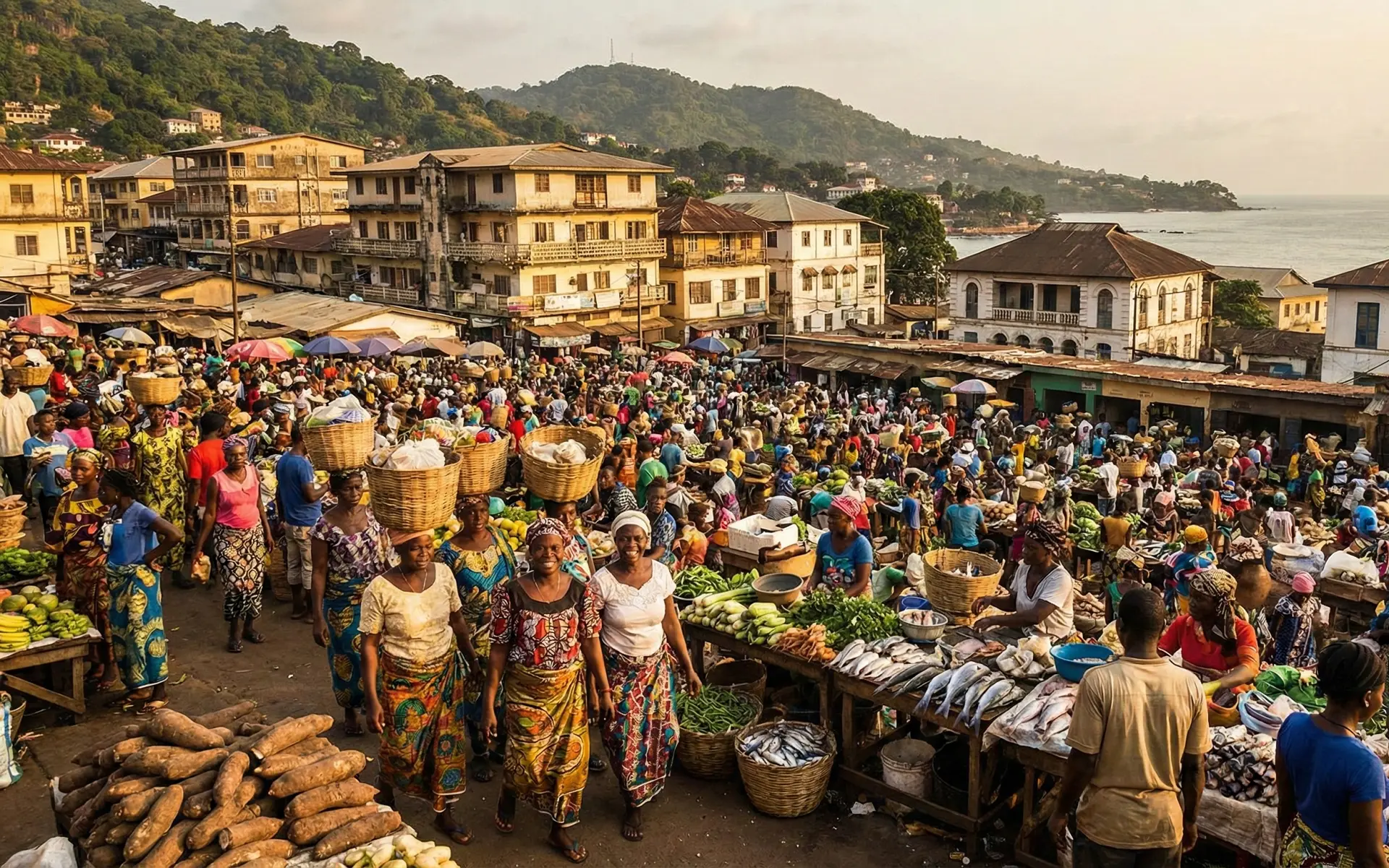
Sierra Leone occupies a slender stretch of coastline on the far western edge of Africa, where the Atlantic’s muted roar meets a land marked by verdant plains, mist-shrouded highlands and stretches of mangrove swamp. Spanning just over 73 000 square kilometres, the country’s boundaries trace a path from the coast’s low-lying swamps inland through plains and forests, rising finally to the lofty peak of Mount Bintumani, whose summit pierces nearly 2 000 metres into the sky. Here, amid equatorial heat tempered by seasonal winds, the climate divides the year into two rhythms: a heavy, life-giving rainy season from May until November, and a parched interlude of dry harmattan breezes from December through May, when nights can cool to a crisp 16 °C and days soar above 30 °C.
- Why Visit Sierra Leone?
- Quick Facts & Essential Information
- Is Sierra Leone Safe for Tourists?
- Best Time to Visit Sierra Leone
- Getting to Sierra Leone
- Getting Around Sierra Leone
- Top Places to Visit in Sierra Leone
- Things to Do in Sierra Leone
- Sierra Leonean Culture & Traditions
- Sierra Leonean Cuisine: What to Eat
- Where to Stay: Hotels & Accommodation
- Sierra Leone on a Budget
- Packing List & Travel Essentials
- Staying Connected: SIM Cards & Internet
- Travel Tips & Practical Advice
- Sustainable & Responsible Travel
- Frequently Asked Questions (FAQ)
The earliest contours of modern Sierra Leone were drawn in the early nineteenth century, when, in 1808, Britain established a “colony” along this coast as a haven for Africans liberated from the slave trade. Nearly a century later, at the Berlin Conference, European powers carved out an inland “protectorate,” forging the borders that endure today. Independence arrived in 1961 under the leadership of Sir Milton Margai, whose Sierra Leone People’s Party guided the young nation through its first years of self‑rule. A decade later, a constitutional shift transformed the country into a presidential republic; subsequent decades would see power shift between rival parties, the advent of one‑party rule, and eventually the reintroduction of multiparty democracy. Yet these political evolutions were overshadowed from 1991 by a brutal civil war that pitted government forces against the Revolutionary United Front. For eleven years the conflict raged—cities were razed, communities uprooted and the fragile infrastructure of a newly independent state was nearly destroyed. It was only through intervention by West African peacekeepers and a renewed commitment from the former colonial power that the fighting ceased in 2002, allowing Sierra Leone to embark on a cautious path to recovery.
Today, roughly 8.5 million souls call Sierra Leone home, and one’s first impression of its people is their extraordinary diversity. Some eighteen ethnic groups dwell within national borders, yet two large communities—the Temne in the north and the Mende in the south and east—together make up almost seven tenths of the population. Lingua franca is found not in tribal dialects but in Krio, a creole language derived from English and a constellation of African tongues, which binds 97 percent of citizens in a single, shared mode of communication. English itself remains the language of government, education and the media, a reminder of colonial legacies both burdensome and formative.
Religious life in Sierra Leone reflects an equally broad embrace. Three‑quarters of the population profess Islam—predominantly Sunni, following the Maliki school—with a significant Ahmadiyya community centred around the city of Bo. Christians, numbering nearly one‑quarter of the populace, are largely Protestant, with Methodists and Evangelical groups most numerous, while Catholics account for a smaller but active minority. Far from friction, these faiths intertwine in daily life: mosques and churches stand side by side in towns and villages, and festivals marking Eid or Easter alike are observed as national holidays. An inter‑religious council, comprising clerics from both traditions, convenes regularly to safeguard the harmony that many regard as one of Sierra Leone’s most resilient virtues.
Beneath these human patterns lies a land rich in natural wealth but riddled with paradox. Diamond mines in Kono District have long drawn prospectors eager for fortune; bauxite deposits fuel aluminium production; and gold veins glint in the eastern hills. Yet diamond wealth has too often lined the pockets of a narrow elite, while the great majority of citizens subsist in multidimensional poverty—some sixty per cent still lacking access to basic services such as clean water, education and healthcare, and another twenty per cent hovering perilously close. The leone, the national currency, circulates through markets and banks alike, but credit‑card machines are a rarity beyond the capital. At Queen Elizabeth II Quay in Freetown—Africa’s largest natural harbour—container ships berth alongside palm‑frond fishing canoes, a testament to both the country’s maritime promise and its uneven development.
Roads weave outward from Freetown into all four geographical regions, though fewer than one in ten kilometres are paved. A coastal highway links to Conakry in Guinea and Monrovia in Liberia, while more remote tracks thread through rainforests and savanna. Ten regional airstrips punctuate the landscape, but for international travel nearly all passengers funnel through Lungi Airport on the far side of the harbor; plans for a bridge promise to bind this gateway more tightly to Freetown by 2027. In the meantime, travelers cross by ferry, threading between mangrove‑lined shores and the city’s steep hills.
Those who venture beyond the capital’s steamy bustle discover a country of striking contrasts. In the east, the hinterland’s highlands give way to ridges cloaked in moss and orchids; rivers carve deep valleys, and villages cling to mountainsides. The centre unfolds as wide plains, a mosaic of farmland, secondary forest and bush, where smallholder farmers grow rice—the nation’s staple—for markets and family alike. Along the coast, some four hundred kilometres of Atlantic beaches stretch near‑continuously, offering sand still white and water still clear. Here, the Tacugama Chimpanzee Sanctuary shelters orphaned or endangered apes in forest reserves that slope toward the sea, while the ruins of Bunce Island, once a fortress in the slave trade, stand as silent witnesses to a past half‑concealed by time.
In Freetown itself, history breathes in every corner. The Cotton Tree, under which early settlers once gathered, rises sentinel over broad avenues; colonial‑era villas crouch behind wrought‑iron balconies; and the National Museum preserves artefacts that span Sierra Leone’s precolonial kingdoms through the era of European contact. A hop from the city centre, the Sea Coach Express skims across the bay, offering panoramic views of reefs and peninsulas. Inland, the National Railway Museum curates relics of the tracks that once ferried ore to the coast.
Cuisine across Sierra Leone is simple yet zesty, built on rice pottages enlivened with local greens—cassava or potato leaves—okra sauce, fish or groundnut stew. On street corners, vendors sell grilled meats and skewered shrimp, fried plantains, roasted corn or peanuts pulled from hot shells. Fresh fruits spill from carts in the afternoon heat: mangoes, pineapples and oranges, their juices mingling with the heady sweetness of ginger beer. At dusk, many will sip poyo—a lightly fermented palm wine—while the coastal breeze brings the tang of sea salt through open doorways.
Despite the weight of its history and the scale of its challenges, Sierra Leone bears the imprint of cautious optimism. International relief efforts since 2002 have rebuilt hospitals, schools and roads; faith in government oversight of the mining sector has grown with new transparency initiatives; and grassroots movements advocate for youth employment, women’s health and environmental stewardship. Membership in bodies such as the United Nations, the African Union, ECOWAS and the Commonwealth speaks to a desire for regional and global partnership, even as the country asserts its sovereignty and distinct identity.
In the end, Sierra Leone cannot be distilled into a single narrative. It is a land of soaring peaks and mangrove swamps, of diamond mines and subsistence farms, of youthful optimism and the scars of war. Its people—speaking in Krio, English or the tongues of their ancestors—carry forward traditions of tolerance and community under one national flag. To know Sierra Leone is to recognize both the weight of its past and the fragile hope of its present: a nation driven by the conviction that, in the face of adversity, perseverance can yield renewal and that the Atlantic’s eternal tides may yet wash in a more equitable tomorrow.
Why Visit Sierra Leone?
Sierra Leone occupies a quiet corner of West Africa where history and nature converge in compelling ways. On paper it is one of the world’s least-visited countries, and that sense of unfamiliarity is part of its allure. After more than a decade of rapid change and recovery, the nation now offers tourists a variety of attractions: lush rainforests brimming with wildlife, endless palm-fringed beaches along the Atlantic, vibrant cities by the sea, and a cultural tapestry that blends African traditions with Creole heritage. Nature lovers can trek in tropical jungles and savannah parks, while history buffs can trace the legacies of kingdoms, colonialism and the slave trade.
The natural attractions abound. Inland, one of the last intact tracts of the Upper Guinea Rainforest lies in Sierra Leone’s borders. At Tiwai Island Wildlife Sanctuary on the Moa River, visitors may glimpse chimpanzees and pygmy hippos in dense jungle. In the northern Outamba-Kilimi National Park, savannah elephants and antelope wander among mangrove forests. Even near the cities, hills and valleys are carpeted in green. On the coast, hidden coves and wide bays offer snorkeling, surf fishing and sailing. Each evening, brilliant sunsets light up clouds over the ocean.
Cultural encounters are equally enriching. Sierra Leone is proud of its heritage, yet welcoming to visitors. The country’s capital, Freetown, was founded by freed slaves in 1792 and still carries Creole (Krio) traditions alongside African tribal customs. You may hear Bubu and Gumbe music drumming in a village, dance at a community festival, or visit a family harvesting cassava. Visitors often remark on the easy friendliness here – it’s common to be invited for a meal of groundnut soup or to help with a cooking fire. Despite its complex history, including civil war and Ebola in living memory, modern Sierra Leone feels upbeat and forward-looking.
In practical terms, Sierra Leone offers many basics tourists need (hotels, guides, traveler services), but still retains a spontaneous, unpolished charm. It is a place for slow travel: to sit on the sand and listen to the surf, wander through a local market at dawn, and share stories under starlit skies. Travelers who relish discovery will find Sierra Leone refreshingly unhurried. It is not about flash travel – there are no thrill rides or theme parks – but rather about authentic experiences. An offhand smile from a street vendor can be as memorable as a landmark. For independent travelers with a sense of adventure, Sierra Leone feels like a secret waiting to be explored.
Quick Facts & Essential Information
- Location: West Africa, on the Atlantic coast. Borders Guinea (north/east) and Liberia (southeast). Freetown (the capital) sits on a peninsula at the mouth of the Sierra Leone River.
- Population: ~9 million (2025 est.). Young population – half are under 18. Over half live in rural areas. Major ethnic groups are Temne (north), Mende (south/east), Limba, Fula, Susu, and Krio (Creole). Each group has its own language and customs.
- Languages: English is the official language. The everyday lingua franca is Krio (an English-based Creole spoken by >90%). Tribal languages (Mende, Temne, Limba, etc.) are common in rural areas. You can get by with English and Krio almost everywhere.
- Currency: Leone (SLL or NLe for “New Leones”). In 2022 the government re-based the currency, so prices now use larger notes. US dollars are widely used (hotels/tours quote in $), but small shops expect Leones. Only post-2006 USD notes are accepted. ATMs (Ecobank, UBA, Rokel, Sierra Leone Commercial Bank) dispense Leones but run out often; withdraw only modest amounts.
- Time Zone: GMT (no daylight saving). Sierra Leone is 5–6 hours ahead of US East Coast (depending on season).
- Visa & Entry: Most visitors need a visa. ECOWAS nationals (neighboring West African states) enter visa-free. Others can get a Visa on Arrival (~US$80, valid 30 days) or apply for an e-Visa (online, submit before travel). Passports must be valid for 6 months after your return date. Yellow Fever certificate is required for all travelers. Be prepared also to show proof of other routine vaccinations if asked. There is a mandatory airport security fee (~US$25) on entry and departure – pay it before passport control via the online portal or at an authorized bank. You will need the receipt when leaving.
- Airport: Freetown’s Lungi International Airport (FNA) is the main entry point. It’s across an estuary from the city. (When booking flights, know that you must still arrange onward transfer from Lungi to Freetown.)
- Health: Limited facilities. Vaccinations: Yellow Fever (mandatory), plus Typhoid, Hepatitis A/B, Polio, and routine shots Malaria is year-round – take prophylaxis and use nets/repellent. Cholera outbreaks occur (especially rainy season) – drink bottled/boiled water, avoid raw vegetables. Rabies is possible from dog bites – consider pre-exposure vaccine if you plan remote travel. Health insurance (evacuation coverage) is strongly advised: hospitals require cash and care is basic even in Freetown. If seriously ill, medevac to another country may be needed.
- Electricity & Communications: 230V, 50Hz. Plugs: Type D (three round pins in triangle) and Type G (UK-style three rectangular pins). Power cuts are common; a small surge protector or portable battery charger is wise. Mobile networks (Africell, Orange, QCell) cover cities and main roads; buy a local SIM with data (passport registration required) to use maps and messaging. Hotels/cafés often have Wi-Fi, but it’s slow or unreliable outside Freetown.
- Transportation: Drive on the left (like the UK). Roads are mostly unpaved outside cities and can wash out in rain. Public minibuses (“pepperoni”) and shared taxis run between major towns (very cheap, but can be overcrowded). In cities, taxis, motorbike taxis (“okada”), and tuk-tuks (“keke”) operate; always agree on fare beforehand. Ferries and speedboats connect Lungi Airport to Freetown. Domestic flights are minimal. Rivers are shallow; only a few organized boats service islands or coastal routes. Plan extra travel time for all journeys.
- Safety: Sierra Leone is neither a danger zone nor completely without risk. Exercise common-sense precautions. Current travel advisories advise extra caution, especially at night outside Freetown, and around political gatherings. Carry only photocopies of your passport when out; use a hotel safe for the original. Petty theft can occur in crowded areas; never flaunt valuables. See the next section for a full safety overview.
Traveler Tip: Many small details (like the airport security fee, water-borne illness, and lack of reliable card machines) can catch tourists off guard. Preparing in advance—getting visas, vaccinations, travel insurance and arranging transfers—will let you relax and enjoy Sierra Leone’s charms.
Is Sierra Leone Safe for Tourists?
Safety concerns often top a traveler’s list, and Sierra Leone’s situation is nuanced. The country is peaceful compared to past decades, but it remains a developing nation with some dangers. Travelers who use caution can usually visit without incident, but awareness is key. Foreign governments currently advise exercising increased caution: avoid crowds or political rallies, and do not travel on remote roads after dark. For example, the road journey from Lungi Airport to Freetown can be long and winding; many visitors prefer to take a ferry or water taxi instead of driving at night.
Crime: Petty theft is the most common issue. Pickpockets and snatch-and-grab thefts have occurred in market areas, on beaches, or in crowded public transport. Rarely, armed robberies are reported (for instance, there have been instances of muggings near Lumley Beach or Aberdeen town after dark). Protect yourself by keeping a firm grip on your belongings, using money belts or hidden pouches, and not carrying all your cash or documents at once. Do not walk alone at night, even in semi-built-up areas; instead, take a taxi or stay in a group. Women have walked Freetown streets and markets safely during daylight, but the same advice (avoid isolated streets after dark) applies to everyone. When returning to your hotel late at night, confirm that the reception light is on.
Taxis and Transport: Some visitors have been robbed by unregulated taxi or motorbike drivers. Always use an official taxi rank or pre-arranged driver. Before hopping into a car or okada (motorbike taxi), agree on the fare in advance or ensure the meter is running. Hotel staff can recommend reputable drivers. If you board public transportation, keep your bag on your lap and be wary of strangers asking seemingly innocent questions or offering help (scams do occur). Driving yourself in Freetown is possible but not recommended for newcomers, as roads can be chaotic and street signage limited.
Demonstrations: Sierra Leone is a democracy, so political rallies and marches do occur. These are usually peaceful but can turn tense or block roads without warning. If you see a protest forming, maintain distance. Never try to take photos of protesters or confrontators without understanding the situation.
Local Laws & Penalties: Drug offenses carry very harsh sentences (often life in prison), so avoid any involvement with illegal substances. Carrying unregistered diamonds or gemstones is illegal (and can be perilous); do not buy gems unless you have official documentation. Public displays of anger or frustration may be frowned upon. Check the law on sexual conduct: consensual same-sex relations are illegal for men, so LGBTQ+ travelers should be discreet with affection (women are not explicitly criminalized, but caution is still advised).
Health & Emergencies: Malaria is a serious risk everywhere. Take prompt action if you develop a fever (inform your doctor about travel). The last Ebola epidemic (2014–2016) is over, and now the government has vaccinated medical staff in case of flare-ups, so the risk to tourists is extremely low. Standard first-aid supplies should cover minor cuts or upset stomachs. In a medical emergency, dial 117 for an ambulance, but note that ambulances may arrive slowly or lack equipment. Often it’s quicker to call a hotel for a taxi to take you to a clinic. The main cities have a few hospitals catering to foreigners (with advance payment), but outside the capital, care is minimal. Hence, travel insurance with medical evacuation is essential. For less urgent problems, pharmacy shops can supply medications for common ailments.
Traveler Tip: Keep a list of emergency contacts handy (embassy number, local host, doctor). Also carry photocopies of your passport’s photo page and insurance papers separately from the originals. If you need police help, dialing 999 summons the Sierra Leone Police – though they may insist on a small “fee” to file a report. If someone tries to bribe or extort money, say that any payment can only be made at a bank and insist on getting a receipt.
Overall: Sierra Leone is neither as dangerous as some warnings imply, nor completely risk-free. By taking sensible precautions – securing valuables, travelling with people after dark, respecting laws, and maintaining awareness – most tourists leave unharmed. Sierra Leoneans are generally friendly and helpful; showing respect in return will make your stay safer and more pleasant. Remember, infrastructure is limited: patience is often the best tool. With the right preparation, travelers often find Sierra Leone welcoming and unexpectedly safe.
Best Time to Visit Sierra Leone
The climate is tropical; rains and heat dominate much of the year. For most tourists, the dry season (November–April) offers the most comfortable travel conditions:
- Dry Season (Nov–Apr): Skies are mostly clear, and humidity is lower. Daytime temperatures hover around 26–30°C (79–86°F) with pleasant sea breezes on the coast. Evenings can be cool in the hilly interior. This season is ideal for beach activities, hiking, and city tours. Roads remain passable, and mosquitoes are less bothersome. Major festivals also cluster here: Independence Day (April 27) celebrations include parades and community events in Freetown. The Freetown Music Festival (typically April) draws crowds for concerts and cultural performances. Note that December–January can be slightly dusty due to the Harmattan wind, but it’s still far better than the heavy rains later on.
- Wet Season (May–Oct): Heavy rains fall from June through September (often with brief sunny intervals). Roads outside cities may become muddy or flooded; travel between some regions can be slow or impassable during peak rain. The coast stays hot and humid, and after dark the air can feel humid and oppressive. However, this season has its beauty: forests are lush, rivers swell into waterfalls, and beaches see powerful surf (surfers love this season for big waves). If you don’t mind some rain, you’ll find fewer tourists and green landscapes. Some travelers report that late October/November and March–April (shoulder months) are a good compromise — you might catch a short rainshower but avoid the worst of storms and heat.
- Important Events:
- Independence Day (Apr 27): The biggest national celebration, with parades, traditional dances and fairs.
- Freetown Music/Arts Festivals: Beyond the city festival in spring, there may be small music/film events year-round. Sierra Leone hosted a large reggae festival (One Nation Reggae Festival, late November 2025).
- Religious Holidays: Christmas (Dec 25) and Eid (dates vary; follows Ramadan/Eid al-Adha) see festivities, church and mosque gatherings, family meals.
- Local Ceremonies: Secret society rites (Poro, Sande) and harvest festivals occur at various times, but these are community-based and not scheduled for tourists.
Bottom Line: For most visitors, traveling between November and April is best. This avoids flooding, ensures good road travel, and coincides with many events. If your schedule is flexible, check local festival dates (e.g. Ramadan/Eid moves annually) and book hotels well before those holidays. If you crave solitude and don’t mind rain, you could save on some rates by coming in the rainy season — just plan indoor alternatives for wet days.
Getting to Sierra Leone
By Air: Almost all international travelers arrive at Lungi International Airport (FNA). This airport is on the north side of the Sierra Leone River, about 20–30 minutes by ferry or speedboat from Freetown. Major airlines serving Freetown include Brussels Airlines, Ethiopian Airlines, ASKY, Kenya Airways, Qatar Airways (via Doha), Turkish Airlines (via Istanbul), Flydubai (via Dubai), and Africa World Airlines (via Accra). There are also flights from neighboring capitals: Dakar, Monrovia, Conakry, Abidjan. In 2025, a second terminal expansion was completed, improving facilities somewhat.
On arrival, you must clear immigration and customs. Have cash ready for visa fees and the $25 airport departure tax (which is prepaid upon entry). Passport control will check your visa and vaccination card.
Visa & Entry: As noted, obtain your visa either on arrival or via an e-visa beforehand. Airlines may require proof of visa eligibility before boarding. A Yellow Fever certificate is checked by health officers; no certificate means denied entry. There may also be a brief health screening (post-pandemic protocols still linger, e.g. temperature check and a quick health form to fill out).
Airport Fee: Before passport control, you must pay a $25 Lungi Security/Immigration Processing Fee. Do not skip this step! There are kiosks or online payment codes posted on arrival. Once paid, keep the receipt to show the immigration officer or airport staff.
Airport Transfer (Lungi to Freetown):
– Sea Coach / Water Taxi: The most popular way is by launch. SeaCoach Express and SeaBird run boats matching flight arrivals. The crossing takes about 30–45 minutes. Tickets (~$20) include a shuttle bus on the Freetown side that takes you to the city center (Lumley Beach or downtown). This is relatively safe and fast.
– Ferry: An older ferry (for vehicles and foot passengers) runs hourly between Lungi and Kissy Wharf in Freetown. The trip takes about 1 hour. The schedule is less reliable and it can be very crowded. Use this only if the speedboats are full or canceled.
– Road (+Ferry): A longer (3–4 hour) option is to take a taxi to Tagrin Point, then a local ferry to Kissy. This is cheaper but much slower and often uncomfortable. Avoid driving the entire distance by road, especially at night: the route winds through remote districts and has had robberies.
– Helicopter: There is a helicopter service (Sea-Air Helitours) linking Lungi and Freetown. It’s fast (~8 minutes), but very expensive and usually reserved for VIPs or urgent travel.
– By Land: Overland entry is possible from Guinea or Liberia. Border crossings are basic. The main road from Guinea enters near Kambia district (north). From Liberia, the crossing at Gbalamuya (east) connects to Kenema. Roads are rough; border posts require fingerprint scans and passport checks. If coming by land, go prepared with necessary paperwork and local currency for visa fees. Crossing may require patience (queues and unofficial “helper fees” happen). Also, firearms are banned; any hunters must declare guns at the border.
Cargo/Sea Travel: There are no regular international ferries or cruise ships to Sierra Leone. The Port of Freetown serves cargo vessels and the occasional private yacht. If arriving by sailing yacht, one must clear customs in Freetown. Short local boat trips (fishing canoes or dhows) operate to nearby islands (Turtle, Banana Islands) but not for long-distance entry.
Arrival Tips:
– Carry small USD bills for tips, snacks, local SIM card top-up. Smaller-than-$50 notes are best for incidental purchases.
– Always have copies of your documents ready.
– Plan your airport transfer in advance (arrange with your hotel if possible).
– If you hire a taxi on arrival, find the official desks inside the terminal to avoid inflated prices.
By air is the only practical way for most visitors. Once on Sierra Leonean soil, you’ll proceed to city or resort by boat or road. With a little planning, the crossing is straightforward.
Getting Around Sierra Leone
Transportation within Sierra Leone can be an adventure of its own. Roads connect key cities but are often in rough shape; ferries and bush taxis fill the gaps. Here are your main options:
Road Travel:
– Buses (“Pepperoni”): These white or yellow minibuses are the cheapest way to go between towns. They run fixed routes and leave only when full. Expect stops en route. Example fares (2025): Freetown–Bo around 25,000 Leones per seat (~$2), Freetown–Kenema about 30,000 L (~$3). Tickets sell at bus station counters (no English schedules; just ask locals which bus goes where). Comfort is basic: seats are narrow and packed. The benefit is cost and local color.
– Shared Taxis (“Car Taxi”): For a bit more ($3–5 to a nearby town), share a white sedan or van taxi. They leave once a few seats fill. These are faster than buses but have less overhead clearance. Always negotiate or clarify price before boarding.
– Private Taxis: Available in cities by flagging or hotel-arranged. They charge by meter or by negotiated distance. A ride across Freetown might cost 20,000–50,000 Leones depending on distance. Always pay in Leones. You can also rent a taxi + driver by the day for excursions (driver might speak Krio/English).
– Motorbike Taxis (“Okada”) and Tuk-tuks (“Keke”): In Freetown and larger towns, these are common for short hops. Okadas are very cheap and handy in traffic, but have no safety gear – wear a helmet and only ride if comfortable. Keke (auto-rickshaws) seat 2–3 people and are cheaper than car taxis. Use only in daylight if you have reservations.
– Self-Drive: Foreigners can drive on an international license, but it’s not recommended unless you have local driving experience. Roadside hazards and sporadic traffic rules make driving yourself challenging. If you do rent a car (usually a 4×4), be cautious: dust storms on unpaved roads can reduce visibility, and night driving is hazardous. Always inspect your rental before departure and note fuel levels and tire condition.
Waterways:
– Ferries and Water Taxis: As mentioned, ferries cross the main river to Lungi. Also, daily ferries connect Freetown to Monkey Island (on a tiny sliver of land at the river mouth) and to Banana Islands (short hops from Kent Beach). On the interior, river transport is limited. In East Sierra Leone, some villages have canoes, but most long-distance travel is by road.
– Island Boats: To reach Banana Islands or Turtle Islands, hire a local speedboat or join a day tour from Freetown. The Sea Coach launches mentioned above sometimes run tours to these islands. Solo travelers can also negotiate a charter with boatmen at Kent. Similarly, small boats run from Yele (east of Freetown) to some remote beaches and resorts. Always wear life jackets, as rivers and seas can have strong currents.
– Canoe Trips: In places like Outamba-Kilimi or on the Moa River, hiring a dugout canoe with a local guide is part of the experience. These are for short distances (crossing a river or navigating a swampy area). They are not formal “transport” but are useful for jungle safaris.
Air (Domestic):
– There is no scheduled domestic airline service between Sierra Leone’s towns. The country’s only airport for larger planes is Lungi International. There are smaller airstrips at Bo and Kenema, but they handle only infrequent charter flights (often military or NGO planes). Thus, internal flights are not a travel option for tourists.
On Foot and Bicycle:
– In towns and villages, walking is always possible and often quickest for short trips. Roadsides can be uneven, so sturdy shoes help. In some areas (villages, forest parks), bicycles or motorcycles may be available to rent; negotiate the price and check brakes carefully if using these. Daytime is the safest time to trek or bike.
What to Expect:
– Travel Time: Distances are deceptive. For example, Freetown to Bo is about 220 km, but the trip can take 6–7 hours by bus due to road conditions. Always add buffer time to any schedule.
– Night Travel: Road travel at night is strongly discouraged. Poor lighting, pedestrians and unlit vehicles make it dangerous. If you must move after dark, arrange for a known driver or fly out of Freetown.
– Costs: Public transport (bus/taxi share) is very cheap. A full-day private car rental may run $80–$120 plus fuel, splitable if in a group. Ferries are modestly priced per passenger. Budget travelers should primarily rely on buses and shared taxis.
– Booking: In Freetown, travel agencies can book long-haul buses for you. For most shared taxis and ferries, arrive early to secure a spot rather than trusting last-minute availability.
With planning, you can stitch together a journey by mixing modes: road for interior, boat for coast. Locals are usually willing to help once you speak a word or two of Krio (for example, “Kenema” to the driver). The journey itself becomes part of the adventure.
Top Places to Visit in Sierra Leone
Freetown: Capital Highlights. Begin in Freetown, Sierra Leone’s sea-lined capital. This city holds colonial history and coastal charm:
– Cotton Tree: An iconic spot in old Freetown. By the City Hall stands the Cotton Tree, a massive kapok tree where freed slaves first prayed on landing here. (The present tree is a later generation, but locals still regard it as sacred.) Nearby is the stilt village of Kroo Bay and the colorful Maritime History Museum (in a former slave fort).
– National Museum: A compact museum downtown with artifacts from all eras of Sierra Leonean history – masks, crafts, wartime memorabilia, and exhibits on traditional kingdoms. It’s adjacent to Albert Market, Freetown’s busiest bazaar. Wander Albert Market’s alleys for batiks, spices, fish and snacks; it’s an experience in itself.
– Freetown Observatory / Aberdeen Hills: For a panoramic city view, drive or taxi up to the Observatory at Sky Pilot. From here you see sprawling Freetown, the bay and surrounding hills. On a clear day the sight is stunning.
– Lumley Beach & Aberdeen: Freetown’s beaches are surprisingly beautiful. Lumley Beach has beach bars and seafood grills – try grilled fish or spicy okra stew. From Lumley you can taxi east along Beach Road to Aberdeen Beach (aka River No. 2 area), a natural bay with calm waters. Both are good for swimming (no lifeguards, so swim with care) and sunset watching. Aberdeen also has newer resort hotels (Capra Beach Hotel, Aventree Riverside) if you want luxury out of the city center.
– Tacugama Sanctuary: A short drive south of Freetown (near Regent village) is this primate rescue center. It shelters orphaned chimpanzees. A 2-hour guided visit here lets you see the chimps safely. It’s both educational and supports their conservation efforts.
– Fourah Bay College: If time allows, walk through the campus of Africa’s oldest university (est. 1827). The clocktower and stone chapel hint at colonial academia. Nearby on Hill Station Road is the former home of Sir Milton Margai (first PM of independent Sierra Leone), now a modest museum.
– Nightlife & Markets: Freetown’s late afternoon bustle includes street markets and food stalls (white rice with groundnut stew is a local favorite dish). In the evenings, Beach Road (Lumley) comes alive with music and bars.
Banana Islands. Just offshore from Freetown are the tranquil Banana Islands – a group of three: Dublin, Ricketts and Mes-Meheux. From Kent Beach or Mobimbi you can catch a speedboat (about 30 min) or slower launches to Dublin Island (often just called Banana Island). Here, simple eco-lodges and palm-thatched huts line quiet beaches and walking trails.
– Dublin & Ricketts: Dublin has a few cafes and lodging. Ricketts is accessible by a 3–4 hour forest hike or short boat ride; its interior jungle and hillsides have old Rastafarian farms where you can meet local fruit farmers.
– Activities: Snorkeling in clear waters (corals and tropical fish abound), canoeing up narrow creeks, and hiking in the island’s volcanic hills are highlights. The islands are remarkably peaceful – you may see herds of green monkeys and blue-faced coucals (wild turkeys). Boats usually include lunch on the island or arrange a barbecue on the sand. The best beaches here feel almost deserted at low tide; it’s a perfect spot for a calm afternoon swim.
Tiwai Island Wildlife Sanctuary. Deeper adventure beckons at Tiwai Island, a 9,000-acre reserve in the Moa River, roughly 2 hours by car from Kenema plus a 3-hour boat ride. Newly inscribed as a UNESCO World Heritage site (2025) for its biodiversity, Tiwai is a sanctuary of thick rainforest.
– Wildlife: It boasts one of the highest primate diversities on Earth (11 species!). Watch for chimpanzees and mona monkeys along jungle trails with a guide. Nocturnal treks may reveal dwarf galagos (bushbabies) or giant forest hogs. Over 135 bird species live here – silent hornbills in canopy or vibrant sunbirds in flowering trees. Hippos (including rare pygmy hippos) surface at dusk in the water, and lush vegetation abounds.
– Activities: Stay at the rustic Tiwai Eco-Lodge (simple cabins with beds and shared bathrooms, solar lighting only). All meals are provided (the food, made by villagers, is exceptional and inexpensive – e.g. a rice-and-stew dinner costs less than $2). Daytime jungle walks, trail hikes to waterfalls, and evening talks by local guides make each day full. A river canoe trip lets you fish with villagers or peer at river otters. In the evening, villagers from nearby towns sing by the fire.
– Access: Getting there is part of the journey: from Freetown, travel to Kenema by bus or hire a car+driver (8–10 hours), then onward to the village of Potoru. From Potoru you arrange the motorized canoe up the Moa River. (No roads reach Tiwai.) Inform lodge staff of arrival time so they can pick you up on the riverbank.
Outamba-Kilimi National Park. In Sierra Leone’s remote north lies Outamba-Kilimi, one of the country’s wildest areas. The park covers forested hills and savannah near Guinea’s border. It is home to chimpanzees, bush elephants, roan antelope, and Africa’s rare pygmy hippo (it swims in forest streams here). Over 350 bird species have been spotted, including African fish eagles and hornbills.
– Visiting: There are no luxury lodges: you’ll stay in basic ranger cottages or pitch a tent (mosquito net included). Guided day hikes or river canoe trips show off wildlife around floodplain pools. Hiring a park-approved guide is mandatory. Because it’s off the tourist map, go with a few nights planned (you can continue overland into Guinea if adventurous). Most visitors combine Outamba-Kilimi with a northern road trip (e.g. Freetown–Makeni–Kabala–Outamba).
Bunce Island (Slave Fort). A short charter boat ride (4–5 hours round-trip) from Freetown leads to Bunce Island, a solemn monument in history. This uninhabited island was a British slave fortress from the 17th–19th centuries. The ruins of whitewashed stone walls and clay huts still stand against the jungle. Guided tours explain how enslaved Africans (mostly from the “Rice Coast,” including Sierra Leone) were held here before being sent to plantations in the Americas.
– Visiting: Day-trips run from Freetown in the morning. Wear a hat and bring water (the sun is fierce on open water). You’ll walk a short loop around the ruins and see a small on-site museum and craft stalls. The experience is somber but educational. Many African-American visitors feel a strong connection to Bunce Island’s history. Proceeds from tours help maintain the site, which is a designated National Monument.
Beaches of the Peninsula. Beyond Freetown’s local beaches lie some of West Africa’s finest sands:
– Lakka Beach: About 45 km east of Freetown, Lakka is a long white beach backed by palms. It has more waves and fewer rocks than Lumley, good for swims and exploration. A few hotels and bars (e.g. Salone Beach Guesthouse) cater to visitors. At low tide, sandbars allow strolling far into the bay. The ride from Freetown is scenic but bumpy (3 hours by taxi or bus). Lakka is quiet, with a sunset party vibe on weekends.
– River No. 2 Beach: Also called Brewerville Beach, this bay is nearer (20 km from downtown). Its standout is the curving bay lined with coconut palms and the old British-era breakwater. It’s perfect for children (the water is calm) and has a few budget bars. Recently an entry fee was instituted (to a village fund) of a few thousand Leones.
– Bureh Beach (Turtle Bay): Known as Sierra Leone’s surfing capital, Bureh (just past Banana Islands) has surf breaks for all levels. There are surf schools and beachside restaurants. The vibe is laid-back by day but can turn into a lively bonfire party scene at night on weekends.
– Cape Sierra / Turtle Islands: For the affluent or deep sleepers, hotels at Turtle Bay (near Lungi airport) offer quiet luxury. The Turtle Islands (reached by canoe from Lungi) have a tropical lodge where you can watch hawksbill turtles at night during nesting season.
In summary, Sierra Leone’s top destinations cover history and nature, city and shore. From the cosmopolitan beats of Freetown to the jungle calls of Tiwai, each place reveals a different facet of this welcoming country. Plan your route to include at least one city, one wildlife area and one beach – that way you experience Sierra Leone’s full range of delights.
Things to Do in Sierra Leone
Sierra Leone offers a rich menu of experiences across all interests. Whether you’re seeking wildlife encounters, active adventures or cultural immersion, you’ll find something to do every day. Here are some highlights:
- Wildlife Watching: As noted above, chimpanzee treks are a major draw. Book a morning walk at Tacugama Sanctuary (just outside Freetown) to see rescued chimps up close in forest enclosures. For wild sightings, stay overnight at Tiwai Island or Gola Rainforest and take guided hikes at dawn and dusk to find primates in the trees. In Outamba-Kilimi, arrange boat safaris on the river to watch hippos and elephants wallow. Birders should not miss early-morning walks anywhere near water; even Freetown’s wetlands host egrets, pelicans and kingfishers. Weigh lip balm for scented expedition; here, nature is the main attraction.
- Adventure Activities:
- Surfing & Diving: At Bureh Beach and Banana Islands, local outfitters rent surfboards, snorkels and gear. Banana Islands have dive shops for beginners and certified divers (the reefs have parrotfish, turtles and moray eels).
- Hiking & Nature Trails: Beyond the major sites, day hikes exist in places like Western Area Peninsula National Park (near Freetown): trails from Lumley up to Outamba Point traverse forested ridges and end at sweeping ocean views. The journey can be muddy; local guides are recommended.
- Kayaking/Canoeing: Paddle along the Sierra Leone River (from Freetown’s suburbs) or up the Moa at Tiwai. Some firms rent kayaks for short excursions (always check the tide or river depth first). Canoe trips by local boatmen provide a cultural angle – e.g. ride with fishermen or go into a mangrove village.
- Cycling Tours: Mountain biking is growing; trails around Bo town or hills outside Freetown can be explored by bike if you bring one or rent locally (supply is limited).
- Camping: Bring gear and pitch tent on safe beaches (ask permission, sometimes a nominal fee). The stars on a remote beach, with only the ocean lullaby for company, are unforgettable. (Always take lanterns and secure your food from wild foragers.)
- Cultural & Historical Tours:
- Village Life: Join a guided village visit near your lodging. Community tourism initiatives (like the Queen’s Hotel Lodge in Kamakwie) allow you to walk through fields, learn about farming sierra Leonean rice or cassava, and share a home-cooked meal. You might watch a weaver create a kente cloth or see a fisherman mend nets. These homestay experiences typically include a night or two under local roofs – a chance to see real Salone hospitality (and swap cooking tips).
- Culinary Classes: A growing number of traveling chefs offer cooking demonstrations. Learn to pound cassava into fufu or stir buttered rice. Take an evening class in Freetown to learn local recipes, then try making garri (fermented cassava) yourself.
- Heritage Walks: In Freetown, some guides lead a “Slavery Heritage Walk” from the Cotton Tree to King Jimmy Wharf. They narrate how freed slaves settled here and where former slave castles stood. You might touch the ground where John Newton (composer of “Amazing Grace”) preached. Small local museums and community centers sometimes host discussions on Sierra Leone’s wartime and Ebola history. These tours require an open mind and a respectful heart.
- Community Events: If your trip coincides, attend a local wrestling match (a Sierra Leone pasttime), a church fundraiser, or market day in a village. Such events immerse you among Sierra Leoneans in a way tourist sites can’t.
- Volunteer Travel: For the altruistic traveler, Sierra Leone has many volunteer opportunities. Teaching English in rural schools, assisting at a clinic, or helping improve water systems can be arranged through NGOs. Volunteer ranges from a few days (e.g. beach clean-up events) to months. Choose a project through a reputable charity that benefits local communities. Note that short “voluntourism” stints should complement – not replace – local labor.
- Relaxation: Don’t underestimate doing nothing: where else can you dine on grilled fish by the surf at sunset, or lie in a hammock as tropical birds call? Sierra Leone invites taking pauses – a long boat ride to an island for an unplanned picnic, or a hammock nap under a mango tree. In busy itineraries, schedule in downtime at a beach bungalow or village home.
Each day in Sierra Leone can be filled with wildlife treks at dawn, cultural encounters by afternoon, and star-gazing on the beach after dark. Most travelers find the rhythm of life here infectious: active out in the world by day, then relaxed around shared meals and conversation in the evening.
Sierra Leonean Culture & Traditions
Travel here is not just sightseeing; it’s also a rich cultural immersion. Sierra Leoneans are known for their warmth and community spirit. A few cultural notes will help you connect genuinely and avoid misunderstandings:
- Ethnic & Language Diversity: Sierra Leone is a mosaic of ethnic groups. The Mende dominate the southeast, the Temne the north, with Limba, Fula, Susu, Mandingo and smaller tribes in between. Around Freetown live the Krio (Creole) people, descendants of freed enslaved Africans who built the city. Each group has its own language and customs, but most everyone speaks Krio as a common tongue, and younger people know English. Don’t hesitate to say “Hello” or “Tenki” (thank you) in Krio; locals appreciate the effort.
- Religion: About 60% Muslim, 30% Christian, the rest follow indigenous beliefs or no religion. Remarkably, religious tolerance is strong. You will often see mosques and churches side by side. When visiting places of worship, dress modestly: women cover shoulders and heads for mosques, and both genders wear conservative attire. Men remove hats in churches and mosques. Always greet with a smile and quietly observe if a ceremony (prayer or singing) is happening inside.
- Music & Dance: Music pulses through daily life. Traditional styles like Bubu (from the north) and Gumbe (Creole drumming) may be heard at festivals or in villages. Youth dance to Afrobeats, hip-hop and gospel on smartphones. If a local radio is on, it’s likely a mix of rhythms. In gatherings, you may see people dancing in a circle (hand-clapping and simple steps) – join in if invited! It’s considered rude to refuse dance or even learn a basic step if others beckon. Traditional dance often accompanies important events (weddings, harvest celebrations).
- Festivals & Events:
- Independence Day (April 27): The biggest national celebration. Expect processions, flag-raising, and cultural shows in Freetown (especially Regent Road) and smaller towns.
- Freetown Music Festival: Usually in March/April, a large beachside arts festival featuring music, theater and local cuisine.
- Religious Holidays: Christmas and the Muslim Eids bring family gatherings, special church/mosque services and feasts (rice stews, grilled meats). Streets in Freetown may quiet down on these public holidays.
- Tribal Ceremonies: In rural areas, secret societies hold initiation rites. Poro (for boys) and Sande/Bondo (for girls) involve weeks-long preparation. Outsiders are generally not invited, but you might see signposts outside a village (wooden carved zoes), indicating a Sande lodge is nearby. If you stumble upon related drumming or chants in the bush, stay back respectfully.
- Social Etiquette:
- Greetings: Always greet people individually. A handshake (sometimes with both hands) is common; an enthusiastic “Good morning/afternoon” and a nod show respect. Among acquaintances, it’s polite to ask, “How are you? (Aw di bodi?)” expecting a courteous response. Elders and officials should be greeted first.
- Gifts & Visiting: If invited into a home, bring a small gift (fruit, pastries). Remove shoes at the door if the family does. Accepting and eating food or drink offered (even tea and peanuts) shows appreciation. Finish what’s on your plate – leaving food can be seen as rude.
- Hand Use: Give and receive items with the right hand (or both hands); the left alone is often considered impolite. Do not point your feet at people; crossing legs away from elders is good manners.
- Business Cards/Photos: Carry some business cards or contact info; Sierra Leoneans give and exchange them frequently. Ask permission before photographing people or private places. Young children often love having their photo taken – ask first, and showing them the picture usually gets laughs and grins.
- Dress: In towns, casual Western clothes are fine (short sleeves, trousers, dresses). In villages or religious settings, cover up: long sleeves, long skirts or pants, no midriffs. Bright colors and traditional printed fabrics are very welcome; you may be complimented on them.
- Tipping: Tipping is not mandatory like in some countries, but it is appreciated. For hotel porters or guides, $1–2 per bag or per day is nice. In restaurants, if service is good, 5–10% is fair (check if a service charge is already included). Most Sierra Leoneans earn small wages, so even a few coins can go a long way.
Local Insights: Respect for elders is fundamental. In conversation, avoid controversial topics like politics or stereotypes. Sierra Leoneans often deflect personal questions with courtesy (“I am fine, thanks”). Being polite, patient and showing genuine interest in people’s lives will endear you. By blending into the friendly social rhythm (smiling, greeting, modest behavior), you will navigate Sierra Leonean culture with ease.
Sierra Leonean Cuisine: What to Eat
The flavors of Sierra Leone are bold and comforting. Staples are rice and starchy vegetables, always accompanied by rich, spicy sauces. Most meals center on a main stew or soup served over a starch. Here are dishes and foods to sample:
- Cassava Leaf Stew (Plasas): The national dish. Dark green cassava leaves (boiled and pounded) are slowly cooked with meat (chicken or smoked fish), ground peanuts or peanut butter, pumpkin leaves, palm oil and spices. The result is a thick green or brown stew. It’s spooned over plain white rice or fluffy olloh (a dough ball made from rice or cassava). Expect it to be nutty and slightly peppery.
- Groundnut Stew: Known elsewhere as peanut soup, this dish uses crushed peanuts or peanut butter to make a creamy tomato-based stew with onions and chilies. Often chicken or fish is added. It’s usually served with rice or cassava fufu. The flavor is nutty and savory; some versions include vegetables like okra or eggplant for texture.
- Jollof Rice (Benachin): Sierra Leone’s take on West African one-pot rice. Rice is cooked in a rich tomato sauce with chilies, onions, and bits of meat or fish. It has a reddish hue and smoky flavor. Each cook has a twist, so try it at a local eatery and compare with hotel or home versions. It’s often very spicy.
- Fufu and Cassava: Cassava (tapioca root) is everywhere. It can be boiled and eaten like a root vegetable, or fried into rough patties. Fufu refers to any doughy starch dumpling. In addition to rice balls, you’ll see cassava fufu, plantain fufu, and sweet potato fufu. People pinch pieces of fufu and dip into soup or stew. Eating with your fingers (right hand) is customary.
- Okra Soup: Sliced okra simmered with tomato and spices, often with fish or meat. The okra makes it slightly slimy (a texture many locals enjoy). Serve it over rice for a simple meal.
- Beans and Rice (Okrika): Stewed black-eyed peas or kidney beans with onions and palm oil, poured over rice. It’s a common everyday meal.
- Fried Fish and Grilled Meats: Being coastal, grilled or fried fish (tilapia, kingfish, bonga) is a staple. Look for roadside fish grills – you can get a whole fish with spicy pepper sauce. Goat meat stew (usually goat is cooked until tender in pepper sauce) is another favorite at gatherings. In cities, small chicken and lamb suya (spicy meat skewers) stands serve char-grilled treats with peanut sauce.
Snacks & Drinks:
– Street vendors sell “ageh” (fried dough balls, plain or sweet), “wonjo” (deep-fried plantain flour cakes), and roasted nuts or corn.
– Sobolo (hibiscus tea) is a bright red sweet drink, served ice-cold from roadside stalls. Fresh fruit juices (papaya, mango, pineapple) are also common.
– Alcoholic offerings include palm wine (chocolatey and tangy) tapped from trees, and local beer (Star Beer is Sierra Leone’s brew). Rum and brandy from imported liquor are pricey, but rum is often mixed with kola nuts in cocktails.
– From the village level, ginger beer (a spicy fermented drink) is homemade and refreshing.
Eating Tips:
– Food is generally safe if it’s cooked hot. Avoid uncooked salads or unpeeled fruit from street stalls. Drink only bottled or treated water.
– In restaurants, it’s polite to wait for the oldest person to start eating.
– Sierra Leoneans eat most meals with their hands (using fufu or injera bread as a spoon). In nicer restaurants forks are provided if you prefer. If using your hands, eat only with the right hand, and wash it thoroughly before and after.
– Street food in markets is spicy and flavorsome. It’s often far tastier and cheaper than hotel dining, as long as it’s freshly cooked.
Vegetarians/Vegans: Options can be limited because stews usually include fish or meat stock. However, you can request fish-free versions of cassava-leaf or okra stew (the shopkeeper might add more greens or nuts instead). Rice and bean dishes are filling and naturally vegetarian. Carry some snacks (fruit bars, nuts) just in case you’re wary of meat in street food.
Trying Sierra Leonean food is a highlight. Be adventurous: the earliest settlers and traders left influences from the Caribbean and Liberia, but local ingredients dominate. Every bite tells a piece of history and community. One taste of the rich palm oil stews, or a bite of corn pudding, and you’ll remember Sierra Leone long after your trip ends.
Where to Stay: Hotels & Accommodation
Sierra Leone’s lodging options span the gamut from simple homestays to luxury beach resorts. Most visitors spend at least some time in Freetown, but there are comfortable places to sleep in many regions:
Freetown Hotels:
– Luxury: The Radisson Blu Mammy Yoko (Lumley Beach) is the only true 4-star hotel in Sierra Leone. It has modern rooms, pool and beachfront. The historic Mammy Yoko Hotel (yes, a different one) and the newly revamped Fourah Bay Resort offer upscale comfort with pools and in-house restaurants. Farther east near Lungi, Capra Beach Hotel is a resort on Turtle Beach, perfect for a beach-side overnight by the airport.
– Mid-Range: Hotel Barmoi (Lumley) and Monty’s (downtown/central Freetown) provide solid 3-star service (A/C, hot water, Wi-Fi). New Brookfields Hotel is a well-known choice (several eateries on-site). These typically cost $50–$80 per night.
– Budget: Backpacker-friendly spots include Steerpike Hostel (Lumley) with dorms and private rooms, and Echo Hostel, both social and beachfront. Basic guesthouses like Maddie’s or Bridgeview (Lumley) cost ~$20–$30/night. These often have ceiling fans rather than air-con. Ensure any place has mosquito nets for beds.
Beach & Island Lodgings:
– On Banana Islands, options are few but charming (e.g. Rasta Huts on Dublin Island, or Banana Safari Lodge on nearby Bonthe). Expect electricity by solar or generator and no air-conditioning.
– At Bureh Beach, Salone Beach Guesthouse and Lapland Resort offer beach bungalows, yoga decks and surfboard rentals.
– Turtle Beach (Lungi) has new resorts like Capra (luxury) and Karibu Cottage (budget cabins).
– Monkey Lodge in Lumley has treehouses in a forest setting (still Freetown peninsula).
Out of Town:
– In Bo, the former capital of the South, try Hotel Imago or Royal Court (clean, air-con).
– Kenema has a few midrange hotels (Anok’s Lodge, Mango Lodge).
– Near Tiwai, lodging is all eco-camp style (basic cabins or dorms at the Tiwai Lodge).
– In Outamba-Kilimi, the park’s small safari lodges are rustic but provide shelter and meals.
Community Lodges & Homestays: Many rural and conservation areas offer locally-run guesthouses. For example, the Wandama Retreat (near Freetown) is an eco-lodge with pool, run by a nonprofit, giving back to community projects. Neini Solar Camp near Makeni is solar-powered and supports a village. Homestays (staying with local families) are common in villages but expect spartan conditions (shared bathroom, squat toilet, usually no soap).
Booking Advice:
– During high season (Dec–Jan, Easter, summer holidays) or big events, book early.
– Online booking platforms have the larger Freetown hotels. For smaller places or eco-lodges, contact via email or local agencies.
– Check recent traveler reviews for cleanliness and service. Understand that “air conditioning” in descriptions may not be reliable (some units are old or noisy). Bring earplugs for generator hum or street noise.
– In all accommodations, mosquito netting is usually provided (especially where malaria is prevalent). If not, make sure to sleep under one or use repellent nightly.
Regardless of budget, choose places that feel safe and cared for. Hotel staff often double as friendly guides (they can arrange tours, taxis or extra bedding). A good stay in Sierra Leone is defined more by the hospitality of the hosts than by luxury amenities. Clean sheets, a hot shower, and a smile will make your night comfortable.
Sierra Leone on a Budget
Sierra Leone can be navigated on a shoestring if you’re resourceful. While imported goods are pricey, locals manage on little, and you can too:
- Eat Cheap: Skip imported-brand restaurants. Instead, eat at “buntu” stands and street vendors. For a few thousand Leones you’ll get rice with a sauce (stew) and maybe chicken. Portions are filling. Drink bottled water sparingly—refill a reusable bottle from a larger jug to save money. Buy snacks (roasted peanuts, fried plantain) from markets. Tea is strong and cheap everywhere.
- Sleep Cheap: Dorm beds in hostels cost ~$5–10. Even a private room in a basic guesthouse often under $20. If you’re adventurous, camping on a beach is possible (for maybe a $5 fee to a local villager). Community-run guesthouses or homestays are also inexpensive (but book ahead in very small places). Showering in cold or lukewarm water is typical in the cheap tier.
- Travel Cheap: Always use public minibuses or shared taxis, not private charters. For example, a public bus seat between cities can cost less than $3, whereas hiring a driver might be $80–100 per day. Haggle taxi fares locally. If going to an island or national park with friends, split a boat or vehicle hire.
- Free/Low-Cost Activities: Spend time at the beach or hiking trails (no entrance fee). Visit local markets and drop into free community events. Attend a church or mosque for cultural experience (respectful dress required). Ask your guesthouse about community tours – often they’re run by groups wanting donations. Buy souvenirs at handicraft co-ops (BASIS in Freetown or Guma Valley artists); prices are negotiable and proceeds go back to artisans.
- Connect for Less: Buy a local SIM ($5) and a small data plan ($5–10). Avoid expensive roaming. Many find WhatsApp and Google Maps (offline) fulfill most needs.
By mixing frugality with occasional comfort splurges, a budget traveler can enjoy Sierra Leone without missing much. A reported budget might be only $25–$35 per day total (food, transport, lodging) outside major tours. Of course, guided safaris or long boat trips cost extra. But daily living is very inexpensive. On a tight budget, it helps to make local friends (exchange knowledge for language practice or shared meals). In the end, Sierra Leone’s biggest rewards are free: fresh air, friendly company, stunning scenery and learning about a new way of life.
Packing List & Travel Essentials
Pack smartly for Sierra Leone’s climate and conditions:
- Clothing: Lightweight, breathable fabrics (cotton or linen). Pack T-shirts, long-sleeve shirts and quick-dry pants. Bring at least one long-sleeve shirt or sweater for cool evenings in hills or air-conditioned places. Don’t forget swimwear for beaches. A compact rain jacket or poncho is essential if traveling in the wet season (May–Oct). For modesty in villages or shrines, have a scarf or shawl to cover shoulders, and long skirts or pants for women (and no tank tops).
- Footwear: Comfortable walking shoes or sneakers for city tours and short hikes. Sandals or flip-flops for beaches and showers. If trekking in forested areas, closed hiking shoes will protect against leeches and mud.
- Health Gear:
- Medications: Bring prescription drugs (in original packaging) for any personal health needs. Over-the-counter basics: pain relievers, anti-diarrhea tablets, antibacterial ointment. Malaria prophylaxis and mosquito repellent (DEET or picaridin) are mandatory. Hand sanitizer and wet wipes for clean-ups.
- First Aid Kit: Bandages, antiseptic, tweezers (for ticks), electrolyte powder for hydration, sunscreen (SPF 30+), lip balm with SPF. A thermometer can be handy. If you wear glasses, consider a spare pair, as repairs are hard to come by.
- Travel Health: A negative malaria test may be needed if you fall sick abroad later. Carry a list of your medications and allergies in writing.
- Documents & Money:
- Passport (and visa) + a copy of the ID page, stored separately. Print or save copies of your itinerary, hotel bookings and insurance info.
- Travel insurance card and embassy contacts.
- Cash: Some US dollars (smaller than $100 bills are best). Also some Euros or pounds are exchangeable but less convenient. Change a little USD to Leones upon arrival at the airport or bank (20,000–30,000 Leones can buy food and sim card).
- Credit/debit card (notify your bank of travel). Remember most places do not take plastic – cards are useful only at a few hotels or the one ATM in Freetown.
- Electronics:
- Universal adapter (Type G and D).
- Phone with charger, and one or two portable power banks. Electricity is unreliable – charge phones at every opportunity.
- If you use a phone for photos/notes, bring a camera or an extra SD card.
- A flashlight or headlamp (to deal with power cuts at night, especially outside cities).
- Miscellaneous:
- Sturdy daypack for hikes.
- Reusable water bottle with built-in filter or purification tablets, since bottled water is expensive outside towns.
- Light, quick-dry towel (many places provide none).
- Hat and sunglasses for sun protection.
- Insect bite cream or calamine lotion (if you get many bites).
- Travel lock for your luggage/hostel locker.
- Binoculars (if wildlife or birdwatching is a priority).
- A notebook and pen, or download a note-taking app – many places have no printers, so keeping records of addresses and contacts in writing is wise.
- Small gifts (soap, notebooks) for children or hosts if visiting communities; these gestures go far.
- Important: Double-check that you have all required vaccination records and prescriptions before leaving home. Carry a yellow fever card. Don’t overload your luggage – focus on versatile items, as Sierra Leone has laundry services at hotels if needed.
With these essentials packed, you’ll be prepared for beaches, bush and everything in between. Traveling light but smart means you can adapt to Sierra Leone’s hot, humid climate and occasional inconveniences without worry.
Staying Connected: SIM Cards & Internet
While Sierra Leone is not a high-tech hub, basic connectivity is attainable:
- Local SIM Cards: Upon arrival, head to an official store for a SIM (Africell, Orange or QCell). You’ll pay about $5–$7 for the SIM itself (includes a small credit). Registration requires showing your passport. Top-up scratch cards (or e-top-ups via SMS) add phone credit and data. A data bundle (e.g. 2–5 GB valid for 30 days) costs around $10–$15. After setup, your phone can make local calls and use internet cheaply. Coverage is reliable in Freetown and along coastal highways. Inland, expect the network to get patchy; Gola or Outamba may have only edge (2G) at best.
- Internet & Wi-Fi: Most mid-range hotels in Freetown and major towns offer Wi-Fi, though speeds can be slow. Don’t count on continuous internet access outside cities. Cafés sometimes have Wi-Fi, but again performance varies. Even in Freetown, streaming might buffer. Therefore, it’s smart to rely on your local data plan for key tasks (maps, calls, messaging). Download Google Maps for offline use (you can select the country map ahead of time). Messaging apps (WhatsApp, Signal) work well on 3G/4G.
- Staying in Touch: If you plan to keep in regular touch with family, use data-based calls. International calls from Sierra Leone using local SIM minutes are expensive. Set up Skype, WhatsApp or Viber on your data SIM. Save important contacts (embassy, guides, hotel number) in both your phone memory and a written list. The country code is +232.
- Emergency Internet: Keep a small amount of local credit for emergencies or booking changes. If you lose signal, find a friend with Wi-Fi or ask at a hotel lobby. Few places have internet cafes now.
Being connected makes travel easier: you can hail rides by phone, check directions and share photos. But do expect intermittent service. Part of the experience is occasionally unplugging. Remember to charge devices when power is on, and carry a power bank for remote outings.
Travel Tips & Practical Advice
Here are some hands-on tips for everyday life and avoiding hiccups:
- Cultural Pointers: A little courtesy goes a long way. Always say “Good morning” (or “Afternoon”) and “Tenki” (thank you in Krio) when buying something or entering a shop. Smile and greet shopkeepers or drivers before launching into questions. Sierra Leoneans value politeness and may dismiss someone who barges in or points.
- Bargaining: Haggling is expected at markets and with street vendors. Start by offering about 50–70% of the first price. Keep the tone friendly – a smile and a laugh work better than stern negotiation. If the vendor laughs too and raises a little, go up a bit. If neither budges, you may politely walk away, but often the seller will call you back at a fairer price. Never get aggressive over a small item.
- Money Handling: Use local currency (Leones) for small purchases. Keeping Leones makes it easier to get change and avoid confusion. Some travelers pay in dollars, but vendors then claim they have none for change. When you do use dollars, insist on smaller bills for change. ATMs in Freetown often run out; if one is empty, try another bank. Never give your card to waiters or strangers; pay it yourself at the terminal (point-of-sale machines). Keep small bills handy for tips, kiosk purchases or paying porters.
- Toiletries & Comfort: Bring plenty of toilet paper or tissues; public restrooms often have none. Hand sanitizer is essential. A small bottle of bleach or iodine can disinfect questionable water (use only 2-3 drops per liter). If you have shampoo or conditioner brands you like, bring them along; stores carry only local shampoo and basic soap. A foldable sun umbrella can protect against heat or sudden rain.
- Crime Prevention: Keep a low profile. Don’t flash jewelry or electronics. Photocopy your passport main page and visa; carry the copy during outings, leaving the original locked up. Store cash in multiple places (some in wallet, some hidden). At night, travel in groups and stick to lit, busy roads. Women should avoid walking alone after dark. If someone offers unsolicited help (e.g. in counting money at a market), be polite but double-check.
- Health Safety: Always drink sealed bottled water, or treat water with purifying tablets. Use insect repellent on ankles, wrists and neck each evening – mosquitoes can come out even just after sunset. Wear long trousers and socks for evenings in green areas. If you have a stomach upset, use bottled water for liquids and take anti-diarrheal medication early. Carry a whistle or phone in water-proof pouch when swimming – currents can be strong.
- Packing Advice: If traveling with children or families, bring entertainment (books, toys) – there’s no streaming if internet is out. For women: pads or tampons are available in pharmacies, but brands and sizes vary; bring your preferred if you think you’ll need them. Check the weather; in Jan/Feb a light jacket or sweater is welcome, whereas July will demand only shorts.
- Tipping: As noted, 5–10% in restaurants, $1–2 for porters, and a few dollars per day for tour guides is generous. Do NOT tip police or officials who ask; that is bribery.
- Emergencies: Save an emergency contact in your phone (friend back home or embassy) labeled clearly. Keep small emergency cash (USD) hidden in case of theft. If you lose your wallet, having spare copies of cards can help.
Insider Note: Many travelers find that Sierra Leone’s biggest surprise is how much help you get from complete strangers when you travel respectfully. If you look a bit lost, locals often point directions or start conversation. Don’t hesitate to ask a friendly-looking person for help; just do so courteously and with a smile. They appreciate that you’ve come to experience their country.
Sustainable & Responsible Travel
You can make your trip better for Sierra Leone by travelling ethically:
- Environmental Care: Pack out all trash, especially plastics. If you bring disposable bottles, recycle them or reuse. Participate in any local beach clean-up if you have time. Limit energy use: turn off lights and AC in empty rooms. Conserve water by taking shorter showers. Avoid single-use plastics (bags, straws) – carry a reusable water bottle and cloth bag.
- Support Local Communities: Spend money in ways that benefit Sierra Leoneans. Buy handcrafted souvenirs (batiks, carvings, baskets) directly from makers or community markets. Eat at village restaurants when on tours, not only tourist spots. Tip well for local services. Choose tour operators or lodges that employ and train local staff. For example, staying in a family-run lodge or at an ecotourism camp means your money goes to a village.
- Wildlife Respect: Do not touch or feed wild animals. Only visit reputable sanctuaries (like Tacugama) that prioritize animal welfare. In forests and parks, stay on trails and maintain distance from animals. Never buy bushmeat or animal products; if you see illicit wildlife trade, report it to authorities. Snorkelers and divers, look but don’t disturb marine life; pick up any trash you find in the water.
- Responsible Volunteering: If volunteering, pick programs that focus on community needs (education, health, environmental conservation) and are run by trustworthy organizations. Don’t take on roles beyond your skills (e.g. medical procedures). Short-term volunteers should listen and learn, not direct. Treat volunteering as an exchange: you help them just as they help you understand the culture.
- Community Engagement: Learn a bit about local customs and ask locals how best to contribute. If staying in a village, you might volunteer a day helping build a classroom or planting crops, but only if invited. Respect sacred traditions: if you learn about something like a village ritual, don’t attempt to attend unless explicitly invited. Often, travelers show respect simply by dressing modestly, greeting, and asking permission for photos.
- Give and Donate Thoughtfully: If you wish to donate money or items, ask trusted local contacts or charities what is most needed. For instance, some visitors bring school supplies for a class or cocoa soap for a community clinic. Make sure your gifts don’t undermine local markets (e.g. used clothes that compete with local tailors).
Being a mindful traveler here means leaving a positive footprint: supporting the people, protecting the nature, and contributing to the economy in sustainable ways. In return, you’ll enjoy a richer experience.
Frequently Asked Questions (FAQ)
Is Sierra Leone family-friendly?
Yes, many families visit Sierra Leone and children often love the open spaces and warm interactions with locals. However, exercise caution. Keep a close eye on little ones near water and roads, as safety features are minimal. Bring any familiar snacks or medicines for your child, since international baby foods may be scarce. In Freetown, there are a few hotels with family suites and pool play, but outside the city expect very simple accommodations. When planning itineraries, include downtime and beach days so kids don’t get overtired. Overall, villages and towns are used to children; you will get smiles and help (often curious hands on kids), but parents must remain watchful given infrastructure limits.
What if there’s an emergency or health issue?
First, travel with comprehensive health insurance. For minor issues, basic drugs are available at pharmacies in big towns. If you fall ill with something like malaria (beware fever after arrival) or have an accident, seek care quickly. In Freetown, private clinics (e.g. Gerard Hospital) cater to internationals but they expect cash upfront. If symptoms are severe (high fever, dehydration, injury), do not hesitate to get a taxi to a hospital. In rural areas, clinics are extremely basic. If problems become critical, arrange evacuation to a country with advanced facilities (Ghana, South Africa). Always carry an International Certificate of Vaccination (Yellow Card) and list of medications. In a non-medical emergency (lost passport, theft), go to the police station (999) for a report, and visit your embassy’s consular section for help.
What is the nightlife like?
Freetown has a modest nightlife scene, mostly centered on Lumley Beach. Restaurants and bars along Beach Road stay open till late, often with live music. There are a couple of small clubs that play Afrobeat or foreign music, but they’re low-key. Many expats gather at “The Junction” or open-air lounges for drinks under string lights. Expect locals in smart casual attire enjoying beers or cocktails. Street food vendors operate at night, but stay only in busy areas. Outside the capital, nightlife is very quiet. Some beach resorts host weekend bonfires or DJs, but otherwise nights in provincial towns are for resting. Always use the buddy system after dark, as empty roads and areas can be less safe.
Can I volunteer while visiting Sierra Leone?
Yes. There are many international and local NGOs (e.g. Global Mamas, Plan Sierra Leone, VSO) that take volunteers. Common areas: teaching English/skills in schools, working with health clinics, conservation projects (reforestation, wildlife monitoring) or women’s cooperatives. Requirements vary: some need professional skills (teacher, nurse), others welcome general help. Usually you pay your own expenses (some programs ask volunteers to fundraise or donate). Research any program carefully – choose those that partner with local communities and have a clear plan for volunteer contributions. Short visits of 2–4 weeks can help tasks like running workshops or classroom assistance, but long-term placements have a bigger impact. Treat volunteering as cultural exchange, not charity tourism: your respectful attitude and willingness to learn are as valuable as any labor.
How do I travel sustainably?
See the Responsible Travel section above. In practice, use less plastic, buy local and eco-friendly services, and adhere to park rules. For example, take reusables to markets, stay on trails in reserves, and turn off lights when not needed. Support businesses that pay fair wages. Even small acts – declining single-use plastics, paying a fair price for goods, encouraging recycling – accumulate. If interested, contribute to local conservation or education funds. Mindful travel today helps ensure Sierra Leone’s environments and communities remain healthy for future visitors and locals alike.
What are the main historical sites?
Beyond the sites mentioned (Bunce Island, Freetown colonial quarters), note:
– Old Slave Castle Ruins: Apart from Bunce, remnants of slave castles stand at King Jimmy Wharf in Freetown (where descendants of enslaved people once built homes) and at the Albert Market area. A short walk downtown along Water Street shows old fort wall fragments.
– Liberated African Villages: Places like Regent or Kent feature wooden houses dating to 1800s, examples of early freedmen architecture. You can ask a guide to drive you through these neighborhoods.
– Maritime Museum: At Lumley Beach, a small compound displays artifacts from shipwrecks and sea trade, shedding light on coastal life.
– National Civil War Memorial: There is no single monument, but the scattered war remnants (like a bomb crater at Fourah Bay College, or plaques listing fallen heroes) can be points of reflection. Local historians in Freetown can narrate these stories if you show interest.
How do I avoid offending local customs?
A quick checklist: dress modestly outside the beach, wash your hands in open containers when entering homes, and wait to be served first by elders. Learn and use polite phrases (even “please” and “thank you” in Krio: “plis” and “tenki”). Be patient in transactions; a smile and steady eye contact matter. Ask before photos, and observe quietly if uncertain. Avoid criticizing local practices (for example, a belief in herbal medicine or witchcraft) – simply listen respectfully if it comes up. Sierra Leoneans appreciate visitors who show humility. Little courtesy gifts (like offering a part of your meal to share) or trying to speak Krio will earn you warmth. Keep politics low-key and always pay respect to community leaders and traditions. In short, treat Sierra Leone with the courtesy you’d show any friend’s home, and you’ll leave with many new friends.
Anything else?
Every trip has surprises, so the best advice is flexibility. Sometimes power goes out, a bus is hours late, or your itinerary needs changing. Sierra Leoneans are generally forgiving of these hassles if you handle them calmly. Approach setbacks with humor and locals will often come to your aid. Finally, remember your purpose: you’re visiting a proud and storied nation, not a theme park. Engage with sincerity, take time to listen, and let Sierra Leone’s rhythm guide you. Safe travels and tenki for being a thoughtful guest!








