Tirópita: Golden Cheese-Filled Phyllo Triangles
Course: Appetizer, SnackCuisine: GreekDifficulty: Moderate6
servings30
minutes45
minutes260
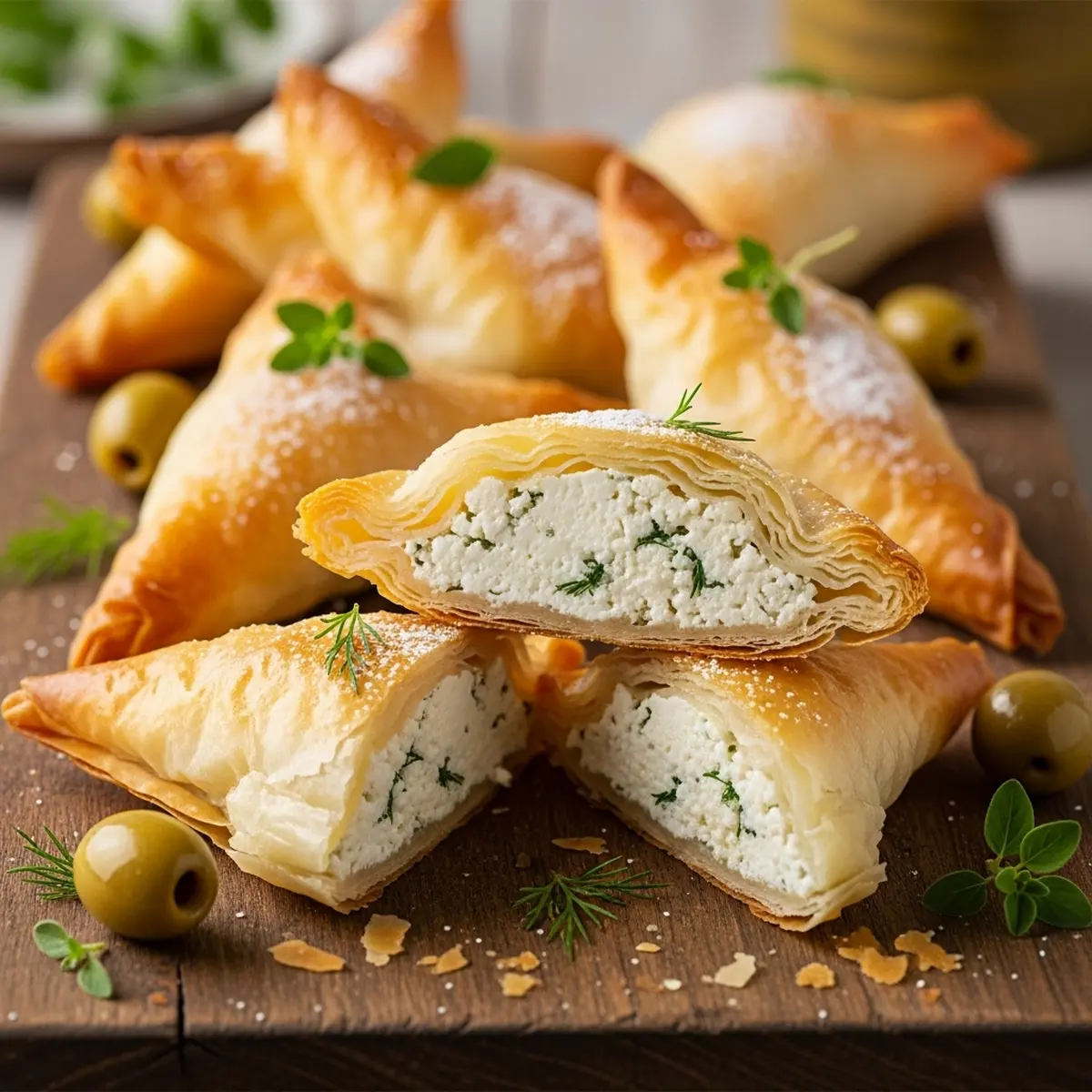
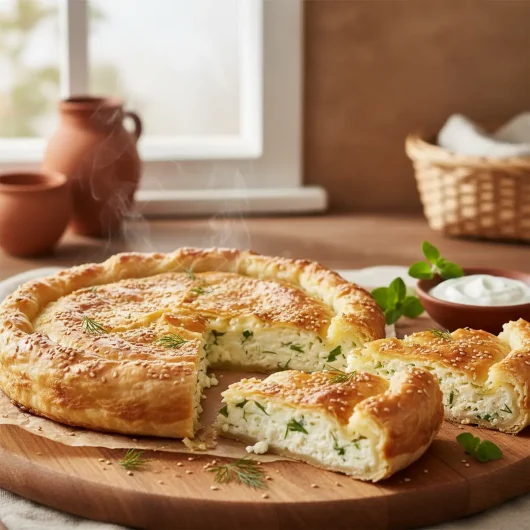
kcalTo make tirópita, a baking dish is layered with sheets of phyllo dough, each brushed with butter (or oil). A crumbled cheese-and-egg mixture (typically feta, ricotta or kasseri cheese, eggs, and herbs) is spread over part of the phyllo. Additional phyllo sheets (either draped or crumpled) are placed over the filling, again brushing with butter between layers. The assembled pie is baked until golden. It emerges puffed and fragrant, with crisp edges and a custard-like interior. Cut into triangles or squares, these pies are best served warm, though they are also delicious at room temperature.
Ingredients
Phyllo dough: 12–14 sheets (1 package), thawed. (Keep the stack covered with a damp towel to prevent drying out.)
Butter: ½ cup (115 g), melted. Or use olive oil for a lighter version.
Feta cheese: 8 oz (225 g), crumbled.
Ricotta or cream cheese: 4 oz (115 g). Adds creaminess to the filling.
Eggs: 2 large, beaten.
Milk (optional): 2 Tbsp (makes filling slightly softer).
Sesame seeds: 1 Tbsp (for topping).
Fresh herbs: 1 Tbsp chopped fresh dill, parsley, or oregano.
Salt and pepper: to taste. (Feta is salty, so taste before adding extra salt.)
Directions
Preheat oven. Preheat to 350°F (175°C). Lightly grease a 9×13-inch baking pan.
Prepare the filling. In a bowl, combine crumbled feta, ricotta (or cream cheese), beaten eggs, chopped herbs, and milk. Stir until evenly mixed. Season lightly with pepper; do not add much salt because of the feta’s saltiness.
Layer phyllo sheets. Unroll the phyllo and lay 6 sheets in the pan, brushing each lightly with melted butter or oil before adding the next sheet. Allow the excess to hang over the sides of the pan.
Add filling. Spread the cheese-egg mixture evenly over the layered phyllo.
Top with phyllo. Take the remaining 6–8 sheets of phyllo, brush them with butter, and scrunch or loosely fold them before laying them on top of the filling. (Alternatively, you can layer them flat and fold over the excess edges from the bottom sheets.) Brush the final layer with butter.
Sprinkle sesame seeds evenly over the top. Bake 30–40 minutes, until the pie is golden brown and the filling is set (it should not jiggle). If the top browns too quickly, tent with foil.
Cut and serve. Let the pie rest 5 minutes. Cut into triangles or squares using a sharp knife. Serve warm or at room temperature.
Tips, Troubleshooting & Variations
- Serving Suggestions & Pairings: Tirópita is great on its own as a snack. For a meal, serve it with Greek salad, olives, and dips like tzatziki. It also pairs well with a side of fresh tomatoes or cucumber. A squeeze of lemon on each pie can cut richness. These triangles are perfect with a chilled glass of retsina or ouzo.
- Storage & Reheating: Store leftovers wrapped in foil or airtight container in the fridge for 2–3 days. To reheat, place slices on a baking sheet and warm at 300°F (150°C) for 10–15 minutes to re-crisp the crust. You can also freeze tirópita: for ease, assemble and freeze unbaked, then bake directly from frozen (add a few extra minutes to baking time).
- Variations - Add spinach or scallions to the cheese filling for a spanakopita-like twist. Mix a spoonful of Greek yogurt into the filling for extra creaminess. Sprinkle the top with poppy seeds or black sesame seeds instead of plain sesame. Make mini pitas: cut phyllo into 6-inch squares and wrap small portions of filling into individual triangles (these are called tiropitakia).
- Chef’s Tips - Work quickly with phyllo and keep unused sheets covered to prevent drying out. Use a light hand with butter/oil—too much will pool. A thin coating between layers is enough. If the filling seems runny, mix in an extra tablespoon of flour or semolina to bind it (traditional titános).
- Optional Add-Ons: Shopping list: phyllo pastry, fresh dill, Greek yogurt. Make-ahead: Mix the filling 1 day ahead and refrigerate. Assemble and bake on the day of serving. You can also assemble completely and refrigerate or freeze; just bake right from cold.
- Equipment Needed - Baking pan (9×13-inch), Pastry brush, Mixing bowls, Mixing spoon or spatula.