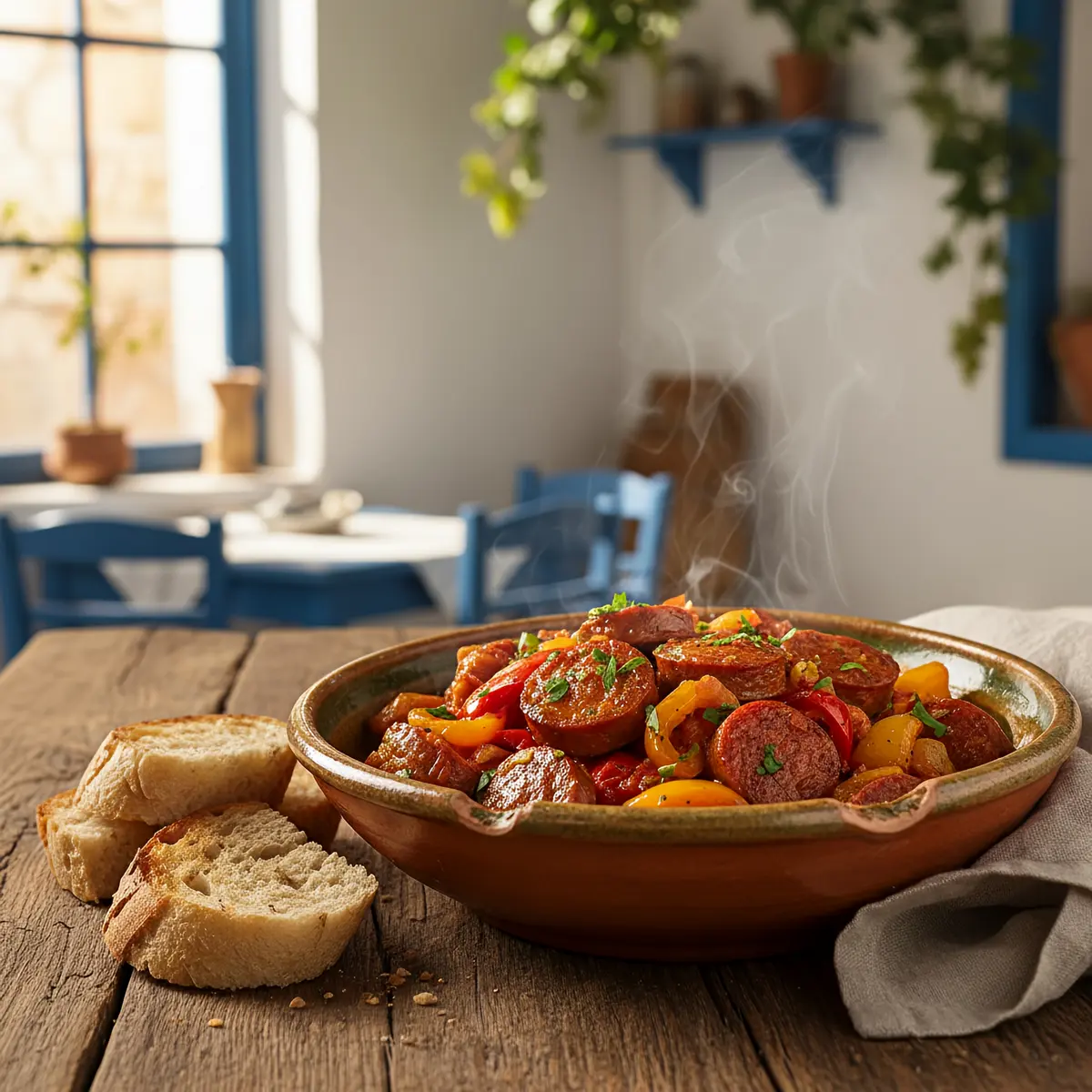

Spetsofai (Greek Sausage Stew) – Sausages & Peppers in Tomato Sauce
Course: Main, MezeCuisine: GreekDifficulty: Easy4
servings10
minutes45
minutes570
kcalThis spetsofai recipe shows how to combine Greek sausages with peppers and tomato into a savory stew. Start by cutting the sausage links into chunks and browning them in olive oil. Sauté chopped onion, garlic and slices of sweet red and green peppers in the same pan. Add tomato paste and diced tomatoes, along with oregano, paprika and a pinch of chili flakes. Return the sausage to the pot, pour in a splash of red wine (if using) and simmer on low with the lid on for 30–40 minutes, until the peppers and sauce are very soft. Finish with a tablespoon of vinegar and fresh parsley. The finished dish is rich and slightly spicy. Serve steaming hot with bread and a chunk of feta cheese on the side.
Ingredients
½ pound (about 2–3 links) Greek-style pork sausage (loukaniko) – cut into 2-inch chunks. (Sweet or slightly spicy sausage both work.)
2 tablespoons olive oil
1 large red onion, roughly chopped
3 bell peppers (e.g. 2 red, 1 green), deseeded and chopped into large chunks. (Red Florina peppers are traditional, but any red/yellow peppers work.)
3 garlic cloves, sliced or minced
1 tablespoon tomato paste (for depth)
1 (14 oz) can chopped tomatoes (or 1½ cups diced fresh tomatoes)
2 teaspoons dried oregano (Greek oregano preferred)
1 teaspoon sweet paprika
¼–½ teaspoon dried red chili flakes (adjust to taste for spiciness)
1 bay leaf (optional)
¼ cup red wine (optional, for deglazing)
1 tablespoon red wine vinegar (added at end for brightness)
Salt and freshly ground black pepper, to taste
2 tablespoons chopped fresh parsley (for garnish)
- Substitutions & Notes
Use beef, chicken or pork sausage if Greek loukaniko is unavailable. For a lighter version, lean chicken sausages can be used. Canned whole tomatoes crushed by hand may be substituted for fresh. The spices are traditional; adjust paprika or omit chili flakes for milder taste. If avoiding alcohol, skip the red wine (or use a little chicken stock).
Directions
Brown the sausage: Heat the olive oil in a large heavy pot or Dutch oven over medium-high heat. Add sausage pieces and cook, stirring occasionally, until they are browned on all sides (about 8–10 minutes). Transfer the sausage to a plate and set aside. Timing: 10 min.
Sauté vegetables: In the same pot (with any rendered fat), add chopped onion and sauté for about 5 minutes until it softens. Then add the bell peppers and garlic. Continue to cook, stirring, for another 5 minutes until the peppers begin to soften. Timing: 10 min.
Add tomatoes and spices: Stir in the tomato paste and cook 1 minute. Add the chopped tomatoes, oregano, paprika, bay leaf (if using), and chili flakes. Pour in the optional wine to deglaze the pan, scraping up browned bits. Let the mixture come to a simmer.
Simmer with sausage: Return the browned sausage to the pot. Season with salt and pepper. Cover and simmer gently over low heat for about 30 minutes, stirring occasionally, until the sauce has thickened and the peppers are very tender. If the stew appears dry, add a splash of water or stock. Timing: 30 min.
Finish with vinegar and parsley: After 30 minutes, remove the lid, add the red wine vinegar and a good grind of black pepper. Stir well and cook uncovered for 2–3 more minutes. Remove from heat. Check seasoning and add more salt or pepper if needed. Stir in chopped parsley.
Serve hot: Ladle the stew into bowls or onto a serving platter. Drizzle any pan juices over the top. Traditional accompaniments include crusty bread and a side of feta sprinkled with oregano. Serve immediately.
Chef’s Tip: For best flavor, brown the sausages well; the caramelized bits on the pan add depth to the sauce. And don’t skimp on slow simmering — this melding time is key to softening the peppers and uniting flavors.
Tips, Variations & Serving
- Serving Suggestions & Pairings: Spetsofai is often served as a main meal or as part of a meze spread. It’s delicious atop rice or creamy polenta, which absorb the hearty sauce. A side of Greek salad or a simple cucumber-yogurt dip (tzatziki) lightens the meal. The spicy, meaty stew pairs nicely with a chilled beer or a Greek red wine like Agiorgitiko. For presentation, garnish with more fresh oregano or parsley and include lemon wedges for a tangy finish.
- Storage & Reheating: Let leftovers cool slightly, then refrigerate in a sealed container for up to 3 days. The stew often tastes even better the next day as the flavors meld. Reheat gently on the stove, adding a splash of water or stock if too thick. Avoid microwave reheating if possible, as even heating by stove helps maintain texture. This dish can also be frozen for up to 1 month; thaw overnight in the fridge and reheat thoroughly before serving.
- Variations & Substitutions - Eggplant Addition: Include 1 diced eggplant along with the peppers (as some Pelion versions do). Add it in step 2 so it softens in the sauce. Vegetarian: Replace sausage with 1 can of chickpeas or sliced smoked tofu. The smokiness of paprika and peppers still yields a rich stew. Fresh Herbs: Finish with fresh oregano or basil instead of parsley for a different herbal note. Quick Version: Use precooked or leftover sausage; reduce simmering time to just meld flavors (the stew will be thinner but still tasty).
- Chef’s Tips - Balance Sweet and Savory: The sweetness of red peppers and caramelized onions is balanced by the tang of tomato and a splash of vinegar at the end. Taste as you go. Spice Control: Greek spetsofai can be mildly or very spicy. Start with a small pinch of chili flakes and increase from there. Smoked paprika can add warmth without heat. Don’t Overcrowd the Pot: Brown sausage in batches if needed so it sears well instead of stewing in its own juices.
- Optional Add-Ons - Shopping List: Greek sausages, bell peppers, tomatoes, onion, garlic, spices. Make-Ahead: The stew can be cooked in advance and reheated on serving day – the flavors develop beautifully with time. If planning ahead, hold off on adding vinegar until just before serving to keep the sauce bright.
- Equipment Needed: Large pot or Dutch oven; wooden spoon; ladle; sharp knife; cutting board; measuring spoons.