

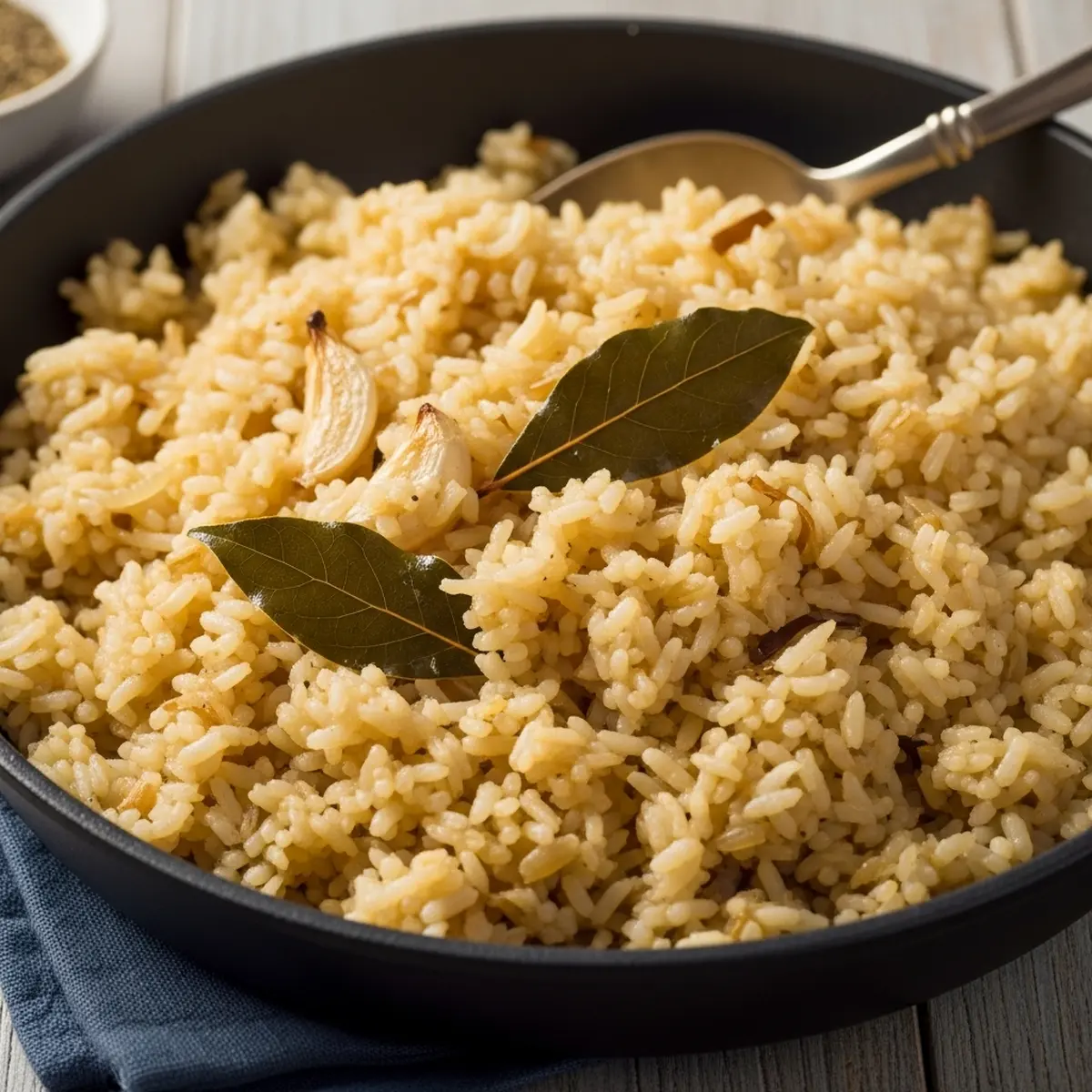

Pilafi – Greek Broth-Cooked Rice Pilaf (Simple Recipe)
Course: SidesCuisine: Greek, CypriotDifficulty: Easy4
servings10
minutes35
minutes600
kcalThis Pilafi recipe starts by sautéing onion, garlic, and rice in butter to toast the grains and layer flavor. Hot broth is then poured over the rice, along with bay leaves, and the skillet is transferred to the oven to bake. In about 30 minutes the rice absorbs all the seasoned liquid and emerges fluffy and tender. Once fluffed and seasoned, this Greek pilaf can be served immediately. The result is a subtly fragrant, golden rice pilaf that serves as an ideal bed for grilled or roasted meats, or as a satisfying vegetarian side.
Ingredients
Medium-grain white rice (2 cups): Rinsed until the water runs clear to remove excess starch. Medium grains give a slightly sticky but fluffy texture. Jasmine or basmati rice can be used instead (adjust water accordingly).
Unsalted butter (100 g, about 7 tablespoons): Coats the rice kernels and toasts them lightly. For a dairy-free version, use olive oil or a vegan butter substitute. The butter adds richness and helps achieve a golden color.
Brown or yellow onion (1 medium), diced: Adds sweet-savory flavor. You can substitute shallots or finely diced leeks if preferred.
Garlic (4 cloves), minced: Provides a warm, aromatic note. Adjust quantity to taste or omit if very sensitive.
Beef or chicken stock (3 cups): Use homemade or low-sodium store-bought stock or broth. Vegetable stock works for a milder taste or vegetarian pilafi. Water with bouillon cubes is another option, but be careful with additional salt.
Salt (1 tablespoon) and ground black pepper (1 teaspoon): Season to taste. If your broth is already very salty, start with less added salt.
Bay leaves (2): Impart a subtle herbal earthiness. Remove before serving. Thyme or oregano can be used if bay leaf is not on hand.
Fresh parsley (chopped, for garnish, optional): Adds a pop of color and a fresh herb note when sprinkled on top.
Directions
Preheat the oven to 350°F (175°C). Lightly grease a deep oven-safe skillet or baking dish. (5 minutes)
Sauté aromatics: In the skillet over medium heat, melt the butter. Add the diced onion and minced garlic. Cook until the onion is soft and translucent, stirring occasionally (about 3–5 minutes). The garlic should become fragrant but not browned.
Toast the rice: Stir in the rinsed rice, salt, and pepper. Cook, stirring frequently, so each grain is coated in butter and warmed. Continue for about 2 minutes, until the rice turns slightly opaque and fragrant.
Combine with stock: Carefully pour in the stock. Stir to distribute the rice evenly. Nestle the bay leaves on top. (2 minutes)
Bake: Cover the skillet tightly (use a lid or foil) and transfer it to the preheated oven. Bake until the rice has absorbed the liquid and is tender, about 30 minutes.
Rest: Remove the skillet from the oven. Discard the bay leaves. Let the rice rest covered for 5 minutes; this finishing period allows any residual steam to even out moisture.
Fluff and serve: Fluff the rice gently with a fork to separate the grains. Taste and adjust seasoning with more salt or pepper if needed. Transfer to a serving dish or serve directly from the skillet. Enjoy warm.
Tips, Troubleshooting & Variations
- Substitutions & Notes: • For a lighter dish, replace half the butter with olive oil. • Use long-grain rice (like basmati) for a lighter, separate-grain texture; you may need slightly more liquid. • To make a whole-grain version, use brown rice, but increase cooking time and liquid (brown rice needs about 50% more broth and longer to cook). • This dish naturally contains dairy (butter). To make it vegan, use vegetable broth and plant-based butter or oil. • Rice is gluten-free, but cross-contamination can occur if cooked in a pan previously used for flour-based products.
- Serving Suggestions & Pairings: Pilafi pairs beautifully with nearly any grilled or roasted meat. For a classic Greek meal, serve it beneath a rack of roast lamb or chicken so the meat’s juices drip into the rice while baking. It also complements stews, braised dishes, and grilled kebabs. As a contrast, drizzle a bit of lemon juice over the rice or serve with a side of Greek salad or tzatziki to brighten the plate. A sprinkle of crumbled feta or a few chopped olives on top can add a Mediterranean twist.
- Storage & Reheating: Store leftover pilafi in an airtight container in the refrigerator for up to 3 days. The rice firms up when chilled. To reheat, add a splash of broth or water to loosen it, then warm on the stovetop over medium heat, stirring gently, or microwave in short bursts, fluffing between. In the freezer, cooked pilafi can last about 2 months; thaw overnight in the fridge before reheating. Note that reheated rice will be softer than fresh-baked.
- Variations & Substitutions - Herbed Pilafi: Stir in chopped fresh herbs (dill, parsley or mint) just before serving for a bright, fresh flavor. Lemon Rice: Add the zest and juice of one lemon to the cooking broth, or serve pilafi with a lemon wedge on the side for a citrusy variation. Vegetable Pilafi: Sauté diced carrots, bell pepper or peas with the onion for a colorful veggie pilaf. Use vegetable stock to keep it vegetarian. Tomato Pilafi: Replace 1 cup of stock with tomato sauce or add a tablespoon of tomato paste when toasting the rice for a tangy, reddish pilafi. One-Pan Meal: You can place seasoned chicken or vegetables on top of the rice before baking, allowing the drippings to infuse flavor into the pilafi as it cooks. Creative Liquids: For extra richness, replace a portion of the broth with coconut milk or coconut cream for a creamy twist. Adjust seasoning if you use salty broth.
- Chef’s Tips - Rinse the Rice: Rinsing the rice until water runs clear removes surface starch and prevents clumping, yielding fluffier grains. Don’t Over-Stir: Once the stock is in and the dish is in the oven, avoid stirring. Disturbing the grains releases starch and makes the pilafi sticky rather than light. Watch the Liquid: The rice-to-liquid ratio can vary by rice type. If the mix is dry before the baking time is up, add a bit more hot broth or water and continue cooking. Conversely, if it seems too soupy, bake a few minutes longer uncovered. Trap Steam: Bake the pilafi in a covered dish (lid or tightly wrapped foil) to trap steam. This helps the rice cook evenly without burning on the bottom.
- Optional Add-Ons - Extras to Have: Shredded chicken or roasted vegetables can be mixed into the cooked rice for a heartier one-dish meal. Toasted pine nuts or slivered almonds make a nice crunchy garnish. Make-Ahead Tips: You can prepare the sauté and toasting steps, then let the rice sit with the stock in the skillet (covered) in the fridge for up to 8 hours before baking. Just bring it to room temperature briefly, then bake as directed. Related Recipes: Serve pilafi alongside other Greek classics such as Greek Lemon Chicken, Lahanodolmades (Greek stuffed cabbage rolls), or a hearty Greek Salad for a full Mediterranean spread.
- Equipment Needed: Deep oven-safe skillet or casserole dish (for sautéing and baking in one pan) Measuring cups and spoons Cutting board and sharp knife (for chopping the onion and garlic) Mixing spoon (wooden or silicone) Fork (for fluffing the rice) Aluminum foil or lid (to cover the dish in the oven)









