


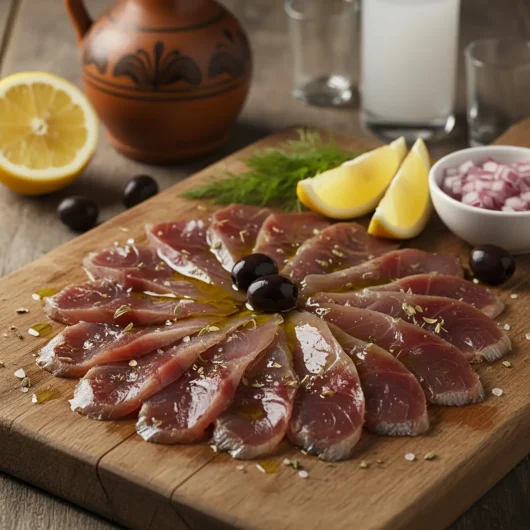
Lakerda – Greek Salt-Cured Bonito Appetizer with Olive Oil & Lemon
Course: Appetizer, MezeCuisine: GreekDifficulty: Hard6
servings30
minutes7-15
days130
kcalLakerda is essentially Greek salt-cured bonito, so the “recipe” is more a process than cooking. It begins by taking fresh bonito fillets and salting them for preservation. The steps are: 1. Prepare the fish: Remove any bones, cut the bonito into steak-sized pieces (about 1-inch thick), and rinse well. 2. Cure in salt: Layer the fish with a large amount of coarse sea salt (and bay leaves if using) in an airtight container or non-reactive bowl. Press down with a weight or plate to squeeze out moisture. Refrigerate or leave in a cool place for 7–15 days, turning or re-layering with fresh salt midway if needed. 3. Rinse and air-dry: After curing, soak the fish briefly in water to remove excess salt, then pat dry. Air-dry the fillets in the fridge for a few hours until firm. 4. Slice and serve: Cut the cured bonito into thin slices or cubes. Arrange on a serving platter, drizzle generously with high-quality olive oil, and scatter torn mint leaves or sprigs of dill if liked. Serve immediately with lemon wedges and pepper.
Ingredients
2–3 pounds fresh bonito or albacore tuna steaks (about 1–1.5 inches thick)
3–4 cups coarse sea salt (non-iodized)
4–5 bay leaves (optional)
½ cup white vinegar (optional, can substitute additional oil/lemon)
Olive oil (extra virgin), for serving
Fresh lemon, cut into wedges (for drizzling)
Fresh herbs (mint, dill, or oregano), for garnish (optional)
Ground black pepper, for seasoning (to taste)
Directions
Prepare the container: Choose a non-reactive container (glass or ceramic) large enough to hold the fish in a single or double layer. Lay a thick bed of salt on the bottom. Optionally, place a few bay leaves in the salt for aroma.
Salt layer and fish: Rinse the fish steaks and pat them dry. Lay the fish on the salt, leaving space between pieces. Cover each steak completely with coarse salt, then sprinkle a bit more on top. Bay leaves or whole peppercorns can be added between layers for flavor.
Weight and curing: Place a flat plate or small baking sheet over the fish, then add a heavy weight (such as cans or a jar) to press down. This weight will press moisture out of the fish into the salt below. Transfer the container to the refrigerator or a cool room (50–60°F). Let it cure for 7–10 days, occasionally draining any liquid (a pink brine) that collects and adding fresh salt if it dissolves too much.
Check and flip: After a week, check the fish – it should have released moisture but still look moist. Carefully rinse one piece under cold water to taste the salt level. If it’s too salty, soak or rinse in vinegar-water (1:4 vinegar to water) for a few minutes. If not salty enough (unlikely), sprinkle more salt. Flip the steaks over and re-salt both sides for another 2–3 days if needed.
Dry the fish: Once curing is complete and the flavor is right, rinse the fish pieces thoroughly to remove excess salt (still, they will remain fairly salty). Pat dry on paper towels. Place them on a rack or plate and air-dry in the refrigerator (uncovered) for a few hours until the surface is tacky but not wet. This step firms the exterior.
Slice and serve: Using a sharp knife, slice the lakerda crosswise into thin strips or bite-sized cubes. Arrange the slices on a serving dish. Drizzle liberally with extra-virgin olive oil and a squeeze of lemon over top. Sprinkle with a pinch of freshly cracked pepper. Garnish with torn mint or dill if you like. Lakerda is now ready to eat.
Serving tip: Traditionally, lakerda is brought to the table lightly oiled and lemony. Diners may add more lemon or pepper to taste. It’s meant to be eaten slowly, with small bread morsels, sipping ouzo or wine between bites.
Tips, Troubleshooting & Variations
- Ingredient Notes: - Fish Selection: In Greece, bonito (skipper or albacore tuna caught in May/June, called palamida) is traditional for lakerda. Any fresh meaty tuna or similar fish will work. The key is freshness – the fish should be gutted and filleted immediately after catch to prevent spoilage. - Salt: Use coarse sea salt or kosher salt. It’s important that it’s non-iodized (iodized salt can make the fish taste chemical). The salt essentially dries out the fish, so use enough to fully cover each piece. - Vinegar: A splash of vinegar or a few whole peppercorns added to the salt layers is common in some recipes. The vinegar gives a subtle tang, but traditionalists often omit it. If using, dilute 1 part vinegar to 1 part water and lightly wipe the fish after salt before serving. - Time: Lakerda cannot be rushed. Plan for at least a week in the refrigerator (or a very cold, non-freezing spot) for the fish to cure. It will shrink in size and firm up as it cures. - Serving: Thin slicing is key. You want nearly transparent slices that dissolve in the mouth.
- Serving Suggestions & Pairings: Serve lakerda cold or at room temperature as an appetizer. It pairs classically with crisp tsipouro (Greek pomace brandy) or anise-flavored ouzo. In a similar vein, sparkling wine or dry white (like a Greek Santorini wine) works well. Present it alongside other meze: olives, feta, and fresh sliced vegetables. Lakerda is usually eaten with just a fork – no knife needed. Slice off a piece, add a bit of olive oil and lemon, and enjoy. The oil and lemon complement the fish’s saline richness.
- Storage: Properly cured and stored lakerda can last for several weeks in the refrigerator, tightly covered. Once cut, it will oxidize (darken) slightly where exposed, but it remains edible. Keep it cold and consume within two weeks for best quality. Any leftover slices should be re-oiled and covered to prevent drying out.
- Variations & Substitutions - Different Fish: Tuna (fresh ahi or yellowfin) or kingfish can be used instead of bonito. The curing process is the same. Brine Method: Instead of dry salting, some recipes call for a saltwater brine (5–7% salt by weight). In that case, soak the fish steaks in brine for 12–24 hours, then dry and refrigerate to age. Herbal Aromatics: Layer the fish with fragrant herbs or citrus slices (e.g. lemon or orange peels) during curing to impart subtle flavors. Quick Pickle: For a faster version (not true lakerda), soak thin slices of tuna in olive oil and lemon for a day as a pseudo-cured appetizer. It won’t have the same texture, but will be lemony-tender.
- Chef’s Tips: Use very fresh, high-quality fish; any off-odor means do not attempt curing. Ensure the curing container is airtight or sealed; unwanted air can cause oxidation or drying out on the surface. If you notice any cloudiness or off-smell in the brine, rinse the fish and replace salt. Proper salt levels prevent spoilage.
- Equipment Needed: Non-reactive container with lid (glass or ceramic, large flat dish), Weights or heavy plate to press fish (clean bricks or cans work), Large bowl (to rinse fish), Sharp knife and cutting board, Plastic wrap or airtight cover (for storage while curing) Serving platter.









