

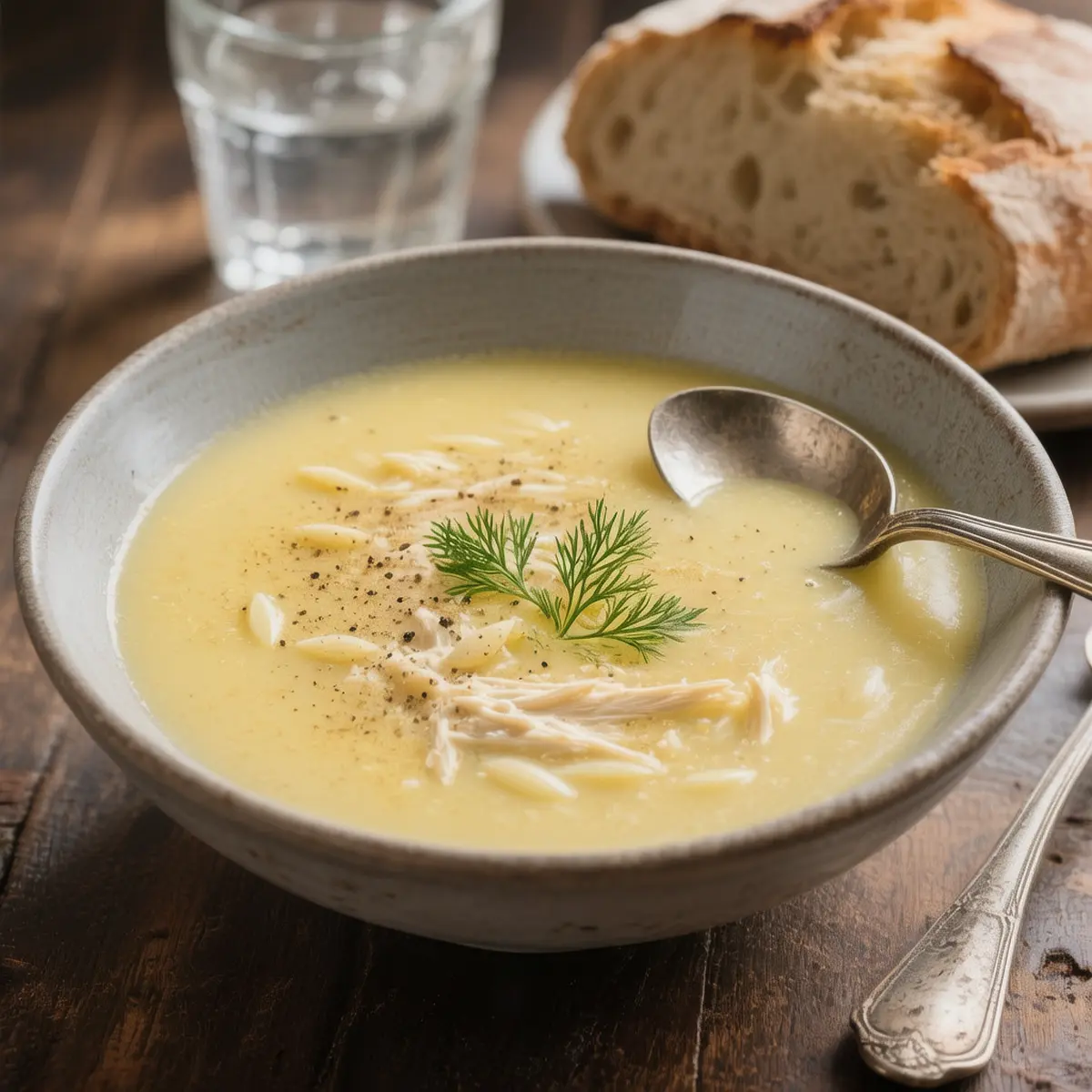

Kotosoupa Avgolemono — Greek Chicken Lemon Soup
Course: SoupCuisine: GreekDifficulty: Easy4
servings15
minutes40
minutes300
kcalThis Kotosoupa Avgolemono is a Greek chicken-lemon soup made silky by an egg-lemon sauce. To prepare it, first simmer pieces of chicken (usually thighs or a whole cut-up chicken) with onions, celery, carrots, and water or low-sodium broth until the meat is cooked through, about 30–40 minutes. Remove the chicken and shred the meat, discarding bones and skin. Add rice (or orzo) to the broth and cook until tender. Meanwhile, whisk together eggs and fresh lemon juice in a bowl. Then, gradually add some hot broth to the egg mixture to temper it (about 1 cup), whisking constantly. Return this egg-lemon mixture to the pot off the heat, stirring gently until the soup thickens. Return the shredded chicken to the pot and stir. Serve the soup warm, garnished with dill or parsley.
Ingredients
1 whole chicken (3–4 pounds), cut into pieces (provides meat and stock)
1 large onion, chopped
2 carrots, sliced
2 celery stalks, sliced
2 cloves garlic, minced (optional)
1 bay leaf
½ teaspoon black peppercorns or ground pepper
1 cup long-grain white rice or orzo pasta (rinsed)
2 large eggs, beaten (forms the egg-lemon sauce)
¼ cup freshly squeezed lemon juice (juice of about 1–2 lemons)
2 tablespoons chopped fresh dill or parsley (for garnish)
Salt and pepper to taste
1–2 tablespoons olive oil (for sautéing vegetables, optional)
Directions
In a large pot, combine the chicken pieces, chopped onion, carrots, celery, garlic (if using), bay leaf, pepper, and about 6 cups of water (or broth) to cover. Bring to a boil, then reduce heat and simmer for 30–40 minutes, until the chicken is cooked through.
Remove the chicken from the pot and set aside. Skim any foam from the surface of the broth. When the chicken is cool enough to handle, discard the skin and bones, then shred the meat into bite-sized pieces.
Add the rice (or orzo) to the simmering broth and continue cooking for 15–20 minutes, until the grains are tender.
Meanwhile, whisk the eggs and lemon juice together in a medium bowl until smooth.
To temper the egg-lemon mixture, slowly ladle about 1 cup of the hot broth into it while whisking constantly. Then pour the warmed mixture back into the pot off the heat, stirring gently. This will thicken the broth into a silky sauce.
Return the shredded chicken to the pot. Stir gently to combine. Season with salt and pepper to taste. Ladle the soup into bowls and garnish with chopped dill or parsley before serving (the soup should not boil after adding the egg-lemon sauce, to keep it creamy).
Tips, Troubleshooting & Variations
- Serving Suggestions & Pairings: Serve avgolemono hot, with the meat and rice in each bowl and a wedge of lemon on the side. It’s often a main course. Pair it with a simple Greek salad or steamed vegetables. For drinks, a light, acidic white wine (such as Assyrtiko) or herbal tea complements the lemony soup. As a guideline, ladle about 1½ cups of soup per person. Garnish with fresh dill or parsley for a traditional touch.
- Storage & Reheating: This soup is best eaten fresh. The avgolemono sauce can split if boiled, so reheat gently on low heat and do not let it boil after finishing. Store leftovers in the fridge for up to 3 days. Rewarm slowly on the stove, and you can whisk in an extra beaten egg at the end to refresh the texture. The soup does not freeze well because of the egg.
- Variations & Substitutions: (1) Orzo or Rice: Use orzo pasta for faster cooking (reduce simmer time by 5–10 minutes) or rice for a thicker soup. (2) Vegetarian Version: Use vegetable broth and omit chicken for a meatless avgolemono (often with extra vegetables or mushrooms). (3) Spicy Twist: Add a pinch of cayenne or chopped pepper when sautéing the vegetables for heat. (4) Herb Variations: Substitute dill with fresh mint or parsley for a different flavor. (5) White Wine: Stir in ¼ cup of dry white wine to the broth when cooking the rice for extra depth (add it with the rice so the alcohol cooks off).
- Chef’s Tips: (1) Temper the eggs slowly: adding hot broth gradually to the eggs (while whisking) prevents curdling. (2) Always remove the pot from heat before adding the egg-lemon mixture; residual heat is enough to thicken the soup. (3) Use room-temperature eggs for a smoother emulsion. (4) Adjust lemon to taste: start with the juice of one lemon and add more if you like extra tang. (5) Using leftover roasted chicken and homemade stock is a great shortcut without sacrificing flavor.
- Additional Notes: Some cooks beat the eggs vigorously to aerate the sauce; a fine strainer or blender yields a silky finish. If the soup accidentally curdles, whisk in a cold egg white or strain the broth. Remember that avgolemono is rich: add salt sparingly at first since the eggs intensify the flavor.
- Shopping List (for this recipe): Whole chicken, onion, carrots, celery, garlic, rice or orzo, eggs, lemon, olive oil, fresh dill, bay leaf, pepper.
- Make-Ahead: The broth and chicken can be cooked and cooled a day ahead, then chilled. You can assemble and reheat the soup just before serving — the flavors will blend beautifully.
- Equipment Needed: Large soup pot or Dutch oven, Cutting board and knife, Wooden spoon or heat-safe spatula, Mixing bowl (for whisking eggs and lemon), Ladle, Measuring cups and spoons.









