Karydopita — Walnut Syrup Cake, Rich and Spiced
Course: DessertCuisine: GreekDifficulty: Easy12
servings15
minutes45
minutes325
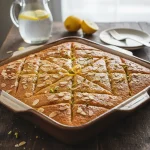
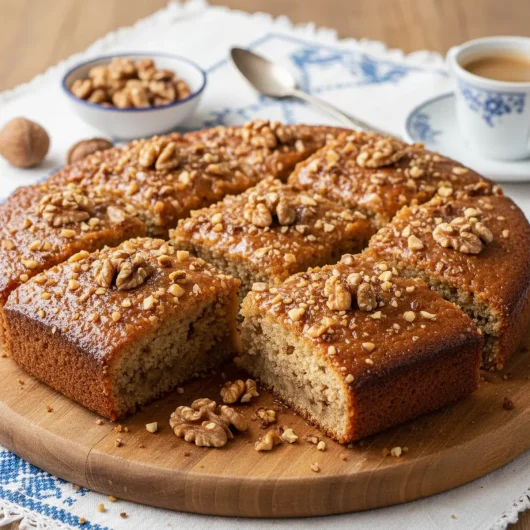
kcalA slice of Karydopita is a bite of Greek tradition: a lightly sweet, warmly spiced walnut cake drenched in syrup. The cake batter, studded with finely chopped walnuts, bakes into a moist, golden loaf. Immediately after baking, it is studded with holes and an amber syrup spiked with honey and lemon is poured over it. As the cake cools, it absorbs the syrup completely. Each piece then offers a satisfyingly dense, moist crumb with rich nut flavor and hints of cinnamon. Traditionally served at room temperature, this cake complements coffee, tea, or dessert wine. Its earthy, nutty character makes it a fitting finale to any meal, especially in the colder seasons.
Ingredients
Walnuts (2½ cups coarsely crushed, ~250 g): The focal point – use fresh, raw walnuts. Coarse chop so you get bits of walnut in each bite. The oil from the nuts keeps the cake moist.
Granulated sugar (2 cups, ~400 g): Provides sweetness. This cake’s batter itself is sweet, plus extra syrup adds more. Can reduce to taste.
Vegetable oil (1 cup, ~240 ml): Neutral oil yields a moist cake. Olive oil may be used (a light Greek olive oil gives an authentic flavor), but a neutral oil keeps the taste clean.
All-purpose flour (2½ cups, ~320 g): Forms the cake’s body.
Large eggs (6): Whisked into the batter; they give structure and richness. (Splitting whites and yolks is not needed for this recipe.)
Ground cinnamon (1 teaspoon): The primary spice, giving warmth and aroma.
Ground cloves (½ teaspoon): Adds a deep, slightly sweet heat. If unavailable, a bit of nutmeg works too.
Baking powder (2 teaspoons): Helps lift the batter slightly. Even though this cake is dense, baking powder ensures it rises a bit.
Milk (1¼ cups, ~300 ml): Thins the batter for easier mixing, and adds tenderness. You may use water or juice if dairy-free, but the cake will be denser.
Pinch of salt: Balances the sweetness and enhances walnut flavor.
- Honey-lemon syrup
Granulated sugar (1½ cups, ~300 g) and Greek honey (½ cup, ~170 g): The syrup’s sweeteners. Honey gives a floral note and a silky texture.
Water (2 cups, ~480 ml): Forms the liquid base of the syrup.
Cloves (4) and lemon juice (1 tablespoon): Spice the syrup with warm notes; lemon cuts through sweetness.
Directions
Preheat and pan: Heat oven to 350°F (175°C). Grease a 10-inch round or 9×13-inch pan with oil.
Combine dry ingredients: In a large bowl, whisk flour, baking powder, salt, cinnamon, and cloves. Stir in the crushed walnuts until well coated with flour (this prevents them sinking).
Mix wet ingredients: In a separate bowl or the same (no need for separate at this stage), whisk together eggs, sugar, and oil until blended. Slowly add milk while whisking until smooth.
Make batter: Pour wet mixture into dry ingredients. Stir gently until just combined. The batter will be thick. Scrape all batter into the prepared pan and smooth the surface. (For an even bake, tap the pan gently.)
Bake the cake: Bake for about 45–50 minutes, or until the top is golden and a toothpick in the center comes out mostly clean (a few moist crumbs are okay). If it starts browning too fast, cover with foil. Remove from oven. (Bake time: 45–50 minutes.)
Prepare the syrup: While the cake bakes, combine 2 cups water, sugar, honey, and cloves in a saucepan. Bring to a boil, stirring until sugar dissolves. Simmer 3–5 minutes. Remove from heat and stir in lemon juice. Remove cloves.
Soak the cake: While cake is hot, poke holes all over with a skewer or fork. Slowly pour the warm syrup over the cake, letting it absorb (pour in stages and tilt pan if needed). The cake will glisten.
Cool and serve: Let the cake rest at room temperature at least 1 hour, until fully cooled and syrup-absorbed. Cut into pieces and serve. Optionally, dust with powdered sugar and garnish with extra walnut pieces.
Tips, Troubleshooting & Variations
- Serving Suggestions & Pairings: Karydopita is hearty; serve small slices. It pairs wonderfully with strong black coffee (Greek style) or a sweet dessert wine. For a contrasting flavor, top with a dollop of plain yogurt or whipped cream. It also goes well alongside other Greek sweets like baklava for a sweets buffet.
- Storage & Reheating: Store the cake covered at room temperature for up to 4 days – the syrup keeps it moist. It does not need refrigeration. The cake actually improves on the second day as flavors meld. To serve later, warm individual slices briefly in microwave or oven, which revives the aromas. Freeze any leftovers tightly wrapped for up to 1 month. Thaw and bring to room temperature when ready to enjoy.
- Variations & Substitutions - Brandy-Soaked: For an adult version, substitute ¼ cup of the milk with sweet wine or brandy in the batter, and soak the cake with syrup blended with an extra splash of liquor. Add Spices: Enhance the warm profile by adding a pinch of ground nutmeg or cardamom into the batter. Orange Karydopita: Replace the lemon in syrup with orange juice and zest for a citrus twist. Lightened-up: Swap half the oil for mashed bananas or pumpkin puree (works surprisingly well; the cake will be very moist and dense).
- Chef’s Tips - Uniform nut pieces: Pulse walnuts until they are a mix of small chunks and fine bits. Too large pieces may fall out of cake; too fine will distribute flavor but lose textural interest. Even syrup distribution: Pour syrup in a spiral or grid pattern to ensure all areas are covered. If syrup pools, tilt pan to help it spread. Quick release: Do not let the cake cool before syruping. Hot cake absorbs syrup more completely. If any dry spots appear after syruping, poke more holes and add a bit more syrup.
- Optional Add-Ons: Shopping List: Whole walnuts, Greek honey, fresh lemon. Make-Ahead: The syrup can be made 1–2 days in advance and stored in the fridge (rehydrate by warming before use). Cake can be baked a day ahead and syrups added just before guests arrive for optimal texture.
- Equipment Needed: 10-inch round or 9×13-inch baking pan, Large mixing bowl, Saucepan for syrup, Whisk or wooden spoon for mixing, Skewer or fork (to poke holes).