


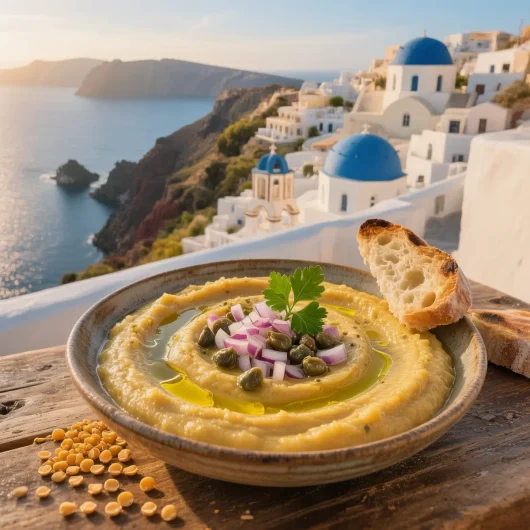
Fava Santorini (Greek Yellow Split-Pea Puree Recipe)
Course: SidesCuisine: GreekDifficulty: Easy4
servings15
minutes60
minutes557
kcal8
hoursSoaked yellow split peas are simmered with onion until they break down fully. The mixture is then drained, returned to the pot, and mashed or blended with olive oil and a splash of lemon juice (or vinegar) until smooth and creamy. The dip is garnished with diced red onion (or scallions), capers, and an extra drizzle of olive oil. The final result is a savory, protein-packed spread that is sweet from the peas and bright from the toppings, perfect on bread, crackers, or as part of a meze.
Ingredients
Yellow split peas: 1¼ cups (about 250 g), rinsed. (Use Santorini variety if available, or any yellow split peas. Chickpeas may be substituted in a pinch.)
Water or vegetable stock: ~4–5 cups, for simmering. (Stock adds flavor, but water is fine.)
Medium onion: 1, quartered (add to pot).
Red onion or scallions: ¼ cup finely chopped, for garnish.
Extra-virgin olive oil: ¼ cup (plus extra for serving).
Lemon juice: 1 tablespoon (optional, for brightness).
Kosher salt and black pepper: to taste.
Capers: 2 tablespoons, drained. (Or substitute chopped brine-cured olives.)
Fresh herbs (optional): chopped parsley or dill for garnish.
Directions
Soak the peas. Place the split peas in a large bowl and cover with water by 2 inches. Let soak 8–12 hours or overnight to reduce cooking time and improve texture. (For a quick version, cover peas with boiling water and soak 1 hour.)
Simmer the peas. Drain and rinse the peas, then transfer to a large pot. Add 4–5 cups fresh water or stock and the quartered onion. Bring to a boil, skimming off any foam. Reduce heat to low, cover partially, and simmer 45–60 minutes until the peas are very soft and begin to collapse. Stir occasionally to prevent sticking; add more water if needed to keep peas submerged.
Mash or blend. Remove and discard the cooked onion pieces. In the same pot (off heat), mash the peas with a potato masher or an immersion blender until very smooth. Alternatively, transfer to a blender and purée (in batches if needed).
Season and finish. Stir in ⅓ cup olive oil and lemon juice, adding a little at a time and mashing between additions, until fully incorporated. Season with salt and pepper to taste. If the dip is too thick, whisk in a splash of water or warm stock to loosen it.
Garnish and serve. Transfer the fava to a bowl and make a shallow well in the center. Drizzle with more olive oil, then top with chopped red onion (or scallions) and capers. Sprinkle with herbs if using. Serve at room temperature with warm pita, crusty bread, or veggies.
Tips, Troubleshooting & Variations
- Serving Suggestions & Pairings: Fava Santorini is perfect as part of a Greek meze. Spoon it on grilled pita, cucumber slices, or pita chips. Serve alongside olives, stuffed grape leaves, or sliced tomatoes. It also makes a great sandwich spread (try it in a veggie pita with cucumber). A crisp white wine like Assyrtiko or Sauvignon Blanc balances the lemony tang and olive oil richness.
- Storage & Reheating: Store leftovers in a covered container in the fridge up to 4 days. The fava will firm up when cold; loosen it by whisking in warm water and a bit of lemon juice before eating. It is not recommended to freeze fava (the texture can separate). Always reheat gently (low heat or microwave) if serving warm, adding a splash of liquid if it’s too thick.
- Variations - Spices: Stir in smoked paprika or ground cumin for warmth. Red pepper flakes give heat. Herbs: Fold in chopped dill, mint or parsley for a fresh twist. Alternate bases: Some recipes use yellow lentils or mung beans similarly. You can replace half of the peas with cooked lima beans or chickpeas for a different texture. Non-vegan: For extra creaminess, blend in a spoonful of yogurt or a pat of butter off-heat.
- Chef’s Tips - Cook the peas slowly and don’t rush stirring; violent boiling can make them pasty. Gentle simmer and occasional gentle stirring are key. Reserve some cooking liquid: if the dip feels too thick, adding a bit of the hot cooking water helps achieve a silky texture. Use the best olive oil you can: its flavor shines through. A drizzle of high-quality oil at serving time really elevates the dish.
- Optional Add-Ons: Shopping list: yellow split peas, cherry tomatoes, fresh parsley. Make-ahead: Soak and cook the peas up to a day ahead; reheat and mash when ready to finish. Chop garnishes (onion, capers) in advance.
- Equipment Needed: Large pot or Dutch oven, Strainer or colander, Immersion blender or food processor (or potato masher), Mixing spoon and bowls, Serving bowl.









