

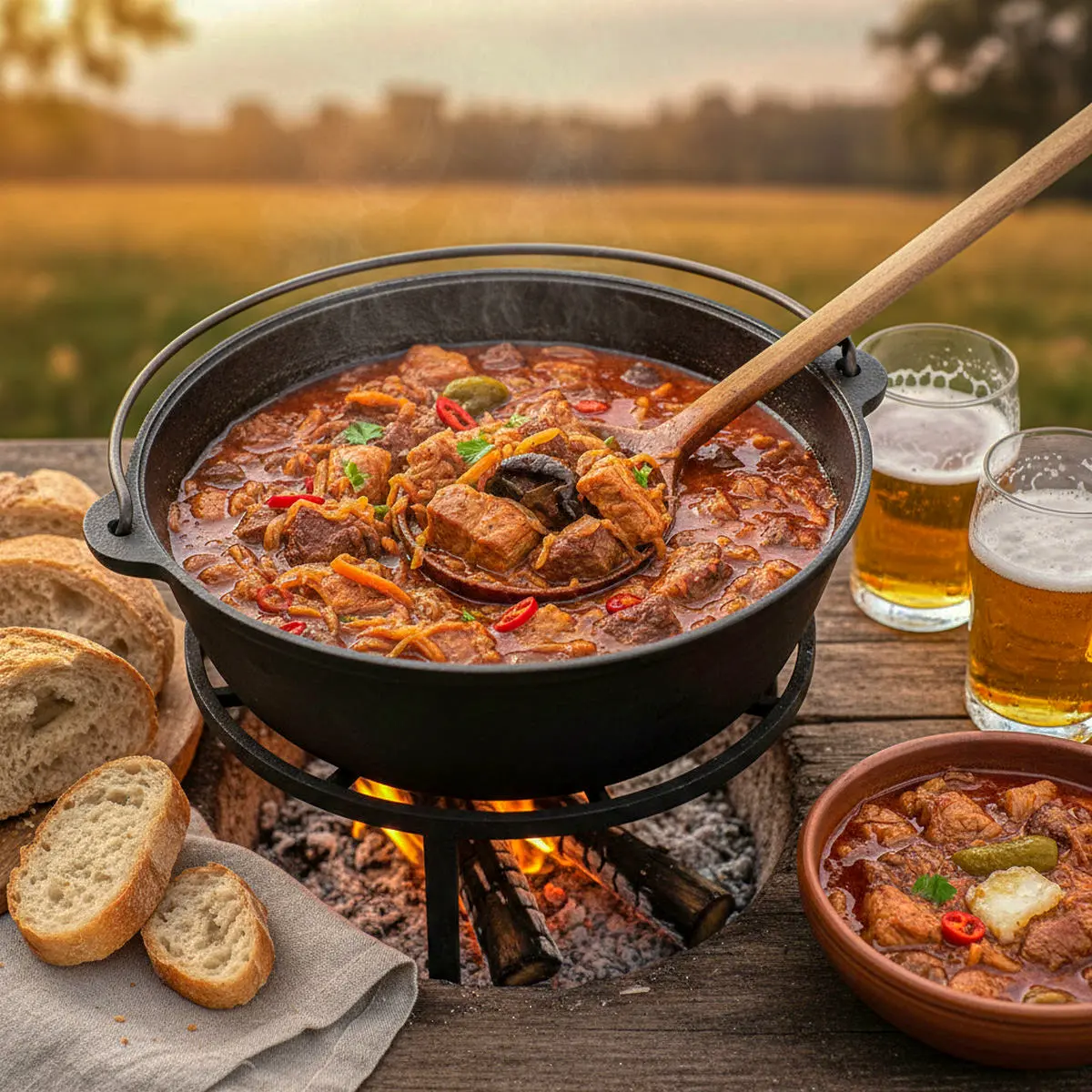
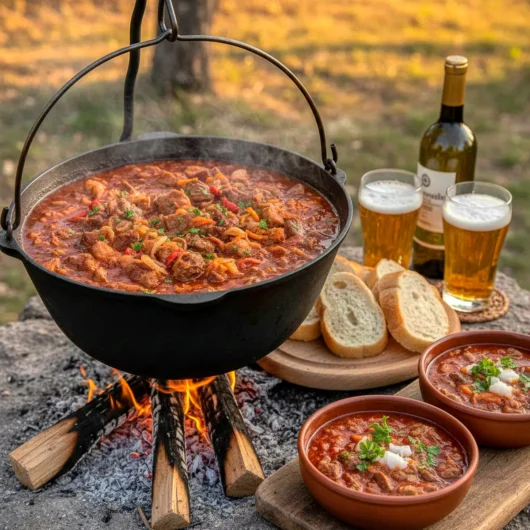
Slavonian Čobanac (Spicy Mixed-Meat Stew Recipe)
Course: MainCuisine: CroatianDifficulty: Intermediate4
servings30
minutes150
minutes620
kcalSlavonian Čobanac is a traditional Croatian mixed-meat stew from the eastern region of Slavonia, known for its vivid paprika color and slow-cooked richness. This version brings the outdoor kettle tradition indoors, using a heavy pot and a blend of beef and pork, with the option to include veal or lamb. Onions form a thick base, paprika and garlic drive the flavor, and a splash of wine and stock carries everything into a deep, brick-red broth. The stew cooks gently for a few hours until the meats turn tender and the liquid thickens naturally. Served with bread, noodles, or polenta, it works both as a weekend centerpiece and a practical make-ahead meal, since the flavor improves after a night in the refrigerator.
Ingredients
- Main Stew
700 g beef chuck or beef shank, cut into 3 cm (1¼-inch) cubes
Tough, well-marbled beef gives body and turns tender with long simmering.500 g pork shoulder, cut into 3 cm cubes
Adds sweetness and gentle fat that enriches the broth.300 g veal shoulder, lamb shoulder, or extra pork in 3 cm cubes
A third meat introduces variation in texture and flavor; use what is available.150 g smoked sausage (optional), sliced into 1 cm rounds
A Slavonian-style smoked sausage or similar cured sausage adds smokiness; omit for a lighter stew.3 tbsp sunflower or neutral oil
Traditional recipes favor neutral oil or lard; oil keeps the dish accessible and stable.4 large yellow onions (about 600 g), finely diced
The onions cook down and thicken the stew naturally.1 medium carrot, diced small
Adds subtle sweetness and color without turning the stew into a vegetable soup.1 small red bell pepper, diced
Brings gentle fruitiness and reinforces the pepper profile.4–5 garlic cloves, minced
Provides aromatic depth that supports the paprika.3 tbsp sweet paprika (Hungarian or Balkan style)
Core flavor and color; freshness matters here.1–2 tsp hot paprika or hot red pepper flakes, to taste
Supplies the characteristic Slavonian heat; adjust for milder palates.1 tsp ground caraway seeds (optional but traditional)
Gives a subtle earthy note that plays well with paprika.2 tbsp tomato paste
Concentrated tomato supports color and umami without dominating.150 ml dry white wine (about ⅔ cup)
Brightens the stew and helps lift browned bits from the pot; cook-off removes harshness.900 ml beef or beef-and-chicken stock, low sodium (about 4 cups)
Forms the liquid backbone; low sodium leaves room for seasoning control.300–500 ml water, as needed (1¼–2 cups)
Used to top up the pot so the meat stays mostly submerged.2–3 bay leaves
Classic aromatic for long-simmered stews.1½–2 tsp fine sea salt, plus more to taste
Start modestly; adjust near the end as the stew reduces.½ tsp freshly ground black pepper, plus more to taste
1–2 fresh hot chilies (optional), left whole or slit lengthwise
For those who like a pronounced burn; remove before serving for gentler heat.- To Finish & Serve
2–3 tbsp chopped flat-leaf parsley
Adds fresh color and a clean herbal lift at the end.Rustic white bread, buttered noodles, or soft polenta, for serving
Any of these soak up the thick, spicy broth effectively.Pickled peppers or mixed pickles (optional)
Cut the richness and echo traditional Balkan side plates.- Substitutions & Allergy Notes
Meat choices: Wild game (venison, wild boar) can replace part of the beef or pork for a more rustic version; increase cooking time if needed. For a milder stew, use only beef and pork and skip smoked sausage.
Paprika and heat level: If hot paprika is unavailable, use extra sweet paprika plus a pinch of cayenne or crushed chili. For a very mild version, rely on sweet paprika only and omit chilies.
Wine: Replace white wine with extra stock plus 1–2 tsp red wine vinegar near the end for acidity, useful for alcohol-free cooking.
Allergens and dietary needs: The base stew is naturally gluten-free if gluten-free stock and sausage are selected. Allium-sensitive cooks may reduce onion and garlic, though flavor will change markedly. Nightshade-sensitive diners should avoid this dish due to paprika, bell pepper, and chili content.
Directions
Prep the meats and vegetables (about 15 minutes).
Pat the meat dry with paper towels, trim any thick surface fat, cut into 3 cm cubes, and season lightly with salt and pepper; finely dice onions, carrot, and bell pepper, and mince the garlic.Brown the meat in batches (about 20 minutes).
Heat 2 tbsp oil over medium-high in the pot, sear the beef, pork, and other meat in batches until lightly browned on two sides, 3–4 minutes per batch, then transfer to a large bowl; add the smoked sausage at the end just long enough to pick up a little color.Soften the onions and vegetables (about 20 minutes).
Lower heat to medium, add the remaining 1 tbsp oil if the pot looks dry, then add onions with a pinch of salt and cook, stirring often, until soft, translucent, and starting to turn light gold; stir in carrot and bell pepper and cook until the vegetables lose their raw edge.Add garlic, tomato paste, and spices (about 5 minutes).
Stir in garlic, tomato paste, and caraway, cooking 1–2 minutes until fragrant and slightly darkened, then take the pot off the heat to prepare for the paprika.Bloom the paprika safely (about 2 minutes).
Sprinkle in sweet and hot paprika and any red pepper flakes, stirring constantly off the heat so the spices coat the vegetables without burning, then add a small splash of wine or stock to form a loose paste.Deglaze with wine (about 3–5 minutes).
Return the pot to medium heat, pour in the rest of the wine, and scrape the bottom with a wooden spoon to loosen any browned bits until the liquid reduces slightly and smells mellow, not sharp.Combine meats, aromatics, and liquid (about 10 minutes).
Return all meats and any collected juices to the pot, add bay leaves and chilies if using, pour in stock, and add enough water so the meat is just covered, then bring to a gentle boil over medium-high heat.Simmer low and slow (about 90–120 minutes).
Reduce heat to low so the surface barely bubbles, partially cover the pot, and cook until the meat is fully tender, 1½–2 hours, stirring occasionally and skimming off excess fat if a thick layer forms.Adjust thickness and seasoning (about 20–30 minutes).
During the last 20–30 minutes, remove the lid to let the stew reduce to a glossy, spoon-coating consistency, then taste and adjust salt, black pepper, and heat level; add a small splash of vinegar or lemon juice if it tastes flat.Rest and garnish (about 10–15 minutes).
Let the stew sit off the heat for 10–15 minutes so the flavors settle, then discard bay leaves and chilies, stir in chopped parsley, and serve hot with bread, noodles, or polenta.
Tips, Troubleshooting & Variations
- Serving Suggestions & Pairings
Bread and starches: Serve Čobanac in warm shallow bowls with thick slices of crusty country bread, wide egg noodles, or soft polenta. The stew should feel generous over, under, or beside the starch, with enough liquid to soak but not so much that it feels soupy. Accompaniments: A simple cabbage or cucumber salad dressed with vinegar and oil balances the richness. Pickled peppers or mixed pickles echo Balkan serving habits and cut through the fat in each spoonful. Drinks: Regional white wines such as graševina match nicely with the paprika and pork, while lighter reds with good acidity, or a cold lager-style beer, hold their own beside the stew’s spice. Plating: For a family-style presentation, bring the Dutch oven straight to the table on a trivet, then garnish with extra chopped parsley and chili slices for those who enjoy more heat. - Storage & Reheating
Refrigeration: Cool the stew to room temperature within about 2 hours, transfer to airtight containers, and refrigerate for up to 4 days. The paprika color may deepen and the flavor becomes more rounded on day two. Freezing: Freeze in meal-size containers for up to 3 months. Leave some headspace for expansion. Thaw overnight in the refrigerator for best texture. Reheating: Reheat gently on the stovetop over low to medium-low heat, adding a splash of water or stock if the stew has thickened too much. Stir frequently to prevent sticking at the bottom. Microwave reheating works for individual portions; cover loosely and stir once halfway through. Texture changes: On chilling, the stew will thicken and any rendered fat will solidify on top. That fat can be skimmed for a lighter result or stirred back in during reheating for a richer mouthfeel. - Variations & Substitutions
Hearty Game Version (Autumn or Winter Feast): Replace half of the beef and pork with venison or wild boar. Add an extra 15–30 minutes of simmering if the game meat remains firm. A small piece of smoked bacon or pancetta at the onion stage adds a robust, campfire-style aroma.
Faster Pressure-Cooker Čobanac: Follow the same browning and onion steps in a pressure cooker insert. After adding liquids and seasonings, lock the lid and cook at high pressure for 30–35 minutes, then let the pressure drop naturally. Finish uncovered on sauté mode for 10–15 minutes to reduce and concentrate the liquid.
Vegetarian “Čobanac-Inspired” Paprika Stew: Substitute meat with a mix of hearty mushrooms (cremini, portobello), cooked white beans or chickpeas, and diced root vegetables. Use vegetable stock instead of meat stock, and add a little smoked paprika to replace some of the depth normally provided by meat and sausage. Reduce cooking time to about 45–60 minutes, just until vegetables are tender and the broth is thick.
Gluten-Free and Allergen-Conscious Version: Confirm that stock and sausage are labeled gluten-free; choose unsmoked fresh sausage or skip sausage entirely if additives are a concern. Serve over polenta or plain rice instead of noodles or bread. For diners with lower tolerance for spice, rely heavily on sweet paprika and use only a pinch of hot pepper. - Chef’s Tips (for better flavor and texture)
Protect the paprika. Always add paprika off the heat and stir it into a slightly oily base before thinning with liquid. Direct, high heat can turn it bitter and dull the color.
Use a mix of connective-tissue cuts. Combine at least two meats that contain some gristle and fat—such as beef chuck and pork shoulder—so the stew gains natural body as collagen melts.
Season gradually and taste late. Salt lightly at the start, then judge seasoning during the final reduction. As liquid evaporates, salt concentration rises, so early heavy salting can lead to an overly salty stew. - Equipment Needed
Heavy 5–6 liter Dutch oven or thick-bottomed soup pot with lid. Large cutting board. Sharp chef’s knife. Measuring spoons and measuring jug. Wooden spoon or heatproof spatula for stirring and scraping. Ladle for serving. Bowls, plates, and serving spoons for the table. Airtight containers for leftovers and freezing.









