

Step 1: Prepare the Pork
01Step 1
Score the pork rind in a diamond pattern, being careful not to cut into the meat.
There’s a kind of reverence in making Schweinsbraten the old way—a reverence for time, for patience, for flavor drawn not from shortcuts but from deliberate, ancestral ritual. This isn’t a meal that’s hurried. It begins with the pork shoulder, dense with promise, rubbed lovingly with garlic, caraway seeds, marjoram, salt, black pepper, and oil. It rests overnight, soaking in its seasoning like a soul steeping in memory. The next day, the oven becomes a quiet cathedral of scent as the meat roasts slowly, for hours. The rind, that unassuming layer, is coaxed into crackling perfection in a hot pan—its blistered surface shatters like golden glass beneath the knife. The gravy—an unglamorous word for such deep comfort—is born from the drippings, flour, and water, stirred and simmered until it thickens into something that tastes like warmth distilled. This is not just sustenance; it’s a gesture of hospitality. On the plate, it finds its faithful companions: Semmelknödel, pillowy and proud; sauerkraut, sharp and alive; or roasted potatoes, earthy and honest. Schweinsbraten is Austria on a Sunday—wood smoke in the air, laughter in the kitchen, something ancient and enduring served with grace. You don’t just eat it. You live a piece of someone’s history.
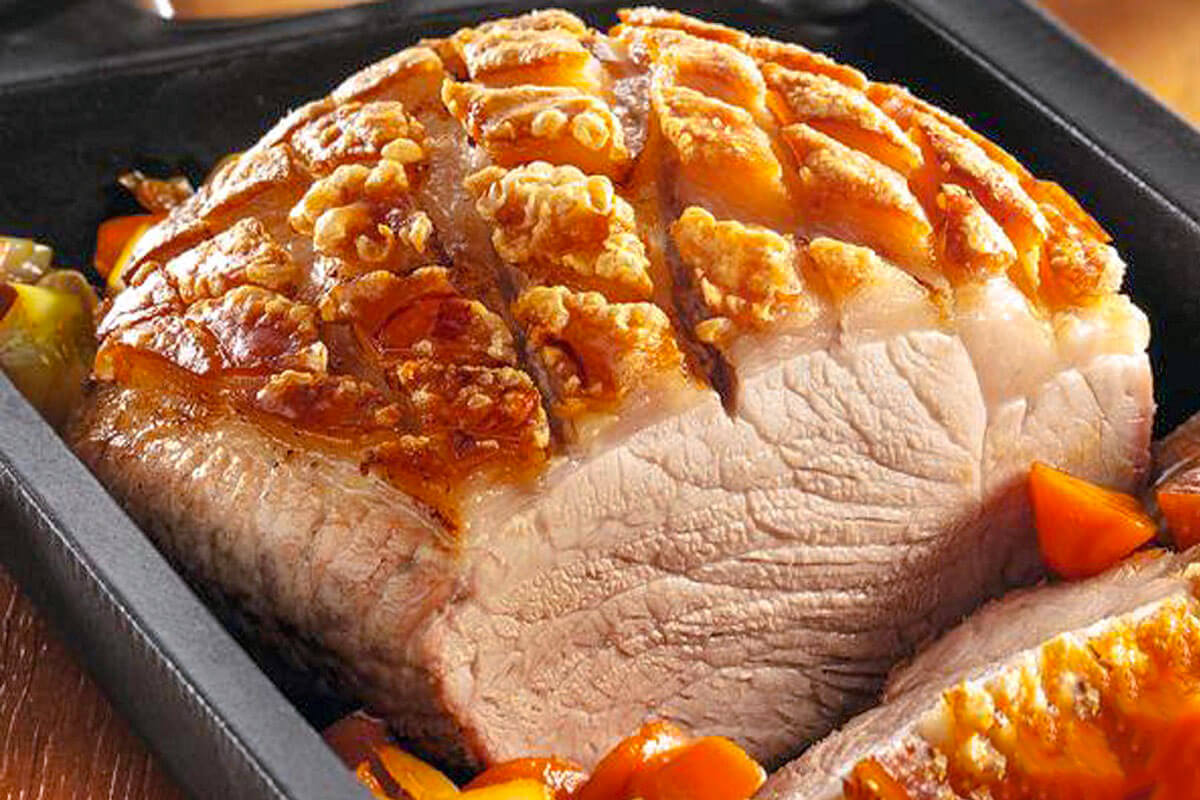
Schweinsbraten, a classic Austrian dish, exemplifies robust flavors and rustic appeal. Centerpiece at celebratory events and Sunday dinners, this roast pork meal is well-known for its crispy crust, tender meat, and aromatic spices. Together with traditional sides like sauerkraut and bread dumplings (Semmelknödel), Schweinsbraten is a gastronomic delight that epitomizes Austrian comfort cuisine.
Score the pork rind in a diamond pattern, being careful not to cut into the meat.
Rub the pork with minced garlic, caraway seeds, marjoram, salt, and pepper. Let it marinate for at least 30 minutes (or overnight for deeper flavor).
Preheat the oven to 180°C (350°F).
Heat the vegetable oil in a large roasting pan over medium-high heat. Sear the pork on all sides until golden brown.
Add onions, carrots, and leek around the pork. Pour the broth and beer (if using) into the pan.
Place the pan in the oven and roast for about 2 hours, basting the pork occasionally with the pan juices. Add more broth if necessary to prevent the vegetables from burning.
Increase the oven temperature to 220°C (430°F) for the last 20–30 minutes of cooking. This will create a crispy, crackling rind.
Ensure the internal temperature of the pork reaches 75°C (165°F). Use a meat thermometer for accuracy.
Once cooked, place the pork on a plate and cover it with foil to rest.
Strain the pan drippings into a saucepan.
Mix the flour with a small amount of water to form a smooth paste. Stir it into the drippings and bring to a boil. Simmer until the gravy thickens, about 5 minutes.
Slice the Schweinsbraten and serve with gravy.
Pair with traditional sides like Semmelknödel, sauerkraut, or roasted potatoes.
| Calories | 600 kcal |
|---|