Quibeba (Angolan Okra Soup) – Thick Okra Stew
Course: Main, StewCuisine: Angolan, West AfricanDifficulty: Easy4
servings20
minutes40
minutes350
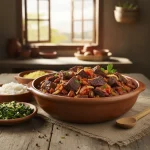
kcalQuibeba is a hearty Angolan okra soup thickened by the okra’s own mucilage. First, sauté chopped onion, garlic, and a fresh chili (if using) in palm oil until softened. Stir in diced tomatoes and cook until the mixture stews slightly. Next, add pieces of tender goat meat or soaked, shredded dried fish to the pot along with water or broth and simmer until the meat is nearly done. Finally, stir in the sliced okra and let the stew cook uncovered until the okra is tender and the soup has thickened. The outcome is a rich green stew with chunks of meat and vegetables, perfect for ladling over rice or funge in an authentic Angolan meal.
Ingredients
Okra: 500 g (fresh or frozen), ends trimmed and sliced. The okra’s mucilage will naturally thicken the soup.
Onion: 1 large, chopped – forms the flavor base.
Garlic: 2 cloves, minced – adds savory depth.
Tomato: 2 medium (about 200 g), chopped – provides acidity and sweetness; you may substitute 1 cup crushed canned tomatoes.
Goat or Dried Fish: ~300 g goat meat (cubed) or 200 g dried salted fish (soaked and flaked). Goat gives richness, dried fish adds umami. Use one or the other as a savory protein.
Palm Oil: 2 Tbsp (substitute vegetable oil) – traditional for color and richness.
Water or Broth: About 1 liter (4 cups) – to create the soup base. Use chicken or vegetable stock for extra flavor.
Seasonings: Salt (to taste), pepper (1/2 tsp), and 1 bay leaf (optional) for aroma. Add chopped chili pepper (aji) or chili powder to taste for heat.
Optional Add-ins: Ground peanuts or a spoonful of peanut butter (2 Tbsp) for creaminess; a squeeze of lime or lemon at the end for brightness; a handful of spinach or kale stirred in at the end for extra greens.
Directions
If using dried fish, soak it in warm water for 20 minutes to rehydrate, then shred the flesh and discard bones. (Prep: 20 minutes) If using goat meat, rinse and, optionally, parboil it with a pinch of salt for 5 minutes, then drain.
Heat the palm oil in a heavy pot over medium heat. Add the chopped onion (and a chopped chili, if using) and sauté, stirring, until the onion is soft and translucent (about 5 minutes).
Stir in the minced garlic and bay leaf; cook for 1 minute until fragrant. Then add the chopped tomatoes and cook for 3–5 minutes, breaking them down with the spoon.
Add the goat pieces or flaked fish to the pot and stir to combine with the tomato mixture. Let it cook for 2–3 minutes, coating the protein in the stewed tomato flavors.
Pour in the water or stock and bring the mixture to a boil. Lower the heat to a gentle simmer, cover the pot, and cook until the meat is tender (about 30–40 minutes for goat; 5–10 minutes for fish). Stir occasionally, adding more water if needed.
Uncover and add the sliced okra (and ground peanuts or peanut butter, if using). Simmer uncovered for another 8–10 minutes, stirring gently, until the okra is tender and the soup has thickened to a stew-like consistency.
Season with salt and pepper to taste. If desired, squeeze in lime or lemon juice and stir in chopped cilantro or parsley before serving. The acidity will balance the stew’s richness.
Serve Quibeba hot, alongside funge or white rice. A simple garnish of chopped green onion or cilantro adds color and freshness. The soup will continue to thicken as it stands, so stir in a bit of water when reheating leftovers.
Tips, Troubleshooting & Variations
- Serving Suggestions & Pairings: Quibeba is often ladled over funge or eaten with rice or sweet potato. A side of bitter greens (like sautéed amaranth leaves) or avocado can cool the palate. A splash of lime juice just before serving brightens the flavors. This dish pairs well with a light beer or hibiscus (sorrel) juice to cut through the richness.
- Storage & Reheating: Store the soup in the refrigerator (3–4 days). The okra will gel the stew as it cools; add a splash of water and reheat gently on the stove. Freezing is not ideal, as thawed okra loses texture. Stir well when reheating, and adjust seasoning as needed.
- Variations & Substitutions: (1) Vegetarian: Omit meat entirely or use smoked tofu and extra vegetables. (2) Extra Ingredients: Stir in a handful of chopped pumpkin, cassava, or carrots with the liquid for more bulk. (3) Additional Flavors: Add a tablespoon of tomato paste or smoked paprika for depth; a squeeze of coconut milk near the end for creaminess. (4) Bean Option: For a heartier stew, add cooked black-eyed peas or kidney beans halfway through cooking.
- Chef’s Tips: Cut the okra into small, even pieces to maximize its thickening. Avoid over-stirring once it’s added, as excessive stirring can release too much slime. For a clearer broth, add a teaspoon of vinegar when adding the okra. Sauté the aromatics well before adding liquid to deepen flavor. Use a heavy pot to prevent burning on the bottom.
- Optional Add-Ons: Chop the okra and soak the protein ahead of time to streamline cooking day. Quibeba is even better the next day, so it’s a great make-ahead meal. (Shopping List: Okra, onion, garlic, tomato, goat or dried fish, palm oil, stock, peanuts optional, herbs.)
- Equipment Needed: - Heavy-bottomed pot or Dutch oven – for simmering the soup. - Knife and cutting board – to prepare vegetables and protein. - Wooden spoon or ladle – for stirring and serving. - Blender or mortar (optional) – to grind peanuts if using. - Measuring cups/spoons – for liquids and spices. - Serving bowls and utensils – to enjoy the soup.