




Lisbon – City Of Street Art
Lisbon is a city on Portugal's coast that skillfully combines modern ideas with old world appeal. Lisbon is a world center for street art although…


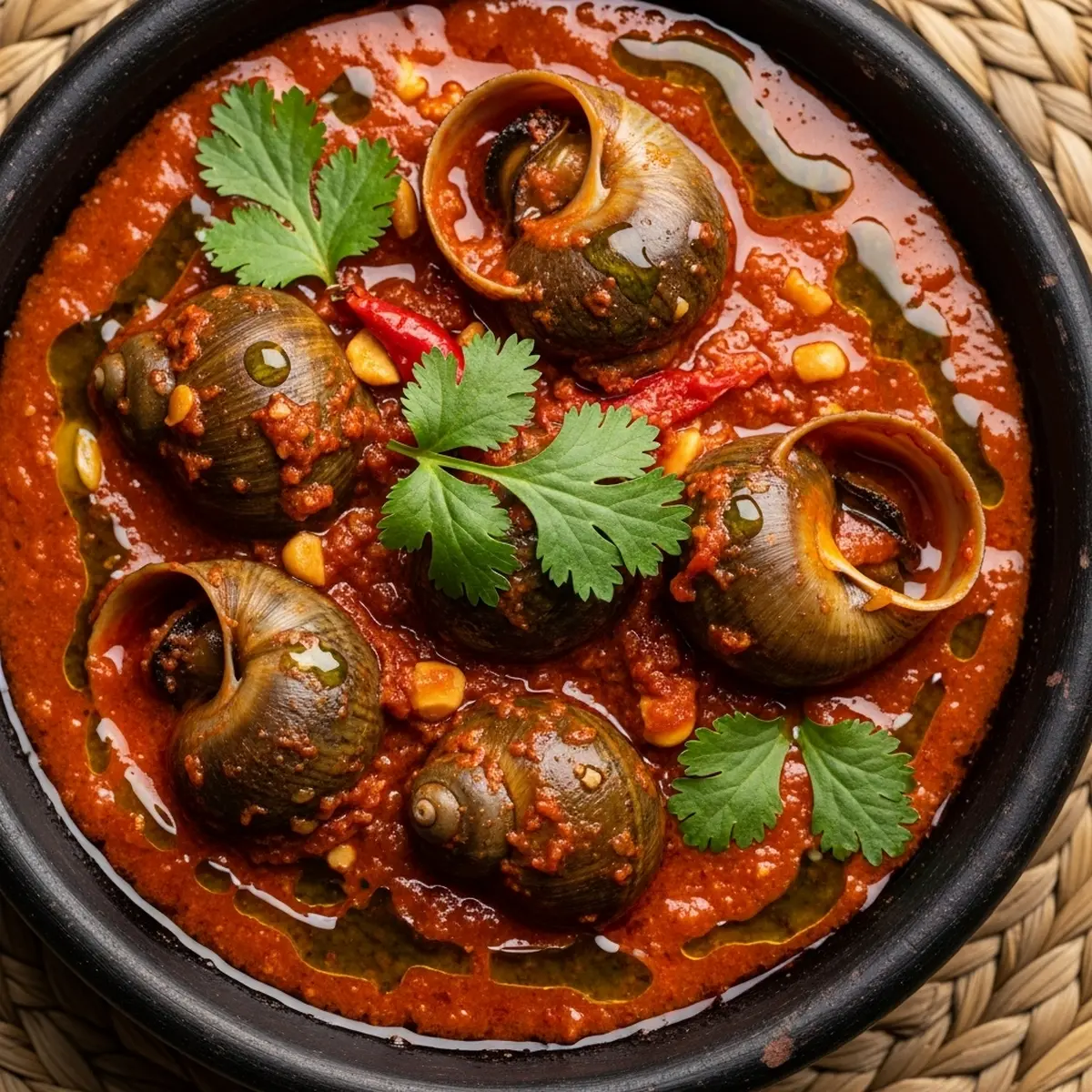
Table of Contents
4
servings30
minutes45
minutes480
kcalTo make Nguri stew, start by cleaning 2–3 pounds of freshwater snails (removing from shells, discarding any bad ones, and parboiling them). In a blender or mortar, grind 1 cup of roasted peanuts (or use unsalted peanut butter), 1–2 red chili peppers, a medium onion, and 3–4 cloves garlic into a coarse paste with a little water. Heat 2 tbsp palm oil in a pot, sauté the paste briefly, then add 1 cup stock or water, salt, and simmer for 10 minutes. Stir in the snail meat and continue cooking on low heat until the sauce thickens (about 20–25 minutes). Adjust heat with more chili if desired. The final dish should be a thick, fiery sauce coating each snail. Serve hot in bowls with a side of funge or rice, encouraging guests to use their hands to extract the snail meat.
Fresh river snails (nguri/búzio) (2–3 pounds total, shells removed). (You can use canned snails in a pinch, but fresh are best.)
Roasted peanuts (1 cup, unsalted) – ground to a fine powder or paste. (Alternatively, ½–¾ cup smooth peanut butter can be used.)
Onion (1 medium) – finely chopped. (Sweats into the sauce.)
Garlic (4 cloves) – minced. (Adds depth.)
Red chilies (2–3, or 1–2 tsp crushed red pepper) – finely chopped. (Use African bird’s eye or habanero for authenticity. Adjust to taste.)
Tomato paste (1 tbsp) – optional, for acidity.
Palm oil (dendê oil) (2 tbsp) – key flavor. (Can substitute vegetable oil plus a pinch of paprika if unavailable.)
Chicken or vegetable stock (1 cup) – or water. (Liquifies the sauce.)
Salt – to taste. (Essential for unmasking flavors in thick sauces.)
Bay leaf (1, optional) – for subtle aroma.
Ginger (1 tsp grated, optional) – warms up the sauce.
Fresh parsley or green onion (2 tbsp chopped) – for garnish. (Adds brightness at the end.)
Clean the snails (10 min). In a colander, rinse the snail meats thoroughly under running water, rubbing to remove grit. Optional: soak them in salted water with a little vinegar for 10 minutes to purge any impurities, then rinse again. This process should be done first.
Prepare peanut-chili paste. In a blender or food processor, combine roasted peanuts (or peanut butter), chopped onion, garlic, chilies, and ginger (if using). Process into a paste, adding a few tablespoons of water or stock as needed to form a thick sauce. Alternatively, mash in a mortar and pestle.
Cook the sauce (5 min). Heat palm oil in a deep pot over medium heat. Add the peanut-chili paste and sauté, stirring constantly, until fragrant and beginning to separate from the oil (about 2–3 minutes). If using tomato paste, stir it in now.
Simmer snails in sauce (25 min). Pour in stock or water and bring to a gentle boil. Add the prepared snail meat and bay leaf. Reduce heat to low, cover, and simmer for about 20–25 minutes, stirring occasionally. The sauce should thicken and cling to the snails; add more liquid if it becomes too dry. Taste and season with salt or extra chili if desired.
Finish and serve. Once the sauce is thick and the snail meat tender, remove from heat. Stir in chopped parsley or green onion. Discard the bay leaf. Transfer to a serving bowl and serve immediately, alongside funge, rice, or cassava bread.
Lisbon is a city on Portugal's coast that skillfully combines modern ideas with old world appeal. Lisbon is a world center for street art although…
Precisely built to be the last line of protection for historic cities and their people, massive stone walls are silent sentinels from a bygone age.…

Examining their historical significance, cultural impact, and irresistible appeal, the article explores the most revered spiritual sites around the world. From ancient buildings to amazing…

While many of Europe's magnificent cities remain eclipsed by their more well-known counterparts, it is a treasure store of enchanted towns. From the artistic appeal…

Boat travel—especially on a cruise—offers a distinctive and all-inclusive vacation. Still, there are benefits and drawbacks to take into account, much as with any kind…
