


Venice, the pearl of Adriatic sea
With its romantic canals, amazing architecture, and great historical relevance, Venice, a charming city on the Adriatic Sea, fascinates visitors. The great center of this…
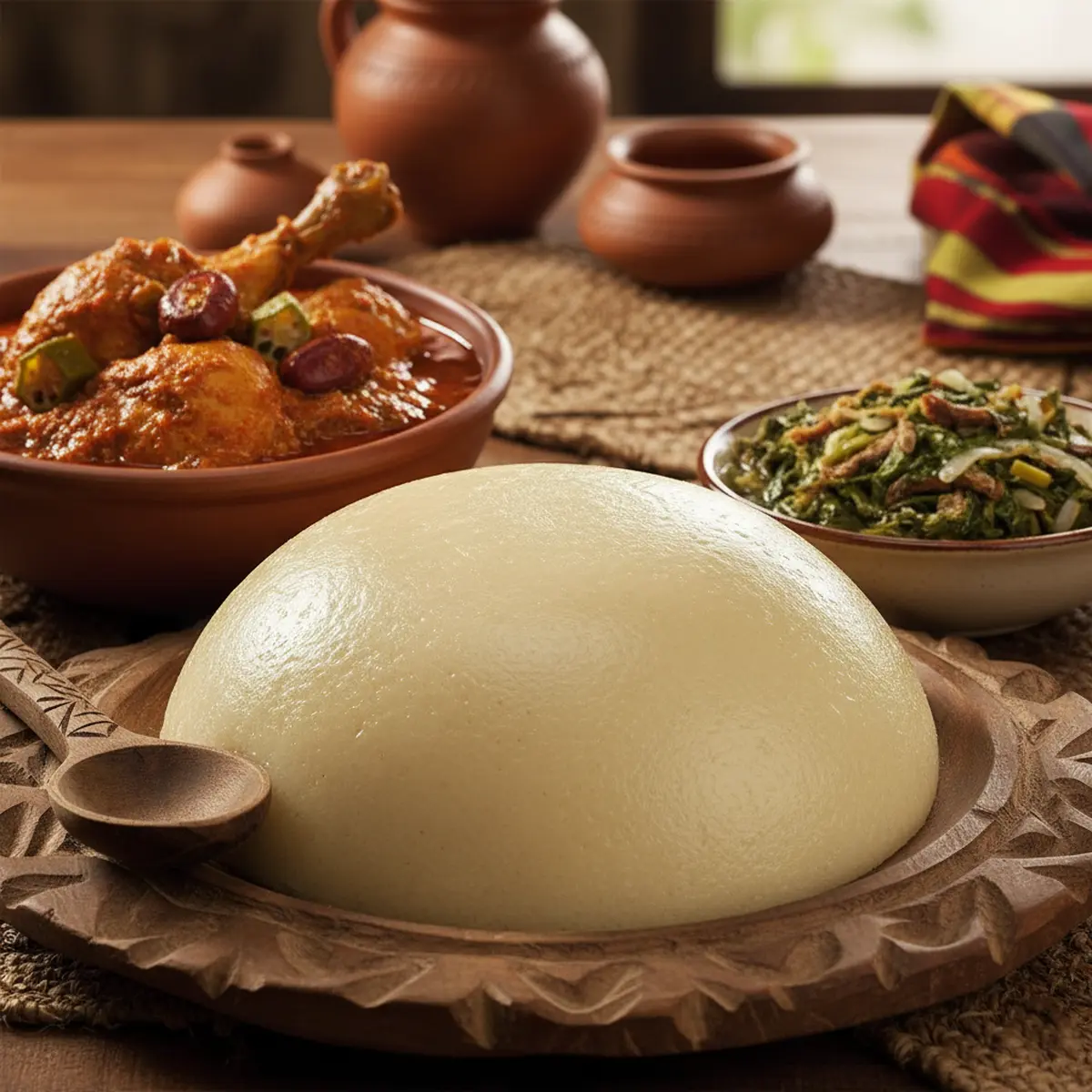
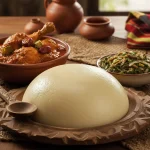
Funje (also spelled Funge) is the soft, sticky cassava porridge that forms the foundation of many Angolan meals. It is analogous to polenta or ugali but made from cassava flour (also called cassava meal or farinha de mandioca). When prepared correctly, funje is smooth, elastic, and mildly tangy. It has a neutral flavor that complements the bold sauces of stews like Muamba de Galinha or Calulu.
This elastic porridge has deep roots in Angolan culture. Cassava itself came to Angola through trade centuries ago and became a staple crop. Funje became essential, especially in rural areas, because cassava thrived in the tropical climate. Today, almost every Angolan cook can make funje by memory: pouring boiling water into cassava flour, stirring until it forms a dough, and then molding it by hand.
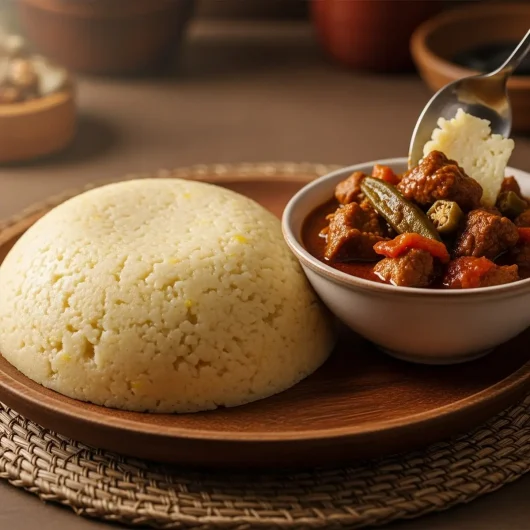
One unique aspect of funje is its texture: it’s firm enough to hold its shape (often formed into a ball or mound), but smooth and slightly sticky to the touch. This makes it ideal for eating by hand: diners pinch off a bite, shape it into a small disk, then dip it into stews or sauces. Funje’s simplicity – just water, flour, and a pinch of salt – masks its importance. It transforms light soups into a filling meal and highlights the flavors of whatever it’s served with.
In Angolan homes, funje is typically made fresh and served immediately. It’s often paired with lunch or dinner stews. For example, a classic meal is Muamba de Galinha with a side of funje. Because funje itself is very mild, cooks sometimes enrich it slightly with fish stock or coconut milk for variety (a fusion influence from Brazil). But the pure cassava version is truly emblematic of Angola’s heritage: humble, nutritious, and comforting.
4
servings10
minutes20
minutes280
kcalThis easy funje (funga) recipe shows how to turn cassava flour into a stretchy porridge. Boiling water is gradually whisked into cassava flour and salt, forming a smooth dough. The mixture is then kneaded and cooked gently on low heat until it thickens into a cohesive ball. The result is a glossy, bland “starch scoop” that’s perfect for scooping up saucy stews. Ready in about 30 minutes, funje makes a simple, gluten-free side that anchors any Angolan dish.
Cassava Flour: 2 cups (about 220 g) – Also called farinha de mandioca. The main ingredient.
Water: 4 cups (1 liter), plus extra as needed – For cooking. You can substitute half fish or chicken broth (for richer flavor).
Salt: ½ teaspoon (or to taste) – Enhances the mild flavor.
4 Ingredient
Boil Water: In a large saucepan, bring 4 cups water and a pinch of salt to a rolling boil. (Add a bay leaf or fish stock cube for extra flavor, if desired.)
Mix Flour Gradually: Place the cassava flour in a large bowl. Remove the boiling water from heat. Gradually pour a small amount (about ½ cup) of hot water into the flour, whisking briskly with a wooden spoon to form a loose paste. Repeat, adding water in ½-cup increments and stirring constantly to avoid lumps.
Combine: Once all boiling water is incorporated and the mixture is too thick to stir, return the pot to low heat. Add the flour paste into the pot of remaining hot water.
Cook the Porridge: On very low heat, stir and mash the mixture with a wooden spoon for about 5 minutes. The paste will thicken into a dough and pull away from the sides of the pot. Press down and flatten the dough against the pot bottom occasionally so it cooks evenly. (Be careful – funje can splatter when thickening.)
Form and Cool: When the porridge is glossy and smooth with no raw flour taste (about 20 minutes total cooking), remove from heat. Wet your hands with a bit of water and shape the funje into a round dome or loaf on a serving plate. Let it cool slightly – the texture will firm up as it cools.
Serve: Tear off pieces of the funje with your hands or a spoon, dipping them into stews like Muamba de Galinha or Calulu.
Nutrient | Per Serving |
Calories | 210 kcal |
Total Fat | 0.5 g |
• Saturated Fat | 0 g |
Carbohydrates | 50 g |
• Fiber | 4 g |
• Sugars | 1 g |
Protein | 0.4 g |
Sodium | 5 mg (very low) |
Allergens: None – naturally gluten-free, vegan, nut-free. |
|
What is funje (fungi)? Funje (also called fungi or mfunde) is a traditional Angolan porridge made by stirring cassava flour into boiling water. It forms a thick, elastic dough that Angolans eat with their fingers, typically alongside stews and sauces.
Can I use cornmeal instead of cassava flour? Not exactly. The cornmeal version is called pirão in Angola, which is a different staple (yellow polenta-like porridge). For authentic funje, you need cassava flour. Cornmeal will make a tasty dish but the texture and flavor differ.
Is funje gluten-free? Yes. Cassava flour contains no gluten. Funje is safe for gluten-sensitive diets.
How do I reheat funje? Reheat it by steaming or microwaving with a little water. That will rehydrate and soften the dough. Direct stirring on the stove can be difficult once it has set.
Why is my funje lumpy? Lumps form if the flour isn’t whisked quickly into the water. Always whisk the flour into a little water first, then stir vigorously. If lumps appear, press them against the pot’s side until they dissolve.
What is funje eaten with? Funje is almost always served with a saucy main dish, such as chicken, fish, or bean stews. It’s the neutral “body” on the plate that carries spicy or rich sauces. In Angola, funje and Moamba de Galinha is a classic pairing.
With its romantic canals, amazing architecture, and great historical relevance, Venice, a charming city on the Adriatic Sea, fascinates visitors. The great center of this…
Greece is a popular destination for those seeking a more liberated beach vacation, thanks to its abundance of coastal treasures and world-famous historical sites, fascinating…
From Alexander the Great's inception to its modern form, the city has stayed a lighthouse of knowledge, variety, and beauty. Its ageless appeal stems from…
Boat travel—especially on a cruise—offers a distinctive and all-inclusive vacation. Still, there are benefits and drawbacks to take into account, much as with any kind…
While many of Europe's magnificent cities remain eclipsed by their more well-known counterparts, it is a treasure store of enchanted towns. From the artistic appeal…