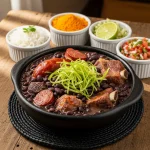
Cabidela Angolana – Chicken Blood Stew
Course: MainCuisine: AngolanDifficulty: Difficult4
servings15
minutes45
minutes350
kcalIn this Cabidela recipe, chicken pieces are first braised with aromatics, then finished with a blood-and-vinegar sauce. Begin by reserving the chicken’s blood and mixing it with white vinegar. In a pot, sauté sliced onions and garlic in oil until soft. Add the chicken pieces, diced tomatoes, bay leaf, salt and white pepper, and just enough water to cover. Simmer covered on low heat until the chicken is cooked through (about 30–40 minutes). In the final minutes, pour in the blood-vinegar mixture and stir quickly as it thickens the broth. Cook for 2–3 more minutes off the direct boil. The stew will be a dark, reddish-brown. Serve hot with plain white rice. Each spoonful of sauce will be rich, tangy, and uniquely satisfying.
Ingredients
Whole chicken: 1 (about 1.2–1.5 kg), cut into pieces (breasts/thighs) – clean and pat dry.
Chicken blood: ~250 ml (collect fresh; mix immediately with 2 Tbsp white vinegar) – see note below.
White vinegar: 3–4 Tbsp total (2 Tbsp for the blood, plus 1–2 Tbsp added to the stew).
Onion: 1 large, thinly sliced.
Garlic: 2 cloves, minced.
Tomatoes: 3 medium, chopped (or 1 can diced tomatoes).
- Bay leaf
Oil: 2 Tbsp (vegetable or olive oil).
Salt and white pepper: to taste.
Water or chicken stock: About 1 cup (enough to cover the chicken in the pot).
Optional: A handful of torn chicken liver or gizzards (for extra richness).
Garnish: Chopped cilantro or parsley (optional).
To serve: Steamed white rice or funge.
Directions
Prepare the blood: Immediately after cleaning the chicken, collect its blood into a bowl. Mix the blood with 2 tablespoons of white vinegar and whisk well. This keeps it from coagulating. Set aside.
Sauté aromatics: In a large pot over medium heat, warm the oil. Add sliced onion and minced garlic. Cook, stirring, until the onion is soft and translucent (2–3 minutes).
Add chicken and tomatoes: Place the chicken pieces into the pot. Sprinkle in salt and white pepper. Add chopped tomatoes and the bay leaf. Pour in just enough water or stock to cover the chicken (about 1 cup). Stir to combine.
Simmer chicken: Reduce heat to low, cover, and let the chicken simmer gently. Cook for about 30–35 minutes, or until the chicken is fork-tender. If using, add chicken liver/gizzards after 15 minutes of simmering. Remove the lid in the last 10 minutes to thicken the sauce if needed.
Finish with blood: Once the chicken is done, reduce heat to very low. Pour in the blood–vinegar mixture all at once while stirring. Stir continuously for 2–3 minutes. The blood will thicken the sauce and impart a rich color. Do not let it boil vigorously, or the blood will clump. The sauce should become velvety.
Serve: Taste and adjust salt or pepper. Remove the bay leaf. Serve the cabidela immediately over cooked white rice (or funge). Garnish with chopped parsley if desired.
Equipment Needed
- Large stockpot or Dutch oven (for cooking the stew)
- Wooden spoon or spatula (for stirring)
- Bowl (to collect and mix the blood)
- Measuring cups/spoons (for vinegar, oil, spices)
- Knife and cutting board (for chopping ingredients)
- Ladle (for serving the stew over rice)