

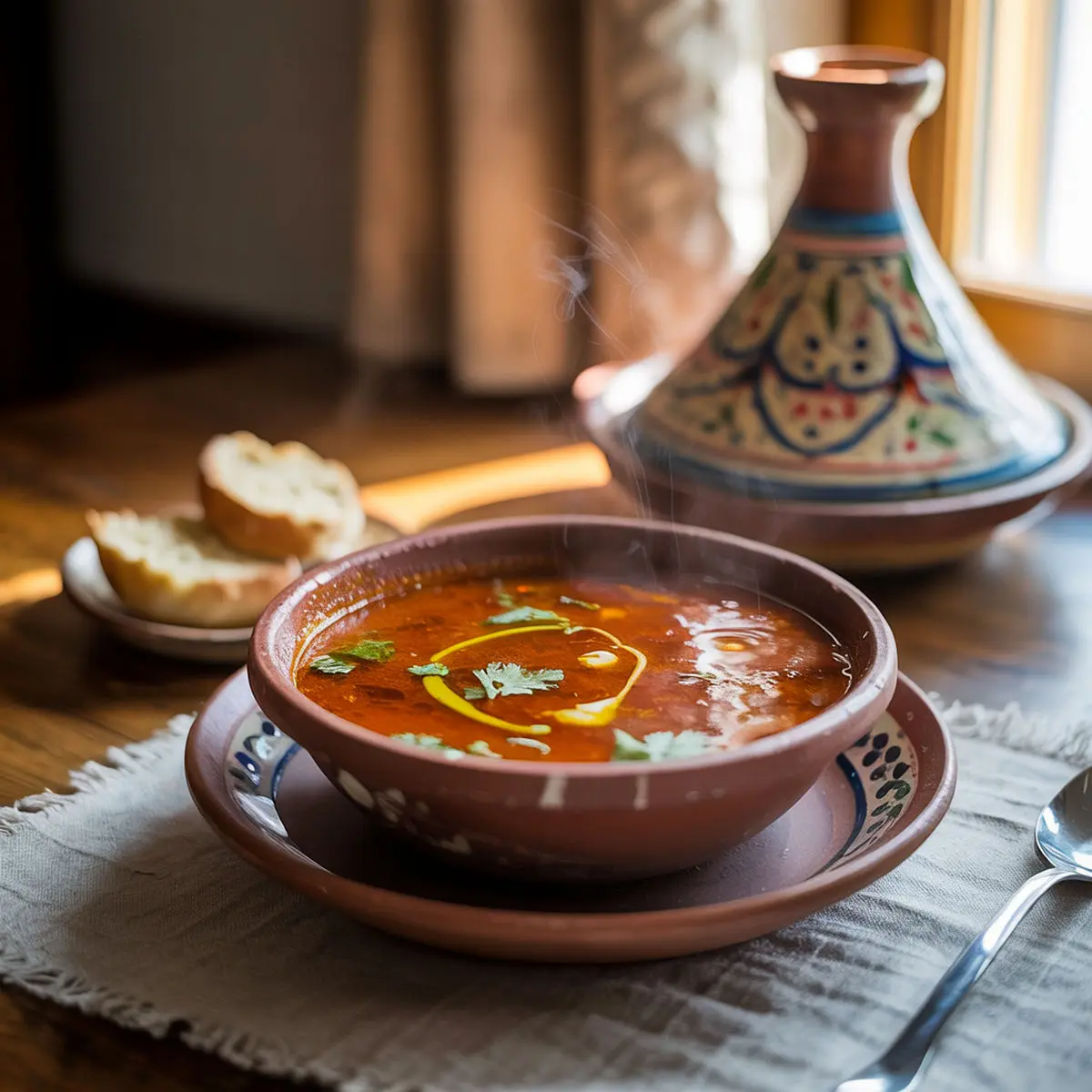
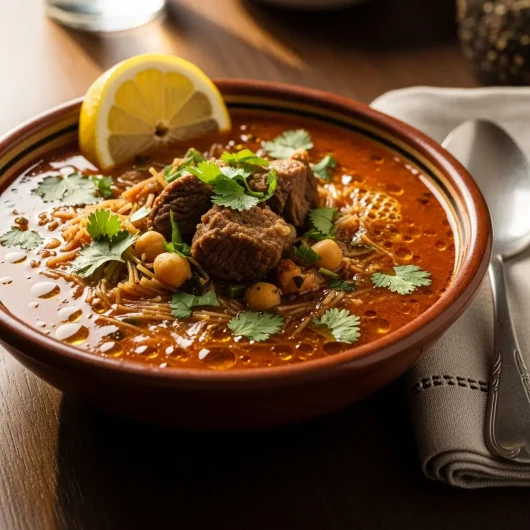
Algerian Harira (Hearty Lamb Soup with Egg & Flour)
Course: SoupsCuisine: AlgerianDifficulty: Moderate6
servings15
minutes90
minutes450
kcalHarira is a beloved North African soup served at Ramadan, and the Algerian version is hearty and warming. In this recipe, tender lamb and aromatic vegetables are simmered in a tomato broth with chickpeas and fragrant spices like ginger and cinnamon. The broth is then enriched with a mixture of beaten egg and flour (called al-’aqda) to give the soup a silky, stew-like consistency. Fresh herbs (cilantro and parsley) and a squeeze of lemon brighten each bowl. The result is a smooth, filling soup reminiscent of Moroccan harira but with its own Algerian twist. It’s traditionally enjoyed with bread and lemon wedges on the side.
Ingredients
500 g lamb pieces (shoulder or stew meat), trimmed and cut into bite-sized pieces – stew cuts with some fat are ideal. (Beef or chicken can be used if you prefer.)
2 tablespoons olive oil – for browning the meat and sautéing vegetables.
1 large onion, chopped – forms the base of the soup.
2 cloves garlic, minced – adds depth to the broth.
2 carrots, peeled and diced – for sweetness and body.
2 celery stalks, diced – adds a mild savory note.
2 medium tomatoes, peeled and finely chopped (or 2 tablespoons tomato paste) – provides a tomato base to the soup.
1 teaspoon ground ginger – warm, pungent spice common in harira.
1 teaspoon ground cinnamon – contributes warmth and complexity.
1 teaspoon paprika – sweet or smoked paprika adds color and mild spice.
½ teaspoon ground turmeric – (optional) for color and subtle earthiness.
1 teaspoon ground coriander – adds citrusy, nutty flavor.
Salt and black pepper, to taste – essential for seasoning.
1 liter water (or chicken stock) – the cooking liquid. (Stock will make it richer.)
½ cup dried chickpeas, soaked overnight (drained) – classic legume in harira. (Use canned chickpeas for shortcut, adding 3/4 cup drained and reducing added salt.)
2 potatoes, peeled and diced – help thicken the soup as they break down.
½ cup coarse semolina or flour – mixed with egg to thicken the soup. (Use fine semolina [tchicha] if available; otherwise, 2 tablespoons all-purpose flour.)
2 large eggs, beaten – used to create the thickening mixture called ’aqda.
½ cup each chopped cilantro and parsley – fresh herbs that brighten the soup at the end.
Juice of 1 lemon (optional, to serve) – adds brightness and acidity.
Directions
Brown the meat: Heat the olive oil in a large soup pot over medium-high heat. Add the lamb pieces and brown lightly on all sides, about 5 minutes. Remove meat with a slotted spoon and set aside.
Sauté the vegetables: In the same pot, add onion, garlic, carrots, and celery. Cook over medium heat until softened, about 5 minutes. Stir in the spices (ginger, cinnamon, paprika, turmeric, coriander) and cook for another minute until fragrant.
Add liquids and legumes: Return the lamb to the pot. Stir in the chopped tomatoes (or tomato paste), salt, and pepper. Pour in the water (or stock), bring to a boil, then reduce heat to a simmer. Add the drained chickpeas and potatoes. Cover and simmer gently for 1 hour, stirring occasionally. Add water during cooking if the soup becomes too thick.
Prepare the thickener: In a small bowl, whisk together the semolina (or flour) with one beaten egg and a ladleful of soup broth to make a smooth paste.
Thicken the soup: Remove the pot from heat briefly. Slowly pour the egg-flour mixture into the hot soup while stirring constantly. This will thicken the broth. If it seems too thick, stir in a little more warm water. Return the pot to low heat and bring back to a gentle simmer. One by one, beat the remaining egg and drizzle it into the soup while stirring, creating an egg-drop effect that further thickens and enriches the soup. Cook for another 5 minutes over low heat.
Finish and serve: Stir in the chopped cilantro and parsley. (Reserve a little for garnish.) Season again with salt and pepper if needed. Ladle the soup into bowls, garnish with extra herbs, and serve with lemon wedges on the side.
Tips, Troubleshooting & Variations
- Thickening: The soup should be thick and creamy, not watery. If your initial thickener (semolina/flour and egg) clumps, strain the soup through a sieve. If it’s too thick after simmering, thin it with a bit more hot water.
- Spice level: Harira is flavorful but not very spicy; adjust heat by adding a pinch of chili or harissa paste if you like more kick.
- Vegetarian option: Skip the meat and use vegetable stock. Add more chickpeas or toss in beans like lentils or red beans for protein. The process of thickening with egg and semolina remains the same.
- Herbs: Fresh cilantro and parsley are traditional. You can also add a little mint or chives to suit your taste. Stir them in at the very end to keep the color and brightness.
- Serving: Harira is often eaten with lemon and bread. Drizzle olive oil on top and serve alongside crusty bread or flatbread.
- Make-ahead: Like many stews, Harira tastes even better the next day after flavors meld. Reheat gently, adding water if the soup has thickened in the fridge.









