

Dark tourism: how to visit places of tragedy with context and respect
Dark tourism describes travel to places associated with death, disaster, persecution or conflict. The category includes memorial museums, battlefields, cemeteries, former prisons, disaster landscapes and archaeological sites. The useful question is not whether a destination is ‘dark,’ but whether the visit deepens historical understanding, respects affected communities and follows the site’s own purpose.
This guide combines ethics with practical travel planning. It explains how to choose an institution, prepare for difficult material, behave around graves and mourners, use photography responsibly, and build realistic itineraries for major memorial destinations. Current access, tickets and safety rules must always be checked with official sources before travel.
What dark tourism is—and what it should not become
The term covers very different places. A preserved concentration camp, a peace museum, an active cemetery and an ancient disaster site do not demand identical behaviour. The common requirement is to let the site’s history, community and rules determine the visit.
Know why you are going
Learning, remembrance, research and family connection are defensible purposes. Thrill-seeking and social proof are weak foundations for entering a place of suffering.
Use the institution’s own interpretation
Official museums, archives, survivor organisations and memorial centres should outrank viral videos, ghost stories and sensational tour copy.
Remember that people still live with the event
Families may visit graves, survivors may guide tours and local residents may reject tourism at a recent disaster site. Their needs come first.
Protect buildings, objects and landscapes
Do not cross barriers, remove fragments, touch remains or enter closed structures. Preservation is part of remembrance.
Five questions to ask before booking
A visit is more likely to be responsible when the site welcomes visitors, the interpretation is evidence-based, affected communities have a voice, your spending supports preservation or local services, and the itinerary gives enough time for reflection. Recent disasters, active conflict zones and places linked to ongoing self-harm require a higher threshold: access alone does not make tourism appropriate.
Avoid operators that sell fear, gore, weapons, trespass or ‘forbidden access.’ Transparent guides state who runs the site, what is included, which rules apply and how historical claims are sourced.
Research the history, logistics and emotional weight
A serious site can be physically easy to reach yet difficult to process. Good planning covers official access, transport, content warnings, weather, mobility needs and what you will do after the visit.
Read a reliable overview first
Learn the chronology, principal groups involved and the institution’s terminology. This prevents confusion and reduces dependence on a guide’s personality.
Check official status close to departure
Confirm timed entry, identity documents, permits, closures, bag rules, photography and the last transport back. Screenshots of old opening hours are not enough.
Choose expertise over drama
Ask how guides are trained, whether survivors or descendant communities contribute, and how the operator handles disputed or sensitive questions.
Leave space after the visit
Do not schedule a party, long drive or second intense museum immediately afterward. A quiet meal, park or unscheduled evening gives the experience room to settle.
Auschwitz–Birkenau — a preserved crime scene, memorial and place of burial
Auschwitz–Birkenau is not a conventional attraction near Kraków. It is a memorial and museum on the grounds of the German Nazi concentration and extermination camp complex, where about 1.1 million people were murdered. A responsible visit begins with the institution’s own historical framing and continues with quiet attention to the surviving buildings, personal objects and landscape.
Most travellers base themselves in Kraków and travel to Oświęcim by train, bus or an organised educational visit. The two principal areas—Auschwitz I and Auschwitz II–Birkenau—form one historical experience, so leave enough time for both rather than compressing the visit between unrelated stops.
Why the visit requires more preparation than a standard museum day
The site is divided between Auschwitz I, where brick barracks hold exhibitions and preserved rooms, and Birkenau, the much larger landscape of barracks, ruins, rail infrastructure and memorial space. Seeing only the first area produces an incomplete understanding of the camp system. The physical distance and scale of Birkenau are central to the history.
Official educators add chronology, explain the function of buildings and correct the myths that circulate online. Independent entry may be available under current rules, but advance online reservation is essential because entry passes are limited. External tour advertising can obscure what is included, so confirm that a booking covers both sections and uses the Memorial’s official reservation system.
Plan a quiet return to Kraków or Oświęcim. Kazimierz contains important Jewish heritage, synagogues and the Galicia Jewish Museum, but it should not be treated as an entertainment extension to Auschwitz. A separate day allows the district’s history, present-day community and restaurants to stand on their own.
Choose this visit for documented history, remembrance and education—not for a dramatic photograph or a claim of having entered an extreme place.
The essential places, evidence and context
Use these as an interpretive sequence, not a race between photo stops.
Auschwitz I exhibitions
The original camp entrance, brick blocks and exhibitions establish the administrative system, prisoner experience and identities of those persecuted.
Auschwitz II–Birkenau
The rail ramp, barrack remains, ruins of killing facilities and international memorial reveal the industrial scale of deportation and murder.
Personal objects and testimony
Shoes, luggage, documents and recorded voices restore individual lives to a history often reduced to totals.
Oświęcim context
The town existed for centuries before the camp. A local museum or heritage walk can clarify the difference between Oświęcim and the German name imposed on the camp.
Kraków Jewish heritage
Kazimierz and Podgórze contain synagogues, cemeteries, the former ghetto area and museums that broaden the regional history when visited separately.
Preservation work
Weathered barracks, ruins and objects require ongoing conservation. Staying behind barriers protects evidence and the site’s future educational use.
Build a respectful, practical visit
Use the Memorial’s official booking system and check identity requirements.
Allow a buffer for security, orientation and the transfer between sites.
Visit Auschwitz I and Birkenau as one continuous historical account.
Keep the evening unstructured; many visitors need silence or a slow meal.
Give Kraków’s Jewish heritage its own day rather than a rushed add-on.
Choose a practical base
Kraków Old Town is convenient for rail and bus connections; Kazimierz offers restaurants and evening life but deserves treatment as a living district, not a themed backdrop. Oświęcim is practical for an early start and reduces transport pressure.
Return to ordinary city life
After returning to Kraków, choose an ordinary meal away from the memorial setting. Pierogi, żurek, obwarzanek and Polish seasonal cooking are widely available. Avoid packaging lunch or souvenirs as part of a ‘camp experience.’
What to add on another day
A separate day in Kraków can include the Galicia Jewish Museum, Schindler Factory Museum, Podgórze and the former ghetto area. Wieliczka Salt Mine is unrelated in subject and works better on another day.
Who will get the most from the visit
- Travellers studying Holocaust history
- School and university groups with preparation
- Visitors seeking an educator-led memorial experience
Details to confirm before departure
- Entry-pass rules and release windows change
- Some rooms restrict photography or equipment
- Large bags and arrival procedures are controlled
Conduct that protects people and place
- Do not pose on tracks, barracks or memorial structures
- Keep conversations low and phones silent
- Do not remove stones, fragments or natural material
The site’s power comes from evidence, not spectacle
Auschwitz–Birkenau matters because buildings, documents, personal belongings and the altered landscape survive together. The most responsible itinerary gives those materials time, follows the Memorial’s rules and resists converting the visit into social proof.
Hiroshima and Nagasaki — peace memorial cities shaped by survivor testimony
Hiroshima and Nagasaki are active cities, not ruins preserved around a single event. Their museums and memorial parks interpret the atomic bombings of August 1945 through objects, photographs, city records and hibakusha testimony, while contemporary neighbourhoods show the lives rebuilt around those memories.
Hiroshima is easier to add to a first Japan itinerary because the Peace Memorial Park sits on the city’s tram network and the Shinkansen connects directly with Osaka, Kyoto and Fukuoka. Nagasaki requires a separate journey but offers a different topography, industrial history and memorial landscape around Urakami.
How to understand two cities without reducing either to the bombing
In Hiroshima, begin inside the Peace Memorial Museum before walking the Cenotaph, Flame of Peace, Children’s Peace Monument and A-Bomb Dome. This order gives the structures meaning and prevents the dome from becoming a detached photo stop. The river setting and surviving trees also show how the city uses public space for remembrance and peace education.
Nagasaki’s principal memorial sites cluster near the hypocentre in Urakami: the Atomic Bomb Museum, Peace Park, Hypocentre Park and National Peace Memorial Hall. The city’s hills and dispersed urban fabric make the experience less linear than Hiroshima. Nearby Urakami Cathedral and the one-legged torii at Sannō Shrine add religious and neighbourhood perspectives.
Both cities ask visitors to move from destruction toward civic action. Testimony, archives and school peace programs frame remembrance as a call to prevent nuclear war. Do not focus only on dramatic objects; listen to personal accounts and note how local institutions describe responsibility, recovery and peace.
The essential experience is a dialogue between preserved evidence, survivor memory and modern urban life—not a search for visible devastation.
The essential places, evidence and context
Use these as an interpretive sequence, not a race between photo stops.
Hiroshima Peace Memorial Museum
The museum uses personal belongings, photographs, survivor accounts and urban history to explain the bombing and its aftermath.
A-Bomb Dome and riverfront
The preserved former Industrial Promotion Hall anchors the outdoor memorial landscape and is best understood after the museum.
Children’s Peace Monument
Paper cranes and school groups connect the story of Sadako Sasaki with continuing youth peace education.
Nagasaki Atomic Bomb Museum
The museum explains the bombing within Nagasaki’s industrial, military and international history.
Nagasaki National Peace Memorial Hall
A quiet underground space centres names, photographs and remembrance rather than spectacle.
A-bombed buildings and trees
City-designated structures and trees carry the history into ordinary streets beyond the principal parks.
Build a respectful, practical visit
Use the museum chronology before interpreting outdoor monuments.
Leave time at the Cenotaph, river and survivor-testimony areas.
Hiroshima streetcars and Nagasaki trams connect the main districts.
Do not schedule both cities’ memorial complexes on consecutive rushed days.
Markets, gardens and neighbourhood meals show recovery without erasing memory.
Choose a practical base
In Hiroshima, the station area is best for rail connections; Hondori and the Peace Boulevard area are convenient for trams and evening dining. In Nagasaki, stay near the station or around Dejima and Hamanomachi, then use the tram to Urakami.
Return to ordinary city life
Hiroshima-style okonomiyaki, oysters and anago are local staples; Nagasaki is known for champon, sara udon and castella. Eat in established dining districts rather than treating food as part of a memorial package.
What to add on another day
Miyajima works well on a separate day from Hiroshima. From Nagasaki, Dejima, Glover Garden and the harbour explain the city’s international history, while Unzen requires more time and different planning.
Who will get the most from the visit
- Travellers interested in peace education
- Rail itineraries through western Japan
- Visitors who value testimony and urban recovery
Details to confirm before departure
- August ceremonies can alter access and crowd patterns
- Museum photography rules vary by gallery
- Timed admission may be introduced during busy periods
Conduct that protects people and place
- Do not photograph mourners or school ceremonies without consent
- Use factual captions and avoid nuclear-themed jokes
- Observe the city’s cues during moments of silence
These cities frame remembrance as public education
Hiroshima and Nagasaki do not ask visitors to remain only with destruction. Their memorial institutions preserve evidence, amplify survivor testimony and place the events within campaigns for peace. A careful itinerary also acknowledges the cities as living cultural centres with distinct food, neighbourhoods and postwar identities.
The 9/11 Memorial and Museum — personal loss, public space and the rebuilding of Lower Manhattan
The World Trade Center site is both a public memorial and a working part of Lower Manhattan. The outdoor pools occupy the footprints of the Twin Towers, while the museum below grade preserves structural elements, emergency vehicles, recordings, photographs and individual stories from the attacks of 1993 and September 11, 2001.
Because commuters, office workers, residents and families of victims share the site with visitors, respectful behaviour is practical as well as symbolic. Plan the museum as the main event and treat the surrounding district—St. Paul’s Chapel, the Oculus, Battery Park and Tribeca—as context rather than a sequence of dramatic backdrops.
Why the site feels different from a conventional history museum
The memorial plaza is open civic space, but the names cut into the bronze parapets make each pool a place of individual remembrance. Visitors may encounter flowers, flags or personal tributes placed by families and colleagues. Do not move them, lean across them for photographs or block people reading names.
Inside, the museum alternates between large-scale architecture and intimate evidence. The surviving slurry wall, tridents and foundation elements explain the site physically; voice messages, portraits and objects return attention to individuals. The historical exhibition contains distressing audio and imagery, so allow time to pause or use bypass routes where offered.
Lower Manhattan adds useful context. St. Paul’s Chapel became a relief centre after the attacks, while the rebuilt transit complex and office towers show the district’s long recovery. Avoid describing the site only through height, destruction or spectacle; the museum’s mission centres memory, response and continuing consequences.
A visit works best when the museum, names and surrounding neighbourhood are read together as a place of loss, response and continuing city life.
The essential places, evidence and context
Use these as an interpretive sequence, not a race between photo stops.
North and South Pools
The footprints of the towers carry the names of those killed, arranged through meaningful adjacencies requested by families and colleagues.
Memorial Museum
The core exhibition combines material evidence, first-person testimony and historical interpretation.
Survivors’ Stairs
The preserved stairway connects the museum to the evacuation routes used by people leaving the original complex.
St. Paul’s Chapel
The historic chapel across Church Street became a support centre for rescue and recovery workers.
Oculus and transit network
The rebuilt transportation hub reveals how the site functions daily for commuters rather than as an isolated memorial precinct.
Battery Park and harbour
A walk south creates breathing space and connects Lower Manhattan to immigration, finance and the waterfront.
Build a respectful, practical visit
Check the museum’s current opening days and timed-ticket system.
Use public transit; street access can shift around events and security.
Give the historical exhibition your main attention before wider sightseeing.
Use the plaza or Battery Park to decompress after intense galleries.
Post reflections after leaving rather than livestreaming inside the memorial.
Choose a practical base
The Financial District is convenient for an early entry and harbour ferries; Tribeca offers quieter evenings and restaurants; the Lower East Side and Chinatown provide broader food options with straightforward subway access.
Return to ordinary city life
Lower Manhattan’s everyday food culture includes bagels, delis, Chinatown noodles, dumplings and modern dining around FiDi and Tribeca. Choose a meal after the visit and allow the transition to feel ordinary rather than themed.
What to add on another day
Ellis Island and the Statue of Liberty add a different form of national memory and immigration history. The Tenement Museum on the Lower East Side is another strong contextual visit, but reserve it separately.
Who will get the most from the visit
- First-time New York visitors who want historical context
- Travellers interested in memorial design
- Families using the museum’s age-appropriate resources
Details to confirm before departure
- The museum is not open every day in every season
- Security and bag policies can change
- Anniversary events affect circulation and access
Conduct that protects people and place
- Do not photograph strangers touching or reading names
- Keep food, calls and staged posing away from the pools
- Give family tributes physical space
The memorial’s design joins individual names to the rebuilt city
The 9/11 site is neither frozen in 2001 nor detached from daily New York. Its pools, museum, transit hub and surrounding streets show how a city preserves evidence, honours individual lives and continues to work around a place of mass loss.
Tuol Sleng and Choeung Ek — Khmer Rouge history told through records, place and survivor voices
Tuol Sleng Genocide Museum and the Choeung Ek Genocidal Center are often visited on the same day, but they should not be treated as a quick ‘Killing Fields tour.’ The former S-21 prison preserves cells, photographs, documents and survivor testimony; Choeung Ek is a former execution and burial site south of central Phnom Penh.
A thoughtful sequence starts at Tuol Sleng, where the bureaucracy of imprisonment and forced confession is documented, then continues to Choeung Ek. Use the official audio material or a guide with strong historical training. The content is graphic and the heat can be demanding, so schedule breaks and avoid stacking other intense museums immediately afterward.
How to visit without turning Cambodia’s genocide into a half-day attraction
Tuol Sleng occupies a former school converted into Security Prison 21 under the Khmer Rouge. Classrooms became interrogation rooms and cells; mugshots and records show how the prison system catalogued its victims. The preserved buildings are simple, which makes testimony and documentation more important than visual drama.
Choeung Ek lies beyond the dense centre. Paths move between burial areas, explanatory signs and the memorial stupa. Seasonal rain can expose fragments in the soil; never touch, move or photograph remains at close range. Follow staff instructions and remain on marked paths.
Phnom Penh’s broader history matters. The National Museum, Royal Palace area, riverside, markets and contemporary arts scene prevent the city from being reduced to 1975–79. Local restaurants and neighbourhoods are not a ‘recovery narrative’ for visitors; they are ordinary parts of a complex capital.
The strongest visits centre the victims’ identities and Cambodia’s own institutions rather than an outsider’s appetite for horror.
The essential places, evidence and context
Use these as an interpretive sequence, not a race between photo stops.
Tuol Sleng buildings
The former classrooms and cell blocks preserve the institutional setting of S-21.
Victim photographs
The prison archive records individuals with a directness that requires time and restraint from visitors.
Survivor testimony
Where available, recorded or in-person testimony should be approached as a privilege, not an opportunity for intrusive questions.
Choeung Ek landscape
Paths and memorial elements explain the transfer from detention to execution and burial.
Documentation Center resources
Cambodian research organisations and tribunal archives can deepen pre-visit understanding.
Contemporary Phnom Penh
Markets, galleries and neighbourhood life make clear that the capital cannot be defined only by the Khmer Rouge period.
Build a respectful, practical visit
Read a concise history of Democratic Kampuchea before arrival.
Understand the prison system before travelling to Choeung Ek.
Choose a driver or guide who avoids sensational language.
Carry water, sun protection and time for a quiet break.
Use official tickets, audio guides and museum publications.
Choose a practical base
BKK1 and BKK3 are convenient for Tuol Sleng and have many hotels and restaurants. Riverside suits first-time sightseeing but is farther from the museum; the Russian Market area offers a more residential base near BKK3.
Return to ordinary city life
Try fish amok, kuy teav, nom banh chok, grilled river fish and Cambodian coffee in ordinary restaurants. Keep meals separate from site commentary, and avoid operators that market ‘genocide lunch’ packages.
What to add on another day
Oudong, Silk Island or a Mekong excursion provides a different historical and landscape context on another day. Do not add another genocide site solely to make the itinerary feel more complete.
Who will get the most from the visit
- Travellers studying Southeast Asian history
- Visitors willing to use local archives and interpretation
- Educators who prepare students before arrival
Details to confirm before departure
- Museum exhibitions and film schedules change
- Traffic strongly affects transfer time to Choeung Ek
- Photography restrictions may differ by building
Conduct that protects people and place
- Do not touch remains, clothing or soil fragments
- Never ask survivors for graphic details
- Avoid joking, costumes or staged reaction videos
Records and testimony make the history personal without requiring spectacle
Tuol Sleng and Choeung Ek preserve connected parts of the Khmer Rouge security system. Their value comes from documentation, survivor voices and Cambodian stewardship. Responsible travel gives those sources priority and leaves room for Phnom Penh’s present-day life.
Pompeii and Herculaneum — ancient disaster sites where archaeology must not erase human loss
Pompeii and Herculaneum sit at the boundary between archaeology and dark tourism. Their streets, homes, shops and public buildings provide an unusually detailed view of Roman life, while casts, skeletons and destruction layers record deaths during the eruption of Vesuvius in 79 CE.
The sites are large and exposed to weather. A useful itinerary focuses on urban life first—water systems, houses, temples, bakeries and streets—then approaches human remains with restraint. Naples, modern Pompei and Sorrento all work as bases, connected by regional rail services whose schedules should be checked before travel.
Why Pompeii should be read as a city before it is read as a catastrophe
Pompeii’s scale can encourage checklist tourism. The Forum, theatres, bath complexes, houses, bars, workshops and street engineering show a functioning city with social divisions and daily routines. Starting with that fabric makes the casts of victims part of a human history rather than isolated objects of fascination.
Herculaneum is smaller and often easier to comprehend. Different burial conditions preserved upper floors, timber and household material, giving a more intimate view of domestic space. The ancient shoreline and boat-house area carry difficult evidence of the eruption; treat remains as people, not curiosities.
Current conservation work affects which houses open on any day. Use the archaeological park’s official map and open-building list rather than promising a single fixed route. Summer heat and limited shade can be more hazardous than visitors expect, so water, sun protection and realistic pacing matter.
These sites reward travellers who are interested in Roman urban life, conservation and the way a sudden disaster becomes archaeological evidence.
The essential places, evidence and context
Use these as an interpretive sequence, not a race between photo stops.
Pompeii Forum
The civic centre links temples, administration, commerce and views toward Vesuvius.
Houses and workshops
Villas, bakeries, thermopolia and laundries reveal work, status and domestic routines.
Casts and human remains
View only where displayed by the park and avoid close-up novelty photography.
Herculaneum streets
Compact blocks, preserved wood and multi-storey buildings create a different urban record from Pompeii.
Archaeological Museum in Naples
Many major mosaics, sculptures and objects from the Vesuvian sites are conserved in the city museum.
Vesuvius landscape
The volcano explains the geography, but summit access depends on weather, transport and current park rules.
Build a respectful, practical visit
Match your entry to the rail stop and intended route.
Open buildings change; avoid relying on an old blog itinerary.
Forum, houses and streets provide context before the casts.
Shade is limited and surfaces are uneven.
Give Herculaneum or the Naples museum its own half or full day.
Choose a practical base
Naples Centro Storico suits travellers combining archaeology with museums and food; Chiaia is calmer but farther from the main stations. Pompei town provides the easiest early start, while Sorrento is convenient for coastal itineraries but increases travel time.
Return to ordinary city life
Naples offers pizza, sfogliatella, pasta e patate and seafood; modern Pompei has simple restaurants around the sanctuary and station. Do not buy or promote imitation ‘victim’ souvenirs.
What to add on another day
Herculaneum and the Naples National Archaeological Museum are the most relevant additions. Oplontis, Stabiae and Boscoreale broaden the Vesuvian landscape for travellers with more time.
Who will get the most from the visit
- Archaeology and Roman-history travellers
- Families able to handle heat and uneven ground
- Visitors interested in conservation practice
Details to confirm before departure
- Named tickets and capacity controls may apply
- Domus openings change daily
- Vesuvius access can close for weather or safety
Conduct that protects people and place
- Do not climb walls or enter roped areas
- Avoid comic poses beside casts or remains
- Do not take stones, pottery fragments or plants
The tragedy matters because a complete urban life is visible around it
Pompeii and Herculaneum are most meaningful when visitors understand homes, labour, religion and infrastructure before focusing on death. Archaeology restores a city’s complexity; respectful behaviour protects both the evidence and the people represented by it.
Kigali Genocide Memorial — remembrance, burial, education and the responsibilities of testimony
The Kigali Genocide Memorial in Gisozi is a burial place, museum and education centre dedicated to the 1994 Genocide against the Tutsi. Its exhibitions move through the historical build-up, the genocide, individual stories and international comparisons, while the gardens and graves create a separate space for mourning.
Kigali’s hills make distances deceptive, so use a registered taxi, car or trusted driver rather than building a tight walking plan. The memorial can occupy several hours. Related sites at Nyamata and Ntarama in Bugesera require another day, careful transport planning and the same restraint expected at an active place of burial.
How the memorial connects national history with individual mourning
The exhibition explains the political construction of ethnic division, the events of 1994 and the experiences of victims, survivors and rescuers. Some galleries contain graphic material. Follow the recommended sequence, take breaks and do not rush because a driver is waiting.
Outside, the memorial gardens and mass graves require a quieter mode of behaviour than the museum interior. Visitors may encounter families, ceremonies or school groups. Stay back from private acts of mourning and ask before photographing people, flowers or commemorative events.
Kigali is a modern capital with a strong café culture, markets, galleries and neighbourhood life. Kiyovu, Kimihurura and Nyamirambo each show a different side of the city. A memorial visit should deepen understanding of Rwanda without suggesting that the genocide is the country’s only story.
The memorial is both public history and a place where families continue to mourn; visitors must respect both functions.
The essential places, evidence and context
Use these as an interpretive sequence, not a race between photo stops.
Historical exhibition
Chronology, propaganda, testimony and international response provide essential context.
Children’s Room
The focus on individual children is emotionally intense and may not suit every visitor.
Memorial gardens
Landscaped areas create space for reflection away from the exhibition sequence.
Guided interpretation
Guides connect exhibits with Rwanda’s current peace-education work and may bring personal experience.
Nyamata and Ntarama
Related memorial sites in Bugesera preserve churches and evidence of mass killing; arrange a responsible guide.
Contemporary Kigali
Museums, art spaces, markets and cafés show a city whose identity extends far beyond 1994.
Build a respectful, practical visit
Kwibuka and monthly civic-work schedules can affect access.
Large or educational groups should contact the memorial in advance.
Use the gardens or café area for a pause when needed.
Ceremonies and mourners require explicit consent.
Visit a contemporary cultural venue on a different part of the day.
Choose a practical base
Kiyovu is central and calm; Kimihurura and Nyarutarama have hotels, restaurants and easy vehicle access; Nyamirambo offers energetic local street life but longer drives to Gisozi at busy times.
Return to ordinary city life
Rwandan meals may include brochettes, isombe, ibihaza, beans, plantain and grilled fish, alongside a strong coffee culture. Choose local restaurants across Kigali rather than framing food as part of a genocide itinerary.
What to add on another day
Nyamata and Ntarama are the most relevant memorial extension and should be visited with preparation. On another day, the Museum for Campaign Against Genocide or a contemporary arts space can broaden historical perspective.
Who will get the most from the visit
- Travellers studying genocide prevention
- Educators and researchers
- Visitors prepared for guided testimony and reflection
Details to confirm before departure
- Commemoration periods can change public access
- Group booking requirements vary
- Road conditions and rain affect Bugesera travel
Conduct that protects people and place
- Treat graves and gardens as active mourning spaces
- Do not record guides without permission
- Avoid political debates with mourners or staff on site
The memorial links historical documentation with continuing care for survivors
Kigali’s memorial is not only an exhibition about 1994. It is a burial place, an archive, an educational institution and a public commitment to remembrance. A responsible visit recognises that survivors and families remain the primary community of the site.
Srebrenica–Potočari Memorial Center — genocide remembrance in a landscape still marked by absence
The Srebrenica–Potočari Memorial Center and cemetery commemorate the Bosniak men and boys killed in the Srebrenica genocide of July 1995. The former battery factory, museum exhibitions, oral histories and rows of graves document both the violence and the failure of international protection.
Potočari is remote from the main visitor centres of Sarajevo and Mostar. Travel by car or with a guide who understands survivor-centred interpretation; a rushed stop on a broad ‘Bosnia highlights’ tour does not provide enough time. Contact the Memorial Center for current visit guidance, accessibility and group arrangements.
Why distance and political context make planning especially important
The cemetery’s white markers make the scale visible, but the names and dates demand individual attention. The annual identification and burial of victims means the memorial is not a closed historical chapter. Families continue to visit, and new graves have been added as remains are identified.
The battery factory exhibitions explain the United Nations ‘safe area,’ the Dutchbat presence, forced separation and the subsequent killings. Survivor testimonies should shape the visit. Avoid guides who present denial, false equivalence or ethnic provocation as entertainment.
The journey through eastern Bosnia is part of the context: towns, abandoned homes and returnee communities reveal long-term demographic and economic consequences. Do not photograph residents or damaged property as visual texture without consent.
This is a survivor-centred memorial in a community where the consequences of genocide remain present in families, politics and the landscape.
The essential places, evidence and context
Use these as an interpretive sequence, not a race between photo stops.
Memorial cemetery
Names, birth years and grave markers individualise the dead and show continuing identification work.
Former battery factory
The industrial complex became the Dutchbat base and now contains exhibitions and preserved evidence.
Oral-history archive
Recorded testimony is central to understanding separation, survival and the search for missing relatives.
July 11 commemoration
The anniversary is primarily for families and official remembrance; ordinary visitors must follow special guidance.
Srebrenica town
The town is a living community with limited services, not an abandoned set for war photography.
Sarajevo context
The War Childhood Museum, History Museum and siege sites provide broader Bosnian War history on separate days.
Build a respectful, practical visit
Use the Memorial Center for visit, group and accessibility guidance.
Book a guide with transparent credentials and survivor-respectful language.
The road journey is long and should not be compressed.
Food options are limited; bring water without picnicking in memorial areas.
Avoid scheduling nightlife immediately after the drive back.
Choose a practical base
Sarajevo offers the broadest accommodation and museum context; Tuzla shortens the drive and has a compact centre. Overnight options near Srebrenica are limited, so confirm availability rather than arriving without a plan.
Return to ordinary city life
In Sarajevo or Tuzla, local dishes include ćevapi, burek, klepe, begova čorba and tufahija. During the memorial day, keep meals simple and separate from the visit; do not stage food photography at the cemetery.
What to add on another day
From Sarajevo, the War Childhood Museum and Tunnel of Hope add civilian perspectives on the 1990s war. These are substantial visits and should not be packed into the same day as Potočari.
Who will get the most from the visit
- Travellers studying the Bosnian War and genocide
- Researchers and educators
- Visitors prepared for a long, focused day
Details to confirm before departure
- Anniversary events change access and road conditions
- Local accommodation and transport are limited
- Political tensions can affect the public atmosphere
Conduct that protects people and place
- Do not debate denial narratives at gravesites
- Ask before recording testimony or local residents
- Keep drones and staged portraits away from the cemetery
The memorial remains connected to identification, burial and survivor life
Potočari is not a completed monument to a distant past. Families still bury identified relatives, archives continue to grow and the surrounding communities live with the consequences. Responsible travel follows the Memorial Center’s interpretation and gives the day enough time.
Berlin’s memorial landscape — a citywide route through dictatorship, genocide, division and resistance
Berlin offers a different model of dark tourism: tragedy is interpreted across a living capital rather than concentrated in one remote site. Memorials, documentation centres, former prisons and fragments of the Wall make National Socialism, the Holocaust, war, dictatorship and division visible within ordinary streets.
The abundance of sites creates a planning risk. Do not attempt a single ‘dark Berlin’ marathon. Build two or three thematic half-days—for example, Nazi terror and Holocaust remembrance in Mitte and Kreuzberg, then the Berlin Wall and East German repression around Bernauer Straße and Hohenschönhausen.
How to connect Berlin’s sites without collapsing different histories
Near the Brandenburg Gate, the Memorial to the Murdered Jews of Europe and its information centre focus on Europe’s murdered Jews. Nearby memorials address persecuted Roma and Sinti people, homosexuals and victims of National Socialist euthanasia policies. Each has a specific subject; avoid using one as a generic symbol for all victims.
The Topography of Terror stands on the former headquarters site of the Gestapo, SS leadership and Reich Security Main Office. Its documentation-led approach shifts attention toward perpetrators, institutions and administrative systems. Farther north, the Berlin Wall Memorial on Bernauer Straße preserves border structures and documents people killed or separated by division.
Hohenschönhausen, a former Stasi remand prison, requires more time and often benefits from a guided tour. Survivor and historian-led interpretation can be powerful, but confirm the language and format. Across the city, resist souvenir-shop versions of history and give priority to publicly funded memorial institutions.
Berlin is best for travellers who want to compare memorial design, documentation and public history across several political periods.
The essential places, evidence and context
Use these as an interpretive sequence, not a race between photo stops.
Memorial to the Murdered Jews of Europe
The field of stelae and underground information centre form a central Holocaust memorial near the Reichstag.
Topography of Terror
Documents and site archaeology explain the institutions that organised persecution and mass murder.
Spomenik Berlinskom zidu
The Bernauer Straße site preserves the border strip, watchtower context and stories of escape and death.
Hohenschönhausen Memorial
A former Stasi prison interprets political repression through preserved rooms, documents and guided tours.
House of the Wannsee Conference
The lakeside villa documents the bureaucratic coordination of the Holocaust and requires a separate journey.
Track 17 at Grunewald
The deportation memorial at the railway station records transports of Berlin Jews and is quiet, exposed and unsupervised.
Build a respectful, practical visit
Separate Holocaust, Nazi institutions, the Wall and Stasi history.
The sites span several districts and cannot be walked as one route.
Hohenschönhausen and some specialist institutions need planning.
Each memorial names a specific victim group or institution.
Two dense museums in one day are usually enough.
Choose a practical base
Mitte gives the easiest access to central memorials; Kreuzberg is close to Topography of Terror and has a broad restaurant scene; Prenzlauer Berg works well for Bernauer Straße and tram connections; Friedrichshain suits Wall-history routes.
Return to ordinary city life
Berlin’s everyday food ranges from currywurst and döner to contemporary German, Turkish, Vietnamese and Syrian cooking. Keep meals in ordinary neighbourhood settings and avoid businesses that turn dictatorship or war into novelty dining.
What to add on another day
Sachsenhausen Memorial in Oranienburg is a separate full historical visit and should not be treated as an extension of a central-Berlin walking tour. Potsdam offers a different focus on Prussian and Cold War history.
Who will get the most from the visit
- Travellers comparing memorial architecture
- Students of twentieth-century European history
- Visitors relying on public transport
Details to confirm before departure
- Tour languages and capacities vary
- Some information centres close on specific weekdays
- Outdoor memorials can have limited supervision
Conduct that protects people and place
- Do not climb or play on memorial structures
- Avoid reducing different victim groups to one narrative
- Skip novelty souvenirs using Nazi or Stasi imagery
Berlin shows how remembrance operates within daily urban life
The city’s strongest memorials do not rely on dramatic ruins. They use documents, names, preserved sites and carefully designed public space to explain perpetrators, victims, resistance and division. A thematic itinerary allows those distinctions to remain clear.
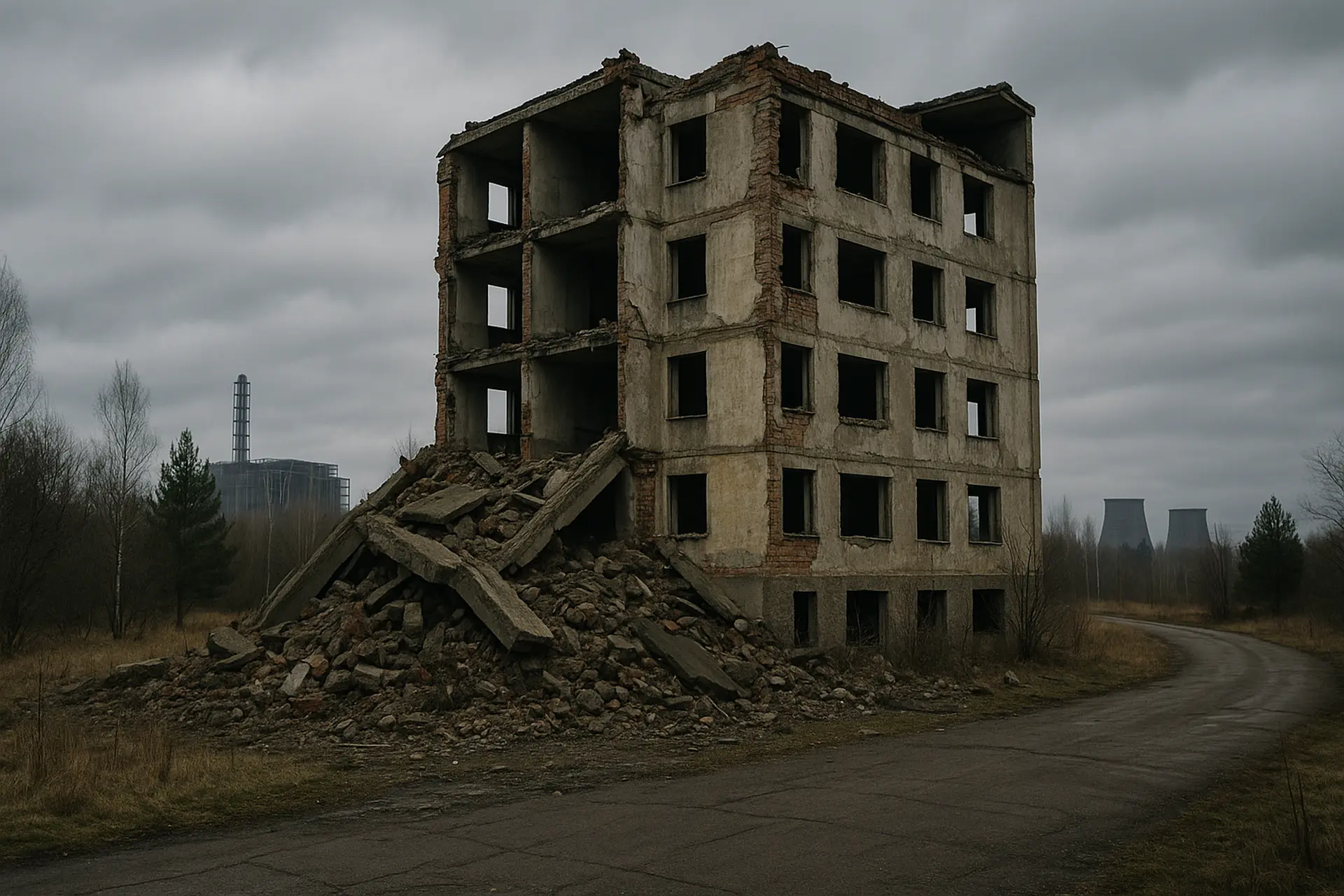
Chernobyl, Pripyat and recent disaster zones are not ordinary itinerary items
The 1986 Chernobyl disaster and the abandoned city of Pripyat remain central examples in dark-tourism writing. Before Russia’s full-scale invasion of Ukraine, access to the Exclusion Zone required controlled arrangements. Current government travel advisories remain highly restrictive for Ukraine, and ordinary leisure travel to the zone should not be planned. Historical interest does not override war risk, radiation controls, unexploded hazards or Ukrainian authority.
The same principle applies after earthquakes, fires, floods, attacks and other recent tragedies. Do not enter an affected area while rescue, recovery, investigation or private mourning is underway. Visit only after authorities and communities explicitly welcome visitors, and use established museums, memorials or local-led reconstruction programs rather than improvised ‘disaster tours.’
Do not use old tour listings as proof of access
Archived booking pages, videos and prewar itineraries may remain online after conditions have changed.
Never trespass for abandoned-site content
Closed buildings can contain structural, chemical, radiological and legal hazards. Trespass also damages evidence and local trust.
Prefer museums and archives while access is unsafe
Documentaries, oral histories, scientific institutions and virtual exhibitions can provide context without turning an active risk area into a trip.
How to behave, photograph and process a difficult visit
Rules differ by site, but restraint is a reliable default. The people represented by the memorial—and those mourning in front of you—matter more than a complete photo set.
Use the standards of a museum, cemetery and ceremony at once
- Keep phones silent and conversations low.
- Stay on marked paths and behind barriers.
- Do not eat, smoke or joke in burial and memorial areas.
- Give ceremonies, school groups and mourners space.
- Follow dress guidance for religious or burial sites.
Permission does not make every photograph appropriate
- Read signs in every room; restrictions can change within one site.
- Do not photograph human remains, personal effects or grieving people for novelty.
- Avoid selfies, jumping poses and staged facial reactions.
- Use factual captions and name the institution accurately.
- Do not livestream guided testimony without explicit consent.
Prepare, offer choices and allow an exit
Age suitability depends on the child, the exhibition and the site’s own guidance. Explain in plain language what they may see, never force entry to graphic rooms, and agree on a signal for leaving. School groups need pre-visit teaching and a structured debrief.
Plan for emotional and physical fatigue
Eat beforehand, carry water where permitted and avoid a tightly timed onward journey. Step outside when needed. Afterward, journal, talk quietly with a companion or leave the evening open. Distress is not proof that the visit was more authentic.
Publish context, not shock
Explain the history, credit institutions and avoid thumbnails that turn victims into visual bait. Disclose commercial relationships. When a post could expose a mourner, survivor or child, do not publish it without clear consent.
Direct spending toward preservation and local life
Book official guides, buy museum publications and use local hotels and restaurants. Avoid vendors selling human remains, looted fragments, extremist symbols or jokes based on atrocity. Responsible spending cannot excuse disrespect, but it can support stewardship.
Which type of dark tourism visit fits your trip?
| Odredište | Primary context | Minimum time | Planning priority | Emotional intensity |
|---|---|---|---|---|
| Auschwitz–Birkenau | Holocaust memorial and former camp | Half day plus transfers | Advance pass essential | Veoma visoko |
| Hiroshima / Nagasaki | Peace museums and urban memorial parks | One day per city | Check museum access | Visoko |
| 9/11 Memorial | Public memorial and ticketed museum | 2–3 sata | Timed museum ticket | Visoko |
| Tuol Sleng / Choeung Ek | Genocide museum and burial memorial | Most of a day | Check audio/guide and transport | Veoma visoko |
| Pompeii / Herculaneum | Archaeology and disaster history | 1–2 dana | Check ticket and open buildings | Moderate to high |
| Kigali Memorial | Burial site, museum and education centre | 2–4 sata | Check ceremonies and group rules | Veoma visoko |
| Srebrenica–Potočari | Memorial cemetery and archive | Full day from Sarajevo | Contact centre; specialist transport | Veoma visoko |
| Berlin memorials | Citywide museums and public memorials | 2–3 half-days | Reserve selected tours | Promenljiva |
Frequently asked questions about dark tourism
Šta je mračni turizam?
Dark tourism is travel to places associated with death, disaster, conflict, persecution or public mourning. The category includes memorial museums, former camps and prisons, battlefields, cemeteries, disaster landscapes and archaeological sites. The term does not determine whether a visit is ethical; intent, behaviour, interpretation and community consent do.
Is visiting a place of tragedy ethical?
It can be ethical when the site welcomes visitors, the purpose is education or remembrance, affected communities shape the interpretation, and the visitor follows local rules. It becomes exploitative when suffering is treated as entertainment, residents are ignored, or access depends on trespass and risk.
Is photography allowed at dark tourism sites?
Rules vary by institution and sometimes by room. Even where photography is legal, avoid grieving people, human remains, personal effects and staged poses. Ask staff when uncertain and accept that leaving without an image can be the correct choice.
Can children visit memorial museums?
Some institutions provide family resources, while others contain graphic material unsuitable for younger visitors. Follow the site’s age guidance, explain the content beforehand, allow children to skip rooms and plan a calm debrief afterward.
Koliko vremena treba da dozvolim?
A large site such as Auschwitz–Birkenau or Pompeii needs at least half a day, excluding transfers. Urban memorial museums often need two to four hours. Add unstructured time afterward rather than scheduling another intense attraction immediately.
Can I visit Chernobyl or Pripyat now?
Do not plan ordinary leisure travel based on prewar tours or old articles. Ukraine remains subject to restrictive government travel advisories and wartime risk. Any future access must come from Ukrainian authorities and current official safety guidance.
What should I wear?
Wear practical, modest clothing suited to weather, uneven ground and religious or burial settings. Avoid costume-like outfits, offensive graphics and clothing chosen mainly for photographs. Some sites publish specific dress and bag rules.
How do I identify an ethical tour operator?
Look for official permission, qualified guides, transparent historical sources, clear safety and photography rules, realistic timing and evidence that local or survivor communities contribute. Avoid marketing based on gore, fear, weapons, trespass or ‘secret’ access.
Is it acceptable to combine a memorial visit with normal sightseeing?
Yes. Living cities should not be reduced to their tragedies. The key is pacing and separation: give the memorial adequate time, avoid promotional language that packages suffering with entertainment, and let ordinary meals, neighbourhoods and cultural visits stand on their own.
Should I leave flowers, stones or donations?
Follow local custom and site guidance. Official donation channels and museum shops are usually safer than improvised offerings. Do not place objects where they could damage graves, block names or burden staff, and never remove existing tributes.


