

Algiers occupies a narrow strip of land between the Mediterranean shoreline and the rising foothills of the Tell Atlas. Its district boundaries trace a history of successive dominions: from Numidian and Roman rule to the Ottoman regency, and later to the era of French governance that lasted until independence in 1962. The city’s contemporary footprint stretches over twelve communes within Algiers Province yet remains governed without a separate municipal apparatus. In 2008, official counts placed the population at 2,988,145; by 2025, estimates approach 3,004,130 within 1,190 square kilometres. These figures make Algiers the most populous urban centre in Algeria, the third largest on the Mediterranean, sixth within the Arab world and eleventh on the African continent.
- Algiers (All Facts)
- Why Algiers, Why Now?
- Snapshot: Fast Facts for Travelers
- Best Time to Visit Algiers (Month by Month)
- Safety Briefing: Practical, Current, and Nuanced
- Visas & Entry Requirements
- Getting There: Flights & Ferries
- From the Airport to the City
- Getting Around Algiers
- Where to Stay in Algiers (Best Areas)
- Top 20 Things to Do in Algiers
- The Casbah of Algiers (UNESCO World Heritage)
- Notre-Dame d’Afrique (Our Lady of Africa)
- Djamaa el Djazaïr (Great Mosque of Algiers)
- Maqam Echahid & National Mujahideen Museum
- Jardin d’Essai du Hamma (Hamma Botanical Garden)
- Grande Poste d’Alger (The Great Post Office)
- Bastion 23 / Palais des Rais (Seaside Ottoman Palace)
- Ketchaoua Mosque & Djamaa el Kebir
- Dar Aziza and Dar Mustapha Pasha (Ottoman Palaces)
- National Museum of Antiquities & Islamic Art (Bardo)
- National Museum of Fine Arts (Hamma)
- Museum of Modern Art of Algiers (MaMa)
- El Kettar Cemetery (Jewish Cemetery & Modern Burial Site)
- Best Viewpoints & Photo Spots
- The Casbah, Decoded: Respectful Exploration
- Museums & Galleries: How to Prioritize
- Food & Drink: What to Eat and Where
- Nightlife, Cafés & Cultural Evenings
- Shopping & Souvenirs
- Day Trips from Algiers
- Money, Costs & Connectivity
- Practicalities & Responsible Travel
- One-, Two- and Three-Day Sample Itineraries
- Frequently Asked Questions
- Algeria
The original settlement—known in antiquity as Icosium—dates back to a Phoenician trading outpost around 1200 BC. Buluggin ibn Ziri formally founded the city in 972 AD, but its location had already drawn rival powers. Successive Islamic caliphates, the Roman Empire and the local Numidian kingdom all left architectural and cultural traces. From 1516 until 1830, Algiers served as the capital of the Regency of Algiers under Ottoman suzerainty. French forces then made it the administrative heart of French Algeria until World War II, a brief alignment with Free France from 1942 to 1944 notwithstanding. After the Algerian Revolution concluded in 1962, Algiers resumed its role as the national capital.
The city’s morphology remains a palimpsest of these layers. Along the waterfront, the boulevard now named for Che Guevara was laid out in the mid-19th century by Pierre-August Guiauchain and Charles-Frédéric Chassériau. Their scheme introduced arcaded promenades, a town hall, courts, a theatre, a governor’s palace and a seaside casino. Further inland, the Casbah unfolds as a labyrinth of narrow lanes descending towards the sea. Its two sectors—High City and Low City—contain mosques erected between the 11th and 18th centuries, among them Djamaa el Kebir (originally built under Yusuf ibn Tashfin), Djamaa el Jedid (dating to 1660) and the Ali Bitchin Mosque (1623). Ottoman-era mansions, former deys’ palaces and the stair-capped entrance to the Ketchaoua Mosque testify to changing functions; the latter building served as St Philippe cathedral under French administration before returning to Islamic use in 1962.
Beyond the Casbah, Bab El Oued (“Gate of the River”) emerged as a workshop and manufacturing quarter, anchored by its landmark “three clocks” square and the so-called “Market Triplet.” To the northeast, Kouba—once a village—expanded under colonial planning and post-independence population growth into a district of low-rise villas and residential blocks. El Harrach lies some ten kilometres to the east; its eponymous neighbourhood gives name to the Oued El Harrach, a river that meets the Mediterranean near the suburb. West of the city, the Mazafran River marks the border with Tipaza Province, irrigating the adjacent Mitidja Plain.
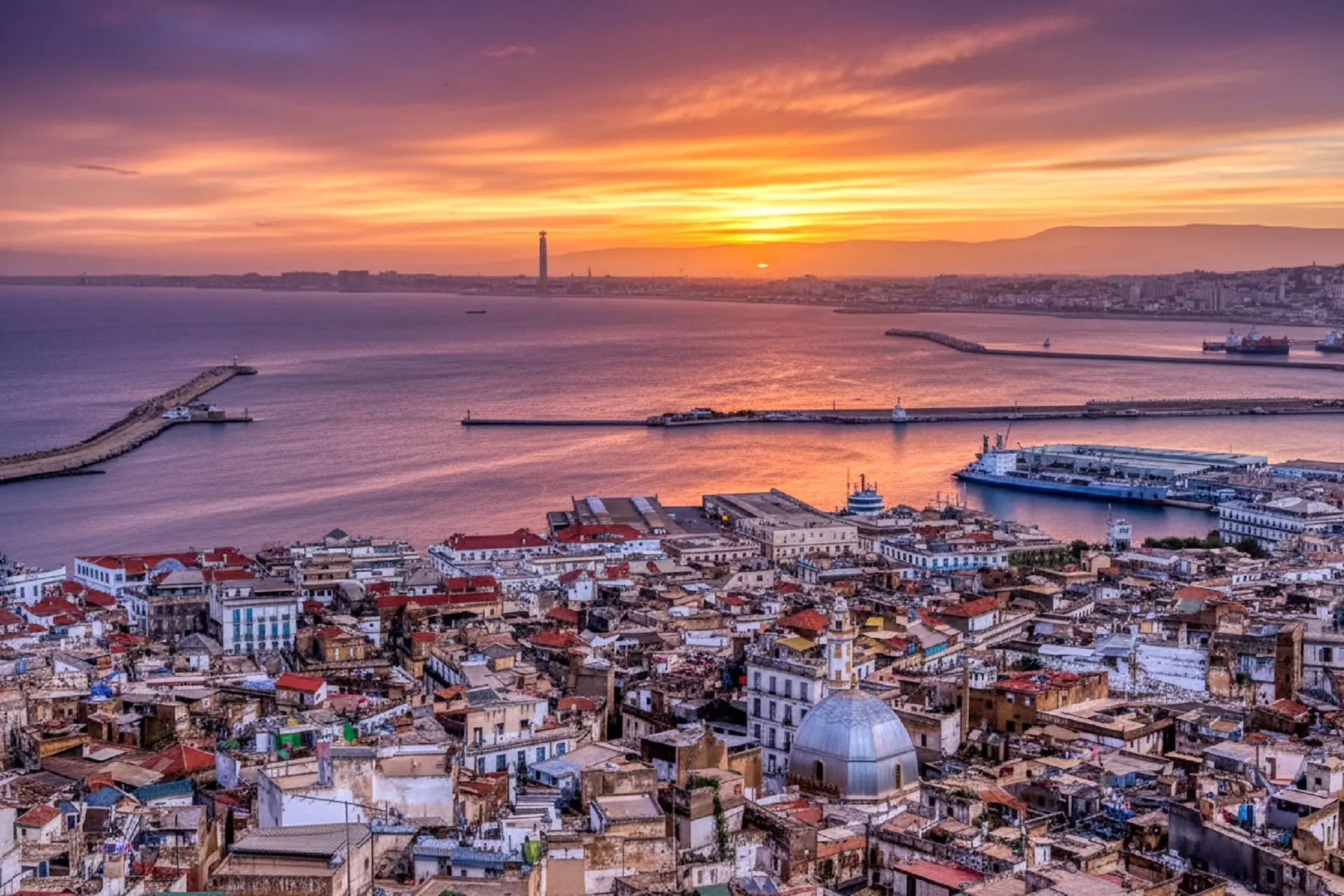
The “Heights of Algiers”—comprising Hydra, Ben Aknoun, El Biar and Bouzaréah—host embassies, ministerial offices and university campuses. From here, the Tell Atlas peaks form a backdrop, their winter snows rare in the city proper but visible across the plain. Algiers lies at two metres above sea level along the bay, rising to 407 metres at its highest point. Annual precipitation averages 600 millimetres, chiefly between October and April—comparable to coastal France rather than to North Africa’s interior. Snowfall remains exceptional; in 2012, records note 100 millimetres of snow after an eight-year hiatus.
Public architecture clusters in several quarters. Martyrs Square stands on the site of a former British consulate, flanked by government ministries. Nearby, the old Bibliothèque Nationale—once a Moorish palace erected in 1799–1800—sits beside a purpose-built modern library. Religious edifices range from the Roman Catholic basilica Notre Dame d’Afrique (constructed 1858–1872 in mixed Roman and Byzantine styles) to the Grand Mosque, whose origins predate Ottoman rule. The church of the Holy Trinity (1870) retains marble memorials to early British consuls and chronicles of Barbary piracy. Villa Abd-el-Tif, once the dey’s residence, later functioned as an artists’ retreat.
Monuments and museums contribute further layers. The Monument of the Martyrs (1982) commemorates the war of independence with three stylistically abstract palm leaves sheltering an eternal flame and statues of soldiers. The Bardo Museum houses mosaics and Roman sculptures uncovered across Algeria. The Grand Post Office (1910) evokes neo-Moorish design. Djamaa el Jedid and Djamaa el Kebir serve both religious and architectural heritage roles. Near the port, the Palais des Rais (1576) and Fort Penon (linked to the mainland by Khair-ad-Din Barbarossa in 1518) speak to the city’s strategic maritime past.
Cultural venues include the Algiers Opera House, the Mahieddine Bachtarzi National Theater and galleries within Riadh El-Feth. Collections at the National Museum of Fine Arts, the Museum of Antiquities and Islamic Art and the Museum of Miniatures reflect the city’s Ottoman, Andalusian and modern Algerian influences. The Central Military Museum adjoins the Martyrs Memorial park. Djamaa el Djazaïr, opened recently, ranks among the world’s largest mosques.
Algiers functions as an economic hub. Sonatrach, the national petroleum corporation, and Air Algérie maintain headquarters there. A stock exchange capitalized at sixty million euros supports financial activity; the city accounts for roughly one-fifth of national GDP, estimated at fifty-one billion US dollars in 2024. Cost of living indices place Algiers at the highest level in North Africa and within the top fifty worldwide.
Transport infrastructure comprises four beltways, an expanding tram network (since May 2011), the metro system (opened November 2011), and a system of 54 urban and suburban bus lines. The Houari Boumediene Airport lies twenty kilometres southwest, with a terminal managed by Aéroports de Paris since July 2006. Commuter rail links the suburbs via the national railway company (SNTF), and ferry services cross the bay.
Tourist accommodations range from large international chains—Hilton, El-Aurassi and El Djazair—to local hotels. Coastal resorts twenty kilometres west include Sidi Fredj, Palm Beach and Zéralda, offering beaches, restaurants and shops. The Jardin d’Essai (created 1832) spans eighty hectares with exotic flora. A water park, the country’s first, opened recently, though tourism development lags behind that of neighboring Morocco and Tunisia.
The city’s common appellation, Al-Bidha (“the white”), refers to the whitewashed façades of its dwellings, whether of Ottoman, Andalusian, colonial or local construction. From the Casbah’s carved wooden balconies to Art Deco apartment blocks, Algiers conveys a persistent interplay of two shores—Mediterranean and African—and two legacies—imperial and indigenous.
Algiers
(All Facts)
Algiers rises in a great white amphitheatre from the sea, its terraced buildings cascading down the hillside — earning the nickname “Alger la Blanche” (Algiers the White).
— Traveller’s DescriptionThe Casbah
Ancient medina and UNESCO World Heritage Site. A labyrinthine Ottoman-era hillside quarter with mosques, palaces, and traditional houses dating to the 16th century.
Alger-Centre
The modern downtown core along the bay. Features the Grande Poste (central post office), Martyrs Square, and the main commercial boulevard.
El Mouradia
Upscale hillside district housing the Presidential Palace, foreign embassies, and government ministries. Overlooks the bay with panoramic views.
Hydra
Leafy western suburb popular with the affluent middle class, international organisations, and expatriate communities. Home to many private schools.
Bab El Oued
Historic working-class district north of the Casbah, known for its vibrant street life and as a centre of resistance during the independence war.
Hussein Dey / Kouba
Eastern industrial and residential suburbs, home to major football clubs (MCA, USMA) and densely populated urban neighbourhoods.
| Port of Algiers | Largest port in Algeria; handles ~75% of national imports |
| Metro | 1 line (Line 1), 19 stations, opened 2011 — extensions underway |
| Tramway | Lines T1 & T2 serving eastern suburbs |
| Ring Road | Peripherique d’Alger — 38 km orbital motorway |
| University | University of Algiers (Est. 1909) — oldest in Algeria |
| Great Mosque | Djamaa el-Djazair — 3rd largest mosque in the world (opened 2019) |
| Share of National GDP | ~25–30% of Algeria’s total GDP |
| Key Sectors | Government & public admin, finance, trade, construction, services |
| Port Activity | Largest commercial port in Algeria; handles 30M+ tonnes/year |
| Banking HQ | Bank of Algeria, BNA, BEA, CPA all headquartered in Algiers |
| Industrial Zones | Rouiba (vehicles, electronics), Reghaïa, Dar El Beida |
| Stock Exchange | Bourse d’Alger (SGBV) — small but only Algerian exchange |
| Major Employers | Sonatrach HQ, Air Algerie HQ, Algerie Telecom HQ |
| Tourism Potential | Growing; Casbah, Ottoman palaces, Roman ruins at Tipasa nearby |
| UNESCO Heritage | The Casbah of Algiers (1992) |
| Iconic Landmark | Djamaa el-Djazair — world’s tallest minaret (265 m) |
| Famous Museum | Bardo National Museum of Prehistory & Ethnography |
| Football Clubs | MC Alger (MCA), USM Alger (USMA), NA Hussein Dey |
| Music Scene | Rai, Chaabi, Kabyle & Andalusian classical music |
| Cuisine | Couscous, Chakhchoukha, Rechta, Baklava, Makroud |
| Beaches | Sidi Fredj, Club des Pins, Zeralda — all west of the city |
| Famous Natives | Albert Camus (raised here), Zinedine Zidane (born here), Assia Djebar |
Why Algiers, Why Now?
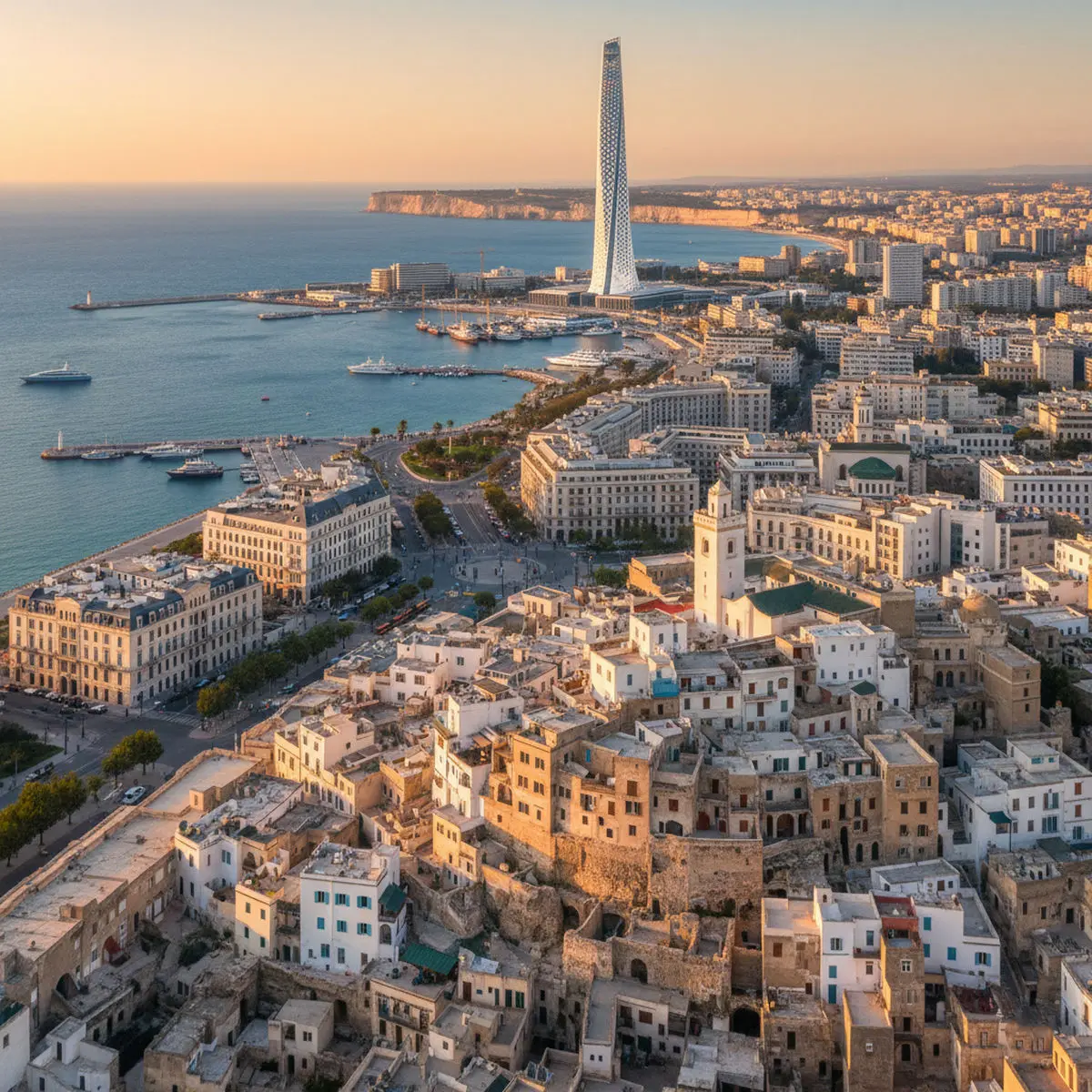
Modern Algiers bursts with contrasts and history. The city’s white-washed Ottoman Casbah – a labyrinth of alleys and mosques – crowns ancient hillside ruins, while 19th-century French boulevards sweep toward a blue Mediterranean bay. New skyline icons, like the Great Mosque of Algiers (Djamaa el Djazaïr) with its 265 m minaret (the world’s tallest), add a futuristic touch to a city steeped in layered heritage. Tourists are now discovering this blend of old and new: ornate Moorish palaces lie in shadow of modern plazas, and the limestone cliffs outside town hold Roman ruins at Tipaza. With Algeria aiming to quadruple its visitors by 2030, infrastructure is improving and guiding services are becoming available, making it a great moment to see Algiers at a turning point in its tourism boom.
Snapshot: Fast Facts for Travelers
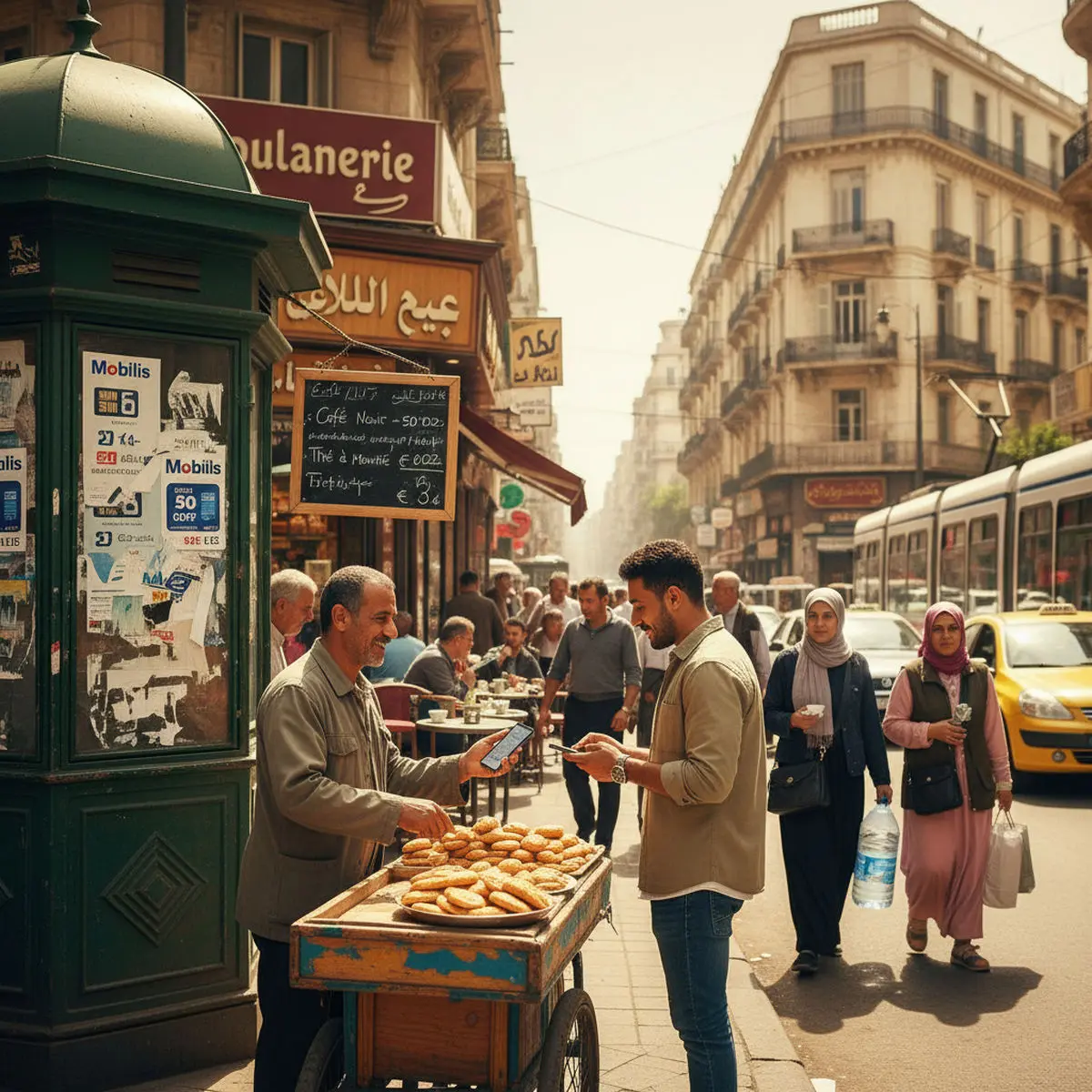
- Language: Modern Standard Arabic is official; Algerian Arabic and Berber dialects are common. French remains widely used in business, signage and menus (15 million people speak it). English is growing but still limited to younger or hospitality professionals. Basic French or Arabic phrases help a lot.
- Currency & Money: The dinar (DZD) is local currency. ATMs are common in the city center and major hotels (carry extra cash as backup); credit cards are not universally accepted. You must declare on exit any amount over 1,000 EUR and you cannot take Algerian dinars out of the country. Typical budgets: backpackers €30–50/day; mid-range around €70–120; top-end €150+. Tipping ~5–10% in restaurants (some add a service charge).
- Costs: Algiers is affordable by European standards. A taxi ride within town may be €2–5 (negotiate or use apps like Yassir/Heetch), a meal in a mid-range restaurant ~€8–15. Museum entries and public transport are very cheap (metro/tram ~50 DZD, around €0.30).
- Connectivity: Major providers (Mobilis, Djezzy, Ooredoo) sell SIM cards at the airport or city kiosks; data plans are inexpensive and 4G coverage is good in Algiers. Public Wi-Fi is rare outside hotels. Carry a phone with offline maps and translation apps.
- Practical: Electric outlets are Type C/F (230 V, 50 Hz). The country is on CET (UTC+1). Drinking tap water is chlorinated – many locals drink it, but cautious travelers often buy bottled. Dress modestly (shoulders/knees covered); women aren’t expected to wear a hijab but a headscarf is advised in rural/mosque areas. During Ramadan (dates vary each year), eating or drinking in public by day is frowned upon; plan ahead, as some restaurants close or serve only late-evening.
Best Time to Visit Algiers (Month by Month)

Algiers enjoys a Mediterranean climate. Spring (March–May) and Autumn (September–October) are the sweet spots: mild days (15–25 °C), blooming parks and fewer crowds. Summers (July–August) are very hot (often 30–35 °C), though sea breezes help; tourism dips but if you don’t mind heat, you’ll find deals on hotels. Winters (December–February) are cool and wet (rain in Jan/Feb, daytime ~10–15 °C); sightseeing is fine but check closures for New Year.
- Weather risks: Summer wildfires occasionally occur in hills around Algiers (notably 2021–2023), so monitor local news if visiting in July–August. Winter storms can cause floods – avoid low-lying areas after heavy rain. Rarely, mild earthquakes affect northern Algeria (none in Algiers in recent memory), so nothing to panic about on a city break.
- Seasonal notes: The cultural calendar can affect visits. If Ramadan falls on your trip, expect empty streets at midday, fewer open cafes and altered public hours. In spring (April/May) local festivals and national holidays can create festive crowds.
Safety Briefing: Practical, Current, and Nuanced
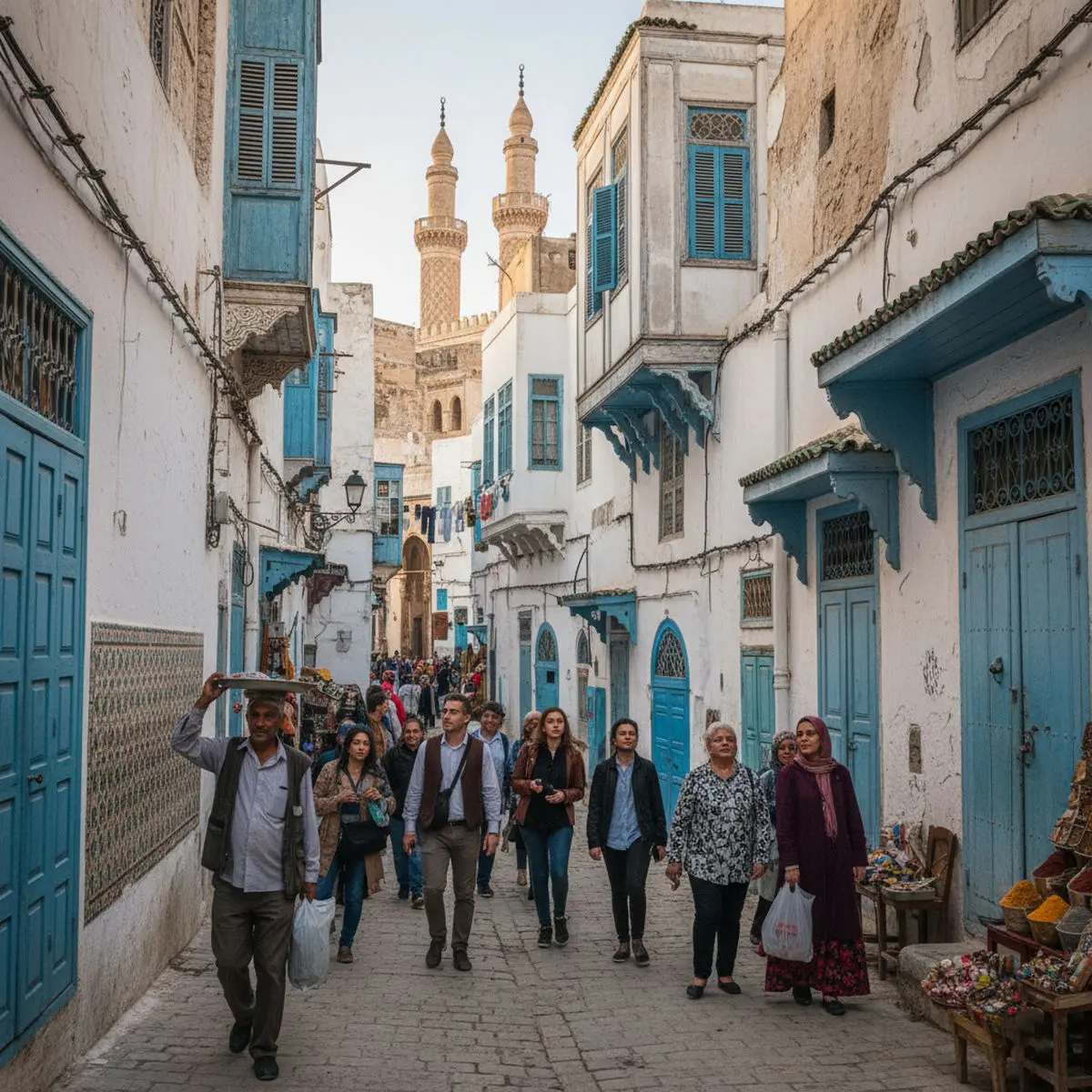
Algiers is generally safe by urban standards, but visitors should take sensible precautions. Major tourist areas (Casbah, downtown, malls) have a heavy police presence.
- Crime: Petty theft like pickpocketing can occur in crowded markets, so secure valuables. Don’t flash jewelry or large amounts of cash in public. Avoid isolated spots late at night (even downtown), and prefer reputable taxis or ride-hailing apps when traveling after dark.
- Travel advisories: The US State Department currently rates Algeria at Level 2 – Exercise Increased Caution. The UK FCDO similarly urges caution (no big bans, but advises against southern desert border zones). Note: This refers largely to remote border regions (Libya, Mali, etc.), which mainstream tourists avoid anyway. In Algiers city itself, stay alert but you needn’t be overly fearful. Always carry ID (a photocopy of your passport is fine) and note emergency numbers: Police 17, Ambulance/Fire 14, Tourist Police 1548, EU/International 112.
- Casbah safety: The old Casbah (medina) is fascinating but can be disorienting. Visit in daylight, and preferably with a local guide or in a group. Stick to main sights (Ketchaoua Mosque, Dar Aziza area, market alleys off Rue Bab Azoun). After dark the narrow lanes become very quiet; locals recommend avoiding them at night. Keep your camera and belongings secure in the Casbah, and do not wander into deserted side streets alone. Licensed guides will point out key spots safely, and many travelers say an organized stroll is best.
- Women traveling solo: Algerian society is conservative. As a female visitor, dressing modestly (covering arms and legs) cuts down unwelcome attention. In Algiers you will see women both in Western dress and in more traditional attire; blend in as you feel comfortable. English-speaking expatriates note that expat women face no unusual threats, but ordinary caution applies (e.g. don’t share personal details with strangers). Stick to populated cafes and taxis at night. Overall, Algiers is not off-limits, but like any city, solo women benefit from group tours or trusting female companions on evening outings.
- Local laws & customs: Respect Islam’s place in society – avoid photographing police, soldiers or official buildings (it’s forbidden). Do not photograph people, especially women, without permission. Public displays of affection are frowned on. Alcohol is legal only in bars or restaurants that have special licenses, and it is never consumed publicly. During Ramadan, public drinking or eating during daylight is culturally sensitive. Dress politely when visiting mosques: cover shoulders, arms, and legs (women should also cover hair with a scarf, men should wear long trousers).
- Emergencies: The city has hospitals and international clinics. Keep on hand numbers like your embassy or local doctor. In a medical emergency dial 14 (ambulance/fire) or 21-21 (international number may connect). The US Embassy (if relevant) is in Hydra district; British/French embassies are in El-Biar. The tourist police (1548) can often speak French/English if needed.
Visas & Entry Requirements
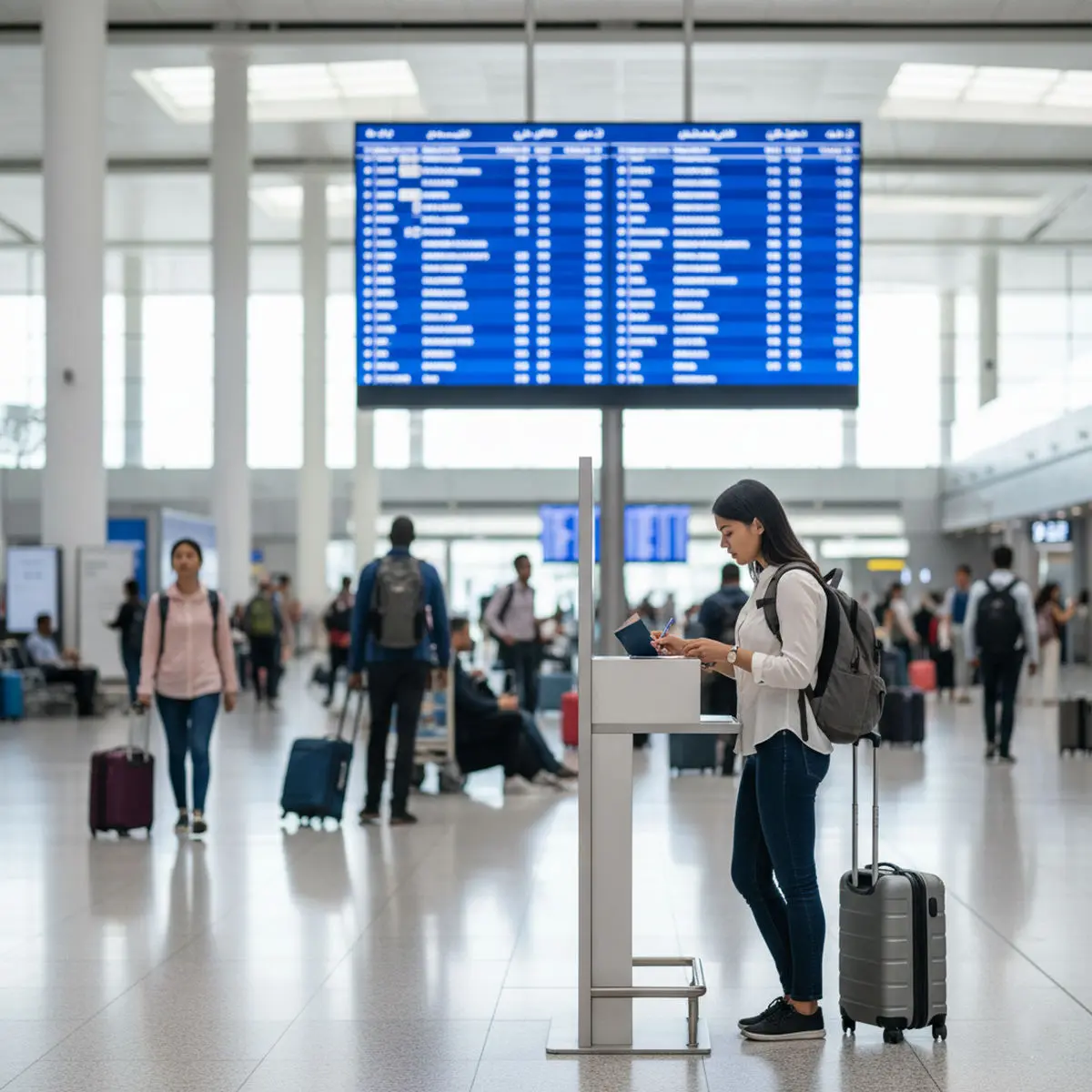
For most nationalities (including US, UK, EU, Canada, Australia), a visa is required in advance. Tourists must apply at an Algerian consulate or visa center, supplying passport photos, hotel bookings or invitation letters, and possibly health insurance proof. Note: Landlocked organized tours or cruise-arriving passengers can sometimes get a visa on arrival, but do not count on it – plan ahead.
Passports must be valid for at least six months beyond your entry date. In practice, applicants often need to show proof of accommodations or a government-issued invitation. Authorities can be strict: declare any valuable items (especially electronics) on entry, and never bring antiques or archaeological items. Algerian law severely punishes antiquity smuggling, so purchase only legally-sourced handicrafts. You must also declare cash totals exceeding 1,000 EUR (or the equivalent in DZD). Outbound customs will stamp your passport and do not allow carrying dinars out of Algeria.
Health-wise, no vaccinations are universally required, but proof of Yellow Fever immunization is needed if you come from an endemic country. There are no mandatory jabs otherwise, but routine ones (tetanus, hepatitis) are wise. Ensure travel insurance covers medical evacuation and car crashes; while Algiers is modern, roads can be busy.
Border control: Upon landing at Algiers airport (ALG), expect a fairly efficient yet thorough immigration check. Keep copies of your paperwork and accommodation info handy. Customs may ask about cameras or drones (permit required for drones). Agricultural items (plants, foods) must be declared.
Getting There: Flights & Ferries
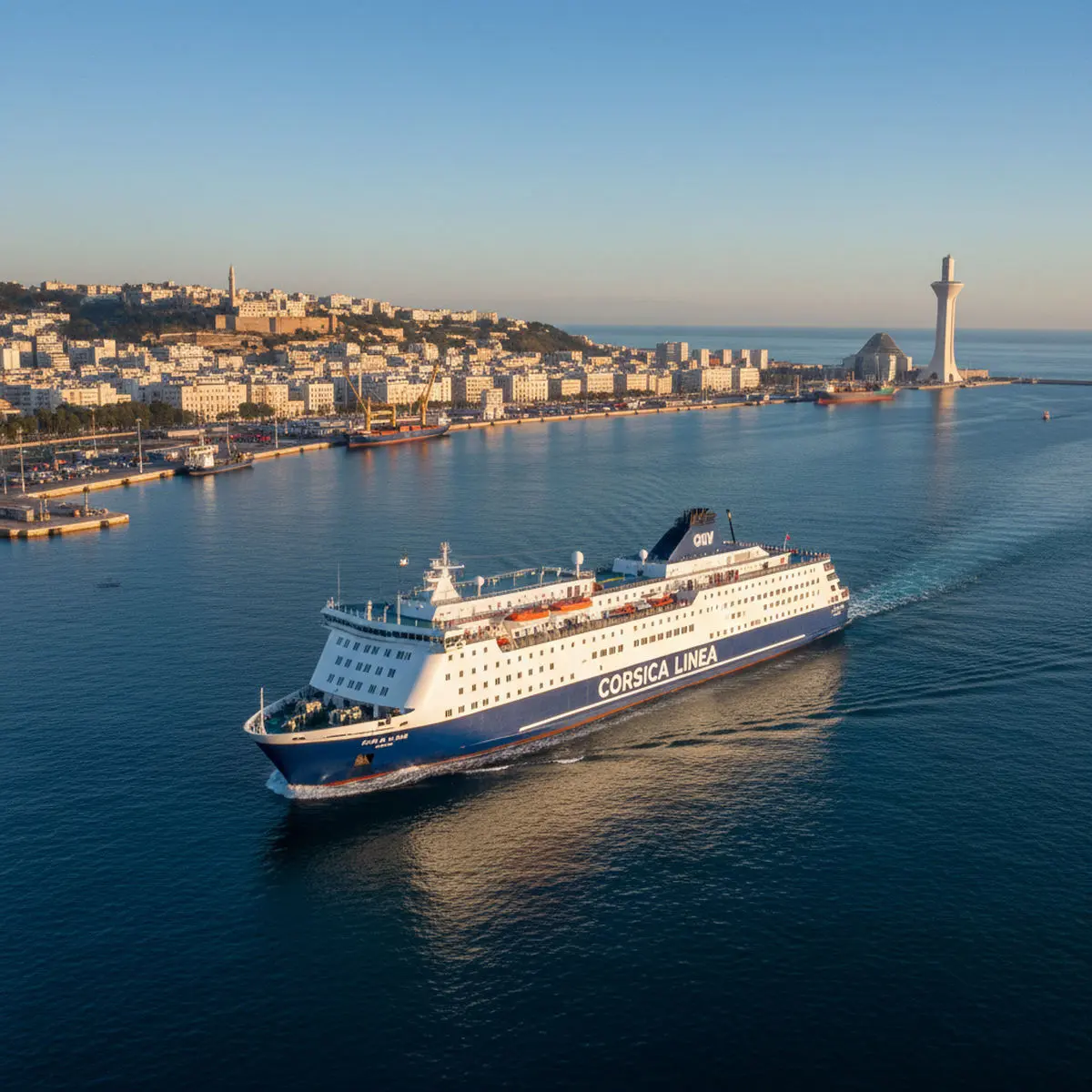
- By air: Houari Boumediene International Airport (ALG) east of the city is the main gateway. Major international carriers connect Algiers with Europe and the Middle East. Direct flights run from Paris (Air France, Air Algérie), Istanbul (Turkish Airlines), Frankfurt (Lufthansa), Madrid (Iberia seasonal), as well as from Casablanca, Cairo, and other regional hubs. There are now a few flights from the Gulf and Africa (e.g. Emirates, Royal Air Maroc). No nonstop flights from the Americas; travelers typically connect via Europe or the Middle East.
- By sea: Algiers has ferry links across the Mediterranean. Corsica Linea and GNV sail from Marseille to Algiers (about 22 h). Spanish operators run services between Almería, Spain and Ghazaouet (western Algeria, ~10 h) and from Barcelona/Valencia to Oran or Algiers (tours can connect on land). Ferry timetables vary seasonally (more sailings in summer). The port is just west of downtown Algiers, and ferries arrive at “Alger – Port” terminal (walking or taxi from city center).
For intrepid travelers, ferries allow taking a car across or enjoying the scenic crossing from Sicily/Spain. Once at the port, taxis and buses serve the city.
From the Airport to the City

Getting from ALG (airport code) to downtown is straightforward:
- Train: A suburban rail shuttle runs hourly from the airport station (steps from arrivals) to Agha station in central Algiers (near the Grande Poste). The trip takes about 20 minutes and costs roughly 50–100 DZD (under €1). (Check if service starts as early as 5:30 AM and ends around 9 PM.) The train stops near downtown landmarks and can be the fastest, cheapest way if you don’t have heavy bags.
- Airport bus: ETUSA bus line 100 (formerly 19A) departs frequently from outside the terminal. It runs to Place Audin (downtown core) in ~30 minutes for 100 DZD. Service starts early morning and goes until late evening. It’s very cheap, but buses can be crowded. Look for “Noureddin Ali Lotfi” or ask staff.
- Taxi/Ride-hail: Official taxis wait outside arrivals (color varies). A ride to the city center (Grande Poste or waterfront) is ~2500–3500 DZD one-way (in the midday), though rates are negotiable or metered on apps. After midnight, fares rise (count on ~5000 DZD). Use caution: only board official yellow cabs, ideally via an agent inside the terminal that prints your destination and fare. Alternatively, download the Yassir or Heetch app (Algerian equivalents of Uber) and book by phone; the driver will meet you curbside.
- Shuttle/Private transfer: Some hotels offer paid transfers. Private shuttles can be booked in advance (~€15–20), useful for groups or if arriving very late.
Plan extra time for baggage and immigration lines. Mobile signal at ALG is good enough to log into a taxi app. Always confirm the price or meter before going. Even if drivers say “open meter,” check it’s running.
Getting Around Algiers
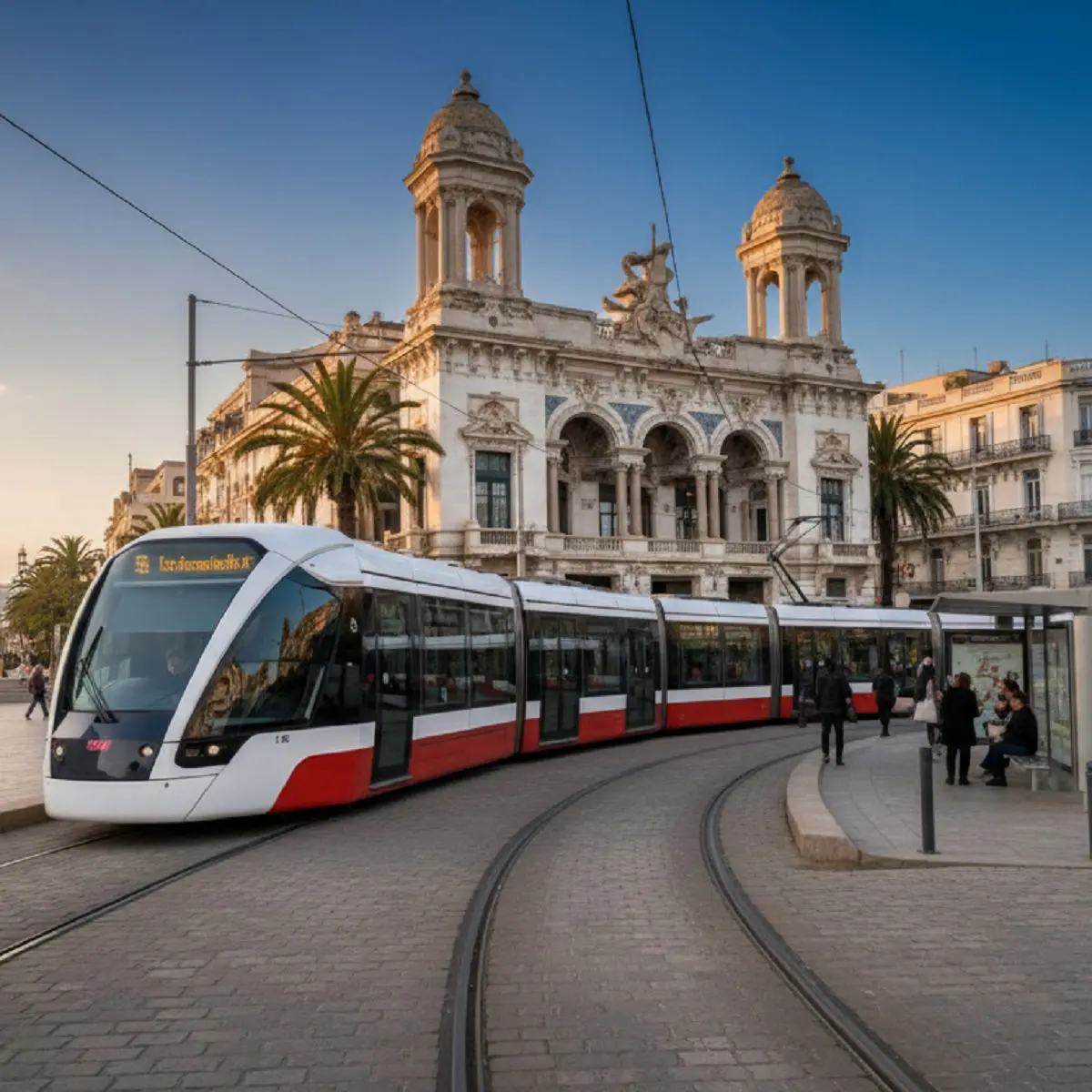
Algiers has a modern public transport network complemented by taxis and on-foot sightseeing:
- Metro: The single Metro Line 1 runs roughly east–west. It connects the suburb of Haï el Badr (north-east) through downtown (stations: Place des Martyrs, Grande Poste, etc.) out to El Harrach east. This hits key spots like the Jardin d’Essai (Botanical Garden) and Hamma area. Trains run approximately 5 AM–midnight (possibly shorter hours on weekends). A one-way ticket is ~80 DZD (€0.50). Use it to bypass traffic, especially between the airport and center (change at Place du 1er Mai).
- Tram: One Tram line (T1) arcs from Bordj El Kiffan (north-east coast) through the city (stopping at Place des Martyrs) to El Harrach. It runs similarly 05:00–24:00 and costs 40–50 DZD per ride. It’s handy along the north Bay (Corniche), near the botanical gardens, and eastern neighborhoods.
- Buses: The ETUSA bus network covers Algiers, but routes can be confusing for newcomers. If you have an Algerian SIM, apps like Dzair Transport or AlloBus show local schedules. Tourist tip: buses are very cheap (<50 DZD) but can get stuck in traffic; no need for most short hops, since the metro and tram cover major areas.
- Taxis & Ride-hailing: Taxis are plentiful in Algiers. Yellow or white cabs often do not run meters openly, so passengers should negotiate or insist on using the meter if visible. A short downtown ride might be 300–600 DZD. For ease and safety, use apps: Yassir is the most popular (governs both taxis and private cars), and Heetch is also widely used. They charge by distance with credit/debit card payment. In popular areas, wait time is usually just a few minutes.
- Walking: Parts of central Algiers (e.g. between Place des Martyrs, Grande Poste, and Jardin d’Essai) are quite walkable on wide boulevards and pleasant Corniche paths. In the Casbah, walking is the only way through its alleys, but stick to daylight and possibly guided routes.
- Cable Cars: Algiers has a short cable-car system that links the city center (Martyrs Monument area) with a hilltop near the botanical gardens. It was reopened in recent years. It’s not essential, but a fun ride with city views (tickets ~100 DZD). Service can be sporadic, so check if it’s running.
Always carry a transit card or small change. Trains and trams allow contactless recharge, but cash (DZD) is still king at bus/tram booths. Controllers occasionally check tickets, so do not ride without one. Traffic can be heavy, so public transit often saves time.
Where to Stay in Algiers (Best Areas)

Algiers’s neighborhoods each have a unique character:
- Alger Centre (Downtown): The historic heart: buzzing streets like Didouche Mourad, elegant Place des Martyrs and waterfront Quay. Staying here (at places like Hotel El Aurassi or older classics like the former Saint George hotel) means easy access to major sights (Grande Poste, Casbah, Notre-Dame d’Afrique ferry). Mid-range hotels and budget inns cluster near Jardin d’Essai or by the Grande Poste. It’s lively day and night, with many cafes and restaurants, though streets can be busy and hilly. Ideal for first-timers.
- Hamma / Botanic Garden Area: Just east of downtown lies the vast Jardin d’Essai (Botanical Garden). Upscale hotels (Sofitel Hamma Garden) and new complexes (Hyatt) line Avenue du 1er Novembre. Quiet evenings in garden surroundings, plus quick tram/metro rides to central areas. Perfect if you want city sights by day and green calm by night.
- Hydra / El Biar (Upper City): On the hills above Algiers, this residential quarter hosts many embassies and villas. You’ll find international hotels (the new Hilton Algiers Hotel, (re)opened 2024, and Radisson Blu), plus mid-range properties. The vibe is leafy, secure, with city views. The coastline is a bus ride away, but taxis are plentiful. Good for peace and a taste of expat life.
- Bab Ezzouar (Airport Zone): About 15 km east of downtown, near the University and business park. This is where chains like Marriott, Hilton Bab Ezzouar, Ramada, and new Ibis hotels are found – all modern and airport-accessible. It’s less about local character and more about convenience and standardized comfort. This area suits business travelers or those with late/early flights. A taxi to the city center costs under 3,000 DZD.
- Casbah/Port Vicinity: While the Casbah itself has few hotels, the port area beneath offers lodgings like the cosy Afric Hotel or guesthouses. Nights here can be noisy, but you’re just steps from Bastion 23, Ketchaoua Mosque and harbor cafes. It’s adventurous and authentic, but not as polished as downtown or Hydra. Expect steep alleys and simpler amenities.
Accommodation types: Algiers has several international luxury chains (Hilton, Marriott, Sofitel, Sheraton, Radisson, Ibis, etc.) alongside local hotels. Boutique riads (guesthouse-style) are rare but a couple exist in the Casbah or scenic spots. Airbnb has some apartments in central districts if you prefer self-catering. For families, hotels near Jardin d’Essai or Club Des Pins (beach resort outside town) offer pools and activities.
Wherever you stay, prioritize security. Most areas recommended here are relatively safe; however, double-check online reviews for recent guests’ experiences. Book through major platforms or reputable local agencies to avoid scams.
A lively street stall in the Casbah, with traditional tea pots on display, and the narrow, stepped alleys of the old city winding away. The historic Casbah is on UNESCO’s World Heritage list and is a highlight for visitors.
Top 20 Things to Do in Algiers
The Casbah of Algiers (UNESCO World Heritage)

Climbing the hill of Algiers, the Casbah is a honeycomb of old palaces, mosques, and markets. Wander its maze of steep lanes and grand courtyard houses. Key spots include Ketchaoua Mosque at the foot of the Casbah, the ornate Dar Aziza palace (archaeology center), and Dar Mustapha Pasha’s twin courtyards. Photography is limited; no snap of military or police, please. Entry is free, but a guide can enrich the experience with anecdotes. Best explored in daytime; start from Place des Martyrs and ascend past souvenir shops and black basalt fountains.
Notre-Dame d’Afrique (Our Lady of Africa)

Perched on a cliff above the sea, this 19th-century basilica offers sweeping city and bay views. The exterior is neo-Byzantine with colorful tiling and two statues of the Virgin protecting the bay. Inside, a vaulted chapel and crypt commemorate World War I soldiers. Visitors are welcome (check opening hours, often morning to midday). Walk the short path from Rue Michelet up to the church; enjoy the panoramic terrace where locals fly kites and watch sunset. Note: modest attire required and silence is observed in the church.
Djamaa el Djazaïr (Great Mosque of Algiers)

Opened in 2020 and fully inaugurated 2024, this is one of the newest wonders of Algiers. Its immense prayer hall (capacity ~120,000) and a garden complex rival Mecca’s Grand Mosque in size. The 265 m minaret has an observation deck and a glass-floored balcony, but tourist access may be restricted – check locally if special tours or visits are offered. At ground level, non-Muslims can admire the elegant courtyard and see some of the fountains. The mosque sits on a peninsula (Reghaïa) above the coast, east of downtown; from certain angles downtown, you can see its gleaming box-like roof rising behind the Casbah. Even viewing it from outside (especially at night, when lit) is memorable.
Maqam Echahid & National Mujahideen Museum

This is Algiers’s grand monument to the Algerian War of Independence. Three stylized palm-frond structures radiate upward from a star-shaped base. A walkway leads into a marble-walled interior (the National Museum of Martyrs) where exhibits recount the liberation struggle. The monument stands on a hill (Bouzaréah) overlooking the city—climb up its terrace for commanding views over the bay and city rooftops. The surrounding memorial park often has locals picnicking or enjoying evening lights. Entrance is free, though the museum may have separate hours or a ticket.
Jardin d’Essai du Hamma (Hamma Botanical Garden)

One of Africa’s oldest botanical gardens (founded 1832), a 32-hectare oasis in the city. It’s an Algiers highlight on a hot day. Wander its winding lanes through verdant landscapes: eucalyptus trees, camellias, cacti, flowering shrubs and orchids. There are shady benches, small lakes with goldfish, and even a bird aviary and frog pond. The main entrance is on Boulevard de la République; a Metro stop (“Jardin d’Essai”) serves it. Admission is very cheap (a few dinars). Plan a couple of hours to stroll; locals come here for exercise and family picnics.
Grande Poste d’Alger (The Great Post Office)
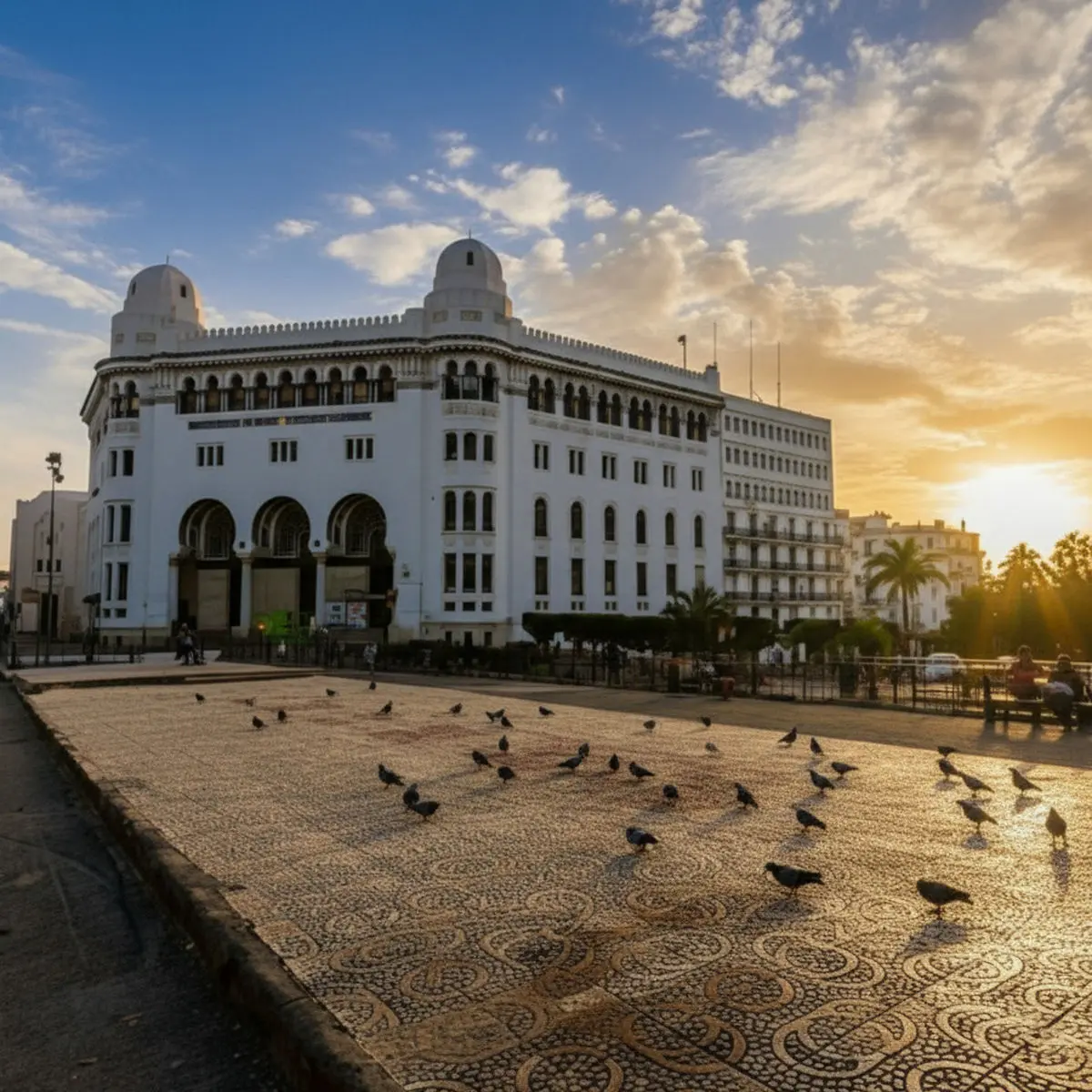
A striking neo-Moorish building dating to 1910, located at the edge of the old town. Its white facade is carved with lanterns, zellij tiles, and horseshoe arches – a postcard image of colonial Algeria. Inside, it’s still a working post office: the golden counters and turquoise tiles are photogenic, though ask permission first. Outside, at Place du Gouvernement, enjoy the fountains and police museum across the square. The Grande Poste is also a central point for trams/metro. It’s often busy, so step in for a minute of air-conditioning or a quick snack at a nearby café.
Bastion 23 / Palais des Rais (Seaside Ottoman Palace)
A short walk from the Port toward the old French quarter (Close to Casbah’s lower end), Bastion 23 is a restored 16th-century palace-fort. The high yellow walls and entrance arch are distinct on the shoreline. Inside, wander cobbled courtyards and gardens shaded by palm trees. There is a small cafe/tea-house, and on some days artisans sell crafts in stalls. Views of the sea and city from the terrace are lovely, especially at sunset. (Look across the water at the Basilica’s clifftop backdrop.)
Ketchaoua Mosque & Djamaa el Kebir
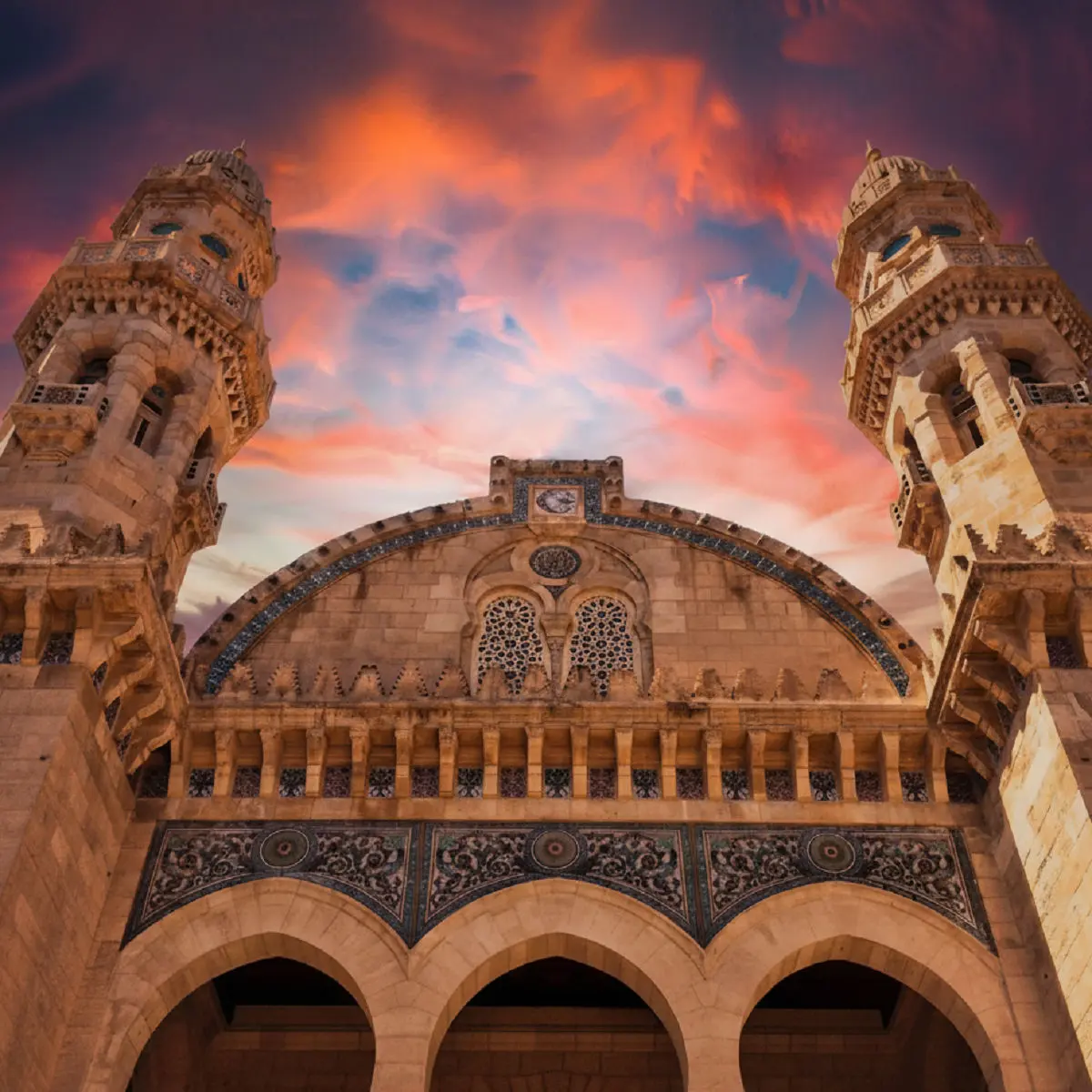
At the heart of the Casbah stands Ketchaoua Mosque, a fine Moorish structure once converted into a cathedral by the French (1838–1962). Its twin octagonal minarets and domes are beautiful from outside. (Entry is restricted; check if open for visitors on Friday afternoons). Nearby is the Djamaa el Kebir, Algiers’s oldest mosque (built 11th century, rebuilt 1660). On Place Emir Abdelkader, its green-tiled roof and palette of orange and turquoise draw the eye. Both are quiet spots of prayer; photograph respectfully from outside.
Dar Aziza and Dar Mustapha Pasha (Ottoman Palaces)

Hidden in the Casbah’s lanes, Dar Aziza (named for an Ottoman princess) and Dar Mustapha Pasha are two ornate 16–18th century townhouses. Their carved cedar wood ceilings, stucco walls and inner courtyards are representative of Algerian Ottoman elite homes. Today they house government offices and are not generally open. However, you can peek through the wooden doors or windows to glimpse their architecture: intricate lattice screens, marble fountains and Andalusian arches. Look for ornate tilework and calligraphy; it’s like stepping back centuries, yet you’ll likely have the street all to yourself.
National Museum of Antiquities & Islamic Art (Bardo)

This museum complex (often just called “the Bardo”) in a former 19th-century palace holds archaeological treasures from Algeria’s entire history. Collections include prehistoric tools, Punic and Roman mosaics from Tipaza and Djemila, and medieval Islamic art. The courtyard alone is photogenic: see the massive 3rd C Roman mosaic of a banquet in its entrance. If time is short, focus on the Roman and Vandal sections (marble pieces, busts) and the eclectic “Ethnography” hall upstairs. Closed Mondays; check reopening hours as curators may rotate exhibits.
National Museum of Fine Arts (Hamma)

One of Africa’s largest art museums, set amid the Hamma Botanical Garden. Opened 1930, it houses an impressive collection of Algerian and French paintings and sculptures. The grand entrance hall alone boasts murals and portraits of local leaders. On display are works from colonial-era Orientalist painters (Eugène Delacroix’s school, others) and famous Algerian artists (for example, paintings by M’hamed Issiakhem). Visiting here gives insight into how art in Algeria bridges European and local traditions. The museum’s gardens are lovely too; linger by the pond if you have more time.
Museum of Modern Art of Algiers (MaMa)

Known as MaMa, this circular contemporary art museum reopened in 2023 after renovation. It houses over 8,000 works of modern and contemporary art by Algerian and international artists (a surprise from the 1900s onward). Even if exhibits vary, the architecture is striking: a white saucer-shaped building with a reflecting pool. Check if any special shows are on; if not, the lobby often displays artistically arranged objects. Nearby on Boulevard Frantz Fanon you’ll also find small galleries showcasing local avant-garde art.
El Kettar Cemetery (Jewish Cemetery & Modern Burial Site)

El Kettar is a hillside Muslim cemetery (near downtown) known for elaborate graves of Algeria’s intellectuals and leaders (Emir Khaled, Bachir Abdesselam, others). Walk through the olive groves and terraced mausoleums, admiring the Arabic calligraphy on tombs. The newer Jewish cemetery (closed now) is just below – a reminder of Algiers’s once-large Jewish community. It’s a peaceful spot with fresh air and sweeping vistas, especially dramatic at sunset. As a visitor, dress neatly, move quietly, and you’ll find it a poignant urban stroll.
Best Viewpoints & Photo Spots
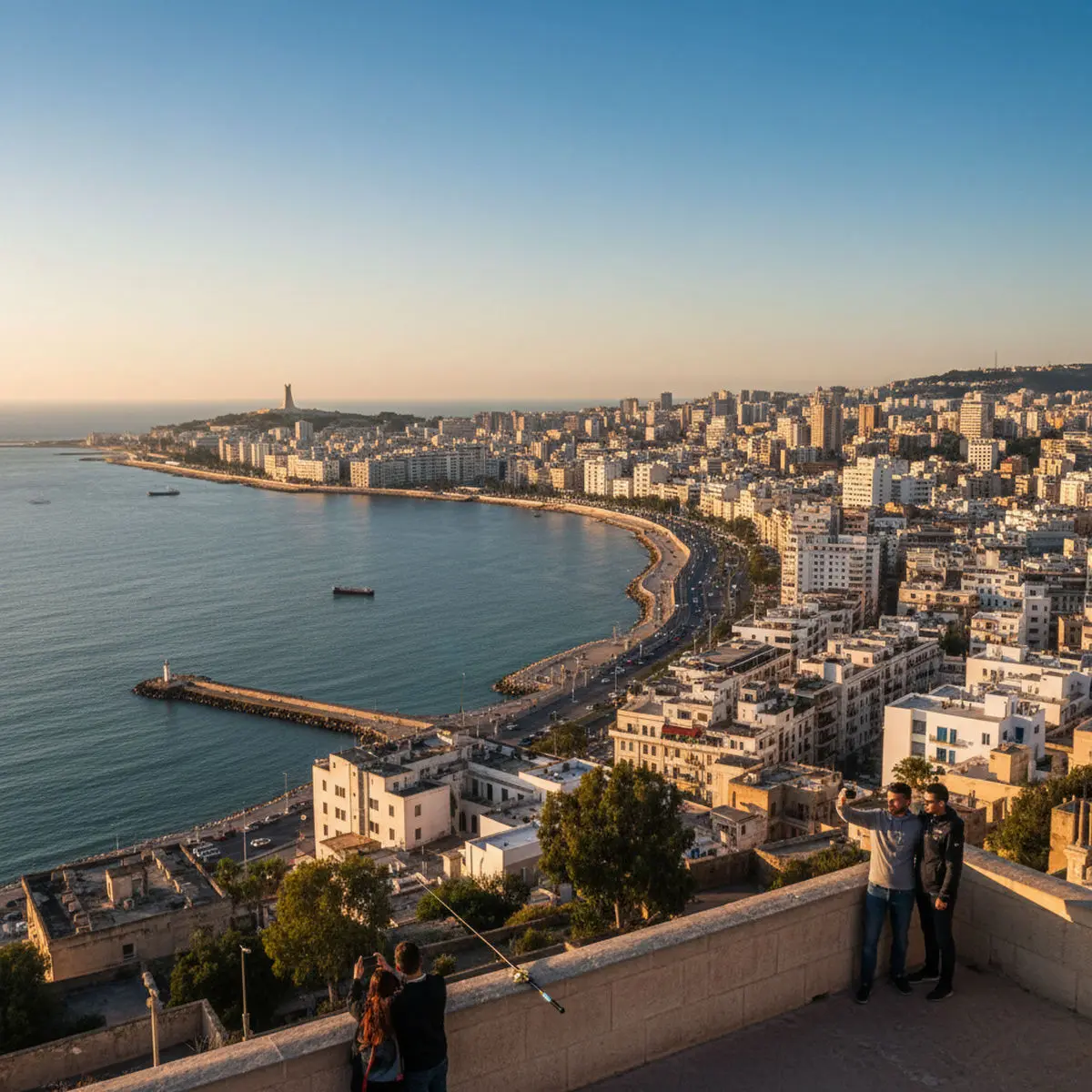
- Corniche: The seaside road facing west offers endless photo ops of the bay, Notre-Dame Basilica silhouette, and modern skyline. Early morning fishermen at the jetty can be a charming shot.
- Martyrs Memorial Plateau: At Maqam Echahid you see the whole city sprawl below and the bay beyond.
- Jardin d’Essai fountain: Its Moorish fountain and lush backdrop are a popular Instagram corner.
- Kouba (Teleferique exit): Hop the cable car to the Téléphérique’s upper station (near Ketchaoua) – the view down to the waterfront and Casbah is stunning.
- Notre-Dame terrace: The overlook by the basilica is famous (often called “pier of Algiers”) for panoramic photos of the city stretching out.
Pack a camera or smartphone – the contrasts in Algiers (narrow alley vs vast sea) make for striking images.
The Casbah, Decoded: Respectful Exploration
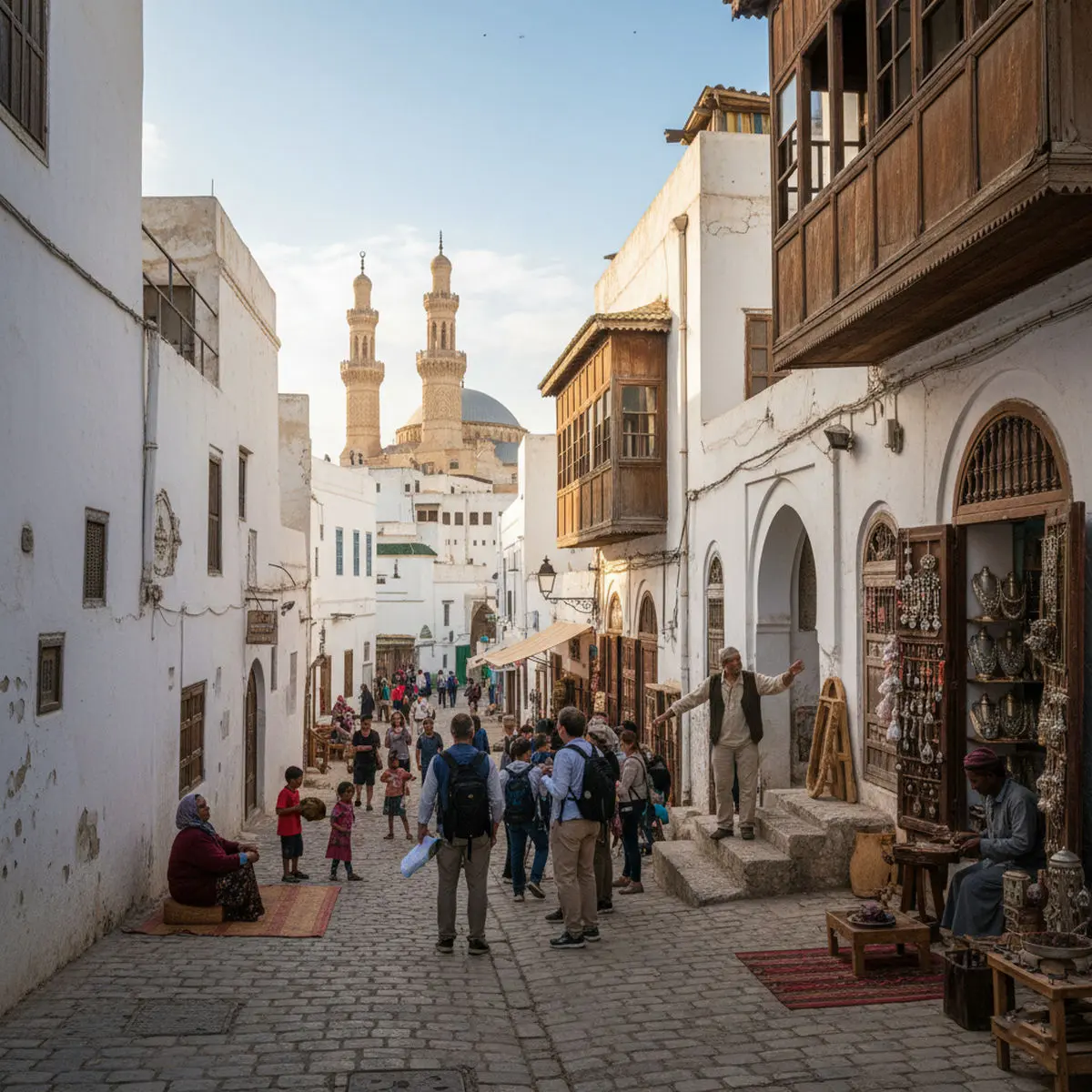
The Casbah deserves its own chapter. This UNESCO medina is best tackled wisely. A guided tour (often 2–4 hours) can be worth it: guides point out hidden carvings and explain family histories tied to houses. They also keep you oriented and safe. If you go solo, start from Rue Bab Azoun or near Ketchaoua Mosque, and head uphill.
Etiquette: Inside private homes (Dar Aziza, etc.) which are now offices, peek but do not enter. Do not sit on raised doorsteps. Many elders still live here; always ask permission before taking a photo of people. Respect prayer times near mosques. In souks, you may haggle on rugs or antiques, but bargaining over tea and odds is not common. If invited for tea by a friendly local, accept the gesture gently – they’re proud to share hospitality, but drink lightly to be polite (tea or juice).
Guided vs. Solo: Guided Casbah walks are available through tourist offices or local guides (verify credentials). These ensure you won’t get lost in the labyrinthine alleys and you’ll hear fascinating stories (about kings, independence fighters and the architecture). Go-it-alone is possible but carry a local map or GPS; cell service is spotty in some corners.
Safety in the Casbah: By day, it’s a lively community space (children play in courtyards). Keep valuables secure – a bag slung in front is safer on crowds stairs. At night, it becomes dim; it’s best to head back to well-lit main boulevards. Always remember your approach route and an obvious landmark to exit.
Casbah highlights include: – Ketchaoua Mosque: Ornate twin minarets and Catalan columns (from its cathedral days). View at the plaza but enter only if it’s open to tourists.
– Dar Aziza: Seek out the off-white facade of this palace on Rue Souika. Once inside is a stunning blue-tiled courtyard (now protected).
– Dar Mustapha Pasha: A stately mansion (near Bab el Oued) with grand arches. The courtyard garden (if open) has fountains and fish ponds.
– Souks: Near Place du Government and Rue Bab Azoun, buy Algerian silver filigree jewelry, carpets, or olive wood carvings. Tip: haggle politely, and check for quality. Avoid random antiques sellers (these can be illegal replicas).
The Casbah was heavily damaged in past decades; supporting it by hiring guides or buying crafts helps. Above all, listen to local guides and observe the rhythms of life there – beyond the guidebooks, the Casbah’s vibrant soul is in its people.
Museums & Galleries: How to Prioritize
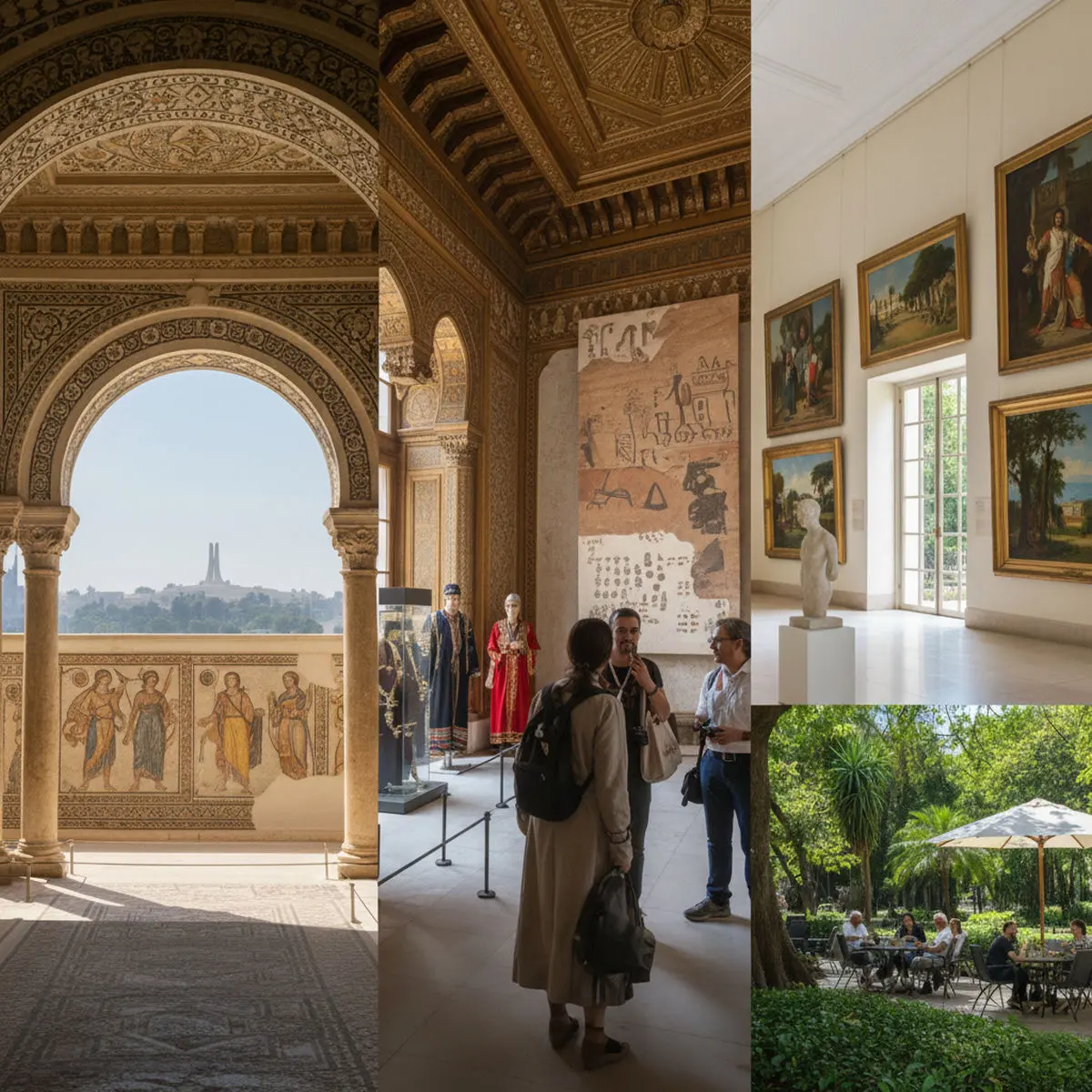
Algiers is rich in museums – here’s a quick guide:
- National Museum of Antiquities & Islamic Art (Bardo): Covers prehistory to Ottoman eras. Allocate an hour for Roman mosaics and medieval galleries. It’s a short walk from the Martyrs Memorial plateau.
- Bardo National Museum: Despite the similar name, this is separate (a colonial palace in Casbah). It has ethnography and some antiquities. Check exhibitions on Kabyle culture and ancient rock art.
- National Museum of Fine Arts (Hamma Gardens): If you appreciate painting and sculpture, set aside 1–2 hours. Key works: Orientalist landscapes, Algerian 20th-century art (Issiakhem, Khadda), plus decorative arts in the side rooms. Admission is low and the grounds are peaceful; the adjacent cafes are nice.
- Museum of Modern & Contemporary Art (MaMa): Openings of exhibitions may not match your schedule, but if it’s open, see it (or at least the lobby gallery). The building itself is worth a visit.
- Local cultural centers: Check if the Palais de la Culture (Main Cultural Center) or US cultural center have any exhibits or performances. Often they host photography or small shows.
Combine visits: For example, pair the Fine Arts Museum with the Jardin d’Essai (same area). Or do the Museums of the Casbah (Bardo and Antiquities) in one go. Many museums open ~9 AM–4 PM, closed Mon/Tues – verify current hours. Most are cheap (under 500 DZD). English signage is minimal, so guidebooks or audioguides help.
Food & Drink: What to Eat and Where

Algerian cuisine is hearty and flavorful. Key dishes to try:
- Couscous: Steamed semolina topped with vegetables and lamb or chicken broth. Often Friday lunch fare.
- Chorba Frik: A fragrant soup with green wheat, tomatoes and lamb, slow-cooked with herbs (common Ramadan starter).
- Tajines: Not the Moroccan pot, but Algerian stews of lamb or beef with prunes or olives. Ask for “derris” (tagine in local patois).
- Bourek: Crispy phyllo rolls filled with meat, cheese or potato. Great as street snack or breakfast.
- Mhadjeb/Rechta: Flatbread stuffed with spicy tomato and onion, or chop thin pasta sheets (rechta) with chicken broth.
- Kebab: Skewered and grilled meats, often served with bread and salad.
- Pastilla: A sweet-savory pie of chicken, almonds and cinnamon, covered in sugar (found in some cafés).
- Coffee & Tea: Algerians love their strong mint tea (“Atay”) and rich Turkish coffee. A cherished tradition is to sip tea with dates or pastries at a café; don’t skip it.
Where to eat: – Downtown squares (Place du Gouvernement, corner of Didouche Mourad) have cafes serving pizza and sandwiches. – For traditional cuisine, try restaurant clusters near the Grande Poste or Bastion 23 (Menzeh district) – look for spots filled with families at dinner. – The new shopping malls (e.g. Centre Commercial Bab Ezzouar) have international food courts. – In the Casbah area, small cafés and patisseries offer pastries like makrout (semolina cakes) and Algerian-style pizza slices. – The port area near Bastion 23 has seafood grills and club med-style restaurants (especially at sunset).
Alcohol: Available only in hotels or special bars. (There’s no wine shop on a street corner.) If you want beer or wine, your best bet is a major hotel bar or possibly some upscale restaurants. Do not drink in public or street.
Tips: Water from taps is generally chlorinated and drinkable in Algiers; still, bottled is safer if you have a sensitive stomach. Ice in drinks is usually from filtered water. Tipping 5–10% in restaurants is appreciated but not mandatory.
Nightlife, Cafés & Cultural Evenings

Algiers isn’t a wild party town, but evenings have charm. After dusk:
- Cafés and Patisseries: Central nightlife means simple café culture. Grande Poste area and Champs-Élysées (Avenue Ben M’hidi) fill with people sipping mint tea or coffee at plastic tables, smoking chicha (hookah). Try traditional sweets like baklava, fresh choux or Tunisian almond pastries. Late-night snack kiosks also serve merguez or sandwiches.
- Seaside Corniche: Evenings, families and teens stroll along the bay road. Ferris wheels and vendors light up sections like Sidi Fredj or near Maqam Echahid. Walking the glittering waterway is relaxing.
- Music and culture: The city hosts live Chaâbi music (Algerian folk-pop) at certain clubs; check local event listings or ask hotel staff. The Algeria Opera House and small theaters (on Belouizdad street or Tizi Ouzou line) have occasional plays and concerts. If you find a café or hotel lounge with live Andalusian or raï music, it’s a memorable taste of local culture.
- Bars: High-end hotels like El Aurassi, El Djazair, Sheraton Club des Pins have hotel bars. They attract a mix of businesspeople and expats. Dress code is smart-casual. The ambiance is civilized: expect lounge music and evening drinks only.
Solo women should stick to groups in nightlife spots. The city quiets down by midnight (especially outside hotels), so taxis or app rides are advised after late shows.
Shopping & Souvenirs
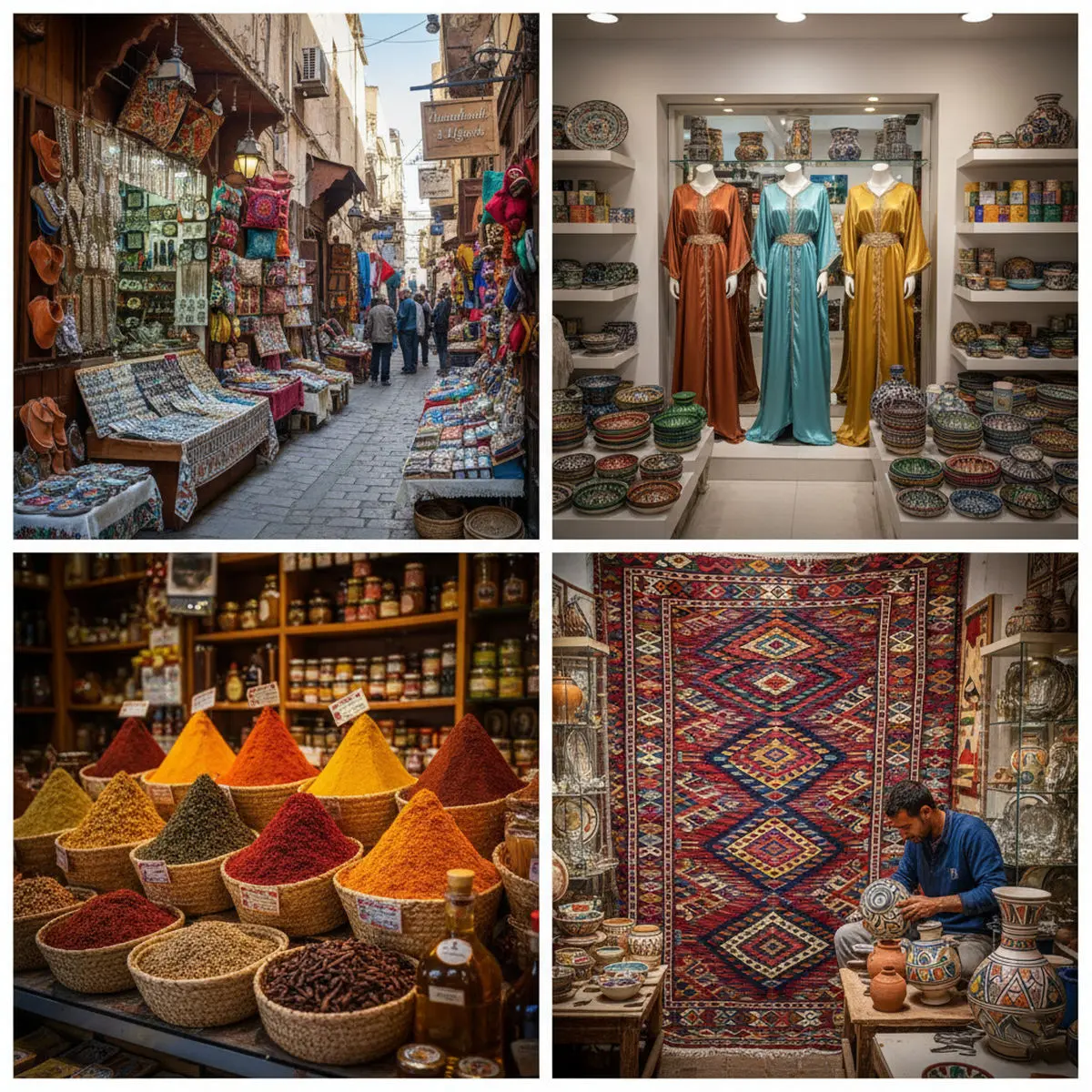
Algiers offers a trove of traditional crafts. Best places:
- Casbah Markets: In the winding alleys (near Bab Azoun or Rue Didouche Mourad side streets), find silver filigree jewelry, leather babouches (soft slippers), embroidered pillows, and mosaic tiles. Don’t buy carved antiques in the medina – the police may ask for provenance. Instead, look for stalls selling new crafts, marked “Handmade in Algeria.”
- Didouche Mourad Street: This main shopping drag has fashion boutiques and perfumeries. On side streets like Rue Hassiba Ben Bouali, small galleries sell pottery, paintings and modern Algerian handicrafts (the cloisonné bowls and red-painted tiles are iconic).
- Hydra & El Biar: Upscale shops with Algerian designers – if you want chic kaftans, silk shawls or high-end teas (try jasmine or bergamot blends in tins). There’s a cluster of shops near the Hotel El Djazair.
- Markets & Souks: For spices (ras el hanout, saffron), visit the Souk El Fellah (on Rue Didouche Mourad) or near the Casbah. Olive oil and honey (especially from Kabylie) are good edible gifts. Watch out for parallel exchange booths – use only banks or official vendors if exchanging currency.
- Handicrafts: Look for Berber carpets or kilims (ask for the wool villages of Kabylie or Ghardaïa patterns), pottery from Setif (colorful northern ceramics), and silverware from Tlemcen (jewelry or decorative pieces). Prices are negotiable – start lower and aim for a fair deal.
- Anti-trade reminder: Algerian law forbids exporting old artifacts. Avoid anything sold as “Roman lamp” or antique tile unless you have a certificate. Stick to authentic crafts and modern artisan goods.
For general shopping, the big malls (Bab Ezzouar Mall, Centre Commercial Alger Centre) offer brands, but they are more for air-conditioned browsing than local character.
Day Trips from Algiers
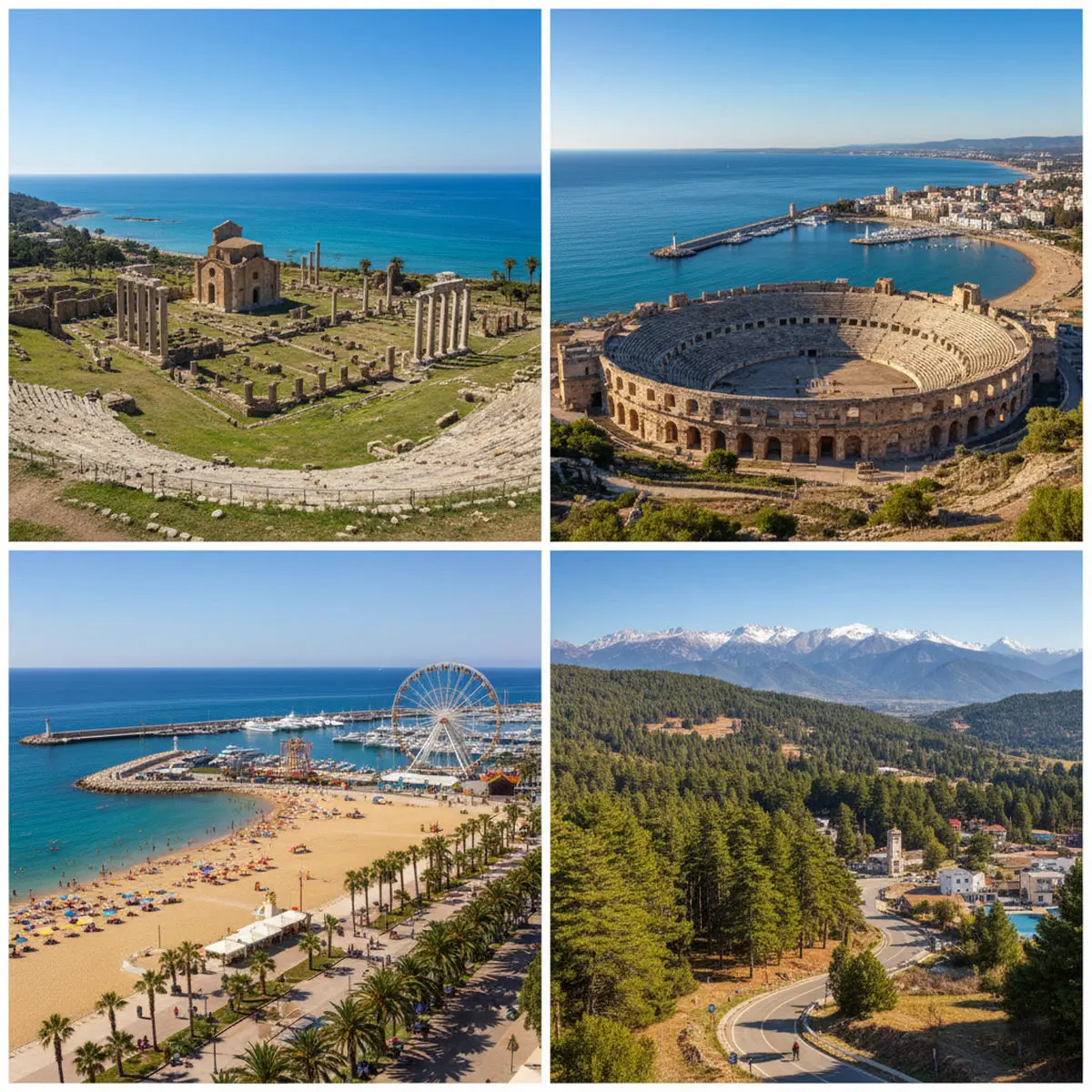
Algiers makes an excellent base for nearby attractions:
- Tipaza: About 70 km west, on the coast. This UNESCO archaeological site has a fine Roman forum, amphitheater, baths and basilicas spilling down onto the sea cliffs. It was a favorite of writer Camus. Allow a half or full day. Buses run from Algiers (Tafourah bus station) to Tipaza for ~100 DZD (1–1.5h journey); or hire a car/guide. In the town of Tipaza, visit the small museum for its artifacts (open daytime). Just outside, the Royal Mausoleum of Mauretania (Juba’s pyramid) is 18 km west. A taxi or a second bus (or Yassir ride) can take you to this Egypt-inspired tomb (100 DZD entry).
- Cherchell: Further west (~90 km, around 1½h by road). In antiquity it was Caesarea, capital of Mauretania. Highlights: a 5,000-seat Roman amphitheater overlooking the sea, a small archaeological museum (closed Mondays), and Ottoman-era ramparts. It’s less visited than Tipaza but can be combined on the same trip (many tour companies do Tipaza+Cherchell in one day). Without a car, you could train to Blida then taxi to Cherchell (last leg ~20 km).
- Sidi Fredj Beaches: Only ~20 km from Algiers. This resort peninsula has a modern marina, sandy beaches and an amusement park. Locals go there in summer for parasailing and fish restaurants. It’s great for a short seaside break. By taxi it’s ~3000 DZD; you can also take a shared taxi (grand taxi) to Sidi Fredj. In evenings you’ll find rides and a carnival atmosphere on the corniche, as seen by the Ferris wheel and lit tower.
- Blida & Chréa: South of Algiers lies the town of Blida (famous for oranges and roses), set below the Atlas mountains. A quick uphill road leads to Chréa National Park (ski resort and cedar forest) about 50 km inland. This is best done with a rented car. In winter Chréa has snow; in summer it’s a cool pine retreat. Not in the initial “Top 20” list, but a green change from the city if you have extra days.
- Other escapes: Several mansions (palaces) of Algiers’ past nobility exist in suburbs (Thlem, for example). Also, a day to Tipaza can include Sidi Ferruch beaches. If time permits, consider a night train to Oran or Annaba for multi-day explorations of Algeria’s other cities.
For trips without a car, local tour agencies (online or at tourist centers) offer day tours to Tipaza+Cherchell or Sidi-Fredj. Public transport is doable but involves transfers. Taxis (grand taxi) from Hydra zone are shared by multiple travelers and can be economical if you negotiate a seat on a round-trip basis.
At night, the amusement zone of Sidi Fredj (west of Algiers) lights up with rides and games. This nearby seaside resort is popular for beach days or evening strolls by the bay. The Algiers skyline glitters across the water in the distance.
Money, Costs & Connectivity
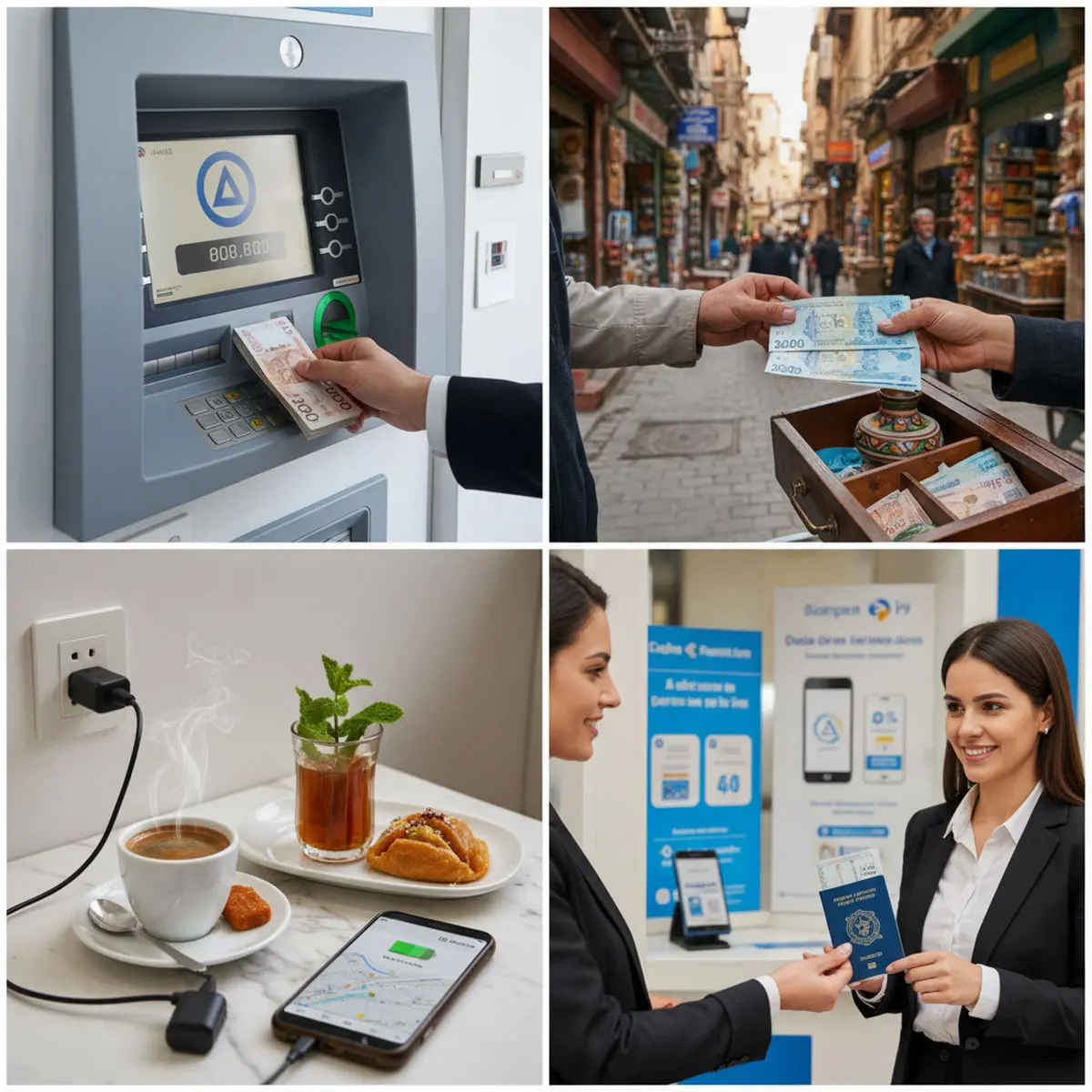
Currency: The Algerian dinar (DZD) is local currency. ATMs are found in city centers and malls – they usually dispense 2,000 DZD notes. Smaller shops may only accept cash. When you first arrive, withdraw enough cash for a few days of transit, meals and taxis. Long-term visitors often use a combination of ATMs and currency exchange at banks (ahead of travel, find the best rate; avoid airport’s lower rate booths). Note: There is technically an underground exchanger market at street corners, but do not use it – it’s illegal and risky.
Prices: Daily budgets can be very light. Street food or cafeteria meals might be ~300–500 DZD (~€3–5). A three-course meal in a midrange restaurant ~1500–3000 DZD. A night in a budget hotel ~3000–5000 DZD. Rides: a 10 km taxi within town ~600 DZD. Allocate in DZD so you’re not doing math with every purchase.
Electricity/Plug: Standard EU-style sockets (Type C/F). Voltage 230V/50Hz.
Communications: Free Wi-Fi can be unreliable outside hotels. Buying a local SIM (Mobilis or Djezzy) at the airport is best – it usually requires your passport. Packages are inexpensive (a few GB of data for under 1000 DZD). Mobile coverage in the city is good, less so if you venture deep into mountains or Sahara. If relying on translation or map apps, get data. Many travelers also use international eSIMs (Airalo, Holafly) without buying a physical SIM.
Exchange tips: ATMs apply the official rate. If exchanging cash, use an official bureau (they post rates) or your hotel. Never allow money-changers on the street to handle more than a trivial amount.
Budget breakdown (example): A backpacker’s day (hostel dorm + street meals + metro + museum) might run ~€25. A midrange couple could spend €60–80/day (2-star hotel, sit-down meals, transport). High-end (luxury hotel, fine dining) easily exceeds €150/day. Algeria has no shortage of cheap stuff, so you won’t overspend by accident – but always tally receipts to stick to budget, since cards slip you into using more (and fraud at ATMs is possible – use machines inside banks or malls).
Practicalities & Responsible Travel
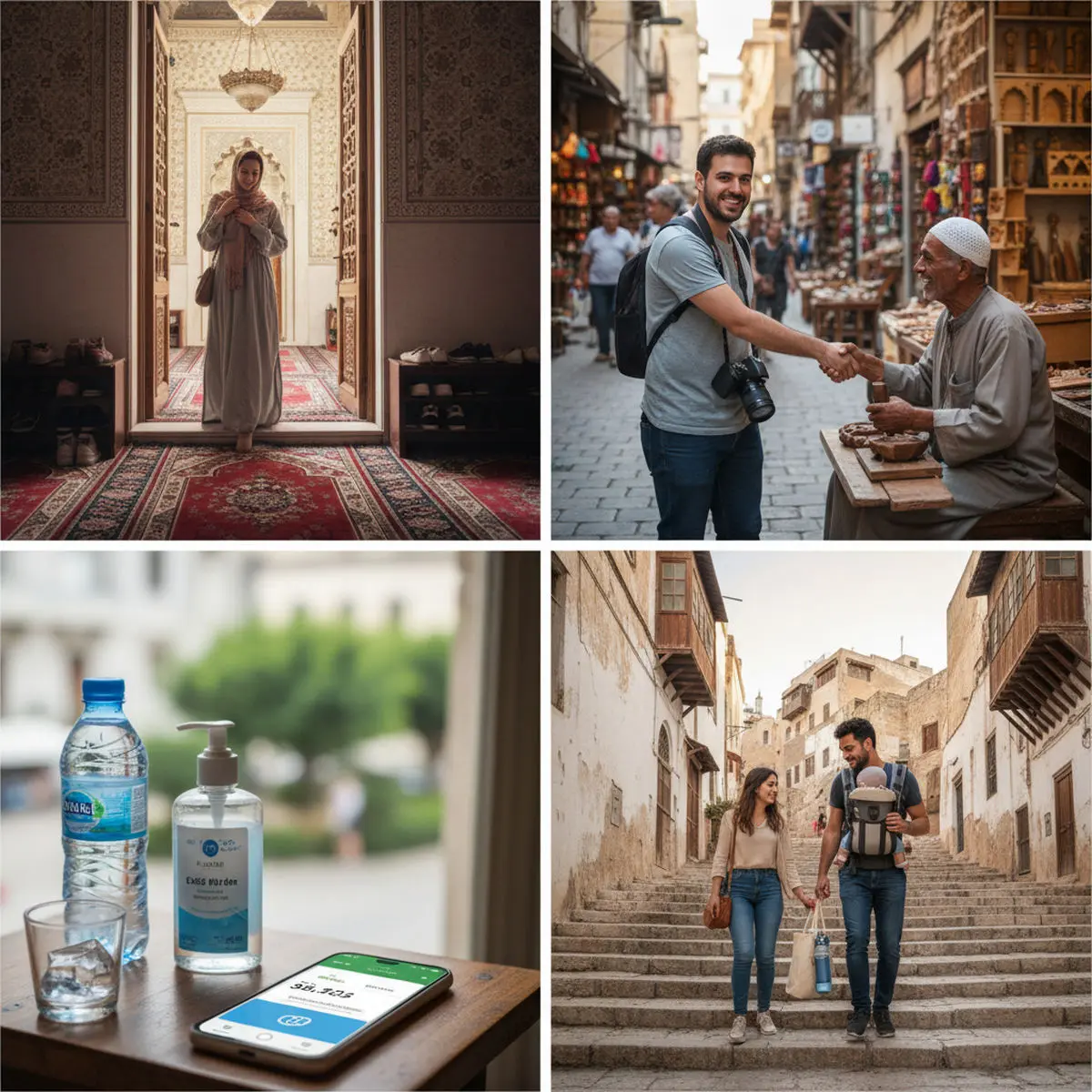
Dress codes: Algiers is cosmopolitan but predominantly Muslim. General rule: shoulders and knees covered for both men and women in public. Swimwear only at the beach. Women do not have to wear hijabs, but wearing one in holy places (mosques) is required (mosques usually provide scarves). If visiting religious sites, have a respectful demeanour. Avoid very tight or revealing clothes.
Health: Tap water is chlorinated; many locals drink it, but if you have a sensitive stomach, buy bottled water (widely sold). Ice cubes in restaurants may be purified, but you can request “avec glaçon” or not depending on trust. Carry hand sanitizer. Pharmacies (open daylight hours) are reliable for minor meds; pharmacists often speak French. If taking prescription medication, bring enough for your stay.
Photography: Non-commercial photography is generally fine. But never photograph military sites, airports, police, or protests. Ask permission before photographing people (especially women, who may decline). The only real “no-go” for cameras is security personnel: one traveler story noted that police or soldiers can detain you briefly if you snap them. Avoid any political demonstrations – just enjoy public squares from a distance.
Etiquette: Algerians are proud and hospitable. Basic courtesy goes far. Learn a few Arabic greetings (e.g. “Salam Alikoum” for hello) – locals appreciate the effort. Remove shoes when entering a local home. Right hand only for giving/receiving. Bargaining is normal in markets, but be polite. If offered tea, you can say “oui, merci” and sip, even if it’s not your cup of tea.
Environment: Algiers struggles with litter like any big city. Help keep it clean by using bins (though they can be sparse). Bottle returns (consigne) exist: many bottles have a deposit you can get back at grocery stores. Recycling isn’t widespread yet, so best you can do is use reusable bags and bottles.
Accessibility: Algiers has challenging terrain (many hills and stairs). Tourists with mobility issues should note that the Casbah is uneven. Some museums have ramps or elevators, but older buildings often do not. The Metro stations are mostly accessible, but the old tram stops and buses may not be. Wheelchairs are uncommon. Families: Kids will love Jardin d’Essai, the naval museum, and parks. Strollers may struggle on rocky Casbah lanes – a baby carrier is better there. Public restrooms usually cost a small fee (a few dinars), especially in malls or at tourist sites.
One-, Two- and Three-Day Sample Itineraries
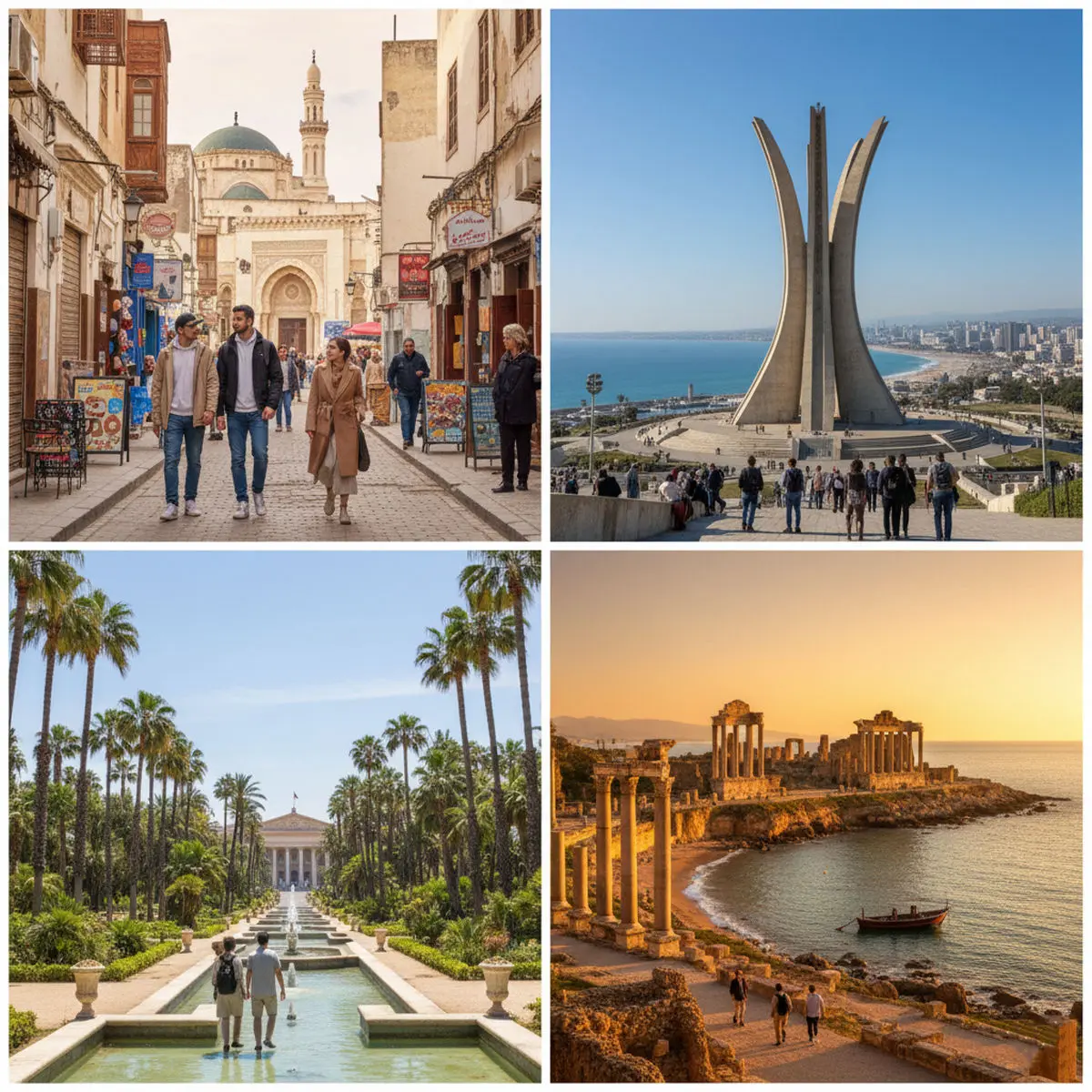
1-Day (24h) Algiers Highlights: Start early at the Casbah. Enter by Ketchaoua Mosque and wander uphill past Dar Aziza (Palace) and the old citadel. Have lunch in a Casbah cafe. In the afternoon, ride the cable car (téléphérique) up to Notre-Dame d’Afrique – enjoy the sweeping view, then visit the basilica. Descend via Jardin d’Essai and relax among palms and fountains (just next door). Evening: stroll along the Corniche (South or central) for sunset, and dine on fresh fish near Bastion 23.
2-Day Algiers: Day 1 as above. Day 2: Morning in town – visit the Martyrs’ Memorial (Maqam) and its museum, then head to the National Museum of Antiquities (Bardo) near the Casbah. Lunch downtown (try traditional couscous). Afternoon: take the tram to the eastern suburbs, visit the lush Hamma Botanical Garden, and if time allows pop into the Fine Arts Museum on its edge. Before nightfall, ride the tram or a taxi to the port end of the corniche and watch the city lights over the bay. Sample sweets at a café on Place du Gouvernement.
3-Day Algiers + Tipaza: Days 1–2 as above. Day 3: Early departure on a day trip to Tipaza (either organized tour or train/bus + Yassir taxi). Explore the Roman ruins by the sea – the amphitheater and basilica by the beach are must-sees. Late morning, visit the small museum and enjoy a seaside lunch of grilled fish. If eager, continue to the Tomb of the Christian Woman (Juba’s Mausoleum) just outside Tipaza. Return to Algiers by evening for a final dinner of Algerian specialities.
Customize by interests: swap day 3 for Cherchell or Blida/Chréa instead if you prefer. Always factor in transit time (roads can be slow) and dress for culture: avoid beachwear inland.
Frequently Asked Questions
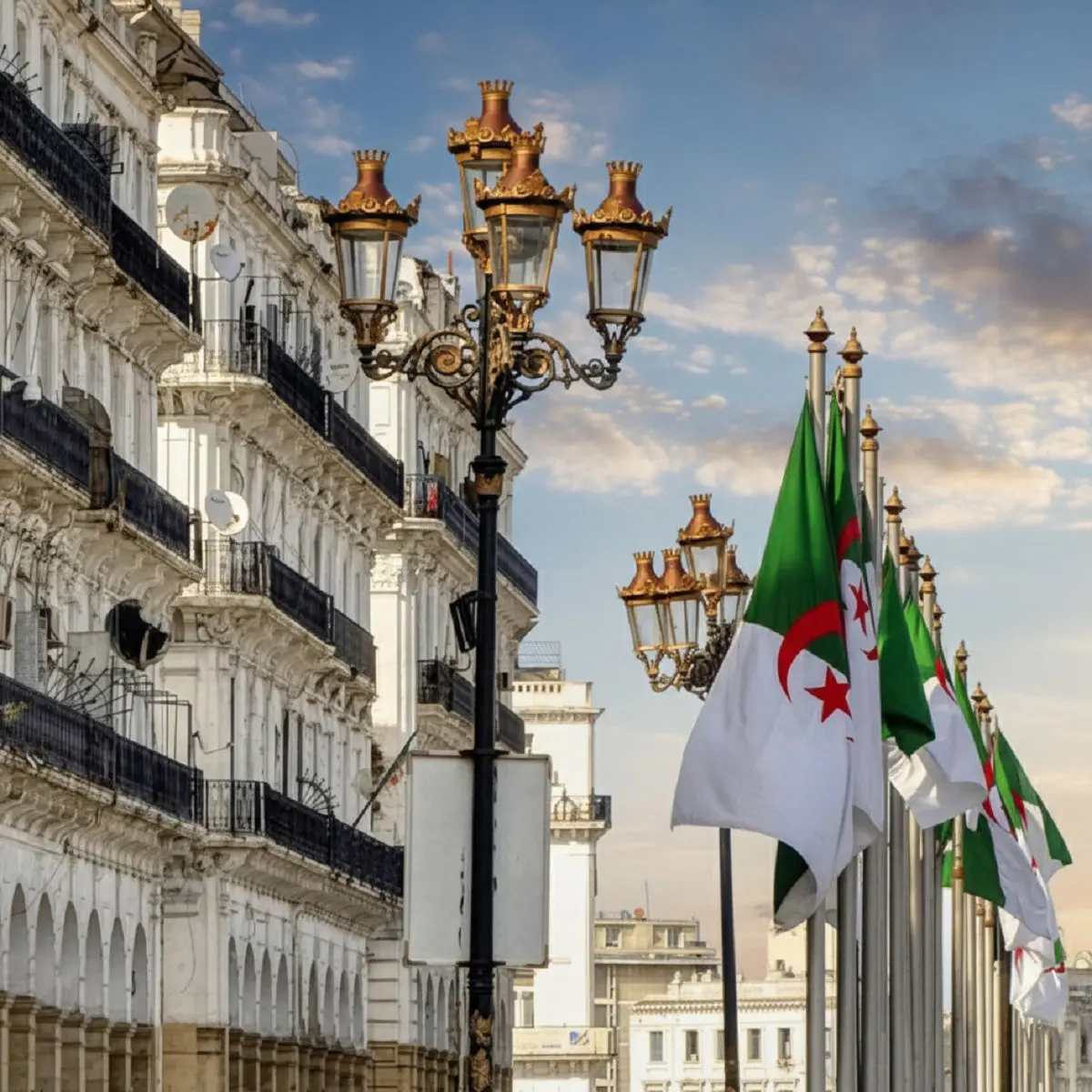
- Is Algiers safe for solo female travelers? Yes, if sensible measures are followed. Stick to busy districts, use taxis/apps at night, and dress conservatively. Algerians are polite; lone women aren’t specifically targeted. Use the same caution you would in any big city.
- Do I need a guide for the Casbah? Not strictly, but highly recommended. The lanes are confusing and guides explain the rich history. Solo explorers should at least download a map beforehand or join a group tour to avoid getting lost.
- Can I drink alcohol in Algiers, and where? Alcohol is sold only at licensed bars/restaurants (mostly attached to international hotels and resorts). Do not drink on the street or outside these venues. During Ramadan, even fewer venues sell alcohol.
- Can I use ride-hailing apps instead of taxis? Yassir and Heetch are widely used and often more reliable than haggling with random drivers. Just ensure your phone has local data and carry small dinar cash in case card fails.
- Can I visit Algiers during Ramadan? Yes, but services change. Most restaurants and shops close during the day or serve take-away only. Plan sightseeing in the cooler mornings. At night, life picks up again: cafes, markets, and some restaurants open after sunset. Always be discreet about eating/drinking in public during fasting hours.
- Are drones allowed? No – commercial or recreational drone flights require special authorization and are generally not permitted in Algiers. Best to leave drones at home.
- Can I photograph security/police sites? Absolutely not. It’s illegal and can lead to trouble. Only photograph army/police or official buildings from a distance of several blocks, if at all.
- What power plugs/voltage does Algeria use? Standard European plugs (Type C/F), 220–230 V, 50 Hz. Bring adaptors if your plugs differ.








