

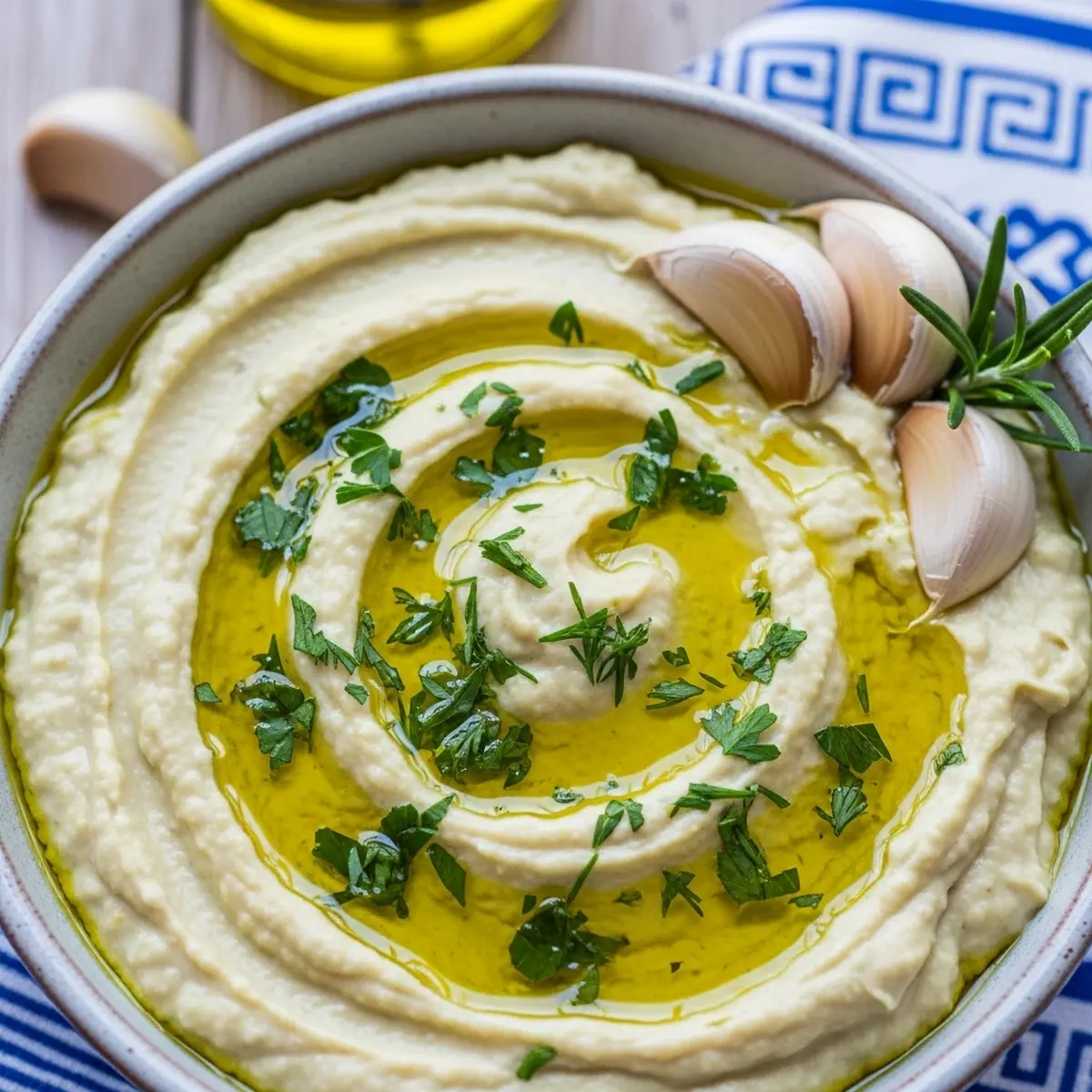

Skordalia (Greek Garlic Potato Dip)
Course: Sides, SauceCuisine: GreekDifficulty: Easy4
servings15
minutes20
minutes300
kcalPotatoes are boiled until very soft, then mashed with crushed garlic cloves (or garlic paste). While mashing, a slow stream of olive oil is beaten in, often with a touch of lemon juice or white wine vinegar, to emulsify the mixture into a creamy sauce. Salt and white pepper are added to taste. The result is a thick, pale dip that smells strongly of garlic but tastes mellowed by the oil and starch. It is typically scooped or spread onto plates next to fried fish or vegetables.
Ingredients
Potatoes: 2 large waxy potatoes (about 400 g total), peeled and quartered. (Classic version uses potatoes.)
Garlic: 3–4 cloves, peeled. (Add more cloves for a stronger garlic punch.)
Olive oil: ⅓ cup.
Lemon juice or vinegar: 1–2 Tbsp (white wine vinegar or lemon juice, to taste).
Bread (optional): 1 slice white bread, crust removed, soaked in water and squeezed dry. Use instead of potatoes in some recipes.
Walnuts or almonds (optional): 2 Tbsp finely ground. Adds richness if used.
Salt and white pepper: to taste. (White pepper keeps the color light.)
Water or reserved potato cooking liquid: a few Tbsp, to adjust consistency.
Directions
Boil potatoes. Place potatoes in a pot of salted water and boil until very tender, about 15–20 minutes. Drain, reserving 2 tablespoons of the cooking water, and let potatoes cool slightly.
Prepare garlic. Crush the garlic cloves into a paste using a mortar and pestle, or finely mince and mash with a pinch of salt.
Mash potatoes. In a bowl, mash the warm potatoes together with the garlic paste until smooth.
Slowly drizzle in the olive oil while vigorously stirring or whisking the potatoes. (If using a blender or food processor, pulse the mixture while drizzling oil.) Add lemon juice or vinegar. The mixture should thicken into a creamy sauce. If too thick, add a little reserved cooking liquid or cold water to reach a spreadable consistency.
Season and finish. Taste and adjust salt and pepper. If using, stir in ground nuts for texture.
Transfer the skordaliá to a serving dish, smoothing the top. It can be served immediately or chilled. Garnish with a drizzle of olive oil or a sprig of parsley if desired.
Tips, Troubleshooting & Variations
- Serving Suggestions & Pairings: The classic pairing is fried cod (bakaliaros) with skordaliá on March 25. It’s also excellent with other fried vegetables (eggplant, zucchini) and grilled fish or chicken. Try serving it with a simple green salad and bread. A slice of lemon on the side is traditional and brightens the sauce. Skordaliá goes well with an ice-cold beer or a crisp white wine like Assyrtiko.
- Storage & Reheating: Store skordaliá in the fridge for 2–3 days. It will firm up as the oil solidifies; mix vigorously before serving to restore the texture. Do not freeze (the emulsion will break upon thawing). Best enjoyed cold or at room temperature; warmer heat will dilute the flavors.
- Variations - Make a bread-based skordaliá: substitute 1 cup of chopped soaked stale bread for the potatoes, and proceed with garlic, oil and vinegar as above. Add a handful of chopped parsley, dill or scallions to the mix for freshness. Stir in a teaspoon of mustard or a pinch of red pepper flakes for a flavor twist. Some regions blend in cooked beets or carrots (for color and sweetness) – this is a local specialty.
- Chef’s Tips - Use lukewarm (not too hot) potatoes when mixing in oil to prevent separation. Add the oil very slowly at first to start the emulsion; patience yields a better texture. If the garlic flavor is too sharp, letting the finished skordaliá sit for 30 minutes can mellow it.
- Optional Add-Ons: Shopping list: garlic, lemons, Greek yogurt. Make-ahead: Boil and mash potatoes a day ahead; keep garlic paste ready. Emulsify just before serving.
- Equipment Needed: Saucepan (for boiling potatoes), Mortar and pestle (or garlic press/mincer), Mixing bowl and whisk (or food processor).









