

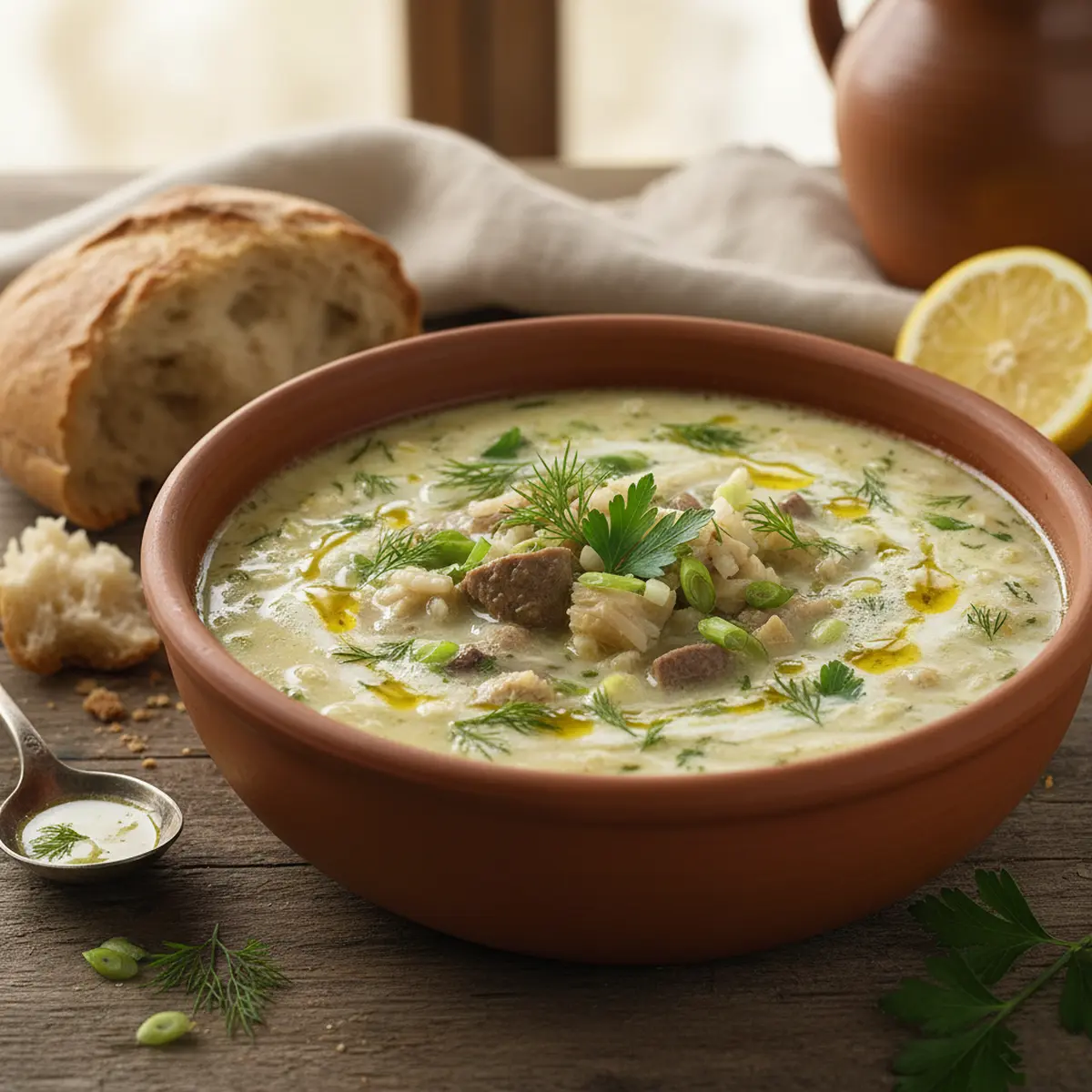
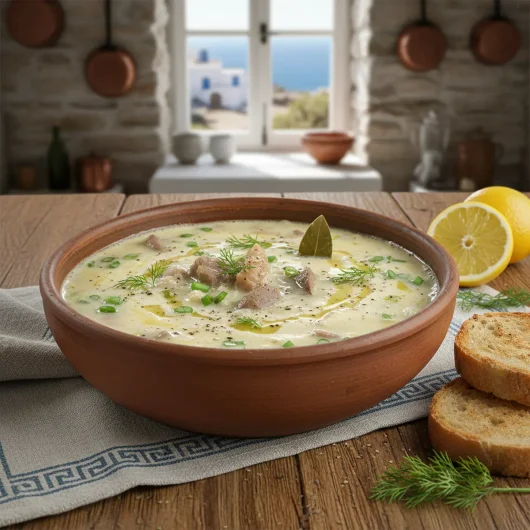
Magiritsa (Greek Easter Soup) – Traditional Avgolemono Recipe
Course: SoupCuisine: GreekDifficulty: Easy4
servings10
minutes35
minutes500
kcalIn this Magiritsa soup recipe, lamb offal (liver, sweetbreads, intestines) and aromatic greens are simmered into a comforting, tangy broth. First the offal is blanched and then cooked with onions, garlic, and shredded lettuce until very tender. Fresh dill and parsley join near the end to brighten the flavor. A classic avgolemono sauce—egg yolks whisked with lemon juice and hot broth—is tempered and stirred in to thicken the soup and add a silky lemony finish. Hearty yet light, each bowl delivers a warm, citrusy lift to the rich lamb. Serve each portion immediately with lemon wedges and crusty bread for dipping. Ready in about 90 minutes, this recipe yields 6 servings.
Ingredients
Lamb offal mix (1 kg) – a combination of lamb liver, lungs, heart, sweetbreads, and cleaned lamb intestines. This mix provides the classic rich flavor. (Substitution: oyster mushrooms can replace offal for a vegetarian version.)
Olive oil (½ cup) – use extra-virgin for depth and aroma; used for sautéing the aromatics.
Red onion (1 medium, finely chopped) – adds natural sweetness and body.
Green onions (4, thinly sliced) – provide a mild scallion note without overpowering.
Garlic (1 clove, minced) – lends subtle pungency to the broth.
Lettuce (3–4 heads, coarsely chopped) – typically romaine or iceberg; wilts into tender ribbons. (Substitution: spinach or chopped Swiss chard can be used if lettuce is unavailable.)
Fresh dill (1 cup, chopped) – signature herb for magiritsa’s flavor profile.
Fresh parsley (1 cup, chopped) – brightens the soup and rounds out the herbiness.
Salt and freshly ground black pepper – for seasoning. Start lightly; you can adjust more at the end.
- For the avgolemono sauce
Egg yolks (3) – richly thicken the broth when whisked in; they are the binder of the sauce.
Fresh lemon juice (½ cup, about 2–3 lemons) – provides bright acidity to balance the rich meat.
Cornstarch (1 tablespoon, optional) – helps stabilize the egg-lemon emulsion; dissolve in a little cold water before adding if using (can also use all-purpose flour).
Directions
Prep the offal: Rinse and trim the lamb offal and intestines. Place them in a large pot, cover with water, and bring to a boil. Boil for 10 minutes, then drain and discard that water (this removes impurities). Rinse the offal under cold water.
Simmer the soup base: Refill the same pot with about 2 liters of fresh water (enough to cover the ingredients). Add the blanched offal and the chopped lettuce. Season with a pinch of salt and pepper. Bring to a gentle boil, then reduce heat and simmer uncovered for 30–40 minutes, until the meat is very tender and the lettuce has completely wilted.
Sauté aromatics: While the soup simmers, heat the olive oil in a skillet over medium heat. Sauté the chopped red onion, sliced green onions, and minced garlic until soft and fragrant (about 3–5 minutes). Do not brown them; just soften.
Combine and simmer: Add the sautéed onions and garlic to the soup pot. Stir in the chopped dill and parsley. Cover and simmer for another 5 minutes. Taste and adjust seasoning with salt and pepper. Remove the pot from heat and let it sit for 5 minutes (off the flame) to cool slightly before adding the egg sauce.
Make the avgolemono base: In a small mixing bowl, whisk the egg yolks until smooth. Gradually whisk in the lemon juice until fully combined. (Timing: 1–2 minutes)
Temper the eggs: Slowly drizzle about 1 cup of the hot soup broth into the egg-lemon mixture while whisking constantly. This raises the temperature of the eggs without scrambling them.
Finish the soup: Pour the tempered egg mixture back into the soup pot, stirring continuously. Return the pot to very low heat (do not boil) and cook, stirring, for about 2–3 minutes until the soup slightly thickens and attains a silky texture. Remove from heat.
Serve: Ladle the soup into bowls. Each serving is traditionally accompanied by a hard-boiled red-dyed Easter egg (cracked open at the table). Garnish with an extra sprig of dill or a wedge of lemon if desired.
Tips, Troubleshooting & Variations
- Serving Suggestions: Serve Magiritsa steaming hot in small bowls. Offer warm pita or crusty bread for dipping. A light Greek salad or cooked greens on the side complement the meal. Pair it with a crisp white wine (Assyrtiko or Sauvignon Blanc) or a shot of ouzo to keep the festive theme. Plan on about 1½–2 cups per serving; it’s hearty but traditionally served in small bowls at first.
- Storage & Reheating: Store leftovers in an airtight container in the refrigerator for up to 3 days. The soup will thicken as it cools (avgolemono tends to gel when cold); when reheating gently on the stove, stir in a little hot broth or water to loosen it. Reheat over low heat and do not boil vigorously, to prevent the egg sauce from curdling. Avoid freezing after adding the eggs—the texture will suffer. If needed, freeze the stock (before adding eggs) for up to 1 month.
- Variations & Substitutions: Vegetarian: Substitute oyster or shiitake mushrooms for the offal, and use vegetable broth. Omit eggs entirely, or whisk in a spoonful of plain yogurt to mimic the tang of avgolemono. Red-sauce twist: Stir in 1–2 tablespoons of tomato paste with the onions for a slightly tomatoey flavor (a regional twist seen in some islands). With rice or orzo: To make the soup more filling, add ½ cup of rice or orzo to the pot after the onions are sautéed and before adding broth; simmer until tender. Spicy finish: Garnish each bowl with a pinch of crushed red pepper flakes or a drizzle of hot chili oil to offset the creamy richness. Offal alternatives: For a milder taste, use diced lamb shoulder or chicken thigh meat instead of offal. The cooking method remains the same, though the flavor will change.
- Chef’s Tips: Use fresh herbs: Add the dill and parsley at the very end of cooking to keep their fragrance vibrant. Trim and rinse well: Scrub the offal thoroughly and trim away any excess fat or membranes. Blanching and rinsing twice helps eliminate any strong gamey odors, resulting in a cleaner-tasting broth. Gentle whisking: When adding the egg-lemon mixture, pour it in slowly and whisk constantly. If tiny curds form, you can strain the soup quickly to smooth it out. Acid boost: If after adding the eggs the soup still needs zip, whisk in another tablespoon of lemon juice off-heat.
- Make-Ahead: You can prepare the soup base (offal and greens) up to one day ahead and refrigerate. Gently reheat on the day of serving and then add the avgolemono sauce just before serving. Chop the herbs and aromatics a day ahead to save time. The avgolemono mixture itself cannot be stored, but its ingredients (eggs, lemon) are pantry staples.
- Shopping List: Lamb offal (liver, kidneys, intestines), lettuce or other greens, fresh dill and parsley, red and green onions, garlic, lemons, eggs, olive oil, cornstarch.
- Related Recipes: For more Greek Easter flavors, see our Avgolemono Chicken Soup and Herby Roast Lamb (Ovelias) These classic dishes complement Magiritsa on holiday menus.
- Equipment Needed: Large soup pot or Dutch oven (for cooking the soup), Skillet or saucepan (to sauté onions and aromatics), Mixing bowl and whisk (for making the egg-lemon sauce), Cutting board and chef’s knife (for chopping offal, greens, and herbs), Colander or strainer (to drain the blanched offal), Wooden spoon or ladle (for stirring and serving), Citrus juicer (optional, for fresh lemon juice).









