

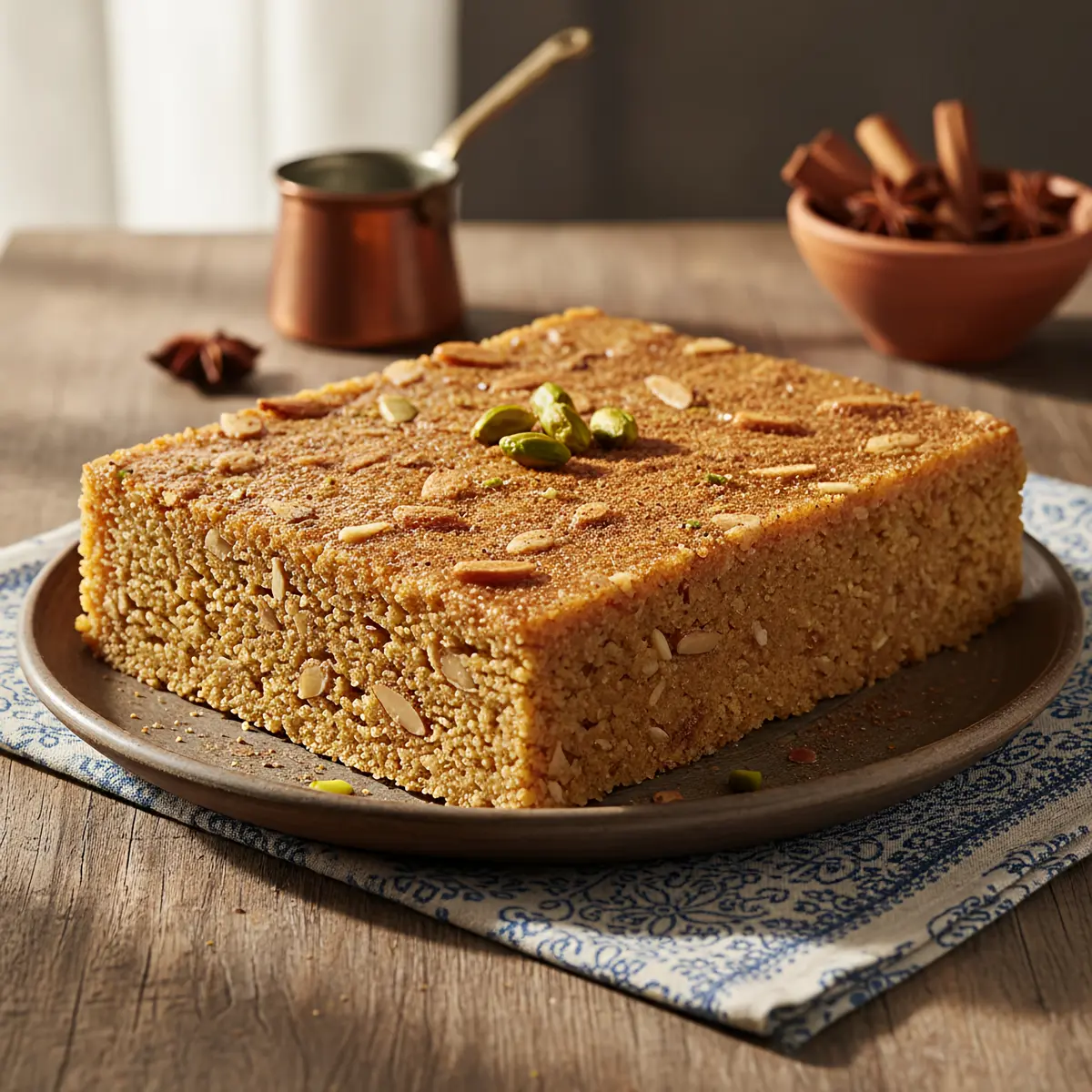

Greek Hálva Recipe – Semolina Dessert for Lent
Course: DessertCuisine: GreekDifficulty: Moderate8
servings15
minutes20
minutes330
kcalThis classic Greek halva starts with semolina toasted in butter or olive oil, then slowly simmered in a sweet, cinnamon-infused syrup. The toasting step builds a warm, nutty aroma while the syrup absorbs into the grains, yielding a soft, cohesive pudding. The mixture is enriched with plump golden raisins and crunchy nuts like almonds or pine nuts. Once cooked, the halva is allowed to set into a firm mass that slices easily. Before serving, it can be garnished with a drizzle of sesame tahini, an extra dusting of cinnamon, or a sprinkle of chopped nuts. This recipe yields about 8 servings of rich, spiced halva – an ideal sweet for Lent or any time a warming comfort dessert is needed.
Ingredients
1 cup (200g) wheat semolina (fine or medium grind)
4 tablespoons (60ml) butter or olive oil (for a dairy-free option)
3/4 cup (150g) granulated sugar or honey (honey adds a deep flavor)
2 cups (480ml) water
1 cinnamon stick or 1 teaspoon ground cinnamon (aromatic spice)
2–3 whole cloves or a pinch of ground cloves (warm spice)
A pinch of salt
1/4 cup (40g) golden raisins or currants (soaked in warm water for 10 minutes to plump)
1/2 cup (60g) almonds or pine nuts, coarsely chopped or toasted (for crunch)
2 tablespoons tahini (sesame paste), optional (to drizzle on top or swirl in)
Directions
Toast the nuts: Preheat the oven to 350°F (175°C). Spread the chopped almonds or pine nuts on a baking sheet. Toast in the oven for about 5 minutes until fragrant. Remove and set aside to cool. (5 minutes)
Make the syrup: In a medium saucepan, combine 2 cups (480 ml) water, 3/4 cup (150 g) sugar (or honey), the cinnamon stick and cloves, plus a pinch of salt. Bring the mixture to a boil over medium-high heat, stirring to dissolve the sugar. Once boiling, reduce heat to low and simmer for 5 minutes to infuse the spices. (10 minutes) Discard the cinnamon stick and cloves.
Toast the semolina: Meanwhile, in a separate heavy-bottomed saucepan, melt the butter over medium heat (or heat olive oil for a dairy-free version). Add the semolina and cook, stirring constantly with a wooden spoon, until the mixture is golden brown and fragrant, about 3–5 minutes. (5 minutes)
Combine with syrup: Carefully pour the hot syrup into the toasted semolina while stirring vigorously. The mixture will foam and bubble. Continue to stir until the semolina absorbs all the liquid. Then reduce the heat to low and cook for another 1–2 minutes. (2 minutes)
Add fruit and nuts: Stir the plumped raisins and half of the toasted nuts into the halva mixture. Cook for another 1–2 minutes to distribute them evenly. (2 minutes)
Set the halva: Transfer the halva into a greased or parchment-lined 8×8-inch (20×20 cm) pan. Press it down evenly and pack it firmly with the back of a spoon. Sprinkle the remaining nuts on top and (if using) drizzle tahini in a swirl over the surface. Cover the pan and let the halva rest for about 15 minutes to set. (15 minutes)
Slice and serve: After it has cooled, slice the halva into squares or diamonds. The edges should hold their shape but the interior will still be moist. Sprinkle with a final dusting of ground cinnamon or extra sugar, if desired. Serve warm or at room temperature.
Tips, Troubleshooting & Variations
- Substitutions & Allergy Notes: If wheat is a concern, note that traditional halva uses semolina (a wheat product), so it is not gluten-free. For a vegan version, choose a fruity olive oil instead of butter and use honey or maple syrup for sweetness. Any dried fruit or nut can be substituted: try chopped pistachios, walnuts or hazelnuts in place of almonds, and dried cherries or cranberries for raisins. Flavor twists might include adding a splash of orange juice or rosewater to the syrup. Allergy note: this recipe contains gluten and nuts, and may contain dairy if butter is used.
- Serving Suggestions & Pairings: Serve halva warm or at room temperature, either in small bowls or as individual squares. It makes a cozy ending to a vegetarian meal during Lent. For an authentic Greek experience, pair it with a strong Greek coffee, herbal tea, or a glass of chilled mulled red wine. A dollop of unsweetened Greek yogurt on the side provides a creamy contrast. Garnish each serving with an extra sprinkle of ground cinnamon or a few chopped pistachios for color.
- Storage & Reheating: Halva keeps well at room temperature for 2–3 days. Store leftovers in an airtight container at room temperature or in the refrigerator (which will firm it up). If refrigerated, let it warm to room temperature before eating. To revive its soft texture, gently warm individual portions in the microwave with a few drops of water or in a small pan over low heat, stirring briefly until it softens (be careful not to overheat, which can dry it out).
- Variations & Substitutions: Use 1/3 cup (80 ml) olive oil in place of butter and substitute all sugar with 1 cup (240 ml) honey for a vegan, Lenten-friendly version. Experiment with different nuts or fruits: chopped walnuts, pistachios, or hazelnuts can replace almonds; dried cherries or blueberries can replace raisins. Add a splash of orange juice, zest, or rosewater to the syrup for a citrusy or floral note. Make a tahini halva variant: omit semolina and replace it with 1 cup (250 g) smooth tahini mixed with 1/2 cup (120 ml) honey or sugar.
- Chef’s Tips: Stir constantly while toasting the semolina or it may burn. Aim for an even golden color for full flavor. Pour the hot syrup slowly and stir vigorously; this prevents lumps from forming and ensures even soaking. If the halva seems too loose, simmer it a minute longer before removing from heat. Let the cooked halva rest with the lid on – this final steaming step will firm it up and improve the texture.
- Garnish: Edible gold leaf or a dusting of powdered sugar can make halva look festive for holidays.
- Make-Ahead: The halva batter and syrup can be prepared up to 1 day ahead. Reheat the syrup before pouring over the toasted semolina if needed.
- Shopping List: Semolina, cinnamon sticks, and good quality tahini if topping (these ingredients can also be used in other Mediterranean recipes).
- Equipment Needed: Heavy saucepan (for toasting semolina and cooking halva), Saucepan (for boiling the syrup), Wooden spoon or spatula (for stirring), Baking sheet (to toast nuts), Mixing bowls, Measuring cups and spoons, 8×8-inch (20×20 cm) square pan (for setting the halva), Sharp knife (for slicing), Cooling rack.









