

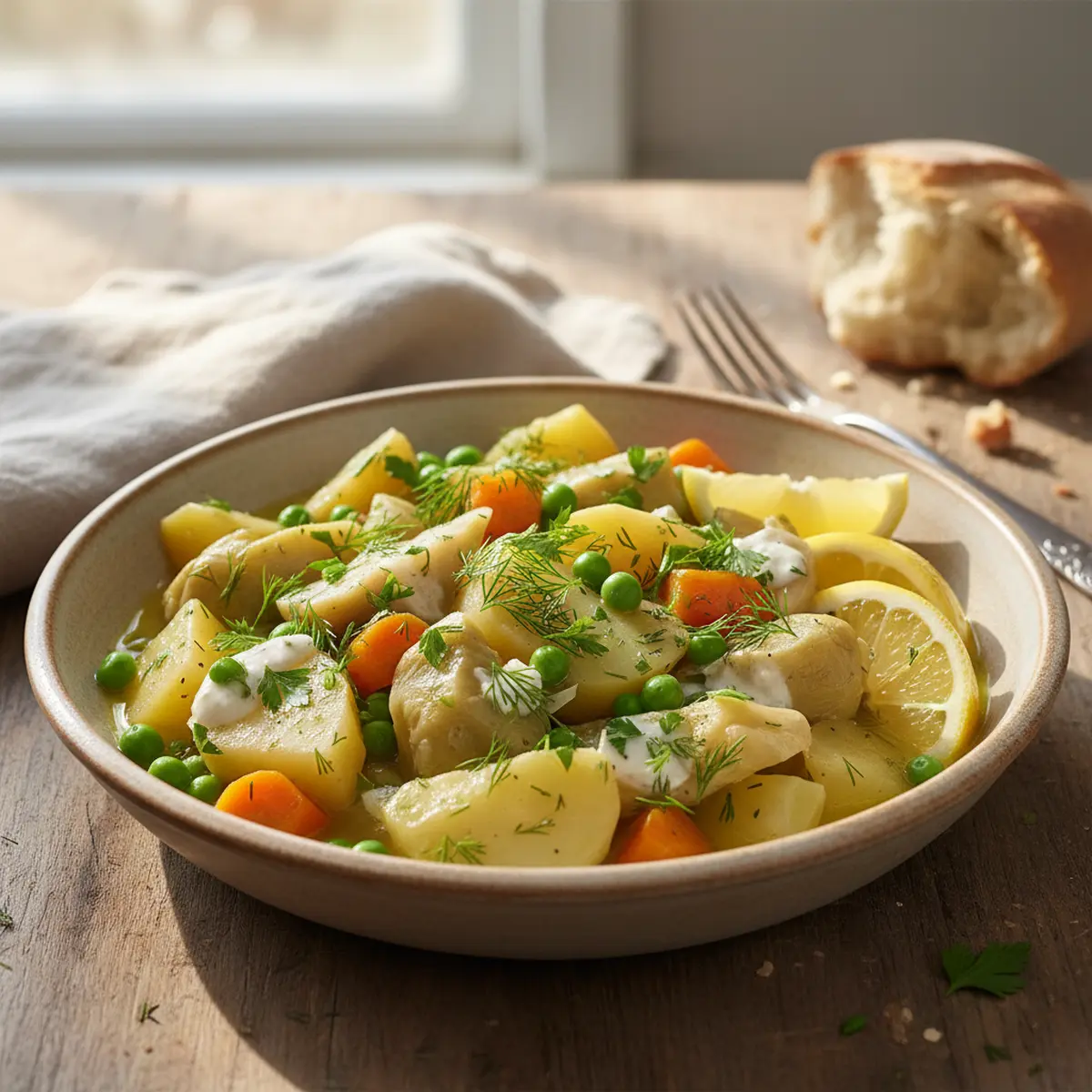

Aginares a la Polita – Artichokes with Lemon & Peas
Course: Main, SidesCuisine: Greek, MediterraneanDifficulty: Medium4
servings15
minutes40
minutes395
kcalGreek Aginares a la Polita is a bright artichoke stew with carrots, peas, and dill in a lemony olive oil broth. Tender artichoke hearts simmer until meltingly soft alongside sweet carrots and garden peas. A squeeze of fresh lemon and a handful of chopped dill bring refreshing zest to each bite. Rich olive oil gives the stew a silky texture, making it hearty yet light. Ready in about 60 minutes, it’s traditionally served warm with crusty bread to sop up every drop. This vegan-friendly dish brings a taste of Greek springtime to any table.
Ingredients
750 grams artichoke bottoms or hearts (fresh or frozen) – trimmed and quartered if fresh. Frozen artichoke bottoms may be used as a convenient shortcut.
1 medium onion, chopped – provides the aromatic base.
3 medium carrots, sliced – add sweetness and color.
1/2 cup (75 g) green peas – fresh or frozen, for pops of texture.
2 tablespoons tomato paste or 1/2 cup crushed tomatoes (optional) – adds depth and color to the sauce.
Juice of 1 large lemon (about 2–3 tablespoons) – stirred in near the end for bright acidity.
1/4 cup fresh dill, chopped – a liberal handful for a fragrant finish.
3/4 cup (180 ml) extra-virgin olive oil – the cooking medium and flavor foundation.
2 cups (480 ml) water or vegetable broth – enough to simmer the vegetables.
Salt and black pepper, to taste – start with about 1 teaspoon salt.
1 teaspoon sugar (optional, to balance acidity) – a pinch to accentuate sweetness (common in some recipes).
1/4 teaspoon ground cinnamon or cumin (optional, for a warm note) – adds an Ottoman-inspired flavor twist if desired.
Directions
Sauté aromatics: In a deep skillet or pot over medium heat, warm 2 tablespoons of olive oil. Add the chopped onion and sauté until translucent, about 5 minutes. (Time: 5 min)
Add carrots and artichokes: Stir in the carrots and artichokes (and tomato paste if using). Season with salt, pepper, sugar, and cinnamon or cumin (if using). Cook for 2–3 minutes to let the flavors mingle.
Simmer: Add the peas and pour in the water or broth. Bring to a gentle boil, scraping up any browned bits from the pan. Reduce heat to low, cover partially, and let simmer for about 40 minutes (approx), or until the artichokes are very tender and the liquid has reduced. Check occasionally and add a little more water if the stew appears too dry.
Finish with lemon and dill: Remove the pot from heat. Stir in the lemon juice and chopped dill. If you prefer a thicker sauce, mix 1 tablespoon of flour (or a whisked egg) with a little water and stir it in at this point, cooking for an additional minute.
Rest and serve: Season to taste and remove from heat. Let the stew sit for a few minutes to blend flavors. Serve Aginares a la Polita warm (or at room temperature), garnished with extra dill or parsley. Offer crusty bread on the side to soak up the flavorful juices.
Tips, Troubleshooting & Variations
- Serving Suggestions & Pairings: Serve this artichoke stew hot, drizzled with extra olive oil. It’s lovely with a topping of crumbled feta and a few olives on the side. Pair it with a crisp Greek white wine (Assyrtiko or Sauvignon Blanc) or a dry rosé. A side of roasted potatoes or a simple Greek salad complements it well.
- Storage & Reheating: Let the stew cool, then refrigerate for up to 3–4 days. Reheat gently on the stove (add a splash of water if needed). Like many stews, Aginares often tastes even better the next day after the flavors have melded. You can freeze leftovers (about 1–2 months), but note that artichoke texture may soften upon thawing.
- Variations & Substitutions: Potatoes: Add peeled, diced potatoes with the carrots for a heartier meal. • Avgolemono: Whisk a beaten egg with lemon juice and slowly stir it into the hot stew (off heat) for a creamy finish. • Herb swaps: Substitute parsley or mint for some of the dill for a different note. • Spicy: A sprinkle of paprika or red pepper flakes adds warmth. • No sugar: Skip the optional sugar for a tangier stew.
- Chef’s Tips: Trim and quarter the artichokes carefully; soak fresh artichoke pieces in lemon water if they brown. 2. Use gentle heat and simmer slowly so the artichokes keep their shape. 3. Add the lemon juice and dill at the very end to preserve their bright flavors (cooked lemon can turn bitter). 4. If the stew is too thin, leave it uncovered a bit longer; if it’s too thick, stir in more water.
- Optional Add-Ons: Make-ahead: You can trim and quarter artichokes several hours ahead and keep them in lemon water. The stew itself may be made a day before serving to develop flavor. • Shopping list: Pick up extra lemons, dill, and a good crusty bread. Don’t forget feta or olives if you like garnishing.
- Related Recipes: Enjoy this alongside Greek favorites like Spanakorizo (spinach rice) or Melitzanes Imam (Greek baked eggplant). Also try our Fasolakia (Greek green beans) as another example of ladera (vegetables in oil) dishes.
- Equipment Needed - Large heavy-bottomed pot or deep skillet, Wooden spoon or heat-proof spatula, Chef’s knife and cutting board, Vegetable peeler or grater (for carrots, optional), Measuring cups and spoons, Serving bowls and ladle.









