

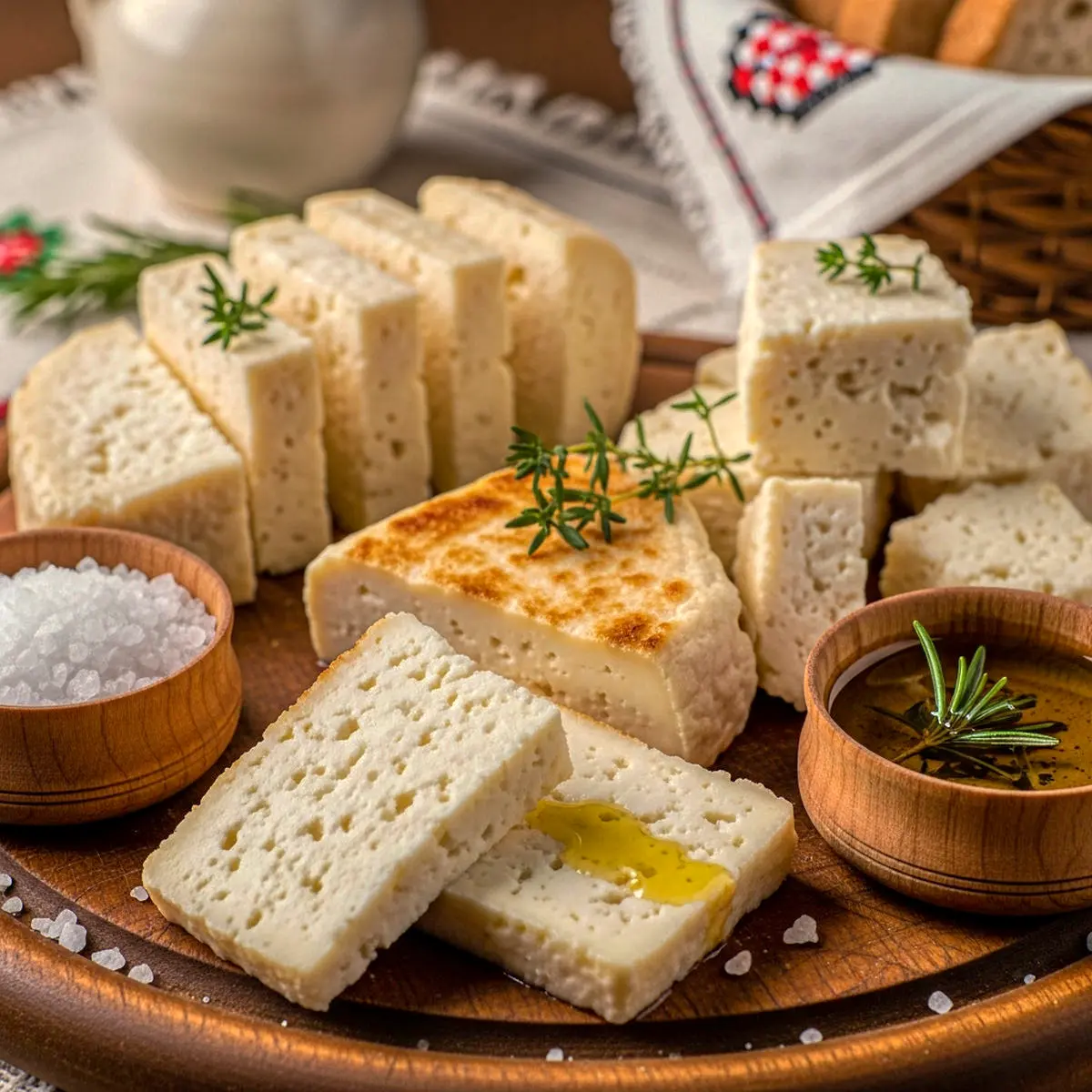

Škripavac – Fresh Squeaky Cheese from Lika (Mild & Milky)
Course: Cheese, BreadCuisine: CroatianDifficulty: Medium6
servings60
minutes120
kcalŠkripavac is made by gently heating raw cow’s milk to around 37–40°C and adding a small amount of rennet. After the milk coagulates very softly, the curd is cut (if it even sets firmly) and allowed to expel whey. The curd is then drained in molds or bags with minimal pressing; it often requires no rind or aging. The cheese can be eaten literally the next day while still warm. The result is a young, moist cheese with a squeaky consistency. For serving, it is often cut into thick slices or chunks. It can also be quickly grilled or fried, which enhances its aroma and softens it slightly on the inside. Škripavac requires no cooking or baking, making it a quick cheese to prepare if fresh milk and rennet are on hand.
Ingredients
Cow’s milk: 8 liters (ideally whole, raw jersey cow’s milk for richness)
Rennet: 5–10 mL liquid rennet (or as directed for 8L milk)
Non-iodized salt: about 1.5 teaspoons (optional, for lightly salting outside or brine)
Optional flavorings: Caraway seeds or chopped garlic (traditional Lika variations sometimes add these to the curd)
Directions
Warm the milk: Pour the milk into a large pot and gently warm it to 37°C (about 99°F), stirring occasionally. (Time: ~20 minutes)
Add rennet: Remove from heat. Stir in the liquid rennet slowly for about 1 minute, then cover the pot and let it sit undisturbed for 45 minutes to set. (Time: 45 minutes)
Check curd: The milk should have just set to a custard-like consistency. If not firm, wait a little longer. Then cut or scoop curd: Traditionally, Škripavac curds are cut very coarsely or even just scooped out, since the texture remains moist. Use a slotted spoon or large knife to release curd.
Drain whey: Line a colander with cheesecloth or use a cheese mold. Gently ladle the curd into it, allowing whey to drain naturally. If you added salt, sprinkle it over the curds now or stir it in. Gather the cloth edges and lightly tie or press. Drain for 30–60 minutes until curd is holding shape but still moist. (Time: 1 hour)
Shape the cheese: Remove the now-formed cheese (it will be soft) from the cloth. It can be shaped into a small log or left as a round. Cover and refrigerate for a few hours if you like it cold; otherwise it is ready immediately. (Optional: For a firmer squeak, you can press it under a light weight for 30 minutes.)
Serve or grill: Cut Škripavac into slices or wedges. It squeaks best at first serving. To warm it, place slices on a hot grill or pan for just 1–2 minutes per side until golden edges appear – the inside will stay creamy. Serve hot off the grill with bread, or cool with a drizzle of oil and fresh cracked pepper.
Tips, Troubleshooting & Variations
- Quick notes: Škripavac was traditionally made on mountain farms with just milk and rennet. Some recipes add salt directly, while others salt-wash after forming. Use the best quality fresh milk you can. There are no grain allergens; the only allergen is milk (cow). Caraway and garlic are optional but classic in Lika.
- Serving Suggestions & Pairings: Škripavac is often eaten at breakfast or as a light snack. Serve it simply with boiled or pressed potatoes and a dollop of sour cream or yogurt (the cool creaminess contrasts the cheese’s toothy texture). It’s also excellent crumbled on warm cabbage or grated raw carrots, or paired with a fresh salad. Traditional Lika preparation is to grill it (like halloumi) and top with chopped ajvar (pepper spread) or fresh herbs. In continental dinners, Škripavac can act like mozzarella – try it with sliced tomatoes and basil or melted on fresh corn tortillas.
- Storage & Freshness: Because this cheese is so fresh, it is best eaten within 2–3 days (and up to 1 week) of making. Store it wrapped in parchment in the fridge. It does not age well due to high moisture; if left longer, it will dry out and lose its signature squeak. To “revive” it, grill or pan-fry leftover Škripavac on low until just softening; this can partially restore the creamy texture.
- Variations & Substitutions: Goat or Sheep Milk: Substitute goat’s or sheep’s milk for a slightly tangier cheese. The process is the same, but sheep milk yields even richer fats. Smoked Škripavac: In cold climates, leftover Škripavac was traditionally lightly smoked. You can do this at home: after draining, hang the cheese in a cold smoker or near a smoldering wood fire for 2–3 hours for a delicate smoke flavor. Herbed Version: Mix chopped herbs like chives, dill, or parsley into the curd for a fresh flavor. Alternatively, form the cheese around a filling of chopped prosciutto or peppers. Salted vs. Unsalted: The cheese curd can be made without salt for a very mild cheese; if needed, simply sprinkle salt on slices when serving.
- Chef’s Tips: Use the freshest milk possible and make Škripavac immediately after milking; freshness is key for the squeak. For a higher squeak factor, drain at room temperature briefly rather than refrigerating immediately. Lower temperatures can mute the squeak. Avoid stirring too much after adding rennet – you want a gentle curd. Over-agitation will break the curd and change the texture.
- Equipment Needed: Large pot for heating milk. Thermometer (to monitor milk temperature). Cheesecloth and colander or cheese molds. Slotted spoon or curd knife. Skillet or grill pan (for warming slices).









