

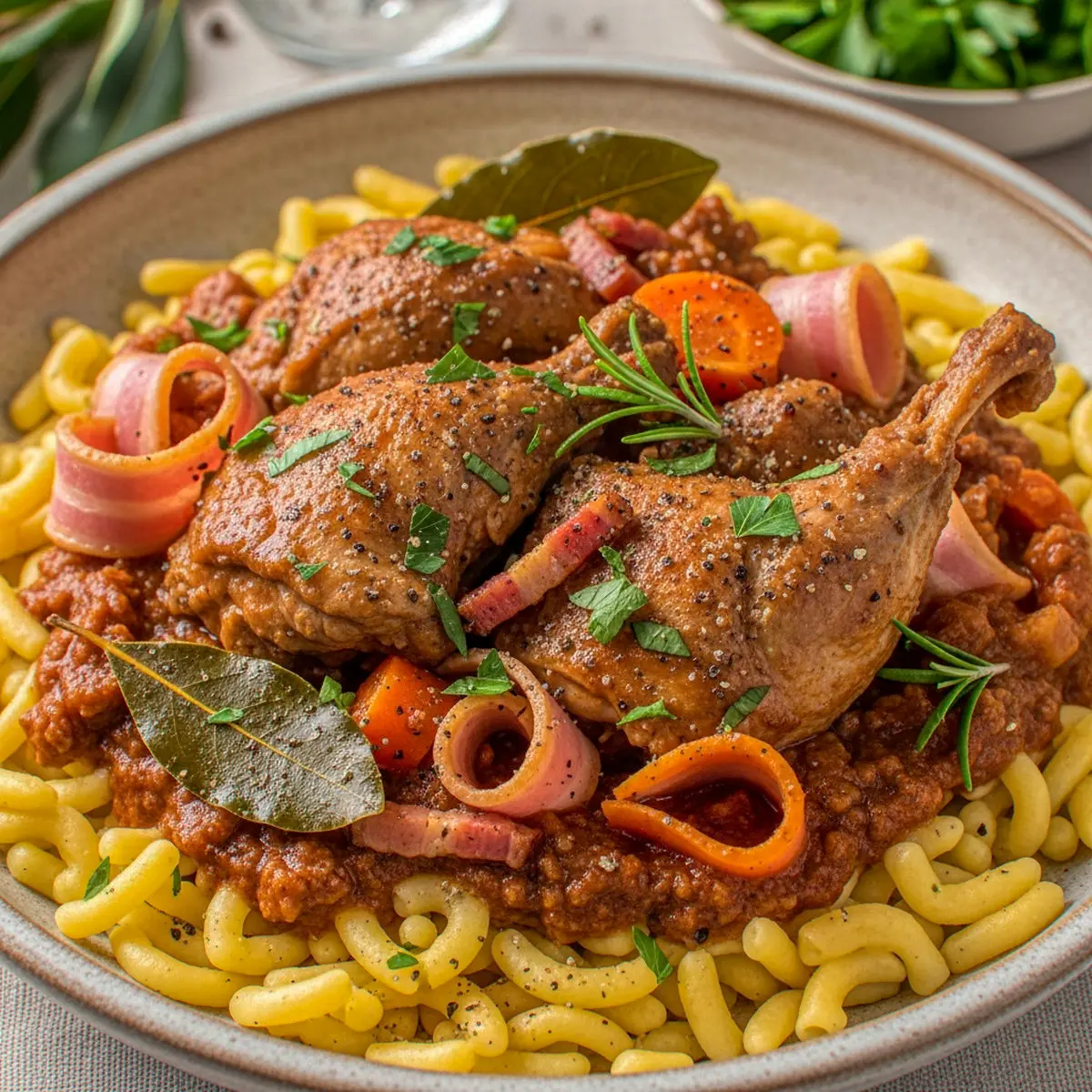

Rabbit Goulash (Istrian Rabbit Stew)
Course: MainCuisine: Croatian, IstrianDifficulty: Moderate4
servings15
minutes120
minutes750
kcalRabbit goulash is a traditional Istrian stew of lean rabbit meat braised in wine with onions, pancetta, and herbs. The long, gentle cooking tenderizes the rabbit and yields a robust gravy. Serve the rich stew ladled over homemade pasta, gnocchi, or polenta. A splash of fresh parsley or a dollop of crème fraîche finishes the dish elegantly.
Ingredients
Whole rabbit (1.5 kg), cut into serving pieces: Lean game meat, a local favorite. Remove excess fat and trim each piece.
Pancetta or bacon (100 g, diced): Adds smoky, savory fat. Provides richness in lieu of lard or butter. Can substitute diced bacon; for less pork, omit or use extra olive oil.
Onion (1 large, chopped): Sweetens the stew base. Cook until soft and golden.
Carrots (2 medium, diced): Offer natural sweetness and body to the sauce.
Garlic (3 cloves, minced): Pungent aromatics; brown briefly with onions.
Tomato paste (2 tbsp) or ripe tomatoes (2, peeled and chopped): Gives depth and tang. Paste concentrates flavor; fresh tomatoes add brightness.
White or red wine (100 ml): Deglazes the pan and infuses the stew. A dry white like Malvasia or a red like Teran both work.
Bay leaves (2): Earthy scent. Remove before serving.
Fresh rosemary (1 sprig) or dried (1 tsp): Piney herb flavor.
Fresh parsley (2 tbsp, chopped): Stir in at end or sprinkle on top.
Flour (3 tbsp): For dusting the rabbit before searing. Helps thicken gravy. Cornstarch or potato starch can replace flour for gluten-free.
Chicken or vegetable stock (500 ml): Stew liquid; covers the meat.
Olive oil (2 tbsp): Sauté and sear fat.
Salt and pepper: To taste. Add salt sparingly until near end, then adjust.
Optional Add-Ons: Smoked paprika (for color), dried marjoram or thyme.
Directions
Prepare the rabbit: Season rabbit pieces with salt and pepper. Lightly dust with flour, shaking off excess. Time: 5 min.
Brown the meat: Heat 1 tbsp olive oil in a heavy pot over medium-high heat. Add pancetta and cook 2–3 min until fat renders. Push aside, then add rabbit in batches. Sear each piece 3–4 min per side until golden. Remove meat and pancetta to a plate. Time: 10 min.
Sauté vegetables: Lower heat to medium. In the same pot with leftover fat, add remaining oil if needed. Stir in onion, carrot, and garlic. Sauté for 5 min until edges caramelize.
Deglaze: Pour in the wine and scrape any brown bits from the pot bottom. Add tomato paste and cook 2 min, stirring, until it darkens slightly. Return rabbit and pancetta to pot.
Add herbs and stock: Slide in bay leaves and rosemary. Pour stock over meat, just covering it. Bring to a gentle boil.
Simmer: Cover, reduce heat to low, and simmer for 90–120 minutes until rabbit is tender. Stir occasionally. Time: 1½–2 hours.
Finish sauce: When meat is fork-tender, fish out bay and rosemary. If sauce is thin, uncover and simmer 5–10 more minutes to reduce. Taste and adjust salt and pepper. Stir in chopped parsley off heat.
Serve: Transfer rabbit and sauce to a serving dish. Pair with cooked pasta, gnocchi, or mashed potatoes. Garnish with extra parsley or grated cheese. Time: 5 min.
Tips, Troubleshooting & Variations
- Serving & Pairings: This stew is traditionally served over homemade pasta like fuži, sturdy noodles, or potato gnocchi. A sprinkle of cheese (Parmesan or hard pecorino) and a drizzle of olive oil brighten the plate. Serve alongside a crisp mixed salad or tangy sauerkraut to cut the richness. A glass of dry white Istrian Malvasia or light red Teran complements the savory meat and herb flavors. Leftovers taste even better the next day as the flavors meld.
- Storage & Reheating: Keep leftover goulash in an airtight container in the fridge for 3–4 days or freeze up to 3 months. Reheat on low in a covered pot, adding a splash of water or stock if needed. Sauce may thicken after refrigeration; thin with a little water or extra wine as you heat. Avoid boiling—gentle simmering preserves the tender texture.
- Variations & Substitutions: (1) Poultry: Substitute chicken or turkey for a lighter version (reduce cooking to 45–60 min). (2) Pancetta-free: Replace bacon with more olive oil and a dash of smoked paprika for smoky depth. (3) Vegetarian: Omit meat entirely. Use mushrooms or lentils in place of rabbit; add a splash of red wine and vegetable stock for umami. (4) Spicy twist: Add crushed red pepper or cayenne to the sauté step for a piquant note.
- Chef’s Tips: Ensure the rabbit browns well on all sides before simmering – this builds flavor. Skim excess fat from the stew top midway through cooking if it looks too oily. To achieve a velvety sauce, stir in a small butter cube at the end off heat. If the gravy tastes too acidic from tomatoes or wine, balance it with a pinch of sugar.
- Optional Add-Ons: Shopping List: pancetta or bacon, fresh rosemary, quality wine (red or white). Prep Ahead: Dust and brown the rabbit a day ahead, storing it in the fridge; just simmer with broth when ready. The stew itself can be made a day ahead and gently reheated.
- Related Recipes: This goulash pairs well with Gnocchi (njoki) or Fuži pasta. For another hearty stew, try a Croatian Zgvacet or game “Čobanac” style stew.
- Equipment Needed: Heavy-bottomed pot or Dutch oven (for stewing). Large skillet or frying pan (for browning). Mixing bowls (for dredging meat). Sharp knife and cutting board (for prepping meat and vegetables). Wooden spoon or spatula (for stirring). Measuring cups and spoons. Fine sieve or colander (if serving pasta separately). Serving dish and ladle.









